‘I don’t want to be like all the other kids, but if I’m not, they won’t like me.’ My seven-year-old daughter’s lower lip trembles and her eyes well with tears.
‘You don’t have to be like anyone else. Be proud of who you are.’
‘Then I won’t have any friends,’ she shouts. Angry. Hurt. Dismayed.
That seven-year-old girl grew up to be an amazing, self-assured woman who has achieved incredible things. She never did conform to the fashions and trends of her peers. That was a decision she made after facing up to the sad reality of society. We like things to be familiar, unthreatening – to know what is on trend so that we can follow fashions.
I don’t have any grandchildren, just my four books – my substitute grand-kiddies. Now they are saying the same thing: ‘I don’t want to be different. If I’m like the others, then I will be more popular.’
There is truth in this. We know what we like and so when we pick up a book; we look for clues that tell us, this is similar to another one I enjoyed. Book-marketing experts follow trends in book titles and cover-design. They know readers want to spot their favourite genre. The weary shopper, me included, can become irritated by the sameness of book covers. It is refreshing to discover something different, but we don’t want to take a risk investing our time in reading a book without some reassurance that it’s our kind of book.
So, what advice do I give myself? What do I say to my books? Much the same as I gave my daughter. You are unique. Be proud of that. Do you want to be like the others? What is more important to you: being popular, or giving voice to what makes you who you are – that kernel of truth within?
Of course, I want my books to be popular. To compete with best-sellers for a top spot in the Amazon charts. But it is impossible, for me anyway, to write a book with that intention. Writing, like any creative pursuit, is an expression of the soul. Writers dig deep to find their truths, to mine emotions and give them voice. The craft of writing is to understand what makes a good story – story-structure, tropes, pace, etc. Authors have a responsibility to deliver a well-crafted story that meets the expectations of readers. But, to really connect with readers, the author’s voice must be authentic. To tell the story that only they can tell.
I guess I am going to have to experience the same growing pains as my seven-year-old daughter as I find my way in the world as an author. Each time one of my books is published, I attract more readers. My readership is wonderful. They know what to expect when they buy one of my books and say that they are never disappointed. So, I owe it to them to continue writing the stories that they love and if that means I am not read by the masses, so be it.
To find out more about my books visit my Amazon Author page or My Books here on my website.
And remember … Don’t be afraid to stand out from the crowd because You Are Amazing!
In this tenth episode, season two of The Mindful Writer, Gail Aldwin, inspires us with two of her favourite quotes and we explore together what they mean to us on this writing journey.
Before I introduce you to Gail, a quick update on my writing journey. It has been a few weeks since the last episode of The Mindful Writer. I took a break as I went on a Transatlantic cruise, discovering the Caribbean and visiting some favourite ports in Europe. It was a wonderful adventure. I returned relaxed — my creative well brimming over.
It’s been hard resuming the work pace I practised before my holiday. The Last Act comes out on 1st August, and there is a lot for me to do preparing for the launch. I have also had a month away from social media, which has had an inevitable impact on the sale of my books. I fluctuate between a sense of calm, with gratitude for the restorative power of a long holiday and self-recrimination, escalating to panic, for the work I have neglected whilst enjoying a rest.
Finding the right balance between productivity and relaxation is always a challenge. This week, I bought Joanna Penn’s 3 books: The Successful Author Mindset,The Healthy Writer, and The Relaxed Author. I am hoping that they will keep me grounded before I lose the benefits of my wonderful restorative holiday.
The right words from a friend or mentor, a quote from a motivational speaker, or business guru can work wonders. And this just happens to be the topic of our chat this week, so let me introduce you to my guest.
Gail Aldwin is a novelist, poet, and scriptwriter. Her debut, The String Games, was a finalist in The People’s Book Prize and the Dorchester Literary Festival Writing Prize 2020.
Prior to the pandemic, Gail volunteered in Bidibidi, Uganda. The 2nd largest refugee settlement in the world.
Deborah: Hello Gail. I’m delighted to meet you almost in person after connecting with you on social media where you are very active in supporting other writers.
You shared two excellent quotes with me which I would like to explore. Let’s start with the first:
‘No Matter how much we rally against it, progress is not linear. All I believe now is consistency. If you keep doing something, you will get where you’re trying to go. There is no destination. Instead, arrival is simply the act of showing up itself.’ Anna Codrea Rado.
What does this mean to you, and how have you experienced this learning in your journey as a writer?
Gail: There’s a lot to breakdown in this quote. First,
Progress is not linear. Writing a novel is circular, as you pick up ideas along the way.
I think my writing process is more like a maze. It can sometimes be a meandering journey with some dead-ends and double-backs. It takes persistence to get to the heart of the story.
I think any writing journey must bring you joy, or there is no point to it. All humans need a creative outlet, but it may not be writing.
Consistency is also important, but within that, being prepared to take risks. One of my mantras is:
If you always do what you’ve always done, you’ll always get what you’ve always got.
So, in writing, don’t be afraid to experiment and try something new. I think that is also where you can find joy. Mastering something new.
Deborah: Would you apply that to writing different genres or do you think authors should stick to writing what their readers enjoy?
Gail: That is a good question. The publishing industry tells us this, but I write what I want to write because having that freedom is important to me. Not everything has to be the size of a novel. Short stories and poetry can allow writers to try different things.
Deborah: I told Gail about my recent experience when I joined a slimming club – how despite my initial frustration at only losing 0.5 to 1 pound a week I learnt, having patience, faith in the process, and showing up each week, that those small weight losses added up and before long I achieved my target weight.
Book marketing also requires patience and persistence. It’s good to review what does and doesn’t work, but important not to give up too quickly. Results take time and persistence.
Gail: When I write a book, I don’t know how long it will take to tell that story.
Deborah:
We all want instant gratification. But often it is about being slow and steady.
Gail: Writing a novel takes a lot of time and persistence. It’s useful to have quick wins running alongside it with shorter projects.
The quote says: There is no destination. I’m not sure I entirely agree with that, as I like those smaller goals along the way as they sustain you.
I got this quote from Writers Hour (London Salon Writers’ Hour). It is 8am GMT every day for the UK but other Writers’ Hours in other time zones.
Deborah: I love Julia Cameron’s words of wisdom. Her books on creativity have got me through a few emotional struggles as a writer.
‘Wherever you are is always the right place. There is never a need to fix anything, to hitch up the bootstraps of the soul and start at some higher place. Start right where you are.’ Julia Cameron
Why do you think we torture ourselves as creatives, believing that we are failing, that we are not where we ought to be in our journey?
Gail: Torture is a strong word! We can get ourselves into a muddle. Believing any place is a good place to start is empowering. I’m in a good place with my writing right now. My third novel, The Secret Life of Carolyn Russell, is due to be published by Bloodhound Books in July and my work in progress is, I believe, my best work yet. So, my self-belief is high right now, unlike last year when I was sending out query letters to agents.
Submitting to agents and/or publishers is a necessary part of the process when publishing a book. By using feedback from rejections to improve your submission package, you can make this a more positive experience. Believing that you are improving, and things are getting better, is what you need to sustain you.
Deborah: the words in that quote that ring true for me are: starting from where you are now. I am very focused and ambitious, always looking ahead. I have learnt through meditation and reflection to observe where I am on my journey and the current learning of that situation.
When our sights are on the future, we miss important lessons in the present.
Gail: In my early days as a writer, I suffered from envy. I did not understand that I first had to learn the craft of writing and it is a long apprenticeship to become a published writer.
I changed my mindset from: Why not me? to: If others can do it, so can I.
Being a cheerleader for other writers, sharing opportunities, and celebrating their success are other ways of overcoming feelings of envy.
Deborah:
Comparison is the thief of all joy.
Wherever you are on your journey, it is unique to you.
Gail: I agree with you.
Deborah: That is what I mean when I say writers can feel tortured. We punish ourselves, throwing up our hands in despair: Why can’t I sell x number of books? Why can’t I get thousands of reviews?
If there is anything we can do through the Mindful Writer to help writers manage that angst, achieving a quiet and calm mind, then my work here is done.
It is so hard for writers trying to get an agent or publisher, my heart goes out to them when I read social media posts of hope and then despair.
Gail: We are working in a very competitive industry and you have to develop a thick skin. No rejection is intended to be personal. Often, it is just not a good fit.
Deborah: I always say to people:
Don’t attach yourself to one particular outcome. Sow seeds of possibility and then wait to see where they root.
We put too much emphasis on getting an agent or a publisher instead of seeing the range of options available to us and taking back control.
Gail: I like the idea of seeds taking root. Where you find fertile ground is where you will flourish.
Deborah: And it will be the right place, at the right time. That is why you cannot compare your journey to another person’s.
You wrote a lovely blog on self-belief where you suggest we should ‘develop a sense of self, to power our writing.’ What do you mean by this? How has this helped you develop as a writer?
Gail: I asked a question on a tweet-chat, ‘Do writers need self-belief? I thought, I don’t need self-belief, just belief in my work. But others came back with a shared view that self-belief was essential to writers. So, I thought: If that’s the case, how do I get some? Simultaneously, I was researching business women for something I was writing, and I came across a business guru for entrepreneurs. A lot of her wisdom applied to me as a writer. For example:
The quality of enquiry is really important.
I’m writing a novel set on an island and I didn’t know what the theme was. About 20k words in, I realised it was about coercive control. So, by trusting the process, the solutions will come.
She also said: Tune into your desire for impact. I reflected on that and realised,
I am the only person who can write the stories I need to tell, and I am the best person to do that.
Another thing she said was: Excavate inner depths. Sometimes, as a writer, I come to a point where I do not feel safe within the story. The jeopardy is there for me as a writer, for example, do I really want to write about my characters in conflict? But it is important that I face this challenge and not turn away. So, don’t back-off.
Deborah: What are you working on now?
Gail: I am writing a novel set on an imagined African island, drawing on my experience living in Uganda to add texture and colour. It is set at a couple’s resort and the story is about three couples who are thrown together when they are all late in arriving for dinner and share a table. I love starting on a new project, exploring new characters and settings.
Deborah: I understand that novel is a WIP but The Secret Life of Carolyn Russell comes out on 3rd July. I will look forward to reading that one.
This is the last episode of The Mindful Writer Season two. There are now 20 inspiring episodes for you to enjoy.
I did have one revelation when I returned from my long holiday. Eighty percent of my social media presence is supporting other writers – which is great! But I suspect I have been hiding behind service to others as that is where I am most comfortable. So, I am stepping outside of my comfort zone to talk about my books, in person as well as social media exposure.
Having a complete break, creating space between me and my work has enabled me to get a clearer perspective. Now I just need to maintain a healthy work life balance.
I hope you find time to relax and enjoy the summer. Until we meet again, take care of your beautiful self, and trust the journey.
An image from the film 10 Things I hate about you, showing Heath Ledger, and Julia Styles lovingly gazing into one another’s eyes. Because I love that film and the title of this blog is a good excuse to use an image from it.
In this 8th episode, season two, of the Mindful Writer, author and blogger, Anneliese Knop tells me about her life with seeing dog, Greta, and shares many words of wisdom. It really is a fascinating interview.
Before I introduce you, let me tell you about my writing journey. Yesterday I wrote The End. Woo Hoo. It’s a fantastic feeling when you finish writing the first draft of a novel. The idea for writing about a sunken village has been with me for about seven years, after seeing an image of a church spire in the middle of a reservoir. I knew it would not go away until I found my story. It took several months of playing with ideas, then a visit to Yorkshire to visit the reservoir, before everything clicked into place and I had the outline for a story. I started writing it soon after Christmas aiming to complete the first draft by the end of March, so I am ahead of schedule. There’s lots more work to do. I always say the first draft is you, the writer, telling yourself the story. I do a lot of planning before I write so hopefully it is structurally sound but I will be relying on my developmental editor to tell me what needs fixing. Then starts the first round of edits.
In the meantime, I will be preparing The Last Act for publication in July.
I am very focused about achieving my goals, but this strength has a downside as my guest this week explains. So, let me introduce you.
Anneliese Knop, is an author and blogger. She writes fantasy with co-author Galadriel Coffeen and her blog, Look on the Dark Side, gives a fascinating account of her life with seeing dog, Greta. Anneliese was born with a genetic degenerative retinal condition, but this has not limited her in any way. She quotes:
‘Where is it written that all our dreams must be small?’
In this episode Anneliese explains:
Toxic Positivity
Toxic Perfectionism
Why we should love the things we hate about ourselves
Why dog owners and their dogs might benefit from couple’s counselling.
Anneliese has already achieved what some people might consider big dreams, and I don’t doubt there is more to come. I was excited to meet Anneliese and asked her to tell us a little more about herself.
Anneliese explains that genetic degenerative condition means that she is blind. ‘I am passionate about good stories, good mental health for all, and promoting professionalism and career advancement in the blind community.’
I love Anneliese’s blog as it is so informative and well- researched. In one blog post, she discusses toxic perfectionism and toxic positivity. I asked Anneliese to explain these and the impact they can have on a person.
I feel most passionate about Toxic Positivity.
A lot of pressure is put on people, particularly disabled people to put their best foot forward, all the time.
In the disabled community, we put pressure on ourselves and each other not to appear bitter, or angry. We do not want to become an emotional burden as well as a physical one. And we don’t want to give disabled people a bad name.
Toxic positivity is about denying reality – clinging to a positive mindset to the exclusion of the negative or unpleasant sides of reality. An unwillingness to acknowledge that sometimes life is just hard.
We all have bad days, and that is normal. The toxicity comes from denying this reality, which then isolates people and gives them no out-let for finding and giving compassion to one another.
Toxic perfectionism comes from a very healthy desire to be excellent at what one does, that becomes toxic when anything less than perfection is completely unacceptable and triggers anxiety, self-loathing, anger, either turned outward or inward. So, both of these things can come from a good place, but they are taken to unhealthy levels.
I suggest we are perhaps all on a spectrum, from the healthy to unhealthy positivity and perfectionism.
Anneliese agrees, describing how a positive attitude enabled her as a blind person to achieve what seemed like impossible dreams.
There are two sides to every attribute, I observe. What we perceive to be positive attributes can have a negative side and vice versa. I am very motivated, a self-starter, and that is great because I am focused and work hard, but the downside is, I beat myself up when I don’t meet my personal expectations. I am compassionate to other people, but I am not always compassionate to myself.
Anneliese agrees and says that in couples’ counselling, she sometimes asks a couple, what character trait in your partner really annoys you? That trait has always been there, and it is why you fell in love with them. So, which part of this trait is the part you fell in love with? In revealing that we discover that the thing which is annoying them the most is the very thing that attracted them. It’s just not working well at the moment.
The same is true for yourself. The things that you find frustrating are also the things that you love about you. They are just out of balance.
I love Anneliese’s approach. When we feel angry and frustrated with ourselves, soften a little and view ourself with compassion, find the positive side of what we view as a negative attribute and be thankful.
Anneliese says, I like to tell clients and fellow writers:
Your inner critic is doing you a favour. She might be over-zealous in doing it, but how is she helping you? You should be thankful for that.
I agree with Anneliese and say that our inner critic is trying to protect us. When they tell us: ‘You can’t do that. You will fail’, they are trying to stop us from getting hurt. We need to say, ‘Thank you. I can hear you, but it’s okay. I’ve got this.’ Be loving to that inner voice and understand its intention, but have faith that it’s okay. You can do this. I call them the goblins.
Anneliese laughs. ‘That’s cute.’ In family therapy, she tells me, there is a popular approach called Internal Systems Family Therapy. It’s basically that we have lots of parts of ourself – goblins of yourself, inside and you have to work out how to get them to all work together. Sometimes, one of them has been exiled by the others, or wounded before they can do their job. And so, another goblin is working harder to make up for it and in order to find balance you have to find the wounded, exiled part, heal them and invite them back into the birth of yourself.
I reflect. So, love all of them? And balance them. Because they are working together with the common goal that they all want you to succeed. This was perhaps an over-simplification, but Anneliese kindly agreed.
Anneliese with seeing dog, Greta
On to my next question, which again came from Anneliese’s excellent blog. I read that Greta, her seeing-eye dog, experienced behavioural problems, which Anneliese researched to understand her better. I asked, ‘You have a Master’s in Christian counselling and so this must have been fascinating for you. What did you discover and how might this relate to us humans?’
Anneliese replied, ‘That is kind of the core of my blog right now. Describing our journey as a working team to explain different mental health concepts.’ She went on to say that when Greta had some behavioural issues, she approached it like couples-counselling.
Because when a dog has issues, then the human does too.
It doesn’t necessarily mean the human caused the issues. Parents of dogs tend to blame themselves almost as much as parents of humans do. You and your dog live together in companionship and so you are bound to impact one another. So, if your dog is anxious, you are aware of that and will respond. Or, if your dog is fearful, energetic, or hyper, that has an impact on you. And so, when you work with your dog, you have to work with yourself too. Just like in couples’ counselling. If one partner has an affair, a traumatic injury or a job loss, this will have an impact on their partner as well as on them. So, it is important that couples acknowledge that and are prepared to work co-operatively as well as independently.
When I recognised that Greta had what I liked to call post high-school stress disorder, after interning at a high-school, brought on by the rambunctious activities of the teens – they did respect her, but she didn’t like the way they were treating each other and frankly, I don’t blame her – then I got myself a therapist and a dog trainer who I refer to as our doggie couple’s therapist.
I asked what behaviour Greta was exhibiting.
Barking at people when she was distressed. She wanted to restore order and so she barked. I felt, everyone is going to think she is an aggressive, badly behaved dog, and we are going to destroy the reputation of service dogs and access law. And I’m going to ruin the world for all blind people, ever. And that’s why I needed a therapist! See, another example of toxic positivity.
I remarked that by working with Greta and the dog-trainer, Anneliese had learnt something about herself.
What I didn’t recognise is all my life I heard definitions of anxiety that didn’t match my experience. People expressing concerns about what might happen in the future.
I didn’t worry. What I did was rehearse and resolve the same problem over and over again. And that is also a definition of anxiety.
It took Greta’s issue for me to realise that I spent hours a day resolving and planning for every possible conversation where someone would criticise us for the slightest misbehaviour on her part. I realised; Oh, I have anxiety. That definition I heard isn’t the only one out there. If I had realised there were things such as rumination and repetitive thoughts, I might have taken action years earlier for myself, not related to Greta.
I could identify with the anxiety Anneliese describes. For me, meditation helps to stop the repetitive thoughts.
Again, we come back to balance, Anneliese reassures me. It comes from a good thing: the ability to look out for potential problems ahead and plan for them, is a healthy natural skill that people ought to be able to develop. It’s a good thing. It’s just a problem when you can’t stop doing it. When it gets in the way.
Your brain is designed to move in and out of threat mode easily. When you can’t get out of threat mode, that’s when you have anxiety.
I understand, I say. ‘It’s learning how to still your mind and understand what’s happening.’
Anneliese says: Mindful meditation can allow us to watch our thoughts, disentangle them and then, in a way, consciously reach for the on/off switch to take us out of threat mode.
I add: And to be compassionate and kind. It’s always easier said than done, but we are all works in progress.
Cover of book: Jubilant. The First Book of the Shallic Sea Chronicles by Galadriel Coffeen and Anneliese Knop.
I ask another question from Annelies’s blog. As a writer, you experience the world differently to sighted people. In your blog post, Overcoming the sight barrier in world building, you explain touch don’t tell and how you envisage the world through your hands. Can you tell us more about your approach to world building?
World building tends to happen more in science fiction and fantasy genres, but it can happen in historical fiction. It’s where you construct a world or part of a world that doesn’t exist. For example, Tolkien’s Middle Earth, or C.S. Lewis’s Narnia.
Being blind from birth, I’ve not been able to experience the world visually, so I don’t care what a person’s clothes are like, for example. I found I felt disengaged from many books because they did not engage all the senses. But then, I read books like the Redwall series by Brian Jacques and he spends a lot of time describing the texture, scent, and flavour of food, and the sound of singing, the accents different characters have, and the scent of trees, flowers, and damp earth. He is a multi-sensory author. And I thought:
Well, my world is pretty rich even though I can’t see, so how can I convey the wealth of experience that I have to people who are so used to limiting themselves to their eyes as their primary sense? How can I make them experience my story with their whole body?
So, when I write about an experience I have not encountered before, for example, firing a cannon; the first thing I will do is research the mechanics of how it works, then I will look up recordings of the sounds, or I will go to a museum that has a cannon and I will put my hands on it, with permission. I get away with a lot because I am blind and they recognise that just looking at something in a museum doesn’t cut it for me. I look for as many experiences that I can experience with my full body and translate that on to the page in the same way that another person might look up an image on the internet and describe it visually on the page.
I could have talked to Anneliese for hours, but sadly, we ran out of time. She shared some fascinating insights. But you can hear more from Anneliese by visiting her blog https://comelookonthedarkside.wordpress.com
A woman walking in a field of tall grass carrying a young boy on her shoulders. Image for giveaway short story by Deborah Klee A World of Difference.
After meeting Anneliese for this interview, I asked her to read the draft of a short story I had written about a sighted boy living in a world where everyone was blind and his sight was considered a disability. The observations in her feedback were invaluable. For example, a blind woman in my story touched the face of her love interest to discover his features. Anneliese pointed out that a person blind from birth would have no interest in what a face looked like. Her comments enabled me to write a much better story. You can access a free copy of A World of Difference by signing up to my newsletter. Or read more about the value Anneliese added to my story as a sensitivity reader, in my blog post: What would the world be like if everyone was blind?
So, until next time, take care of your beautiful self, and trust the journey.
Whatever we are trying to achieve: weight loss, success at work, or any other goal, there is the opportunity to learn about ourselves and grow from the experience – even if we don’t achieve our goal. It is of course, about the journey, not the destination.
I started this year resolving to lose half a stone that had crept up on me and was refusing to budge. I could have welcomed those extra pounds, bought looser dresses and attributed it to the inevitability of late middle-age. But I wasn’t comfortable with my new body shape and did something I had never done before – I joined a slimming club.
I am six weeks into the Slimming World regime and although I am happy with my weight loss and impressed by the approach; it is the life lessons I have learnt that are having the most impact. Lessons that can be transferred to any project or journey.
When I turned up for my first session, I didn’t know what to expect. I was concerned that having so little weight to lose, I might offend those people struggling with a greater challenge. Here is my first lesson: Comparison.
Comparison.
On more than one occasion a group member would reassure me that if my half-stone mattered to me, then it was just as important and relevant as another person’s two stone. The love, generosity, and fellowship of club members was inspiring.
One week, I noticed a beautiful young woman with a curvaceous figure and a pretty face. She was trying to slim down to a version of herself before she had babies. The way she spoke of how she was now and how she wanted to be saddened me. Couldn’t she see how beautiful she was? I told her how I saw her. The consultant, observed that we don’t believe what other people say, until we feel beautiful ourself. I wanted to tell her, ‘Don’t compare yourself to other versions of you, or to other women, or models. You are unique. You are beautiful – just the way you are.’
We are all guilty of comparing ourselves unfavourably to others instead of recognising our unique attributes and strengths.
My mother always told me, ‘One day, in years to come, you will look at a photograph of yourself today and exclaim, “I was beautiful. So young. Why did I not appreciate it then?”’
Having Faith
I must admit, I did not believe that the diet, or lifestyle change to food optimising, would work for me. I had always had a healthy diet and thought I knew everything there was to know about calories and nutrition. At the end of week 1, when I had lost just one pound I thought, I could have lost more on my own. I was eating more than I would normally and had no faith in the process.
Week 2, I lost another pound. Then week 3, a pound and a half. Gradually, little by little the weight loss was building. I didn’t know everything.
Patience
If I had not been held to account by attending the club each week, I would have given up by week 2. That had always been my pattern of behaviour. I would weigh myself once, sometimes twice, a day. Then react to the reading by forgetting the diet as I considered there to no longer be a need, or give up because change was too slow. The truth was – I was impatient.
Breaking Habits
Changing my behaviour patterns was a challenge. I realised I had all sorts of excuses to rationalise why I weighed myself excessively, skipped meals, and filled up on sugary carbs. Now, I am having to plan what I am going to eat each day. I am taking the time and trouble to prepare three meals a day and to sit down and eat them. I am valuing myself and my body. I am mindful, when I eat.
Trusting the Journey
By week four I was on a roll. I had lost five pounds, just two more to go. I felt great and could see a difference. Then, week five I lost just half a pound and week six, nil. I had done nothing wrong. If anything, I was trying too hard. Denying myself treats. Feeling angry and resentful that this stupid diet was no longer working, and I had lost enough weight, anyway.
I was ready to throw in the towel. But the wisdom of other members taught me I was trying too hard, and I needed to let go a little. It was then I realised that by not losing any weight that week; I had learnt a more important lesson – how to enjoy life and continue to eat well, forever – not just for a few weeks. My goal shifted from losing half a stone in six weeks to learning how to enjoy treats, be kind to myself, and maintain a healthy weight in the long term.
Letting Go
When we want something too much, we tighten our grip, trying to assert our control. This often has the opposite effect. It chases away what we most want. Several people in that club reported unexpected weight losses after ‘being naughty’ – eating a bag of chips or a takeaway. Now, I have stopped being hard on myself. I am realising that I can still enjoy all of my favourite treats in moderation. Now I know that, I don’t even want them!
In summary
This is what I have learnt about myself and my world:
Be patient.
Celebrate every achievement, however small it may seem, because they all add up.
Don’t be afraid to step outside of my comfort zone, it can open up new opportunities and learning.
Listen and learn, even when you think you know it all.
Be thankful for my strong, and healthy body and appreciate its beauty.
Take time and care to prepare and eat nutritious meals, it is never a waste of time.
When things do not happen the way, I want and expect them to, ask myself what is this teaching me?
Stop being so hard on myself and have fun.
I do not have to suffer to achieve great things.
I have also learnt that my local Slimming World club has the most amazing, kind, and supportive women. And they are all beautiful – just the way they are.
In this episode of The Mindful Writer, Sandell Morse tells me about her journey back to herself and why it is never too late to pursue our dreams. Before I introduce Sandell, let me update you on my writing journey.
I am making steady progress with my WIP, a dual timeline story set in 1940s war years and 1964, north Yorkshire. My 1964 protagonist travelled in to Harrogate to buy a pink gingham dress similar to a popular one sold in Biba that year. I wanted to know where young people would have shopped for fashionable clothes in 1964, Harrogate, so I sent a message to the Harrogate, Past, Present, and Future Facebook group.
Within one minute I received a response, followed by many more. 138 comments to date. I loved the recollections that people shared: glass fronted wooden counters and drawers from which items were carefully removed by assistants wearing gloves, then displayed over the counter for inspection; the discussions about which shops were there in 1964 and which ones came later. We all love to reminisce and share memories about our community. History is preserved through these stories handed down through generations.
So, my heartfelt thanks to the Harrogate, Past, Present, and Future Facebook group for their generosity in sharing their memories, and for their support in my research of this novel.
Memoirs are a powerful form of story-telling. They give us a glimpse into another life, another time, another culture. They enable the writer to reflect and make sense of life experiences, sometimes finding new meaning.
This is a great lead in to this week’s guest, Sandell Morse, prize-winning author of a fascinating memoir. So let me introduce you.
I was humbled to interview Sandell Morse. This prize-winning author’s journey is remarkable. At 81 Sandell’s first book The Spiral Shell: A French Village Reveals Its Secrets of Jewish Resistance in World War II, was published, receiving much critical acclaim – a silver medalist in the 2020 Sarton Women’s Book Awards for Memoir and a finalist for the 2021 New Hampshire Literary Award for Nonfiction.
The Spiral Shell is a double journey, one outward in which Sandell uncovers long-silenced stories of courage and resistance in a village in Southwest France, and one inward as she unexpectantly finds herself on a journey back to her own Jewish identity.
I asked Sandell what inspired her to write this memoir and how the story developed as she researched Jewish resistance in WW11.
Sandell started writing when she was middle-aged. First fiction, and then non-fiction. She had a residency at Moulin à Nef, a retreat owned and operated by the Virginia Centre for the Creative Arts https://www.vcca.com/ in Auvillar, France. Auvillar is on the Campo de Santiago, a pilgrimage walk, which means that it is also on a Crusaders Route and that got Sandell thinking about Jews both in the Middle Ages and during World War II.
She chatted to a rabbi about her interest and he suggested she meet a friend of his. Initially, Sandell had no intention of writing a book. Her plan had been to write a series of essays. The connection made through the rabbi, led Sandell to a French woman who was a Jewish scholar and a journalist. She became Sandell’s translator. Another connection led Sandell to the discovery of a nine-year-old resistance courier who had lived in the village with his family. He shared Sandell’s maiden name and so it intrigued her to discover more.
It was like following a trail of breadcrumbs, Sandell said.
I commented on how life was sometimes like that, leading us along a path that we had not expected. It sounds as though everything fell into place for you; I said.
‘It was not so much falling into place as being present in the moment.’
She went on to say; I was 71 when this all began. I had raised my family, and I had been writing for many years, but I had not travelled alone.
‘I had the opportunity to be the person I wanted to be. Just me.’
I returned to the same village in France, many times. I was introduced to Germaine Poliakov, a 92-year-old-woman who had been a caretaker in a secret house in another village not far from where I stayed. We became very close.
I was interested in Sandell’s observation that now that she no longer had responsibilities as a parent she could be herself. I have spent much of my life being a wife, and a mother. When I try to find my true self, I think back to the person I was before I took on these roles. I wondered whether Sandell had found freedom in this, later in life.
‘Yes’, she said. ‘That is what I experienced.’
I quoted back to Sandell her epiphany as she described it in a press release:
‘I wanted my French friends to acknowledge their heritage and history. But what was I thinking? They were holding a mirror to my face. This was what I wanted to do, stand tall and say to the world, I am a Jew. No more childish games. No more now you see me, now you don’t. No more being a Jew only inside the comfortable world of other Jews.’
I asked Sandell how writing her memoir changed her perception of herself and her community.
‘That was huge,’ she says. I was the daughter of a German/Jewish American father whose family came over to the States in the mid-1800s, and an Eastern European orthodox family on my mother’s side. My father’s main goal was assimilation. Assimilation is when a minority group take on as many characteristics of the majority group as they can. But the irony is, you can never belong, because however much you try – you won’t be us.
I had blue eyes and fair hair so it was easy for me to assimilate. I celebrated Christmas, a wreath on my door, etc. Then, when I was studying for a Master of Arts in literary studies, I took an interdisciplinary class about dealing with the past, led by a Holocaust scholar and and an English scholar.
I did a lot of reading and research and I realised that assimilation was a kind of erasure of a culture and people and that was Hitler’s goal. I didn’t want to contribute to that and so I started going to synagogue and learning more about my Jewish identity.
When I was interviewing, Germaine, she was also a very assimilated French/German Jew– in France there is a lot of hidden antisemitism – Germaine told me about her experience when she went to a concert. A friend whispered to her, ‘That conductor. He is Jewish.’ She observed her friend would not have mentioned anything had the conductor been Christian.
Sandell asked Germaine, if she then told her friend that she too was Jewish. Germaine said, ‘You can’t do that here.’
I asked Sandell how long it took her to internalise her new understanding and then change her behaviour.
It’s ongoing, Sandell says. As a Jewish person I grew up as a minority where the majority were Christians. The way Christians understand being Jewish is from their interpretation of the bible – Old Testament. Jewish people read the Hebrew bible before it was translated.
This interested me as I have long felt that religion, particularly Christianity is based on scriptures written thousands of years ago and interpreted by man. I expressed my belief that religion unlike spirituality is manmade and can be about power. Religions can set people against each other. In my view, there is one God but many ways in which to worship as we all come from different backgrounds and cultures. I would love to study theology so that I could identify the common truths that run through all religions.
Sandell agreed with me that religions have more that unites them than divides them. However, we did not entirely agree on the importance of rituals. I explained that I no longer went to church as I found the rituals imposed on me distracting and as a result I felt further from God. When I meditate, I experience a deeper connection.
Sandell’s view is ritual takes us to past, present, and future within a framework. That Judaism gives us the freedom to create our own rituals. She went on to say that she doesn’t believe in God, but in spirituality and mysticism. In Judaism, there is no hierarchy. No head of church. Every synagogue is a small community.
I asked Sandell how her attitude to ageing had influenced what she had achieved in her life.
I have come to accept that you cannot deny your body is ageing. My mother-in-law was a wise-women. She told me,
‘You don’t give things up – they give you up.’
I thought, I am not going to give anything up until I really have to. So, I just keep going. I am a hiker, and a skier. Just keep going until you can’t.
I asked, ‘Do you think fear can stop us from carrying on doing things?’
Absolutely. People say to me, are you afraid you might break something? If I was, then I wouldn’t be able to ski properly because I would tense up. I just have to take the risk and accept the consequences. Sandell skis with a group of older people. One of the group broke her shoulder but now she’s back skiing. A man in his 90s still skis with them.
We laughed about the transition from ‘falling over’ when you are under 60 to ‘having a fall’ when you get older. The shift in perception of how others see you.
Sandell said that publishing her recent book gave her renewed energy as she had to learn social media and how to market when her book was published during the pandemic.
I asked for her words of advice to her younger self.
Sandell told me a wonderful story about how when she was 3-years-old she would stand on the porch and watch children pass by on their way to school. One day, unknown to her parents she followed the children to school and took herself to kindergarten. When her parents found her, the teacher said that Sandell could stay in the class as she was no trouble. So, she continued to attend kindergarten until she was old enough to start. When her mother tried to enrol her, the teacher said, ‘You can’t put that child back into kindergarten she will be nothing but trouble. You’d better get her tested.’
When Sandell was tested, she was asked to colour a picture of a cow purple. She responded, ‘I’ve never seen a purple cow.’ So, Sandell was enrolled in first grade instead of starting Kindergarten.
Her reply to my question, ‘What advice would you give your younger self?’ ‘None because I don’t think my younger self would have listened to anything I said.’
I asked, what advice would you give listeners who think it is too late to pursue their dreams?
As long as you are breathing and able to; give it one hundred percent. Sandell teaches creative writing workshops to people who have started writing in their seventies. When you get older, she says, life slows down and you reflect more than you did. Stories come out and you want to write them down.
Sandell is going to be my role model for ageing. Whenever I question if I am too old to try something new, I will tell myself, Sandell Morse is still skiing at 83.
When we finished recording this interview, I expressed concern to Sandell that maybe I had revealed too much of myself, my spiritual and religious beliefs. I am always careful to be inclusive as I do not want to alienate listeners who have differing views. I thought I might need to edit the chat but when I listened again, I decided that it was okay to share my personal beliefs. They feel deeply personal and exposing myself in this way made me feel vulnerable.
I think that this is true for all creatives when we express ourselves through our art. It takes courage to be authentic. To dig deep. In writing her memoir, Sandell has shared a transformation of self. When we read other people’s truths it helps us to examine our own. I am grateful to Sandell for inspiring me with her honesty, courage, and her positive attitude to ageing.
I hope you are now convinced that it is never too late to pursue your dreams, whatever they might be – maybe you will write a memoir?
In this episode of the Mindful Writer, author Kim Nash, shares her secrets to success, but before we learn how to make our dreams come true, let me update you on my writing journey.
After the successful launch of The Forever Cruise in December, I am hunkering down to work on my fifth book set in Yorkshire. My plan is to complete a first draft before I go away for a month cruising the Caribbean and then cross Atlantic to the Greek islands. My plan is to leave this draft with beta-readers whilst I enjoy a break and fill my creative well with fresh story ideas. On my return, I will prepare The Last Act for publication in July. Then back to my Yorkshire novel. A busy but exciting year ahead. I’m really looking forward to the cruise.
It’s great starting the new year with plans and goals. There is a lot that we have no control over and life will always throw unexpected challenges. My guest this week explains how she turned her dreams into a reality and shares many words of wisdom on dealing with life’s curve balls.
So, let me introduce you.
Kim Nash is the author of uplifting, funny, heartwarming, romantic, feel-good fiction. Kim is Digital Publicity Director for publisher Bookouture (a division of Hachette UK) and is a book blogger at www.kimthebookworm.co.uk.
In this episode, Kim tells me:
How she turned her dreams and wishes into a reality.
Kim, you have a remarkable history of achievement. A love of reading inspired you to start a blog reviewing books, Kim the Bookworm. Your outgoing personality and can-do attitude led to you securing a position at Bookoutre (digital publisher) where you are now Head of Publicity and social media manager. In 2019 your debut Amazing Grace was published by Hera followed by another three books in quick succession. As I said, a considerable achievement.
How have you turned your dreams and wishes into reality?
Kim’s journey started with book blogging. She read a book by Milly Johnson, A Spring Affair. It was about a woman who cleared clutter from her home and discovered it was her life that needed to be decluttered. At the time of reading this book, Kim was experiencing challenges in her own life. The book helped her gain a different perspective. At the end of the story, the author invited readers to contact her to give feedback. Kim wrote to say what the book meant to her and was astounded to receive a reply hours later. Milly wrote, ‘You lady are the reason that I write.’
Kim and I talked about the joy of receiving feedback from readers. Kim says:
‘The best thing about being an author is when a person you have never met chooses your book out of all the books available to them and it helps them through a situation or takes them away from their normal life.’
We agreed that if you touch one other person, you have achieved something incredible as a writer.
‘Comparison is the thief of joy,’ is one of Kim’s favourite mantras. For her, success is not the number of books she has sold but the number of times she receives messages of this kind from readers.
It was Milly Johnson who encouraged Kim to set up a book blog. Having had one important exchange with Milly, Kim contacted her again and asked her if, as an author, she felt a book blog would be useful. At that time, there were few book bloggers. Once again, Milly inspired Kim with confidence and she started her book blog – Kim the Bookworm.
Kim’s work as a book blogger took her into the publishing world, as she became known to authors and publishers. She was invited to launch parties and other events where she networked. One day a publicist at Bookoutre contacted Kim to ask if she would review a book. In her response, which was yes, Kim asked a question: ‘If you know of anyone in publishing who would like to employ an enthusiastic book lover, let me know.’
As a result, Kim was offered a job with Bookoutre. She had years of experience in PR and marketing as well as her love for books and reputation as a book blogger. It was an opportunity that brought together all the things that she loved.
I asked Kim what advice she would give based on this experience of seeing her dreams materialise.
‘Be brave enough to put yourself forward. Recognise what you need to do to make things happen. You can’t become an author without first writing a book.’
Always ask yourself what you need to know. For example, when will a decision be made? Be direct and ask the question.
Being an author can make you feel anxious, so don’t be afraid to ask the questions when you need an answer. Being an author is a massive emotional roller-coaster. Kim says: At Bookoutre we always try to get back to authors so that we do not increase their anxiety. It seems to be accepted in this industry that it’s okay not to get back to people, but it is not acceptable. Agents and publishers don’t get back to people. In any business other than publishing, it would be different.
I agreed. ‘Don’t hand over responsibility and control for your happiness to the industry or anyone. And don’t attach yourself to one particular outcome.’
Kim talked about having a can-do attitude. In response to the lack of literary cultural events in the area where she lives, Kim set up a local book festival with fellow author Phillipa Ashley. Her message is: If you want something to happen, then make it happen yourself. Another example is the book club she set up nine years ago.
If there are things you would like to happen – write them down.
Then write what you need to do to make them happen.
Finally, be brave. Step outside of your comfort zone and do it.
I asked Kim how she looked after her health and well-being given her busy life. I use a colour coded planner, Kim explains. The colour coding shows her the activities that are taking most of her time. When cleaning the oven takes priority over writing, she knows that she is procrastinating.
Kim loves nature. She takes her dog for walks, enjoying sunsets and sunrises, walks in the forest or by water. Sometimes she just needs to sit in front of the TV and binge watch a favourite series. Time with family and friends – laughing. These activities help her relax and unwind.
Kim is an inspiration to me and one of my role models.
I love her can-do attitude. Sometimes we may look at another person’s journeys comparing it to our own and we make excuses: that person has more opportunities, more money, more time. That might all be true. Their journey is different and we gain nothing by comparing. But we can learn from another person. How have they achieved success? Determination? Resilience? Persistence? Putting themselves forward as Kim did? Self-belief? What can you take control of in your life right now? What do you want to happen in your life and what do you need to do to make it happen?
I wish you the very best for 2023. The Mindful Writer Podcast will be back on 8th February with guest, Sandell Morse who explains how her journey to a French village uncovered long silenced stories of courage and resistance, and her unexpected inward journey back to her Jewish identity. Subscribe now so that you don’t miss this fascinating episode.
So, until next time: Take care of your beautiful self and trust the journey.
To prepare for the launch of my book, The Forever Cruise, I wrote a new short story as a giveaway. I say, ‘new’ but the truth, is I wrote a version of this story ten years ago. I had recently joined a small creative writing class in my village. Our facilitator suggested we try entering a short story competition. The brief was to write about the senses. I wrote A World of Difference, a story about a sighted boy in a world of blind people, where his sight was considered a disability. I won this competition and as a result had my story published in an anthology by Chuffed Buff Books. So, I have been a published author since 2013!
It was my first flag of encouragement. We need these affirmations along the way when we follow our heart, unsure where we are headed.
Chuffed Buff Books sadly folded a few years ago. So, when I was searching for a short story to write as a giveaway, I pulled it out to see if it still had some merit. I love the premise. The idea came to me because as a young occupational therapist I was angry and frustrated that people were made to feel disabled as a result of their environment. That the environment disabled people. I was idealistic at twenty and believed that one day things would be different. Huh!
The premise still rang true but my writing needed much improvement, as did the plot. I have of course become a better writer over the past ten years. So, I set about rewriting the story.
What is really interesting is the feedback from two beta-readers. The first, a writer friend who is regularly published in women’s magazines. This writer friend was very encouraging and gave me a couple of pointers on the romance side of things. The second beta-reader was Anneliese Knop, a blind author. I asked Anneliese for a sensitivity review. Boy, was that interesting!
In the draft I shared with Anneliese, I wrote:
‘It is rare for a person to be sighted. A sighted person may not have a well-developed sense of smell. They may have difficulty hearing some pitches that are easily heard by non-sighted people. Their responses can at times be slow as they tend to lose concentration easily, this may be because they are distracted by sight.’
This is what she said: ‘My first impression was that it was clearly written by a sighted person, in that you used the words “sighted” and “non-sighted” in the opening paragraph, and throughout the story. A sighted person only thinks of themselves as “sighted” when they encounter a blind person. A blind society wouldn’t think of themselves as blind until they come into context of sight, and in that case, they wouldn’t use the negative “non” to refer to themselves. After all, they’re not lacking anything, from their perspective. The “sighted” person has something extra, like a growth or excess of something. They might more accurately think of themselves as normal, and the random sampling of sighted people as “photo-sensitive,” or something else denoting their excessive awareness of light. I imagine some additional health concerns like headaches might be listed in the disadvantages of having sight. Sure, blind people can and do get headaches, but a lot of headaches come from eye strain and excessive brightness. On a sunny day in a world without sunglasses, the poor photo-sensitive people would be considered infirm.’
Who would have thought that we are at a disadvantage being exposed to bright light? As a migraine sufferer I could identify with this. Thank goodness for sunglasses which would not have been invented in a world of blind people.
Headaches and photosensitivity can be particularly disabling for a sighted person. Their sense of smell will be underdeveloped, and they may have difficulty hearing some pitches. Their responses can be slow as they lose concentration easily, this may be because they are distracted by sight. Only a small proportion of the population experience the disabling condition of having sight. Awareness of the sighted person’s experience and careful adaptation of the environment can greatly enhance the sighted person’s feeling of independence and wellbeing.
The comment that I loved most from Anneliese was this:
‘As I understand it, infatuation and sexual attraction doesn’t generally lead to people wanting to grope each other’s faces. Now, in a biology geared more toward touch than sight, this might be different. The modes of determining genetic compatibility would have to be different. But then, the face would probably be slightly less important than the arms, chest, shoulders, torso. The face’s ability to project strength and intelligence is only useful to prospective mates with sight. A blind society would have evolved seeking signs of these things in other body parts.’
I found Anneliese’s perspective fascinating. My protagonist no longer wants to ‘grope’ the face of a handsome stranger.
A World of Difference is an uplifting story about a single mother and her teenage son as they negotiate the difference in their worlds, and prepare for more change: he is on the brink of adulthood and she is preparing for an empty nest.
In this third episode of season two, The Mindful Writer, Isabella May talks frankly about her writing and spiritual journey. It was recorded some months ago, and listening to it today, I realise how my writing life has changed since that interview. At that time, I had two complete manuscripts and was undecided whether to pursue a traditional publishing route or Indie publish. Now, I am approaching the launch date of The Forever Cruise – the paperback is already on sale with Amazon. I needed to make sure I could order copies in time for my book launch and with postal strikes and Christmas approaching I didn’t want to risk any delay. Anyway, listening to Isabella’s philosophy about being true to yourself, and trusting you are on the right path, it reinforced the decision I had already made. Before we get to that fascinating interview let me update you on my writing journey.
Since my holiday, which was only six weeks ago, life has been hectic. All great things – and related to writing but too much. When I plan and commit to things, I underestimate how much time and energy each activity takes. Everything is in my diary but I do not take account of how much energy I have. Sometimes I think of my energy like a jug of water. There is only so much available to me each day. I have to stop planning activities by time and start thinking about the energy they use. It’s no good filling every hour with tasks if there is no water left in that jug! And I have to replenish the jug with relaxation. I am celebrating my 63rd birthday this week and although I am in excellent health, I am beginning to realise that maybe I need to listen to my body and slow down – just a little.
Writing news – my WIP on a sunken village is progressing well. The Last Act is out on submission with publishers. And The Forever Cruise will be published as an e-book 1st December. Life is good!
Now on to the interview.
Isabella May is a level 4 pranic healer, and the author of foodie, romance, journey books. Having experienced domestic violence and the birth of a still born daughter, Isabella went on a spiritual journey.
In this interview Isabella tells me how her understanding of The Law of Attraction, and Pranic Healing have transformed her life and led to her to a deeper understanding about her journey as a woman, and as a writer.
Deborah: Hi, today I’m talking to Isabella May. Hi, Isabella.
Isabella: Hi, thanks for inviting me.
Deborah: An absolute pleasure. Isabella May, is author of eight foodie, romance, journey books. And I love saying that because they are my three favourite things: food, travel and romance. She’s a successful author, and has a life that Isabella described in a blog once as ‘pretty damn rosy.’ In fact, you’re joining us from the Costa del Sol in Spain as we speak, which is where you now live.
Isabella’s journey has not been an easy one, her experience of school bullying, a decade of domestic violence, and the heartbreak of a stillborn daughter, are life events that many of us would not recover from. Isabella attributes the positive changes in her life to a spiritual awakening.
She is now happily married with a family, and was traditionally published before embracing the opportunities of being an indie author.
Isabella, this is quite a journey. Can we start with your spiritual awakening? Perhaps tell us a bit about this experience and how it helps you to manage the highs and lows of being a writer. As I said, being a writer can be a very emotional experience. But it should be a picnic in the park compared to what you’ve been through. Tell us about your learning how you’ve used that.
Isabella: In many ways it has been a lot easier. So, I grew up in Glastonbury, which I don’t know if every single person listening has heard of it, but it’s a very spiritual, mythical town in the UK, in Somerset. And I think that really sets the tone for my spiritual journey. You have always got that intrigue, and there’s something about being born – I wasn’t born on the ley lines, but I lived in Glastonbury from toddler through to 27. So, I think you absorb that energy. And that stays with you, even if you move.
Yes, I now live in Spain, and in between that I’ve lived in various cities in the UK. I did a degree in languages. I was based in Bordeaux and Stuttgart – so, France and Germany. And around my early 20s, I started to get into self-help books. Let’s just say, I started off with Men are from Mars, Women are from Venus, like many people would have. And that piqued my interest. And then, you know, I started to devour quite a few mainstream books, and you start thinking alternatively. And then, eventually, when we moved to Spain,
I stumbled across the secret, as many people will have, on the law of attraction. And that’s when things really started to kick into gear.
I’d been through, as you say, all of those awful experiences. Financially, we weren’t in a great position as a family. I had walked away from a career – a really good jet-set career in foreign rights and selling children’s books overseas. So, I was flying off to different countries regularly every few weeks. And yeah, it was a really great time. But unfortunately, I ended up working for a company toward the end of that career, that treated me very badly as a woman, particularly in light of the stillbirth I went through
I was very backed into a corner by many male members of staff, let’s just say – and it was an awful, awful experience. So that’s another one to add to the list.
I think I started to piece together around that time, when we came to Spain, that things weren’t happening to me. It was a cause-and-effect thing. It was a law of attraction thing. And that’s what really, really got me thinking.
I was in a position then where my husband basically said: Look, you know, your career in foreign rights, obviously, it’s over. We had two young children to look after. So, I had two other children – one either side of the stillbirth. And I couldn’t really continue with my foreign rights publishing career, but I’d always wanted to write. I always wanted to write – I wanted to write a book, which was very different to the usual rom coms that are out there.
I wanted the book to include domestic violence, because it’s something I have been
you through. But I wanted readers to understand that it can happen – even when you have good things going on in your life.
So, for example, for me, I was working in publishing and one side of my life was very rosy. And, you know, I’d step out the door and I was one person. But when I came back home, at the end of the day, I was the downtrodden. I wasn’t a housewife – I wasn’t married, but I was the downtrodden housewife. And I wanted to put that out there.
So yeah, my husband, who was not part of that domestic violence relationship, he was very supportive. And he basically said: Look, you know I’ve got this job in Gibraltar. You can’t really do much with the school hours that the children have here, because they are very short in Spain. Start jotting ideas down and you know, go for it. Use this time to write that book.
So yeah, The Secret, kind of tied in with all of that, and it felt like I was on a path that I should have always been on – the signs always been there. I hope I’m not taking too long to, to answer this question. Along the way – the signs had always been there. They had been there since I was a toddler on a potty, when I used to have a pile of books by the side of me, and I wouldn’t get off – and I’d end up with a red ring around my bottom. And I used to – also when I was a young child – make up quirky, silly stories about the people on our street. I’d draw illustrations to go with them. And they were always a bit wacky – a bit different, you know. They always had that sense of humour laced through them. So, I think that’s where the rom com aspect comes from.
Deborah: That’s fascinating. I want to pick up on something you said earlier, before we get too far ahead. You said something very interesting. You said you realised things weren’t happening to you. It was two-way. That’s interesting, because lots of writers can feel –when they’re experiencing rejection, and they are feeling that they are outside and can’t get into that traditional publishing process – frustration. They can feel very victimised – things are happening to me. So, can you just shine a light on that and tell us a bit more about what you mean by that which might be helpful?
Isabella: Yes. So, I think it’s just – sort of, that realisation that your thoughts –
your thoughts, your feelings, your actions, everything is energy.
I’ve learned to expand on that much more now. Because after The Secret, the Rhonda Byrne Law of Attraction books, I went on to study Esther Hicks, and Abraham. And then after that, shortly after that, pranic Healing came into my life. And that changed everything. It was like the missing piece of the puzzle.
And it’s the understanding that you’re planting seeds all the time, everything you put out there, is multiplied and comes back to you.
So, you know, if you want good things to happen in your life, if you want success – you’ve got to stop looking at yourself in a certain way. And I can’t speak for everyone, because I think you’ve got to be at a certain point on your spiritual journey to accept that and to understand that – you know, you can’t kind of force it down anyone’s throat. And I must admit, I did start to do that when I got into The Secret. I’d have people come over to stay here and I’d leave copies in the spare room – like a preaching sort of fairy godmother, but everyone’s on their own journey.
I was at that stage in my journey where I was ready, the student was ready the teacher appeared in the form of these books.
And yeah, I really sort of started to realise – particularly with pranic healing, which is just such a high level of spiritual truths, that everything I was doing, you know, everything I received was of my own making. And when you start looking at things in that way, and realising everything’s energy – and taking karma and things like that into consideration, you look at things differently. But again, I know this isn’t going to gel with everybody and I know this is something that will really be difficult for some people to accept, let’s say.
So, you know, for me, that’s where I’m at in my spiritual journey and it’s made all the difference. All the difference. It’s made my life so much clearer. It’s helped take away the bad emotions associated with writing because I went through quite a struggle with the whole rejection side of things as you say. I take critique and rejection really badly – I always have done. I sort of felt like a star shaped peg really trying to fit into a square hole for a long, long time.
And, you know, whatever I tried – I’m going on to sort of answer another question here – but whatever I tried, it felt like I was pushing all the time – pushing, and pushing, and pushing. And I also felt like the industry owed me because I’d worked on foreign rights for so long. I think I’d spent 12 to 15 years in foreign rights in some form or another. I’d sold books in 45 plus languages everywhere from Korea, South Korea, to Iceland, to the Dutch Island of Aruba, to South Africa. And I felt like, hang on a minute – the traditional industry owes me. I’ve done all of this for them. Now, I want them to put my books out there.
But you get to a point when you realise, you have to surrender because your mental health is on the floor from constant rejections.
And I was always so close. It was always Yesbut. Yes, you wrote really beautifully.We love it, but you’re trying to do too much. That was the usual old chestnut rejection I would get.
For me, things came to a head when – I’ll be quite honest, I did a Romantic Novelist Association thing. Kind of like a conference where they pair authors with an agent or an editorial director. You choose your top three, and they put you together and you have a chat. You send off your manuscript, and they look through it and appraise it. I don’t think any of them had kind of looked at the fact I’d been traditionally published before. And they were just – It was awful. They were teaching me how to suck grapes, basically. And one of them basically said – this was someone from a big top five publishing house. No, you need to write the whole thing over again. That was from my book, The Chocolate Box. You need to write the whole thing over again. And we would suggest you base it in a hotel, and you have the character dropping chocolates under the pillows … And you do this and you do that. I thought, hang on one minute, you’re rewriting my entire story. That doesn’t happen in it at all – you know, it’s just not what it’s meant to be. It’s based in a French Gite. And it’s a team-building retreat run by this woman who’s faked her CV to be HR manager, so she can get the guy who works at the company. No, I don’t think I’m basing it in a hotel. Yeah, so I think that was it for me. I just thought, why you’re putting yourself through this? I just didn’t know why I was doing it anymore. It’s not working.
You know, and I’ve also seen so many writers spend two years of their life constantly sending off subs and things and it’s great when it works. But sometimes it’s not meant to work – sometimes trad isn’t the path to take and the universe is trying to tell you something, you know?
Deborah: I must jump in there, because you’ve touched on something that is very relevant to me for where I am in my journey. I’ve self-published two novels. I’ll be frank too. I had a leading literary agent representing me on my first book, who said that she thought it’d be snapped up by the industry – that it really deserved to be published. I was so excited. And she went out to the big five. And anyway, 18 months later – I mean, I had to keep doing rewrites – rewrites, and rewrites for her. But the end result – we were pleased with that, but I didn’t get a publishing deal. And then, she dropped me because I’d never actually signed a contract. It really – looking back – it was only if I’d made it with that book, that she was going to sign me. So, that was it. I was completely back into having to find an agent again. That’s the reason I self-published. For me, it was wonderful – not just the self-publishing experience, the indie author experience, which I’ve loved. It was realising that I didn’t have to give away the control or responsibility for my happiness to a person or an industry – that I could take control of that.
I loved that freedom, becauseit can really wear you down that whole waiting for somebody to say, Yes, I approve of you. Yes, you’re good enough.
And all the things that we read into it – which they’re not saying, but we read into it. Our esteem is held in, you know, in their hands as far as we see it at the time. So, I moved past that. But now, I’m at the point where I’ve got two full manuscripts and I’m going through that process again, this time with a very different attitude because I’m much lighter of heart. I’m not handing responsibility to anyone. I know there are options. And I keep on looking to the universe for answers – am I to carry on as an indie author? Or am I to go this way? And it’s difficult. I’m older than you. And I think to myself about how much time I’ve got, you know, whether you can waste 2- 3 or 5 years, waiting for a yes, when you don’t know how many writing years you’ve got in you.
Isabella: I totally understand what you’re saying. And that, for me is one of the things that you really, sort of, take into account. I mean, no, I don’t like comparing myself to other people. But I’ve started on this writing journey at the same time as other friends and some of them have been messed about by literary agents to be quite frank – they won’t be listening to this podcast – I don’t think, but if they are – sorry. They have been.
And they are younger, okay. And that’s their path, perhaps. But I can’t help but think, well, I’ve got 10 books out there in that space of time, and it’s not quantity, obviously, it’s quality.
But I think as long as you stay true to yourself, as long as you know – if you get to that point eventually, where they’re not discrediting your unique voice – the agent or publisher that signs you. But if you’re being asked to rewrite things so much, that it’s a totally different story and it’s not what’s come from your heart, and your soul, then I think it’s hard to sit with that – as how to stand in front of that book and feel as proud about it as you could be. And I mean, in a way, I kind of liken it to the same way that women, in particular, have fought to be heard for centuries. You know, we have writers and stories who don’t naturally fit in, we’ve all got a unique storytelling voice. And if that’s being watered down too much, that’s not what we’re here to do.
I think we’ve all got unique voices and unique ways of expressing ourselves. And we do ourselves a massive discredit, if we are moulding ourselves too much to fit into the industry.
I think as long as you’re not forging your creativity by ticking all the boxes of an agent or publishing house, then that’s fine. But I don’t think anyone will ever truly be satisfied if they go down that route and have to do that too much. And I think then, success is fleeting and meaningless in a way.
And what I love is the way that traditional publishing has been shaken up at the moment, we’re entering – or we already have, into the Age of Aquarius, and creativity really needs to shine now. That’s what we’re being called to do.
So, there’s new ways of doing things, you know, evolution is part of it. And we don’t need these badges of honour from these big companies. They are lovely but like you say, you’re seeking an outsider’s approval all the time. And for me, that should really only come from the readers, not from the gatekeepers.
I find that frustrating – we only, really, need our own approval, and obviously, some readers – otherwise nobody’s going to buy our books. And obviously, a good editor. We can’t just throw material out there willy-nilly. But yeah, everything’s changed so much. And you can see that as well with, for example, with Booktoc. So, I’m a big part of the Booktoc community at the moment.
Deborah: Sorry. What is that Booktoc?
Isabella: Tik Tok
Deborah: Oh, Tic Tok – Booktoc. Got it.
Isabella: I didn’t want to get involved, initially. Actually, Lizzie, who was on this show before, she coaxed me into it. And yes, it’s made quite a difference in terms of daily sales on daily Kindle Unlimited patriots. And what I love about it is that you can truly be yourself on that platform, to people of all ages, all backgrounds, all genres of writing, and we are just on there for the books, we’re not on there for anything else. We’re literally just on there for books. So, we have our own book talk hashtag, but you can be yourself on there. So that’s a great place for your personality to shine and it then creates a level playing field for all of us. There is no advantage over being a traditionally published author on there. And you’ll find that indies are selling many, many times more books than the traditional authors because indies have more time to go on there and do it. The traditionally published authors are like, Well, I’m not doing this marketing. My publisher should be doing that.So, you know for me, it’s made a huge difference.
And it’s free as well. It’s a really creative platform. There’s so much you can do with it. And I find it very exciting. And the fact that sort of turned up the year that I made the decision to be completely self-published, I think that’s great. It’s really exciting. I mean, I’m not obviously selling millions of books. It’s changed things. It’s definitely changed things andyou realise you can then be directly in touch with your readers. You don’t need anyone gatekeeping, or telling you your books are good enough, you know – they will.
Deborah: I love that. I didn’t know that there was this Booktoc I knew about Tik Tok. But there’s so many horrible things on Tik Tok, I decided not to get involved. I’m going to check it out now.
Isabella: It’s in Tik Tok – If you see what I mean? It’ll be #booktoc once you’re in TikTok. And yeah, I’d heard a lot of bad things about Tik Tok, I really had. I was very reluctant to join. I understood, it was all teenagers lip synching, and dancing around in bikinis and all that kind of thing. And honestly, nothing could be further from the truth. It’s a very positive, supportive community.
So, I will go there as opposed to spending my time on Twitter, for example. I’m not on Twitter very much anymore. And I kind of switched my time marketing #booktoc. So, you’ll find Mind Body Spiritual Authors on there, as well, you know, all sorts of authors, from all different genres. It’s really good.
Deborah: So, Isabella, how do you find your emotional courage, your resilience, and your determination when you need it? Where does that come from?
Isabella: Well, it’s certainly been tested through the pandemic, like most people’s but meditation. So, I do a very specific meditation called Twin Hearts, which I try to do every day. But it really does cleanse the aura of stress and negative energy. It really calms everything down and stops all the mind chatter. It’s great. And then, where I’ve learnt pranic healing, I also apply pranic psychotherapy techniques to physically remove stress, anxiety, depression – anything like that, from the chakras. So, that’s amazing. It really, really helps. And it also boosts motivation.
And also, I suppose having a sort of sense of purpose and a sense of destiny. And knowing deep within that I am on the right path now, now that I’m self-publishing.
And having a vision as well, I think it’s important to keep a vision in mind and not to compare yourself to others.
That is one of the worst things that you can do as a writer, and I’m very guilty of doing it from time to time.
Deborah: One of my biggest fears, I guess, because I’m further back in the journey than you are – having only indie published two novels. I spent a lot of money on getting it done probably: structural edits, copy edits, good cover design. I did it all properly. But there’s a lot of financial investment, and what I find difficult – where my courage is affected, I kind of know that the more books I get out there, and the more promoting and advertising, it will eventually pay off. But I feel very uncomfortable about spending that much money. Without – you know, my courage fails me when I don’t see the income coming anywhere near to matching the expenditure. How do you how do you cope with that?
Isabella: Again, go back to the pranic healing side of things that’s been incredible with helping me with all aspects of life. Pranic healing covers finances as well. So, it covers health, spirituality, relationships, and finances. And yeah,
it’s just having that understanding that you have to give to receive, you have to exhale to inhale. Everything’s a cycle.
You have to kind of look at it in that way. But it can be very difficult. I understand that at a grassroots level, when you’re in the thick of it and you’re thinking oh my goodness, you know, I’m spending out on editing – I’m doing this, I’m doing that. It’s difficult to justify carrying on but what I look at, as well, is the fact that abundance and prosperity comes in from many, many different channels. Sometimes it doesn’t come back to us directly from our books, but it will come through other means. And that’s been really interesting to look at.
My books have a very kind of uplifting, good energy feel to them, I suppose. They help people escape and they’re infused with positivity. Ultimately, of course, they have some baddies and things like that, but they’re very uplifting. And I think when you’re putting words out there, obviously words have vibrations, or on the spiritual side – they literally do have vibrations.
So, if you’re putting good words out there, and you’re helping people in some way to perhaps think about improving areas of their life, and you can sow these kinds of seeds into a romcom even, then I think, ultimately, you are going to get that good karma back at some point.
It might not be immediate, but the more you put out there, the more it will come back. And so, it’s just trusting really, but it is hard at times. It’s hard when you don’t see that instant gratification as you would with, you know, a nine to five office job where you’re getting paid at the end of the month – you know what’s coming in, and it’s regular.
Deborah: That’s really helpful. Thinking as well, about some women – I know some women who have expressed a feeling that they’re being selfish if they spend time to write instead of being with their partner. And, again, spending money on something if they have a joint account with their partner. Now, I’m not talking about me here, but I’m talking about other women who might be listening, who have felt that to pursue a creative hobby or interest that maybe a partner sees as a hobby, feels selfish. And so, what would you say to them?
Isabella: Well, I think it harks back to – and I’m, you know, this is such a timely question – I’m reading so many books at the moment where women’s rights, you know, the suffragette movement, all sorts of things, are coming into whatever fiction I’m reading. And I just look back at it, and I think we have to keep pushing for this, you know,
we have to let our voices be heard, whether it be in our writing, our storytelling, whether it be in voting or you know, equality – when it comes to things like abortion. It encompasses everything we do.
That’s one of the reasons I write foodie, romance journeys, because I get so fed up with hearing women justify how many calories they’ve eaten, and that side of things. It’s the sort of everyday nuances that get swept under the carpet if we don’t stand up for them. I would say that many women, not all women, but many women have had families, and we have brought children up and we’ve mothered and now it’s time for us, we’ve made sacrifices with our careers. And just because the money isn’t coming in immediately, you know, we are entitled to do this. It’s something for us, whether we’re doing it for a hobby, or we’re doing it as a career. You know, we’re entitled to have this time to express ourselves creatively. And we’re not just doing it for ourselves, we’re doing it for all the women who’ve come before us – for all of them, who struggled and fought to get us to where we are today. And we still got a long way to go on this journey. So, it’s really important, I think, and I understand, it’s not easy.
When I got together with my husband, I was the breadwinner and things have totally turned around since children – as they do, and now he earns a lot more than I ever did back then.
But I just think you support each other. And you know, if you’ve got a partner who doesn’t support you, then well, I don’t like to say it. But maybe it’s time to ask questions as to your relationship and things like that.
Deborah: Thank you. Thank you. I’m getting a lot out of talking to you. I hope – I’m sure, everybody will. But I personally thank you as well, for so much. So, Isabella, what words of wisdom would you impart to your younger self? It’s a question I ask everybody that comes on to this podcast. If you were to look back at that time when you were really at your lowest as a writer and struggling – from where you are now what would you say to your younger self?
Isabella:
I would say it’s all happening perfectly and stop comparing yourself to everybody else.
I still do it now and I still have to tell myself off for doing it. But I do. I will compare myself to other writers. I think, well, you know, they’re signed up with that publisher, and they have all these books out, and have been translated into all these foreign languages. Something I would love – seeing as I worked in foreign rights for so long. I hope they appreciate how lucky they are. You know, they’ve won this award, or that award. They’ve done, this, that, or the other. And then, I look at them and think – well maybe that don’t have a family. Maybe it’s easier for them to write and produce more. Maybe they are older than me. Maybe they started their writing career in their twenties. There are so many variables, and we are all such different people. And so, you can’t, and shouldn’t, compare yourself to anyone else because no two journeys are the same. But I also do believe that it is all happening perfectly and even the books that you’re not so proud of – or for me, I’ve changed my covers multiple times – you look back and think – yes, but if that hadn’t happened, I wouldn’t be here now at this point. It was a learning curve and a steep learning curve too – being a self-published, indie author. It’s perhaps a steeper learning curve for us than traditional authors. So, I think we have to give ourselves a huge pat on the back, because we have to do so many things, and wear so many hats: writing, and marketing, and publicity. You know, all the variables. And so, yeah, I think we’re doing an amazing job.
Deborah: That’s true. There are so many things I could ask you. You are so fascinating. I’ll have to ask you to come back again on a future show, I think. But before you go – any parting thoughts to encourage writers out there?
Isabella: I would just say:
Stay true to yourself. Don’t be too seduced by traditional publishing.
This is the mistake I made. I was published traditionally with a small press, and they were lovely – Crooked Cat Books. However, they then changed their list and decided to go dark, so my books didn’t fit. So, me and a number of other authors – we all got our rights back. At that point, I thought, that’s it I’m going to have my big break now. I’ve had three books out there. Everybody is going to want to snap me up. I’ve got a nice – small, but loyal readership. I had been with a small publisher and obviously they couldn’t afford much marketing. I thought – That’s it now. Who wouldn’t want me? You know, I write books about food, and romance, and they’ve got good reviews. I got a bit big for my boots, I suppose – I’ll be honest. But I was so fixated on success happening only via the traditional publishing industry – and that was my mistake. Things are really different now, you know. Indies, self-published authors have shaken up the industry so much. It’s not what it was. The hey-day, the golden years, have absolutely gone. They really have. We can go straight to market now, with books, and things are very different.
We hold our destiny in our own hands.
And so, I know it is a question of finances – as some of us are paying for editors, and good cover designers, and all the rest of it – but I would think seriously about spending years: chasing, and subbing to agents, and you know, going through all that turmoil because it can be. If you’ve got a thick skin, fine go for it. But even then, you know, you can get snapped up and you find, quite often, that there are one or two authors who are cherry picked and have all the marketing thrown at them – and you still have to do your own marketing. So really, in many ways, you might just as well self-publish. And it is so much fun. It really is.
Whether your writing journey takes you on a traditionally published route, an independently published, self-published, or a hybrid one the most important thing is to embrace the experience. Be open to possibilities as you plough your own furrow. I have never been more content and rewarded in my writing life as I accept where I am now with gratitude.
So until next time, take care of your beautiful self and trust the journey.
‘Knowing yourself is the beginning of all wisdom.’
Aristotle
At the beginning of last week’s podcast, The Mindful Writer, I told you how I was applying Know Yourself to my writing journey. Understanding our personality type, our strengths, and our weaknesses have, for many of us, been part of our professional life. The personality tests, which at one time seemed to be a requirement of the job recruitment process, labelled us so that we could be fitted into an organisation. But there are trillions of shapes and sizes – every one of us is unique. And nobody knows us better than ourselves.
We have an amazing resource of inner knowledge, gained through a lifetime – maybe many lives. We are the best textbook on ourselves; we just have to look inside.
When we take time to learn who we are: How we think, feel, react, learn, grow What makes us happy, sad, frustrated, fulfilled Our values, and beliefs What we are good at and where we struggle Motivations, aspirations, fears
The list goes on.
Christos Giakkas – Pixabay
We can use this self-knowledge to flow through life with less resistance and angst. As creatives, we can achieve our best work and reach our audience.
I believe that by knowing and accepting our unique selves we can take joy in the writing journey. Envy, shame, imposter syndrome, despair, and fear of failure become a thing of the past.
Getting to know ourself takes time, it is our life’s work, but if we stop and look inward there is so much knowledge already there. The truth is, we try and deny it. We are too busy trying to be like someone else instead of honouring our unique selves.
I have got to know myself over the years through: Journaling Meditation Yoga Mindful activities such as walking in nature Reflection Observation
It helps me to write down how I am feeling. To reflect back on how I behaved in the past and the consequences of my actions – there are behaviour patterns for me: Starting a new project with energy and enthusiasm then burning out. Impatience – stepping in to try and take control of a process rather than allowing events to unfold in their own time. Driving myself hard with high expectations lead to feelings of failure and disappointment when I do not achieve my goals in the anticipated time frame.
By recognising these behaviour patterns, I can treat myself with compassion. It is like being a caring, and wise line manager/supervisor. Journaling has helped me to have these conversations with myself. To set realistic goals, to keep motivated, and to self-care.
In last week’s Mindful Writer, Grace Sammon talks about finding meaning in the moment. What is this moment teaching me? It is a good way to stop and reflect on how we are feeling – to check in on ourselves, before reacting.
There are many books on how to write a novel. I know that I work best starting with an outline plan – nothing detailed just the beginning, midpoint, ending, and the key pinch points. Every time I start to write a new novel, I wonder how I achieved it before. Every time is different.
A best-selling author friend of mine wrote a letter to herself as a reminder that: She will experience overwhelm and despair at some point in writing the first draft. She will panic and be terrified of failing. Because this is what always happens to her. She wrote to herself with compassion reminding herself that this is part of her writing process and that she always comes through it.
Understand the different approaches on writing a novel and then find one that is right for you. There is no right or wrong way – but there is the best way for you. And you are the expert on this.
Similarly, the time it takes to write a novel. How often and how much we write. I like to write every day when I am working on a story. I typically write one chapter a day, because my chapters are short and this satisfies me. Another person may prefer writing on one or two days of the week. I write early in the morning because I am a morning person, another person may prefer late at night. Do what works for you and don’t compare yourself to others.
Stock Snap Pixabay
We bring to our writing life skills, knowledge, and expertise, from other areas of our life. Understanding what we are good at, and enjoy doing, should form the basis of our marketing plan.
Facilitating group work, listening to people and enabling them to be heard, sharing good practice and resources – have been key components of my working life for the past few decades. It makes sense for me to use this experience in my approach to marketing.
Networking is the basis of all marketing practice – making meaningful connections with other writers and readers. My podcasts, Castaway Books, and The Mindful Writer, allowed me to sit quietly with my guest and listen to how they have experienced life, using questions to explore with them deeper meaning. This comes naturally to me after a career in health and social care.
The Friday Salon tweet-chat and virtual writing retreats draw on my management consultancy experience facilitating groups and sharing good practice.
My marketing approach will be different from yours because you will bring to it different knowledge, skills, and experience. For example, one of my writing friends worked in quality control and is skilled and knowledgeable about systems. He used this expertise to develop a quality system for writing a novel in one month – The Efficient Novelist. Sharing this model through social media, seminars, and a book has been an important component of his marketing plan.
Another writer was in advertising and sales. This writer uses Pinterest, Instagram and Facebook to share beautifully designed posts. She finds visually appealing content to share with readers and writers.
There is no one marketing plan to suit everyone. If we know ourselves then we can find an approach that, not only are we good at, but one that we enjoy. When we find that niche approach it doesn’t feel like work. I forget that my podcasts, and meeting with Friday Salon friends started as marketing. I am making meaningful connections. My networks continue to expand, and amazing people have come into my life as a result. This is what marketing is about. By forming these networks and connections we invite new opportunities.
So, take time to know yourself. Go inward and listen. What brings you joy and what fills you with dread? Where is fear holding you back? Be honest with yourself. Be compassionate and kind. Know that we are one of a kind – one in a million. When we do what comes naturally, we flow with ease.
This is a work in progress for me. I keep forgetting that there is nothing to worry about. That everything is working out just fine.
In this third episode of The Mindful Writer, Indie author C.D’Angelo tells me about her writing journey, how she overcame disappointment to embrace new opportunities and found unexpected treasures.
But first, an update on my writing journey. Whilst two of my unpublished manuscripts are doing the rounds as I seek a publishing contract, I have been thinking about my next novel. Like most authors I have been collecting ideas, so many stories to tell – but none of them felt right. Sometimes you have to wait for the right time to write a particular novel.
My thoughts kept going back to an image I saw several years ago of a sunken village in Yorkshire. The spire of a church was visible in the middle of a reservoir. I knew I had to write about that village.
I did some research and found that it was situated in a hard to reach place – for me anyway, as I was travelling by public transport. A series of amazing events led me to a wonderful woman who lived just three miles from the sunken village. Not only did this stranger open up her home to me but she volunteered her services and those of her friends to help me in my research. I will be spending a few days in North Yorkshire at the end of July, and will tell you more then. It really does show that miraculous things can happen when you open up your mind and heart to new possibilities. Which leads me on to this week’s interview with author C.D’Angelo.
C.D’Angelo
C.D’Angelo is author of The Difference and The Visitor. See links below to buy.
Deborah: C. D’Angelo. I’m so happy to welcome you to the Mindful Writer Podcast. Your debut, The difference, was published last year, and your second novel, The Visitor is published this week. So happy publication day! It’s important to celebrate each step of the journey to publication, you know, from whether it’s writing a difficult chapter or completing the first draft.
I wonder if you can tell us about some of the highs and lows in your journey to publication and what you’ve learned about yourself in the process?
C. D’Angelo: Oh yes. There are many highs and lows. First of all, with The Difference, I had a shift in how it was going to be published that I had to manoeuvre kind of at the last minute.
And I ended up self-publishing, which was not expected. So, dealing with that change was really difficult and actually making the decision to do that instead of waiting, God knows how long, for another agent or publisher, or whatever, was a very difficult one. And I made sure that I: wrote out choices, talked to people in the field, talked to my friends and family, really did some soul searching and figured out what’s the most important thing. It was not the way it was published – just that it was published to me at that point. So that is, that was, the hardest thing so far for me, but I am really glad that I moved forward and I have no regrets about it because now it’s out in the world and it’s been bringing people pleasure.
And, and so, you know, there’s always going to be highs and lows even much more minor than that. I mean, just last week I thought, oh gosh, I’m still, you know, stuck at a certain level of review numbers. And I wish that I could have more reviews and things like that. You know, everyone who’s an author thinks about, but then, you just keep pushing and you keep doing what you’re doing.
I’m going to stick to me. I’m going to stick to what I do and it’s going to come. I believe that.
Deborah: Really interesting. A couple of things I want to pick up there. One is about that heartache, that heartache and disappointment that all authors go through when they have a submission, a query out there with agents, or a submission with publishers. We kind of give the responsibility for our happiness over to somebody else.
C. D’Angelo: Yes.
Deborah: We put everything, don’t we, on whether or not you’re going to choose me? It’s like, Choose me, choose me. And all of the feelings that you have of rejection when you’re not chosen. You did a brave thing, you said, Well, it’s not going to happen that way – traditional publishing on this occasion, therefore I’m going to take another route independently publishing.
I think that sometimes we can get too focused on one particular outcome it is the be-all and end-all and we put all of our hope into it. And that can be so destructive, can’t it?
C. D’Angelo: Oh yes. It actually in the end does not matter because when you’re a reader reading a book, are you really looking to see where it came from?
No, you’re just enjoying the story. And so, us on the other side, the authors, you know, we get so swept up in these ideas and the way that we thought it should be and all of that stuff. And it can really do damage to your mindset and your self-esteem because yeah, that rejection, that’s hard to face all the time.
You know, to be successful, you have to keep pushing, but you will have those moments as well. That’s just human.
Deborah: Absolutely. I went through a similar journey to yours, which we’ve shared in the past. I too was thinking I was going to get a traditional publishing deal and then took the option of going to be independently published. I have absolutely no regrets. I’d like to be hybrid published in the future (both traditional and indie) because I can see all the options have opportunities within them. But it meant that my father got to see the book that had a dedication to him and my mother in the front before he died. And he was so proud. He showed everyone in the care home. ‘My daughter wrote this, my daughter wrote this.’ I know that he had dementia but he knew very well that he was telling everyone again, and again, he’d say, ‘I’ve probably told you this, but my daughter…’
C. D’Angelo: That is the sweetest story. Oh my gosh. That’s … see that’s everything. That was meant to be.
Deborah: Absolutely. So no, no regrets on that. And like you, I know I’ve seen on your social media feeds, you’ve been to book shops where you’ve signed, you’ve had wonderful responses from readers and that’s so uplifting too, isn’t it?
C. D’Angelo: Yes. That means so much to me. I wrote the story The Difference just, you know, needing to get that story out there, but it is a very deep story for me because really, isn’t in honour of my grandpa and his immigration to the US and all the implications of that.
But also, I have a lot of mental health issues in there because I’m also a mental health therapist. And so I knew people could relate to it, but I didn’t really think about it on that deep of a level. I just thought, ‘I think people will like it, you know, but people’s response to, it has been extremely heart-warming, especially with the mental health aspect. People are very much relating and even saying, Thank you. I feel heard. I feel seen. And you treated anxiety in such a real way. Whereas in a lot of other books it’s not. And, you know, cause I, I can get all the innuendos cause, I’ve been doing therapy for 20 years. And I’m an anxious person myself, but anyways, so yeah. It’s been such a great pleasure to be able to have that feedback. Some people that I didn’t really think about ahead of time, you know, you’re just on a mission to get it done, get it out there, but this is a true joy in, in having the book published.
Deborah: Absolutely. You were saying about people felt that they’d been heard. Again, I draw a parallel because as I’ve told you before my professional background was an occupational therapist, and then I worked in writing serious case reviews and domestic homicide reviews. So, I was listening to people who’ve been through a lot of pain, who were often on the outskirts of society. And their voices are in your head.
I feel that if I have a mission in life, right back from when I was an occupational therapist through my whole career, and now I’m an author; If my purpose has been anything, it’s listening with empathy and giving voice to people whose voice feels unheard. And that’s another way we can do that. Not just in our professional lives, but as authors. Not intentionally, I never set out to write a book to show people this or that. It’s just those voices get in your head and you feel like you’re still doing a service in making sure they’re recognized, and seen, and heard.
C. D’Angelo: Yeah. And it’s really interesting because it brings me to this idea of just being open to possibility. Which you can’t, you can’t predict what’s going to happen along this journey, and so, don’t even try. Just kind of go along with it and, and keep trying your best, you know? But these great things come that you didn’t expect, that you didn’t plan for, and it’s sometimes even better than you thought.
And it’s interesting because in The Visitor, my second book, there’s kind of a theme in there of a certain character – I literally write, Be open to possibility, because that’s so meaningful to me now.
Pexels – Pixabay
Deborah: Tell me more
C. D’Angelo: In the visitor, I have a character that I have reflecting on being open to possibility and I mentioned it a few times in there. It’s kind of like a scene for her. So that. really hit me with the first book’s journey: Just be open to possibility. And so, I made sure I integrated that into this second book, The Visitor.
Deborah: That’s a wonderful mantra, to be open to possibility. It’s true. And that’s one of the most wonderful things about this writer’s journey – when you open yourself up, with an open heart and mind, a generous spirit, the things that come to you are unimaginable sometimes far greater than you would have dreamed for yourself. It’s incredible.
C. D’Angelo: Definitely.
Deborah: And the way those little links and connections are made, that lead you down a path, or bring people to you. I mean, you and I would never have met had you not contacted me about my last podcast, Castaway Books books.
C.D’Angelo: I enjoyed that.
Deborah: And it’s a wonderful connection – you introduced me to the Author Talk Network.
We’ve had some fabulous guests from there and I’ve met some amazing women. So, all of those opportunities that bring new networks and new opportunities into your life. It’s incredible.
C.D’Angelo: It is. I love that you’ve been talking to the Author Talk Network people. They’re wonderful. I’m so happy to be part of that. And also, this writing community has just been such a huge addition to my life. I mean, I now have people that I talk to all the time and consider friends, even though I haven’t met them in person, you know, it’s the funniest thing to me, but they are best friends at this point.
I love how we can communicate and support each other on Twitter in a, Like, in a comment. And it’s just fun to keep that connection. So again, had no idea that that would happen when I started this journey.
Deborah: I know I’ve been so impressed by the writing community and social media, because I didn’t really get into all of this until the beginning of the pandemic, beginning of 2020 when I decided to indie publish and thought, I’d better dip my toes in the Twitter and Facebook world et cetera. I wasn’t expecting to find such a generous, supportive, amazing community, the writers, especially on Twitter. Like you, I’ve made connections and friends. I have zoom chats with people as I’m doing this for our podcast. I can look at you and you’re, you’re in the States and I’m in the UK, but I have other writer friends from around the world and we meet on Zoom. It’s incredible.
C. D’Angelo: It really is. And especially, I mean I’m of an age where growing up – You were told, Don’t talk to strangers – especially when the internet came around, Don’t talk to strangers on the internet, that’s dangerous. And now it’s this completely different world where some of this is very safe and fine and actually adds a richness to your life. So, it’s really funny to think about the flip side.
Deborah: I’m older than you and I’m of the generation where this is all very new. I think younger people, they think now, Of course, you do that. They’ve been doing it for years, but it was really only beginning of 2020, I was launched into this world.
C. D’Angelo: Yeah. Well, me too, really. I mean I was online. I had, you know, social media and things like that, but I wouldn’t talk to people I didn’t know. So I would say it started a little bit before that with the writing community though, because I had started to build my platform, I would say, I think it was 2019, maybe, Oh, 2018 at the end of 18. So yeah, a good solid year before the world teams.
Deborah: What would you say to people who are listening, who perhaps have only just started writing or are a bit shy of getting involved in the writing community on social media. Where would you say for them to start, if they were just getting involved?
C. D’Angelo: Well, okay. So talking about getting involved, you mean online?
Deborah: Finding a writing community on online.
C. D’Angelo: Oh, yes, yes. I knew that having a Facebook account, an Instagram account and a Twitter account were pretty standard. And so, I had already had those, personally. So I thought, Okay, I’m familiar with them I’ll just do that. And then of course I kind of have my favourites now, but I think it was very valuable for me to be on Twitter actually. Using the hashtag writing community. That is what brought me, everyone there. And just, it’s kind of a tradition on that platform, in that community where people will introduce you.
And so maybe someone will see that and say, oh, hi, CD Angelo, welcome to the community. And then they’ll tag other people. So, then they see you’re new and then it carries on.. Literally, that’s how it started on there one kind soul said, Oh, you’re new. Oh, here. Okay. I’m going to introduce you to people. And it just grew from there. And so then, you know, you just start commenting back and forth with people and it, and it really grows before you know it and unpredictably.
Deborah: I found that the tweet chats have really helped me make meaningful connections with people. I set up one myself, which is #FriSalon for Friday Salon. We meet every Friday using the hashtag #FriSalon. I found that by talking to the same people, or not just same people, because other people would join us, but a whole network of people every week, we got to know each other well. Not only do we meet now once a week, we’ve been beta- readers for each other’s books. We’ve met up on Zoom. They’ve become friends. They always welcome other people in, and now I’m joining in other people’s tweet chats because I think it’s the meaningful connections you make, rather than just surfing – looking at things and commenting. I think when you get involved in tweet chats, you have perhaps more meaningful exchange that can lead to other supportive, fun opportunities amongst writers.
C. D’Angelo: For sure. A long time ago on there, someone that I just would comment back and forth with a lot put me and a few other people into a Twitter group, like in the messages – I don’t know what you call that – it’s like a group chat kind of thing, you know? And we keep in touch every day, all the time. It’s been wonderful. And then some of those people from Twitter in general, not just in the group chat, are also on the other platforms and then you make connections on there.
I think we need, as authors, to support each other and share each other’s work. Be a cheerleader for each other. It really brightens my day when I, all of a sudden, see someone shared a post that I made, that I spent a lot of time on and someone appreciates it, you know? Oh my gosh!
Deborah: Networking is so important to bring new opportunities and open up more possibilities to make friends, and for mutual support. I can’t say strongly enough how important it is to network.
C. D’Angelo: Oh yes, definitely. But, oh, sorry. I was just going to say, not only for just, you know, the kind of sharing, and everything, of posts, and things that are happening, but the
non author stuff that goes deeper. The everyday things, the challenges, you know, like just, oh gosh, how do I continue? Or am I good enough for this, you know, kind of the imposter syndrome? Things like that too. I mean, those people really have gotten me through. I just want to add that in, because that is so important.
Deborah: Yes, absolutely. So, C. D’Angelo, if you were to write a letter to your younger self now, perhaps thinking about the time when you had written your first novel and it wasn’t going down the path you expected it to go, what words of wisdom would you impart?
C. D’Angelo: Trust the process. Have faith that what is, is meant to be, will happen.
If you push sometimes too hard, I think your energy is spent in a place that’s not meant to be. And so sometimes you have to just kind of let go, and then what you want will happen, although maybe in a different way. So, trusting that process, it’s going to happen. Just keep putting in the hard work and you’ll get there.
Deborah: Such good words of advice. Absolutely. Trust the journey. Let go and trust the journey.
C. D’Angelo: Yes.
Deborah: Very often better things than you envisaged will happen. They’ll happen at the right time, in the right way.
C. D’Angelo: Exactly. Yes. And that’s hard sometimes to keep in mind when you see some of the things that are happening to other people that you wish would happen to you, you know, and you have to just keep checking yourself and say, That’s okay. It’s not my time yet. It will happen. Or what is meant for me will happen.
Deborah: Exactly. Don’t compare. We all compare, don’t we?
C. D’Angelo: Yes. Yes.
Deborah: It’s not healthy. We will have different journeys for different reasons, which is perfect for us.
C. D’Angelo: Exactly. I wrote a blog post on this a while ago. I think it was last March. And it’s called Just say no to comparison. We need apples and oranges in the world and so both have their place. Both are beautiful and it’s okay. They’re going to serve different needs. So, we can’t compare.
You must give me a link so I can put it in the show notes.
C. D’Angelo: Okay. I will.
Deborah: Thank you. So how do you look after your wellbeing? Because you’re working full time and you’re still being a prolific writer, and doing all your marketing and networking. So, how do you find time to do all those things, and how do you self-care?
C. D’Angelo: Well, as far as the time, I just have to make sure I prioritize what is needed, but also one of the priorities is my self-care.
Getting The Visitor out there, there have been times where I had to spend all of my time when I wasn’t working, including weekends, editing, doing everything needed to make the deadlines for the different editors and the different appointments and things like that. But most times I could at least have the break of a whole Saturday and maybe half a Sunday, and then just spend a little bit of time on Sunday, doing what I need to do.
I make sure that I keep a consistent schedule. I do book things on Sundays, so it may be writing my blog. It may be catching up with a tour guide/ host of the bookish road trip on Facebook and Instagram. And so, I have duties for that. I may do those things on Sundays. Otherwise, I really try to give myself a break all day, Saturday, and hopefully Friday night too.
During the week nights, it depends on what I have to do. Usually, if I’m not in the deep edits of a book, I don’t have to do much book stuff except maybe social media. But that, to me, isn’t a big deal. That’s just, I’m kind of laying on the couch, doing some things on my iPad. So, prioritizing what I need to do for the week, keeping a schedule on my weekend, but also including my self-care.
Deborah: And what is self- care to you? What do you do to self-care? Finding time to relax – but what do you do to relax?
C. D’Angelo: Yes. Sorry about that. I got lost in my other thoughts. I love to talk with my husband just zone out and read or watch TV or a movie. I do a lot of other types of arts. So sometimes I’ll draw, sometimes I’ll crochet. I have a ukulele that I play. So, those are some other kinds of outlets for me.
Deborah: Finding time, quality time, to spend with family is also something we have to fit into our schedule, otherwise we can be too insular getting on with our writing every free time we have. And then there’s the danger that when we are with them our brains are working on our books and not giving them our full attention.
C. D’Angelo: That is so true. Yes. Sometimes my husband says we need to talk about other stuff than books stuff, you know?
Deborah: My husband’s just as bad because he composes music and I will know he’s thinking about the music and not what I’m saying, when I see his fingers playing the piano ne his leg, my thigh, or on the arm rest.
C. D’Angelo: Sure. That’s so funny. Well, that’s what happens when you’re so ingrained in something, you know, you think about it a lot of the time.
Deborah: Absolutely. It’s been a pleasure talking to you C. D’Angelo and congratulations on The Visitor. It’s publication this week and there’ll be links to your book and anything else you’ve mentioned in the show notes, because you did mention something else – your blog.
I am excited to introduce the first episode of The Mindful Writer podcast.
Before I introduce this week’s podcast with guest Jessica Redland, let me update you on my writing life.
The past few weeks I have focused on preparing this podcast and blog post. I’m afraid poor Jessica is like the first pancake out of the pan. I had the idea for The Mindful Podcast several months ago but to be honest I was afraid to make the leap and have a go. I have had some experience of recording podcasts as last year I recorded Castaway Books. However, this venture was different as I was going to ask creatives to share their emotional and spiritual experience of the writing journey.
When we get an idea that won’t go away, I believe we need to follow it and see where it leads. Moving outside our comfort zone is healthy as we are learning new things and opening ourselves up to new opportunities. So, I pushed myself to follow through with the idea. I was amazed by the incredible writers who came forward and the honesty of their stories.
Learning to use new software was a huge challenge for me. I’m not there yet but I’m learning and I hope you will excuse the occasional blips as I get more proficient. I was striving for excellence but had to accept this is the best I can do for the first attempt – having spent many hours/days trying.
Although my recording and editing techniques may not be great, the interviews with guests are truly inspirational. I learnt so much from each and everyone. These conversations have lifted and inspired me. I hope that they do the same for you.
What are you working on now? How have you pushed yourself to try new things outside of your comfort zone? Please drop me a line with your news as I wouldlove to hear from you.
From struggling Indie to a best-selling author with two 12-book publishing contracts, Jessica Redland shares the highs and lows of her writer’s journey:
How she found time to write eight books as an Indie whilst working full time and raising her daughter.
How she coped with the transition to a full-time author with what others might perceive to be overnight success – experiencing Imposter Syndrome and continually shifting goals.
The words of wisdom that she would have shared with her younger self when she was struggling as an Indie author to sell her books and questioning, ‘Why do I bother to put so much emotion and energy into my writing when I sell so few books?’
I was inspired and motivated by Jessica’s journey. She really does prove that you should never give up on following your dreams.
Jessica refers to a mini-series on Imposter Syndrome she posted on her blog.
This is an excellent series, well researched, informative, and helpful. I recommend you find time to read through all five starting with part one dated September 21st 2020 here: https://jessicaredlandauthor.com/2020/09/
Jessica ends the interview by reading a poem that she wrote several years ago, before experiencing the success she has achieved in recent years.
Jessica Redland
Transcript of Interview with Jessica Redland
Jessica Redland is the best-selling author of fifteen novels including The Starfish Café, and Hedgehog Hollow series.
Deborah: Hi, Jessica. It’s an absolute pleasure to chat with you today because as you know I’m a big fan. I love your books and you have been an inspiration to me through your writing journey. And that’s why I particularly wanted to talk to you so that you can share some of your wisdom with our listeners.
Jessica: Hi, thanks for having me.
Deborah: So, Jessica, you are a prolific writer. You’re an author of 15 books today. And in 2020 you became a full-time author with many best sellers in the Kindle charts. This phenomenal success came after signing a 12-book contract with Boldwood Books and I understand you’ve signed another 12-book contract since.
So, goodness me, we’re only in 2022 and you have been contracted to write 24 books, which is absolutely incredible. You were a finalist in this year’s Romantic Novelists’ Association for romantic novel of the year with Snowflakes Over the Starfish Café.
Jessica, these are incredible achievements, very well-deserved. As I say, I love your books and I have great admiration for you, but you didn’t achieve overnight success.
Jessica: Definitely, definitely not been an overnight success, quite a long journey and five difficult years to get where I am now. So, the starting point was very much me joining the Romantic Novelists Association RNA New Writer Scheme in 2012. That gave me a push to finish my first novel. I put that through the scheme twice. And then, at that point, I put that out four rounds of submissions to a mix of agents and publishers. The submission process is challenging because everybody wants something different. And, of course, you are dealing with the rejection side of things, although I tend to see it as a process, so they didn’t hit me too hard. I secured a publishing deal just under a year after I started submitting and thought, That’s brilliant. This is it. Got it made. But then I started to have doubts about that particular publisher and the direction they wanted to take my writing.
I was seriously thinking, should I go Indie? But then another publishing deal came along that felt a lot better. I accepted that one and started working on my edits. My very first book came out in spring, summer 2015. That publishing company was new and if they had been able to match their enthusiasm to their ability, things would have been brilliant, but unfortunately, they struggled to make an impact. After about 18 months with them, we parted company because the publishing house was going to cease trading. So, I got back the book rights for my trilogy. Then, I had to kind of panic design the covers, and get them out there as Indie. To be honest, they tanked. That was really hard – starting back at the beginning.
I wrote a brand new book, brought that out in March, 2017. That didn’t do well either. I kind of went into a few years of being a struggling Indie. Pretty much, no sales, certain points where I did okay – a couple of Christmas books that did well.
Then, in 2018, I realized that that things were going to need to change and decided to start submitting again. I was very selective as to the companies that I went out to. I got some kind of close, close calls, but didn’t quite get there. It was really, really devastating because at this point, I’d written eight books. knew I could write, had some good feedback, but they just weren’t what the publishers wanted.
Fortunately, in February, 2019 Boldwood Books opened for business. I submitted on their very first day and the rest is history. I got a book deal to take on new books plus my backlist and it’s been absolutely phenomenal. It changed my life.
Deborah: Fantastic. So, how did you manage to be a prolific writer whilst still working the day job?
Jessica: I’m now self-employed and my husband has been all along, so he’s understood that when you’re self-employed you often work erratic hours. You often do need to work evenings and weekends. He’s a type setter, so he lays out pages of textbooks, and plays, and journals, and things. He works when the customer needs him to work.
If something comes through at six o’clock in the evening saying, ‘We’re going to print tomorrow. We need these edits,’ he will get on with it. And so, he’s very much understood and accepted my working life. We often have some time during the day with both of us working from home. Sometimes we go out for lunch together.
When my daughter was very young, I did my writing when she went to bed. At the weekend we always try to have at least one family today together. So even if I write and do things on the other day, there is this one day of devoted family time.
Deborah: I think that’s important – structuring your time. I’m in the position of being semi-retired. My husband gave up work when our daughter was born and so he’s at home too. I’m aware of when I’m not spending much time with him and then I actually compartmentalize time for him. I mark out in my head certain periods of the day, for example, we might go out for breakfast or there’ll be something we do in the afternoon. I ring fence about three hours of my time for my husband and then I’ve got a good five hours of time, which is for me, for my work.
I learned something when I was a mum and working full time. I think lots of mothers go through this. If I was at work, I felt guilty I wasn’t with my daughter, and if I was with my daughter, I felt guilty that I wasn’t at work. At that time a very wise woman said to me, ‘Give a hundred percent to what you’re doing at that time.’ And that was it. That was the lesson I learned. So now when I have time with my husband, go out for breakfast, or drive, or just doing something nice together, I really make an effort to give a hundred percent of my attention to him and not have my mind working on a plot or something else. It was a good lesson to learn. When I’m at my computer, I’m working with complete focus. There’s no housework. There’s no listening to anyone else. I completely switch off the outside world.
Jessica: No, that’s great advice that is, definitely. If I’m downstairs with my husband and we are watching TV, or a film together, I tend not to take my phone down with me. I’ve never been a phone obsessed person, but that means that I’m not checking anything. I’m not seeing if I’ve had any emails or notifications. I’m not nipping on Facebook. So, even if it is just watching TV or a film, it is time together, away from the tools of the trade.
Deborah: It’s important for two reasons, isn’t it? For your own self-care that you switch off sometimes from work and also to show respect for somebody who’s important to you.
There’s something else I want to ask you because our time is limited and there’s so much, I want to get from you. I would like you to tell me about five blog posts you wrote in a series about Imposter Syndrome, which I found fascinating. I’m going to give links in the show notes to this because it’s very relevant for the mindful writer. I just wondered if you could spend a little time talking us through what Imposter Syndrome is from your experience of it and your coping mechanisms.
Jessica: I wrote the blog because I found that in 2020, once I heard, and I’d got my first contract with Boldwood that I was experiencing this. I’d had a new book and four of my backlist books released. I was loving, being a full-time author; that had always been my goal. But I was getting myself, worked up about certain things and I identified that as being Imposter Syndrome. So, I took a little bit of time out looking into it because I thought if I really understand how and why it manifests itself, then I could find ways of coping with it.
I’ll read a quote from my blog. This is from Gail Corkindale Harvard Business Review in 2008. She says ‘It’s a collection of feelings of inadequacy that persists despite evident success. Imposters suffer from chronic self-doubt and a sense of intellectual fraudulence that overrides any feelings of success or external proof of their competence.’
So, it’s basically at a point that somebody has achieved some success, and they think that they’re going to get found out. They think that they don’t deserve to have got that success. They’re not good enough to have had that success. It’s not about self-confidence, that’s something separate, but it is about self-doubt.
I was suffering massively from this – this kind of feeling that somebody was going to tap me on the shoulder and say, ‘You know, those top one hundreds that you’ve just had? You’re not – you’re not all that, and you can’t really write. And you’re not going to be able to continue that success in the future.’
So, I did quite a bit of thinking as to where that comes from and why it happens. It was really fascinating understanding the typical triggers for somebody having Imposter Syndrome, particularly for me, because I’m actually a really confident person. My day job was as a trainer. I’m used to standing in front of audiences capturing people’s attention. I’ve presented to audiences of a thousand plus before, so the idea of public speaking, that a lot of people are terrified of, was no problem whatsoever for me, but I was thinking, why do I feel like an imposter?
It came back to some issues in the workplace and being passed over repeatedly for promotion. And, you know, I knew partly why, it’s because I didn’t play the politics game. I’m somebody who believes in progressing on your own merits. I therefore had to be so much better at my job to prove my worth for any promotion than somebody who did play the game. And it just became this thing. Like I just had to prove myself constantly: always trying to be a perfectionist, always striving to do better.
It even got to the point that New Beginnings at Seaside Blooms really, really, took off and it got as high as number 14 in the Kindle UK chart, which is just absolutely phenomenal. I started beating myself up that it hadn’t made it into the top 10 and I just thought, What is going on in your head?
Before I got my deal with Boldwood to get into the top thousand – top 10,000 even, would have been a dream come true, but your goals shift and that’s natural, but mine were linked to Imposter Syndrome. I was looking at other authors and comparing myself to them. We’re all on a different journey.
It’s really not worth comparing yourself to anybody else. But I kept thinking, Boldwood are going to regret signing me. Then, when I got my second book deal for another 12 books I started thinking, Oh, we’re going to get so far into these and then they’ll go – Do you know what, we’ve made a mistake? Can we just knock 10 off and just make that another twoand then let’s part company?
It was really taking away from my enjoyment of – basically, a dream job. I had got everything I’d wanted: to be able to write full-time, and to have a supportive family but I couldn’t live in the moment. I couldn’t enjoy it. I’m not the sort of person who gets anxious about things, and so this didn’t sit with my personality, but I could sometimes just stare at my computer screen. I couldn’t write. I couldn’t write anything. Now, I can absolutely trace it back to Imposter Syndrome. Once I’d understood where it came from, how it displayed itself, I could then look at things I could do to change how I felt.
Occasionally it might just pop its ugly, head up and I’ll give it a little slap and it disappears- than all is good in the world. But it really, really stopped me in my tracks in 2020. It was quite horrific, so I completely understand anybody going through it and hopefully the blog post if anybody does read it will help. It’s long, but it really breaks it all down – all the different ways Imposter Syndrome manifests.
Deborah: It’s an excellent blog post and I recommend people read it. As I say, the link will be on the show notes. I wonder why we all do that to ourselves? Every attribute that we have has a positive and a negative side doesn’t it? So, the same thing that pushed you from being independently published, all the books you’ve produced and then getting your contract with Boldwood that is the positive. The flip side of that is the same thing that drove you to do better and better is still driving you to say, It’s not good enough. It’s not good enough. You’ve got to do better. You’ve got to do better. And we never stop to just enjoy and celebrate our success. To say, I’ve done a really good job.
Jessica: No, we don’t. It’s funny because we’re continually shifting goalposts, We don’t pause to say, wow, I’ve met one. I’m so proud of that. Take a little bit of time out, celebrate that success. You just immediately think – What’s the next one?
Before I’d thought massively about having imposter syndrome, I was aware of it as it would come up in other ways, but not really before I achieved success as an author.
I wrote a poem some time ago, which is also a blog post about shifting goals. It starts off with the idea of wanting, just to write a book, see if you can, and then to write more than one book and then it’s, I want it to be in this chart position. It goes through all the goal shifts: ultimately wanting movie deals, and all sorts of things. You have to take yourself to what is the original goal. I often say this anytime I’m having a conversation with an author friend who is struggling a bit because we all do. And it’s – Go back to – what was the goal that you started off with? And if that was, like me, you just wanted to write a book and then you wanted to become a writer and write full time then you’ve already achieved that. Anything that you achieve over and above that is an absolute bonus.
I look at all of the chart positions, the sales, they are bonuses. I earn enough to write full-time and that’s all I ever wanted out of it. I keep reminding myself of that goal.
Deborah: I think there’s two different things that drive us in in what you’ve been talking about. One is looking for recognition: where you are in the charts, getting that feedback, that is perhaps the unhealthy aspect. I think the positive is: I want to do this and now I’m going a bit further – pushing myself to achieve. Because I see that as following a dream in your heart.
I always say there’s a seed sown in your heart. It is from your soul and you are compelled to follow. When you listen to that inner voice it can take you on the right path and journey for you to become your true self and fulfil your potential.
That’s the positive aspect. The negative one is all of those voices, those goblins in the head – the Thought Goblins: You can do better. She’s doing better than me. Where am I in the charts? It is about trying to silence that voice.
Jessica: I now refer to that and other people do as well me, as being the noise. It’s not my term. It’s all that noise around you. And, and the thing is if you were to look at another author who has got a book, say at, number 10 in the Kindle chart, that’s not reflective of everything. They may be number 10 because there’s just been a promotion at that moment. It may be, because their price is different. It may be that they’ve just gone into prime reading. And it may be that whilst they get that higher position, they drop out the charts faster and long-term don’t sell as many copies. There’s just so much influencing this that you can’t put much stock in a chart position.
There’s also, if we’re talking Amazon, algorithms that with the books that are part of their own publishing houses will chart higher. There are all sorts of factors that you just don’t know – behind the scenes, how it’s all working. Chart position is one thing, but it’s not everything. If you look at the Sunday Times best seller list, you don’t actually have to sell a phenomenal number of books to appear on that, but to appear at the top of the Kindle chart, you have to sell quite a phenomenal number of eBooks. And yet so many people equate being on the Sunday Times bestseller list as what success is and not so much on the Kindle top one hundred. The volume shifted is much, much greater for a book to be in the Kindle top hundreds. So, there’s all sorts of things that just go on and you just have to silence it and feel proud of your work or you could drive yourself crazy.
Those days when there are zero sales you can you start questioning. Why am I bothering? The time I’m investing in this book, the amount of emotion I’m putting into this and nobody’s buying the book – so, what’s the point? But then when your royalty statement comes through or whatever, it can be pleasant surprise.
Deborah: So that brings me to a question for you. You were an Indie author for a good few years before you were published by Boldwood; looking at where you are now, if you were talking to yourself in those early days, when I think you said in your blog, perhaps only your mum and your close friends were reading your book – maybe thinking: Why am I bothering? What would be the words of wisdom you would whisper in the ear of your younger self who was feeling despondent?
Jessica: It would be: Just keep believing. I mean, I would never have written a book, if I didn’t think I could write a book, and I didn’t think it was a good enough story, and I didn’t think I was a good enough storyteller. So, keep going back to that. The self-belief in the story that you have, that people will want to read. Accept that the roller coaster, to use a bit of a cliche, but the roller coaster absolutely is how publishing works.
There are highs and lows, even those who have a contract, maybe for two or three books, if one of the big five publishers, they can suddenly find that that their contract is not renewed, or they choose not to renew it. Maybe book one does phenomenally well but book two doesn’t. You know, there are so many peaks and troughs in what we do.
I got a publishing deal right at the front. And at the point I was about to give up with the submissions process thinking, I’ve got it made. I’m going to be an author. Brilliant. But the publishers didn’t do very well and went bust and I got my rights back and became Indie for five years. So, you know, so, so much can change just in the blink of an eye.
And so, keep believing, keep going, have that resilience. If you have stories to tell burning inside of you. Keep, keep, telling them because at one point it could all change. And I would remind myself about the importance of finding your tribe, finding a group of writers around you, who understand it, who get what it’s like when you are having Imposter syndrome, Comparisonitis, all the other things that go with us, those high moments, those low moments.
I’ve been part of a writing collective for about nine years. It’s just been really encouraging, seeing everybody become a published author, indie, traditionally, or hybrid, and just having that support network because when somebody is on a high, somebody else might be on a low and they can support them with that and vice versa.
I’d love to have had a crystal ball and said, look, this is where you’ll be in in five year’s time. Just keep going that. That’s my message to keep going. Don’t give up because this, this was a dream. This is what I wanted to do.
The two most important days in your life are the day you were born and the day you find out why
Mark Twain
On the day that I, I got my first novel published my husband got me a canvas of that novel, and also a novella that had come out before. So, two canvases of my covers. But he also got one that sits in the middle that has a quote on it by Mark Twain, which says: The two most important days in your life are the day you were born and the day you find out why. And then it’s got the date that my book was published and it says: The day life changed for Jessica Redland on it, love from him and my daughter. I usually actually get quite tearful when I read that I was trying to kind of keep the emotion in check then. And it’s just such a perfect quote because all my life although I didn’t know it I was working to this point.
I’m not somebody who wanted to be a writer from a young age. It never even entered my head to be an author when I was a reader, you know, it was something other people did. It was only when I hit about 30 that I even thought about it. But it was as though I’d been building up to that all my life. My favourite subject in school was English. My favourite jobs were always the ones in HR that involved some sort of creative writing. I used to design assessment centre exercises. I used to create scenarios of characters that were part of that. Little did I know that I was building up to becoming an author and creating characters.
Around that time somebody said to me, I should write a book. I just said. Gosh, I should. I’d love that. And then everything from that point just fell into place. So, yeah, that was the day that I found out why I was born. I was born to be a writer. And the big thing is I get so many messages from readers talking about how my books have helped them through dark times through three years of the pandemic, particularly more recently, but even some of the subjects that I tackle in Snowflakes over the Starfish Cafe, that you mentioned at the beginning, that book was up for an award. It deals with bereavement. And I’ve had messages from people saying it’s been so cathartic reading that because I’ve suffered some extreme bereavements as well.
For readers to read the feelings of main characters and feel that I’m normal in feeling like that. It’s just, it’s made me turn a corner and you just think, wow, I never thought about any of that when I started out as a writer, that we can make a difference in our own little way through the characters that we create and the stories that we tell.
That’s the reason in the moments when I wasn’t selling any books and thinking It’s never going to work for me – that’s the reason to keep going.
Deborah: Fantastic. I absolutely loved that story and it really chimes a cord makes I’m often writing in my blog about the seeds of desire in your heart and to listen to that and to follow it.
And, you know, I also think that our whole life is like a book. Everything happens for a purpose in terms of all of our experiences. As you say, they all, come together and you go, Aha. That experience is making me who I am and that’s why because this is what I’ve got to do. And the other thing you said about somebody saying to you, You should try to write a book – It’s those little miracles, all the people that come into our lives. They may be strangers. Sometimes a person says something that takes you off on a path, or something, you read. They are whispers to point you in the right direction.
Jessica: It’s so funny because it was my manager at work. I used to write lots of reports and he would laugh reading them. One day he said, ‘I love reading your reports. They’re like a story. Maybe you should make them a bit more business-like. But have you ever thought about writing a book, you really should? Nobody had ever said that to me. And it was like this light bulb, just kind of fireworks explosion. Yes. Yes, I should. The next thing was finding an idea for a book, but then by some pure coincidence a set of events happened in my life that gave me the premise of my first book.
Deborah: So again, as you say, little things present themselves and you go, Oh wow. I can do something with that. Which shows why we have to be open to listen to what’s around us.
When we get too much into our head, we’ve got all that noise going on. We don’t pick up on little messages which are there for us to see and listen to. We need to go inward and be at receptive so that we can pick up on ideas and opportunities.
Jessica: Definitely.
Deborah: Before you go, please tell us about the latest books that you have got out. I will provide links in the show notes so people can find out more about.
Jessica: Thank you, Deborah. I have a new novel that just came out in early April, called Spring Tides at the Starfish Cafe. And that is a sequel of Snowflakes over the Starfish Cafe. I’ve been doing a bit of a promotion and celebration of that. I’ve also just about hit the ends of the final edits on the fifth book in the Hedgehog Hollow series called Chasing Dreams at Hedgehog Hollow which is out on the 28th of June, but available for pre-order. And I’m just about to dive into the final book in that series, which is out on the 6th of September. That’s set at Christmas. Although we don’t quite have a title, we’ve got a couple of working titles at the moment and that’s pretty typical. I write four books a year, so quite often I am promoting one, finishing the edits on another, and writing the next one. So, kind of working a few books in advance.
That will take me up until about probably June to have worked on that Christmas one. And then I will be writing my first 2023 release, which sounds really scary talking that far ahead. I work about eight months in advance.
Deborah: And this is why I admire you. You’re a prolific writer. You’re determined. You’re resilient. Absolute pleasure talking to you Jessica.
Jessica: Thank you. And thank you so much for inviting me as a guest. I will look forward to listening to the other podcasts.
Deborah: I’ve got loads of interesting guests that I’m chatting with. So, me too.
Never Enough by Jessica Redland
All I want is one idea How difficult could that be? A plot that has some mileage That would be enough for me
All I want is to write a book What an achievement that would be 300 pages, a brand new world That would be enough for me
All I want is for someone to read it A friend or family If they said it was good; that I could write That would be enough for me
All I want is an eBook publisher How amazing would that be? To believe in my story and share my work That would be enough for me
All I want is to make some sales Just one, or two, or three A handful of readers to download to Kindle That would be enough for me
All I want is some good reviews How flattering would it be For strangers to say they love my work? That would be enough for me
All I want is to climb the charts It would make me so happy To see my ‘baby’ go up and up That would be enough for me
All I want is a bestseller tag In some obscure category That orange flag would scream success That would be enough for me
All I want is to break the top hundred I know there’s no guarantee But then I’d know I’ve got some talent That would be enough for me
All I want is to be top ten Can anyone hear my plea? Side by side with my favourite authors That would be enough for me
All I want is a number one I’d barely contain my glee That coveted slot and all those sales That would be enough for me
All I want is a paperback Something I can hold and see To say “I wrote this”, oh my word That would be enough for me
All I want is to write full time A lady that lunches? So me! Full days in my office, creating away That would be enough for me
All I want is an audio deal Listening while sipping my tea Those accents, those sounds, my world brought to life That would be enough for me
All I want is my books on the shelves Of a supermarket: big four. Or three The sales, the success would remove all the stress That would be enough for me
All I want is a top five publisher The validation? My pants I would pee! I’d finally know that I really can write That would be enough for me
All I want is to make foreign sales Australia? France? Germany? Translations galore, the world at my door That would be enough for me
All I want is the film to be made The big screen for everyone to see Amazing reviews, the compliments ooze That would be enough for me
All I want is an Oscar win I’d really be top of the tree Best screenplay? Oh my, I think I would cry That would be enough for me
All I want is some book two success And the same for book number three Doing even better than first out the grid That would be enough for me
All I wanted was one idea To write a book, just for me But the goalposts kept changing, my life rearranging And it’s never enough for me
It’s easy to feel so overwhelmed When sales aren’t what I’d hoped And reviews are mean and personal And very unprovoked When all the writers that I know Seem to do so great And the day job takes priority So my writing has to wait
So it’s back to the start to recapture that feeling When first I typed “the end” When someone said, “I loved it!” Even though they were a friend When I sat at my keyboard and laughed and cried As my characters found their voices When the publishing world was unexplored But filled with exciting choices
The task once seemed impossible: To write a full-length story A big fat tick against that goal I should bask in the glory That I achieved what many don’t And repeated it six-fold I am a writer BECAUSE I WRITE; Not for how many I’ve sold
The problem is, there are millions of other books out there, so why is someone going to pick yours?’
Ian Miller
Recently a fellow blogger and author Lizzie Chantree posted this quote on her Facebook page to stimulate discussion. It is perhaps one of the most common thoughts a new author or even a seasoned one has. It is what relatives and friends will tell aspiring authors. Why bother?
My brother is excited to be on the Faber Academy novel writing course. One week their tutor asked them to write down and then share their secret fears about becoming an author. All of them said similar things: I’m not good enough. It’s almost impossible to get a publishing contract. What if I put in all of this effort and nobody reads my books?
Every aspiring author has these doubts. Musicians and artists have similar concerns. We perceive an impenetrable gate guarded by gatekeepers who will send us on an impossible quest to win our heart’s desire.
Bernswaelz – Pixabay
Last week I had a dream. My brother was suffering from this familiar writer’s angst and so I explained to him why he had to follow his dream and how he had complete control over his future success and happiness. When I woke up, I felt as though a weight had been lifted from me. My dream changed my mindset. Of course, I had and will continue to have, those same fears that every creative experiences but my subconscious/ higher self/ God spoke to me in my dream and so I will attempt to share this with you.
We have become brainwashed to believe that success means fame and fortune. This is reinforced daily through the media, from comments by family and friends, and our ego as we compare ourselves to others.
This interpretation of success is based on a commercial world where the gatekeeper’s goal is to make money. There is nothing wrong with that we all need to earn a living. A writer needs to be both creative and mindful of the business of publishing. However, we should understand that interpretation of success is a commercial one and has absolutely nothing to do with our personal success.
We have come into this world with a purpose. A seed of desire has been sown in our hearts. Just as an acorn has everything within its DNA to become a magnificent oak tree, we have within us an infinite potential to fulfill all that we desire.
To succeed is to follow that dream. To be courageous and audacious. To put everything that we have into being the best that we can be. There are no gatekeepers. The only thing that can stand in our way is our lack of self-belief and fear of failure.
Mabel Amber- Pixabay
Last year, I told you about my plan to broadcast a new podcast The Mindful Writer. It’s something I have thought about for months. I’ve been sharing my inner journey as a writer with you here but I wanted to talk to other creatives to hear about their experiences. The idea wouldn’t go away. It felt like something I had to do but something held me back. I was afraid of putting myself out there and asking other creatives to do the same. To voice out loud our fears and vulnerabilities is a big ask. I was also a bit overwhelmed by the amount of work required – the knowledge and skills I would have to learn. Then there was that voice – the thought goblins: There are so many podcasts out there who is going to listen. Is it really worth the effort?
I truly believe that when something is in our heart, an idea that won’t go away, then we have a responsibility to act on it. Yes, this took me out of my comfort zone but that is when the magic happens – when we start to grow. At the beginning of February, I reached out to potential guests and I have been overjoyed with the response. I have a project plan and I am taking one step at a time. It’s exciting and scary. This is success.
I have indie published two novels, The Borrowed Boy and Just Bea. My third and fourth novels will be ready to publish this year and I am hoping to secure a traditional publishing contract. However, I am not looking to this outcome as the answer to my dreams – it is just one possible outcome. To look to the gatekeepers of the creative industry as the people who can grant you what your heart desires is to hand over responsibility for your happiness. No wonder it feels so painful and wrong.
Gerd Allman – Pixabay
If you are waiting for an agent to represent you, or a publisher to offer a contract, and feel the angst that we all feel then try visualising it as a tight ball in your diaphragm – that’s what it feels like to me. Take that ball of negative energy and place it outside of yourself. Maybe you can see it now that it is detached from your body? Let it stay there.
Now, look upon yourself as a loving parent, a wiser version of you – be kind and compassionate. Fill yourself with positive, loving energy. Remember that you have everything that you need to fulfill your dreams.
As you listen to your heart and follow those dreams you will be surprised by the miraculous things that happen. I am every day. The messages I receive from readers who have enjoyed my books, contacts made with like-minded people from all over the world, invitations to speak at book clubs, being featured on other writers’ blogs, comments on my show Castaway Books. The list is endless.
So, the advice I gave my brother in my dream was to: Redefine the meaning of success Remember you hold the power to your peace and happiness Be the best that you can be Be joyful – you are doing what you love Celebrate every success however small
You are amazing!
One final note. Lack of recognition and financial reward did not stop Henri Toulouse- Lautrec, Johannes Vermeer, Vincent Van Gogh, or Emily Dickenson from creating incredible works of art – thank goodness. All died penniless not knowing the impact of their work.
Season one of The Mindful Writer starts on 4th May 2022. If you would like to be a guest on this show contact me at dkauthor@btinternet.com telling me why you would like to share your story.
At the beginning of a new year, we often reflect on what we achieved the previous year and plan for the coming one. The big achievements are easy to identify, maybe you started a new job, completed a creative project, or lost some weight but we are not always aware of the smaller actions that have had an impact on others.
In the lead-up to Christmas, I love to watch the James Stewart film, It’s a Wonderful Life. This 1946 classic is about an angel who is sent to earth to show a disillusioned man what the world would have been like without him in it. He learns how his actions had an impact on others – the ripple effect.
Last year I discovered a new favourite film Journey Back to Christmas. It is a delightful family film about a WW11 nurse who is transported to 2016. She thought that her life had no purpose until, on the night of a comet, she is transported to the future and sees for herself the impact of her small actions.
Its a Wonderful Life
Both of these films are great reminders that we are powerful individuals who, by being part of creation, impact those around us in profound ways – even though we cannot always see this.
We can all recall a conversation or the comment of a friend – maybe a stranger, that has led us in a certain direction. It was an advert for a creative writing group in my village that reminded me of a passion I had neglected for years. I joined a small group that met in the home of a writer. This writer had self-published a novella and the creative writing group that she set up was to help build her confidence as she had anxiety and was trying to get back into the workplace. One week, she suggested that we try writing a story of 5k words and then share 1k of that story each week when we came together. The creative writing group folded before we got to share more than the first 2k words of our stories but my 5k story became my first novel. I did not publish it then but went on to write four more novels. However, last year I reworked that first novel and it is out on submission for publication. The young woman who started that creative writing group may not consider it a great achievement. She may even have beaten herself up for not being able to continue the project. I would love to tell her the impact that she had on my life.
I have many more examples and I am sure you will have a few of your own. A chance remark that led you to apply for a job, a story on TV that inspired you to try something new, or the kindness of a stranger that made you feel valued and restored your hope for the future.
John Bain – Pixabay
Just because we cannot see the impact of our actions that doesn’t mean they are insignificant. Perhaps our greatest achievements are those that we will never know. So, when you sit down to write what you have achieved at the end of the year remember that by being open and kind you may have achieved more than you thought.
I believe that we are all connected and great things happen through us when we are receptive. Miracles and angels are a result of this – remember the saying God works in mysterious ways?
You may be somebody’s angel today and you will never know.
I started to write my first novel when I was in my fifties. I am 62 next month and have had two novels published The Borrowed BoyAug 2020and Just Bea February 2021. I always wanted to write a novel and have been a writer all of my life from writing stories and making books as an eight-year-old, to writing national reports for NGOs, and editing an International Journal Working with Older People. There were many reasons I did not pursue my dream at a younger age. I was the main breadwinner as my husband was a stay-at-home dad. When I wasn’t working, I was compensating for not being a full-time mum – always torn between building my career and spending quality time with my daughter. I have no regrets as I had a wonderful career and all the while I was writing reports, and national publications on health and social care I was honing my writing skills.
An article in the Guardian 20th August 2021, about the new award announced by Women’s Prize in partnership with Good Housekeeping, argued that the upper age limit of 35 years should be scrapped and prompted debate on social media. Some felt it was discriminating against older women and Joanna Walsh writing in The Guardian believed assumptions were being made about older women having financial security with no need for recognition.
There is no right time to write. My brother has had considerable success as a songwriter and now in his sixties has started to write a novel. We have shared our feelings about having so much we still want to achieve and a sharpened awareness of how quickly time can pass. The truth is none of us know how much time we have. Using our time the best that we can, valuing how precious it is, and making the most of every moment is important at every stage of life.
Mary Wesley had her first adult novel published at the age of 71 and followed with several best-selling novels. Penelope Fitzgerald was first published at 60 and became famous at 80 after winning the Booker Prize for Off-Shore then went on to achieve international fame with The Blue Flower. It is never too late.
There is scientific evidence that creativity increases during and after menopause (Dr. Christaine Northrup https://www.drnorthrup.com). I believe it is more than hormonal change. Men and women reach a time in their life when they may experience a freedom that they haven’t known before. Children may be less dependent and a person’s career more established. It is a time of reflection as we become introspective, questioning our purpose in life. Also known to some as a mid-life crisis. We are all creative beings and have an innate need to express ourselves. The pressures of earning a living and raising a family can deny us the fulfilment of this need if we consider it an indulgence.
Bruno/Germany Pixabay
For me now is the perfect time to write. At this stage of my life, I have:
Stored more life experiences that I can draw on in my writing.
I am fortunate enough to have financial security and so earning a living from writing is not be a necessity.
With children grown and parents no longer in need of my care, I have fewer demands on my time.
I have acquired skills from my working life such as marketing, public speaking, financial management, and contract negotiation.
I know how quickly time passes and so make the most of every opportunity.
I am more confident having achieved success in other areas of life.
I have more leisure time.
There is never a right time to write but neither is there a cut-off point. Creativity should not discriminate by age, gender, race, faith or sexuality. It crosses all divides and connects us in a meaningful way. Writing has deepened my self-awareness and I have discovered a wonderful writing community.
Sending out a query letter to literary agents, or applying for a job that you desperately want is scary. You pin so much hope on your submission and feel as though you have handed over responsibility for your future happiness. It doesn’t have to feel like that. In my post, 5 Ways to attract what you want into your life I share practical steps on managing feelings when you want something too much.
Maybe, like me, you have been burned before and so are cautious this time around. My third novel is ready to submit to agents. I have had a literary agent in the past and lived through the anxiety and trauma of finding an agent and a publishing contract. It is not for the faint-hearted. This time I am in a good place as:
I am not attaching myself to one particular outcome
I am not looking for validation
I know that I have options and I am in control
I have faith that the right solution will find me so long as I am open to possibilities.
However, despite having done a lot of inner work to reach this healthier state of mind the prospect of seeking an agent and contract is still daunting. When something is important to us, we will always feel some trepidation.
I have enjoyed taking regular runs for many years. When I was in my fifties, I experienced pain in my hips after a run. As a result, I gave up running for a few years. Then, a fitness trainer explained to me that if I prepared properly for a run by stretching and did the same post-run then I would not experience any joint pain. She was right. I am using this analogy to explain how the pain of trying to get a job or an agent can be avoided with proper preparation and after-care.
Before
I successfully self-published my first two novels The Borrowed Boy and Just Bea, receiving great reviews and three awards. However, it is a challenge to reach the audience I would like to attract without a publisher and agent championing me and helping to promote my books. This is why I am going to approach agents and some independent publishers with my new novel.
Before applying for a job, querying agents, or approaching publishers be very clear about what you want, why, and what a good fit would look like.
My goal is for my books to be visible to a wider audience of readers and to increase sales. I want to achieve this so that I can share my stories, engage with readers, and be heard. For me, a good fit with an agent would be one where there is mutual respect, a partnership with both parties listening to the other, an agent who loves and understands what I write.
Just as the wrong job for you can be damaging to your career, so can the wrong agent. It is not a one-way street – you are looking for the right job/agent just as they are looking for the best person to employ/ sign to their list.
Do your research. Now you know your needs and what you are offering, invest time in finding potential agents/jobs that are a good match.
There are several ways you can achieve your goals. Be imaginative and brainstorm other options to get what you need. Getting an agent is not the only, or necessarily the best, outcome for me, it is just one. I have other options:
Find an Independent Publisher to publish novel three and potentially my first two novels.
Enter competitions to attract an agent or publisher.
Rebrand my first two novels with my third and fourth to make them more marketable. This would include changing the covers to make them recognisable for the genre and my brand. Invest in advertising.
I am excited about the third option and have a long-term strategy to promote sales. It is important not to attach ourselves to one particular outcome. This week I read a meme on Instagram God’s plans are greater than our dreams. This spoke to me as in the past I have found this wisdom to be true. I am thankful that I am not the creator of my future because what has unfolded in my life is more than I could have imagined or hoped for.
If an agent rejects our submission, it is because they do not think that we are a good fit. I know my shape and size – I am holding a jigsaw piece up to see where it goes. The agent is another piece of the jigsaw and they too know what they are looking for. It has to be a perfect fit for the author and the agent. That means trial and error before finding a match.
Christos Giakkus Pixabay
During
You have applied for the job or sent out query letters now it is time to wait. You can check your inbox every few minutes or put the time to good use. I will be using the time to do a much-needed revamp of my website. I will also be plotting my next novel. By focusing on the next project, you can save wasted energy worrying about the outcome of your submission. When you get a full manuscript request you will need the distraction of a shiny new project to stop you from imagining every scenario from a harsh and crushing rejection to the opening night of your book to film premier. When The Borrowed Boy was out on submission to publishers, I wrote my next novel, Just Bea.
Focus on other options. You might well get the positive response you are hoping for but there is no harm in thinking ahead and planning the next steps.
My daughter was recently disappointed when, following a lengthy recruitment process, she got the call to say that whilst it was a close thing, she had not got the job. On reflection, my wise daughter had come to a similar conclusion. A few weeks later, she got a call from the same organisation inviting her to apply for another job which they considered a better fit. I am delighted to say that she got this job and much prefers it to the original one.
After
You have had an interview or maybe you have been invited to meet with a prospective agent. Be fully prepared.
Research everything that you can about their organisation and how they work.
Clarify the questions that you will want to ask.
Be clear on what you would be expecting from your future employer/agent.
Consider the terms and conditions that are acceptable to you.
and you will be confident in your decision to accept or not.
If you do not get an offer then you know that you have other options. Do not standstill. Be positive and pro-active in improving your application/submission for next time, network, raise your profile on social media, improve your skills, try new things – a different genre, or short stories. Do not whine and complain on social media. Lick your wounds for one day if you need to but then get back up and out there. A positive, confident employer/author is more attractive and therefore attracts more opportunities than a negative one.

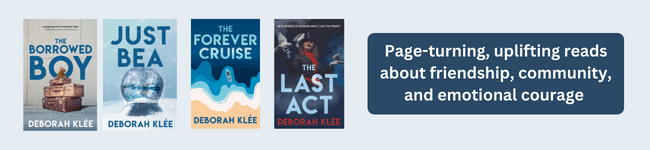

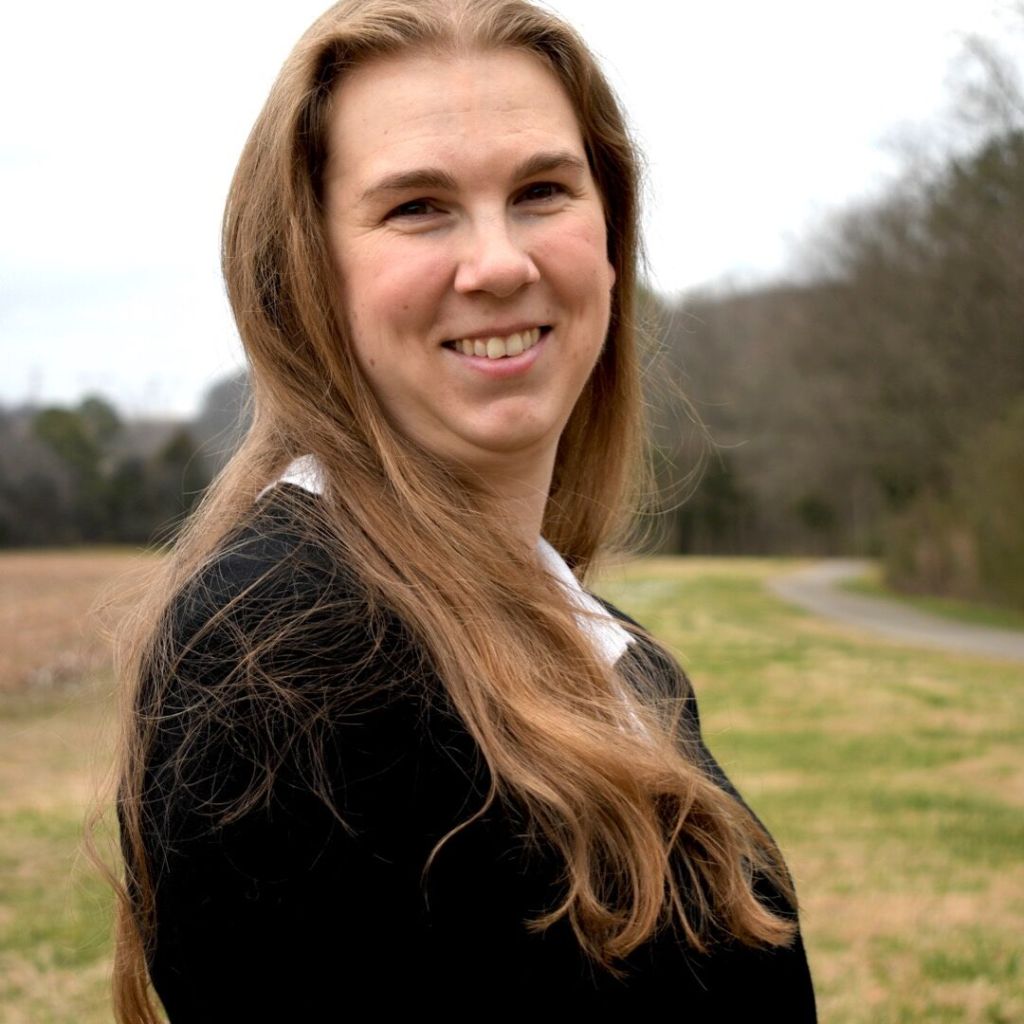
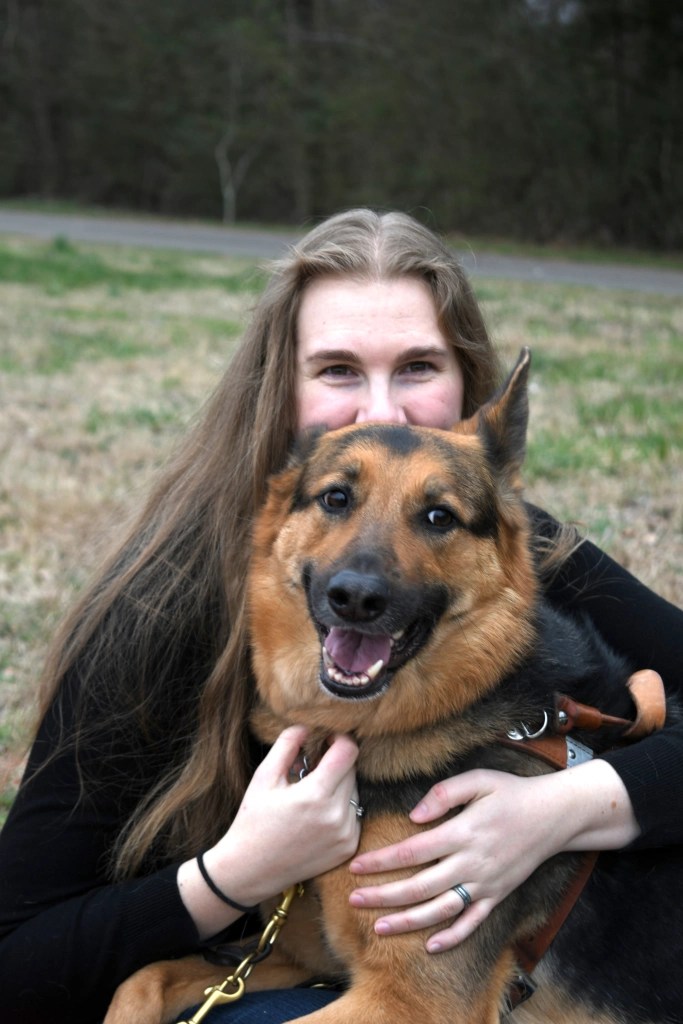
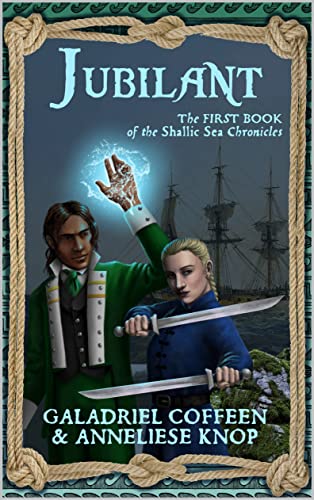
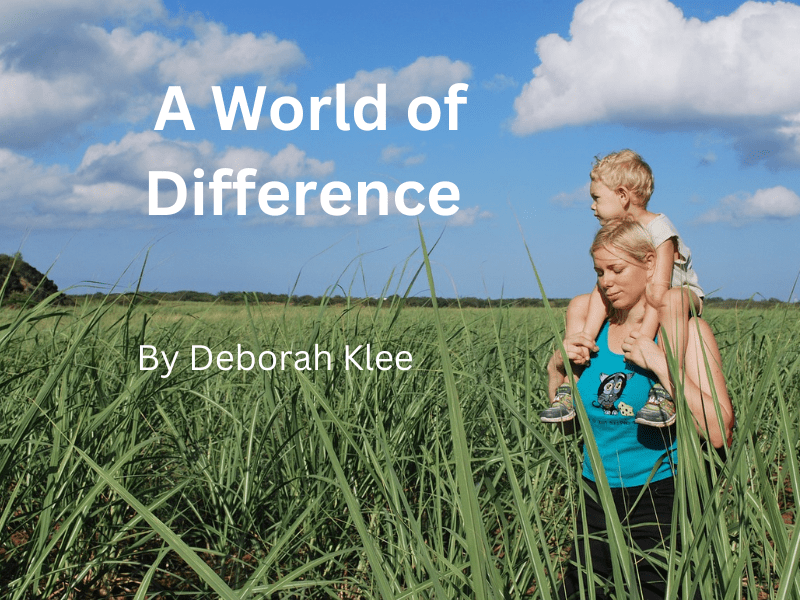
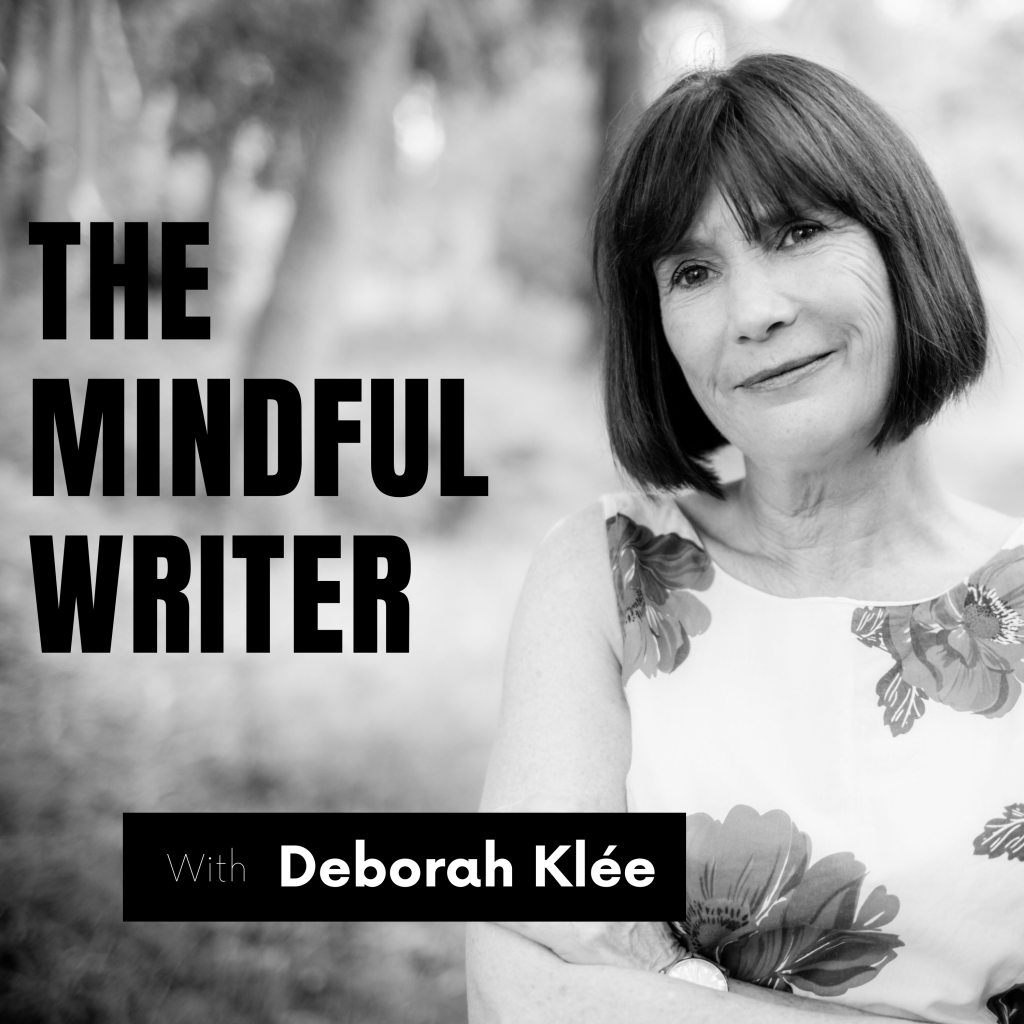




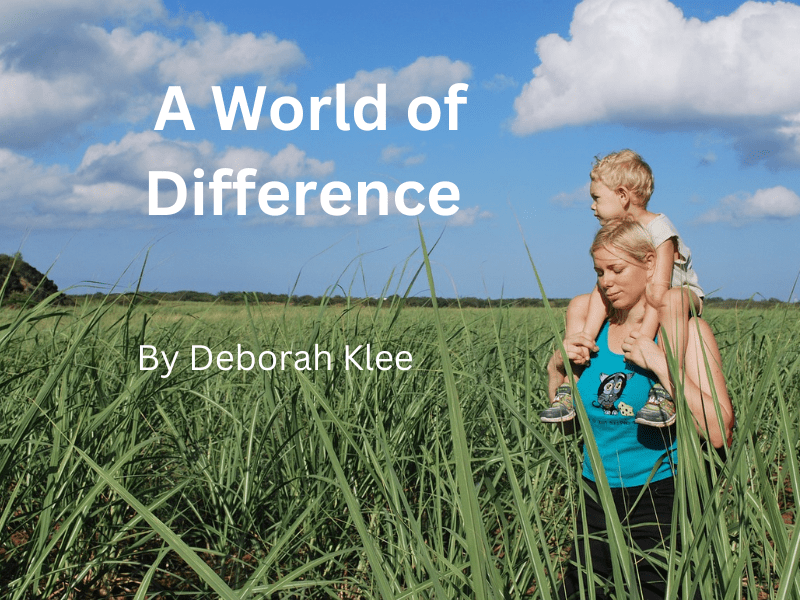

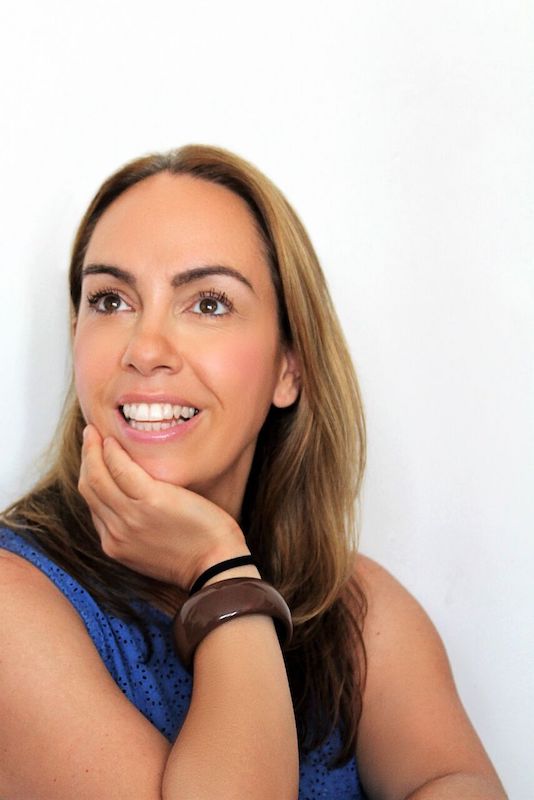
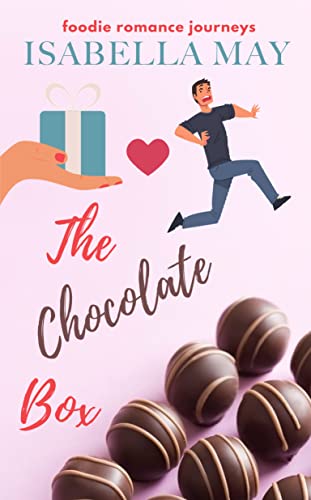


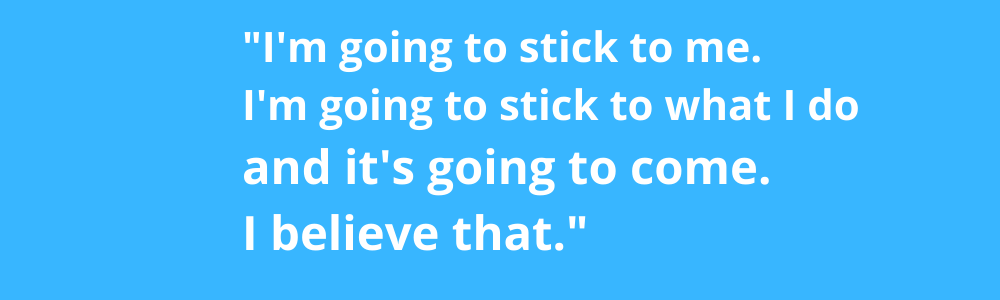
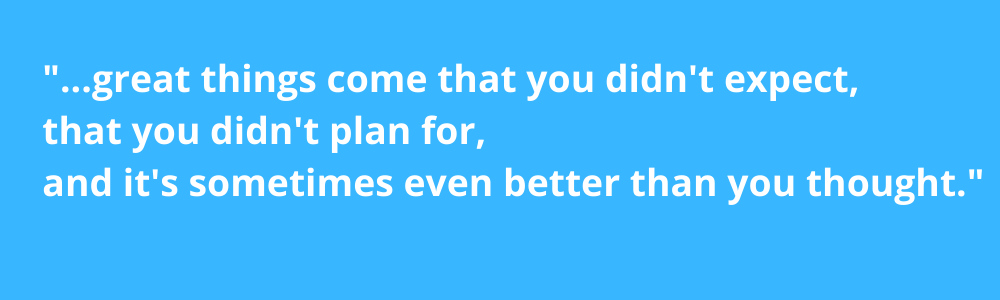
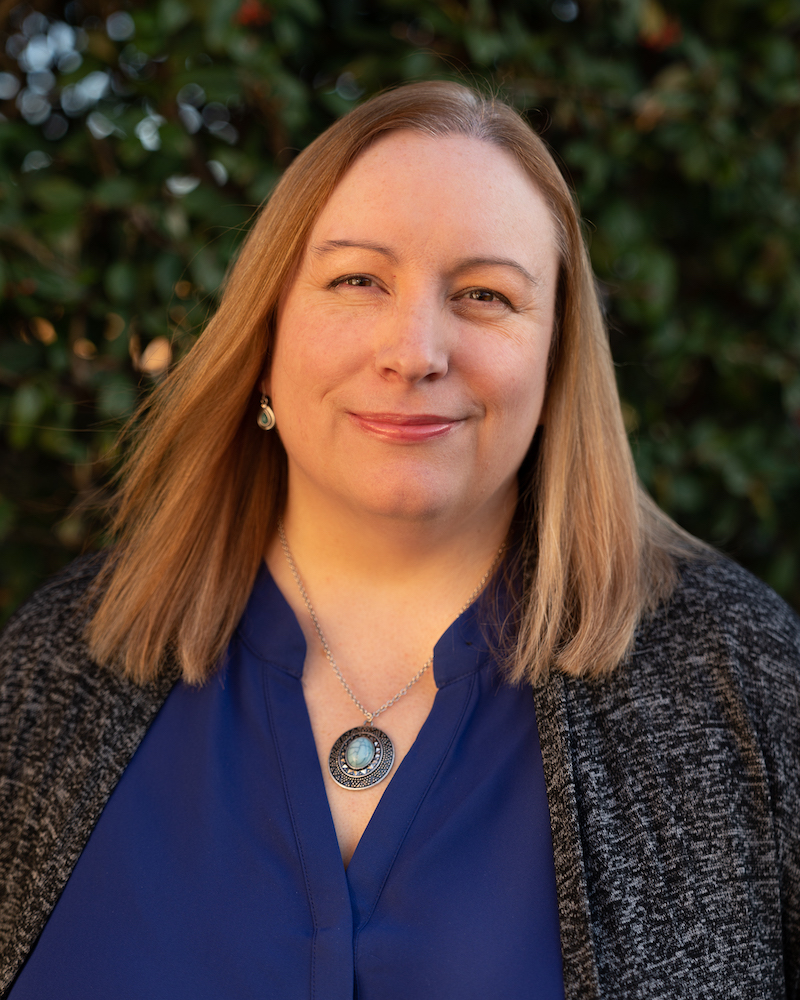








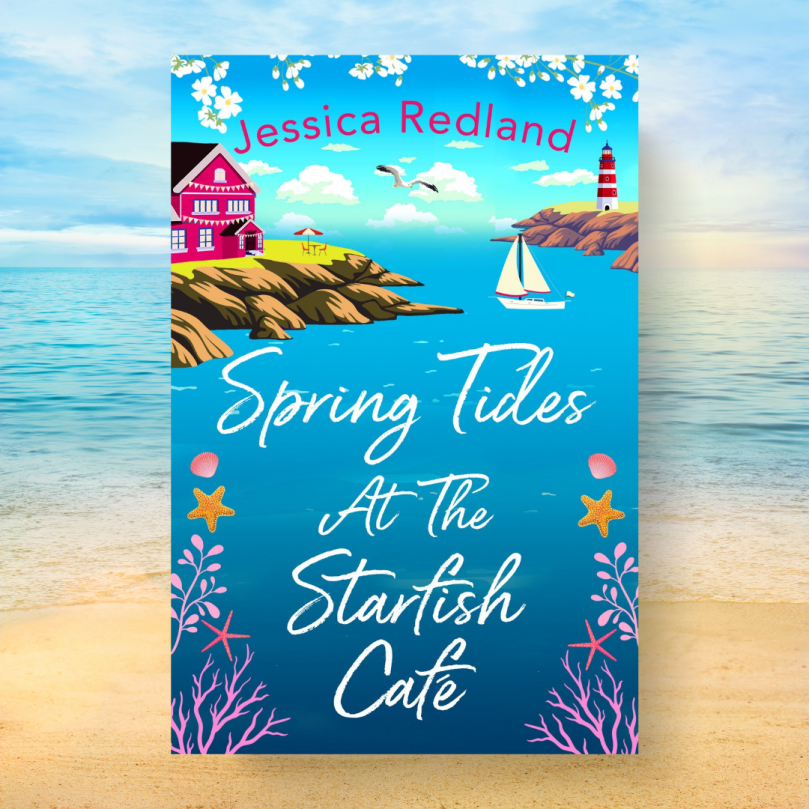



 Deborah Klee