Yesterday we were driving back from Norfolk, where we had enjoyed a few days’ stay at a favourite caravan park. Husband at the wheel, me and Sat Nav. riding shot gun keeping an eye on the road with helpful directions.
Sat Nav: ‘At the roundabout, take the first exit.’
Me confirming: ‘You turn left at the roundabout.’
Husband: ‘No. That’s wrong. I’m going to ignore her.’
We go around the roundabout, taking the 3rd turnoff and head in the opposite direction.
‘Rerouting.’
The Sat Nav tells us to do an about turn at the next roundabout. Fifteen minutes added to the journey. My husband reluctantly complies, but he is mentally kicking and screaming – a toddler being told, ‘No. We are not going where you want to go.’
As a parent, we know what’s best for our child. We know that the direction we are taking them in is exactly what they need – a nap maybe, or a treat they are not yet aware of.
The Sat Nav was right. It was taking us home by the quickest and safest route.
As creatives, we often experience the anguish of being told No. That is not the route you are going to take.
I am a great planner – a control freak. I’ve always been motivated and driven, working towards my goals with commitment and determination. But we cannot control where and how the products of our creativity will be received. Maybe you have a novel out on submission as you try to secure a publishing contract, or you are querying agents looking for representation. Maybe, like me, you think this is the one – your best work, bound for success. You imagine what that success looks like. You can already feel the gratitude, the uplifting feeling that at last you have arrived. Your foot is on the pedal as you anticipate the journey ahead. But No. The way ahead is barred.
When doors close; when the route we were so sure of leads to a dead end, it feels as though the world is against us. Like my husband, convinced he knows better than the Sat Nav, we believe the Universe is wrong.
If we step back mentally and imagine we are the wise parent and not the screaming toddler, maybe we can self soothe with the belief that everything really is working out for us even though we cannot understand or see the bigger picture – right now. Trust that in time, all will become clear.
I am learning, and perhaps that is why I have to experience frustration; a relinquishing of my perceived control – in truth, we control very little of what will be. We just have to listen to the Sat Nav and trust it is the right road.
Until next time, one dear one… take care of your beautiful self and trust the journey.
In this tenth episode, season two of The Mindful Writer, Gail Aldwin, inspires us with two of her favourite quotes and we explore together what they mean to us on this writing journey.
Before I introduce you to Gail, a quick update on my writing journey. It has been a few weeks since the last episode of The Mindful Writer. I took a break as I went on a Transatlantic cruise, discovering the Caribbean and visiting some favourite ports in Europe. It was a wonderful adventure. I returned relaxed — my creative well brimming over.
It’s been hard resuming the work pace I practised before my holiday. The Last Act comes out on 1st August, and there is a lot for me to do preparing for the launch. I have also had a month away from social media, which has had an inevitable impact on the sale of my books. I fluctuate between a sense of calm, with gratitude for the restorative power of a long holiday and self-recrimination, escalating to panic, for the work I have neglected whilst enjoying a rest.
Finding the right balance between productivity and relaxation is always a challenge. This week, I bought Joanna Penn’s 3 books: The Successful Author Mindset,The Healthy Writer, and The Relaxed Author. I am hoping that they will keep me grounded before I lose the benefits of my wonderful restorative holiday.
The right words from a friend or mentor, a quote from a motivational speaker, or business guru can work wonders. And this just happens to be the topic of our chat this week, so let me introduce you to my guest.
Gail Aldwin is a novelist, poet, and scriptwriter. Her debut, The String Games, was a finalist in The People’s Book Prize and the Dorchester Literary Festival Writing Prize 2020.
Prior to the pandemic, Gail volunteered in Bidibidi, Uganda. The 2nd largest refugee settlement in the world.
Deborah: Hello Gail. I’m delighted to meet you almost in person after connecting with you on social media where you are very active in supporting other writers.
You shared two excellent quotes with me which I would like to explore. Let’s start with the first:
‘No Matter how much we rally against it, progress is not linear. All I believe now is consistency. If you keep doing something, you will get where you’re trying to go. There is no destination. Instead, arrival is simply the act of showing up itself.’ Anna Codrea Rado.
What does this mean to you, and how have you experienced this learning in your journey as a writer?
Gail: There’s a lot to breakdown in this quote. First,
Progress is not linear. Writing a novel is circular, as you pick up ideas along the way.
I think my writing process is more like a maze. It can sometimes be a meandering journey with some dead-ends and double-backs. It takes persistence to get to the heart of the story.
I think any writing journey must bring you joy, or there is no point to it. All humans need a creative outlet, but it may not be writing.
Consistency is also important, but within that, being prepared to take risks. One of my mantras is:
If you always do what you’ve always done, you’ll always get what you’ve always got.
So, in writing, don’t be afraid to experiment and try something new. I think that is also where you can find joy. Mastering something new.
Deborah: Would you apply that to writing different genres or do you think authors should stick to writing what their readers enjoy?
Gail: That is a good question. The publishing industry tells us this, but I write what I want to write because having that freedom is important to me. Not everything has to be the size of a novel. Short stories and poetry can allow writers to try different things.
Deborah: I told Gail about my recent experience when I joined a slimming club – how despite my initial frustration at only losing 0.5 to 1 pound a week I learnt, having patience, faith in the process, and showing up each week, that those small weight losses added up and before long I achieved my target weight.
Book marketing also requires patience and persistence. It’s good to review what does and doesn’t work, but important not to give up too quickly. Results take time and persistence.
Gail: When I write a book, I don’t know how long it will take to tell that story.
Deborah:
We all want instant gratification. But often it is about being slow and steady.
Gail: Writing a novel takes a lot of time and persistence. It’s useful to have quick wins running alongside it with shorter projects.
The quote says: There is no destination. I’m not sure I entirely agree with that, as I like those smaller goals along the way as they sustain you.
I got this quote from Writers Hour (London Salon Writers’ Hour). It is 8am GMT every day for the UK but other Writers’ Hours in other time zones.
Deborah: I love Julia Cameron’s words of wisdom. Her books on creativity have got me through a few emotional struggles as a writer.
‘Wherever you are is always the right place. There is never a need to fix anything, to hitch up the bootstraps of the soul and start at some higher place. Start right where you are.’ Julia Cameron
Why do you think we torture ourselves as creatives, believing that we are failing, that we are not where we ought to be in our journey?
Gail: Torture is a strong word! We can get ourselves into a muddle. Believing any place is a good place to start is empowering. I’m in a good place with my writing right now. My third novel, The Secret Life of Carolyn Russell, is due to be published by Bloodhound Books in July and my work in progress is, I believe, my best work yet. So, my self-belief is high right now, unlike last year when I was sending out query letters to agents.
Submitting to agents and/or publishers is a necessary part of the process when publishing a book. By using feedback from rejections to improve your submission package, you can make this a more positive experience. Believing that you are improving, and things are getting better, is what you need to sustain you.
Deborah: the words in that quote that ring true for me are: starting from where you are now. I am very focused and ambitious, always looking ahead. I have learnt through meditation and reflection to observe where I am on my journey and the current learning of that situation.
When our sights are on the future, we miss important lessons in the present.
Gail: In my early days as a writer, I suffered from envy. I did not understand that I first had to learn the craft of writing and it is a long apprenticeship to become a published writer.
I changed my mindset from: Why not me? to: If others can do it, so can I.
Being a cheerleader for other writers, sharing opportunities, and celebrating their success are other ways of overcoming feelings of envy.
Deborah:
Comparison is the thief of all joy.
Wherever you are on your journey, it is unique to you.
Gail: I agree with you.
Deborah: That is what I mean when I say writers can feel tortured. We punish ourselves, throwing up our hands in despair: Why can’t I sell x number of books? Why can’t I get thousands of reviews?
If there is anything we can do through the Mindful Writer to help writers manage that angst, achieving a quiet and calm mind, then my work here is done.
It is so hard for writers trying to get an agent or publisher, my heart goes out to them when I read social media posts of hope and then despair.
Gail: We are working in a very competitive industry and you have to develop a thick skin. No rejection is intended to be personal. Often, it is just not a good fit.
Deborah: I always say to people:
Don’t attach yourself to one particular outcome. Sow seeds of possibility and then wait to see where they root.
We put too much emphasis on getting an agent or a publisher instead of seeing the range of options available to us and taking back control.
Gail: I like the idea of seeds taking root. Where you find fertile ground is where you will flourish.
Deborah: And it will be the right place, at the right time. That is why you cannot compare your journey to another person’s.
You wrote a lovely blog on self-belief where you suggest we should ‘develop a sense of self, to power our writing.’ What do you mean by this? How has this helped you develop as a writer?
Gail: I asked a question on a tweet-chat, ‘Do writers need self-belief? I thought, I don’t need self-belief, just belief in my work. But others came back with a shared view that self-belief was essential to writers. So, I thought: If that’s the case, how do I get some? Simultaneously, I was researching business women for something I was writing, and I came across a business guru for entrepreneurs. A lot of her wisdom applied to me as a writer. For example:
The quality of enquiry is really important.
I’m writing a novel set on an island and I didn’t know what the theme was. About 20k words in, I realised it was about coercive control. So, by trusting the process, the solutions will come.
She also said: Tune into your desire for impact. I reflected on that and realised,
I am the only person who can write the stories I need to tell, and I am the best person to do that.
Another thing she said was: Excavate inner depths. Sometimes, as a writer, I come to a point where I do not feel safe within the story. The jeopardy is there for me as a writer, for example, do I really want to write about my characters in conflict? But it is important that I face this challenge and not turn away. So, don’t back-off.
Deborah: What are you working on now?
Gail: I am writing a novel set on an imagined African island, drawing on my experience living in Uganda to add texture and colour. It is set at a couple’s resort and the story is about three couples who are thrown together when they are all late in arriving for dinner and share a table. I love starting on a new project, exploring new characters and settings.
Deborah: I understand that novel is a WIP but The Secret Life of Carolyn Russell comes out on 3rd July. I will look forward to reading that one.
This is the last episode of The Mindful Writer Season two. There are now 20 inspiring episodes for you to enjoy.
I did have one revelation when I returned from my long holiday. Eighty percent of my social media presence is supporting other writers – which is great! But I suspect I have been hiding behind service to others as that is where I am most comfortable. So, I am stepping outside of my comfort zone to talk about my books, in person as well as social media exposure.
Having a complete break, creating space between me and my work has enabled me to get a clearer perspective. Now I just need to maintain a healthy work life balance.
I hope you find time to relax and enjoy the summer. Until we meet again, take care of your beautiful self, and trust the journey.
In this second episode (season two) of The Mindful Writer, author Gabriel Constans, tells me how being mindful and finding balance in life has enabled him to achieve his life purpose.
Before I introduce you to Gabriel, let me update you on my writing journey.
I have just returned from a writing retreat with a wonderful group of writer friends. We have been meeting as a group for nine years. Everyone in our group of nine has developed as a writer and each of us taken very different journeys. One of our group became a best-selling Times author which made us all proud.
We celebrate each other’s success whether it is finding the emotional courage to continue writing despite feelings of self-doubt, publishing a debut, or having a short story published in a magazine. I would not have survived this writing journey without the support of my writing group. It is perhaps the best advice I can give any writer – find a group of writer friends. We have critiqued one another’s work over the years learning from the critique process as well as the personal feedback. We beta read each other’s work, talk through writing problems, and are loyal cheerleaders. When one of us succeeds we all do as we are invested in one another’s journey and share the excitement.
When I celebrate the launch of my 3rd novel The Forever Cruise on the 1st December, I know that my writer friends will be there cheering me on. I honestly could not have written this book without Ellie Holmes urging me not to ditch the idea because it was too difficult and then inspiring me to create a fantastic plot, and Janet, Catherine, Peter, Ellie, and Anita, beta-reading because they helped to make the book shine.
The group was formed when one of the group moved in to the area, leaving behind another writer’s group. This founder member put out a request on a local Facebook group and an advert in the independent bookstore. The rest is history. My point is, you can make it happen. If there is not an existing writers’ group in your area start one. It could be the best thing that you do to improve as a writer and to enjoy the writing journey.
The FWG 2022 Writing retreat. Top left me and writer friend, Janet Bridger. Photos by Catherine Rendall
Now, let me introduce this week’s guest.
Gabriel Constans is the author of fiction, and non-fiction. His book A Brave Year (52 Weeks Being Mindful) draws on his lifetime practice of daily meditation.
In this episode Gabriel explains how writers can:
Find balance in life
Achieve writing goals with a calm and quiet mind
Fulfil their potential and purpose
You can spend more time with Gabriel by visiting his websites.
Deborah: Dr. Gabriel Constans has an impressive CV both as both as an author and a caregiver. His catalogue of fiction, nonfiction and short stories is too long to list here, but I will provide a link to Gabriel’s books in the show notes. Gabriel has served the community over the past few decades as a grief counsellor, a social worker, a massage therapist, a certified thought field therapist, a mental health consultant working with teams and ex-convicts on substance misuse, and as an advisor for the street children of Rwanda project. He has a doctorate in death education, a master’s in pastoral counselling, and a Bachelor of Science in Human Relations and organisational behaviour.
Wow, your achievements are breath-taking. What has driven you on this journey, Gabriel? And what have you learned along the way? I should say welcome and hello, first of all, before I throw the question at you.
Gabriel: Oh, welcome, and it’s a pleasure to be with you. And thank you for that question. I think in some ways, it’s interesting what started me on this journey was a couple things when I used to work – as far as caregiving, I worked as a nursing assistant on the cancer unit at the local hospital.
I saw a person in pastoral care, and how she interacted with people, and supported. And I decided, that’s what I wanted to be when I grew up.
So, I went back to school, and got all the degrees I needed to do it. And that’s why I about three years later, no, four or five years later, started working in pastoral care at the hospital. Before that I had already been involved with hospice for a long time. So that way, I was able to combine really a lot of what I did as a volunteer, with my work and vocation.
Deborah: Can I just ask you something there. First of all, how old were you when you saw that person working in pastoral care? And the other thing really is, do you think sometimes when we see something or hear something, it triggers something – a sense of purpose? I wonder if you could explore that with me.
Gabriel: Yes. I already had felt a sense of purpose. For other things I was involved with, such as hospice and in counselling and that I had been doing since I was about 16 in different formats. But this was the first time I saw that, and thought,
‘Oh, I can do this and have enough money to live on. And do something that is also perhaps the most helpful for other people at the same time. So, it gave me a purpose as far as my job, vocation.
The purpose as far as being with other people, and helping other people came before that. But this – when I saw Rosemary Helmer, who was the person who was in pastoral care at that time, that’s what inspired me to see it was possible to do both at the same time. I think I was about 20. See, we had one son, one daughter, one son we hadn’t adopted anybody yet. I was around 25. So, that’s what happened.
Deborah: So, where did you go from there in your life? You’ve had such an interesting life. Can you tell us a few of the milestones?
Gabriel: Well, I started actually, around that same time. I started writing again, a lot more. I hadn’t written since I did an alternative newspaper in high school years before and I started writing fiction again. That was a big turning point for me because I started realising two things, one that I enjoyed it, and that I have a lot to learn to make it better. And part of that started, in some ways, like you, when you were making up stories to a younger brother, and then to your daughter. When the children were little, I would make up stories and start just creating them as well as reading comic books but and then I realised there were stories that I wanted to start telling talking about. And I think it wasn’t. So, I started doing fiction and then after a while, I started doing a lot more nonfiction, doing profiles of people that I thought were inspiring. Getting things accepted in different newspapers, journals, and magazines in the US and around the world. Then, after some time, I started going back to writing more fiction. As the kids got older, the fiction changed.
Deborah: I was reading about one of your novels, the Buddhist’s Wife, and I wondered, do you have Buddhist beliefs yourself?
Gabriel: I do, although I don’t per se state that I’m Buddhist, because in many ways, it’s – for some people, it’s become a religion. But in other ways,
it’s essentially practising being mindful and compassionate to people, and to yourself, and finding out what works and what doesn’t.
So, there’s no – in its pure essence in Zen and Buddhism, there is no hierarchy. There is no church, or group. There are just people that are seeking what is true – what they discover what is true, in order to connect with other people.
So, I started going to a Zen monastery when I was 16. It was the only thing in the area where I grew up – a small town and a lumber mill in Northern California, that I really connected with. And it was about an hour away. So that was my first introduction to it. And actually, the first time I got married, that’s where we got married at the Zen Buddhist monastery. So, in some ways, I guess I have been a Buddhist – in quotes since then.
Deborah: How have your spiritual beliefs influenced your daily life and your life as a writer? Either / or?
Gabriel: I think primarily spiritual beliefs because through the years I went through different phases of girlfriend, a Jewish girlfriend who wanted to be Catholic, so I became Catholic. And we worked with Mother Teresa co-workers. And then at another time, I went to Quaker meetings for a long time.
I think primarily,
it’s influenced me by realising there’s something beyond myself. And that we all have a similar connection of being human.
I think those are the two primary ways it’s influenced me. I found that through different practices, by paying more attention to myself, I was able to let go of myself more. And so, in that way it has helped me to be more present and helpful with other people, as well, the more that I practice in my own life. So, in that way, spirituality, which can mean a lot of things I know to a lot of people. That’s what it means to me. A way to get out of myself and connect with others.
Deborah: It sounds simple, but it’s incredibly profound. And it’s a work in progress. I should think, for everybody.
Gabriel: Absolutely. It’s ongoing.
It’s like I’ve been meditating for over 50 years, and I feel as though I have just started.
Deborah: Really. I’m new to it then because I’ve been meditating every day for four years and it seems I’m very much on the nursery slopes compared to 50 years.
Gabriel: You have all the time to serve. The time is irrelevant in a way. Just now is now. So yes, I think the thing that meditation – actually with a lot of spiritual practices, that probably is the most difficult for me which is one reason that I learned over the years and wrote the book, A Brave Year (52 Weeks Being Mindful) to make it easier for people to do.
The thing that I forget the most is to just remember to be present, and to pay attention to what I’m thinking, feeling, and sensing with my senses.
Because it’s so easy to get caught up in what our mind is telling us. All the things we’re doing, or all the things we think we need to do, or what comes next, or what already happened. And that’s what our mind is, that’s for.
Deborah: It’s part of being human, isn’t it? Very hard. It leads me to talk more about the writers’ journey and the process for writers, because I know lots of writers and other creatives listening will really be wrestling with the wanting to control and the difficulty in letting go when they’re thinking about their work, and getting it published – getting their voice heard, getting it out there. So, what advice or help might you pass on to other creatives?
Gabriel: Probably what I learned and keep remembering is –
really be clear why it is that you are writing? What is your intention for writing?
No matter what it is, you’re writing – nonfiction, fiction, fantasy, regardless of the genre, what is your intention? Why do you want to write? Or why are you writing? I think that’s probably the most important place to start. And also come back to asking yourself that question. Because if it’s to have other people reaffirm you or to become well known, or to make money, or just to be creative – to create different worlds that take you outside of yourself. Or whether it’s journaling and writing something just about your own life and your experience as a way to take it out of your life and look at it and also to externalise it and let it be cathartic. All of those reasons are okay. Any reason as to why you are writing is okay. But if you’re doing it for some of those intentions, such as wanting to make money or being well known, or want lots of people to read what you write, or have people tell you positive things, ‘Oh, you’re such a good writer,’ or to reaffirm who you are, or to give meaning in your life, for those reasons, it can be very lonely and a long, long time. So, that’s why it’s important to look at why you’re doing it, and then doing it because you enjoy writing. And to continue doing that, regardless of the outcomes can be really life-saving as far as your energy, and your grief, and disappointment, and dealing with rejection.
Because the more secure you feel in yourself, the more okay you are with who you are and how things are in the moment. Then you don’t get as attached to the outcomes.
I still do sometimes. But it comes and goes more quickly. And it’s not so overwhelming.
I still get excited about screenplays accepted or, you know, after years of trying to get something produced. I get all excited and, you know, dance around and etcetera but the other times when three producers don’t want to look at it. One or two finally look at it and then months later say they aren’t interested – the feelings that that brings up, I’ll acknowledge them as well. Usually, sadness and disappointment. But it doesn’t last as long and doesn’t prevent me as much as it used to in the past from continuing to keep writing and keep doing it.
Deborah: I agree with you entirely. Really helpful. And hearing you say it in such a thoughtful way is really helpful. I think it’s something that people will listen to and find really calming on this journey, which can be very rough, and tumultuous? How do you self-care? Because you will have times, as we all do, when, as you say, when you have had a setback or disappointment, or just life gets in the way and it’s a bit overwhelming. How do you self-care apart from the meditation? Do you have other things that you do to keep your equilibrium?
Gabriel: Yes. I balance out the day quite a bit. And it’s easier since I work at home now with pretty much everything. It is more difficult when you’re out at a job, or working, or doing other things or with raising children. I remember those times. Even though I’m still like raising children as adults sometimes. So, it’s much more difficult but having a balance helped the most when I had a really packed day. All those things are pretty much the same things I do now. Just not as much as I do now. And what those things were, and are: doing yoga in the morning. Meditating every morning. Doing tai chi. I love being outside, and we have a small garden – I never used to be into gardening at all. And then all of a sudden one day it just became my thing. I don’t know why. So, being outside if possible.
Nature is something bigger than yourself, other kinds of living creatures being around.
You can do it in the city too, if you live in a city, if you live in London or a big city, and it’s pretty much all concrete. There are still little places you can go. You can find little parks. Just going for a walk, being out in the air and paying attention to yourself and not necessarily all of the people and things around you. I love watching movies and reading books which are all things that take me outside of myself – my own cares and worries and stress.
Deborah: Sounds like you have a similar sort of life to me. I wake up I do my yoga. I have a lovely walk by the sea. I do my meditation, and I write, and I spend time with my lovely husband. So, yes, is it’s a good life.
Gabriel: Yes, wonderful. That sounds really wonderful.
Deborah: Like you I did work hard before I retired. So, life brings different things in different seasons.
Gabriel: Yes. What was the work that you did? It was in health care, wasn’t it?
Deborah: Varied. I started off by training and then working as an occupational therapist. And then, my husband gave up work when daughter was born. She’s now 32. And he didn’t go back to work. So, I’ve been the main wage earner, which was great, because that propelled me to fulfil my potential, I guess. And I’ve always loved what I do.
So, I went into managing health services, and then into regulation. And in the latter years – the last 15 to 20 years, I lose count, I’ve had a management consultancy for health and social care. And I’ve been writing safeguarding adult reviews, independent inquiries, you know, domestic homicide reviews and chairing boards for safeguarding adults. So, I’ve been doing that in the latter years, but most of my career was working with older people. So, I did lots to do lots of work, both as a clinician and in informing government policy through national reports and things. So, my work also was very much writing before I was writing fiction, I was writing national reports, I was writing my safeguarding adult reviews. So, it was always writing, it’s just changed to writing fiction now. And I always say that now I write happy endings for people because they were never happy safeguarding reviews.
Gabriel: Yes, so many things are beyond your control. How wonderful. Thank you for the support and what you’ve done for so many people for so long to help them in different circumstances,
Deborah: And likewise, to you. I don’t know about you but I feel that it’s been a privilege and a pleasure, being able to work with people in health and social care. And I don’t know about you – you must tell me. But I feel that for so long, I’ve been listening to people who have experienced adversity, and have had to cope with incredible challenges in their lives. Perhaps feeling on the outskirts of society, and unheard. I’ve listened to them. And my paid job was making sure those voices were heard, and fighting for them, really. So now that I write fiction, those voices still kind of play out in my head. These characters come into my books, which are almost like the ghosts of the voices from my health and social care career. I don’t know whether you find that you carry a lot of that with you still in your work?
Gabriel: I do and actually especially with hospice because I went into homes and people’s families, as a social worker and bereavement counsellor for many years, and in all kinds of situations. A lot of those stories, and people have been reflected, not the same names, I changed the situations and stuff. But they had a big impact on me, and influenced how I write characters, as far as fiction. And then of course, with a lot of nonfiction I wrote. A lot of that is about death and dying, and trauma, and resilience, and how to live your life without – so obviously, those are drawn a lot from those experiences as well. But it has come out in fiction as well, in different ways. I think I learned a lot about, about people. And the variety of ways, the endless variety of ways, of how we comprehend and how we act. And what happens in our lives, and the beauty of how different people are. And yet also how similar in some ways so that we can all relate to a character. Even if it’s a fantasy that takes place somewhere zillion times in the future. I try to write fantasy. There are still certain characteristics about it that we can identify with.
Deborah: So why do you write? You were saying we should consider our purpose for writing? What is it that makes you feel you need to write?
Gabriel: For nonfiction, when I started writing a lot of nonfiction articles and books, there was very little about death and dying available to people. And it was still – it still is, but even more so – something people didn’t talk about or deal with grief and loss. It was the same with birth and midwives having it back in the home (home births). You’ve had it in the home a lot longer in UK, but up until the 70s it was still illegal in the US because the medical community pretty much hijacked it and said it was a whole technical thing that had to be done in hospitals. So, with hospice, and with people dying, it was very similar having it be in the home, as opposed to in the hospital. So, when I first started writing, I wanted to make it more available to people, what a natural thing grief and loss is. And reaction, and the differences between just grief and normal reaction to loss and complicated grief and how to get support.
So, I think for a lot of nonfiction when I first started writing, it was to help support people, and inform people, help them make a difference. And with fiction, I always came up with a story, with ideas for things. And stories that I hadn’t seen somebody else do exactly the same way. Even though all fictional stories are the same, in many respects. Just those little things and different combinations of stories or characters, I just felt compelled to write about. Actually, the first fiction book – this may sound weird, being a male,
I wanted to empower women’s voices in characters of women who have never been talked about – hardly ever in fiction, let alone nonfiction, for their experience to be available to people, or what I imagined their experience might have been.
So those are some of the primary reasons I think that I still write fiction.
Deborah: I’m sure that your stories are helping people in the same way as your work and caregiving did.
Gabriel: I don’t know if it is or not. It’s something that I love doing.
If it makes people laugh, or something touches them and gives them a break from other things going on, or something that was a bad they identify with. That’s wonderful.
Deborah: It’s a great thing as a writer, when you get feedback from readers that you’ve touched a chord and something’s meant something to them. I think that gives writers great joy, doesn’t it?
Gabriel: For sure.
Deborah: Well, you’ve shared many words of wisdom with us, is there a parting message you’d like to share?
Gabriel: A message I think that is probably the most vital is:
If you are clear why you write and continue doing that, then be consistent about it.
People with a lot of things, especially with writing, try it for a month or two and if they don’t have what they determine success, or people don’t say it’s ‘Oh, it’s wonderful’, then they stop. I think one reason that I’ve been able to have so many things published and produced etc. was not because I’m a fantastic writer. But because I’ve been consistent and kept getting better, as the years went along. In the first years, I thought, ‘Oh, this is the best thing I’ve ever written’. Now, oh my gosh, I look back and think oh, this is horrible, how could I have thought that.
So, being open to constructive criticism, getting somebody who’s willing to be really honest with what you write, I think makes a huge difference.
And then being open to changing things completely from how you thought they might go. And keep working on things.
Deborah: Have you taken any of your early works down of have you left them out there?
Gabriel: I haven’t taken any of them down but I think some of them aren’t available anymore, because magazines don’t exist. Some of the publishers of the players I first wrote, I think they don’t exist anymore.
Deborah: Thank you very much Gabriel. I really enjoyed meeting and talking to you. I wish you continued success.
Gabriel: Thank you so much. I really appreciate you taking the time and having this conversation. I hope it is as enjoyable to you as it has been to me.
Great words of wisdom from Gabriel. Why do you write? I write because it brings me joy. Of course, I love getting feedback from a reader that they have enjoyed a story. Entertaining a person, triggering emotions, or memories is a wonderful accomplishment. Connecting with readers through the written word is why I write.
It has taken a couple of years and a lot of hard work finding my readers but now, with my third book about to be published, I am reaping the rewards. I have found my readership and I write with them in mind. It may only be a few hundred people today but I value each one of them and I know that my tribe of readers will continue to grow. Be patient and consistent writer friends. And above all find joy in writing.
So until next time. Look after your beautiful self and trust the journey.
In this seventh episode of The Mindful Writer, I chat with Ellen Jayne, about the challenge some writers experience in finding time to write and how she learnt to overcome writer’s block.
Before I introduce you, let me update you on my writing journey. I have just returned from a week’s holiday in Norfolk where we stayed in a woodland retreat. The weather was perfect, warm, but surrounded by trees we had plenty of shade. I sat on the porch of our lodge reading and planning my next novel. Wrestling an idea into a cohesive plot can be frustrating until it all comes together and then joy.
I am still at the stage of feeling frustrated. I have to remind myself that this is part of the process. I had several false starts to The Forever Cruise and was on the verge of giving up on the idea altogether. Fortunately, a writer friend listened to my fragmented thoughts over a leisurely lunch last summer. After talking the story through with her I returned home and scribbled down the outline in 35 chapters – a line for each. Sometimes you just need to talk it out. Another writer friend who works in computer programming calls this rubber ducking. I much preferred talking to my warm, and generous friend than a rubber duck but apparently, that can work too. Evidently time for another lunch.
We all experience vexation at some point in the writing process, whether it is finding an idea that excites us, plotting and planning, feeling stuck midway, or that chapter that just won’t flow. This is the topic of our conversation this week as Ellen Jayne shares her experience. So, let me introduce you.
In this chat with Ellen Jayne, poet and blogger, we share:
Deborah: I’m delighted to welcome Ellen Jayne to the mindful writer podcast, because I have been following a blog Pointless Overthinking of which Ellen is the co- CEO. It’s an excellent blog, and I shall put a link in the notes so you too, can read it. It’s a community of thinkers and writers about understanding the world we live in. It’s a really inspiring blog, and it’s got over 27,000 subscribers. Ellen is also a poet, and you can find her poems on Poems and Prose blog as well. So, lots to share with us. I am delighted to welcome you, Ellen.
Ellen: Thank you for having me.
Deborah: So, my first question is, how did you come to be part of Pointless Overthinking? And tell us a bit more about it?
Ellen: Yeah, sure. So, I came to be part of Pointless Overthinking at a time, when I wanted to start a new chapter in my life. I wanted to use my free time for more fulfilling purposes, rather than just browsing through social media. So, at this point, I had a blog for a few years prior; I started it when I was studying abroad in London, and then kept it when I moved to Spain then and Italy. I had just moved back from Italy. And I’m wanting to prioritise things that were going to help me achieve my next big goals in life. And part of that was making more meaningful interactions on my blog.
So actually, the first day of this practice, I commented on my now co CEOs, posts, and he answered something like, ‘Thank you for your response, I can see that you’re a very critical thinker by nature, and we’re looking for more writers. So if you’re interested in joining our team, please feel free to email me.’ So, I was. I guess I’ll just explain a bit, when I say more of a meaningful interaction, I mean, something that is more than just ‘oh, great job on this post. I really liked what you wrote, but really taking the time to get my thoughts out there and give some great feedback and just more connections like that. I was really excited to find a connection in the first day that I started this practice. So, from there, I sent in three articles that I wanted to be posted on our blog of Pointless Overthinking. And if the readership took well to them, then I would be able to join the team. So thankfully, our readers were very welcoming to me. I sent over three articles that were called, I’ve studied abroad three times, and I’ve learned nothing. And then also American students abroad: Culturally savvy or road to tragedy? and then The unattainable open mind. So, yes, the readership took very well to them, and I joined the team got my own credentials, and the rest is history.
So, I’ve been co-managing the blog with my colleague, Troy Hedrick, and we have a team of 13 talented writers. A lot of us live lives as professors, pilots, playwrights, life coaches, and we come from all over the world, including Hong Kong, Kenya, Turkey, and the list goes on. So really grateful to be a writer alongside such inspirational and intelligent, open-minded people. We have meetings a couple of times a year. And it’s just great to have gotten to know them. And we’re all truly here to connect with our readers and make this world a little bit less of a lonely place.
Deborah: Absolutely inspiring. It’s an amazing project, I was so pleased to have discovered it, as you say, the team of writers are excellent. And they’re all very different in their approaches.
Ellen: A lot of us have different topics and philosophy, and different life lessons. Those seem to be pretty heavy topics on our blog. But I know the main thing that we all love is being able to connect with our readers. I have quite literally been in tears many times, just from some of the comments from my readers, and it really is fulfilling to me and helps me feel like I’m working towards my purpose here in this life. And I’ve just been so grateful to have been a part of it.
Deborah: Fantastic. The blogs that I read that have been by you are very much about the about writing practice, you wrote one on, There’s no such thing as writer’s block, which is something that I know listeners, fellow writers will identify with. Some people experience it but you say, There’s no such thing. Can you explain a bit about that blog? And why you say there’s no such thing?
Ellen: Yeah, sure. So, I guess a few months ago, I would have disagreed with the title of the post, I thought I suffered pretty bad, or a lot, from writers’ block, like many others, I’m sure can relate. But after reading Seth Godin book it’s called The Practice: Shipping Creative Work, it really changed my perspective. So, writer’s block is something that I’ve personally described as the metaphysical Muse that causes us to create out of the blue. It’s a fantastic feeling. It’s when you start creating, and you keep on creating, start writing, you don’t stop writing right until midnight until you’re low on sleep for the next day. But it’s worth it because you are full of words and ideas. But unfortunately, those involuntary instances of inspiration have been far too few to be a professional writer. So historically, I have put off writing until I’m in the right mindset, until I have an evening with no plans, until I finished everything I needed for the day. And especially until I feel like I have an idea that’s good enough. So, you can see the dilemma. professional writers can’t wait all that time to be inspired, you have to get work out and you have to create. You can’t always wait for the Muse, you don’t have the time.
So, something that I’ve practised is that I write every single day, no matter what – for the past four years. It’s really been part of my subconscious. And it’s not necessarily that I’m sitting there and busting out articles, full articles or full poems, but I am always writing different ideas that I have throughout the day. Sometimes I’ll hear a different word, either in conversation or from a book I’ve read and I’ll just write that word down, because I feel some sort of inspiration from that one single word. So, I’ll jot it down in my notes, and either on my phone or on my laptop, and then I’ll come back to it at a later time. I have a 30-page working document of poetry lines on my laptop. And I also have just notes, and notes on my mobile phone.
Another routine that I have, that I try to do weekly – I am fortunate enough to have a great environment here in Salt Lake City, Utah. I have the mountains, and nature has always been very inspiring for me. It’s inspired the movement of romanticism from the poet’s Wordsworth and Keating, back in northern England, which I’m sure you’re aware of in the Lake District. They were all very inspired by nature. And I feel the same inspiration from nature. So, one of the things I really love to do is go on a hike, a solo hike by myself, and I’ll take a good book and my journal up there as well. So, I’ll start by reading and get some inspiration. And then I’ll go into writing and I always feel like I have the best ideas up there. The best words and lines of poetry, and ideas for articles, and for my novel, come to fruition while I’m sitting up there all alone surrounded by so much beauty.
Deborah: I didn’t know that you also wrote a novel, – you’re writing a novel.
Ellen: Yes, it’s just been in the background for a few years, but my priority is my poetry collection, and then the articles on my blog. So that will be on the backburner for now.
Deborah: Excellent. I agree with you about getting out into nature to help stimulate creativity. I live by the sea, and I go for a walk by the sea pretty much every day that, like you, are where I get lots of my inspiration. I think when you’re calm and you’re relaxed, that’s when the ideas come. Stephen King says ‘the boys in the basement doing their work’ – working through your plots and ideas, even when you’re not aware of it. And when you’re relaxing, they come to the fore.
Ellen: Exactly. I think that’s why so many people love nature. And also, you get so many ideas when you’re able to relax and not think about the next thing that you have to do during the day.
Deborah: I too try and write every day. When I’m writing a novel, I have to write every day to keep myself in the plot. And I’m so eaten up with telling the story I have to write every day for myself. I can’t not write. But you wrote another blog about Should you force yourself to write? So, let me ask you about that. Do you think there are times when we should break from writing? Or should we make ourselves sit down every day regardless?
Ellen: I think that is a great question. And I think the word that I have an issue within that question is forcing yourself. I don’t think that you should ever force yourself to write because I think more so the most important part is to have a healthy relationship with writing. But I do think it’s very important to create on a scheduled basis, and if you can to write every day. So, if I had to answer I would say No, you shouldn’t force yourself to write but you should write every day. Forcing yourself to write seems a bit too draconian for me. And you need to have good writing habits to be a writer. I think you should make it a daily habit. And maybe if it’s not the next thing you do, maybe take some time and decompress, do something that refills your cup. For example, you can do a monkey mind journal where you just write whatever’s on your mind, then maybe some ideas will come to fruition in what you are actually looking to write about. But I would like to share a quote from one of my favourite writers about this topic. He’s actually a poet from Portugal and South Africa. So, he says,
We may think the book that we will write will be bad. But even worse will be the one we put off writing. At least the book that has been written exists.
Fernando Pessoa.
Deborah: Absolutely. That’s a good one. I always say when you’re writing the first draft, it’s just you telling yourself the story. You just need to get your story down. And writing is all about rewriting anyway. But what would you say to listeners who are struggling to find the time to write perhaps they’ve got a story they want to write, they want to be a writer, but they think ‘I haven’t got the time’ – they’ve got a young family, they’re working full time? They just can’t find it. They’re not seeing it as a priority. How do you find the time when you’ve got a very busy life with lots of demands on you?
Ellen: Yeah, that is a great question. If you have a busy life, I think one of the main things is finding some free time to write and trying to make it a daily habit, whether that’s sitting down for longer chunks of time and just mapping out your story and where you want to go. And then maybe for five minutes a day, you can just touch on it and revise it a little more and more each day. But I think it’s important to have that writer’s mind and be able to work on it each day and make it a priority because it is something that’s important to you, and it is important for you to get your story out there.
Deborah: Absolutely. I think, especially – and this sounds a bit of a sexist thing -but I think especially with women, because many of us are carers, whether we’re caring for older parents or for children, babies. We often put everyone else’s needs before our own.
I’ve spoken to women who’ve said, ‘I don’t think my husband would like it if I disappeared to write.’ Or ‘My family would think, you know, I’d feel selfish if I shut the door and ignored them for a time to write.’ And I think you’re absolutely right. If you’ve got it in your heart, something you want to do, you should be true to yourself, and you should find time and you should honour your wish and your dream and make that time. You will be a better person, a better family member, a better wife, a better mother. You’ll be able to care and love those around you better when you’ve loved yourself and honoured what’s in your heart – to fulfil that wish.
But actually, finding the time you need, not everybody has the luxury of having an hour or two to set aside. But I’ve had times when it has been a challenge. My father died last year, he had dementia, but I was the main carer for him. And I was working and I was writing. I went through a period where I was so stretched with all the things I was doing that I found little moments to write. So instead of having a two-hour slot, I would have 30 minutes here, 20 minutes there, it would be anywhere and everywhere. I would find a little slot to write. And it’s amazing with the 20 minutes here and 20 minutes there, how much that writing adds up to over the course of a week. But I think the first thing is recognising – if this is important to you – to do it. You know, to self-care and to follow that through. You can always find a bit of time.
Ellen: I think that’s a brilliant idea. It’s definitely something I wanted to bring up as well, because it’s very true, we don’t have two hours every day. I’d be lucky if I found two hours on the weekend days. But I think you have a brilliant point with finding the time and the 20 minutes here and maybe 15 minutes there. I think one of the struggles with that is you might have a hard time getting into the zone of writing into the, you know, mindset of writing. Because writing has always seemed to me to be a bit different than my logical practical, day to day self. I kind of like to be more relaxed. And one of the things that has helped me get into the writing zone faster, to make more use of those 15 or 20 minutes, is doing some grounding practices. They can be meditative practices, or anything that really helps you be in the moment. Working with your senses is something that always helps ground you. And for example, something that pertains a little bit more to writing for me is I will sit in the moment, and I’ll think of five different adjectives that describe the environment around me. And they can be anything. I’m not looking for brilliant words, or great adjectives. I’m just looking for any words that come to mind, no judgement. And I’ll just jot those down. I’ll be more in tune with the environment around me. Sometimes I’ll describe all the unique colours that I see, I’ll go through the rainbow of colours. So, for example, I’ll see a red glass over there, or an orange towel over there. And that is something that helps me feel grounded sooner, and then I can start writing sooner so I can make more use of that time.
Deborah: Excellent. It’s letting all of that noise in your head – all the must do’s, should do’s out – so, that you can then go into your inner self, which is where the writing comes from.
Ellen: Exactly.
Deborah: I heard some good advice; I’ve forgotten where from but it’s stuck with me. So, I’ll share it anyway. And that was when you’re sitting at the computer, perhaps you’re writing something and you just cannot find the right words to say, it just doesn’t feel right. The advice I was given was, ‘That’s because you don’t actually know what you want to write yet.’ You think you do. You go to your computer to write a blog or you’re writing a chapter and it’s just not coming out, right? You haven’t done enough reflection to really understand and get underneath what it is you really want to say. So, stepping back from the physical writing to really tune in and understand and explore what you want to say is another way – then to come back to your keyboard and flow through.
Ellen: Yes, I love that. I think that’s a great idea to just pause for a moment and think about what you really want to say maybe map it out or try to understand the final point of where you want to go – the final destination.
In terms of different tools that could be used – because I have many times been sitting at my laptop and just been stumped for words. But in terms of other tools that I use that have been very helpful for me, is always having a thesaurus open, a dictionary as well. I have Rhyme Zone, which is a website that gives you all of the different words that rhyme with a certain word. And then I also have a random word generator site open as well. And those four sites really help me open up my mind to different words, and use a greater array of vocabulary in my writing as well. And I think it helps me a lot sometimes because I’m really looking for that certain word, especially with poetry. You are limited to how many words you can use. It’s not like prose. And when I find that one – that one word that is, that just fits just right, it’s almost a euphoric feeling. And I feel extremely satisfied when I find it. And actually, that is the tagline of my poetry blog. So, the finest part about poetry is the accentuated emphasis of the individual word, the epitome of less is more.
Deborah: Beautiful.
Ellen: Thank you.
Deborah: I’ll just give a plug for another thesaurus source. I have this source open on my computer when I write – and there’s a book. The Emotional Thesaurus and The Conflict Thesaurus, both by Becca Puglisi and Angela Ackerman.
And it means that if you were looking at anger, anxiety, affection, all the different feelings, it has all the different ways it might be described, what the physical sensations will be, what the facial expression might be. So, you don’t always have ‘she sighed,’ or ‘he shrugged his shoulders.’ We all have our favourites for describing an emotion and this gives alternative suggestions.
Ellen: Wow, that’s genius. I would love to read that.
Deborah: I will put it in the show notes. But if you Google the Emotional Thesaurus or go on Amazon, you’ll find it. Yes, it’s very good.
Ellen: That’s brilliant. I’ll look that up. Many times, I am describing a character or somebody in one of my poems, and I feel like that would be very helpful. So, thank you.
Deborah: We all have our favourite words; we keep on using the same expressions.
Ellen: Exactly. That’s why sometimes – like throughout the day, if I hear a different word that describes somebody, or in a book that I’m reading, if it’s a great character trait that I’ve seen described, that I haven’t used before, I’ll jot it down. And I think that’s another important topic to stress as well. When I started writing, I was very scared, almost I would say, to sound like a different author – sound like another author, to not sound like myself. And to seem like I was copying another writer’s style. But the truth of it is we are all an amalgamation of our experience in the environment around us and of other artists around us. There’s a book called Steal Like an Artistby Austin Kleon. And I think that topic is also very near to my heart, because we are all just the impact of the influences of the environment around us. So, if we can kind of let go of the judgement of being grouped like somebody else, I feel like we can really bloom and blossom into our own author’s voice that we want to hear.
Deborah: And trust it. Trust your voice and the story you have to tell. Because sometimes we’re so busy criticising – all that noise in our heads. You try to be different, then you start criticising yourself, ‘I’m not fitting in enough.’ ‘I’m not enough like this writer or that writer.’ But we are, as you say, we are all unique, a combination of different experiences and the things we bring from our journey. We all have our own story to tell. So, trust your story, and trust the journey.
Ellen: Exactly.
Deborah: Thank you so much, Ellen, you’ve shared some wonderful words of wisdom. I will capture these in the show notes, along with links to anything we’ve mentioned. But I’m going to finish the show by asking you to read one of your beautiful poems. So, we’ll sign off with your poem.
Ellen: Awesome thank you for having me
E.IlReference Points a poem by E.L. Jayne from her blog Poems and Prose
Lots of great tips there. To summarise:
Try and find a writing schedule/routine even if it’s 15 – 20 mins here and there.
Use grounding techniques to get into the zone faster e.g. using your senses, describing what you can see, smell, and hear.
Spend time in nature where you can relax.
Honour what is in your heart, By making time to write you will be able to love and care for those around you better as you have first taken care of yourself.
Be kind to yourself. Do not force yourself to write but develop a healthy relationship with writing finding time in a way that suits you without judgement.
My thanks to yoga instructor, Jocelyne Leach, for inspiring this week’s blog post.
The world feels as though it is full of extreme views right now. When we listen to the news, it is no wonder we feel the antagonism. In recent years, conflicting views about politics, policy, and the behaviour of world leaders, have divided families, and friends – certainly here in the UK, and from what I hear, in the USA.
We take these thoughts and feelings into our daily lives, as we absorb the negative energy. So, finding our equilibrium – a fulcrum on which to find a balance between extremes is needed now more than ever.
Creatives are prone to extremes in emotional response. It seems agents/publishers are fond of saying I/we loved … before going on to give an honest and balanced critique. It is IMHO an overused word in the publishing world – used, maybe, to manage our fragile egos.
Authors want readers to love their books and fear that they might hate one. It is always love or hate. We swing between feelings of elation and despair. Those great highs are often followed by an adrenalin dip, and/or the need for another high. That is perhaps why we feel the need to constantly check sales, reviews, or social media comments. It is an addiction to receiving positive reinforcement.
I know that I have a need for approval. For most of my life I have had a habit of ending my statements with a question – isn’t it? Don’t you? A boyfriend once pointed this out to me.
Like many new writers, it was important to me to receive validation. I have had this through the belief of my agent, feedback from editors, book reviewers, and readers. This should be enough but l find myself swinging from either end of that scale – it’s all fantastic or doom and gloom. I am trying to focus on that steadying fulcrum in the centre, to accept the reality, the ways things are – perfectly OKAY.
I know that my need for approval goes back to my childhood, wanting the approval of my parents, particularly my father. There are some painful childhood memories that I have buried but there lies the root of my need for approval. Understanding myself is the first step to letting go of that need.
There is nothing sexy or exciting about OKAY. To accept what is and be still with it will take time and patience for me. I am trying to break the habits of a lifetime. I will do this through meditation. By noticing my emotional responses with compassion and then letting them go.
Julia Cameron wrote in The Right to Write, Keep the drama on the page. Creatives love drama, but there is no need to play them out in our lives. Let’s try and find that quiet, mindful path, between extremes.
Are you feeling frustrated in your writing endeavours? A feeling that you have come up against a brick wall?
This post is about learning to let go of resistance and to relax into the flow of creation. It sounds simple but is surprisingly hard.
Frustration, disappointment, and impatience are part of this writing journey. Writers tend to be determined, and resilient. We need to be or we would have given up long ago. But sometimes we need to surrender and learn how to relax into the natural flow.
Everything in this beautiful world has been created to work in perfect harmony. I was listening to a radio programme whilst driving and was struck by a comment that the start of spring triggers a series of natural events that are interdependent. I could not make a note as I was driving but it was about the migration and breeding patterns of birds, plant growth and the production of vegetation to encourage bugs – which birds needed to feed on, etc. This is a bit vague but the message I took from this was the amazing way nature works in perfect harmony. It cannot be rushed. Neither can one thing happen ahead of the other. Everything is integrated into one wonderous, miraculous, whole. We are part of this whole and subject to the same natural rhythms and flow.
You may be wondering how this is of any help to you as you battle against the frustration of waiting to hear back from agents, or publishers, fret over a lack of inspiration, or an inability to write. For me it reinforced the need to be patient. Our path is affected by many things: events, people, circumstance, that we cannot see and may never know.
Yesterday, I randomly selected a guided meditation from YouTube. It was about letting go of resistance and relaxing into the flow. Then, by coincidence (or synchronicity) my yoga class this morning was an unscheduled Yin yoga. In Yin yoga, we hold a pose for a longer period of time than in other styles. We experience discomfort in the pose but are asked to relax our bodies rather than resisting. Gradually, the muscles stretch and lengthen.
This yoga class taught me a similar lesson to the meditation. To feel the edge of my discomfort and instead of pushing through intentionally relax – mind, and muscles. I liken this to our natural tendency to hunch shoulders and clench our teeth when we are very cold. I bravely immersed myself in a freezing plunge pool when I came out of the sauna last week. By relaxing the body instead of trying to resist the cold it was easier and my body adapted more quickly.
The poses in Yin yoga challenge us. They help us to break the habit of holding our body in a certain position and learn new ways of being. The poses lead to positive changes in our bodies.
I am trying to apply this lesson to my writing journey. Instead of wasting energy trying to change what is, I am learning to be present. To accept where I am in my journey and make the most of what I am experiencing now. For example, I am waiting to hear from a couple of agents, and a publisher, about two of my unpublished manuscripts. I am also between novels as I make final edits to one and wait for a planned research trip in July before starting the next. It is a time to be still. To enjoy what I am doing: producing The Mindful Writer podcast, supporting other writers, and enjoying new experiences to feed my imagination. Before gaining this insight, I would have been trying to hurry things along. I would have been feeling tense and frustrated at my perceived powerlessness.
When we experience discomfort, we are breaking old patterns and learning new. It is hard and requires patience. We must be kind to ourselves as we feel the edge of resistance and try to relax into the flow. It is worth practicing in our daily lives because as with all things it will get easier.
So, until next time, take care of your beautiful self and trust the journey.
I went for a run by the sea this morning. The sun was shining and the was tide out. There was even a shard of rainbow suspended between an arc of clouds. Whenever I go for a run by the sea, I get so many ideas and find clarity on some of the things that have been troubling me. It’s as though I have a conversation with my inner self or a greater power.
Anyway, on this morning’s run I was thinking about a film I watched on Netflix this week, Paycheck with Ben Affleck. It is an exciting thriller, but it also has a message: When things don’t go the way you planned and you are disappointed trust that God or the Universe has a better plan for you. Follow the signs even when you don’t know what they mean. Of course, the film makes no mention of this but I drew a parallel. If I tell you anymore, I will spoil the film for you. It’s well worth watching – very exciting.
Stories have been used for thousands of years to pass on wisdom and learning. In today’s podcast, Kamina Fitzgerald, reminds us of three stories from the Bible which have powerful messages to help us on this writing journey.
Deborah: Hello, Kamina Fitzgerald. I’m absolutely delighted to welcome you to the mindful writer podcast, because I discovered you through reading your blog posts. The School of Life Sessions. I love the way you introduce them with, The school bell has rung …
Kamina: Hello, Deborah. It’s a pleasure being on your podcast today. And the main way I start my blog is The class is now in session. And then at the end, I will say, The school bell has rung, class is dismissed.
Deborah: Excellent. And that comes from the fact that you are a teacher by profession, and currently the vice-principal of a business school?
Kamina: I’m vice principal of a middle school here in North Carolina, and I was a business teacher. So, you are correct. And so, I look at not only teaching as being – teaching the lesson, but also teaching life lessons. So, my blog is really centred around sharing those stories to motivate and inspire. And I look at it as a lesson – everything that I write.
Deborah: And you’ve also written five books about life lessons, for which I will give links in the show notes. Could you tell us a little about them?
Kamina: Okay. Well, mostly the first book I wrote was a children’s book called Bumper Stucco Village – Patience as a virtue. And I wrote that a long time ago. It has kind of a Disneyland feel of a girl who is going to be promised to someone. And she was worried about that because she wanted to marry for love and she met someone and wished she could marry that person. And at the end, she gets a chance to, so it was kind of a story. If you want to read it; it’s interesting because she thought she was going to lose out on that opportunity, but through being patient she ended up getting the desires of her heart after all.
I’ve also written inspirational stories. They didn’t have much rhyme or reason. I guess they were more about friendship, life, managing your careers, choosing your career.
I write a lot of career focused things because I used to be a workforce development person, where I tried to help students understand their career choices and what they needed to go to university to make that career happen. So, some of my things have a lot of helping you make decisions on the career front as well.
Deborah: I got so excited, which is why you paused. Because you could see that I was desperate to say something. When you were talking about the first book, the fiction book for children, you mentioned a story about how the girl had to be patient and wait. That made me think of one of the blogs that you wrote that really inspired me, which was Do not go ahead of God.
The stories in the Bible teach us lessons through stories. And that that’s very interesting that you’re using a story as well, to give a similar sort of message. Now I’m a very impatient person by nature. And I can think of several times in my life where I have gone ahead of God. I’ve jumped in being too impatient – I’ve got to make things happen. My good fortune in life has come despite me. I mean this a classic example for me. It was when I desperately wanted to be an occupational therapist when I was at school, it’s all I ever wanted to do. And when I got a letter from the clearing house saying, we suggest you seek another career – because I wasn’t studying the right subjects and didn’t have the qualifications, I thought, Right. That’s it. So, I left. I got a job in an insurance company and then eight or nine months later, I got a letter inviting me to interview for my college and I didn’t have the qualifications.
Kamina: Wow.
Deborah: I’ll let you talk in a minute! But the good result from that – a little miracle did happen for me because I went for the interview really enthusiastic and said, Oh, you know, I really, really want to become an occupational therapist. And they said, Well, if you go away and you pass these exams. Would you come back next year? And I said, Yes, I will. And something went wrong with the administration because a week later I got a letter saying, As you have now got these qualifications you can start this September.
Kamina: Oh, wow.
Deborah: And I never told them, but that was when the rules were different and I’ve been on the right path, despite me jumping in.
Kamina: Wow, that’s amazing that it ended up happening anyway, even though you tried to you know, plan it yourself. That’s the graciousness I think of God, that sometimes we have a tendency to jump ahead and he still lets us get what we want.
Deborah: Anyway. Tell me about the Bible story that you used in your blog.
Kamina: Sure. So, with the Don’t get ahead of God story, I was referring to the five promises that God gave Abraham when he was promising to, you know, make him a great nation and give them a great land of promise. And it was certain things that he promised him. And Abraham was a person of faith and he, he believed God, even if it seems as if he was delayed. But Abraham’s wife, Sarah, she, you know, wanted to help things along. Especially when it came to her being a mother, she I believe was around 99 years old when she got pregnant.
So, of course we all can think that, she could be a little worried. Okay. I’m going to be a mother of many nations, but I’m 99. So, she thought maybe she can help God along. And it caused a lot of heartache when she tried to do things herself. So, I just talked about waiting on the promises of God. Just from us reading those stories, hopefully it can encourage us to just continue to be patient and to wait. Because it’s worth the wait whenever you’ve got promises for things in your life. And sometimes, even with Sarah and doing that in spite of herself, she still was blessed with Isaac. So, you know, I think that that still happens for us today.
Deborah: Like me. I tried to sabotage, but despite me, I still got what I needed.
Kamina: Exactly. So it still happens even now. And I’ve been the same way with several different occasions where, you know, I would try to make things happen, but then when I’m praying about it and something better comes along, it makes me happy because even though what I did may not have worked, usually God can open a better door for me. So, I’ve been grateful for that. At first, you’re disappointed, but when something else better happens, you’re like, wow, I could have just waited on this instead of trying to force the other situation.
Deborah: Absolutely. I found that as well. And what has absolutely amazed me, particularly when I was about 40 years old. I was pushing myself along a career trajectory. You know, next job was chief executive and was applying for these jobs. And I thought that’s where I need to go. And I was completely stuck in that thinking that mindset, so I was disappointed and disappointed repeatedly. What ended up happening was something far better and greater than I could have imagined. That was much, much more in fitting with what I could give- it fitted me. It was the right path. And I would never have been able to imagine that in a million years it was, it was wonderful. A wonderful blessing that came my way, taking me on a different path.
I think sometimes we can get so frustrated, can’t we? We think, well, why won’t you give me what I want? Why? Because we don’t know what we don’t know.
Kamina: And sometimes, like you said, it’s amazing how another opportunity will come and it’s so perfect for you and you never imagined it. That happens a lot too. So, I think if, you know, that can happen, then maybe that’ll make you more patient. Because that has happened to me before too, where God knows you better than you know yourself. So, you can say, Why didn’t I get that job? I was trying to move up or I tried to apply forward. I’m qualified. But then another door can open that you did not perceive could open. I think that is always amazing when that happens.
Deborah: Absolutely. And timing. I mean, God’s timing, isn’t our timing. I say, God, but I’m going to say God/ the Universe, because some people have different sorts of faiths and it doesn’t matter whether you believe it’s the Universe or you believe it’s God. It is having that faith in a greater power. But the timing could be very different to what we think the timing should be.
Kamina: Very true I’ve actually been reading this in a research study I was doing about the Kairos time and that being a divine time. When I was younger, there was a pastor who wrote a book about God’s appointed time and it was talking about the Greek word Kairos. We know in chronological time, it is like, you said, In two more years I need to be here, in three more years I need to be there …. But with Kairos there is an interruption when you know, I’m looking with tunnel vision and then this certain situation happens out of the blue, and I couldn’t even imagine it happening, but it’s perfect for me, or is causing me now to have to make a decision or see things differently.
So, it’s amazing. I believe there really is a such thing as a divine time that happens that interrupts your trajectory of your goals for yourself, and then you have to decide: Am I going to keep going on the path that I have for myself, or am I going to step into this possible opportunity that I didn’t perceive happening?
Deborah: To do that, you have to be open to opportunities and different solutions. If you get really wedded to one option, This is the only way for me. You don’t see other things along your way.
Kamina: That is so true.
Deborah: There’s a message there, especially for writers who are trying to get published. Because the reason that I launched this podcast is because of the emotional turmoil that authors go through as they try to get published. It’s a rollercoaster of emotion for many writers, who are trying to get published, get turned down by agents, and they’re trying to cope with rejection, and the frustration of that. It’s knowing that sometimes you have to go through that for a reason. And one of the reasons can be that your writing hasn’t matured sufficiently for you to be able to give your best. It might be good enough. It might be better than many other writers, but it might be that if you give yourself time to grow what you gain to finally bring to fruition is much greater. And that might be where you need to start, because otherwise you do yourself a disservice. So, there’s all sorts of reasons why things might be. And we get so hung up on feeling it’s a judgment or a criticism of us and letting it affect our self-esteem, but there can be all sorts of reasons why you need to wait.
Kamina: Yes, I like that. And that’s very encouraging for you to say that because a lot of times you can think that you’re ready for something or that you are at your best when really, you’re not. And a lot of the times you won’t stretch yourself if you’re not rejected. I think growth happens a lot when you are rejected, it just depends on how you interpret it and what you do with it. So I do like what you just said, and I think that should be encouraging for, you know, most of the writers or artists or anyone who is, you know, setting goals for themselves who have been rejected to just don’t look at it like it’s a rejection. Look at it as a growth opportunity for yourself to be better. And maybe that persons rejecting you and then the next person is going to see your work and it’s going to work for them.
Deborah: It’s a bit like people waiting for the perfect partner, the younger people who want to fall in love. I think falling in love is a bit like finding an agent to represent you or a home for your book. The person is out there. You just haven’t met them yet. You might not meet the one that’s the perfect match for you because they might not be ready to meet you yet because there’s something else going on in their life.
Kamina: Exactly. They may have to have a person to break up with or something.
Deborah: Or they might be about to become an agent, but they’re not an agent yet and you’ve got to wait for them.
Kamina: Yeah. It was like, Don’t get ahead of God now or don’t get ahead of yourself. Just wait until it is all aligned, then you’ll be glad you did.
Deborah: We are all part of something bigger, everything has to be in place because it’s not just about us. It’s about the people who come into our lives and being the right time for them as well as.
Kamina: Exactly. I agree.
Deborah: Now this goes onto another one of your very inspirational posts where you talked about Jesus telling Simon to cast once again, his net into the sea. And I should get you to tell us a bit more in a moment, but it, it makes me think about when somebody says to you, Have you tried this?Have you tried that? And you think, Oh, don’t tell me that, I know better than you. But sometimes that’s what you need to do. You tell us in your own words.
Kamina: Okay. Well, with that story, I was referring to when Simon Peter had been fishing all night and all day, and he hadn’t caught anything and anyone who knows Peter, he was a professional fisher. He was a fisherman by trade. So, he knew everything that you really need to know to fish. So, when Jesus walked up to him and said, Go out further, launch yourself out into the deep. Simon Peter was really annoyed and kind of like, What do you know? You’re telling me and this is what I do. And of course, Jesus was a carpenter by trade. So, he was a little annoyed, but he said, Nevertheless, at your word, I’ll go do it. And he did it. And he had so much fish that he couldn’t contain it in the net.
So, it’s a lesson to me that we have to make sure that we make decisions not based on what we’re comfortable with, that we don’t make decisions based on our, I guess you could say study, or maybe what we know, but be open to other suggestions, especially if what you’re doing isn’t working. I think that’s the main thing. Because no matter what I do every day or my professional job, if it’s not working, I should be open to a suggestion or reflecting, Hmm. Maybe I should try something else. So, I think that was kinda my thinking was to just be mindful of, you know, for me spiritual counsel and being willing to hear other perspectives.
Deborah: And isn’t it interesting that you can get these suggestions or these little directions, the most unlikely sources and unexpected times? If you keep your mind open and you hear and you respond. It could be something that you read. It could be a stranger saying something. It could be, it could be anything.
It brings to mind when I was working as a management consultant and I had lots and lots of work, then suddenly the work dried up. I kept on going out to try and find work you know, bidding for work. It wasn’t happening. I was so frustrated. And then somebody who I had worked with in the past, who had had no contact with me for a long time sent me an email out of the blue saying, Have you seen this advert?They’re looking for a chair of a safeguarding adult board in a London council. And I thought, Well, why would I do that? I don’t think I’m qualified. I wouldn’t even think of doing that. I did. Not only did I get that job, but it then led into a ten-year career around adult safeguarding. I chaired five different boards. I wrote safeguarding adult reviews. I became an expert on it. I wrote journal articles.
It was absolutely where I was, where I needed to be. But if I hadn’t listened to that woman who happened to say to me, Have you thought about? And I sometimes think that these people are put there like little angels.
Kamina: That’s exactly what I had. What I read in my book about the Kairos moment. It was just like that. You’re looking, things aren’t really working. And then one little word or sentence or suggestion can just turn you upside down and it gets like: What? That’s nothing I’m qualified for, but like you said, you actually adhere to the Kairos moment or the divine appointed time and, and they opened up a whole other career level for you. So that’s amazing.
Deborah: Interesting. I picked out three posts, which I told you in advance. The other one was, I’ll get it right this time, Samson and Delilah.
Kamina: Okay. In that one, I’ve talked about the spirit behind Delilah. I shared a lot of her characteristic traits that I pointed out: A person who looked good on the outside; a person who was very cunning and complimentary and flattering. Just the traits of who she was and how she led Samson to finally share his secret.
It just really stood out to me. So, I just wanted to talk about those traits because I think it’s still around today that a lot of us can think of times where we have been deceived by people. We never would have seen deceiving us. It’s just something, a lesson that I think even a child or an adult can learn from just to be mindful of people in your life. When people come in, you know, come around you that you’re not deceived. It is more so a story about deception and just being, being careful about that in your life. Delilah looks good on the outside and said all the right things.
Deborah: You were saying in this story that again, and again, Samson would catch her out and see that she was trying to cut his hair but he saw only what he wanted to believe. I think it’s the way that we fool ourselves, because if we want to believe something, we ignore all of our instincts. Just as I was saying that we need to be open to hear things and see things – in the same way you can completely close off if you only see what you want to believe, can’t you? You can completely close down.
Kamina: So true. I think that, you know, I can definitely remember times where I saw what I wanted to see. And you may have a family member or a good friend that are trying to tell you, Be careful. You know, do not see this. And it’s amazing how we can trick ourselves. Even if you read my blog, you may still fall for it. So, you know, I mean, Samson was, was smart and he was anointed and, you know, he destroyed so many of the Philistines, but this one person came in his life who looked good on the outside, and he liked her so much he was willing to lose everything for her. So, I just think it’s important that we regard ourselves as well, because we all have something that we can offer the world. We have gifts and we have to be careful. Just be mindful that not everyone is your friend or means well for you.
Kamina: Other people suffer.
Deborah: Absolutely. We have special gifts. Every one of us is amazing, unique and not to give all of that away, but have self-respect and belief. You owe it to others as well as to yourself to nurture, cherish, and protect those special gifts that you have so you can use them. And when we give it all up for somebody who’s not worthy and we don’t listen then…
Deborah: Absolutely. As well as ourselves.
Kamina:So true.
Deborah: I always like to think the best of people. I always see the best in them. And I can think of examples like that because it breaks my heart to think that somebody has let me down who I’ve trusted. So, I go back to trusting them again.
Kamina: Yes because it’s a bad feeling to get to a point where you don’t trust anyone, you know, that’s a terrible thing to feel like I can’t trust anyone because I’ve been hurt. So, we usually try to see the good and isolate that bit whenever we have been hurt or deceived by someone. You know, we’re human.
Deborah: I found it so inspiring talking to you as I do your blogs, and I’m now going to be looking at your books as well, which I’ve discovered.
Kamina: Thank you, I’m inspired by you. I didn’t know, you know, your story. So, I think that you’ve inspired me as well, especially since I am still in my career and trying to work hard and eventually get to the point where I can be like you.
Deborah: Oh, thank you.
Kamina: It made me feel better to know that I need to be open to suggestions and make sure that I’m not just seeing things through one way or through having a tunnel vision about things.
The problem is, there are millions of other books out there, so why is someone going to pick yours?’
Ian Miller
Recently a fellow blogger and author Lizzie Chantree posted this quote on her Facebook page to stimulate discussion. It is perhaps one of the most common thoughts a new author or even a seasoned one has. It is what relatives and friends will tell aspiring authors. Why bother?
My brother is excited to be on the Faber Academy novel writing course. One week their tutor asked them to write down and then share their secret fears about becoming an author. All of them said similar things: I’m not good enough. It’s almost impossible to get a publishing contract. What if I put in all of this effort and nobody reads my books?
Every aspiring author has these doubts. Musicians and artists have similar concerns. We perceive an impenetrable gate guarded by gatekeepers who will send us on an impossible quest to win our heart’s desire.
Bernswaelz – Pixabay
Last week I had a dream. My brother was suffering from this familiar writer’s angst and so I explained to him why he had to follow his dream and how he had complete control over his future success and happiness. When I woke up, I felt as though a weight had been lifted from me. My dream changed my mindset. Of course, I had and will continue to have, those same fears that every creative experiences but my subconscious/ higher self/ God spoke to me in my dream and so I will attempt to share this with you.
We have become brainwashed to believe that success means fame and fortune. This is reinforced daily through the media, from comments by family and friends, and our ego as we compare ourselves to others.
This interpretation of success is based on a commercial world where the gatekeeper’s goal is to make money. There is nothing wrong with that we all need to earn a living. A writer needs to be both creative and mindful of the business of publishing. However, we should understand that interpretation of success is a commercial one and has absolutely nothing to do with our personal success.
We have come into this world with a purpose. A seed of desire has been sown in our hearts. Just as an acorn has everything within its DNA to become a magnificent oak tree, we have within us an infinite potential to fulfill all that we desire.
To succeed is to follow that dream. To be courageous and audacious. To put everything that we have into being the best that we can be. There are no gatekeepers. The only thing that can stand in our way is our lack of self-belief and fear of failure.
Mabel Amber- Pixabay
Last year, I told you about my plan to broadcast a new podcast The Mindful Writer. It’s something I have thought about for months. I’ve been sharing my inner journey as a writer with you here but I wanted to talk to other creatives to hear about their experiences. The idea wouldn’t go away. It felt like something I had to do but something held me back. I was afraid of putting myself out there and asking other creatives to do the same. To voice out loud our fears and vulnerabilities is a big ask. I was also a bit overwhelmed by the amount of work required – the knowledge and skills I would have to learn. Then there was that voice – the thought goblins: There are so many podcasts out there who is going to listen. Is it really worth the effort?
I truly believe that when something is in our heart, an idea that won’t go away, then we have a responsibility to act on it. Yes, this took me out of my comfort zone but that is when the magic happens – when we start to grow. At the beginning of February, I reached out to potential guests and I have been overjoyed with the response. I have a project plan and I am taking one step at a time. It’s exciting and scary. This is success.
I have indie published two novels, The Borrowed Boy and Just Bea. My third and fourth novels will be ready to publish this year and I am hoping to secure a traditional publishing contract. However, I am not looking to this outcome as the answer to my dreams – it is just one possible outcome. To look to the gatekeepers of the creative industry as the people who can grant you what your heart desires is to hand over responsibility for your happiness. No wonder it feels so painful and wrong.
Gerd Allman – Pixabay
If you are waiting for an agent to represent you, or a publisher to offer a contract, and feel the angst that we all feel then try visualising it as a tight ball in your diaphragm – that’s what it feels like to me. Take that ball of negative energy and place it outside of yourself. Maybe you can see it now that it is detached from your body? Let it stay there.
Now, look upon yourself as a loving parent, a wiser version of you – be kind and compassionate. Fill yourself with positive, loving energy. Remember that you have everything that you need to fulfill your dreams.
As you listen to your heart and follow those dreams you will be surprised by the miraculous things that happen. I am every day. The messages I receive from readers who have enjoyed my books, contacts made with like-minded people from all over the world, invitations to speak at book clubs, being featured on other writers’ blogs, comments on my show Castaway Books. The list is endless.
So, the advice I gave my brother in my dream was to: Redefine the meaning of success Remember you hold the power to your peace and happiness Be the best that you can be Be joyful – you are doing what you love Celebrate every success however small
You are amazing!
One final note. Lack of recognition and financial reward did not stop Henri Toulouse- Lautrec, Johannes Vermeer, Vincent Van Gogh, or Emily Dickenson from creating incredible works of art – thank goodness. All died penniless not knowing the impact of their work.
Season one of The Mindful Writer starts on 4th May 2022. If you would like to be a guest on this show contact me at dkauthor@btinternet.com telling me why you would like to share your story.
We live in an era of instant gratification. An expectation that if we live by the rules, tick all of the right boxes that we will be rewarded with our heart’s desire. A person with faith in God, the Universe, can find that faith tested.
When we experience setbacks, we have to draw on our inner resources, developing resilience and this prepares us for what lies ahead. If our prayers are not answered immediately, or even for a considerable time, it is because the time is not right. I am writing this as an author who, like many writers, has experienced frustration and disappointment when a submission to publishers has been rejected, or an agent has passed on a full manuscript. A few years ago, when I first started a daily meditation practice, I did everything: positive affirmations, visualisations, prayers to God. I had absolute faith that all would be well and my novel which was out on submission to editors would, as my agent suggested, be snapped up. As the weeks passed, I did not lose faith. I meditated for longer. Prayed harder. But it was not to be.
I learnt a lot through that experience. The most important lesson – we cannot impose our will over God’s (the Universe). And that is just as well because the great creator of all things has a much better plan for us than we can envisage right now.
If you have submitted a manuscript or other creative project and experienced rejection then take that as a positive. It means you are not ready. Not because you are not good enough but because you are still developing creatively and your best work is yet to come.
Little Women by Louisa May Alcott 1994 film adaptation
In the 1994 adaptation of Little Women with Winona Ryder, Jo’s father counsels her on the wisdom of selling her short stories to a magazine and settling for this as a writer. He tells Jo that writing is her greatest gift and not to squander that gift. He doesn’t mean that writing short stories for a magazine is unworthy, he means work at your writing, nurturing your gift. Maybe the Universe has greater plans for you. Be patient.
To have faith does not mean believing that your will – will be done. It means trusting that all that transpires is in your best interest. We cannot see the bigger picture.
An author friend desperately wanted to get published. She experienced her share of rejection letters from agents, and disappointment when full manuscript requests did not lead to representation. We had several conversations about what was next. My friend decided that she would be happy to settle for a publishing contract with an independent publishing press, bypassing the need for representation by an agent. So, she sent her MS to several independent publishers and she also entered a national competition. My friend was a runner-up in the competition but this led to representation by an agent. Around the same time, one of the independent publishers came back with the offer of a two-book publishing contract. However, the agent secured a much bigger deal with a leading traditional publisher and my clever friend is now a well-known Times best-selling author. The moral of this tale? Trust that God/ the Universe has a plan for you. It is not for us to decide how bright we will shine but to step into the future that awaits us by being prepared and ready when the time comes.
The challenges that we face as we strive towards our goal test our endurance and determination. It is a way to prepare us for what lies ahead. The bible story of David and Goliath is well-known: how David the youngest and smallest son fought Goliath, a giant of a man, and won. In this bible story, David was bullied by his brothers. Maybe this experience hardened him and gave him the courage to fight Goliath.
David and Goliath
Many years ago, I was recruited to lead a national project evaluating older peoples’ experience of services provided by local authorities, health, and social care. We were midway in planning and delivering this project when the commissioning agency changed as the result of a merger. As time went on resources were pulled from our project – team members reassigned, funding cut, infrastructure removed, etc. It would have been so easy to give up. To give in my notice and find another job. It was hard. Really tough. It became clear to me that the new organisation was not interested in the project. I was committed to seeing this project through to completion because I had consulted with an advisory group of older people who were passionate about shining a light on the inadequacy of services. I would not let them down. So, my team and I battled on to complete the evaluation and produce a national report. This report was challenged by government departments and the commissioning bodies as it was uncomfortable to read. However, the report was published in 2005. It made national headlines – front pages of all the tabloids. And resulted in a Department of Health initiative to improve dignity in care. That experience taught me to stay the course whatever obstacles are put in my way. As my mother always told me: Nothing worth doing is ever easy. Maybe this experience prepared me for life as an author.
So, if you are waiting impatiently for your dream to manifest reflect instead on how you are growing, changing, and becoming so that when you step into the spotlight you will give the performance of your life.
Do you sometimes despair believing that you have no chance of being seen when there is so much competition? Maybe you are a musician, a writer, an actor, or just applying for your dream job and facing one rejection after another. To keep on, keeping on, when it feels the odds are against us is tough. We may start out optimistic and full of energy but to survive one knockback after another requires resilience and determination. There will be times when we question whether our efforts are in vain, after all, there are a million others like us with the same dream. What makes us so special?
We are special because each one of us has been created to fulfil a purpose. We are unique; a precious part of the whole. Imagine the universe. A cosmic system of a billion stars and galaxies, containing all of the energy and matter that there is. Every tiny detail created to work in perfect harmony. It is magnificent – awe-inspiring, and we are part of that universe.
When I was younger and had several knockbacks in my career, I remember walking on a stony beach. I picked up a pebble and questioned – why that pebble when it might have been any one of the million on that beach? It was chance, so what chance did I have of being picked for my dream job?
As it happened, the job I thought was right for me was not. When I let go and trusted the universe, I was rewarded with a future that was more than I could have imagined. I truly believe that the great creator of all things has a perfect plan and we just have to let go and trust. So, shine bright and know that you are special.
In yoga and meditation, we are taught to focus on the pause between breaths. Mindful breathing- slow deep breaths, help calm the mind and relax the body. But it is the pause between breaths where transformation happens. In these moments of stillness, we switch off our thoughts and go inward.
‘Breathe in for four counts, hold your breath for seven, and breathe out for eight,’ Jocelyn our yoga teacher instructs, us as we start the class. I have been practicing patterns of breathing for years both in yoga and meditation. I knew that focusing on my breath helped me to shut out my thoughts and become more present but I did not fully understand what happened in the pause between. It only lasts for a few seconds but in that moment, we are outside of thought – observing.
Maybe that experience builds with each practice because over time I have come to recognise that sacred place and can take myself there when I need clarity and direction. Some people may call this prayer. Prayer. Meditation. For me, it is about switching off the incessant chatter of my thoughts and creating a stillness in which I can receive wisdom.
I am writing this post today because it feels as though I am experiencing a pause between activities in my life. I have spoken before about our cyclical nature which mirrors that of the seasons. How we need to recognise the natural ebb and flow of our energy and creativity. There is a time to be still: to reflect on what we have achieved, Gather the harvest, Nourish and restore – before starting afresh on new ventures. Sometimes the pause between is of our own making, sometimes it is thrust upon us and we rail against the injustice, other times things just run their natural course.
When we have been super busy and productive with project plans and objectives, daily to-do lists, and lots of interaction on social media, etc, it can feel a bit discombobulating. We may feel lazy. Worry that we have lost our sense of purpose and direction. Or fear that we will lose what we have achieved. It is really hard to ignore those negative thoughts. I am mentally chiding myself for what part of me perceives to be lazy. Fortunately, through meditation – and yes, breathing exercises – I have learnt to hear the negative thoughts and recognise them for what they are.
Gerd Altmann – Pixabay
The novel I completed earlier this year and was about to self-publish is being considered by a literary agent and so I am waiting for a response. A few years ago, before I practiced daily meditation, I would have been incredibly anxious waiting to hear back from an agent following a full manuscript request. This time, my experience is entirely different. The positive comments in the agent’s reply to my submission were enough to satisfy me that I am on the right track. I have had a couple of full MS requests for this novel along with some very positive and encouraging rejections. So, I have choices: if this agent does not offer representation, then I can self-publish again, I can approach other agents, or I can hold back on the publication of this novel and look for representation when I have finished my current WIP. I do not know which path I will take but I have confidence that it will become clear in time.
The podcast and YouTube programme Castaway Books came to an end this week after broadcasting 28 episodes. I loved hosting the show but was ready to try something new. My plan is to start a podcast on the Inner Journey of the Creative, interviewing guests as well as sharing my experience. A transcript of the show will replace this blog. To do this well, I need to reflect on what would make a great show and plan the first season. The impatient part of me is nagging, ‘Get on with it. What’s taking you so long?’ But I know that my ideas need time to develop and I am enjoying considering the possibilities.
Similarly, the weekly tweet-chat that I hosted for a year has changed format and I am now sharing the hosting with other writers. This has released more time for me. I am thinking about hosting a virtual writing retreat for the writing community.
Lots of things are happening but at this stage they are ideas. I know that when the time is right my vision will become a reality but for now, I am experiencing that pause between. Recognising that my energy levels are low, that I need to be kind to myself and create the time and space for ideas to flourish. In the meantime, I am completely immersed in writing my next novel and enjoying the relaxation that this brings.
I think of Autumn and Spring as the pause between breaths– Autumn the end of a long inhale when we are full with the plentitude of summer and Spring when winter has depleted our reserves and we are ready to fill our lungs again with fresh, cool air. So, it is fitting to pause in the autumn to reflect on all that we have achieved and rest without self-judgement so that we can restore and renew.
Sometimes we need to be still – to pause – to break habits. A circuit breaker. My habit is to be impatient. To rush ahead trying to take control. A blog by Kamina A. Fitzgerald Caution do not go ahead of God was a great reminder for me to be still and wait for that inner wisdom. However long it might take.
How are your energy levels right now? Do you sometimes lose your oomph? Fatigue and sometimes burnout are part of the writer’s life but we can be kinder to ourselves and find a natural rhythm that enables us to give our best and enjoy the writing journey.
I have not written a blog post for a few weeks. As I explained in my last blog, I am planning to record podcasts on the inner journey of the creative – chatting with writer friends, and will post transcripts of these podcasts as blogs. However, this change of direction, will take a little time to come to fruition. In the meantime, I am missing this weekly communication! It has become part of my Sunday ritual – a run by the sea where I reflect on what I have learnt that week and then, on my return, sharing it with you.
I felt I had nothing new to say about the inner journey of the creative, and my posts were in danger of becoming repetitive. Maybe I just needed a break to consolidate what I had learned. It has also been an exhausting six weeks. First my father’s memorial service which I planned and then hosted, and a couple of weeks later a fundraising tea party in aid of Glass Door – a charity that helps people find a path out of homelessness. I just did not have the energy to run and so lost the inspiration that I always gain from this morning ritual. But today I enjoyed my Sunday run by the sea and felt compelled to share my thoughts.
For me the marathon of writing, publishing, and marketing novels began in March 2020. I limbered up, and set off from the starting line as if I was in a hundred metre sprint. I kept up an incredible pace, keeping my sight on the finish line – a time in the not too distant future when my efforts would have paid off: the expenditure on publishing my novels would be returned in sales and there might even be some profit, I would have an email list of a thousand devoted readers eagerly awaiting my next novel. I tried everything in marketing and attended on line workshops which promised incredible results. Although I continued to write, the joy of relaxing into my writing was marred by the pressure to sell – to keep up with the targets I had set myself and what the experts told me I should be doing. Does that sound familiar?
A writer friend warned me that if I continued at that pace I would risk burn-out. Fortunately, I did not, but I did recognise an ebb in my energy and motivation. This did not affect my writing as I never have difficulty sitting down to write and that is a blessing. I also listened to my own inner wisdom. This is not a sprint it is a marathon and as writers we need to pace ourselves. To accept our personal seasons of creativity. To step back and reflect on what works for us and what does not. To allow ourselves to make mistakes without beating ourselves up. To accept that everything we do as writers can be changed – including book covers, titles and blurb. We can reinvent ourselves. Try writing in a different genre. Explore and have fun with different marketing approaches. And writing should be fun. Why would we devote so much time and energy to this writing life if it did not bring us joy?
Yesterday I downloaded the latest writing craft book by the wonderful Joanna Penn. The Relaxed Author was written by Joanna with Leslie Lefebvre. The title spoke to me and as soon as I opened the pages, I found gems of wisdom.
I started this blog by describing the writer’s journey as a race but that is not a good analogy because it is not a competition. We all compare ourselves to other writers, measuring our success against theirs even though we know it is not healthy. It is unkind – when we need to be our own best friend and cheerleader. We each have a different journey, one that is unique and perfect for us as we learn, grow, and fulfil our potential. Patience, resilience, and self-care are essential to succeed as a writer.
I have made a conscious decision to slow my pace. To enjoy the journey. I will continue to work hard and set myself goals but I will listen to my inner self and be kind. I will value times of inactivity respecting the natural ebb and flow of creativity and the need for renewal.
Tomorrow I am going away for a few days on a writer’s retreat. I am looking forward to a break from social media and the opportunity to focus on me and my writing. If I do not blog every week I know that you will not judge me and neither will I judge myself – although I have to admit, that is still a work in progress.
All writers have days, sometimes weeks when the words will not flow on the page. It is frustrating when you think you know what you want to say but it doesn’t come out right. I have had that experience in the past when describing myself and my writing for my website author page, and this week when making several false starts on my new novel. I have learnt that the reason I cannot find the right words is because I do not truly know what I want to say. I am not ready to start writing because my ideas are not fully formed.
Dig Deep
I have been working on my author page this week and after a year of grappling with my identity as an author, I am now able to write confidently about who I am and what I write. It sounds simple but any author who has tried to do this in the first few months of their career will, I suspect, identify with this. There is a bit of imposter syndrome. Fear of exposing who we really are – being authentic makes us vulnerable, as we get used to presenting to the world the image of ourselves that is most acceptable. Writing this blog and digging deep as I write my stories has helped me to see and value what makes me unique. That thing which once seemed so nebulous – my writing voice. If you are struggling to describe yourself as a writer – don’t read other author’s pages looking for inspiration – go within. Sit with yourself and take the time to understand who this amazing person is – because you are extraordinary. Only you can write what you write because it comes from your unique experience of the world.
StefanKeller Pixabay
Be patient
Starting to write a new novel is exciting. It is also a little scary as I explained in last week’s blog. I have been thinking about this novel since I had the first inspiration in February 2019. I have pages of notes, loads of research and I know the beginning, middle, and end. What I don’t yet know are the characters or how to get into the story. I read a note by Rachel Joyce in the back of her novel, Miss Benson’s Beetle – a novel I greatly enjoyed and can recommend – she said that she walked around her story idea as though it were a house and couldn’t find her way in. For Rachel Joyce, it was seeing an old photograph of two women that spoke to her and enabled her to dive into writing that story because it was then that she discovered her protagonists.
I have stopped trying to hunt down my ideas because the more I stalk them, the further into hiding they go. It is a waste of my time sitting at my computer attempting to write yet another chapter that will end up being deleted, or scribbling longhand in my notebook. My mind needs to be still and diverted for inspiration to come creeping out. I woke up this morning with a revelation. I was starting my novel in the wrong place and from the wrong point of view. It was as though my ideas had been given a good shake whilst I slept and now, they came tumbling in a different order giving me a new perspective. My first attempts did not work because the ideas were not fully formed. Understanding the heart of your story and the journey you want to take the reader on is crucial. The magic in writing is that the story unfolds as you go along but you need to be true to what you set out to achieve.
MarDais Pixabay
Have faith
When I first started writing this blog, I was afraid that I would run out of ideas. Each week I fretted over what I would write and if I had not written and scheduled the blog by midweek I panicked. Now, I have a weekly ritual. Every Sunday I get up early for a run by the sea. I warm up with 10 minutes of yoga then head out. This morning, I was blessed as the tide was out exposing a long sandy beach. There was a mist on the horizon and the air smelt so good – of roses from the green slopes above mingled with the scent of the sea and a promise of rain. It is easy to empty the mind running in such a beautiful setting. I never set out to think of a topic for my blog but at the end of each run, I know what to write. It is a time of quiet reflection when I listen to my inner voice. On my return, I scribble a few notes to capture ideas for future blogs, before doing ten minutes of post-run yoga and my daily meditation. This is the only time in my life when I can honestly say that I completely let go of control and trust the process. When I was running today, I wondered what might happen if I applied the same faith to my daily life.
The creative process is a miraculous thing. It comes from somewhere deep inside. We are conditioned to be busy and productive but that is not how creativity works. It takes its own time and requires us only to be still, to trust, listen, and to be patient. Because that is when the magic happens.
‘If this doesn’t happen, I don’t know what I’ll do.’
‘If only I got that promotion/job everything would be different.’
‘I just need to find that special someone and I will be happy.’
The drama and passion of these heartfelt pleas are fuelled by the media. We watch films and read books where life is simple. The geeky girl/boy meets someone who loves them just the way that they are, they fall in love and live happily ever after. A woman loses her job, her world is falling apart, but then she writes a book, and all of her financial worries are resolved. Then, there are the talent shows where an awkward-looking boy tells the camera that winning the competition would mean everything to him, and a few series later he is back as the star act, having achieved super-stardom. Real-life doesn’t make good telly and so stories of success, both imaginary and real, are dramatized and we buy into this. I have thought for some time that the romcoms we adore contribute to dissatisfaction in relationships.
Albrecht Fietz Pixabay
1. Focus on what is within your control
Our dream is a pot of gold at the end of a rainbow. We truly believe that once that one thing we wish for happens our life will be transformed. For many writers, it is getting an agent or a publishing deal. We hold that heartfelt wish so tight, we clench it within our soul, willing it to happen. To relax that hold for one second feels as though we are giving up and reducing our chances of success. Everything depends on that wish coming true.
The thing that we long to happen, or fear will happen doesn’t change our life. There is a blip of happiness or despair, but in the scheme of things, it is a minor disturbance. Think back to the day you got your dream job, got married, or on the downside received a rejection letter from an agent or following an interview. You may have been happy or disappointed for a few days, or weeks but then life happened and soon you had another goal or dream. I can no longer remember my rejection letters or the jobs I didn’t get.
The constant is the life you are living now. Your family and friends, the pleasure that you get from everyday activities, your good health. By focusing on what is beyond our control, changing another person’s behaviour, making someone like you – hire you – sign you, we are neglecting to change the things that we can control. If life carries on as normal after the blip, then we need to invest in making it a good life by appreciating what we have now and making the most of each moment.
Noel Bauza Pixabay
2. Invite new opportunities into your life
This is a lesson that has taken me some time to learn, and I am still learning. When I was forty, I could see only one way to further my career and that was the next step up on the career ladder – a chief executive of a health trust. It had been my goal for years and I had made steady progress up until that point. I was shortlisted again and again but was disappointed when I received the news that I had not been successful and each time a different or conflicting reason – ‘too strategic,’ ‘not strategic enough.’ I didn’t know what to do as this had always been my goal and it felt too early in my career to settle for what I had already achieved.
I was in the depths of despair. I felt rejected – unworthy. Not good enough. I was blinded to other opportunities because I was too focused on that one outcome. A wise woman suggested that I was feeling discomfort as the job I had was no longer a good fit for me. Like an ill-fitting shoe, I had outgrown the role. This sparked my imagination and I wrote down all the things I enjoyed and was good at, also the things I didn’t like about my job.
Unsurprisingly, the job I had set my heart on was not a good fit for me either. The result was a specification of my unique combination of skills, expertise, and experience. I used that to evaluate every job advertised within a salary scale that was acceptable. In keeping an open mind, I came across an advertisement that I would never have considered before. I wasn’t even sure what the job description meant, but it was a perfect fit with my personal specification and the employer thought so too because at the end of a two-day selection process I was offered the job. What unfolded from there was better than I could have imagined. I found the perfect career for me as one opportunity led to another.
Through this experience, I learned that my imagination is limited. The universe/God’s vision is greater. When I stopped hanging on tightly to what I thought should happen and opened my heart and mind to possibilities, I was led to the best outcome for me.
Beate Bachmann Pixabay
3. Do not attach yourself to one particular outcome
You may be focused on bagging your dream agent, securing a traditional publishing deal, getting that promotion, or your ideal job and I wish you success. Keep working towards your goal and hopefully, your wish will come true. However, too narrow a focus might be blinding you to other opportunities.
Try brainstorming all of the options. Be imaginative and open yourself up to the infinite possibilities for your success. Instead of focusing on one agent, try approaching several. Visualise offers coming in from four or more so that you have to choose. Submit to independent publishers. Enter novel writing competitions. Scatter these seeds of possibility and you may be surprised by what grows.
Your future is waiting for you. It could be brighter and bigger than anything you have imagined, but you need to open your heart and mind to new possibilities and trust that what is right for you will find you.
Peggy und Marco Lachmann-Anke Pixabay
4. Open your heart
I know what it feels like to want something too much. It is a tightly clenched fist in the solar plexus, a lump of longing that takes up all the room in your heart. You are afraid to release your grip. As though holding tight to that dream will make it come true, and if you release your grip, it will lessen your chances of success. I have learned that this is not true and by wanting something too much we are driving away the very thing that we want.
We have all heard the stories of a couple who conceive when they have stopped trying for a baby, the girlfriend who meets the love of her life after resigning herself to a future of singledom, the job offers that flood in when you have decided to become self-employed.
When we are desperate for something we become tense. There is a physiological reaction that may lead to symptoms of stress, for me it is eczema and migraines. We become so focused that we have tunnel vision and miss the bigger picture. A tense, intense person, who is desperate for something, is not attractive and can repel the person that they want to attract.
If you are in a furniture store and a sales assistant working for commission pursues you relentlessly, advising you of the features of every sofa you show a vague interest in, I suspect that like me, you will decide to visit another day or go to a different store where you won’t be hounded into buying something.
Many years ago, I had a friend who following a divorce was desperate to find another man. This friend was young, attractive, and clever. She had a great job and was financially independent. She threw herself into the dating world with gusto, joining online dating agencies and requesting blind dates. I tried introducing her to eligible men but her desperation scared them off. Sadly, none of her would-be partners wanted a second date.
I am extremely embarrassed to confess that when I started out as a management consultant, I stepped out of a meeting to run after someone who I thought might be interested in hiring me. I cringe when I remember this. At that time, I was terrified that I would not attract any clients and, of course, I didn’t. When I relaxed and went with the flow, I had plenty of work. The more work I had, the more I was offered.
When we are relaxed and content, we are open to new possibilities. We notice opportunities because we have an open mind and are more susceptible to ideas that come into our orbit. People are drawn to us because we radiate positivity.
I know it is hard to let go of longing. Keep hold of your dream but try to gently release your grip. Imagine that knot of tension, softening. Breathing exercises and meditation can help with this. When I am meditating, I imagine a lotus flower opening up to the sun. It takes practice but you can relax your hold.
Jplenio Pixabay
5. Trust the journey
I believe that our purpose is an idea that is sown like a seed in our heart. Our wish to be a writer, an artist, a chef, an acrobat is intense because we are driven to achieve our life purpose. But just as the seed has been sown, trust that your dream will come to fruition. Open yourself up to a greater power. Trust that what you need will come to you. Be relaxed and calm. Because then you will find the golden breadcrumbs that will lead you to your destiny- a chance meeting, an advertisement, an idea that comes from a conversation.
I previously published this post as Wanting Something Too Much Part 1-3. I have combined them here and renamed them so that they are more accessible.
When we have hopes and dreams, we must sow seeds of possibilities. Make them plentiful and cast them wide. Don’t try to double guess which is most likely to take root because you will be surprised. A seed can transform into a spectacular plant in the most unlikely of places.
Whether it is to succeed as an author, a new job, or funding for a project, be aware of the opportunities that come into your orbit and respond. The seeds that you sow might be, entering a competition, writing to a potential funder, using a chance meeting to discuss an idea, joining an association or club.
I remember my line manager, when I worked in a consultancy firm, advising me ‘not to set too many hares running.’ There is some wisdom in this but I would add – at once. I don’t think you can pursue too many opportunities but take the time to give each one your full attention, and to receive feedback so that you learn from each experience. For example, a writer might initially send out eight query letters to agents, depending upon the responses, the next ten letters might be strengthened. Alongside these query letters, the same writer might enter competitions, approach independent publishers, and present their work at writers’ conferences. Don’t hold back because you are invested in a particular outcome.
We sow the seeds of possibility, casting them wide, with hope in our hearts. It is the great creator – God, The Universe, that gives life. What takes root and where is beyond our control. We have no choice but to let go and have faith. Sometimes, it is long after we have sown a seed that it surprises us by blossoming.
I just read a tweet from @HutchinsAuthor
‘My tree peony hasn’t flowered for over 8 years and this spring it is full of buds!’
Author R.A. Hutchins’s Tree Peony Photo by Anne Hutchins
It is human nature that we try and control what comes to us, when, and how. We read into things, believing that we can make sense of patterns to determine what will happen next. How many of us count Magpies, or look for signs, in a desperate bid to claw back some control?
The wondrous reality is this – we cannot even start to fathom the multitude of factors which might come together to bring what we need into our life. In the past few weeks, I experienced two events that led me to write this post. Neither of them was remarkable but they demonstrated to me how the unexpected can happen at any time.
The first event. My local independent bookstore has been selling copies of my debut The Borrowed Boy. When I was writing this novel in 2018 the bookshop owner kindly asked a young Polish man who worked in a neighbouring restaurant if he would help me with my research. He generously agreed and gave up his lunch hour to answer my questions as we sat in the bookshop. Although I wrote down his phone number, he moved back to Poland soon after our interview, the number was unobtainable and I had no way of getting in touch. I mentioned him in the acknowledgements of my book but, as three years had passed and I hadn’t written down my name or told him the title of my novel, I never expected him to come across this. A couple of weeks ago when I popped into the bookshop the owner told me that the Polish boy’s father had been instructed by his son to buy two copies of The Borrowed Boy and to send them to him in Poland. I have no idea how he heard about my book as we have no connections in common that I am aware of.
The second event. I received an email from a woman who remembered me working at her firm as a consultant fifteen years ago. This was not someone who I knew well, she was not a personal friend, or even on the same team. She said that she didn’t use social media but randomly Googled me and saw I had written a couple of novels. We had an email chat and she has since signed up for my newsletter.
As I said, the events themselves are not earthmoving but they taught me a lesson. Things happen beyond our control and awareness – are happening now.
This example is incredible. I heard the lovely Anne Cleves talk at a Frinton Literary Festival a couple of years ago. You may have enjoyed the popular TV series: The Shetland Murder Mysteries, and Vera. When Anne was a little-known author, one of her novels was bought in a charity shop by a person who on the strength of reading the story, and recognising it met a current need in TV, contacted Anne and the rest is history.
Take joy in planting your seeds and look forward to being surprised. Like children waiting for Christmas, it sometimes feels as though it will never come but have faith. I truly believe, ‘Nothing that is for you will pass you by.’

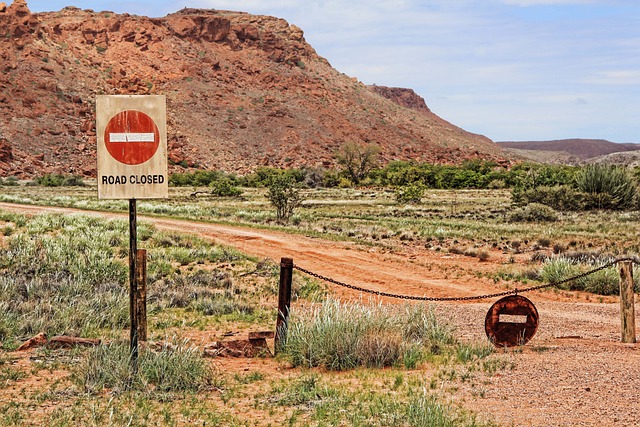

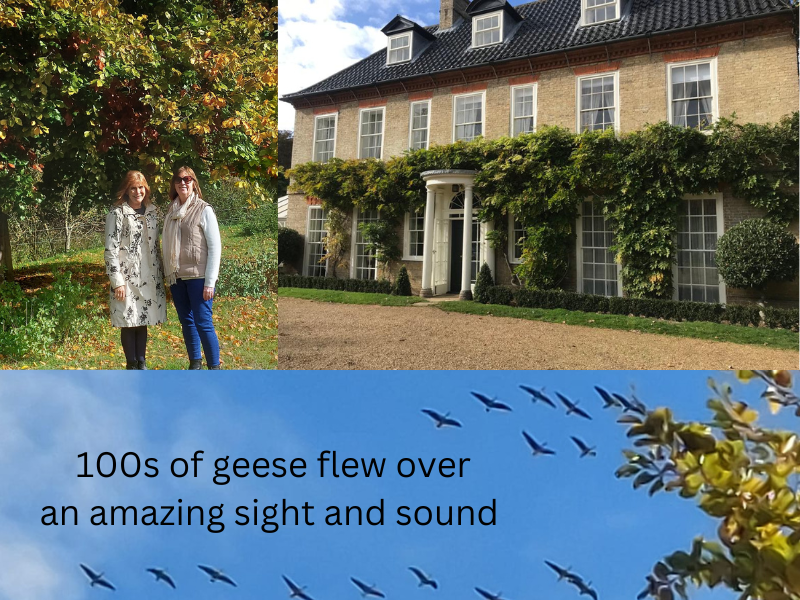
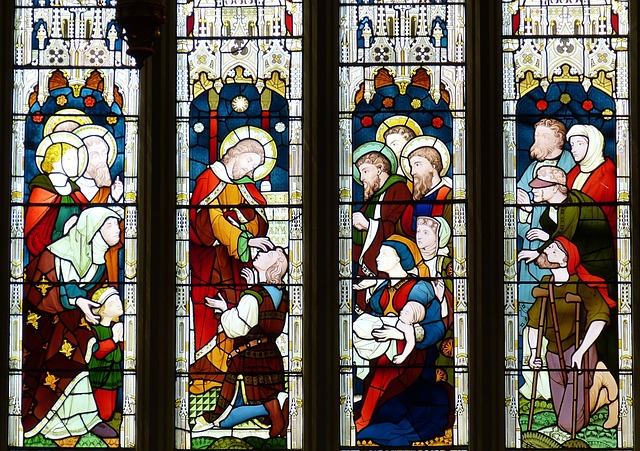



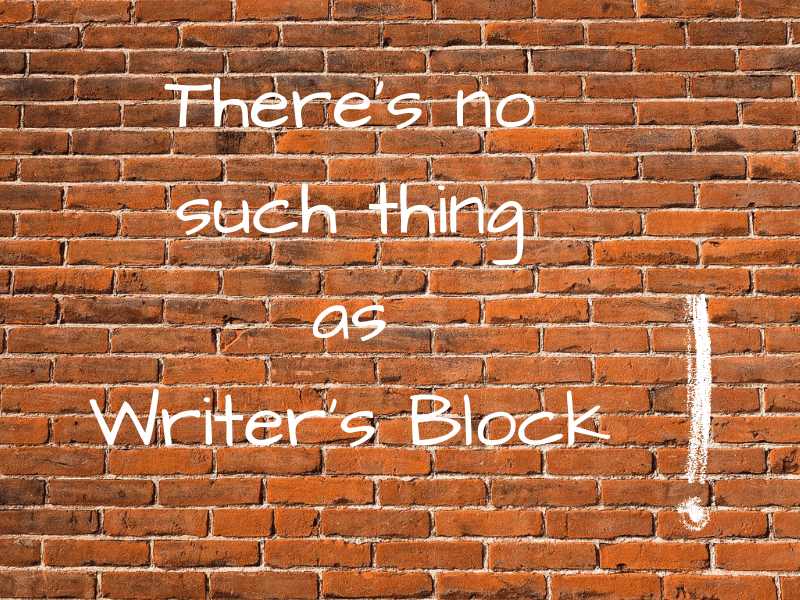
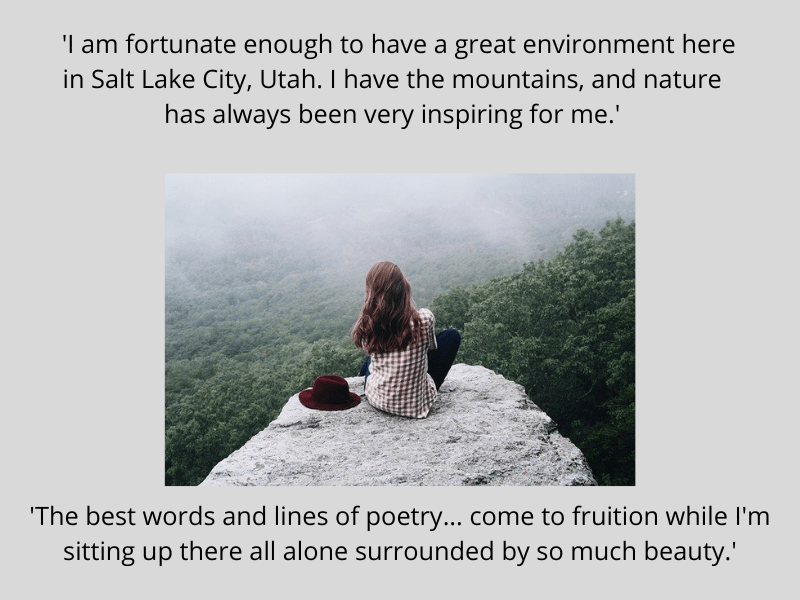
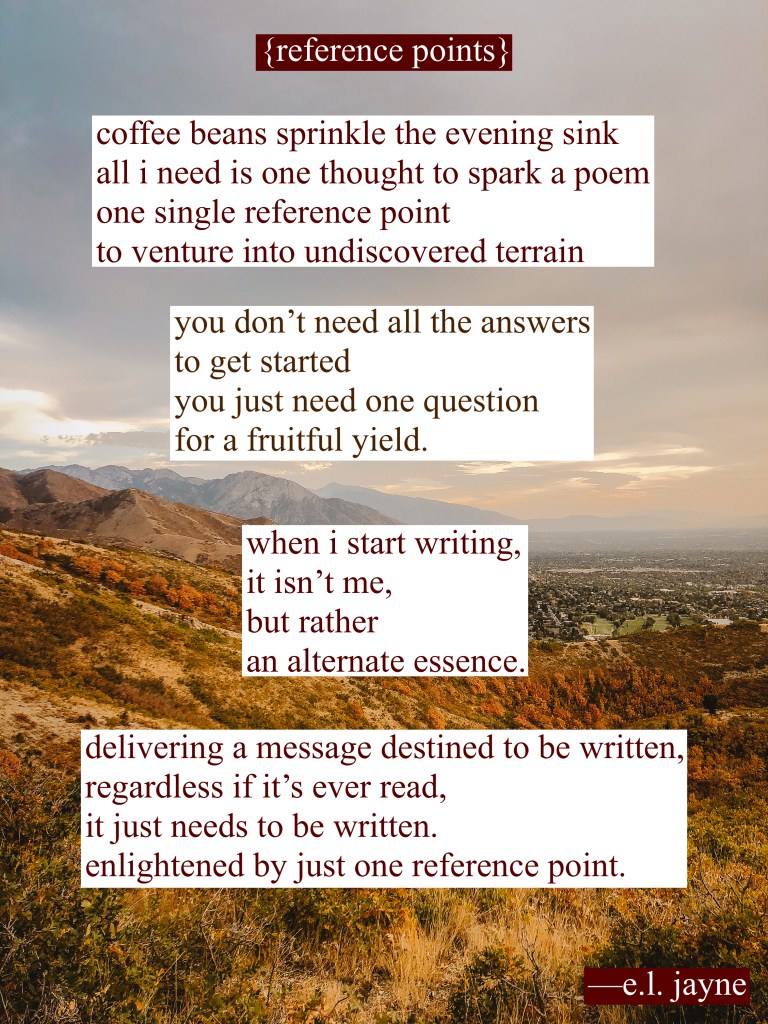
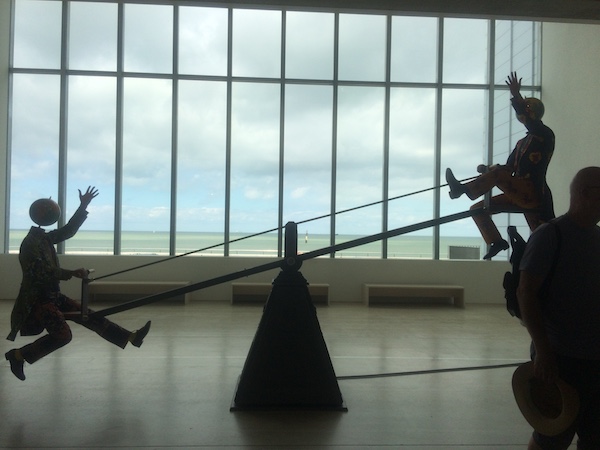
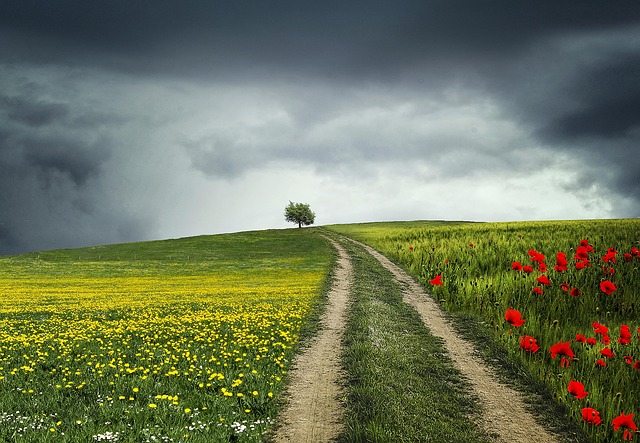
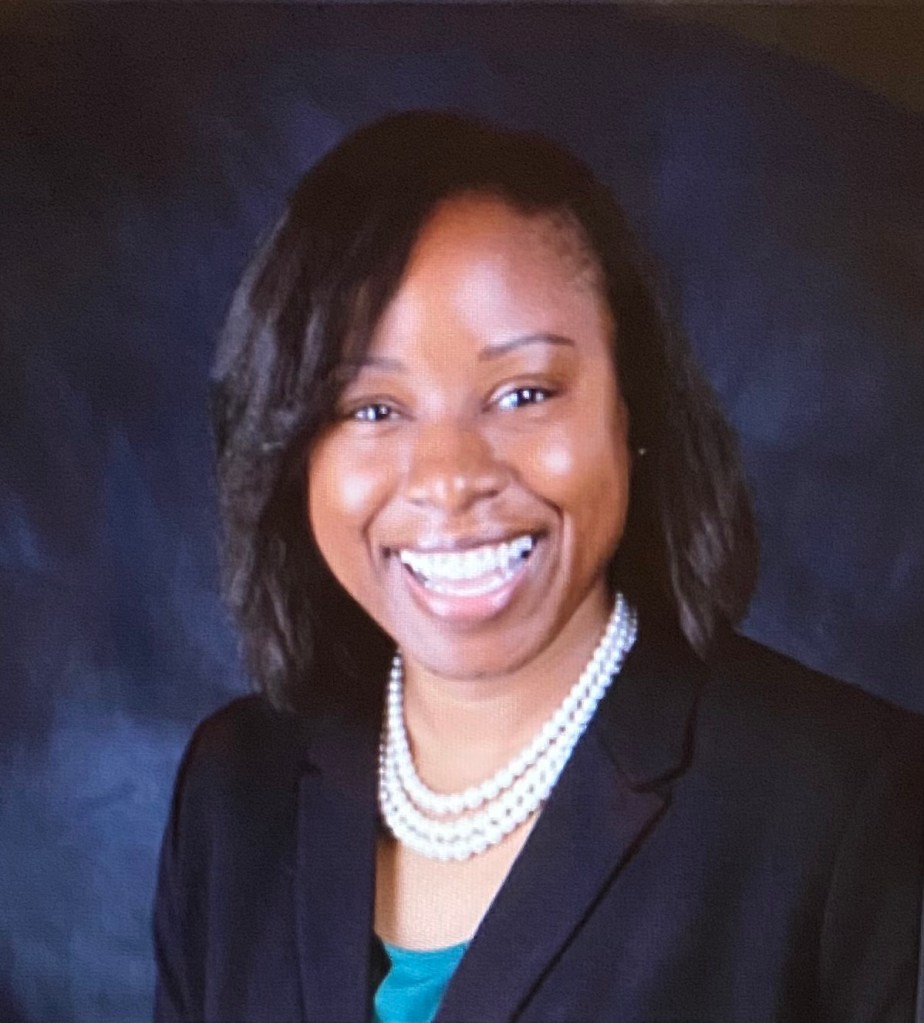







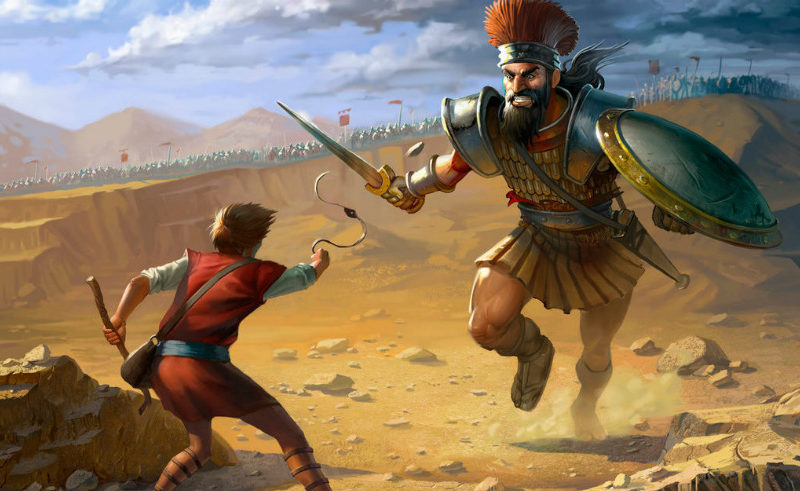



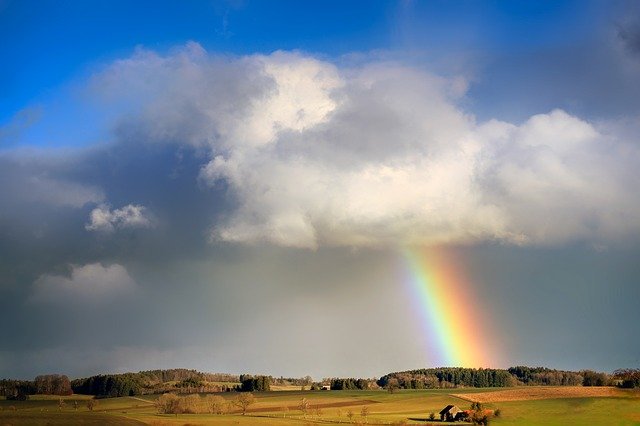




 Deborah Klee