In this episode of the Mindful Writer, author Kim Nash, shares her secrets to success, but before we learn how to make our dreams come true, let me update you on my writing journey.
After the successful launch of The Forever Cruise in December, I am hunkering down to work on my fifth book set in Yorkshire. My plan is to complete a first draft before I go away for a month cruising the Caribbean and then cross Atlantic to the Greek islands. My plan is to leave this draft with beta-readers whilst I enjoy a break and fill my creative well with fresh story ideas. On my return, I will prepare The Last Act for publication in July. Then back to my Yorkshire novel. A busy but exciting year ahead. I’m really looking forward to the cruise.
It’s great starting the new year with plans and goals. There is a lot that we have no control over and life will always throw unexpected challenges. My guest this week explains how she turned her dreams into a reality and shares many words of wisdom on dealing with life’s curve balls.
So, let me introduce you.
Kim Nash is the author of uplifting, funny, heartwarming, romantic, feel-good fiction. Kim is Digital Publicity Director for publisher Bookouture (a division of Hachette UK) and is a book blogger at www.kimthebookworm.co.uk.
In this episode, Kim tells me:
How she turned her dreams and wishes into a reality.
Kim, you have a remarkable history of achievement. A love of reading inspired you to start a blog reviewing books, Kim the Bookworm. Your outgoing personality and can-do attitude led to you securing a position at Bookoutre (digital publisher) where you are now Head of Publicity and social media manager. In 2019 your debut Amazing Grace was published by Hera followed by another three books in quick succession. As I said, a considerable achievement.
How have you turned your dreams and wishes into reality?
Kim’s journey started with book blogging. She read a book by Milly Johnson, A Spring Affair. It was about a woman who cleared clutter from her home and discovered it was her life that needed to be decluttered. At the time of reading this book, Kim was experiencing challenges in her own life. The book helped her gain a different perspective. At the end of the story, the author invited readers to contact her to give feedback. Kim wrote to say what the book meant to her and was astounded to receive a reply hours later. Milly wrote, ‘You lady are the reason that I write.’
Kim and I talked about the joy of receiving feedback from readers. Kim says:
‘The best thing about being an author is when a person you have never met chooses your book out of all the books available to them and it helps them through a situation or takes them away from their normal life.’
We agreed that if you touch one other person, you have achieved something incredible as a writer.
‘Comparison is the thief of joy,’ is one of Kim’s favourite mantras. For her, success is not the number of books she has sold but the number of times she receives messages of this kind from readers.
It was Milly Johnson who encouraged Kim to set up a book blog. Having had one important exchange with Milly, Kim contacted her again and asked her if, as an author, she felt a book blog would be useful. At that time, there were few book bloggers. Once again, Milly inspired Kim with confidence and she started her book blog – Kim the Bookworm.
Kim’s work as a book blogger took her into the publishing world, as she became known to authors and publishers. She was invited to launch parties and other events where she networked. One day a publicist at Bookoutre contacted Kim to ask if she would review a book. In her response, which was yes, Kim asked a question: ‘If you know of anyone in publishing who would like to employ an enthusiastic book lover, let me know.’
As a result, Kim was offered a job with Bookoutre. She had years of experience in PR and marketing as well as her love for books and reputation as a book blogger. It was an opportunity that brought together all the things that she loved.
I asked Kim what advice she would give based on this experience of seeing her dreams materialise.
‘Be brave enough to put yourself forward. Recognise what you need to do to make things happen. You can’t become an author without first writing a book.’
Always ask yourself what you need to know. For example, when will a decision be made? Be direct and ask the question.
Being an author can make you feel anxious, so don’t be afraid to ask the questions when you need an answer. Being an author is a massive emotional roller-coaster. Kim says: At Bookoutre we always try to get back to authors so that we do not increase their anxiety. It seems to be accepted in this industry that it’s okay not to get back to people, but it is not acceptable. Agents and publishers don’t get back to people. In any business other than publishing, it would be different.
I agreed. ‘Don’t hand over responsibility and control for your happiness to the industry or anyone. And don’t attach yourself to one particular outcome.’
Kim talked about having a can-do attitude. In response to the lack of literary cultural events in the area where she lives, Kim set up a local book festival with fellow author Phillipa Ashley. Her message is: If you want something to happen, then make it happen yourself. Another example is the book club she set up nine years ago.
If there are things you would like to happen – write them down.
Then write what you need to do to make them happen.
Finally, be brave. Step outside of your comfort zone and do it.
I asked Kim how she looked after her health and well-being given her busy life. I use a colour coded planner, Kim explains. The colour coding shows her the activities that are taking most of her time. When cleaning the oven takes priority over writing, she knows that she is procrastinating.
Kim loves nature. She takes her dog for walks, enjoying sunsets and sunrises, walks in the forest or by water. Sometimes she just needs to sit in front of the TV and binge watch a favourite series. Time with family and friends – laughing. These activities help her relax and unwind.
Kim is an inspiration to me and one of my role models.
I love her can-do attitude. Sometimes we may look at another person’s journeys comparing it to our own and we make excuses: that person has more opportunities, more money, more time. That might all be true. Their journey is different and we gain nothing by comparing. But we can learn from another person. How have they achieved success? Determination? Resilience? Persistence? Putting themselves forward as Kim did? Self-belief? What can you take control of in your life right now? What do you want to happen in your life and what do you need to do to make it happen?
I wish you the very best for 2023. The Mindful Writer Podcast will be back on 8th February with guest, Sandell Morse who explains how her journey to a French village uncovered long silenced stories of courage and resistance, and her unexpected inward journey back to her Jewish identity. Subscribe now so that you don’t miss this fascinating episode.
So, until next time: Take care of your beautiful self and trust the journey.
In this sixth episode of The Mindful Writer, best-selling author Lizzie Chantree, shares some practical lessons on how to succeed and find joy in your writing life.
Before I introduce you let me update you on my writing life.
I have some exciting news to share. In the past couple of weeks, I decided to publish The Forever Cruise on 1st December, and The Last Act on 1st June next year. I love both of these books and can’t wait any longer to share them with my readers. My last novel Just Bea was published 17 months ago. During that time, I have been going back and forth with agents, and publishers. Although I have received interest in both manuscripts, I realised that it would take at least another 18 months until my next book could be published – and I cannot wait that long. I have built up a loyal following and want to keep those readers entertained with my new books. As soon as I made that decision, I felt a rush of energy. I am back on track and it feels good! My local independent bookstore is hosting the book launch for The Forever Cruise, and I am meeting with my cover designer in a couple of weeks.
Yesterday, I met the wonderful Lizzie Chantree in person for the first time at a writing buddy event she co-hosted with author Christine Penhale. We sat in a spacious room above a café to write, network, and enjoy fabulous coffee. Now it is your turn to meet Lizzie, so let me introduce you.
Lizzie Chantree is a best-selling author of uplifting romantic reads and Networking for Writers. In this episode Lizzie explains:
How to develop a positive mindset
How to make good use of the resources and networks available to us
How to build our readership, reader by reader
How to be a kind and compassionate manager (to ourselves).
Deborah: Hello, Lizzie, lovely to see you on my podcast.
Lizzie: Hello. Thank you for inviting me.
Deborah: You’ve had an incredible career: You founded your first company at 17, invented a ladder stop spray – The Runaway Spray. I love the name of that. And then, when your daughter became unwell, you made a transition from successful businesswoman to best-selling author. A remarkable journey, which shows you’re a woman of courage, determination, and obviously have a very positive mindset. So, I’m sure we’re going to learn a lot from you about where that comes from, and how you maintain that to achieve the incredible things that you have done. So, have you always had a positive mindset? And where does that come from?
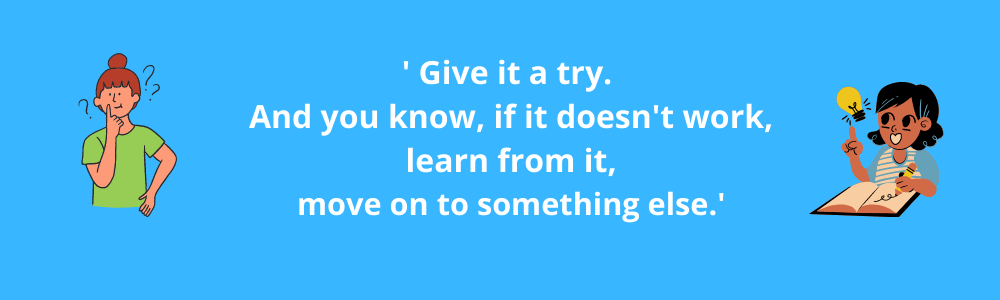
Lizzie: Oh, thank you for that. I think I have grown up with a positive mindset because of my parents. I grew up in a very, very creative family. And my parents didn’t ever sort of say You can’t try that. You know, if I came up with a crazy … I was coming up with crazy ideas from a very young age. My parents never said, That’s just ridiculous. Don’t do that. They said, Give it a try. And you know, if it doesn’t work, learn from it, move on to something else. So, I always thought – well, I didn’t ever think I can’t do that. I always thought I’ll give it a try. If it goes wrong, try something else learn from it. So, I think that has always been my mentality. And basically, that is thanks to my parents.
It is a really positive way of thinking. Do you do this? Have you done the same thing with your family?
Lizzie: Yes, absolutely, with everything. You know, life’s very fluid, things change. You know, most people grow up, and then they do something completely different to what they were doing when they were younger anyway. So, we try not to set too many pressures or too many boundaries, with you know, your work life. Because you know, if something doesn’t work – the same thing, just try something else, or teach yourself new skills, or go back to school or to college and learn new things. Or go to the library and pick up some books, online courses. I’ve taught myself so many things on this writing journey through online training. So, you know, there is a world of possibilities, you’ve just got to look for them. And a lot of these online courses and things actually are free as well. So many free resources out there. It’s just a matter of finding them.
Deborah: It is really hard when you’re a writer, because it’s not just about writing is it? It’s about writing and marketing. And as you say, all the things you have to learn. I started this journey of being an indie author at the beginning of the lockdown. And when I was counting all the things that I had to learn in terms of technology it was amazing. If you look at the beginning of what you’ve got to learn, it could put you off, if you look back at what you’ve achieved, you think, Gosh, I’ve done all that. So, what’s stopping me going on to the next, the next thing and the next thing? But it’s very easy for us to get put off, isn’t it? When we think to myself, Oh, I made a mess of that, you know, we’re our own worst critic critics, we can really give ourselves a tough time. And that can put people off carrying on.
Lizzie: Totally, I think like you say we do. There’s a lot of use imposter syndrome in the creative industries where we just feel not good enough. And also, we haven’t got sort of bosses and things saying, Oh, that was wonderful. You did a good job with that today. Pat on the back. You know, that was brilliant. We have to be our own bosses. So, if we do something well, we have to say, Yeah, that was brilliant. But we don’t do so much of the Oh, well done, we’ve achieved that even if it’s making a book meme or talking to someone online or getting 100 words on paper, or whatever your targets are. We tend to forget about saying nice things to ourselves. And yet, if we haven’t written the 100 words, or we haven’t done the main today, or we haven’t spoken to someone online that, Oh, that’s useless. You know, I’m so terrible. I can’t, I can’t do it. I’m not doing enough. But we tend to impose those kinds of things on ourselves. So, in a way what I try and do is set manageable goals, like small ones, and then tick them off as I go along. And if I miss something, then I add it to the next day. It’s not the end of the world. But I think it’s really important to get a balance and also to praise ourselves when we do something well.
Deborah: Yes. Really good points there. I have been a really good manager to people that I’ve supervised and managed in my working career. I’ve been a kind, generous manager supportive and nurturing. But I’m a horrible manager to myself because my expectations are really high. And like most people, I think, we drive ourselves hard. I pick up on the things I haven’t done and not the things that I have. So, good advice there.
Lizzie: Even as a manager you still even if you’re kind and caring, you still might have high expectations of the people that are working for you. You want them to do well. You want them to achieve great things. So, even though you’re having those high expectations for yourself, we still need That that’s really lovely. Well done. You’ve reached that goal. You’ve done that writing. You’ve done that little bit of marketing, or whatever it might be, and maybe go and have a coffee, or go for a walk in the garden, or play with a dog, or pick up the phone and ring somebody because that means something to someone else as well. So, I think it’s also about getting balance, because like you say, the marketing side of it can be really, really overwhelming.
When I came into it, I didn’t know any writers. I’d done writing courses when I was younger, but I didn’t know anything about, you know, the creative side of writing, and the industry. So, I had to learn as I went on, and it came from talking to other writers, meeting mentors, researching things online, and in creating my own community.
Deborah: And that’s really important networking, which we’ll come on to, because you are our guru on effective networking. Networking is so important, not just for opportunities it brings and it certainly does, most definitely, but for the writer, writing community, and your writer friends. Because even when we are slow to congratulate ourselves and celebrate our success, to give ourselves a pat on the back, our writer friends who are on a similar journey – they do that for us, too. I belong to a writers’ group. And, and we’ve been working together for about into about eight years, all of us writing novels. We meet each month and say what we’ve achieved: I’ve only done this. I’ve only done that. We remind each other of just how much we have done and how far we’ve come. I always leave feeling a couple of inches taller. So that support is important.
Lizzie: That’s the thing of saying, We’ve only done this, or we’ve only done that. And we always do that. I do it all the time. You know, I really try not to. But it’s kind of we feel that what we do maybe isn’t enough all the time. That we need to be doing more when actually what we’re doing is great at whatever pace it might be for whatever person, you have to do what is right for you and what works for you. And if you’re chipping away too, even if it’s a little bit of time, that is amazing.
But having that network around you, like you say – sometimes I’ll just go meet a couple of people for a coffee, or I’ve got one writer friend, we meet once a month, we literally make a few TikToks. We have a laugh. We meet over coffee. We have to be quiet if we go in the library because we are giggling too much work. But we are working together. We come across so many ideas. We talk about magazine articles, about blogs. We’re writing. We make TicTocs. We do our social media.
And it’s meeting your friend for a coffee; you know, we meet for a few hours, once a month or twice a month, and we come up with so much work. And it’s absolutely hysterical. It’s really bad. But to me, that’s work. But it’s fun. You know, it fills my creative tanks. We come out of there: I feel fantastic. She feels fantastic. We support each other with something we might be stuck with. We will talk about it. I’m really stuck on this. I’m doing too much of that. How do I get through that? And we just push through it with words over a coffee or cake or lunch or whatever. And that is still work. We’re still being productive, but in a fun way.
Deborah: Yes. Excellent. And that also replaces what we miss from our work environment. I, like you, was an entrepreneur and had my own businesses before I was a writer. So, I was used to that. But even then, I found those environments to bring together people who worked in a similar area who were also friends. And that creates what other people might have in their lunch hour or coffee break at work. So, if you’re writing when you’ve been working, perhaps you’ve been made redundant, or you’ve changed jobs and you’re more isolated from people – it’s recreating those things that helps you survive in your workplace by creating it around you.
Lizzie: Exactly. And it doesn’t even have to be in person; it can be online. You know, with the way things have happened with COVID and things like that, it’s opened up different opportunities. People think of things differently now. So maybe if you can’t get to the coffee shop, or you can’t get out, you haven’t got transport or you’re in a rural location, or you’re in a different country to the people you’re working with, it doesn’t matter. You can jump on Zoom. You can jump on some chat rooms or on Facebook or Twitter. There are ways to not have to be isolated not have to be on your own. Because, like you say, writing is a really isolating profession in some aspects. And so it’s a really good way to meet other people, find people that have got similar interests to you. And there’s lots of places locally. You could visit your local library and ask them about a writing group, or a book group, or ask if you can go in and give a talk. Or just getting to know other people in your community, even the local banks. They host seminars for free about marketing and social media. It doesn’t necessarily have to be about writing. It can still be relevant to your business as a writer, but it doesn’t have to specifically be about writing.
Deborah: I’m just going to go back to something else you said that I wanted to talk about. We were talking about thinking I’ve not done enough. I’m not enough and how we drive ourselves crazy. Yesterday, I had a really lovely yoga class I attended. And when we were doing the meditation, it was about when you have lots of energy bringing that energy back down. So if people do yoga, the yellow one, the one around the navel, (solar plexus chakra) because I can’t remember the proper word for it. But it was about focusing there. And our meditation was, I am enough, I’ve done enough. I can rest without agenda. And I think that was just a wonderful mantra. I am enough, I’ve done enough. I can rest. And that bit about without agenda; how often do we think we’re resting, but all the time, our minds busy, busy, busy? I’ll rest. But while I’m resting, I’m going to get this done. Because I’m sort of resting. I’m not wasting time.
Lizzie: I totally agree about that. Our minds are always working, aren’t they? It’s always over running. And it’s fine, if you’re doing something, you’re thinking about book ideas, or something that’s exciting you because that in a way can be relaxing. But I think we do put pressure on ourselves to work, even when we’re asleep. It’s so ridiculous. No, we don’t give ourselves enough credit.
I’ve also grown up in an environment where my parents have run businesses that have always been quite busy. So, I’ve always been very aware of being in the present. There’s no point going somewhere and doing something if you’re thinking about something else. This is what I’ve grown up and learnt from my parents, because they obviously have very busy lives. If you’re going to go and meet someone and have a cup of tea, or if you’re going to go and take an afternoon off, or if you’re going to go work for the morning, or the afternoon or all day, whatever – be present, be present in what you’re doing. Because if you’re going for that cup of tea with friends, and you’re actually thinking, I’ve got a deadline, I should have been doing this, I’ve missed that this morning, I haven’t written my words, I haven’t done my 1000 I haven’t done this. What is the point in being there? You might as well not be there. You might as well be at home, or in your office, or wherever doing those 100 words, 1000 words, whatever – be present in what you’re doing. Because then your body does get to relax. You get the creative tanks filled back up. And then, more often than not, you’ll go back and you’ll be more productive later because you’ve had a rest. You’ve had a creative time. You’ve seen different things or you’ve spoken to somebody different. Without that constant, like you say, that voice in your head about I should I should be doing this. What you should be doing is what you’re doing at that present moment.
Deborah: That’s another really good point. There are so many good messages from you to capture. When I’m doing something in the kitchen – I come away from my writing, and I’m making a cup of tea, or just getting the laundry, something I’m doing in my mind is still working on my writing. Actually, it’s not working on my writing, it’s usually fretting – something that I’m worrying about. And while my mind is doing that, I always, always, do something stupid. I will make a cup of tea for my husband, who I know isn’t in the house; I put something in the fridge instead of the washing machine, I will do something ridiculous. And that just demonstrates when you think that you are concentrating on a task, when your mind is whirling away on something else, you’re not present. It’s so important.
Lizzie: It’s also a waste. It is a waste of your own time. Even if it’s doing housework. You might as well be productive, get the housework done. When it’s over and done with and then you can move on to whatever it is you’re thinking about. This is where I find list writing and things like that can sometimes help because that kind of empties those thoughts from your mind. You’re putting them onto paper. They’re in front of you. So, you can see them, they’re there, you can cross them off, you can move them to another page. This is a good way of systematically writing down tasks so that you’re not constantly thinking about I should be doing this next It’s blame culture, I think. Because everything we hear is quite negative. So, we need more positive energy, positive thoughts, positive news, to help people because otherwise they are going to feel worried and stressed. And they’re not good enough all the time, because they’re not hearing enough positivity. I think that’s really sad.
Deborah: Your life hasn’t always been smooth and golden. You had a very difficult time when your daughter was two years old and she was very unwell, and you had to leave your successful business. During those years is when you went through a transition to writer. Can you tell us about the emotional journey of how you found the courage to move from businesswoman to writer and what was going on for you at that time?
Lizzie: Yes, it was. At the time I didn’t think of it as being tough. I just was going through it; so, you just have to deal with it. But yes, my child was very, very, ill from a young age. She just coughed constantly. She just couldn’t breathe. She was on ventilators. She was in the hospital every month and on tablets every month. Then obviously, as a parent, you just feel distraught, because you feel like you’re not being good enough. Again, it’s that just not good enough thing, when obviously you can’t help it – you’re not, you’re not not good enough. And also, very frustrating because we didn’t know what the problem was, she had so many tests. And I had to basically watch her. I didn’t like anyone going near as her in case they breathed on her and she got another cough. But it was every month, you know, she could cough for nine hours, stop for an hour, and then keep coughing.
So, we didn’t sleep for years, basically. And it was just trying to find a way to cope with the stress. So obviously, I spoke to professionals about how to cope with the stress. They helped me to understand that actually, it didn’t mean I was a terrible parent, it just meant that my child was going through something and any other parent in that position would feel the same way. And they also taught me the coping mechanisms, which I still use today with stress, which is how to balance – you know, work and play, how to keep my mind on an even keel so that I’m not overloading myself.
So, what I did was, I just decided I needed to stay awake at night because I had a baby monitor. And I needed to listen to her to make sure she was breathing. So, I just thought I needed to stay awake. I tried sweets, and cake and coffee and, everything, and nothing worked. So, I thought, you know, I’ve been on a writing course many years ago, and I was writing as a child. I had an idea for a book. I thought, well, let’s just try that. And literally, that is what I did. I just sat every evening for a year in my studio with my baby monitor next to me, and I just listened to her breathing or coughing. And I wrote a book.
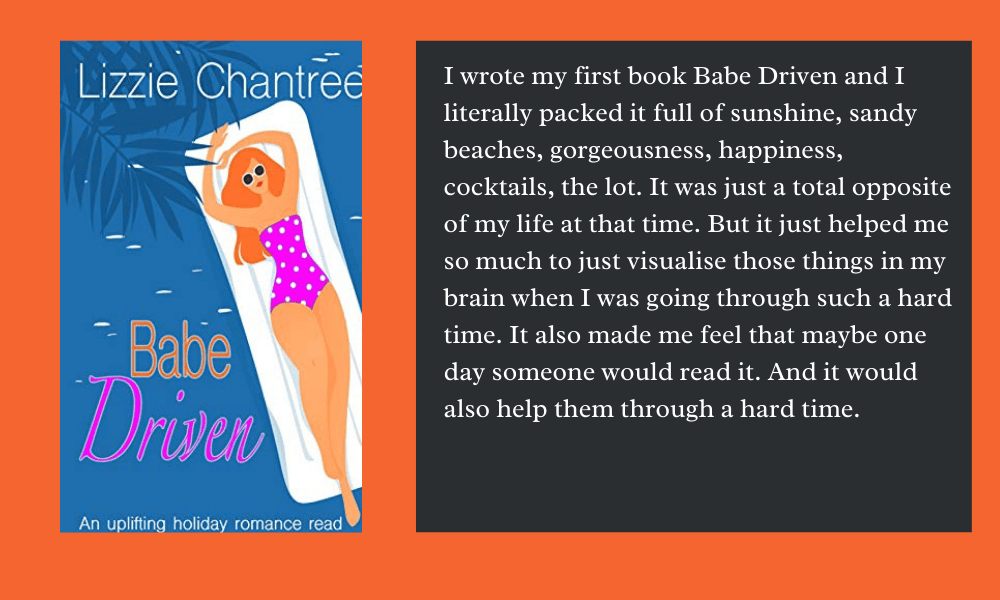
I wrote my first book Babe Driven and I literally packed it full of sunshine, sandy beaches, gorgeousness, happiness, cocktails, the lot. And it was just a total opposite of my life at that time. But it just helped me so much to just visualise those things in my brain when I was going through such a hard time. And it also made me feel that maybe one day someone would read it. And it would also help them through a hard time. You know, if they were having a bad day; they might be able to read it and they feel, happier, and uplifted and smiling. So really, that was what motivated me to keep going.
And then after a year, I literally stuck in a cupboard for five years. Again, it’s the imposter syndrome. I didn’t have the courage to do anything with it for five years, until her health started to improve. Then, once her lungs started to mature, and she could breathe better. And we started to get more answers about the problems with their health, then I felt, okay. And all I did was I sent it to three smaller publishers and two of them offered me contracts. So, it kind of went from there.
Deborah: Fantastic. And your books certainly do make people feel brighter and happier. So, you do give a gift to those who read your books. Definitely.
Lizzie: Thank you.
Deborah: That’s a wonderful thing that you can do as a writer – when that you express emotion, and then you find that it’s touched somebody in a way, it makes it worthwhile.
Lizzie: You just want people to not feel like they’re alone. You know, everybody’s going through stuff. You can think on the surface, you might know what someone’s life is like, actually, we don’t really know what people are going through in their own lives. So, it’s just a way to sort of be in people’s homes and provide something they can kind of open and just not feel that they’re going through things alone. And that if they are going through something, to make them smile. You know just to give them some respite from the stress and the worry, because we have a lot of things like that to go through. And even if we’re not going through anything, then that’s absolutely incredible too. If that brings a smile in any situation, then that’s what I’m all about.
Deborah: Absolutely. As you were talking, I was thinking. I think our lives are like a book in themselves. You know when you’re reading a book, and the author drops in the breadcrumbs. Then, of all these things come together the end of it. You say Oh, that’s why all of those things happened. All of the skills and experiences you picked up along the way; You’re using all of those now – today, as an author. You have your parents, your upbringing of the Try something, see if it works, try again, you’ve got all that you learned through your own business, your retail business, marketing, all the things you brought from that. And then you had what you learned when your daughter was unwell about managing your own health and well-being and coping with that. So, all of that has come together. You’re using everything that you’ve got.
Lizzie: Yes, totally. And I think, you know, when you’re going through something, all you can feel is the pain and the suffering and you don’t realise that you’re learning things. Obviously, now I’ve realised how much I’ve learned. I mean, my daughter she’s so proud of what I’m doing and she tells people she’s the catalyst of my writing career and things like that which is true. You know, out something so awful has come something
really, really beautiful. But obviously, I didn’t know that that was going to happen at the time. And, we just feel so proud of what’s happened and come out of something like that.
I think all the skills, like you say, throughout our businesses, that nothing has been wasted: the graphic design, the marketing, the advertising, the networking. I’ve learned through having wholesale and retail shops, talking to customers. And, you know, I love that side of the business, getting to meet customers and making products for them, and things like that. It was just a joy. So now, I’m still making products, but just in a different way.
Deborah: So what would you say if you were looking back now at yourself, when your daughter was perhaps two or three, when you were at your lowest? What words of wisdom or advice would you give yourself?
Lizzie: Just to be kind to myself, I think. That’s something I learned
with help – not to beat myself up and think I’m not good enough. I’m failure, I’m not doing enough for my family.Those sorts of thoughts are quite toxic. But at the time … I’ve got a very problem-solving brain. And so, if I see a problem, my brain is automatically thinking, Right? What’s the solution? How can I help someone? What can they what can we do to solve this problem? So obviously, with a problem like that, I haven’t got the medical skills to know what to do. So, all I was doing was trying to find other solutions all the time, which is quite exhausting.
But I think you just have to use the resources you have and find that inner strength in yourself and just keep pushing forward and looking for new ways to enrich your life and, surround yourself with people that are like you, that are kind, and caring, and loving. And you don’t need to put someone else down to succeed in life. So, surround yourself with people that lift you up.
Deborah: Absolutely. I was thinking, when you were saying that you were driving yourself crazy trying to work on the things that you didn’t know about – the medical, trying to control areas, which you couldn’t control, because you had no control over them. So, you looked at what you could do, which is to be kind to yourself. And that made me think about how, as authors say, trying to get published, all of the things that authors drive themselves crazy about, the things that are out of their control, those are the things that make them feel helpless and anxious. I think if we can learn to let go of that, and give that up to a higher power – to God, to the universe, that which is out of our control. There is somebody who knows much better, what’s good for us, and what’s going to happen. So let go at that. Deal with the things you can, to be the best writer you can, to be the best at what you’re doing as you can. And to be kind to yourself. All the things you can control, focus on those and let go of the things that you can’t. There are others, a power, whatever, or other people that know better, and have your best interests at heart, we hope.
Lizzie: Yes, absolutely. And also, there’s a lot of people around. We’ve all got different skills, we can all help each other. If I know something that someone else doesn’t, I’m happy to help, or if they know something that might help me, you know, we all have got different skill sets. Not everybody can do everything. And that’s exactly what you were saying we can’t do everything, we’re human beings, we can just do our best. So, it’s asking for help when you need it as well. There are people around you can say, I’m not sure about this, would you mind just explaining it to me? Or looking online and finding a course. There are ways to help ourselves in areas where we don’t know things. We can’t be expected to know everything. Like you say, that’s life, it’s nature, it’s the world. We can just do what we can do, but we can also sometimes think we have to do everything on our own. I think that was what I was going through I was just like, I’ve got to solve this. It’s my child, her health. Obviously, we needed to do everything we could, and we tried every everything we could. Now she’s doing really, really well – as best as she can and that’s just incredible. So, I think sometimes, like at that time, I could have said to people I’m having a really hard time can someone help me? Come in to my home or whatever and help me but I didn’t. I did it on my own. I was like, I have to do it myself. I have to show that I’m coping. I’m being you know, smiley self. You go out and smile and you come home and you’re crying or whatever.
It’s the same with work with writing. Sometimes we think we have to do everything ourselves. We can’t ask for help, that would make us look weak, or that we can’t do something. And that’s not true. I think, kindness is a real strength in people. And sometimes, if we don’t know how to do something, then ask somebody that can.
Deborah: There’s a wonderful writing community on social media, if can’t meet people in person, as you said earlier. You have Twitter, a regular tweet-chat, and as do I. I’ve found the connections I’ve made with people through that, really meaningful.
Lizzie: Oh, it’s totally amazing. But again, it’s about making your community of like-minded people. And you know, they’re so supportive, the writing community are brilliant, the creative community, and readers. Readers are absolutely brilliant. And the book bloggers are incredible. They give up so much of their time to support writers, you know, so there’s a lot of support. We’re really isolated as writers sometimes. And actually, we don’t need to be because readers, they love books. There’s so many, they love all the aspects of writing, and they’re so supportive and give up their time to support authors and just chat to them. You know, they’re really lovely, lovely people.
Deborah: It is. it’s a wonderful community. And your Lizzie’s Book Club is a great Facebook group. That’s always fun. It always makes me smile. It’s my feel good. It’s where I’ll go with my cup of coffee to brighten my day.
Lizzie: That’s made my day. Thank you know. It’s just, again, it’s just lovely to chat to people that love books and love writing. And readers, they’re really supportive of all the writers, the writers are supportive of the readers. And also, just to have a bit of fun, you know, so it’s nothing too serious.
It’s all about just enjoying ourselves. Enjoying what we’re doing. Because we put a lot of effort into this. It’s our world, really. It’s everything. We think about it all the time. When you’re writing, you’ve always got characters in your head, and things like that. So, it’s lovely to chat to other people that understand the kind of book obsession, because I can just see a book and I’m drawn. If there’s one in the window, I’m drawn to it. If there’s coffee, it’s even better because I can get lost for hours. The same with my parents. I could lose them for hours in a bookshop. Can’t let them near it, because they’re gone for days. A book is such a special thing.
Deborah: Yes. As well as writing your wonderful novels (I shall give links in the show notes to find your author page, and links to your books), you’ve also written a book, which I found invaluable Networking for Authors, which shares a lot of your expertise around how to use networks. There’s so many ways networks can benefit you.
Lizzie: Yes. It’s finding people that have got a commonality, but they might not be doing what you’re doing at all. Like, I met a guy outside a hotel who was painting the hotel and he came in and introduced himself. I said, I was doing a book event. He said, his daughter loved books, and we swapped cards. You just never know, when you meet someone. I even met someone waiting in line for a changing room and started talking about things that were nothing to do with books, but it ended up in a quite a big deal for me; I started doing lots of seminars, and sending loads of paperbacks across, and things like that. So, you just don’t know who you’re going to meet. It’s just about being having business cards with you at all times. It’s such a simple thing to get the book covers on the front: website, contact numbers. Just hand them out. You know, when you’re going to coffee shops. I went to a coffee shop with my friend the other day, and we’re doing our TicTocs. And I said to the coffee owner, Do you put out business cards? and she went Oh, yes. And she literally put them in her card holder by the till. It’s just little things like that. It’s getting your name known, it’s getting the word out. And it’s just talking to people really. Just talking to people, not necessarily about I’m an author, I write books, just about books in general,
or anything in general that’s to do with creativity. It’s surprising how many times that comes back to talking about people’s work and what people are interested in. It’s really lovely to chat to people about their day and what they’re doing. It’s fascinating. I think as writers we’re just fascinated with people full stop.
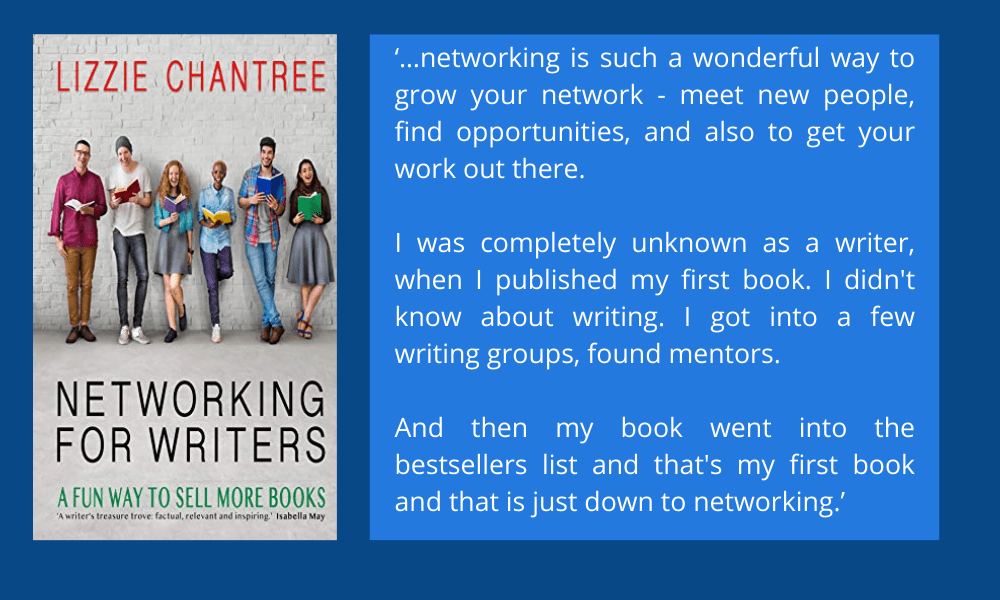
But it is, networking is such a wonderful way to grow your network – meet new people, find opportunities, and also to get your work out there. I was completely unknown as a writer, when I published my first book. I didn’t know about writing. I got into a few writing groups, found mentors. And then my book went into the bestsellers list and that’s my first book and that is just down to networking. It must be from my history of being in business competitions and, running retail and wholesale shops.
Deborah: It’s not just because of that. It’s because your books are brilliant. Give yourself credit. You’re doing that typical impostor syndrome thing, It’s just because.
Lizzie: I’m always thinking, Why was that? It’s really odd!
Deborah: It has been lovely chatting with you. So many gems of advice, and words of wisdom there, which I shall capture in the show notes. Thank you so much Lizzie
Lizzie: Oh, thank you for inviting me. It’s been an absolute joy as always.
I have to admit Lizzie Chantree is one of my role models. It is no coincidence that my website is similar in appearance to hers. Her warm, inclusive approach to marketing her books by networking and being kind resonates with me and it obviously works. Her books are uplifting – great for a summer read. I am on holiday in Norfolk now, as this episode goes live. I have two of Lizzie’s books on my Kindle and intend to do a lot of reading.
I hope that you are enjoying the summer. Please get in touch to share your news. It is by talking to each other, extending our networks, and being interested in one another that great things happen.
So, until next time… look after your beautiful self and trust the journey.
In this third episode of The Mindful Writer, Indie author C.D’Angelo tells me about her writing journey, how she overcame disappointment to embrace new opportunities and found unexpected treasures.
But first, an update on my writing journey. Whilst two of my unpublished manuscripts are doing the rounds as I seek a publishing contract, I have been thinking about my next novel. Like most authors I have been collecting ideas, so many stories to tell – but none of them felt right. Sometimes you have to wait for the right time to write a particular novel.
My thoughts kept going back to an image I saw several years ago of a sunken village in Yorkshire. The spire of a church was visible in the middle of a reservoir. I knew I had to write about that village.
I did some research and found that it was situated in a hard to reach place – for me anyway, as I was travelling by public transport. A series of amazing events led me to a wonderful woman who lived just three miles from the sunken village. Not only did this stranger open up her home to me but she volunteered her services and those of her friends to help me in my research. I will be spending a few days in North Yorkshire at the end of July, and will tell you more then. It really does show that miraculous things can happen when you open up your mind and heart to new possibilities. Which leads me on to this week’s interview with author C.D’Angelo.
C.D’Angelo
C.D’Angelo is author of The Difference and The Visitor. See links below to buy.
Deborah: C. D’Angelo. I’m so happy to welcome you to the Mindful Writer Podcast. Your debut, The difference, was published last year, and your second novel, The Visitor is published this week. So happy publication day! It’s important to celebrate each step of the journey to publication, you know, from whether it’s writing a difficult chapter or completing the first draft.
I wonder if you can tell us about some of the highs and lows in your journey to publication and what you’ve learned about yourself in the process?
C. D’Angelo: Oh yes. There are many highs and lows. First of all, with The Difference, I had a shift in how it was going to be published that I had to manoeuvre kind of at the last minute.
And I ended up self-publishing, which was not expected. So, dealing with that change was really difficult and actually making the decision to do that instead of waiting, God knows how long, for another agent or publisher, or whatever, was a very difficult one. And I made sure that I: wrote out choices, talked to people in the field, talked to my friends and family, really did some soul searching and figured out what’s the most important thing. It was not the way it was published – just that it was published to me at that point. So that is, that was, the hardest thing so far for me, but I am really glad that I moved forward and I have no regrets about it because now it’s out in the world and it’s been bringing people pleasure.
And, and so, you know, there’s always going to be highs and lows even much more minor than that. I mean, just last week I thought, oh gosh, I’m still, you know, stuck at a certain level of review numbers. And I wish that I could have more reviews and things like that. You know, everyone who’s an author thinks about, but then, you just keep pushing and you keep doing what you’re doing.
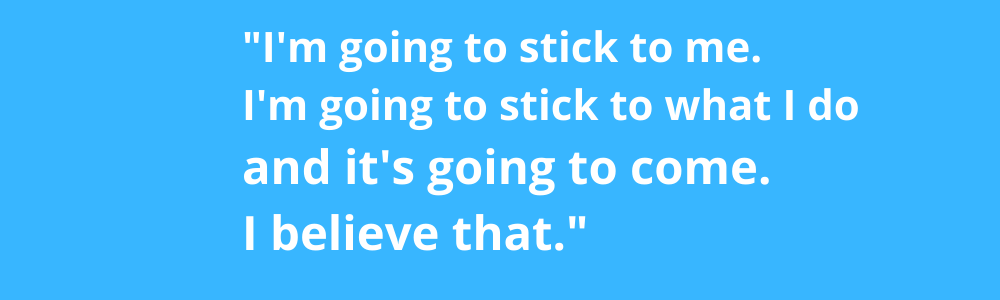
I’m going to stick to me. I’m going to stick to what I do and it’s going to come. I believe that.
Deborah: Really interesting. A couple of things I want to pick up there. One is about that heartache, that heartache and disappointment that all authors go through when they have a submission, a query out there with agents, or a submission with publishers. We kind of give the responsibility for our happiness over to somebody else.
C. D’Angelo: Yes.
Deborah: We put everything, don’t we, on whether or not you’re going to choose me? It’s like, Choose me, choose me. And all of the feelings that you have of rejection when you’re not chosen. You did a brave thing, you said, Well, it’s not going to happen that way – traditional publishing on this occasion, therefore I’m going to take another route independently publishing.
I think that sometimes we can get too focused on one particular outcome it is the be-all and end-all and we put all of our hope into it. And that can be so destructive, can’t it?
C. D’Angelo: Oh yes. It actually in the end does not matter because when you’re a reader reading a book, are you really looking to see where it came from?
No, you’re just enjoying the story. And so, us on the other side, the authors, you know, we get so swept up in these ideas and the way that we thought it should be and all of that stuff. And it can really do damage to your mindset and your self-esteem because yeah, that rejection, that’s hard to face all the time.
You know, to be successful, you have to keep pushing, but you will have those moments as well. That’s just human.
Deborah: Absolutely. I went through a similar journey to yours, which we’ve shared in the past. I too was thinking I was going to get a traditional publishing deal and then took the option of going to be independently published. I have absolutely no regrets. I’d like to be hybrid published in the future (both traditional and indie) because I can see all the options have opportunities within them. But it meant that my father got to see the book that had a dedication to him and my mother in the front before he died. And he was so proud. He showed everyone in the care home. ‘My daughter wrote this, my daughter wrote this.’ I know that he had dementia but he knew very well that he was telling everyone again, and again, he’d say, ‘I’ve probably told you this, but my daughter…’
C. D’Angelo: That is the sweetest story. Oh my gosh. That’s … see that’s everything. That was meant to be.
Deborah: Absolutely. So no, no regrets on that. And like you, I know I’ve seen on your social media feeds, you’ve been to book shops where you’ve signed, you’ve had wonderful responses from readers and that’s so uplifting too, isn’t it?
C. D’Angelo: Yes. That means so much to me. I wrote the story The Difference just, you know, needing to get that story out there, but it is a very deep story for me because really, isn’t in honour of my grandpa and his immigration to the US and all the implications of that.
But also, I have a lot of mental health issues in there because I’m also a mental health therapist. And so I knew people could relate to it, but I didn’t really think about it on that deep of a level. I just thought, ‘I think people will like it, you know, but people’s response to, it has been extremely heart-warming, especially with the mental health aspect. People are very much relating and even saying, Thank you. I feel heard. I feel seen. And you treated anxiety in such a real way. Whereas in a lot of other books it’s not. And, you know, cause I, I can get all the innuendos cause, I’ve been doing therapy for 20 years. And I’m an anxious person myself, but anyways, so yeah. It’s been such a great pleasure to be able to have that feedback. Some people that I didn’t really think about ahead of time, you know, you’re just on a mission to get it done, get it out there, but this is a true joy in, in having the book published.
Deborah: Absolutely. You were saying about people felt that they’d been heard. Again, I draw a parallel because as I’ve told you before my professional background was an occupational therapist, and then I worked in writing serious case reviews and domestic homicide reviews. So, I was listening to people who’ve been through a lot of pain, who were often on the outskirts of society. And their voices are in your head.
I feel that if I have a mission in life, right back from when I was an occupational therapist through my whole career, and now I’m an author; If my purpose has been anything, it’s listening with empathy and giving voice to people whose voice feels unheard. And that’s another way we can do that. Not just in our professional lives, but as authors. Not intentionally, I never set out to write a book to show people this or that. It’s just those voices get in your head and you feel like you’re still doing a service in making sure they’re recognized, and seen, and heard.
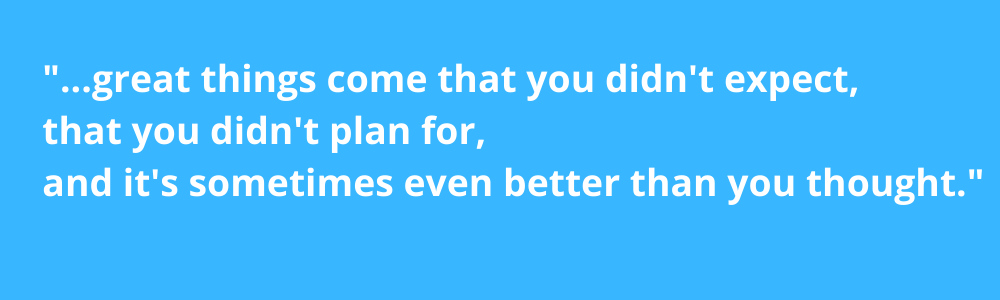
C. D’Angelo: Yeah. And it’s really interesting because it brings me to this idea of just being open to possibility. Which you can’t, you can’t predict what’s going to happen along this journey, and so, don’t even try. Just kind of go along with it and, and keep trying your best, you know? But these great things come that you didn’t expect, that you didn’t plan for, and it’s sometimes even better than you thought.
And it’s interesting because in The Visitor, my second book, there’s kind of a theme in there of a certain character – I literally write, Be open to possibility, because that’s so meaningful to me now.
Pexels – Pixabay
Deborah: Tell me more
C. D’Angelo: In the visitor, I have a character that I have reflecting on being open to possibility and I mentioned it a few times in there. It’s kind of like a scene for her. So that. really hit me with the first book’s journey: Just be open to possibility. And so, I made sure I integrated that into this second book, The Visitor.
Deborah: That’s a wonderful mantra, to be open to possibility. It’s true. And that’s one of the most wonderful things about this writer’s journey – when you open yourself up, with an open heart and mind, a generous spirit, the things that come to you are unimaginable sometimes far greater than you would have dreamed for yourself. It’s incredible.
C. D’Angelo: Definitely.
Deborah: And the way those little links and connections are made, that lead you down a path, or bring people to you. I mean, you and I would never have met had you not contacted me about my last podcast, Castaway Books books.
C.D’Angelo: I enjoyed that.
Deborah: And it’s a wonderful connection – you introduced me to the Author Talk Network.
We’ve had some fabulous guests from there and I’ve met some amazing women. So, all of those opportunities that bring new networks and new opportunities into your life. It’s incredible.
C.D’Angelo: It is. I love that you’ve been talking to the Author Talk Network people. They’re wonderful. I’m so happy to be part of that. And also, this writing community has just been such a huge addition to my life. I mean, I now have people that I talk to all the time and consider friends, even though I haven’t met them in person, you know, it’s the funniest thing to me, but they are best friends at this point.
I love how we can communicate and support each other on Twitter in a, Like, in a comment. And it’s just fun to keep that connection. So again, had no idea that that would happen when I started this journey.
Deborah: I know I’ve been so impressed by the writing community and social media, because I didn’t really get into all of this until the beginning of the pandemic, beginning of 2020 when I decided to indie publish and thought, I’d better dip my toes in the Twitter and Facebook world et cetera. I wasn’t expecting to find such a generous, supportive, amazing community, the writers, especially on Twitter. Like you, I’ve made connections and friends. I have zoom chats with people as I’m doing this for our podcast. I can look at you and you’re, you’re in the States and I’m in the UK, but I have other writer friends from around the world and we meet on Zoom. It’s incredible.
C. D’Angelo: It really is. And especially, I mean I’m of an age where growing up – You were told, Don’t talk to strangers – especially when the internet came around, Don’t talk to strangers on the internet, that’s dangerous. And now it’s this completely different world where some of this is very safe and fine and actually adds a richness to your life. So, it’s really funny to think about the flip side.
Deborah: I’m older than you and I’m of the generation where this is all very new. I think younger people, they think now, Of course, you do that. They’ve been doing it for years, but it was really only beginning of 2020, I was launched into this world.
C. D’Angelo: Yeah. Well, me too, really. I mean I was online. I had, you know, social media and things like that, but I wouldn’t talk to people I didn’t know. So I would say it started a little bit before that with the writing community though, because I had started to build my platform, I would say, I think it was 2019, maybe, Oh, 2018 at the end of 18. So yeah, a good solid year before the world teams.
Deborah: What would you say to people who are listening, who perhaps have only just started writing or are a bit shy of getting involved in the writing community on social media. Where would you say for them to start, if they were just getting involved?
C. D’Angelo: Well, okay. So talking about getting involved, you mean online?
Deborah: Finding a writing community on online.
C. D’Angelo: Oh, yes, yes. I knew that having a Facebook account, an Instagram account and a Twitter account were pretty standard. And so, I had already had those, personally. So I thought, Okay, I’m familiar with them I’ll just do that. And then of course I kind of have my favourites now, but I think it was very valuable for me to be on Twitter actually. Using the hashtag writing community. That is what brought me, everyone there. And just, it’s kind of a tradition on that platform, in that community where people will introduce you.
And so maybe someone will see that and say, oh, hi, CD Angelo, welcome to the community. And then they’ll tag other people. So, then they see you’re new and then it carries on.. Literally, that’s how it started on there one kind soul said, Oh, you’re new. Oh, here. Okay. I’m going to introduce you to people. And it just grew from there. And so then, you know, you just start commenting back and forth with people and it, and it really grows before you know it and unpredictably.
Deborah: I found that the tweet chats have really helped me make meaningful connections with people. I set up one myself, which is #FriSalon for Friday Salon. We meet every Friday using the hashtag #FriSalon. I found that by talking to the same people, or not just same people, because other people would join us, but a whole network of people every week, we got to know each other well. Not only do we meet now once a week, we’ve been beta- readers for each other’s books. We’ve met up on Zoom. They’ve become friends. They always welcome other people in, and now I’m joining in other people’s tweet chats because I think it’s the meaningful connections you make, rather than just surfing – looking at things and commenting. I think when you get involved in tweet chats, you have perhaps more meaningful exchange that can lead to other supportive, fun opportunities amongst writers.
C. D’Angelo: For sure. A long time ago on there, someone that I just would comment back and forth with a lot put me and a few other people into a Twitter group, like in the messages – I don’t know what you call that – it’s like a group chat kind of thing, you know? And we keep in touch every day, all the time. It’s been wonderful. And then some of those people from Twitter in general, not just in the group chat, are also on the other platforms and then you make connections on there.
I think we need, as authors, to support each other and share each other’s work. Be a cheerleader for each other. It really brightens my day when I, all of a sudden, see someone shared a post that I made, that I spent a lot of time on and someone appreciates it, you know? Oh my gosh!
Deborah: Networking is so important to bring new opportunities and open up more possibilities to make friends, and for mutual support. I can’t say strongly enough how important it is to network.
C. D’Angelo: Oh yes, definitely. But, oh, sorry. I was just going to say, not only for just, you know, the kind of sharing, and everything, of posts, and things that are happening, but the
non author stuff that goes deeper. The everyday things, the challenges, you know, like just, oh gosh, how do I continue? Or am I good enough for this, you know, kind of the imposter syndrome? Things like that too. I mean, those people really have gotten me through. I just want to add that in, because that is so important.
Deborah: Yes, absolutely. So, C. D’Angelo, if you were to write a letter to your younger self now, perhaps thinking about the time when you had written your first novel and it wasn’t going down the path you expected it to go, what words of wisdom would you impart?
C. D’Angelo: Trust the process. Have faith that what is, is meant to be, will happen.
If you push sometimes too hard, I think your energy is spent in a place that’s not meant to be. And so sometimes you have to just kind of let go, and then what you want will happen, although maybe in a different way. So, trusting that process, it’s going to happen. Just keep putting in the hard work and you’ll get there.
Deborah: Such good words of advice. Absolutely. Trust the journey. Let go and trust the journey.
C. D’Angelo: Yes.
Deborah: Very often better things than you envisaged will happen. They’ll happen at the right time, in the right way.
C. D’Angelo: Exactly. Yes. And that’s hard sometimes to keep in mind when you see some of the things that are happening to other people that you wish would happen to you, you know, and you have to just keep checking yourself and say, That’s okay. It’s not my time yet. It will happen. Or what is meant for me will happen.
Deborah: Exactly. Don’t compare. We all compare, don’t we?
C. D’Angelo: Yes. Yes.
Deborah: It’s not healthy. We will have different journeys for different reasons, which is perfect for us.
C. D’Angelo: Exactly. I wrote a blog post on this a while ago. I think it was last March. And it’s called Just say no to comparison. We need apples and oranges in the world and so both have their place. Both are beautiful and it’s okay. They’re going to serve different needs. So, we can’t compare.
You must give me a link so I can put it in the show notes.
C. D’Angelo: Okay. I will.
Deborah: Thank you. So how do you look after your wellbeing? Because you’re working full time and you’re still being a prolific writer, and doing all your marketing and networking. So, how do you find time to do all those things, and how do you self-care?
C. D’Angelo: Well, as far as the time, I just have to make sure I prioritize what is needed, but also one of the priorities is my self-care.
Getting The Visitor out there, there have been times where I had to spend all of my time when I wasn’t working, including weekends, editing, doing everything needed to make the deadlines for the different editors and the different appointments and things like that. But most times I could at least have the break of a whole Saturday and maybe half a Sunday, and then just spend a little bit of time on Sunday, doing what I need to do.
I make sure that I keep a consistent schedule. I do book things on Sundays, so it may be writing my blog. It may be catching up with a tour guide/ host of the bookish road trip on Facebook and Instagram. And so, I have duties for that. I may do those things on Sundays. Otherwise, I really try to give myself a break all day, Saturday, and hopefully Friday night too.
During the week nights, it depends on what I have to do. Usually, if I’m not in the deep edits of a book, I don’t have to do much book stuff except maybe social media. But that, to me, isn’t a big deal. That’s just, I’m kind of laying on the couch, doing some things on my iPad. So, prioritizing what I need to do for the week, keeping a schedule on my weekend, but also including my self-care.
Deborah: And what is self- care to you? What do you do to self-care? Finding time to relax – but what do you do to relax?
C. D’Angelo: Yes. Sorry about that. I got lost in my other thoughts. I love to talk with my husband just zone out and read or watch TV or a movie. I do a lot of other types of arts. So sometimes I’ll draw, sometimes I’ll crochet. I have a ukulele that I play. So, those are some other kinds of outlets for me.
Deborah: Finding time, quality time, to spend with family is also something we have to fit into our schedule, otherwise we can be too insular getting on with our writing every free time we have. And then there’s the danger that when we are with them our brains are working on our books and not giving them our full attention.
C. D’Angelo: That is so true. Yes. Sometimes my husband says we need to talk about other stuff than books stuff, you know?
Deborah: My husband’s just as bad because he composes music and I will know he’s thinking about the music and not what I’m saying, when I see his fingers playing the piano ne his leg, my thigh, or on the arm rest.
C. D’Angelo: Sure. That’s so funny. Well, that’s what happens when you’re so ingrained in something, you know, you think about it a lot of the time.
Deborah: Absolutely. It’s been a pleasure talking to you C. D’Angelo and congratulations on The Visitor. It’s publication this week and there’ll be links to your book and anything else you’ve mentioned in the show notes, because you did mention something else – your blog.
It has become a joke between my daughter and me that, Sherman, my husband, always gets preferential treatment at holiday buffets. For example, several years ago, Sherman and I were on a cruise of the Nile. I was standing in a long line of people waiting for the chef to prepare an omelette. Sherman is not even in the queue, he is helping himself to a bread roll close by the omelette station. The chef calls him over and, with a grin and a wink, slides a fluffy omelette onto his plate. Why? Why does Sherman get his needs met without having to ask? I know it doesn’t seem fair.
We have been married for thirty-five years and I have learnt that shop assistants, strangers in cafés, and people we occasionally pass on the street, all want to talk to Sherman. Faces light up when he approaches. We visited a pub on one occasion whilst on holiday in Whitby, Yorkshire. Seven years later we returned to the same pub and the publican greeted Sherman recalling his last visit. I know that Sherman would have bought him a pint when they first met and would probably have made him laugh. But beneath his banter is a man who genuinely cares. He notices people and makes them feel special and included. He doesn’t do it for any kind of return. He loves people and has a generous nature.
My daughter told me that she tried the ‘Sherman technique’ whilst on holiday hoping that she would get preferential treatment at the buffet, and was disappointed to find that it didn’t work. And there is the trick – the lesson to be learned.
If you do something hoping to be rewarded in kind, you will be disappointed. Life doesn’t work like that. When I first started this blog, I checked the statistics a few times each week driving myself crazy with negative thoughts. Why would anyone follow my blog when there were more experienced people out there writing much more interesting stuff than me? Was I wasting my time?
Checking stats
Then I had a revelation, and I have Lauryn Trimmer prostorybuilders.wordpress.com to thank for that. In a blog, Lauryn said quite simply, Don’t look at the view count on stats. Just don’t do it. That was all it needed. I went for a run and thought, why am I worrying about the stats? I am doing something that I love. The blog, sharing thoughts and ideas with like-minded people on social media, reading and reviewing other authors’ work, being part of a readers’ and writers’ community – I love these experiences and opportunities. By the end of that run, my mind set had changed. Now, I commit to all of these things for the joy that they bring – not for any expected return.
The law of abundance
Meditation teaches us that gratitude, love, and joy bring abundance into our lives. That people are attracted to positive energy. Abundance does not work like a weighing scale with each good deed or good thought rewarded in kind. By being happy with where you are and who you are, you radiate positivity.
If you have been following my blogs, you will know that I started this journey as an Indie author/creative entrepreneur with mixed feelings: excited by the possibilities, but daunted by the challenge that lay ahead. It is still early days, but as I relax and enjoy connecting with other creatives without expectation, just a willingness to support others on a similar journey, people and opportunities have come into my life that I could not have anticipated.
Networking
Social media can be a valuable tool for networking and may lead to more meaningful connections with others. It can also be soul destroying if you value your worth by how many followers or ‘likes’ that you have. Take pleasure in the process. Be kind. Be authentic. Don’t expect any return– but don’t be surprised when you are called to the front of the line to receive an omelette before having to ask.
I am ending this week’s blog with a favourite poem of mine. Many years ago, this was pinned above my desk as the words really resonate with me. It is by Robert Muller, former Assistant Secretary-General of the United Nations.
Decide to Network
Decide to network Use every letter you write Every conversation you have Every meeting you attend To express your fundamental beliefs and dreams Affirm to others the vision of the world you want Network through thought Network through action Network through love Network through the spirit You are the center of the world You are a free, immensely powerful source of life and goodness Affirm it Spread it Radiate it Think day and night about it And you will see a miracle happen: the greatness of your own life. In a world of big powers, media, and monopolies But of six billion individuals Networking is the new freedom the new democracy a new form of happiness.


 Deborah Klee