My thanks to yoga instructor, Jocelyne Leach, for inspiring this week’s blog post.
The world feels as though it is full of extreme views right now. When we listen to the news, it is no wonder we feel the antagonism. In recent years, conflicting views about politics, policy, and the behaviour of world leaders, have divided families, and friends – certainly here in the UK, and from what I hear, in the USA.
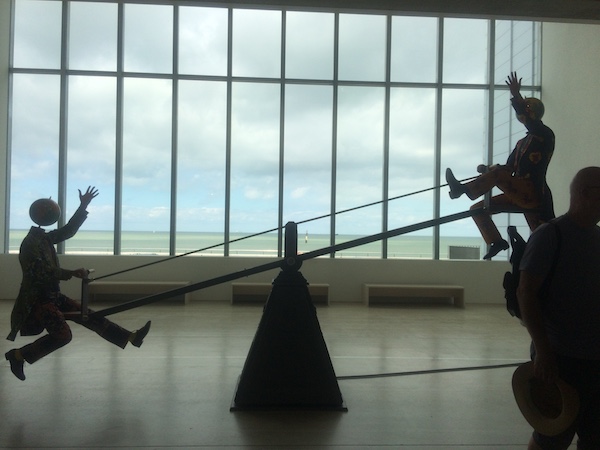
We take these thoughts and feelings into our daily lives, as we absorb the negative energy. So, finding our equilibrium – a fulcrum on which to find a balance between extremes is needed now more than ever.
Creatives are prone to extremes in emotional response. It seems agents/publishers are fond of saying I/we loved … before going on to give an honest and balanced critique. It is IMHO an overused word in the publishing world – used, maybe, to manage our fragile egos.
Authors want readers to love their books and fear that they might hate one. It is always love or hate. We swing between feelings of elation and despair. Those great highs are often followed by an adrenalin dip, and/or the need for another high. That is perhaps why we feel the need to constantly check sales, reviews, or social media comments. It is an addiction to receiving positive reinforcement.
I know that I have a need for approval. For most of my life I have had a habit of ending my statements with a question – isn’t it? Don’t you? A boyfriend once pointed this out to me.
Like many new writers, it was important to me to receive validation. I have had this through the belief of my agent, feedback from editors, book reviewers, and readers. This should be enough but l find myself swinging from either end of that scale – it’s all fantastic or doom and gloom. I am trying to focus on that steadying fulcrum in the centre, to accept the reality, the ways things are – perfectly OKAY.
I know that my need for approval goes back to my childhood, wanting the approval of my parents, particularly my father. There are some painful childhood memories that I have buried but there lies the root of my need for approval. Understanding myself is the first step to letting go of that need.
There is nothing sexy or exciting about OKAY. To accept what is and be still with it will take time and patience for me. I am trying to break the habits of a lifetime. I will do this through meditation. By noticing my emotional responses with compassion and then letting them go.
Julia Cameron wrote in The Right to Write, Keep the drama on the page. Creatives love drama, but there is no need to play them out in our lives. Let’s try and find that quiet, mindful path, between extremes.
In this 4th episode of The Mindful Writer, poet Ingrid Wilson reads a few of my favourite poems from her collection, and talks to me about becoming forty. Before I introduce Ingrid, let me update you on my writing journey.
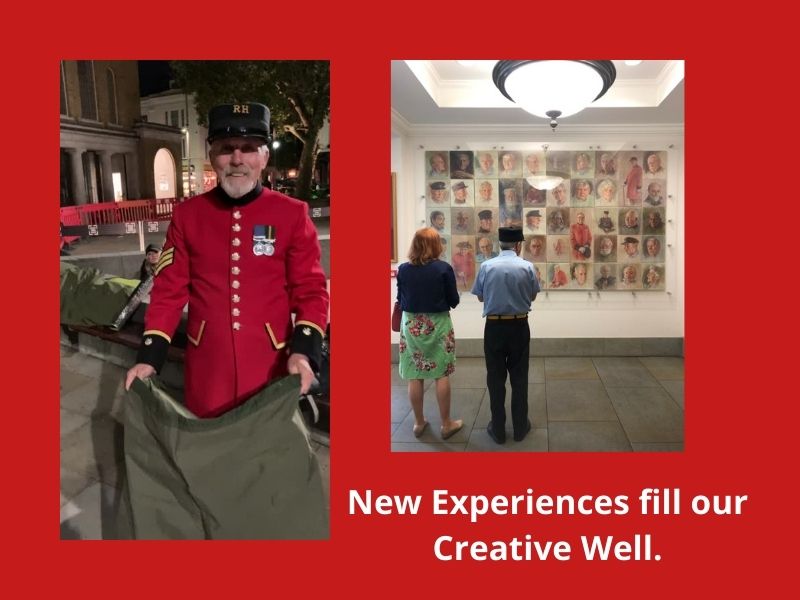
We are enjoying a spell of warm weather in the UK at the time of writing this. Do you find it difficult to keep up a writing routine when the outdoor beckons? Although it’s many years since I lived by the academic year, I always find the need to have a break in August. Slowing down in the summer months feels right to me. I believe that being part of nature we should listen to our natural rhythm and accept the ebbs and flows of creativity. I have been enjoying what Julia Cameron, in her book, The Artists’ Way, describes as filling my creative well. An outing to The Royal Hospital on the day of The Chelsea Flower Show has filled my cup with story ideas. A Chelsea Pensioner, who I met last October when I was sleeping on the street for one night to raise funds and awareness for homelessness, invited me to visit him at The Royal Hospital for a private tour. The day following that inspiring visit, I wrote the synopsis for two novels.
Left: Chelsea Pensioner Alan Rutter shares the pavement with me when we bed down for the night in October. Right: The Royal Hospital admiring a mural of pensioner’s portraits. A few of these faces will influence characters in a future novel.
So, enjoy the summer. Experience new things, and fill your head with ideas. I would love to hear what you are up to: how you are spending this summer, and how you self-care to enjoy the rewards of each season. Now, to the interview.
Ingrid Wilson is author of the poetry collection 40 Poems at 40 At the time of this episode going live Ingrid has been busy preparing Wounds I healed: The Poetry of Strong Women for publication day on 18th June 2022 with the editorial expertise of Amazon #1 bestselling poet Gabriela Marie Milton.
In this week’s episode Ingrid explains:
How she keeps grounded when experiencing uncertainty and change
How she found the courage to pursue her dream of being a fulltime writer
How she is using her unique combination of talent, skills, and experience to make a difference in this world.
Deborah: Welcome Ingrid. I’m really excited to be interviewing you for the mindful writer because I have followed your blog. And I know you followed mine. We’ve had some really interesting chats online over the last couple of years, and I know you’re a like-minded soul. You’re very aware of your spiritual and personal growth journey.
I’m going to introduce Ingrid by giving a quote from a review of her recently published poetry collection, 40 poems at 40, which is exactly what it says. It’s 40 poems that you wrote to commemorate your 40th birthday. This review came from Gabriella, Maria Milton, and this is what she said. ‘40 poems at 40 is the manifesto of an extremely intelligent and talented woman unafraid to explore her past and her inner world.’
And she went on to say, ‘A woman who knows how to ask questions about the real meaning of life. A woman who does not mince words and does not submit to stereotypes’. I think that’s wonderful review. And what wonderful things to be said about you. I absolutely agree with her. So, I’m really excited to welcome you Ingrid.
Let’s start by asking you, what inspired you to publish a collection of poems to commemorate your 40th birthday?
Ingrid: I’m going to read a short part from the introduction to the book because it explains it quite well. In the introduction to 40 poems at 40 I’ve written: I’m publishing these short and highly personal poetry collection on the occasion of my 40th birthday as I feel in some way that this milestone marks a watershed between the faltering and unsure steps of youth through the years of self-doubt, and even at times, self-loathing into a period of self-acceptance and quiet competence. A period of reflection, serenity, and gratitude, balanced as ever with hard work.
Deborah: Amazing. Forty seems a long while ago to me that I’m now 62, but I do remember it felt like a watershed for me. It is a time when you have had lots of experience and you’re looking forward. So, can you tell us a little bit about some of the major things in your life that have happened that have brought you to forty?
Ingrid: Oh, well, there’s been a lot. I mean I experienced bereavement early on because I lost my mom when I was eight. So, that will have played a big part – well it’s had a huge impact on my life, and my development. Not all of it negative. I mean, I’ve grown and learned a lot through my experience of processing grief.
Then, I moved around a lot as I think you mentioned. I’ve lived in lots of different parts of the UK. I’ve lived in Manchester, Newcastle, London for a long time. And then, with my family, I moved abroad. We lived in Barcelona. We lived in Malacca. We lived in Slovenia and now I’m back in my hometown, back in the UK, in the north of England. So, that has really shaped this journey: the travel, the emotional experiences. And I have two beautiful children as well, which of course has shaped my experience and brought me to where I am now. I’ve tried to get all of this into the book in one way or another.
Deborah: So, adjusting to live in different countries. I mean, that’s, you have to be quite courageous to have that kind of upheaval. How did you find the adjusting? How were you with language and culture and integrating into communities?
Ingrid: I found it very interesting. It was certainly challenging. When I arrived in Spain, I didn’t speak very much Spanish at all, but I had to learn fast because I put my son into school and the Spanish school. Then I became pregnant with my second son and I was having to talk to doctors in Spanish. So, I just threw myself into that and really focused and spent a lot of time practicing with Apps and practicing speaking. That helped me to integrate up to a point, but I still did feel like a foreigner for a long time until I started to work. When I went to work in Spain, I got a lot better at the language and I felt more that I was integrated. Slovenia it was totally different. I could already speak Slovenian coming to live there, I felt a really huge culture shock more so than when I went to Spain. Perhaps because of the pandemic and the circumstances in which we moved, but I found it harder to adapt to life there overall, lots of challenges. But I had to keep grounded, you know, keep doing my yoga, spiritual affirmations. And of course, the writing. That always helps keep me grounded.
Deborah: Let’s go on to talk about being grounded because you take a lot of inspiration from nature in your poetry, which is one of the things I love about your poetry. And I know the environment’s very important to you. You recently hosted a community assembly on the climate and ecological crisis. So, does nature help you to feel grounded too?
Ingrid: Definitely nature. Being out in nature is very therapeutic to me. If I’m going through a difficult time personally, or if outside world events are getting me down, I head out to the countryside. I’ve got the Lake District on my doorstep now, which is a place I really love. And I like to go to the quiet places where there aren’t a lot of tourists around and just listen to the sounds of nature and take in the sights and smells.
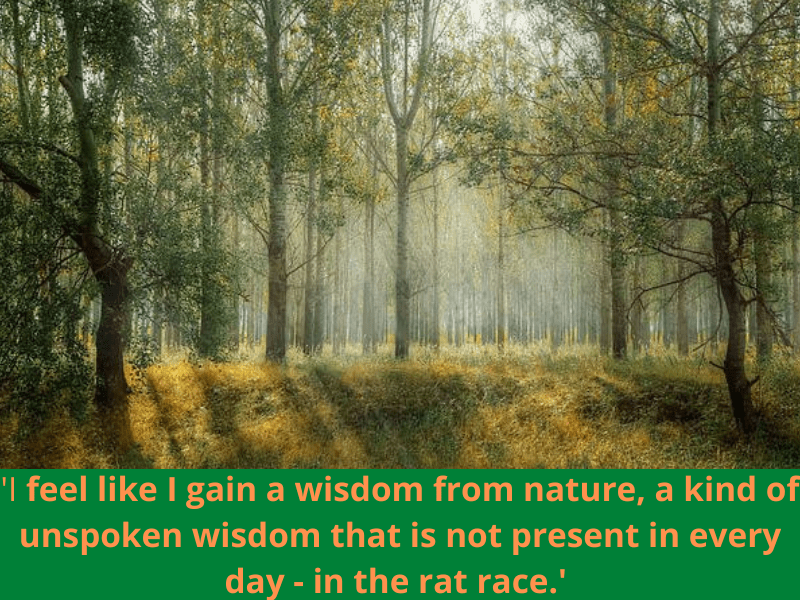
I feel like I gain a wisdom from nature, a kind of unspoken wisdom that is not present in every day – in the rat race. You know, when you go into the shops? It leaves me quite cold and so just to feel whole again, heading out into nature really helps with that. Also, the seaside. I’ve lived by the sea several times in my life I’m lucky to say. That inspires me too. It does feature a lot in my poetry.
Deborah: Absolutely. I feel exactly the same and I don’t know about you, but I would choose where I live by making sure I have those things around me. For me. It’s the sea. I can be walking by the sea within five minutes from leaving home. I can walk to the sea. I couldn’t imagine not living near the sea. I think I’d be claustrophobic if I was too far inland. I like to look out over the edge and breathe the fresh air.
But not everybody who’s listening will have the countryside or sea around them. But even if you can find some open, or green space will make a difference.
Ingrid: I’ve lived in London, you know, right in the middle of the city and just to go to the park or to the river will have a similar effect for me. Nature’s always bursting through wherever you are. It always finds a way through however much concrete we put down, or buildings we put up. It’s always there. We just need to know how to find it.
Deborah: Absolutely. I find it always just fills me with awe and makes you feel that you are connected, and part of something much greater and bigger. To be grounded is really to feel connected with your body and the earth, isn’t it? Sometimes we can get so caught up in what I call the thought goblins, all the noise that goes on in our head, and that’s when we start to feel ungrounded. We need to take time to bring ourselves back into our body, the earth, and feel connected so that we ‘ve got a clear and calm mind. And I think it’s particularly difficult at this time. We’ve got so many pressures going on in the world haven’t we? First of all, we had the pandemic, and then the things going on in Ukraine and across the world. It’s such an unsettling time for us all. I think it’s really important people know how to feel grounded.
There’s nature. There’s meditation. You and I both are strong advocates for the benefits of meditation, aren’t we? Do you try to do a daily practice?
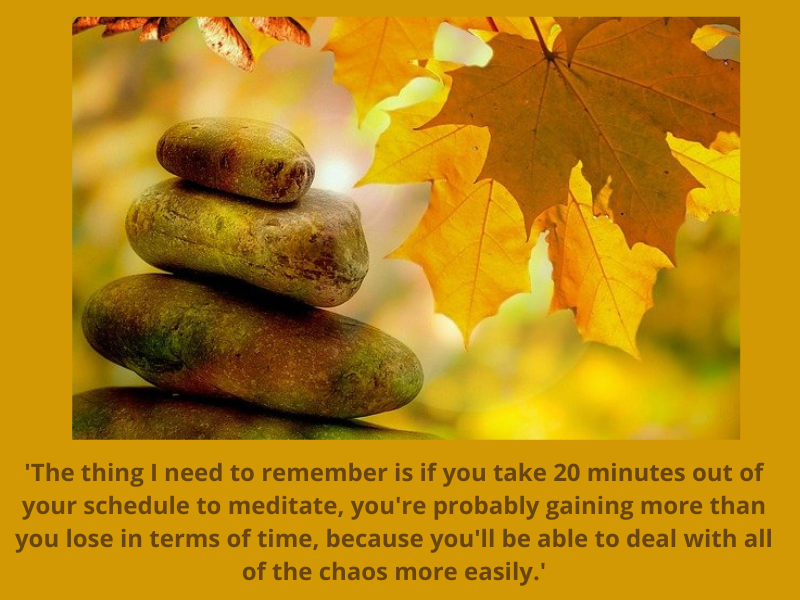
Ingrid: I do. I’ve been not been keeping it as regularly as I should, and I can feel when it, when I’ve missed out too much. I was in the habit during the pandemic of spending at least 20 minutes a day. Now life’s gone a bit more back to normal, things are more hectic. I can find myself missing out on the practice, but it’s always beneficial. You’re not actually losing time. The thing I need to remember is if you take 20 minutes out of your schedule to meditate, you’re probably gaining more than you lose in terms of time, because you’ll be able to deal with all of the chaos more easily. So I do try to keep up the practice.
Deborah: Absolutely. It’s like putting some petrol in your engine or oil (I’m not very good on technical things), but it’s filling up and recharging, so that you can cope with what life throws at you. And also, you’re more effective because you have more clarity of mind so you can see your path better.
Ingrid: Yeah. It’s like seeing the woods for the trees. Isn’t it?
Deborah: Absolutely. So, you have had an interesting life traveling around the globe, as you say. Have you always had a strong sense of purpose?
Ingrid: It’s interesting you should ask. As a child I did. I always enjoyed writing. Especially I could relate to poetry and I would recite it and learn it and write my own poems. And I always felt that I would do that. You know, that would be my, my life purpose, but then kind of real life, if you can call it that, got in the way. I went away to study at university and then your kind of shoe horned into ‘You’ve got to have a career now.’ And I didn’t really know what to do, or how to have a life as a writer or a poet. So, you know, I took a day job. Like most people do, you know, got bills to pay and all that kind of thing. And then I wanted to have a family and I sort of drifted away from it a bit. I didn’t stop writing altogether, but with the pressures of everyday life, it kind of went by the wayside until really the birth of my second son brought back that focus. I really felt that now I need to take this seriously, or I’ll just live out my life and do the things that everybody does, but I will not be true to myself unless I do something with writing. And that’s when I really started writing again in earnest. And then with the pandemic and I took redundancy and I started to treat my writing as my profession at that point.
And I’ve just been growing from that point. It is hugely satisfying. It’s got a lot of challenging challenges, but I certainly feel I’m fulfilling a purpose that I’ve always had now by doing that.
Deborah: You’re giving a gift to so many others who can read your poems and get so much from it. So, I’m going to get you to pause there and ask you to read one of your poems. Can you read, Points North? I picked out a few that I particularly love, but this for me struck a chord about sense of purpose.
Ingrid: Thank you.
Points North
Wheels in motion and the wind
whips around behind my ears
at the nape of my neck
Deborah: I love that. I think we all have, I believe, a purpose. What comes together with our unique contribution of attributes. You know, our knowledge, our networks, experience, talents, all the things that make us who we are. I always believe it’s been put there because we have a unique purpose to fulfill in our life.
I’ve had a sense of that since I was seven years old. I remember saying to my mum, I must’ve heard Bible reading or something at my school. It must have been about everyone having a purpose. And I said to her, ‘I don’t know what my purpose is. I don’t know what I’m here for.’ And my mother just sort of told me to go to sleep and not to be so silly, but it plagued me from seven years old, until I grasped what it was.
Have you always had a sense of purpose in your head, apart from writing? Maybe about the connections you make with nature and sharing that with others? Or was it just a sort of innate need to write?
in a subtle caress
and I know I’m being propelled
along a river of life
whose course and motion
I do not pretend to understand
sometimes I like it when the waters
speed me down towards a sea
sunless and sighing
till the cloud breaks
and I see
the sky is crying
and at sundown
out come all the thousand stars
and I can name the constellations
in this hemisphere
at any time of year
there is always the Plough
above, or the Big Dipper
and at its tip, Polaris
The Pole Star
Points North.
And so I have my fixed
celestial compass
though I do not
always understand the path
or the trajectory
I know well my own
portion of the sky,
the earth below, above only the heavens
and
Points North.
Wilson, Ingrid. 40 Poems at 40 (pp. 35-36). Experiments in Fiction. Kindle Edition.
/
Deborah: I love that. I think we all have, I believe, a purpose. What comes together with our unique contribution of attributes. You know, our knowledge, our networks, experience, talents, all the things that make us who we are. I always believe it’s been put there because we have a unique purpose to fulfill in our life.
I’ve had a sense of that since I was seven years old. I remember saying to my mum, I must’ve heard Bible reading or something at my school. It must have been about everyone having a purpose. And I said to her, ‘I don’t know what my purpose is. I don’t know what I’m here for.’ And my mother just sort of told me to go to sleep and not to be so silly, but it plagued me from seven years old, until I grasped what it was.
Have you always had a sense of purpose in your head, apart from writing? Maybe about the connections you make with nature and sharing that with others? Or was it just a sort of innate need to write?
Coutesy of Pixabay
Ingrid: I think it was the writing first because the connection with nature, although it was always there, I didn’t realize it or appreciate it so much at that age. It’s something I’ve grown into. But the writing, that was always a burning thing in me. I kept lots of diaries when I was a teenager, you know? I would write pages and pages not to share. I just have this need to write and yeah, that’s always been with me. I went off to explore different things I would like to do. I love music and I went through wanting be a singer for a while, you know, like, like you do when you’re a teenager and acting, I wanted to be an actress. But really it was the, the writing that I would always come back to. It’s nice to have that.
I find it interesting that in the poem, Points North; when I wrote it, I was in Slovenia, having just moved from Spain and feeling a bit dislocated. And then I ended up coming back to the north of England. So, I find it interesting that that poems kind of prescient in a way now looking back.
Deborah: Yes. When you’re going through life, because we all have these periods where we feel it as if we’re losing direction, what do you use to help you set your direction to have to have that sense of you’re on the right path?
Ingrid: The few things that we mentioned meditation. Yoga, which to me goes hand in hand with meditation. Just to help me keep my focus on my balance. The writing as well, because I try to keep that going whatever’s happening. However, chaotic my life might be at a particular point. I will keep writing the poetry and it might change a lot in subject and tone and form.
But the thing that keeps me grounded is just the act of doing it and keeping it going through whatever’s happening around, stay clear, headed and focused. I think.
Deborah: Excellent. I say to people who perhaps are in an earlier stage of their life and have lost direction, or don’t feel they have a sense of purpose – you probably say this to your boys, I always said it to my daughter, when she was growing up: Do what you love. If you do what you love, you’ll be good at it. And if you’re good at it, you’ll succeed at it, because that is the seed that’s been sown in your heart. That seed of desire that is there for you to nurture.
Because that will give you an idea about what your purpose is. And I think, when you get excited about something, and you get lots of energy, that’s telling you that you’re on the right path. So, when I was younger and I would have a look at a job, somebody said to me, Does it make your heart sink or sing? I would always then test out how does that make me feel? Do I think, oh no, or do I think yay? And you know, that feeling when something really excites you? For me, I just have to go and run because I just get woosh! All this energy. And for me, that buzz of energy is – You’re on the right path.
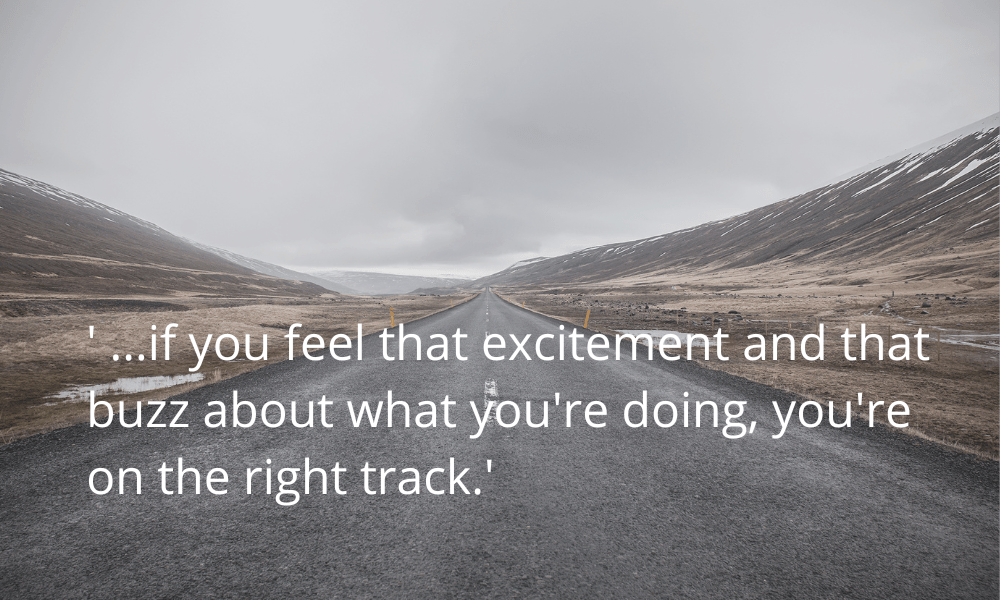
Ingrid: Oh, yes, I can really identify this. It was just funny when you say about looking at the jobs, because when I used to look at the job page in the paper, my heart was just constantly sinking. Whereas now, when I get up and my job is, you know, to write a poem, to work with other writers putting books together, launching creative projects, that really gives me a buzz. And it’s great advice if you feel that excitement and that buzz about what you’re doing, you’re on the right track.
Deborah: Even if you think, ‘It’s impractical. I’m not earning money,’ or comparing yourself to others, or ‘This isn’t the route I thought I would take,’ ignore that and listen to that inner energy, because that’s your soul telling you which path you’re on. You’re on the right path.
Ingrid: You have to be quite brave to do that and ignore the pressure and what other people think. You just have to. How else, how else can you do it? You have to put yourself out there and believe in what you’re doing. Yeah.
Deborah: Absolutely. We’ve talked a little bit about nature. I didn’t hear what happened about the community assembly on the climate. I’m really interested in that. How did that go?
Ingrid: Yes, I was awarded some funding to hold a community assembly – to get a group of people together and discuss, you know, the best ways to meet the challenges of the climate and ecological crisis.
So, what we could practically do about it. Unfortunately, I couldn’t get enough people to come along to a Zoom session and discuss this because it was quite a long time. It was supposed to be held over three hours and who wants to spend three hours on these things, but to me it was very important, I’d been given a chance to add my voice. I’m always talking about, we need to do more about this crisis and I had a chance to add my voice to where it might be heard. So, I held it as a poetry prompt in the end. I write for a forum called Earthweal, where we write a lot of eco poetry and we write about the climate crisis. So, I invited people to write poems about how they would address the climate crisis and biodiversity crisis. I posed the questions that I was asked to put into the community assembly as a poetry prompt, just to see what came out of it. And I did get a good response. Then I collated it and sent it to the Global Assembly which does get fed back to some kind of global panel on climate change. Whether it makes a huge difference? I mean, it’s a drop in the ocean, but I feel it’s important to add your voice wherever you.
Deborah: That’s amazing. I really love the way that you brought together the poetry and how you enabled people to have voice using that media.
That’s amazing. And that’s something that only you could do, that is using your unique contribution, your attributes, your skills, your experience, your network, to do something that only you could do in that way, which is amazing. And it does make a difference.
Ingrid: Well, you have to do what you can with, with the tools you have.
Deborah: Amazing. And that brings me to another poem I’d love you to read. We started by talking about the sea. I like to go for a walk by the sea pretty much every day. It is where I do my best thinking and meditation. And this really spoke to me. So, can you read to us You and Me Sea?
Ingrid: Yes.
You and Me, Sea – A Love Song
Ain’t it just like you and me, Sea
when we dance together,
I barefoot on the sand, you
lapping at my toes?
Ain’t it just like we’re two parts of
the same whole:
I was born of you, and you
bring me to life once more?
Ain’t it just like you and me, Sea?
And we’ve always been together
dancing a saline tango in the sun.
Ain’t it just like you and me, Sea?
When I hit stormy weather
on your shore I’ll wind up, by the wild
winds
flung.
Say, it’s just like you and me, Sea;
I can hear you calling:
your echo fills my silent afternoon.
And that was all I wanted to say, Sea:
When I’m far away from you
I feel your surge in me which swells into
a tide to take me home.
Wilson, Ingrid. 40 Poems at 40 (p. 41). Experiments in Fiction. Kindle Edition.
Deborah: Beautiful. Love that. I’m going to give a link in the show notes for your book Poems at 40, so other people can appreciate and enjoy them as much as me, hopefully. And I’m going to get myself a paperback because I just want to have it by me so I can keep on referring to it. It’s a book you have to have as a paperback. I think. You’ve got two beautiful boys. One of them is a poet himself. Isn’t he?
Ingrid: The older one? Eight. Yeah. They both liked writing so, I think they pick up on what I do and, and they’re inspired by it, which is great to see. I hope they keep that going.
Deborah: Lovely. How on earth do you juggle your time, especially when you were working as well, with two boys, and keeping up your writing, and working? How did you manage that?
Ingrid: Good question. When I was working – if I was working full-time the writing went by the wayside. So, that’s why I decided to change and make writing my full-time job. So, nowadays I tend to get up very early. I’ll often get up about 5:00 AM. That’s when I have my creative ideas. It’s when the muse is with me. When I write my poetry, I love that silence when everyone else is asleep and you can just hear the birds sing. I sit and do my creative work at that point. And that gets my head in the right place for the day. And then I’ll do the school run and the things I need to do, housework, whatever.
Then I’ll come back and do the more practical side of the writing job: emails, responding to comments on blog, putting work together. The project management side I do later. But the creative work comes first. And that’s how I most often start my day. So, I love to get the day started off in that way, but there is a lot of juggling and I try to make sure I have time for the boys and we, you know, read stories together and go on adventures together at weekends and whenever we can. So, balance is really important. In a way I tend to push myself very hard, and sometimes I don’t take enough time for myself to just relax. I try to put that in as well. Otherwise, I’m in danger of burning myself out.
Deborah: Absolutely. Yes. It’s a fine balance isn’t it between work, self-care, and giving quality time to your loved ones?
Ingrid: Yep. It can be done, but you have to keep everything in balance.
Deborah: It sounds like me. I tick them all off in my head. I allocate time. That’s my quality time there. That’s my writing time. I schedule my time. I don’t tell anybody else, but I do. You probably do the same thing.
Ingrid: Yes. And I’ve had to let go of the idea of things like housework ever being done. It’s just always in the process of being done. It’s like a flow. And if I can manage the flow and stay on top of that, that’s fine. Other things get done. Like a book can be finished and put out, but the laundry is never done. It’s always just been done. And I’m okay with that. Now I used to think I had to get it done, but now I just go with the flow. And that helps me to be able to do other things as well. So yeah, something has to go. You can’t do everything. You would drive yourself crazy if you tried to?
Deborah: Absolutely. I would like you to read Poem for my children, which is another beautiful one.
Ingrid:
Poem for My Children
Let not my words die with me
after all is said and done
I dedicate these words to you,
continue on alone.
Let not my words die with me
at the closing of my day:
they’re all I ever had to give
and now I cannot stay.
Let not my words die with me,
let them linger in the light
of eventide, e’en as I fade
into the darkling night.
Let not my words die with me
and I cannot be afraid
that I am leaving you alone
with too much left unsaid.
But let my words live with you
let them echo down the years,
let them resound and comfort you
when I’m no longer near.
Wilson, Ingrid. 40 Poems at 40 (p. 24). Experiments in Fiction. Kindle Edition.
Courtesy Shanghaistoneman Pixabay
Deborah: That makes me cry. I cried when I read it and I cried when you read it out. It’s very, very good.
Ingrid: I knew I was onto something cause it made me cry when I wrote it. So yeah, it’s an emotional poem that one.
Deborah: It’s beautiful. Do you think that’s one of the reasons writers write? To leave a legacy?
Ingrid: Yes. I think the first reason writers write is because it’s in them and you just have to. For me, it’s like, I don’t really have a choice. It’s part of me and I need to do it. And then I thought, some things you just write for yourself, like a diary, or if, you know, you make a journal because something’s upset you and that’s very personal type of writing. But then I think, yeah, as writers we do also like to write for an audience and we like to have at work read. Certainly, my poems. I want to share them. I put them on the blog and sometimes I think I should hold these back so I can include them in a book. I write them to be read, and I always try to keep my readers in mind as well as me.
I’ve wanted to have a direct, emotional impact. I like word play. And I don’t really like to use lots of fancy words and sort of inaccessible language because I want to reach the reader and to have an emotional impact. And whenever I get a comment on my blog that something has touched someone, you know, has touched the heart, that means the most to me, because that’s really what I’m trying to do with my writing.
Deborah: Well, you certainly achieve that. You always touch me with your poetry. I just love reading it.
Ingrid: Well, thank you so much.
Deborah: Thank you so much for joining me to talk about your journey and sharing your poems. And there will be links, as I say, in the show notes so that others can enjoy them too.
Ingrid: Thank you for the interview. I’ve enjoyed it. It’s been an honour.
Deborah: Thank you.
Some final words from me…
The turmoil created by uncertainty and fear makes us unsteady. We find it hard to concentrate, sleep badly, feel panicked, and anxious. I get migraines and eczema, my body’s way of telling me that there is an imbalance in my body that needs attention. This is what it means to feel ungrounded.
To be grounded is to feel connected with our body and/or the earth. It is about being fully present. To have a clear and calm mind. It is essential if we are to take care of ourselves and our future. When we have a clear mind, we are more receptive to ideas and opportunities. We are better able to plan and to take control of the things we can influence.
There are practical things that we can do to feel more grounded.
Go for a walk where we can get close to nature
Try mindfulness meditation. If this is new to you the HeadSpace app is a good place to start. There is a 7 day free trial at www.headspace.com
Exercise. Something that focuses us on our body and stops our mind from wandering. For me this is yoga. There are yoga classes for being grounded on YouTube. Try Yoga with Adrienne. If you don’t enjoy yoga then dancing, Pilates, running, swimming – anything that helps us switch off our thoughts and connect with our body.
Relaxation – using a guided visualisation or listening to calming music. I try to focus inward and ask myself what I want and need. Then honour myself with kindness. If I need more sleep, then I try to get an early night. What can we do to reduce the pressure on ourselves?
When I feel fatigued and overwhelmed, I try thinking about it this way: The experience is making me stronger and more resilient. As we learn how to still our mind and draw on our inner resources we are growing as a person. We are becoming a warrior and will be better equipped to face future challenges.
A mind in turmoil is of little use but a calm mind will help us to spot new opportunities and solutions to problems. Control the things that we can by focusing on what needs to be done, and let go of the things we have no control over.
So, until next time, take care of your beautiful self, and trust the journey.
Recently, I had a dream. The ground had fallen away in my garden, exposing the roots of plants and shrubs, and if that wasn’t bad enough, somebody had moved the fence reducing my garden to a fraction of its former size. It is an easy one to translate, given the fear and uncertainty surrounding the pandemic. On a day to day basis, I think I am fine coping with the changes to my life, and I am taking good care of myself and loved ones. My dream tells me otherwise. This is a challenging time for all of us, and we need now more than ever to practice feeling grounded.
In the UK we have just heard that we are to have another full-scale lockdown, following other countries such as France. Although this is not a complete surprise, I understand fully the fatigue and distress this will cause for many people. It is as though we have been running a marathon and just as we think the finishing line is in sight we find out we have miles yet to run.
Everybody’s situation is different. You may be afraid about your future income and paying the mortgage or whether your business will survive. A health professional working at the frontline exhausted from treating patients in the first wave and facing an even harder winter. A single person living alone without the company of work colleagues and friends, concerned for your mental health. Or separated from a loved one who is in a care home wondering whether you will ever see them again. It is tough. It is painful and it is frightening.
The turmoil created by uncertainty and fear makes us unsteady. We find it hard to concentrate, sleep badly, feel panicked, and anxious. I get migraines and eczema, my body’s way of telling me that there is an imbalance in my body that needs attention. This is what it means to feel ungrounded.
To be grounded is to feel connected with your body and/or the earth. It is about being fully present. To have a clear and calm mind. It is difficult at this time, but essential if we are to take care of ourselves and our future. When we have a clear mind, we are more receptive to ideas and opportunities. We are better able to plan and to take control of the things we can influence.
There are practical things that we can do to feel more grounded.
Go for a walk where you can get close to nature. I love to walk in the woods. The smell of leaf mould, rich dark earth soft beneath my feet, and ancient trees, it is a great way to feel connected to the earth and forget for a while about any worries. If you live in an urban area, any green space can offer similar benefits.
Try mindfulness meditation. If this is new to you the HeadSpace app is a good place to start. You can find a 7 day free trial at www.headspace.com The meditations last no longer than ten minutes. With practice, you can learn to still your mind. Even if it is just for one minute, you will start to feel the benefit of regular practice. When I was new to meditation I would find ten minutes each day, even if it meant sitting in my car when I had a short break at work or listening on the train. My blog on Meditation Challenge Part one explains how learning to meditate helped me to feel grounded when experiencing a challenging time in my life.
Exercise. Something that focuses you on your body and stops your mind from wandering. For me this is yoga. There are yoga classes for being grounded on YouTube. Try Yoga with Adrienne. If you don’t enjoy yoga then dancing, Pilates, running, swimming – anything that helps you switch off your thoughts and connect with your body.
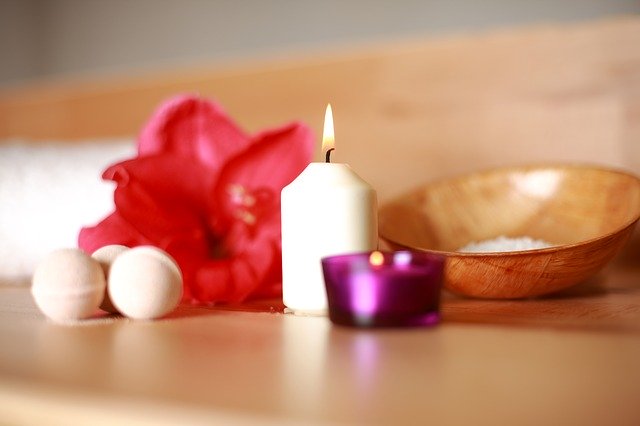
Relaxation – using a guided visualisation or listening to calming music. Try to focus inward and ask yourself what you want and need. Then honour yourself with kindness. If you need more sleep, get an early night. Try and reduce the pressure on yourself. In my blog Restore and renew your creative spirit, I suggest how you can enjoy a spa day at home.
To feel grounded, we need a solid foundation. I imagine myself as a tree. My roots go deep into the earth, holding me firm, and my branches reach up, the leaves absorbing energy from the sun. I am strong. I am grounded. This is my mantra and affirmation.
When you feel fatigued and overwhelmed, try thinking about it this way: The experience is making you stronger and more resilient. As you learn how to still your mind and draw on your inner resources you are growing as a person. You are becoming a warrior and will be better equipped to face future challenges.
A mind in turmoil is of little use but a calm mind will help you to spot new opportunities and solutions to problems. Control the things that you can by focusing on what needs to be done, and let go of the things you have no control over.
As this blog is about the inner journey of the creative I will use an example from the writer’s life. You can write and publish a novel to the very best of your ability using all the resources and expertise available to you, but you cannot control who buys your book or what the reviews say. Sure, you can spend time and money on marketing your book but that is all. Despite this, all writers angst about sales and reviews. It can make a writer feel panicked and anxious – sure signs of being ungrounded. Comparing yourself to others – feeling inferior or superior, are signs of being unconnected to your body and true self. Stay grounded. Be consciously present. Focus on the things you can control and let go of those you cannot.
I hope that this helps you to find ways to stay grounded. Keep safe and be kind to yourself.
We have all experienced those dark days during this pandemic. The days when it feels as though it will go on forever and you mourn all that you have lost. Your independence, freedom, social contact, hugs, travel, and adventure. Many people have lost loved ones and/or their livelihood. We have endured months of this challenging time and like marathon runners, we sometimes hit a wall.
Last week when I popped into the little grocery store on the corner of my road, the owner, an Asian woman who always greets her customers with a smile and kind words, seemed distracted. She wasn’t hearing what I was saying and she was making mistakes. When I asked what was wrong, she told me that she was afraid of the consequences of this third lockdown (in UK) on her, her family, and her business. I reminded her of how well she had managed the last two lockdowns and how we had all relied on her shop. She said, ‘That was because in the first lockdown we didn’t expect it to last more than two months and so it was easier.’
I replied, ‘When I’m running and feel as though I can’t run another step, I follow Paula Radcliff’s tip. I tell myself that I just have to run to the next lamppost. That’s easy. Then just one more. Could you think of the lockdown like that? Just get through one week or a month at a time?’
I didn’t think I had offered much comfort but she paused and I could see she was giving this some thought. Each time I pop into the shop she reminds me of what I said and tells me that it did help. So, I am offering it up here as just one little tactic that might help to change your mindset.
When I experience a particularly dark day, I practice gratitude. It is not the gratitude I learnt as a child, ‘Think of all those who are less fortunate than you.’ When we do that it can make us feel guilty for being miserable and that does not help.
Hans Braxmeier Pixabay
Gratitude, love, and joy generate feelings that lift our spirits. Even when we are feeling low, we can find those emotions. Writers have to do this all of the time. We remember a feeling so that we can describe it accurately and in doing so experience it again from memory. A good writer conveys this to the reader triggering their emotional memory.
On a dark day, this takes a bit of effort but some techniques can help you to go inward and experience feelings of gratitude.
Imagine yourself as a young teen or older. This younger version of yourself is given a glimpse of your life now- what you have achieved, where you live, the people in your life. How does that feel? I know I would be overwhelmed with gratitude that my life worked out as it did. Take just one thing that you never thought possible that you once desired with all your heart – something that is now part of your life. Feel the gratitude as if you are that younger self looking into the future.
We very quickly take for granted the good things in our life. Last week I noticed that my diamond eternity ring had slipped off my finger without me noticing. I was frantic. The ring represented a special time in my life and was a symbol of a long and happy marriage. As I searched for my ring it felt impossible. It could be anywhere. I kept telling myself it was just a thing, not a person and so I should not be so materialistic but I won’t lie I felt sick. Then, miraculously I found my ring in the wastepaper basket. It slipped off my finger when I was wiping away excess hand cream with a tissue. I said a prayer of thanks. The gratitude for finding my ring was powerful. I held onto that emotion. Think of a time in your life when you were thankful for what felt like a miracle. Or remember a time when you regained full health after a period of illness. We have a deep sense of gratitude but it is fleeting. By remembering how it felt you can generate the uplifting power of that emotion.
Travelling, meeting with friends and family, hugs and kisses, going to the theatre and exhibitions, these are all things that are missing from our lives right now. Instead of mourning the temporary loss of these privileges focus on how lucky we were and are (because they will return to us). Feel the gratitude for these gifts. We may think that we will never take them for granted again but we will.
I have suggested a few ways in which you can generate a feeling of gratitude on a dark day when you perhaps do not feel that you have anything to feel grateful for. Similar techniques can be used for generating feelings of love and joy. Meditation gurus and yogis believe that these three emotions vibrate on a higher frequency which has a positive impact on our physical, emotional, and mental health. I know that when I practice gratitude in the ways that I have described it is very effective in lightening my mood.
I did not want my post to be all about me so I saved my news until last. Today 1st February is publication day for my 2nd novel Just Bea. I am extremely grateful to you for reading my books, the writing community for your support, and the amazing book bloggers who work so hard to read and review books so that they can introduce them to new readers. If you would like to join my launch party this week or follow the blog tour then head over to the Just Bea page to find out more.
A period of lockdown seems the ideal time to clear out cupboards and drawers. It is a job that I hate but I always get a sense of satisfaction knowing that I have thrown away things I no longer need and created some order to help me find the things I do need. It must be four or five years ago that I last went meticulously through all of my personal belongings to do a clear out. Since then, I have emptied my parents’ home and so more things have found their way into the eaves of my house, to sort out later. The trouble is, later never comes and every time I open certain doors, everything comes tumbling out.
Clearing the home of a person who has died or is moving permanently into a care home brings into sharp focus the amount of stuff we acquire in a lifetime, most of which we do not need. It is of course much easier to decide what to throw out and what to keep when we are doing this for someone else. We hang onto things because of the memories associated with them because we might one day need this thing, or just because letting go is hard.
As I look in dismay at the disorder of my once organised drawers, cupboards, and the eaves of my house, I cannot help but draw an analogy with the clutter of thoughts that cram my head. Just as physical clutter creates visual stress, mind clutter creates emotional and mental stress. We cannot find what is important because it is lost in our jumble of thoughts. Sometimes we need to declutter the mind so that we have more clarity over what is important to us and can work on letting go of the thoughts that no longer serve us.
Let’s start with the surface clutter: the to-do list, and the distraction of social media. The thoughts that have us darting our attention from one thing to another and achieving very little. Call it our sock drawer!
Make a list of what needs to be done, break it down into tasks for the months, weeks, and days. I have a marketing plan for my novels. There is so much I want to achieve that I have a to-do list that realistically will take months if not years. Every time I find a marketing tip, something that I should do to promote sales, I add it to my long list. Then, I prioritise for the month setting an achievable goal. Each week, I work towards this goal, breaking down the steps. My desk diary has tasks for each day. I stick to this. Every time I think of something else I should/could do, I add it to the long list and return my focus to that day’s tasks. Before I established this discipline, my mind was like a bluebottle buzzing from one thought to another never settling long enough to complete anything.
Socks paired and sorted – time to tackle the knicker drawer. Social media can rob us of time and drain our energy unless we create some order. I turn off notifications when I am working so that I am not distracted by pings and messages. I love spending time chatting with Twitter and Facebook friends but I try to set boundaries around the time spent on this. Scheduling tweets for the week using Buffer helps. Also, a system such as Tweet deck. When I am being very focused I set a timer and interact on Twitter from Tweet deck where I can be intentional in the way that I network. I also indulge in a bit of chatter when relaxing, but I recognise that I am making this choice over other relaxation activities so that it does not become a habit.
Sorting out our drawers is the easy part. Now, we will go a bit deeper and tackle the cupboards. Open the door and thoughts come tumbling out. The constant chatter that replays past events finding fault, and worries about the future. The to-ing and fro-ing from past to future leaves us feeling giddy and ungrounded. We need to be mindful of the present, to still our mind. Exercise helps as we focus on our breath and become aware of the physical sensations in our body. Being close to nature is also good. If you practice mindfulness meditation for a few minutes each day you will soon take back control of these troublesome thoughts.
Now, into the eaves of the house. Maybe you have an attic or basement. It’s where you have stored long-held beliefs and memories. Part of you knows that they are there, waiting for your attention – much like the treasures I brought back from my parents’ house. The thoughts that we feel an attachment to and are reluctant to let go of. Maybe it is a childhood memory. A past hurt or grievance. Or a negative belief about ourselves. Sorting through these thoughts needs time and care. Let’s take one of these thoughts at a time. We will sit quietly where we are comfortable, safe, and cannot be disturbed and then lovingly unwrap the thought. Why have we held onto it for so long? Is it serving us or holding us back? Maybe we thought we would need it one day; how else would we remember not to make the same mistake again? If it is time to let that thought go, do so with compassion for yourself. Meditation has helped me to discover these thoughts and to let them go. I have found Tara Brach’s talks and meditations particularly helpful.
Decluttering the mind is an important part of self-care. Just as our homes can become disorganised, so can our minds. When we spring clean our home, we throw away what we no longer need, and tidy the things that are important to us so that they are easy to find. We feel energised and more in control. The same is true when we manage our thoughts.
As creatives, we are passionate about our art. A desire to share our work with other people can be all-consuming. We drive ourselves harder and harder to succeed. Does this sound familiar?
Writers, artists, musicians and entrepreneurs have some character traits in common. These can be both a blessing and a curse. This blog is about recognising our superpowers as creatives and nurturing them with self-care so that they serve us well.
Creatives are sensitive people. As we regularly tune into the right side of our brain to create, we further develop our intuition.
I suspect that many of us are empaths. An empath is a highly intuitive person, who senses the feelings and emotions of the people around them. We absorb other people’s pain, as we try to ease their suffering.
Creatives are perfectionists. We are self-critical, and that inner critic can sometimes prevent us from expressing our self for fear that our work will not be good enough.
We tend to be good and loyal friends. Our emotional intelligence means that we are often successful in the workplace, and are caring and supportive of our staff.
Our drive to succeed makes us self-starters. As entrepreneurs we put everything into our work, striving to achieve the best we possibly can.
These attributes are amazing superpowers, but they need to be treated with respect, or we risk burn out, writers’ block, feeling overwhelmed, or emotionally and mentally exhausted.
Burnout
A new project gets one hundred percent superpower. We are flying high. For example, you have finished writing a novel. You have self-published and spent weeks marketing it. The steep learning curve has been worth it because you have received fabulous reviews and your friends and family are proud of what you have achieved. Or, you have set up a new business and after months of work, you have launched with a fanfare.
This is when we are most at risk of burn out, if we do not recognise how to look after our superpowers. There is likely to be an adrenalin slump after the work and excitement of a launch. We will be vulnerable to our self-critic when we look at how far we still have to climb, and our energy levels will be low.
I have noticed on social media that a number of creatives are experiencing low energy levels and poor health. It is not surprising as we are trying to adjust to and cope with a pandemic. As empaths, personal stories of heartbreak and loss, and those we hear from friends, and the media affect us deeply. This is another reason why we need to take extra care of our mental and emotional health at this time.
Self-care
If you are anything like me, you will be very good at giving advice to friends, telling them to take care of their emotional and mental health but may fail to look after yourself.
A holiday or a spa day away from home may not be possible, at this time but you can create this at home. Find a day when you are going to be alone for all or part of the day and plan some treats. This will be different for everyone, but this is what my retreat day would include:
A guided meditation for chakra alignment or deep relaxation. There are several on YouTube. I favour Deepak Chopra or The Honest Guys.
Restorative yoga. Again, there are workshops on YouTube, but I subscribe to Core Vitality Yoga, and recommend the virtual retreat, I equip myself with a couple of pillows, a bolster or rolled-up towel, a throw/blanket, a face mask, and soothing oils, for this.
A light lunch made up beforehand. This would include a delicious salad, fresh fruit, and maybe a smoothie.
A walk where you can enjoy nature.
A warm bath with scented oils, and candles. I might put a conditioning mask on my hair, or include other beauty treatments such as a face mask.
Put on comfortable clothes to lounge in and read a book or listen to music.
Manicure and pedicure if you feel inclined.
I have enjoyed a couple of home retreat days like this. It is important that you have a complete break from work and social media on this day. Do not let anything interfere with this special time. I promise you, it will feel good.
On a day to day basis, we can take care of ourselves by slowing down. How many of us obsess about being active on social media? I love my Twitter friends, and because of that, I do not want them to feel pressurised into constantly responding to me. Mindfully monitoring the time that we spend on social media can be beneficial to our emotional and mental wellbeing.
Find time to do things that you enjoy. I have been so intent on getting my debut published that I have neglected other interests: riding my bike, walking in the woods, crafting, and baking. I am going to make time for these things, and when I do engage in them, I will try to be one hundred percent present.
A visualisation
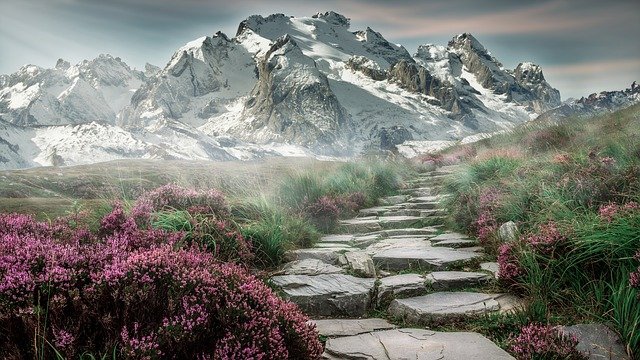
Finally, I will share with you a little visualisation that helps me. I imagine that we are all climbing a mountain. Some travellers are ahead and others behind. When I look down, I am surprised at how far I have come. Small steps each and every day have had an impact. However, I am tired and I still have such a long way to go. I sit at the side of the mountain and rest. The view before me is beautiful. It is momentary – the exact fall of the light, the little bird that has alighted at my side, the flowers in bloom. I rest in the moment.
‘Why do you need to carry that heavy backpack?’ a voice says. ‘Everything you need will be provided.’ And so, I let go of my load.
There is a well of crystal-clear water and I drink my fill. As I rest I help others on their journey. I know that when I need a hand or a word of encouragement there will be others to help me.
As I set off again I feel lighter and restored. Instead of worrying about the climb I enjoy the sun on my back and remember to admire the view.
These are techniques that help me. I hope that by sharing them I have given a hand to you on that mountain path.
‘If this doesn’t happen, I don’t know what I’ll do.’
‘If only I got that promotion/job everything would be different.’
‘I just need to find that special someone and I will be happy.’
The drama and passion of these heartfelt pleas are fuelled by the media. We watch films and read books where life is simple. The geeky girl/boy meets someone who loves them just the way that they are, they fall in love and live happily ever after. A woman loses her job, her world is falling apart, but then she writes a book, and all of her financial worries are resolved. Then, there are the talent shows where an awkward looking boy tells the camera that winning the competition would mean everything to him, and a few series later he is back as the star act, having achieved super-stardom. Real-life doesn’t make good telly and so stories of success, both imaginary and real, are dramatized and we buy into this. I have thought for some time that the romcoms we adore contribute to a dissatisfaction in relationships.
Our dream is a pot of gold at the end of a rainbow. We truly believe that one that one thing we wish for happens our life will be transformed. For many writers, it is getting an agent or a publishing deal. We hold that heartfelt wish so tight, we clench it within our soul, willing it to happen. To relax that hold for one second feels as though we are giving up and reducing our chances of success. Everything depends on that wish coming true.
My writing buddy achieved what seemed to the outside world like an overnight success. I know that she worked hard to develop her writing craft over many years and when success came it was well deserved and well earned. This friend won a novel competition and a couple of years later her internationally best-selling novel was advertised on posters at airports and railway stations. Of course, she was giddy with excitement as she was swept up in a whirlwind of success, but soon life settled back into a routine. ‘I am often asked how I feel about my success, and that it must have changed my life beyond recognition,’ she told me, ‘but it hasn’t. Not really. I was happy before and I’m happy now. Apart from being able to earn a living doing something I love, nothing much has changed.’
I have another friend who was over-joyed to be signed by her ‘dream’ literary agent certain that this was it – her passport to the glittery world of becoming a published author. Fourteen months later, she is still waiting for her agent to find a publisher and one heartfelt wish has been replaced with another.
The thing that we long to happen, or fear will happen doesn’t change our life. There is a blip of happiness or despair, but in the scheme of things, it is a minor disturbance. Think back to the day you got your dream job, got married, or on the downside received a rejection letter from an agent or following an interview. You may have been happy or disappointed for a few days, or weeks but then life happened and soon you had another goal or dream. I can no longer remember my rejection letters or the jobs I didn’t get.
The constant is the life you are living now. Your family and friends, the pleasure that you get from everyday activities, your good health. By focusing on what is beyond our control, changing another person’s behaviour, making someone like you – hire you – sign you, we are neglecting to change the things that we can control. If life carries on as normal after the blip, then we need to invest in making it a good life by appreciating what we have now and making the most of each moment.
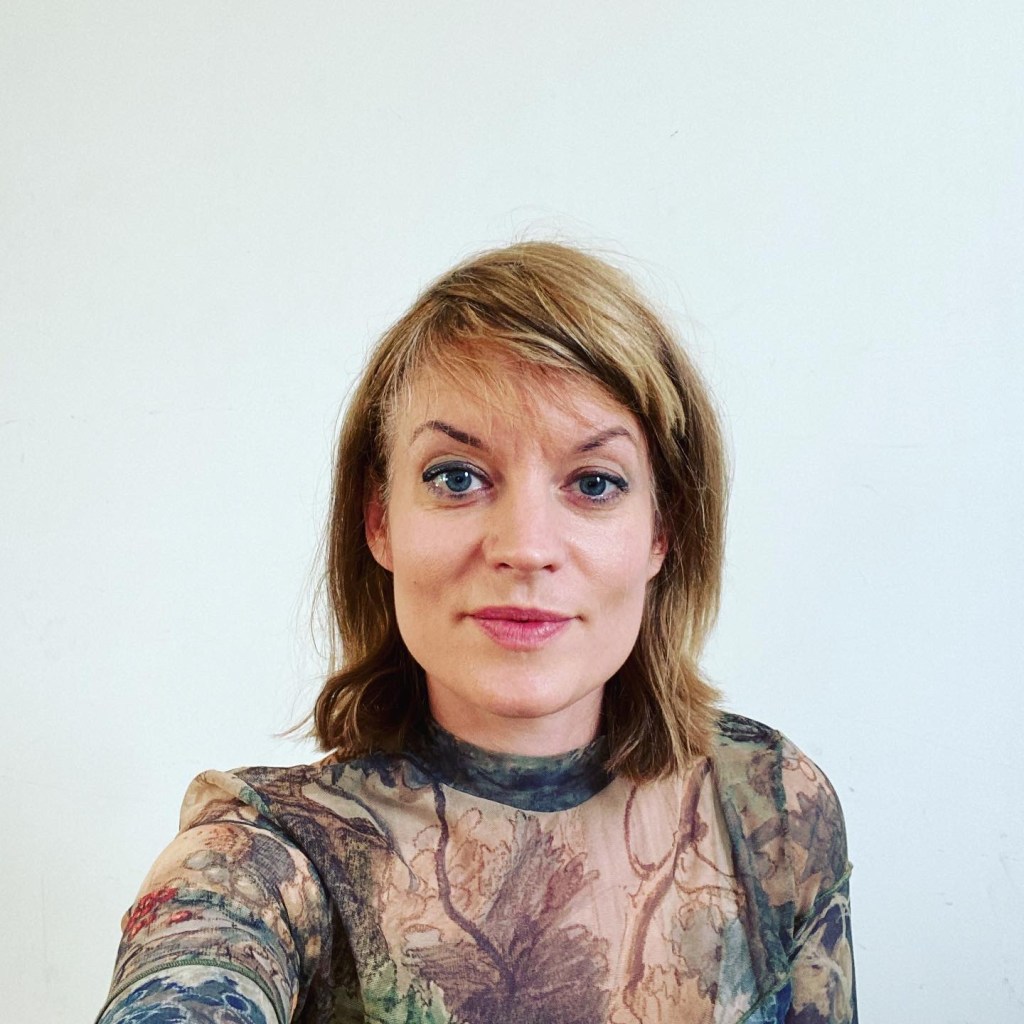





 Deborah Klee