In this episode of The Mindful Writer, Laurence Anholt, best-selling author, and multi-award winner author, explores the relationship between fathers and sons, and shares some useful writing tips.
Before I introduce Laurence, let me update you on my writing journey.
This podcast is going live the day before the official launch date of The Forever Cruise. The paperback was published a few weeks ago and has had excellent reviews. So, I am looking forward to the launch party on 1stDecember, at my local independent bookshop, Caxtons.
This may sound weird but for the past few decades I have experienced prophetic dreams about career and aspirations. They always take the form of a car. For example:
Missing the turnoff on a roundabout: Did not get the job and career went in a different direction.
Car reversed: Received a revise and resubmit response from an agent.
Car joining motorway without stopping at junction: Agent submitted MS to publishers without first asking me to sign a contract or to meet.
I could go on. I have a dream, sometimes recurring and then the event follows.
A few weeks ago, I had a car dream that made little sense until now. It was a recurring dream where the car turned a corner. I thought maybe I was to change direction, write something different, or I was about to be offered a publishing contract. But none of these explanations rang true.
Whether or not you believe these dreams were prophetic, I think you will agree that we all have intuition. Our heart knows but sometimes it takes a while for us to register this mentally. Maybe my car dreams are about my intuition being heard when I am sleeping.
In the past couple of weeks, the dream has made sense to me. So many amazing things have happened, and it seems are continuing to happen, as I approach the launch of my third novel. Incredible support from my local community and social media friends, in ways that I could not have imagined. Every day I get another surprise. I will tell you about these wonderful gifts in a future blog.
This leads me in to introducing this week’s guest. Laurence talks about the dappled light – how we need both the highs and lows in life. The balance. So, if you feel as though you are on a long road with no light at the end look forward to turning a corner. Who knows what magnificent views await you? And now my friends on to the interview.
Laurence Anholt has been at the forefront of UK publishing for thirty years and consistently amongst 150 most borrowed authors from UK libraries across all genres.
His award-winning books span every age from baby board books, through to his adult crime series, The Mindful Detective.
In this episode Laurence talks about fathers and sons:
- How his father’s experience as a young man liberating Belson had a ripple effect on the generations that followed.
- How criticism is like weed-killer on the shoots of new life
- Why we should embrace the light and shade in our lives
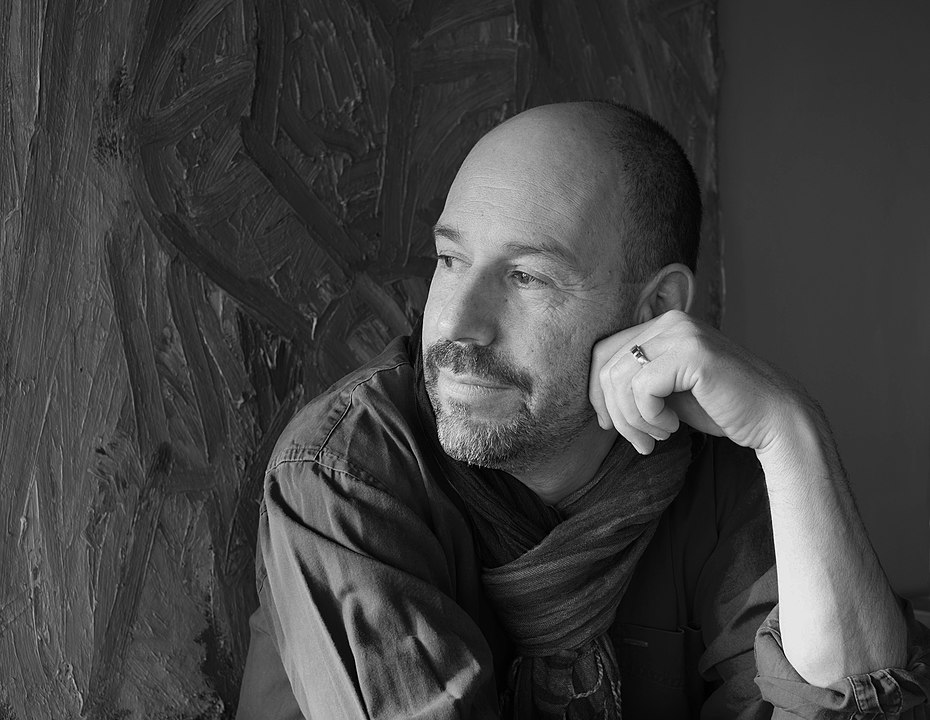
Deborah: I’m delighted to welcome Lawrence Anholt to the Mindful Writer podcast today. Lawrence has been an author for over 35 years. His books, he says, reflect the ages of his children, as he first wrote stories for young children, then older children, young adults, and today he writes for adults.
Laurence is multi-talented as an artist, Illustrator, and an author. He once owned a bookshop which went by the wonderful name of Chimpanzee Beside the Sea, which I love. It makes you smile, just saying it.
Laurence lives with his wife, Cathy, who is also an artist. And they’re passionate about renovating properties, creating beautiful homes. Their current home includes a rewilding project. So fascinated, reading all about your background, and really delighted to meet you, Lawrence.
Laurence: So nice to meet you, Deborah, thanks for inviting me.
Deborah: Well, Lawrence, I haven’t got enough air time to do justice to all you’ve achieved in your life to date, and I’m sure, there will be more to come. But hopefully, we’ll learn more about you as we talk. You had huge international success as an award-winning author of children’s and young adult’s books, before writing your Mindful Detective series, which is what drew me to you – with the word mindful, which I found fascinating. But, before we go there, and we will go there, because I want to talk about that.
I listened to a radio four programme recently called Forethought, in which you were sharing some of your family history, which inspired The Hypnotist. I want to start there, because it’s really interesting how your family history, and your relationship with your father, inspired you to become an author and perhaps influenced what you wrote. Can we talk about that?
Laurence: Yes.
I had a complicated and quite difficult relationship with my father. When he died about 10 or 12 years ago, I honestly thought to myself: Well, I never really knew him.
He was a very secretive man. And actually, Deborah, right now I’m working on a sort of memoir – a sort of autobiography. So, every day now, I’m sitting down and writing about my father and my relationship with him. So, it’s something that’s very much in my mind.
As a child, and as a teenager, I really didn’t get him at all. I felt rejected by him, he wasn’t a good communicator. And it was only really later in life that I began to find out where he was coming from. Why he was the way he was; about his background experiences during the war, and the whole history of his family, which impacted so much on him. And it’s almost a cliche, but these things are like dropping a pebble in a pond; they have ripples that run through the generations.
There’s just simply not time to go into it in detail now. But my father came from a Dutch Jewish family with Persian roots. And during the war, he was a member of British intelligence. And he had some pretty horrific experiences in occupied France and occupied Holland. And eventually, he was in the group as a very young man of British allies who liberated Belson.
So, he saw some really appalling stuff at a very young age. And when he met my mom, he just simply hadn’t processed it. And there was no way of processing it, I think back then. So, when we all came along – when we were born, actually, you know, I’m quite old – not that long after the war. My father was not ready to have children, in many ways. Emotionally, he was still a child himself. And that had huge ramifications for me and my siblings. And it’s something I’ve been working with, for the whole of my life, really.
I think a lot of my friends actually – it’s extraordinary, and I’m talking about men here, but the same thing, I’m sure is true of women – you know, did struggle with their relationship with their father.
Particularly my generation, because the father’s had been through the war and so on.
So, yes. I mean, that’s very much part of who I am and who I always have been. And I think because he wasn’t nurturing as a father, I think I struggled a lot with self-esteem as a young man and at school. I failed miserably at school, actually. And so, I guess my life journey has been that journey of trying to find who I am, trying to find some degree of self-esteem –enough at least to write, and to paint, and to do the things that I want to do.
And also, in particular for me, not to repeat the same mistakes with my own children, and now my grandchildren. So, I remember – I had kids quite young – and I remember almost consciously thinking to myself that I was going to do the opposite, really, of what my father did or didn’t do. And I would just finally say that, you know, none of this is to cast blame. When I was a young man, if you’d have asked me, I would have said, I hated my father. You know, that’s the way that we were. But I mean, that’s a pretty pointless and kneejerk way of reacting. And I think now, you know, I respect him. There are many, many things that I admire about the man he was: a very liberal man and without prejudice, really. And a self-educated man. And he’d been on an extraordinary journey himself. So, you know, I do have respect for who he was, but he wouldn’t have won any parenting awards, let’s put it that way.
Deborah: It’s interesting, isn’t it, as you get older, that you can look back with compassion at your parents, as you go through different, similar stages – life stages, you can look back, and perhaps look back on yourself as well, with some compassion?
Laurence: That’s right.

Deborah: Interesting, you were talking about your generation and fathers who went through the war. That’s really interesting, and that I’ve picked up that a lot with men. And, you know, years ago, because I was an occupational therapist early in my career and worked in mental health, and I found a book – I just wished I had bought it. I think, I must have just it on a library shelf. It was about the main reasons why – men and fathers, and they were categorised with the case studies about the reasons why there were conflicts or problems between men and their fathers. And somebody had written this from a mental health perspective. And it was so powerful, about that important relationship between father and son.
Laurence: Yes, and it’s been a huge privilege for me. I have three grown up children and four grandchildren. And I have two daughters, and a son. And just concentrating for a moment on the relationship between men and boys. I mean, for me, it’s been one of the most – it almost makes me well up to talk about it – it’s been one of the most profound and rewarding things in my life, to develop a relationship with my son. A really close relationship. He lives in Berlin. Now he’s an artist, a painter, very, very successful. And we have such a close relationship. And it’s, it’s sort of everything I would have wanted with my father, but just didn’t happen. And I have a grandson too. And I can see the same thing happening there. It’s not to say that I was perfect as a father, in any way at all.
But I’ve always thought that raising, I mean, it’s one of the things that attracted me to writing and illustrating children’s books is because I’m very interested in early childhood, those formative years, those very early weeks, months, and years, really do affect the people that we become.
And one of the things that I understood, I think, is that raising children in a way is kind of really very simple. You know, children just want our time. They want to be heard. They want a discussion. They just want you to show up. And, you know, I’ve said before that …
raising children is almost like growing plants, that in a way you water them, you give them sunlight. And that criticism is almost like weed killer.
And I received a lot of criticism as a child, both from my father but also at school. That’s the way that schools worked largely back then. I received so much criticism. And even now I struggle with that inner voice, that critical inner voice, and I’ve had to very consciously understand that that voice doesn’t belong to me. It’s not my voice – that the these are thoughts that were implanted there at that very formative age. So, with my kids, I set out to do the opposite really, to, you know, when they came home with their first drippy paintings, it just seems so natural to say: It’s wonderful. It’s beautiful. And to watch them grow and flourish. From that point, I think is an absolutely marvellous thing. And you know what you give your children you get back ten times over in your own life. So, that’s very important to me. In fact, if I was to say, You know what I’m most proud of in my life? It’s not so much anything to do with work, it’s to do with my relationship with my kids and my grandchildren. And that’s the most precious thing to me. It really is.
Deborah: That’s wonderful. You’ve written some amazing children’s books. You wrote the Anholt Artists books for children, which brought together your love of painting because you started life as an artist, didn’t you?
Laurence: Yes, I did.
Deborah: So, the question really: life as an artist, and life as an author is, it’s a very, very difficult path to take. So why did you choose to do that? Were you pushed or persuaded in any way to go out and earn a living? Because you spend lots of time with your children, but it must have been very difficult making that decision?
Laurence: Yeah, that’s a really good point. I mean, yes, I was pushed to do something. Although, you know, my father, both of my parents were people who were very interested in the arts in general. So, it’s not like they were forcing me to become a dentist or something. But I do remember my father, when I first had a child saying: You know, now you’ve got to face up your responsibilities and pay your mortgage, and so on. Perfectly fair.
And I did work for a while, as a school teacher. I taught art for a while, but not for long. And then, very quickly, I got into the business along with my wife, Catherine, of writing and illustrating picture books. And it seemed very natural to me. And well, above all else, it allowed me to be at home, to work from home. And not only that, but sort of integrate the children into my work. You know, a lot of our early ideas came from our own children. So, it ticked a lot of boxes looking back on it.
None of that it was a conscious plan at the time. But also, yes, I’ve always been both an artist and a writer. I’ve always been interested in both of those things. And when you think about it, picture books are one of the few ways in which you can do both. That series that I do about great artists came really very naturally to me. And in fact, 35 years on, I’m still working on those. I’m doing some interesting projects related to those right now – stories about great artists for young children. Yeah, so when I’m working on those, it’s the words, and the pictures running together, almost like a sort of footpath beside a stream, really through t a story. And I like that very much.
And just finally to say, that when I’m writing novels now, writing novels for adults, I think, visually. I’m not sure if everybody does, but I see the events, almost like a movie in my head. I’ve always just thought in that way. I think visually. And so, for me, when I’m writing,
when I’m writing (for adults), I get myself almost into a state of sort of lucid dreaming, you know, where I see and smell and touch everything that’s around me. And I’m sort of lulling myself into a hypnotic state. And again, this ties into meditation and the whole sort of mental attitude towards writing.
And that for me is the secret. When I’m in that stage, then the writing comes very fluidly. And the characters become very real and the places become very real. And when I’m not, then it just ain’t happening. And then there’s that whole struggle of, of getting into it. So, a bit of a rambling answer, but yeah.
Deborah: No, that’s incredible. So, the stories you write, the ones you write for children: the Anholt Artists, and the Hypnotist, which is about race and the Ku Klux Klan, and The Mindful Detective novels, they’re all about values and life lessons. Because The Mindful Detective is about the values and life of a Buddhist detective. And I know there’s messages in each of the children’s art books. So, is that always your intention?
Laurence: Yeah. It’s certainly not something that I sort of set out to do. I certainly don’t want ever want to be didactic. But yes. I suppose part of writing is exploring what you’re learning and what you’re feeling in your life. And so that spills out into the work.
I mean, I write often to try and solidify my own ideas, and if those ideas are passed on to other people and you know, that’s absolutely a bonus.
The Hypnotists was a young adult novel about, as you say, civil rights and the Ku Klux Klan. And, yeah, I mean, I absolutely did want to educate young people about that very, very important era in history. And, you know, I’ve had some really interesting correspondence with young people about that. But, yeah, I don’t ever want to be sort of preachy.
With The Mindful Detective, in a way, I think what entertains me about it is that he’s this very unlikely cop. He’s a cop who feels too much for his own good. Besides the sort of Buddhist aspect, he’s also an empath. So, when he’s confronted by a crime, it horrifies him. It appals him. And I think that’s one of the reasons that I wanted to create this character. It was because I’ve often looked at – we’re all fascinated by true crime and that sort of thing – but it amazes me quite often, how detached people are by it all. And I guess if you were a detective or a cop, you would have to develop a pretty thick skin. But I’ve often sort of thought, well, what would that actually be like? What would it be like for me? I mean, I would be traumatised by what I’ve seen. So, my character, Vincent Kane, The Mindful Detective, is a very reluctant cop. He really doesn’t want to be here at all, but he’s damn good at it because he has these intuitive skills, ways of relating to people, and also an instinctive sleuthing skill, almost like a sort of Native American tracker. So, he picks up on things that other people don’t see. And that’s why he’s always pulled back to these things. Pulled out of his blissful life in his cabin on the under cliffs outside Lyme Regis, where he sits in in meditation and enjoying nature, every time he’s reluctantly drawn into some bizarre crime. So that’s the basic idea.
Deborah: Sounds fantastic. I’ve got to read them. You practice meditation yourself, don’t you? So, I wondered how that helps you as a writer.
Laurence: Yes. I got into – I mean, I’ve talked a lot about my father, the person I haven’t talked about is my mother, who was an extraordinary woman. My parents just couldn’t have been more different. Again, I’m writing about this now. So, it’s very much in my mind. My mum was Scottish English. And whereas my father was olive-skinned, dark and secretive, my mother was an academic. She loved literature and writing. And she was an English teacher; a wonderful woman. And she also had a kind of almost hippyish interest in eastern philosophy. She loved to travel.
And I remember, in my teens I think, being dragged along to a transcendental meditation group that she joined. And that was a thing that we had in common throughout our life, really; that we talked about the sort of spiritual side of things. And so, I got into meditation through her really at a relatively young age. And I’m sort of on and off, and on and off with it. And I would always come back to it at times of particular stress or particular difficulty. I’d realise that there was something missing. And then I have to think that what is it? What’s missing? What’s missing? And then I’d realised that it was that. And I think that, you know, the world that we’re living in now, is a very complicated and quite scary world. And for young people, particularly, they’re faced with so many existential threats, and there’s so much anxiety about and social media intensifies that.
And so, I think meditation and some sort of spiritual basis, some sort of foundation in our lives is more important, perhaps, than it ever has been.
And there’s a lovely thing happening as I’m talking now, which is, the sun’s coming out across the sea out of my window. It has been a foggy day and the sun’s just coming out. So, there we are. That’s what meditations like. It’s restorative. And so, I meditate not because I’m a spiritually aware person, but because of the opposite. Because I have a naturally very overactive mind. I have a brain like Piccadilly Circus in the rush hour and I just need this to stabilise my life.
And so yeah, I start each day sitting for 30 minutes. And it’s tremendously important because it helps me to focus. And you know, in the old days, I remember when we first got computers, there was that D fragmenting process that you had to do with your computer. And it’s a bit like that, you know…
restoring factory settings in your mind. Getting rid of the clutter. Just sitting in silence. And then writing comes so much easier from that point.
It also helps me to settle that critical voice and get ready for writing? So, it’s invaluable for me? Yeah.
Deborah: I agree, because I like to – I have to – do a daily meditation because as you say, if I don’t do it, I can feel it. It’s like missing a meal. You need it for your nourishment.
Laurence: Exactly. Exactly.
Deborah: And like you, for me, it’s to still myself, and all of that noise that goes on in your head: the critic, the worrying, the anxiety. It’s just calming down. Very good.
So, if you go back to the young Lawrence, perhaps when you were going through the most angst with your family life or worrying about life as an artist? What, what words of wisdom would you say to your younger self now?
Laurence: Yeah, I mean, that’s a tricky one. Because I think what I lacked as a child was, you know, that encouragement that should have come from other people, i.e., from my father, from teachers at school, and so on. And so, you know, that’s not something that I could fix. But actually, I’ll tell you something that’s just come to mind, Deborah, which I think applies to writers and to children as well.
When I was writing children’s books, I spend a lot of time visiting schools. And I would talk to really quite young kids about that inner voice about the way that we talk to ourselves. And I remember a thing that I would say to kids of six or seven years old, that they would really, really understand. I would say to them,
imagine that you’re sitting down at a table and you’re trying to draw a picture or do some creative writing and you’ve got a friend who’s standing at your shoulder and the whole time you’re working they’re saying: That’s rubbish. That’s no good. That’s never going to work, you know? What would that be like?
And the kids would say: Oh, my God, it would be impossible to do your work. And then I would say to them: Do you have an inner voice? Do you speak to yourself? And they would understand that, and they would recognise that yes, they probably did. And I think we all have an inner voice. And so, I think that this idea of examining that inner voice and making sure that it’s helpful, that it’s constructive is really, really important, wherever you are in your life.
That’s one of the things that I learned from getting interested in Buddhism. I did a full foundation course in Buddhist philosophy. And I remember the very first principle of Buddhism that I discovered that just rang so true to me, was, the Buddha said this incredible thing two and a half, thousand years ago, which I believe to be one of the truest things that has ever been said. He said,
the mind is everything. What you think you become.
And when you think about it, that is so profound, because everything that we experience in our life, is through the filter of our own mind, and through our own thoughts. And so, if we can affect that inner filter, that inner voice, and just become aware of it, and look at the way that we’re speaking to ourselves, and what sort of a climate and inner climate we’re creating, then we can begin to change that. Not by blaming ourselves, or criticising ourselves further, but just by bringing awareness to it, which again, is a Buddhist philosophy, bringing awareness to things. And then slowly, slowly, slowly, changing that inner voice to something more positive.
So, to the children I would say:
Imagine that that friend behind your shoulder goes away and another friend comes in who’s encouraging saying, ‘That’s great. That’s fantastic. You’re doing so well.’ How would that affect what you actually produce?
And I think as adults, we can do this on a daily basis. This has been the journey of my life really. I absorbed so much negativity. I had an extraordinary experience when my father died, which was clearing out his house. And for some strange reason, he’d kept my school reports. I’m not sure why. And they were, without exception, incredibly negative and critical. And, you know, I failed so badly. And it’s almost like these teachers, and my father had got into this thing of, you know, that I was fulfilling a prophecy, you know: He’s stupid. He’s lazy. There we go, this proves it. And so, it went on. And there was this kind of negative spiral that just went on, and on, and on.
And so, the journey of my life, I think it has been, it still goes on, on daily basis, has been learning to just tweak that. Just to change it. And it’s magical. It’s extraordinary. And it ties in with, you know, this whole thing of manifesting. It’s thought of as a sort of modern concept, but that’s part of Buddhism as well. That, you know,
if you start believing in positive things, then good fortune does seem to flow your way to the most extraordinary degree.
And I remember, you know, in my 20s, and 30s, late 20s, and 30s, when I was beginning this journey with my wife, Cathy, of writing and illustrating children’s books, for whatever reason, I was in a very positive frame of mind. I was meditating at the time, and it was just quite extraordinary. There was this sort of wonderful tide of good fortune that seemed to flow towards us, and it sort of just felt so natural. And then you lose touch with that, and you become doubtful and cynical, and it leaves you. And then it comes back again, you know, and I think that’s such an interesting, such an interesting concept. Again, another Waffly answer.
Deborah: No, that’s fascinating. I’m hanging on your every word, as I’m sure listeners will. You’re so interesting and inspiring. I know – and I’m talking from my personal experience – I’ve gone through times where everything is going really great. And you’re thinking, wow, you know, I’ve manifested this – I don’t use those words –but I’ve manifested this. I’ve been really positive and done all the right things. Everything’s going great. And it goes on for so long. And then suddenly, you go into a real slump. And either, things don’t happen when you think they should; they don’t happen the way you think they should; you feel out of control, and you feel as if it’s left you, and you’re lost. And whatever wonderful spirit was guiding you and blessing you, seems to have disappeared for a bit. Let’s talk about that, because that’s an important stage that we all go through. What’s your reflections on how to deal with that?
Laurence: So absolutely true. I experienced that myself. I think one always will experience that. So, what I would say to that is, I think, again, I would look at a little bit of wisdom that used to come from my own mum. She had this this amazing philosophy. And one of her favourite words was the word dappled. Dappled is a lovely word. And I remember at quite a young age, she shared a poem with me by Gerard Manley Hopkins, which is called Pied Beauty. And it’s about the dappled quality of nature, you know, the way that the light falls through a tree in light and shade and the way that the cows in the field are dappled and so on. And, Gerald Manley Hopkins, she explained to me, was using this as a metaphor for life – the light and the dark. And again, this comes back to Buddhism, that, you know, one cannot exist without the other.
And so those dips and dives that we constantly enter and then leave are as much a part of life as the joy. That it’s impossible to be in a joyful blissed out state all the time. Life just isn’t like that.
But I think that what you can do; you can you can’t avoid those things. You can’t avoid illness. You can’t avoid tragedy. You can’t avoid so many things. I mean, so much of what’s going on in the world right now is out of our control. But what you can do, is adopt a state of sort of benevolent acceptance, in a way. Which has to do with embracing those lights and darks. And again, the, you know, coming back to Buddhism, the Buddhist monks would have this practice of meditating in the charnel grounds. You know, alongside the dead bodies, because it was part of this acceptance of mortality and death. And all the things that we in the West push away and reject. It was to do with that thing of accepting it all. Accepting it all, for whatever it is; the dappled things in life, and sort of being at ease with that. Because after all, you cannot avoid it.
We will all die. We will all become ill. We will all get older.
And so, if you’re fighting it … I think that’s one of the things that’s so unhealthy with this Instagram culture that’s been pushed on young people. They’re being encouraged to aspire to this idea of perfection, which is an illusion. It just simply doesn’t exist. So yeah, I also think with writing, those periods of uncertainty, when you examine them afterwards, are not quite what they seem. It feels sometimes like you’ve lost touch with your creative flow. But actually, if you examine it afterwards, it’s, I’m trying to remember who it was The boys in the basement…
Deborah: Stephen King?
Laurence: Stephen King, said, ‘The boys in the basement, (the girls in the basement too), you know, there’s something cooking down in the bottom oven – and just to accept that. When it’s difficult, go for a walk. I’m very blessed here. We have a lot of space. We’ve got a bit of land, and so just to sit at a desk beating yourself up, is not the best way to be. So, make use of the times when you’re outside, just doing something completely different are as important, I think. That is all I can say.
Deborah: Thank you. Well, I think time is going to start running out, and I could talk to you forever. So many fascinating insights. It was a real privilege to have you join us today.
Laurence: Such a pleasure, Deborah.
Deborah: Any last words, before you go?
Laurence: People often ask for little writing tips. I mean, one very small writing tip I’ve been thinking about a lot. My daughter, Maddy, published her first book – really good book, last year about toxic relationships. She’s a really good writer. I was speaking to her just yesterday and she got rather stuck at a particular point and she was asking me for advice. And she said that she had lost connection with what she was writing, And I was in a similar place myself. So, we had a bit if a discussion about it. Maddy had trained as an actor. And so, I said to her, it’s those skills that you need to apply here. In other words what I’m saying in a convoluted way is that as writers we need to step inside the skin of our protagonists. So, when we get stuck. When we get lost. It’s because we’ve lost connection with our characters. And so, what you can do as a writer, when you get stuck is become an actor and start feeling what they are feeling. For me, feelings and emotions are often the key to getting things moving again. So, if I’m just not able to connect with a situation in the story, I try to do that. To think what that person is feeling. In writing this thing that is almost autobiographical, I was struggling with that and I realised it was because it was just really rather painful – this business of remembering how lost and painful it all was. And so, you have to go there; really step in and feel those kinds of feelings and then the writing starts to flow from that point.
So, I would say as a little tip for a writer, when you get stuck, inhabit those emotions; experience the feelings of your protagonist at that particular point and see if that starts to get the machine flowing again.
I hope you enjoyed that interview as much as I did. Laurence was so interesting; I was reluctant to say goodbye and probably over ran. If you are still with me, I am going to end by reading the poem Laurence mentioned by Herald Manley Hopkins. Pied Beauty.
Pied Beauty
Glory be to God for dappled things –
For skies of couple-colour as a brinded cow;
For rose-moles all in stipple upon trout that swim;
Fresh-firecoal chestnut-falls; finches’ wings;
Landscape plotted and pieced – fold, fallow, and plough;
And áll trádes, their gear and tackle and trim.
All things counter, original, spare, strange;
Whatever is fickle, freckled (who knows how?)
With swift, slow; sweet, sour; adazzle, dim;
He fathers-forth whose beauty is past change:
Praise him.
The Mindful Writer will be back on 11th January with guest, Kim Nash. Seasons greetings to you all.
So, until next year. Take care of your beautiful self, and trust the journey.
You can find all episodes of The Mindful Writer podcast here: https://themindfulwriter.buzzsprout.com
Don’t forget to subscribe so you don’t miss any episodes.


 Deborah Klee