How words can change your world, with poet, Leah Bailey.

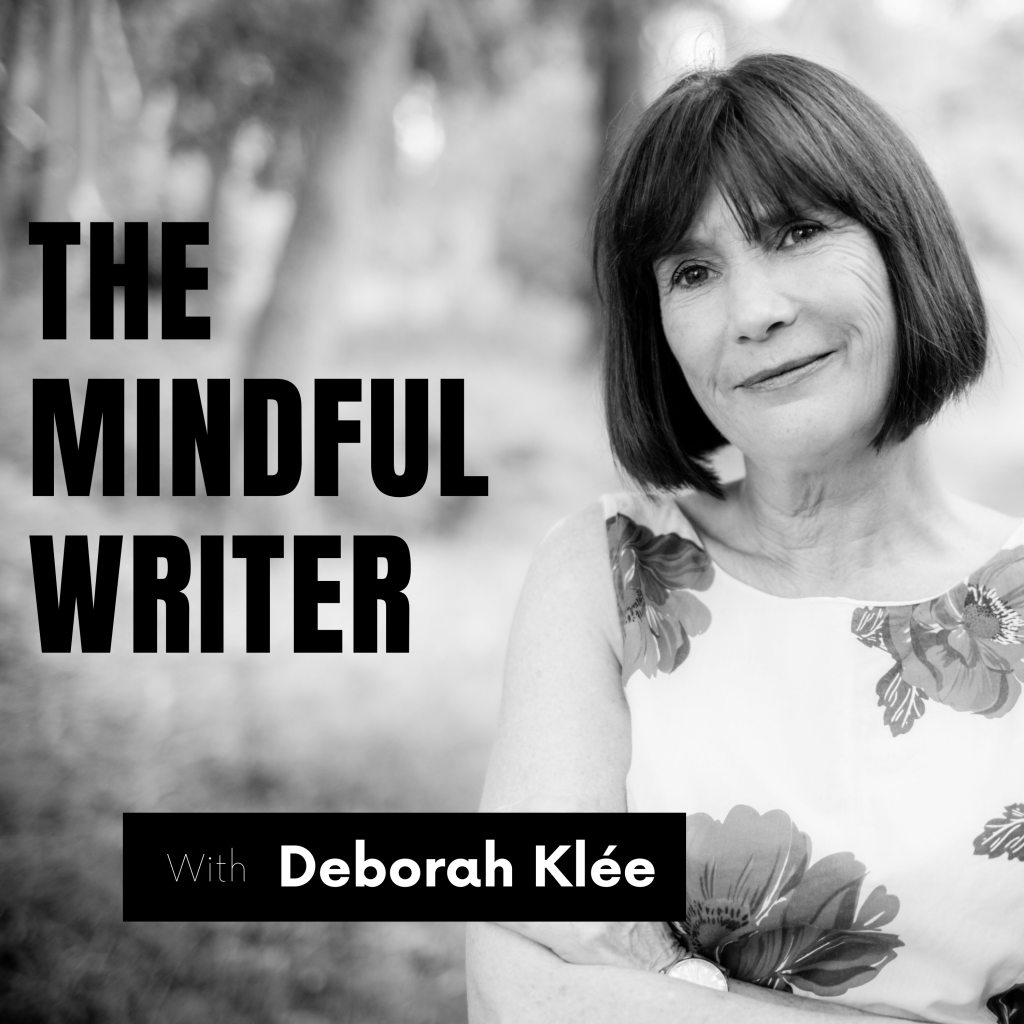
In this fourth episode of season 2 The Mindful Writer, Leah Bailey, talks about the power of words and explores how they can change our perspective.

Before I introduce you, let me update you on my writing journey. Publication day for The Forever Cruise gets closer, and I experience as many highs and lows as a cruise ship on a choppy sea. The paperback is already out, as I wanted to be sure I had copies in time for the launch party on 1st December – which is the day the eBook goes live. 

Highs – I’ve had some wonderful reviews from readers who ordered the paperback, and advanced readers who received a copy of the eBook in exchange for an honest review. 

Lows – I noticed some typos in the paperback and had to correct and re-order for the launch party. What have I learnt from this? I have reviewed my proofing process so that there is less chance this will happen again. Having beaten myself up for not being perfect, I have reflected and concluded that it is okay – we learn from our mistakes. I’ve been charging ahead at a million miles an hour, wearing myself out, and making mistakes. I set high standards for myself, and so, when I fail to meet them, I am tough on myself. I am learning to be kinder to me. To slow down. And to be grateful for where I am now on my writing journey. 

I am looking forward to celebrating the publication of The Forever Cruise with my wonderful readers, friends, and family. It is with their support and friendship that I have been able to write and publish this book.

Sometimes we are so focused on what we have not achieved that we forget to cherish where we are now. 

My guest this week, lives very much in the moment. I found her interview fascinating. So, let me introduce you.

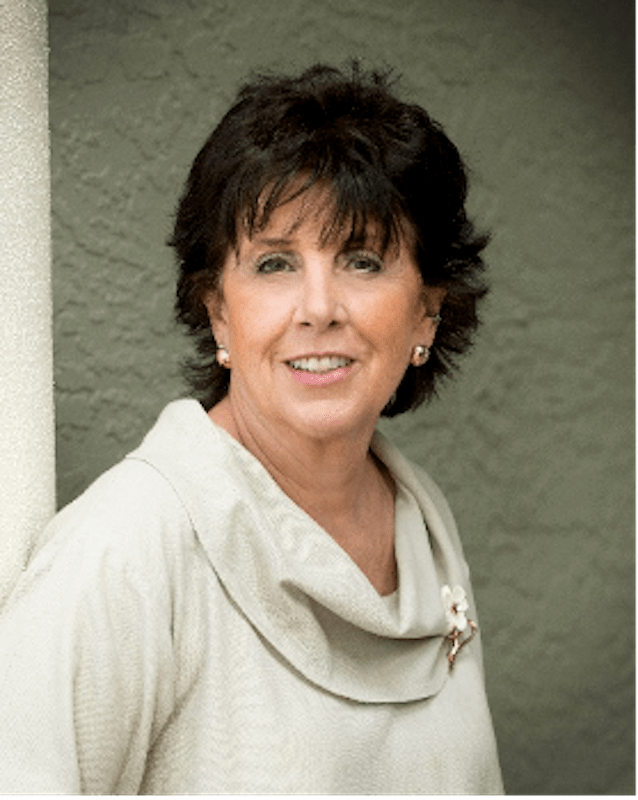
Leah Bailey is a poet, and teacher of English language and literature. In this episode, Leah explains how we use language to:

  • Connect with other people
  • Make sense of our world
  • Express how we are feeling
  • Process thoughts, and emotions.

Leah also shares some practical exercises to write for wellbeing and reads two beautiful poems.
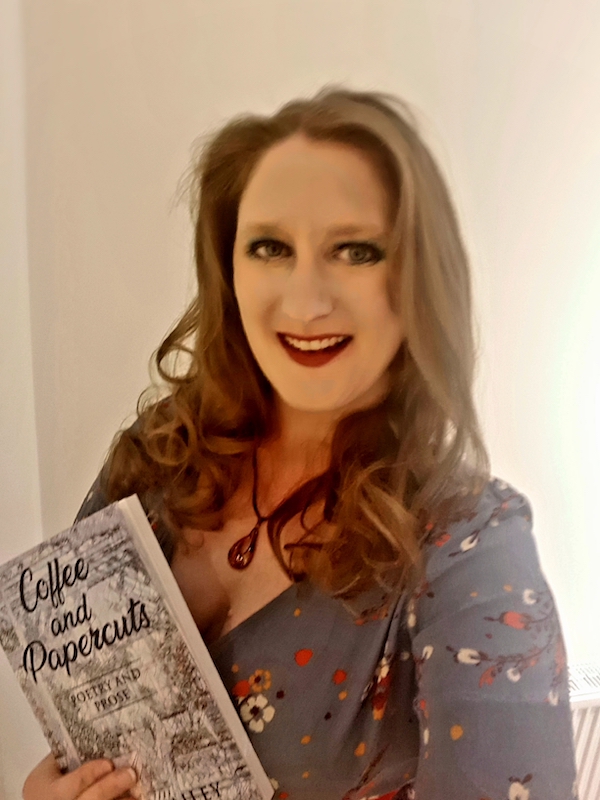
Leah Bailey

Deborah: Hi Leah, I am really pleased to welcome you to the mindful writer podcast. So, before you introduce yourself, and I shall do a bit of an introduction for you, I should just say you are recovering from the cat knocking over your mug of coffee. 

Leah: Yes. Two of my key things for my sanity is my cats and my coffee. But unfortunately, they do sometimes collide. 

Deborah: So welcome. Leah, you are a poet, with three collections of your poems now published, including the most recent, Coffee and Paper Cuts. I love the title of that one. The English language is your passion, and one that you share with others, both as a poet, and a teacher of English language and literature. So, let’s start with why you think it’s important to use the written word to communicate our thoughts and feelings.

Leah: I think that language is how we approach the world. It’s how we think; it’s how we communicate. And so, to be able to understand ourselves, using language, through reflection, and then to be able to communicate our understanding to someone else, connects us to other people: whether the language is our own, or someone else’s. 

I did some travelling recently. And so, you know, when you’re in a country where you don’t speak the language, you have to communicate. And so, you find the words – you find the sentences – you find the capacity, using everything you have to get something across. That is quite important and valuable. 

But language, and the words that we choose to use, can be both helpful and harmful

And so having the right ones, and communicating what we actually want to say, instead of what we think we want to say. Miscommunication, can cause huge problems in terms of language. So, knowing and understanding the right words to use to communicate what you actually mean is vitally important for anybody: adults, teenagers, students, and teachers alike.

Deborah: And that is a skill, isn’t it? I remember my aunt years ago – I overheard a conversation; she was talking to my mum. And she said, ‘Oh, my husband gets so crossed with me, because he says, when we have arguments, you always win because you know, the right things to say, and I don’t have the language or I can’t express myself like you do.’ So, he felt powerless compared to her. 

Sometimes there’s a bit of an imbalance or an inequality, when somebody hasn’t had an education, or they can’t express themselves so well, to actually be heard. So, I wondered how teaching language and working with students, adults and children, and young people, how you can help people to express their emotions.

Leah: Well, it’s important to try and get them to think for themselves, and not just parrot other language that they’ve heard. One of the most important parts of my job is not telling them what to think. Because obviously, that would be me imposing my ideas on them. My language, my words. It’s trying to get them to understand their own responses and their own thoughts, and put those thoughts into words, because all too often, they are just repeating something that they’ve heard in the playground, or just repeating something that they have heard in the classroom, or out in society, or on TV. So, the concept, you know, the concept of trying to get them to express themselves, but making sure that it’s them. Making sure that it’s their own thoughts, and not just the thoughts of someone else that they are copying because they think that that’s in fashion. So, the thing I suggest to all my students is to read as much as possible. It doesn’t have to be classics or poetry or, or even something beyond the fashion magazine. But any reading at all. 

Any reading at all exposes you to more ideas. And the more ideas you have, the easier it is to express your own ideas.

Watching how a great writer does it, or how someone you admire does it, helps you do it better yourself. So, finding language – finding language to be able to suit your own ideas, is vital to being able to argue for yourself, being able to defend yourself, or support yourself.

And all too often people use it to manipulate others just because they’re better at it. So, you know, we know that language has a double-edged sword. It can be used for great, good things: persuading people to step up and do the right thing. And unfortunately, persuading people to engage in horrible things. So, you know, using the power of words is a dangerous tool, but is vital to be able to use yourself.

 Deborah: As you said, at the beginning of your response, words can be used for good or for bad, and they can influence. They’re very powerful.

What about using language to help you understand your feelings, your emotions, and to understand yourself, when you’re in a dark place? How can writing help you to make sense of your world?

Leah: Well, writing for me has always been a kind of therapeutic use – a therapeutic effect. My process for writing is – usually when something occurs to me, or I have an emotion, or a feeling that’s happening, that is intense, especially whether that’s intensely good or intensely bad. But those intense feelings you have inside. My process for writing is to usually write down a single word, or phrase or something that I see in front of me. And that’s where I start. And then I write it by hand, and I just kind of splurge. I don’t worry too much about the technical things. And then when I take the handwritten and type it up, I can start to shape and develop it.

 And for me, especially when it is negative, it’s taking it outside of my head, and putting it onto the page, so that I can look at it and observe it, and deal with it outside of myself. 

So, whether your type of writing is poetry, or prose, or any kind of thing, it’s taking the feelings and trying to find the right words. And then shaping them, and dealing with them, and developing them outside of yourself on the page that I find the most helpful, because then it’s not in a tangle inside your brain. It’s in a defined – it’s online. It’s you know, in letters and words, and punctuation marks, and you can you can deal with it. And then when you have dealt with it, or when you’re satisfied that you understand it, you can shut the book and put it aside. 

Deborah: That’s a really good way of describing it. It’s almost as if you can have a conversation with yourself, because you can get it out. And then, as you say, look at it objectively with fresh eyes. And it’s almost like a dialogue between you and your inner thoughts. Excellent. 

Leah: Hmm. Wrestling with it.

Deborah: We were talking in another conversation we’ve had outside of this, about when a person is in dark place – a person experiencing depression. And they may not understand. How do they understand what’s going on? And how can loved-ones help – understand what’s going on? Because trying to give voice, or to be heard, or to explain – can words help with that? 

Leah: Well, you know, obviously, in that previous conversation we had, you know, I deal with a lot of people who have different types of mental health issues. I myself, have dealt with episodic depression. So, it’s part of that kind of word tangle I said was in my head. 

A lot of times people don’t, who have not experienced any mental health problems, will not understand the experience of it.

So, if you are able to somehow put it into words, that gets them closer to being able to understand the experience of it. But likewise, one of the main problems with things like depression is that there isn’t a reason. Loved ones and people that we are in relationships with, and friendships with, they desperately want to help. But it’s difficult to communicate reasons for something feeling the way it does, when there isn’t a reason. Because a lot of the difficulties with mental health, is that they’re irrational. They are just parts of our brain that are making us feel, and do, and say, things that we wouldn’t necessarily want to if we didn’t feel the way we do. That there’s no source. There’s no reason for it happening. And if you have experienced that, it’s difficult to communicate to someone else that there isn’t a reason. That you just feel the way you do. And so, using writing and using poetry to kind of communicate that helps someone else understand it. 

One of the main purposes for all of my writing is to share experience good and bad: emotions, events, experiences.

To try and connect with someone who might not be good with words, as you said, someone who struggles with knowing words or knowing what to say, it’s helping that person say, ‘Yes, that – that’s what I feel. I’m not alone, thank God. I’m not the only one. Or someone who has never had that experience, to kind of feel it, however briefly, while reading the poem. And think, ‘Oh, my gosh, that’s incredible how that feels.’ or ‘That’s horrible. I wish I could help someone who feels that way.’ So that the concept of shared experience with writing makes it resonate.

I can’t tell you, there’s any number of poems that I’ve talked to with people that I know have read them. Then like that, you know, that made me cry, or that made me laugh, or I saw myself in that. And it’s not that I have anything necessarily special about putting those particular poems out there. 

It is just, from my experience, from my observation, from my reflection, trapped in words and stuck on the page, and shared with someone else. Not just as a relief to me, so that it’s outside me and I can deal with it, but so that they themselves can see it, and know that they are not the only one feeling it and, and have a way of expressing it themselves.

Deborah: I’m glad you said that, because that’s really powerful. And especially to people who might be listening, who live with loved ones who go through depression. I hear so many people say, ‘I don’t know what to say. I don’t know how to help them.’ So that’s really helpful.

Leah: It’s important, you know, when you read these poems, or you read these experiences, or when you listen to people who have experienced it – putting it into words; it’s not about necessarily actively doing something. Just like there isn’t an act of reason that necessarily starts it; there’s not necessarily one trick, or one thing that you can do to help that person other than not give up on them. 

You know, we people who experience depression, have a tendency to push people away and to isolate themselves, either because they feel like they deserve it, or because they don’t want to burden their loved ones in their relationship. They see someone trying to help them, and trying to help them, and trying to help them, and they feel like a burden. That you know, their completely irrational feeling is harming someone that they care about. 

And so, the important thing with a loved one who’s experiencing mental health is simply the effort of trying to understand and not giving up on, you know, that continuing process, as they try to understand themselves, you work with them on that – you go on that trip with them. So that you both learn kind of together and deal with it.

You know, it’s something that I’m quite passionate about – trying to help the students and adults that I work with to be healthy in themselves. With that wellbeing in trying to explore those thoughts and emotions: positive and negative, that come from, from everyday experience. 

Deborah: Thank you. And that leads me to my next question about your writing for wellbeing workshops. You work with adults, and you work with young people. So how does that work? How might somebody who doesn’t consider themselves to be a writer – they’re not going to write a novel, a story, or a poem – but they want to use writing to help them get in touch with their thoughts and feelings? How would they go about that?

Leah: Okay, well, that’s like a two-part answer. And the first one, and the reason I started the workshop, is because we have responsibilities all the time. We have emails to write and reports. And in this – in the academic context – were where I live, essentially, we have to write essays and we have to write stories. And even when we’re writing poetry and creative writing, it’s for a grade or it’s for a parental report, or it’s for an office email. And it doesn’t matter what job you’re in, a lot of the communication that we have to do day to day is our responsibility. And I started the writing for wellbeing workshop simply as an outlet and a one-hour a week outlet for people to just write for fun. To just write whatever’s in their mind, just for the sake of doing it, not for any other purpose, or any other responsibility.

Just to enjoy going through the attic, of their mind and kind of getting it out there without actually having to produce anything, or be anything other than what they want.

So, when I start the workshop, I’ll give you the other answer, which is: I provide stimulus. And so, if you don’t consider yourself a writer, that’s fine, you don’t have to be. The idea of writing for wellbeing is starting with something small.

I have writing prompts that I provide. For me, I have them on my Instagram, once a week. But when I come to the workshop, I have maybe lists of them, and I put them out and people can choose a particular prompt. Or there are tonnes of books that contain writing exercises that you can do. I use one called The Five-Minute writer, which is great, it has like 50 different five-minute exercises. The exercises or the writing prompts are just a start. It’s whatever comes to you from that.

There are ways of doing it using abstract nouns or random words. Like you can almost literally cut up a dictionary, and pick out a word. And then whatever comes to you from that word, that’s what you write about. Fiction, nonfiction, poetry, whatever. And then it doesn’t have to be 100,000 words, it can be 10, or it can be two sides of A4, or it can be whatever it needs to be. But the idea is to just kind of go with it. Whatever Association you have. We hear it all the time; people hear a song on the radio and it reminds them of a memory. Or they hear a certain phrase or quote from the film or TV show that they’ve seen, and it reminds them of something else, or the moment. So, that’s the kind of thing we’re talking about. You start with a writing prompt, or a word or an idea, and whatever is associated with that, that’s where you start developing it. 

The next step obviously, could be a picture. When we take photographs, we don’t take photographs of everything and anything. I mean, you know, I do, because I’m weird. But I mean like observation of what’s around you – what’s important. So, when you are thinking about taking a picture, you kind of frame it. You look at it; you get the right angle; you get the right content in the photograph; it’s the same with writing. There’s information around us all the time – stimulation. I’m sitting in a room with the fan going. I can hear the buzzing of the fan. My cat is sneaking around under the bed waiting to destroy another coffee cup. The light outside is a particular threatening to rain kind of look. And I’m in just one moment here, feeling those things: temperature wise, topical wise. It doesn’t have to be a great metaphor of our time. It can just be what your senses feel around you. 

Same with a photograph. When you take a photograph, it’s because you want to remember it. The whatever,that is in the photograph, is something that you want to remember. So, you can look at the photograph and do that same sort of sensory input. What temperature was it? What was the weather like? What were you feeling that made you want to take the photograph? Why do you want to remember it? Why is it important to you? Has that memory changed since you took the photograph? Does the feeling change since you took the photograph? So, all of those observational skills of what’s coming at us all the time is fodder for writing. You’ve got to do it. It’s being aware of what’s around you, and then putting it into words. And that’s just the external stuff. Once you start to develop that you can reflect on it, and turn it on the inside of what that stimulus on the outside does to your brain.

Deborah: And how does it help with health and wellbeing?

Leah: Being aware of what affects you is extremely important. Whether that’s noticing that every time it rains, you get a certain feeling. Or if you have a favourite coat, or a favourite bag, or every time you wear a certain shirt it reminds you of a certain person, or a certain day when you wore it before.

 So, that awareness of what stimulates those feelings is extremely healthy because then you can start to pick and choose what makes you feel good.

And what makes you feel more yourself; what makes you feel your best self, and start to discard or minimise the things that don’t make you feel good, or don’t make you feel yourself. So, by extending our awareness, and for our observational skills in order to write about them, you start to notice things you might not have noticed before. And in noticing them decide whether they are beneficial or healthy, or includes your wellbeing. If you know that a particular – if you start to write about a particular voice, or a particular stimulus outside of yourself, that is not very healthy, not very helpful you can start to minimise it, or avoid it, or detract from it, to improve your wellbeing. And then, over time, the observation – the more you observe, the more you understand, the easier it is for you to decide what you keep inside yourself.

Deborah: Excellent. I think in addition to getting a greater self-awareness through writing, the relaxation of writing – going to a quiet still place, it’s quite meditative, isn’t it?

Leah: Yes, I do write in quiet places. Sometimes I do find that nice, quiet still place. When we have the workshop, it’s usually after school in a quiet classroom. We don’t always interact. I give out the stimulus, which they’re free to ignore. And then they just write and then people share, but they don’t have to share to get feedback. So, that nice quiet space.

I also write in the noisy bar, because that’s very stimulus heavy as well. So, I think both. I’ve met loads of writers and they all say they all have their place where they go writing. So, I think that it can be just as fun in a noisy bar as it can be a quiet classroom.

Deborah: But it’s the going there. In fact, that leads well into the poem that I hope you’re going to read. Because in this poem, when you wrote it, you were in a public place but you went very much inward to write it. So, it’s a good example. I shall let you introduce it. 

Leah: Okay, so this is from my first book between Hindsight and Foresight, which is best of all the poetry I’d written from the time I was 14 Until I was 38. So, it spans a whole wide range of feelings and emotions and experiences in one volume.

This particular poem was written the first time I lived on my own – basically in my entire life. I’d never lived on my own, it was family or partners or uni. But this was the first time I’d lived on my own and I decided to go out to dinner, even though I was on my own. And so, the poem follows that process and it’s one it’s one of my favourites to use as an example because it was a sneaky poem. I thought it was going to be about one thing, and it turned out to be about something completely different.

So, it’s called: Define Alone 
Image by Umut Yıldız from Pixabay

Define Alone

Is it an empty restaurant

with kind staff who smile,

and remove the other set

so you don’t feel alone?

Is it the abandoned

and crumbling petrol station

with an exit sign the only

legible sign

through flimsy wire fence?

Is it the dim twilight

painting pastel colours

as your steps echo

on cracking pavement

one set?

Is it the lone voice

of your nature

turning thoughts

like straw into gold

giving you someone

to talk to?

Is it the single flame

burning on the tealight

next to your single

glass of wine?

Is it an empty night

staring out a window

which frames a twisted,

ivy covered tree

in the gathering night

with emerging stars?

Is it closing your eyes

and wiggling your toes

in the wet sand

feeling the wash

of the grit begin to

sink you

in the last warmth

of summer?

Is it a single touch

along the jawline

thoughtful

gentle

provoking thoughts

of it being

someone else’s

hand?

Is it a strand

of long hair

in your eye

shifting the light

into a forested

shadow?

Is it an empty chair,

staring,

sitting across

the table

wanting to be

filled?

There is so much that

can seem alone

but alone… is not

the same,

as lonely…

I relax into the empty

the abandoned and crumbled

the dim twilight

the turning thoughts

the single flame

the single glass

the wooden frame

the twisted tree

the closed eyes

the sinking sand

the last warmth

the single touch

the long hair

the empty chair.

I listen to the alone…

and am content.

By Leah Bailey.

Deborah: Lovely. It gives me shivers. It is beautiful. Tell us about what you thought it was going to be about, and what it ended up being about.

Leah: Well, this happened obviously, like I said, when I was living alone for the first time, but it was like a really dramatic change in my life. I’d never lived on my own. And so, it became,

it became … I thought it was going to be an exploration of me being lonely. And you know, how it felt to be lonely, or how it felt to be on my own for the first time. And

instead, it turned into kind of a – almost a mantra of realisation that just because I was alone, didn’t necessarily mean that I had to feel lonely. That I could still enjoy the twilight. I could enjoy a night out. I could, you know, just listen to the quiet, and the echoes, and the reflection, and have it not be negative, to be on my own. 

So I started the poem thinking that it was going to be an exploration of how I felt being so lonely. And it turned out to be like, well, no, you’re alone – not the same. And it was very sneaky. Poems – ideas are not always in the charge of the writer. Sometimes they take over. And they’re like, No, no, this is this is what you want to write about. This is what you’re thinking; not what you thought that was.

Deborah: What it says to me, is that you’d gone out with one feeling – feeling like, I’m going to this restaurant on my own; I’m going to feel lonely. And this is what I mean about the process of the writing, because you were very much in the moment. You were picking up all the sensory cues around you, as you wrote them down. You were very much in the moment, and that enabled you to go inward. And as you went inward, you found that sense of inner peace, and the reassurance within that this is okay. So that’s where I think that writing can be quite meditative, and help you connect with your inner self. 

Leah: Yes.

Deborah: It demonstrates this beautifully. 

Leah: Yes, and as we were saying in another conversation about when we are in relationships. 

When we are with other people – family, or partners, or friends – we change. We have different facets of ourselves, and we become that person that they relate to.

But when we’re on our own, the only person we have to relate to is ourselves. And so, the mirrors, the bouncing off of who we actually are, and how we actually are and how well we are or, our wellbeing, or how we are feeling. We have nothing to bounce off of when we’re by ourselves. 

And so, within relationships: that is who we are. And it’s not always bad to be the person within the relationship. But our identity separate from our relationships, is also important to explore, which is where that kind of went. Define Alone is how I relate to myself when there’s only me there.

Deborah: I find that interesting, because I’ve been married to my husband for 38 years; I’ve been a mother for 33 years; and sometimes when I’m meditating, I just I just go back to who I was, before I was a mother, before I was a wife, to connect with my younger self. Because sometimes I feel that I can see myself so much through their eyes and their impressions of me. 

When you’ve got a partner of many, many years, you kind of partly absorb part of them, as you do with your parents. Since my mother died, I can hear her voice in my head all the time with her views on things. I think all your loved ones – you get all of their noises in your head. And sometimes, finding that quiet still place that is you, is quite hard. Because you love them all, and your relationships with them are important, but there’s also a part of you that is uniquely you. And we lose sight of that sometimes, don’t we?

 Leah: Sometimes, and it’s important to get back to it. And that is another benefit for the wellbeing of the writing, because 

if you do write over time, you can then revisit that writing and remind yourself of a good thing. Or you can remind yourself of a negative experience you had and realise how strong you are to have overcome it when you’ve when you’ve gone past it.

So, by pinning it to the page, you’re not just dealing with it at the time for your wellbeing. But also, later on when you go back and you look at these things and you remember those pleasant experiences, and you relive those pleasant experiences, and you relive the darker ones realising how strong you are to have gotten past. And it’s like, you know, so it puts everything in perspective if you can look at it over time. So, it helps you at the time, and it helps you later to revisit it.

Deborah: That’s great. I’m going to ask you to read another poem, but this time, I would like you to read a poem that has influenced you. Because you were saying that sometimes you read a poem, which means that you don’t feel so alone. So, I’m interested in the receiving of poetry and hearing, as well as the … the two-way process of the words coming from you and receiving. So, I’m going to say goodbye to you in a moment but before we do that, please could you say something about receiving poetry – the other part of the two-way process?

Leah: Obviously, I read a lot because I am a teacher, and so I read constantly. My preference for reading is pre 1900 poetry and things like that. I do read some modern poetry. There’s a series published by Bloodaxe called, Staying Alive: Being Human, which is all very modern poetry written in the last one hundred years. It is very good – encompassing many, many topics. It’s good to dip into and dip out of when you need that kind of exploration. 

The poem I want to read to you comes from an anthology that a friend gave me as a present when I was a teenager because she knows I love poetry. I love exploring other people’s feelings and seeing if it’s like, or unlike, my own feelings. It helps me to express. This particular poem that I’m going to read to you is by Grace Stricker Dawson. I’ve used it many times to express to other people who I feel that they have helped me, because the experience is similar. So, If I don’t have the words someone else might – kinda thing.

Deborah: Thank you Leah. I am going to say goodbye to you now, and then we will close the show with the poem you are about to read. 

Leah: Okay. Thank you very much for having me.

Image by Pexels from Pixabay

Leah reads: 

To a Friend

by Grace Stricker Dawson

YOU ENTERED my life in a casual way, 
And saw at a glance what I needed; 
There were others who passed me or met me each day, 
But never a one of them heeded. 
Perhaps you were thinking of other folks more, 
Or chance simply seemed to decree it; 
I know there were many such chances before, 
But the others — well, they didn’t see it. 

You said just the thing that I wished you would say, 
And you made me believe that you meant it; 
I held up my head in the old gallant way, 
And resolved you should never repent it. 
There are times when encouragement means such a lot, 
And a word is enough to convey it; 
There were others who could have, as easy as not — 
But, just the same, they didn’t say it. 

There may have been someone who could have done more 
To help me along, though I doubt it; 
What I needed was cheering, and always before 
They had let me plod onward without it. 
You helped to refashion the dream of my heart, 
And made me turn eagerly to it; 
There were others who might have (I question that part) — 
But, after all, they didn’t do it!

A moving poem to end this episode. A reminder to be kind, and not just to others but to yourself. Would you speak to your best friend the way that you talk to yourself in your head? Our work for today – to love ourselves and to be the person described in this poem in the way that we take care of us. If you find it hard – think of the person who loves/loved you most and imagine what they would say to you. Feel their love.

So, until next time … look after your beautiful self, and trust the journey.
You can find all episodes of The Mindful Writer podcast here: https://themindfulwriter.buzzsprout.com

Don’t forget to subscribe so you don’t miss any episodes.
How to achieve your potential as a writer the mindful way, with author, Dr Gabriel Constans

In this second episode (season two) of The Mindful Writer, author Gabriel Constans, tells me how being mindful and finding balance in life has enabled him to achieve his life purpose.

Before I introduce you to Gabriel, let me update you on my writing journey. 

I have just returned from a writing retreat with a wonderful group of writer friends. We have been meeting as a group for nine years. Everyone in our group of nine has developed as a writer and each of us taken very different journeys. One of our group became a best-selling Times author which made us all proud. 

We celebrate each other’s success whether it is finding the emotional courage to continue writing despite feelings of self-doubt, publishing a debut, or having a short story published in a magazine. I would not have survived this writing journey without the support of my writing group. It is perhaps the best advice I can give any writer – find a group of writer friends. We have critiqued one another’s work over the years learning from the critique process as well as the personal feedback. We beta read each other’s work, talk through writing problems, and are loyal cheerleaders. When one of us succeeds we all do as we are invested in one another’s journey and share the excitement.

When I celebrate the launch of my 3rd novel The Forever Cruise on the 1st December, I know that my writer friends will be there cheering me on. I honestly could not have written this book without Ellie Holmes urging me not to ditch the idea because it was too difficult and then inspiring me to create a fantastic plot, and Janet, Catherine, Peter, Ellie, and Anita, beta-reading because they helped to make the book shine. 

The group was formed when one of the group moved in to the area, leaving behind another writer’s group. This founder member put out a request on a local Facebook group and an advert in the independent bookstore. The rest is history. My point is, you can make it happen. If there is not an existing writers’ group in your area start one. It could be the best thing that you do to improve as a writer and to enjoy the writing journey. 

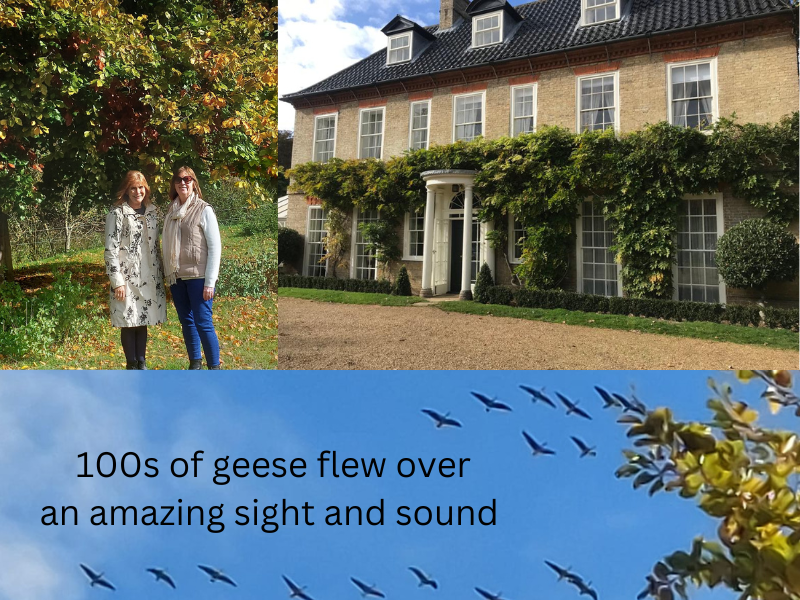
The FWG 2022 Writing retreat. Top left me and writer friend, Janet Bridger. Photos by Catherine Rendall

Now, let me introduce this week’s guest.

Gabriel Constans is the author of fiction, and non-fiction. His book A Brave Year (52 Weeks Being Mindful) draws on his lifetime practice of daily meditation.

In this episode Gabriel explains how writers can:

Find balance in life

Achieve writing goals with a calm and quiet mind

Fulfil their potential and purpose

You can spend more time with Gabriel by visiting his websites.

Website: http://www.gogabriel.com/books.html

Videos & Film: http://www.gogabriel.com/videos.html

Gabriel Constans

You can listen to the podcast here: Episode two (season 2) How to achieve your potential as a writer the mindful way, with author Dr Gabriel Constans

Or read the transcript below:

Deborah: Dr. Gabriel Constans has an impressive CV both as both as an author and a caregiver. His catalogue of fiction, nonfiction and short stories is too long to list here, but I will provide a link to Gabriel’s books in the show notes. Gabriel has served the community over the past few decades as a grief counsellor, a social worker, a massage therapist, a certified thought field therapist, a mental health consultant working with teams and ex-convicts on substance misuse, and as an advisor for the street children of Rwanda project. He has a doctorate in death education, a master’s in pastoral counselling, and a Bachelor of Science in Human Relations and organisational behaviour. 

Wow, your achievements are breath-taking. What has driven you on this journey, Gabriel? And what have you learned along the way? I should say welcome and hello, first of all, before I throw the question at you.

Gabriel: Oh, welcome, and it’s a pleasure to be with you. And thank you for that question. I think in some ways, it’s interesting what started me on this journey was a couple things when I used to work – as far as caregiving, I worked as a nursing assistant on the cancer unit at the local hospital. 

I saw a person in pastoral care, and how she interacted with people, and supported. And I decided, that’s what I wanted to be when I grew up.

So, I went back to school, and got all the degrees I needed to do it. And that’s why I about three years later, no, four or five years later, started working in pastoral care at the hospital. Before that I had already been involved with hospice for a long time. So that way, I was able to combine really a lot of what I did as a volunteer, with my work and vocation.

Deborah: Can I just ask you something there. First of all, how old were you when you saw that person working in pastoral care? And the other thing really is, do you think sometimes when we see something or hear something, it triggers something – a sense of purpose? I wonder if you could explore that with me.

Gabriel: Yes.  I already had felt a sense of purpose. For other things I was involved with, such as hospice and in counselling and that I had been doing since I was about 16 in different formats. But this was the first time I saw that, and thought, 

‘Oh, I can do this and have enough money to live on. And do something that is also perhaps the most helpful for other people at the same time. So, it gave me a purpose as far as my job, vocation.

The purpose as far as being with other people, and helping other people came before that. But this – when I saw Rosemary Helmer, who was the person who was in pastoral care at that time, that’s what inspired me to see it was possible to do both at the same time. I think I was about 20. See, we had one son, one daughter, one son we hadn’t adopted anybody yet. I was around 25. So, that’s what happened.

Image by falco from Pixabay

Deborah: So, where did you go from there in your life? You’ve had such an interesting life. Can you tell us a few of the milestones?

Gabriel: Well, I started actually, around that same time. I started writing again, a lot more. I hadn’t written since I did an alternative newspaper in high school years before and I started writing fiction again. That was a big turning point for me because I started realising two things, one that I enjoyed it, and that I have a lot to learn to make it better. And part of that started, in some ways, like you, when you were making up stories to a younger brother, and then to your daughter. When the children were little, I would make up stories and start just creating them as well as reading comic books but and then I realised there were stories that I wanted to start telling talking about. And I think it wasn’t. So, I started doing fiction and then after a while, I started doing a lot more nonfiction, doing profiles of people that I thought were inspiring. Getting things accepted in different newspapers, journals, and magazines in the US and around the world. Then, after some time, I started going back to writing more fiction. As the kids got older, the fiction changed.

Deborah: I was reading about one of your novels, the Buddhist’s Wife, and I wondered, do you have Buddhist beliefs yourself?

Gabriel: I do, although I don’t per se state that I’m Buddhist, because in many ways, it’s – for some people, it’s become a religion. But in other ways, 

it’s essentially practising being mindful and compassionate to people, and to yourself, and finding out what works and what doesn’t.

 So, there’s no – in its pure essence in Zen and Buddhism, there is no hierarchy. There is no church, or group. There are just people that are seeking what is true – what they discover what is true, in order to connect with other people. 

So, I started going to a Zen monastery when I was 16. It was the only thing in the area where I grew up – a small town and a lumber mill in Northern California, that I really connected with. And it was about an hour away. So that was my first introduction to it. And actually, the first time I got married, that’s where we got married at the Zen Buddhist monastery. So, in some ways, I guess I have been a Buddhist – in quotes since then.

Deborah: How have your spiritual beliefs influenced your daily life and your life as a writer? Either / or?

Gabriel:  I think primarily spiritual beliefs because through the years I went through different phases of girlfriend, a Jewish girlfriend who wanted to be Catholic, so I became Catholic. And we worked with Mother Teresa co-workers. And then at another time, I went to Quaker meetings for a long time.

I think primarily, 

it’s influenced me by realising there’s something beyond myself. And that we all have a similar connection of being human.

I think those are the two primary ways it’s influenced me. I found that through different practices, by paying more attention to myself, I was able to let go of myself more. And so, in that way it has helped me to be more present and helpful with other people, as well, the more that I practice in my own life. So, in that way, spirituality, which can mean a lot of things I know to a lot of people. That’s what it means to me. A way to get out of myself and connect with others.

Deborah: It sounds simple, but it’s incredibly profound. And it’s a work in progress. I should think, for everybody.

Gabriel: Absolutely.  It’s ongoing.

 It’s like I’ve been meditating for over 50 years, and I feel as though I have just started.

Deborah: Really. I’m new to it then because I’ve been meditating every day for four years and it seems I’m very much on the nursery slopes compared to 50 years.

Gabriel: You have all the time to serve. The time is irrelevant in a way. Just now is now. So yes, I think the thing that meditation – actually with a lot of spiritual practices, that probably is the most difficult for me which is one reason that I learned over the years and wrote the book, A Brave Year (52 Weeks Being Mindful) to make it easier for people to do.

 The thing that I forget the most is to just remember to be present, and to pay attention to what I’m thinking, feeling, and sensing with my senses.

Because it’s so easy to get caught up in what our mind is telling us. All the things we’re doing, or all the things we think we need to do, or what comes next, or what already happened. And that’s what our mind is, that’s for. 

Image by Nato Pereira from Pixabay

Deborah: It’s part of being human, isn’t it?  Very hard. It leads me to talk more about the writers’ journey and the process for writers, because I know lots of writers and other creatives listening will really be wrestling with the wanting to control and the difficulty in letting go when they’re thinking about their work, and getting it published – getting their voice heard, getting it out there. So, what advice or help might you pass on to other creatives?

Gabriel: Probably what I learned and keep remembering is – 

really be clear why it is that you are writing? What is your intention for writing?

No matter what it is, you’re writing – nonfiction, fiction, fantasy, regardless of the genre, what is your intention? Why do you want to write? Or why are you writing? I think that’s probably the most important place to start. And also come back to asking yourself that question. Because if it’s to have other people reaffirm you or to become well known, or to make money, or just to be creative – to create different worlds that take you outside of yourself. Or whether it’s journaling and writing something just about your own life and your experience as a way to take it out of your life and look at it and also to externalise it and let it be cathartic. All of those reasons are okay. Any reason as to why you are writing is okay. But if you’re doing it for some of those intentions, such as wanting to make money or being well known, or want lots of people to read what you write, or have people tell you positive things, ‘Oh, you’re such a good writer,’ or to reaffirm who you are, or to give meaning in your life, for those reasons, it can be very lonely and a long, long time. So, that’s why it’s important to look at why you’re doing it, and then doing it because you enjoy writing. And to continue doing that, regardless of the outcomes can be really life-saving as far as your energy, and your grief, and disappointment, and dealing with rejection. 

Because the more secure you feel in yourself, the more okay you are with who you are and how things are in the moment. Then you don’t get as attached to the outcomes

I still do sometimes. But it comes and goes more quickly. And it’s not so overwhelming. 

I still get excited about screenplays accepted or, you know, after years of trying to get something produced. I get all excited and, you know, dance around and etcetera but the other times when three producers don’t want to look at it. One or two finally look at it and then months later say they aren’t interested – the feelings that that brings up, I’ll acknowledge them as well. Usually, sadness and disappointment. But it doesn’t last as long and doesn’t prevent me as much as it used to in the past from continuing to keep writing and keep doing it.

Deborah: I agree with you entirely. Really helpful. And hearing you say it in such a thoughtful way is really helpful. I think it’s something that people will listen to and find really calming on this journey, which can be very rough, and tumultuous? How do you self-care? Because you will have times, as we all do, when, as you say, when you have had a setback or disappointment, or just life gets in the way and it’s a bit overwhelming. How do you self-care apart from the meditation? Do you have other things that you do to keep your equilibrium?

Gabriel: Yes. I balance out the day quite a bit. And it’s easier since I work at home now with pretty much everything. It is more difficult when you’re out at a job, or working, or doing other things or with raising children. I remember those times. Even though I’m still like raising children as adults sometimes. So, it’s much more difficult but having a balance helped the most when I had a really packed day. All those things are pretty much the same things I do now. Just not as much as I do now. And what those things were, and are: doing yoga in the morning. Meditating every morning. Doing tai chi. I love being outside, and we have a small garden – I never used to be into gardening at all. And then all of a sudden one day it just became my thing. I don’t know why. So, being outside if possible.

Nature is something bigger than yourself, other kinds of living creatures being around

You can do it in the city too, if you live in a city, if you live in London or a big city, and it’s pretty much all concrete. There are still little places you can go. You can find little parks.  Just going for a walk, being out in the air and paying attention to yourself and not necessarily all of the people and things around you. I love watching movies and reading books which are all things that take me outside of myself – my own cares and worries and stress.

Deborah: Sounds like you have a similar sort of life to me. I wake up I do my yoga. I have a lovely walk by the sea. I do my meditation, and I write, and I spend time with my lovely husband. So, yes, is it’s a good life.

Gabriel: Yes, wonderful. That sounds really wonderful.

Deborah: Like you I did work hard before I retired. So, life brings different things in different seasons.

Gabriel: Yes. What was the work that you did? It was in health care, wasn’t it?

Deborah: Varied. I started off by training and then working as an occupational therapist. And then, my husband gave up work when daughter was born. She’s now 32. And he didn’t go back to work. So, I’ve been the main wage earner, which was great, because that propelled me to fulfil my potential, I guess. And I’ve always loved what I do.

 So, I went into managing health services, and then into regulation. And in the latter years – the last 15 to 20 years, I lose count, I’ve had a management consultancy for health and social care. And I’ve been writing safeguarding adult reviews, independent inquiries, you know, domestic homicide reviews and chairing boards for safeguarding adults. So, I’ve been doing that in the latter years, but most of my career was working with older people. So, I did lots to do lots of work, both as a clinician and in informing government policy through national reports and things. So, my work also was very much writing before I was writing fiction, I was writing national reports, I was writing my safeguarding adult reviews. So, it was always writing, it’s just changed to writing fiction now. And I always say that now I write happy endings for people because they were never happy safeguarding reviews.

Gabriel: Yes, so many things are beyond your control. How wonderful. Thank you for the support and what you’ve done for so many people for so long to help them in different circumstances,

Deborah: And likewise, to you. I don’t know about you but I feel that it’s been a privilege and a pleasure, being able to work with people in health and social care. And I don’t know about you – you must tell me. But I feel that for so long, I’ve been listening to people who have experienced adversity, and have had to cope with incredible challenges in their lives. Perhaps feeling on the outskirts of society, and unheard. I’ve listened to them. And my paid job was making sure those voices were heard, and fighting for them, really. So now that I write fiction, those voices still kind of play out in my head. These characters come into my books, which are almost like the ghosts of the voices from my health and social care career. I don’t know whether you find that you carry a lot of that with you still in your work?

Image by Sabine van Erp from Pixabay

Gabriel: I do and actually especially with hospice because I went into homes and people’s families, as a social worker and bereavement counsellor for many years, and in all kinds of situations. A lot of those stories, and people have been reflected, not the same names, I changed the situations and stuff. But they had a big impact on me, and influenced how I write characters, as far as fiction. And then of course, with a lot of nonfiction I wrote. A lot of that is about death and dying, and trauma, and resilience, and how to live your life without – so obviously, those are drawn a lot from those experiences as well. But it has come out in fiction as well, in different ways. I think I learned a lot about, about people. And the variety of ways, the endless variety of ways, of how we comprehend and how we act. And what happens in our lives, and the beauty of how different people are. And yet also how similar in some ways so that we can all relate to a character. Even if it’s a fantasy that takes place somewhere zillion times in the future. I try to write fantasy. There are still certain characteristics about it that we can identify with.

Deborah: So why do you write? You were saying we should consider our purpose for writing? What is it that makes you feel you need to write?

Gabriel: For nonfiction, when I started writing a lot of nonfiction articles and books, there was very little about death and dying available to people. And it was still – it still is, but even more so – something people didn’t talk about or deal with grief and loss. It was the same with birth and midwives having it back in the home (home births). You’ve had it in the home a lot longer in UK, but up until the 70s it was still illegal in the US because the medical community pretty much hijacked it and said it was a whole technical thing that had to be done in hospitals. So, with hospice, and with people dying, it was very similar having it be in the home, as opposed to in the hospital. So, when I first started writing, I wanted to make it more available to people, what a natural thing grief and loss is. And reaction, and the differences between just grief and normal reaction to loss and complicated grief and how to get support. 

So, I think for a lot of nonfiction when I first started writing, it was to help support people, and inform people, help them make a difference. And with fiction, I always came up with a story, with ideas for things. And stories that I hadn’t seen somebody else do exactly the same way. Even though all fictional stories are the same, in many respects. Just those little things and different combinations of stories or characters, I just felt compelled to write about. Actually, the first fiction book – this may sound weird, being a male, 

I wanted to empower women’s voices in characters of women who have never been talked about – hardly ever in fiction, let alone nonfiction, for their experience to be available to people, or what I imagined their experience might have been. 

So those are some of the primary reasons I think that I still write fiction.

Deborah: I’m sure that your stories are helping people in the same way as your work and caregiving did.

Gabriel: I don’t know if it is or not. It’s something that I love doing.

 If it makes people laugh, or something touches them and gives them a break from other things going on, or something that was a bad they identify with. That’s wonderful.

Deborah: It’s a great thing as a writer, when you get feedback from readers that you’ve touched a chord and something’s meant something to them. I think that gives writers great joy, doesn’t it? 

Gabriel: For sure. 

Deborah: Well, you’ve shared many words of wisdom with us, is there a parting message you’d like to share?

Gabriel: A message I think that is probably the most vital is: 

If you are clear why you write and continue doing that, then be consistent about it.  

People with a lot of things, especially with writing, try it for a month or two and if they don’t have what they determine success, or people don’t say it’s ‘Oh, it’s wonderful’, then they stop.  I think one reason that I’ve been able to have so many things published and produced etc. was not because I’m a fantastic writer. But because I’ve been consistent and kept getting better, as the years went along. In the first years, I thought, ‘Oh, this is the best thing I’ve ever written’. Now, oh my gosh, I look back and think oh, this is horrible, how could I have thought that.

 So, being open to constructive criticism, getting somebody who’s willing to be really honest with what you write, I think makes a huge difference.

And then being open to changing things completely from how you thought they might go. And keep working on things.

Image by Dorothe from Pixabay

Deborah: Have you taken any of your early works down of have you left them out there?

Gabriel: I haven’t taken any of them down but I think some of them aren’t available anymore, because magazines don’t exist. Some of the publishers of the players I first wrote, I think they don’t exist anymore. 

Deborah: Thank you very much Gabriel. I really enjoyed meeting and talking to you. I wish you continued success.

Gabriel: Thank you so much. I really appreciate you taking the time and having this conversation. I hope it is as enjoyable to you as it has been to me.

Great words of wisdom from Gabriel. Why do you write? I write because it brings me joy. Of course, I love getting feedback from a reader that they have enjoyed a story. Entertaining a person, triggering emotions, or memories is a wonderful accomplishment. Connecting with readers through the written word is why I write. 

It has taken a couple of years and a lot of hard work finding my readers but now, with my third book about to be published, I am reaping the rewards. I have found my readership and I write with them in mind. It may only be a few hundred people today but I value each one of them and I know that my tribe of readers will continue to grow. Be patient and consistent writer friends. And above all find joy in writing.

So until next time. Look after your beautiful self and trust the journey.

You can find all episodes of The Mindful Writer podcast here: https://themindfulwriter.buzzsprout.com

Don’t forget to subscribe so you don’t miss any episodes.
How to turn disappointment and despair into success with playwright Jack Canfora

In this episode of The Mindful Writer, Jack Canfora and I explore the challenges of keeping a calm and positive mind despite disappointment and despair.

Welcome back to season two of The Mindful Writer. There are lots of great guests in this season. As always, they have been a joy to meet and I am looking forward to sharing their wisdom with you.  

In this episode, Jack Canfora and I explore the challenges of keeping a calm and positive mind despite disappointment and despair.

Before I introduce you, let me update you on my writing journey. Life has become incredibly busy for me – but exciting too. We returned from a Mediterranean cruise a week ago, our first venture abroad since the pandemic. It was a wonderful holiday and I returned with my creative well overflowing from the many fascinating experiences on our travels. 

The downside of a holiday is managing the workload before and after the break. I am following the advice I have shared here from guests – scheduling everything in my diary and only concerning myself with one day’s activity at a time. 

Alongside preparing for the launch of my next novel The Forever Cruise on 1st December, which is incredibly exciting because it will be my first in person launch event since the pandemic, I am helping to organise the Frinton Literary Festival in October. Paula Hawkins and Freya North are just two of the authors featured this year. 

I try to schedule at least two hours every day to write, as well as allocating marketing and admin time. It would be easy to neglect my writing if I did not make this a priority.

When there are many competing demands on our time and we feel overwhelmed by the to do list we often neglect our self-care. The truth is relaxation, exercise, family time – the things that make us feel good, are even more important because when we balance these with work we achieve more and become more resilient. 

My guest this week has experienced many highs and lows in his writing life and has a realistic perspective on what we might expect of ourselves in challenging times. So, let me introduce you.

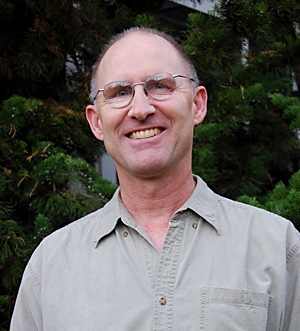
Jack Canfora is a playwriter and podcaster. He blogs www.thewritingonthepaddedwall.com, has an

online theater company  www.newnormalrep.org with a podcast “New Normal Rep’s Play Date” on most platforms.

In this episode we explore:

What we can and can’t control as writers and when to let go

Coping with envy and disappointment

How we can learn from our suffering, turning it into something positive

Jack Canfora

You can listen to the podcast here: Season Two, episode One.

 How to turn disappointment and despair into success with playwright, Jack Canfora.

Or read the transcript below.

Deborah: Jack Canfora, playwriter, podcaster and writing coach, I came across you through the Pointless Overthinking blog as you’re a regular contributor. However, since then, I’ve discovered and listened to your podcast NNR, the New Normal Rep Theatre Company podcast, and I love your energy and sense of humour. There have been numerous regional productions of your plays, and you’ve won several playwright awards. So, I consider you to be very successful as a writer. This is something you and I have discussed – how do we measure success? So, Jack Canfora, what does success look like to you?

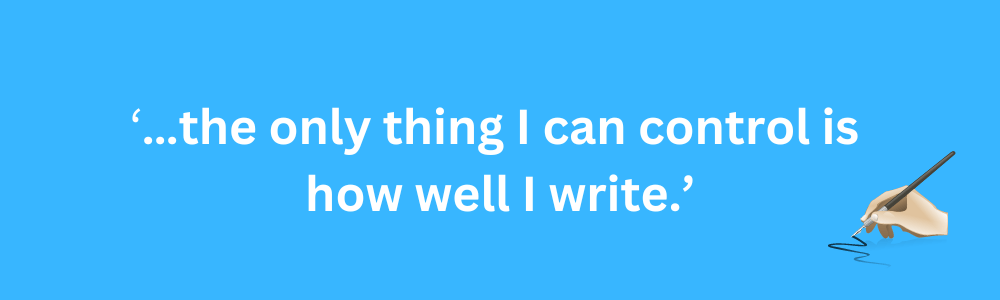
Jack: Well, I can tell you what I aspire that answer to be for me, which is – and I’m getting better at it, I feel I’m getting closer to it – is thinking of success in terms of doing what you’re doing, in my case writing, as well as you can possibly do it. In whatever that means to you, you know, for me, it is to be honest, and it’s hopefully entertaining, but also accomplishing what I set out to do, which is writing a play – simply writing a good play. And if you get people to perform it, that’s even better, of course. But ultimately, those are all things beyond your control – beyond my control, certainly, and the only thing I can control is how well I write. And if I feel satisfied with what I’ve written – relatively, because I’m never completely satisfied, right?  I think someone said, forget who – they said about plays, the plays are never finished, they’re just abandoned. And I think that’s true of probably all writing. But as long as I can feel at the end of the day, I’ve done the best I could do, then that should be my definition of success. And there are days where I’m pretty close to that. And there are days also when I get to work with some talented people, which I’ve been very lucky to do pretty regularly, and get to spend time in a room with them working on a play that I wrote, and they take the trouble to remember the lines I wrote.  I mean, that’s pretty great in and of itself. There’s a sense in which, you know, what more could you want from from life? In fact, that’s the most fun for me – being in the rehearsal room and doing those things in collaboration. There are external things sure, like, having your name better known and having some money. I wouldn’t lie and say that I’m not so profound, that those things don’t matter to me. But I think in the end, I have to try to measure and I think all I can do is try to measure what I can do, and leave the other things to the fates. So, is that too long a winded answer?

Deborah: No, it’s not at all, but there are a few things I want to pick up with you on the interesting points you made. First of all, the point you made about the things we can and the things we can’t control, that’s quite difficult, isn’t it?  To think about what we can control and letting go of the things we can’t.  I know you coach writers, how do you help them cope with the letting go of what they can’t control?

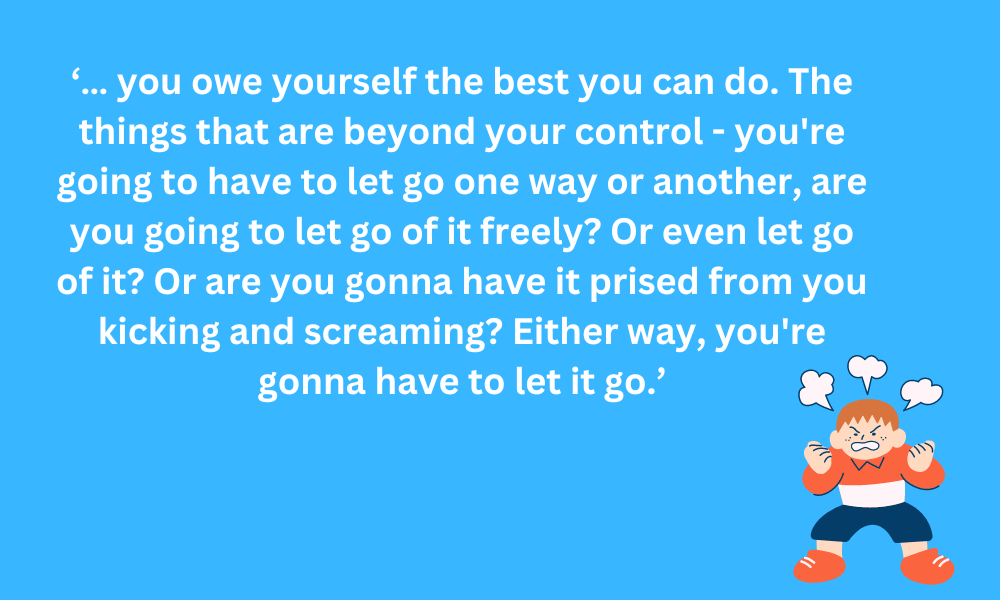
Jack: Well, first of all, do as I say not as I do to a certain extent. I mean, I think it’s something that’s aspirational. Like I would argue, mindfulness is probably. You know, attaining that perfect sort of Zen – just being in the moment and letting everything go. Very few people can ever really, truly accomplish that for any length of time. But that’s always the goal. And you can’t – paradoxically, you can’t measure your time there in terms of goals. It’s just, you know, being in the moment in terms of letting go of the stuff you can’t control. I think it’s a tough reality to square with what your dreams or ambitions may be. I have to tell myself this on a regular basis. I read – someone posted something recently, and they said that ‘the theatre is at least twice as old as the Christ’s tale and it’s been disappointing disciples ever since and that – art owes you nothing. And you owe yourself the best you can do. The things that are beyond your control – you’re going to have to let go one way or another, are you going to let go of it freely? Or even let go of it? Or are you gonna have it prised from you kicking and screaming? Either way, you’re gonna have to let it go.

Deborah: We’ve all had that experience – that kicking and screaming, when you rail against the world that ‘why hasn’t this or that happened?’ and, ‘it’s not fair.’ The energy we waste on that.

Jack: Oh, my goodness, yes, that’s, you know, more of my week than I would like to admit.

Deborah: Another point you said, is knowing when to let go – when it’s finished. Saying that, you can keep on and on and on, and you say ‘a play is just a play that’s been abandoned because it’s never finished.’ There are two things there: How do you decide it’s good enough? And also, when you’re doing the best, you can, for yourself – to show your best work, how do you stop those voices in your head, that are the critics – the voices questioning how it’s going to be received that get in the way?

Jack: Yeah, well, again, it’s sounds like this is going to be a wishy-washy answer. But I think that it’s a little bit of both. I think you do have to silence those critics at a certain point. But I also think it’s important to listen to them to a degree. Because, I think, if you don’t, you run the risk of becoming sort of self-indulgent. And the minute I think, as a writer, and as a novelist, or a poet, or short story writer, or a playwright, or what have you, you send – you know, you write your work and keep it to yourself, that’s fine, you can be as self-indulgent as you like, it’s sort of freeing in a way – but the minute you send it out for someone else to read, then I think you have an obligation to not be that way, to yourself as much as anyone else, because probably no one’s going to want to read it or do it if it’s that way.

 I have been lucky enough to cultivate relationships with a few people in particular, whom I have great respect for. And so, just to give you my own experience as a playwright, if I’m in a room with people whom I trust, you know, in terms of their intellectual and emotional judgement about a work, and they say, X, and I was thinking Y, then, that doesn’t mean I’m wrong necessarily. Or there is a wrong. But if you’re saying X, and my intent was Y, it behoves me to at least consider X, because three very smart and dedicated people have said this whom I trust. And again, I can’t emphasise that enough, because there are people who, whose judgments won’t jive with yours. And so, you need you need to be open to that critic. 

But on the other hand, you also have to say, you sort of have to feel I think, when you’ve reached a wall. The great thing for me as a playwright is if my play is being produced, there reaches a point where the script is what they call frozen, and the actors and you are no longer allowed to make changes. And that is a great thing to do, you know, to a writer actually, because you can overwrite things. I think, a lot of problems for playwrights and also my guess is for novelists or other fiction writers, you can workshop things to death. And there is a point where, you know, there’s little quirks in the play that technically may not be by the book correct. If you sand all those away, it becomes pretty nondescript. So again, it’s a question of taste, right? I mean, I readily accept that not everyone is going to like my plays. I say that, but I don’t really think that!  But I aspire to that. I mean, Tolstoy hated Shakespeare, so Shakespeare can’t be beloved. I do feel the onus of having everyone like me, is definitely lifted off of my shoulders. You know, I just have to do the best I can. And you know, again, it’s a constant practice. I think it’s a practice and I’ve never gotten there completely. I may never achieve that at all. But that’s certainly what I what I aspire to do. 

What I would advise is constantly tug back and forth with yourself. Be absolutely as forgiving to yourself as you can be while you’re writing and then as ruthless with yourself as you can be when you’re editing. It’s a bit of a back and and forth, I think.

Image by Hoàng Anh Vũ from Pixabay

Deborah: Do you use anything like yoga or meditation? Because as you were talking, and you were saying, keep going back to it, it made me think of when we’re meditating. And your mind wanders, and you come back to the stillness. So, do you have affirmations or meditation or anything to help keep you in the right state of mind? 

Jack: Yeah, I think I would benefit enormously from it. And again, I think my story is very typical. But I have tried meditation on several occasions and have found it bafflingly hard. And I am ashamed to say I have, you know, I’ve sort of walked away from it. But, you know, it’s, it’s clearly to my benefit to try it again. I guess this is the word of the day, I aspire to get to that place where I can incorporate that as part of my life, because I have no doubt that it would help every aspect of my life.

Deborah: I’m a great believer in in meditation and yoga. It’s part of my daily practice. And it has made a huge, huge difference. In fact, I started a daily meditation practice, when I knew I was going to be going through a challenging time as a writer. This is about four years ago, when a book was out with an agent, to find a home for it – a publishing contract.  I started doing it then – planning to do it in the 40 days for Lent before Easter. And I’ve carried on, I think about four years into it now, for daily practice. 

Jack: That’s wonderful.

Deborah: When I compare how I was, emotionally, and mentally, at that point – when I was waiting for to hear back about my work, compared to how I am now. All the things you say about letting go and being calm and accepting. I’m totally – I can feel, in that place. And I just noticed such a huge difference.

Jack: Yeah. I guess I would want to drill down on that a little bit. So, like you said, that you’re in a completely different place? And is it that you just feel calmer and more at ease? Or is it something more profound than that?

Deborah: I wouldn’t say – profound, in terms of great spiritual-awakening-type things, to dress it up. It is a sense of absolute calmness. But the greatest thing for me is really being open to possibilities. And knowing that I’m not giving responsibility for my happiness into an agent’s hands or in the outcome. I’m not wedding myself to one particular outcome. I absolutely feel uplifted by the number of potential outcomes there might be. And I truly, truly believe 100% that the right thing will find me at the right time. And I have absolute faith in that. It takes an awful lot away from the anxiety. And I think that positive attitude, and that feeling of well-being, you’re more likely to attract something, just by the fact that if somebody is positive and happy, and not chasing something, they’re more attractive to a person, whether it’s dating or a job or anything. The desperate person, the uptight person has a closed mind and can’t see the wood for the trees. So, I think it’s just practical, you know?

Jack: Well, I think that’s a much better answer than I gave about what you would tell the student in terms of letting go. Yes, absolutely, that sounds wonderful. I hope to get there someday. But yes, I mean, I think that’s exactly it. It’s not living and dying with every rejection. Because if you do that, you’re I mean, as a writer, as an artist, you’re just really asking for it. I mean, I think you’re asking for it as an artist to begin with, right? You know, the odds are stacked against you, in terms of what you can control in terms of, you know, the standardised in normative sense of what success, you know, means. So, if you go chasing after that, and if you go chasing after that doggedly, with only one sense of what constitutes happiness or success, or, you know, and I think, you know, as a writer, and just as a person, if you do that, then you’re bound to be, you know, the irony is, I think the more you do that, the less likely you are to, to get that specific thing, because you’re never going to. It’s never going to be played out the way you expect it to play out – good, and bad or indifferent. You just have to sort of be flexible enough to bend with the wind.

Deborah: So, looking at your journey Jack because often when you look back, you can see oh, that happened. If that hadn’t happened, this wouldn’t have happened. And it all starts to make sense. What has your journey been like? Because as I said, you are successful, and it can’t have always been easy. So, what were the breakthroughs for you that you can look back on and say, ‘Oh, well, I’m glad it happened that way?’

Jack: Again, success is such a relative thing. I mean, you know, it’s there. I’ve been very lucky in many regards, with plays done regionally in and off Broadway, and I’ve a couple, you know, published for sale on Amazon, by the way. 

Deborah: Which I will promote in the show notes (see below).

Poetic Licence and Jericho

Jack: But, I think inevitably, the answer comes down to relationships for me. You know, I’ve been able to meet people and some people fall away, just like you fall away from certain people’s lives. But I’ve been very lucky in cultivating some really good relationships with people who have helped me both pragmatically, but also just grow as a person and as a writer. So really cultivate those relationships, and not let in a cynical’ What can I get out of this person?’ way, but in a genuine form of connection. 

I have had it pointed out to me by a few people who have seen my plays, that a common thread is running through them, because the subject matters differ pretty wildly. But a common thread is – people sort of seeking a community or connection. And I think that’s probably true. It’s never in my mind as I’m writing it. But I think it’s probably true. And I think, especially these days, I think, you know, our culture is sort of, you know, finely crafted to promote alienation. And so, I think that it’s something we all need. And I remember, as a kid, I found that with people doing theatre, or as a musician, when I was in the band, you know, a lifetime ago. But, yeah, it’s always about the people to me, and I think I would, I would give myself this much credit that even a while ago, even at a fairly young age, even if I didn’t know it, intellectually, I intuited that really, the point of things is relationships, and other people. Not that you should become dependent on other people, but that you should be welcoming of other people. And so, yeah, like I said, I think that’s the one key thing for me that I’ve realised over and over again, that inevitably boils down to the relationships you have with people.

Deborah: Excellent advice. I agree. Absolutely, networking is so important, you don’t know who might come into your life that can have a huge influence, and how you can help other people. 

Jack: Yes, has to be reciprocal. I completely agree, and you have to be fine with it, you know, doing something with someone when they have some sort of pragmatic success from it, and you don’t necessarily. That’s certainly happened to me. And you have to sort of let go of that little childish self that says, ‘Well, why didn’t I get some?’ Which very much exists within me, but yeah, I am much happier, when I can be happy for that person. You know, and it’s just a very nice feeling.

Deborah: That’s a really good thing to pick up. Because I think we would be lying if any of us said we didn’t, at some time feel envy for a fellow writer who we wished well, who we loved with all our hearts, but we thought, That’s not fair. And then, you feel awful that you think that’s not fair when you really do wish them well. Feeling why not me? And it’s, as you say, it’s a childlike emotion, because that’s where we are.

Jack: Yeah, that’s where I am certainly. I think it was Gore Vidal said, ‘Every time a friend of mine succeeds, I die a little inside’, which is a little too acidic, I think, for it to be, you know, entirely true. But yeah, we all have those feelings. And I think it’s okay. You know, as I’ve grown up or attempted to, I think, one of the things you learn is that your feelings are going to show up, and they’re going to take whatever form they take. It’s a question of, you know, you can’t judge yourself for that, because there’s a sense of what you’re not, you’re not in control of your feelings. What you can control is what you do with those feelings and what feelings you choose to dwell on and to focus and to foster. That’s your choice. But the feelings themselves aren’t either good or bad. They just exist.

Deborah: When I do my meditation, if I feel like that, I do two things. One, I acknowledge, that’s how I feel and I don’t give myself a hard time about it. I just feel where it is in my body. I can feel it and recognise it’s there. And then I think about that person, wishing them love, wishing them the best and sending light and love. It sounds a bit hippy, but it’s sending a sense of feeling to them that I genuinely want well for them, and then with those two combined, and trusting that there’s a different path for me – and that’s okay. Those two techniques really helped me.

Jack: Yeah. I think that wonderful and it’s down to you, if you can put out that feeling genuinely – out there to the world. To quote someone else – the Beatles said, and  I think it’s very true, ‘The love you take is equal to the love you make.’ And I think really the point of that is – you need to learn to give and feel good and feel love wherever you can find it. And just, again, let go of anything negative and don’t judge yourself for it. You know, everything is transient. Even your darkest feelings are going to pass. Don’t try to label them. And more importantly, don’t label yourself based on what you’re feeling at any given moment.

Deborah: I was listening to something on TV about Julie Andrews’s life, you know, Mary Poppins, My Fair lady? 

Jack: Oh yeah!

Deborah: Well, this is a great true story. I hadn’t really realised at the time but Mary Poppins, not Mary Poppins, sorry, Julie Andrews – she’s just a real person! Julie Andrews had done My Fair Lady on Broadway and in London. And it was huge, huge success. So, when they were coming to choose an actress to be in the film, she assumed it would be her. And of course, it wasn’t.  It was Audrey Hepburn. And can you imagine her disappointment, you know, as an artist, when that happened? How devastated she must have felt? She really believed it was hers. And it wasn’t. And then a few months later, the role of Mary Poppins fell into her lap. And she was asked to do that. Then when it came to the awards, that film and her as leading actress, got more awards than my fair lady. I take from that, when things don’t go the way that you hope they will or expect them to, very often, there’s something much better that you hadn’t envisaged just waiting for you.

Jack: That’s absolutely true. And that’s true of my life as well. In low moments, it’s very hard to see that maybe this is a new opportunity, in that this clears the path for you to go a way and you’ll actually get more out of. I’ve had multiple experiences of that my life. 

Deborah: Yes, me too. And I think the older you get – I’m sure I’m older than you.

Jack: You’re more mature than I am, I’m sure.

Image by Wolfgang Eckert from Pixabay

Deborah: As you go through life, the more experiences that you have that you can look back on. You can use those as a reference point to think, ‘Ah, but when that didn’t happen, X happened. And when that didn’t happen, that happened.’ And you get more and more affirmations that this is the way life can work – is, working for you. And that fills you, I think, with positivity. If you can go back and remember that.

Jack: Yes, absolutely. It’s so hard for me to claim to be committed. It’s so hard for me in the moment, where I’m expressing or experiencing disappointment to, to remind myself of that, but it is vital to do that. You’re absolutely right.

Deborah: It’s a journey. We’re all a work in progress.

Jack: Yes. Very much so very much. 

Deborah: That’s why the journey is so interesting.

Jack: Yes, that’s right. I won’t pretend this is an insight of mine, it’s pretty much common knowledge. But, you know, suffering is awful, it’s why they call it suffering, but it’s also imperative that you have it without that you wouldn’t grow in any way. I suffer a lot from depression, and I don’t recommend it to anyone, if they have a choice. But having said that, I also have to, in my less desperate moments, realise that it’s actually been a pretty, a very strict and mean, but very good teacher. At times, I think I’m a lot more empathetic than I would have been, had I not had those feelings. I think, whatever abilities I have, to whatever degree I have them, have been sort of sharpened I think, by that experience. I mean, certainly, I don’t think I would have been a writer. And I certainly wouldn’t have been, you know, as however good or bad or I may be, I wouldn’t have been able to reach the potential I’ve reached, you know, to whatever degree that may be without that suffering. And so, I think it’s you have to accept, you know, the yin and the yang as they say.

Deborah: It’s a really good point to make. Thank you. How would you like to be remembered?

Jack: Well, if I’m remembered at all that would be a little surprising for me. I think ultimately, you know, I mean, cliched answers are really cliches for a reason. I really want to be – I have two children who mean the universe to me. And so, I want to be remembered by them, as someone who loved them and did his best even when he – you know, although I am far from perfect father, but that they knew that they were loved and that I love them. And then, beyond that, I would love to be thought of fondly by my friends and most of the people whose lives I’ve been in, that won’t be 100%. But it’ll hopefully it’ll be nice. And then maybe if in my small, totally unverifiable via data way made the world just made, like a half a centimetre nicer, you know, slightly, slightly better than when I showed up. 

Deborah: I’m sure you’ve already done that, because my favourite film is, It’s a Wonderful Life.

Jack: Oh, that’s a beautiful one. The day, I don’t cry at the end of that movie is the day I really need to worry about myself.

Deborah: So, I’m sure you already touched a lot of lives through your plays and your work.

Jack: Well, that’s very kind. Thank you. Then of course, lastly, I would love it if a play or two of mine survived into the next generation, but ultimately, I won’t be around. So, the most important thing is to just, you know, be as kind as you can be, as often as you can be. There are days in which the bar for my ability to be kind is pretty low. So that varies, obviously, but I think that’s our main job – to try to be kind. When I was younger, I really valued talent and intelligence. And it’s not that I don’t value those anymore, but I place a lot more stock in than just being a good person, you know, a nice person, which sounds idiotic, but I think it’s true. I mean, I think being proud of, you know, your intellect, for example, is like being proud of your blood type it is sort of an accident of birth. But kindness is something you have to work at. 

Getting back to our earlier point about what do you have control of, you don’t have control over a lot of things. And you don’t really have control over your talent to a degree. I mean, you can work at it and shape it, and I think you should, but you don’t have control to a degree in your intelligence, for example. But you do have control in how kind you are, and how you treat other people. So ultimately, I think that’s what I respect that, more than anything.

Deborah: Again, this is probably a cliche, but when I heard it, which wasn’t that long ago, for the first time, it had an impact on me. I was at a funeral. And the celebrant said, ‘It’s not what we have achieved, but what we have become that’s important in life.’ And I thought that was so true.

Jack: Yes, that’s really wonderful. It’s far better than I would have come up with, but I think it’s so true. And I think that, you know, in life as I get older, I think that most of life is a verb as opposed to a noun. You know, it’s about acting, whatever way you want to, but acting in the best way you know how for yourself and for others, rather than just thinking things will come to you or thinking things are facts – unalterable and permanent. You know, it’s about, it’s about trying to do these things that matters more.

Deborah: I nearly said, ‘absolutely.’ And I’ve noticed when I’ve been editing my show notes, I say absolutely too much. Absolutely.

Jack: Well, good. Good. I got a couple of them out of you so I succeeded today.

Deborah: Great. So finally, what words of wisdom would you impart to your younger self, when you go back to when you first started out writing and you felt overwhelmed by what you wanted to achieve and where you were? Looking back, what would you say to yourself?

Jack: Well, I would say to myself, and I think is what I would say to myself today, and will say to myself tomorrow, which is much of what we’ve been talking about is – ‘Just do the best you can do and don’t worry so much about the other things.’ 

Everyone would always like to have accomplished more materially. I certainly would, I’m not ashamed of saying that, but and I haven’t accomplished nearly as much as some and I’ve been fortunate enough to accomplish in the material sense, more than other people. Although, again, at the same time, you also have to realise a lot of it doesn’t have to do with you, a lot of it has to do with luck, and it’s not really necessarily in any way a definitive quantification of your abilities. 

You just have to do what you can do and try and enjoy the relationships and just enjoy the work as much as you possibly can, even when – this is gonna sound ridiculous, but even when it’s not fun. You should still enjoy it as much as possible. And, again, do everything you can to succeed materially, but don’t use that as the arbiter of whether or not you’ve succeeded or failed.

Deborah: Those are great words of wisdom. Life goes by far too quickly for us to waste our energy being unhappy. 

Jack: Yes, absolutely. Now I’m saying it now. You’ve started a trend.

Deborah: Brilliant.

Jack: It’s your catch phrase.

Deborah: (laughs) I’ve really enjoyed talking to you Jack Canfora.

Jack: Likewise. Thank you so much for having me on.

Deborah: It’s a pleasure. So, I will give links to your work in the show notes. 

Jack: Please do. Thank you so much. And again, it was such a pleasure talking to you. A lot of fun. Thank you. 

I really appreciate Jack’s honesty in talking to me about disappointment, envy, and suffering because we all experience these feelings at some time, even the most successful of writers. It is what we do with them that makes us stronger and better – both as a person and a creative.

Since chatting with Jack he has told me about an audio play that is going to be released on all podcast platforms in October, called Step Nine. You can find out more by visiting his theatre company’s website www.newnormalrep.org. I recommend you subscribe to New Normal Rep’s YouTube page, which has lots of amazing free content, including an online production of Jack’s last play Jericho, directed by Marsha Mason. 

I will be away on a writer’s retreat before we next meet. I’m so looking forward to spending a few days hidden away in the wilds of Norfolk with my writer friends, where I intend to lose myself in my WIP. When life gets this busy I have to remind myself that I love everything that I do and try to enjoy each moment instead of fretting over getting everything done!

Please check out The Forever Cruise available for pre-order on Amazon for just 99p/99c until publication day on 1st December. 

So, until we meet again look after your beautiful self, and trust the journey.

You can find all episodes of The Mindful Writer podcast here: https://themindfulwriter.buzzsprout.com

Don’t forget to subscribe so you don’t miss any episodes.

How to succeed and find joy in this writing life with author Lizzie Chantree 

In this sixth episode of The Mindful Writer, best-selling author Lizzie Chantree, shares some practical lessons on how to succeed and find joy in your writing life. 

Before I introduce you let me update you on my writing life.

I have some exciting news to share. In the past couple of weeks, I decided to publish The Forever Cruise on 1st December, and The Last Act on 1st June next year. I love both of these books and can’t wait any longer to share them with my readers. My last novel Just Bea was published 17 months ago. During that time, I have been going back and forth with agents, and publishers. Although I have received interest in both manuscripts, I realised that it would take at least another 18 months until my next book could be published – and I cannot wait that long. I have built up a loyal following and want to keep those readers entertained with my new books. As soon as I made that decision, I felt a rush of energy. I am back on track and it feels good! My local independent bookstore is hosting the book launch for The Forever Cruise, and I am meeting with my cover designer in a couple of weeks. 

Yesterday, I met the wonderful Lizzie Chantree in person for the first time at a writing buddy event she co-hosted with author Christine Penhale. We sat in a spacious room above a café to write, network, and enjoy fabulous coffee. Now it is your turn to meet Lizzie, so let me introduce you.

Lizzie Chantree is a best-selling author of uplifting romantic reads and Networking for Writers. In this episode Lizzie explains:

  • How to develop a positive mindset
  • How to make good use of the resources and networks available to us
  • How to build our readership, reader by reader
  • How to be a kind and compassionate manager (to ourselves).
Lizzie Chantree

You can listen to the podcast here:

Episode Six How to Find Joy and Success in this Writing Life

Or read the transcript below:

Deborah: Hello, Lizzie, lovely to see you on my podcast. 

Lizzie: Hello. Thank you for inviting me.

Deborah: You’ve had an incredible career: You founded your first company at 17, invented a ladder stop spray – The Runaway Spray. I love the name of that. And then, when your daughter became unwell, you made a transition from successful businesswoman to best-selling author. A remarkable journey, which shows you’re a woman of courage, determination, and obviously have a very positive mindset. So, I’m sure we’re going to learn a lot from you about where that comes from, and how you maintain that to achieve the incredible things that you have done. So, have you always had a positive mindset? And where does that come from? 

Lizzie: Oh, thank you for that. I think I have grown up with a positive mindset because of my parents. I grew up in a very, very creative family. And my parents didn’t ever sort of say You can’t try that. You know, if I came up with a crazy … I was coming up with crazy ideas from a very young age. My parents never said, That’s just ridiculous. Don’t do that. They said, Give it a try. And you know, if it doesn’t work, learn from it, move on to something else. So, I always thought – well, I didn’t ever think I can’t do that. I always thought I’ll give it a try. If it goes wrong, try something else learn from it. So, I think that has always been my mentality. And basically, that is thanks to my parents.

 It is a really positive way of thinking. Do you do this? Have you done the same thing with your family? 

Lizzie: Yes, absolutely, with everything. You know, life’s very fluid, things change. You know, most people grow up, and then they do something completely different to what they were doing when they were younger anyway. So, we try not to set too many pressures or too many boundaries, with you know, your work life. Because you know, if something doesn’t work – the same thing, just try something else, or teach yourself new skills, or go back to school or to college and learn new things. Or go to the library and pick up some books, online courses. I’ve taught myself so many things on this writing journey through online training. So, you know, there is a world of possibilities, you’ve just got to look for them. And a lot of these online courses and things actually are free as well. So many free resources out there. It’s just a matter of finding them.

Deborah:  It is really hard when you’re a writer, because it’s not just about writing is it? It’s about writing and marketing. And as you say, all the things you have to learn. I started this journey of being an indie author at the beginning of the lockdown. And when I was counting all the things that I had to learn in terms of technology it was amazing. If you look at the beginning of what you’ve got to learn, it could put you off, if you look back at what you’ve achieved, you think, Gosh, I’ve done all that. So, what’s stopping me going on to the next, the next thing and the next thing? But it’s very easy for us to get put off, isn’t it? When we think to myself, Oh, I made a mess of that, you know, we’re our own worst critic critics, we can really give ourselves a tough time. And that can put people off carrying on. 

Lizzie: Totally, I think like you say we do. There’s a lot of use imposter syndrome in the creative industries where we just feel not good enough. And also, we haven’t got sort of bosses and things saying, Oh, that was wonderful. You did a good job with that today.  Pat on the back. You know, that was brilliant. We have to be our own bosses. So, if we do something well, we have to say, Yeah, that was brilliant. But we don’t do so much of the Oh, well done, we’ve achieved that even if it’s making a book meme or talking to someone online or getting 100 words on paper, or whatever your targets are. We tend to forget about saying nice things to ourselves. And yet, if we haven’t written the 100 words, or we haven’t done the main today, or we haven’t spoken to someone online that, Oh, that’s useless. You know, I’m so terrible. I can’t, I can’t do it. I’m not doing enough. But we tend to impose those kinds of things on ourselves. So, in a way what I try and do is set manageable goals, like small ones, and then tick them off as I go along. And if I miss something, then I add it to the next day. It’s not the end of the world. But I think it’s really important to get a balance and also to praise ourselves when we do something well.

Deborah:  Yes. Really good points there. I have been a really good manager to people that I’ve supervised and managed in my working career. I’ve been a kind, generous manager supportive and nurturing. But I’m a horrible manager to myself because my expectations are really high. And like most people, I think, we drive ourselves hard. I pick up on the things I haven’t done and not the things that I have. So, good advice there. 

Lizzie: Even as a manager you still even if you’re kind and caring, you still might have high expectations of the people that are working for you. You want them to do well. You want them to achieve great things. So, even though you’re having those high expectations for yourself, we still need That that’s really lovely. Well done. You’ve reached that goal. You’ve done that writing. You’ve done that little bit of marketing, or whatever it might be, and maybe go and have a coffee, or go for a walk in the garden, or play with a dog, or pick up the phone and ring somebody because that means something to someone else as well. So, I think it’s also about getting balance, because like you say, the marketing side of it can be really, really overwhelming. 

When I came into it, I didn’t know any writers. I’d done writing courses when I was younger, but I didn’t know anything about, you know, the creative side of writing, and the industry. So, I had to learn as I went on, and it came from talking to other writers, meeting mentors, researching things online, and in creating my own community. 

Deborah: And that’s really important networking, which we’ll come on to, because you are our guru on effective networking. Networking is so important, not just for opportunities it brings and it certainly does, most definitely, but for the writer, writing community, and your writer friends. Because even when we are slow to congratulate ourselves and celebrate our success, to give ourselves a pat on the back, our writer friends who are on a similar journey – they do that for us, too. I belong to a writers’ group. And, and we’ve been working together for about into about eight years, all of us writing novels. We meet each month and say what we’ve achieved: I’ve only done this. I’ve only done that. We remind each other of just how much we have done and how far we’ve come. I always leave feeling a couple of inches taller. So that support is important.

Lizzie: That’s the thing of saying, We’ve only done this, or we’ve only done that. And we always do that. I do it all the time. You know, I really try not to. But it’s kind of we feel that what we do maybe isn’t enough all the time. That we need to be doing more when actually what we’re doing is great at whatever pace it might be for whatever person, you have to do what is right for you and what works for you. And if you’re chipping away too, even if it’s a little bit of time, that is amazing.

But having that network around you, like you say – sometimes I’ll just go meet a couple of people for a coffee, or I’ve got one writer friend, we meet once a month, we literally make a few TikToks. We have a laugh. We meet over coffee. We have to be quiet if we go in the library because we are giggling too much work. But we are working together. We come across so many ideas. We talk about magazine articles, about blogs. We’re writing. We make TicTocs. We do our social media. 

And it’s meeting your friend for a coffee; you know, we meet for a few hours, once a month or twice a month, and we come up with so much work. And it’s absolutely hysterical. It’s really bad. But to me, that’s work. But it’s fun. You know, it fills my creative tanks. We come out of there: I feel fantastic. She feels fantastic. We support each other with something we might be stuck with. We will talk about it. I’m really stuck on this. I’m doing too much of that. How do I get through that? And we just push through it with words over a coffee or cake or lunch or whatever. And that is still work. We’re still being productive, but in a fun way. 

Deborah: Yes. Excellent. And that also replaces what we miss from our work environment. I, like you, was an entrepreneur and had my own businesses before I was a writer. So, I was used to that. But even then, I found those environments to bring together people who worked in a similar area who were also friends. And that creates what other people might have in their lunch hour or coffee break at work. So, if you’re writing when you’ve been working, perhaps you’ve been made redundant, or you’ve changed jobs and you’re more isolated from people – it’s recreating those things that helps you survive in your workplace by creating it around you. 

Lizzie: Exactly. And it doesn’t even have to be in person; it can be online. You know, with the way things have happened with COVID and things like that, it’s opened up different opportunities. People think of things differently now. So maybe if you can’t get to the coffee shop, or you can’t get out, you haven’t got transport or you’re in a rural location, or you’re in a different country to the people you’re working with, it doesn’t matter. You can jump on Zoom. You can jump on some chat rooms or on Facebook or Twitter. There are ways to not have to be isolated not have to be on your own. Because, like you say, writing is a really isolating profession in some aspects. And so it’s a really good way to meet other people, find people that have got similar interests to you. And there’s lots of places locally. You could visit your local library and ask them about a writing group, or a book group, or ask if you can go in and give a talk. Or just getting to know other people in your community, even the local banks. They host seminars for free about marketing and social media. It doesn’t necessarily have to be about writing. It can still be relevant to your business as a writer, but it doesn’t have to specifically be about writing.

Deborah: I’m just going to go back to something else you said that I wanted to talk about. We were talking about thinking I’ve not done enough. I’m not enough and how we drive ourselves crazy. Yesterday, I had a really lovely yoga class I attended. And when we were doing the meditation, it was about when you have lots of energy bringing that energy back down. So if people do yoga, the yellow one, the one around the navel, (solar plexus chakra) because I can’t remember the proper word for it. But it was about focusing there. And our meditation was, I am enough, I’ve done enough. I can rest without agenda. And I think that was just a wonderful mantra. I am enough, I’ve done enough. I can rest. And that bit about without agenda; how often do we think we’re resting, but all the time, our minds busy, busy, busy? I’ll rest. But while I’m resting, I’m going to get this done. Because I’m sort of resting. I’m not wasting time.

Lizzie: I totally agree about that. Our minds are always working, aren’t they? It’s always over running. And it’s fine, if you’re doing something, you’re thinking about book ideas, or something that’s exciting you because that in a way can be relaxing. But I think we do put pressure on ourselves to work, even when we’re asleep. It’s so ridiculous. No, we don’t give ourselves enough credit. 

I’ve also grown up in an environment where my parents have run businesses that have always been quite busy. So, I’ve always been very aware of being in the present. There’s no point going somewhere and doing something if you’re thinking about something else. This is what I’ve grown up and learnt from my parents, because they obviously have very busy lives. If you’re going to go and meet someone and have a cup of tea, or if you’re going to go and take an afternoon off, or if you’re going to go work for the morning, or the afternoon or all day, whatever – be present, be present in what you’re doing. Because if you’re going for that cup of tea with friends, and you’re actually thinking, I’ve got a deadline, I should have been doing this, I’ve missed that this morning, I haven’t written my words, I haven’t done my 1000 I haven’t done this. What is the point in being there? You might as well not be there. You might as well be at home, or in your office, or wherever doing those 100 words, 1000 words, whatever – be present in what you’re doing. Because then your body does get to relax. You get the creative tanks filled back up. And then, more often than not, you’ll go back and you’ll be more productive later because you’ve had a rest. You’ve had a creative time. You’ve seen different things or you’ve spoken to somebody different. Without that constant, like you say, that voice in your head about I should I should be doing this. What you should be doing is what you’re doing at that present moment. 

Deborah: That’s another really good point. There are so many good messages from you to capture. When I’m doing something in the kitchen – I come away from my writing, and I’m making a cup of tea, or just getting the laundry, something I’m doing in my mind is still working on my writing. Actually, it’s not working on my writing, it’s usually fretting – something that I’m worrying about. And while my mind is doing that, I always, always, do something stupid. I will make a cup of tea for my husband, who I know isn’t in the house; I put something in the fridge instead of the washing machine, I will do something ridiculous. And that just demonstrates when you think that you are concentrating on a task, when your mind is whirling away on something else, you’re not present. It’s so important. 

Lizzie: It’s also a waste. It is a waste of your own time. Even if it’s doing housework. You might as well be productive, get the housework done. When it’s over and done with and then you can move on to whatever it is you’re thinking about. This is where I find list writing and things like that can sometimes help because that kind of empties those thoughts from your mind. You’re putting them onto paper. They’re in front of you. So, you can see them, they’re there, you can cross them off, you can move them to another page. This is a good way of systematically writing down tasks so that you’re not constantly thinking about I should be doing this next It’s blame culture, I think. Because everything we hear is quite negative. So, we need more positive energy, positive thoughts, positive news, to help people because otherwise they are going to feel worried and stressed. And they’re not good enough all the time, because they’re not hearing enough positivity. I think that’s really sad.

Deborah: Your life hasn’t always been smooth and golden. You had a very difficult time when your daughter was two years old and she was very unwell, and you had to leave your successful business. During those years is when you went through a transition to writer. Can you tell us about the emotional journey of how you found the courage to move from businesswoman to writer and what was going on for you at that time? 

Lizzie: Yes, it was. At the time I didn’t think of it as being tough. I just was going through it; so, you just have to deal with it. But yes, my child was very, very, ill from a young age. She just coughed constantly. She just couldn’t breathe. She was on ventilators. She was in the hospital every month and on tablets every month. Then obviously, as a parent, you just feel distraught, because you feel like you’re not being good enough. Again, it’s that just not good enough thing, when obviously you can’t help it – you’re not, you’re not not good enough. And also, very frustrating because we didn’t know what the problem was, she had so many tests. And I had to basically watch her. I didn’t like anyone going near as her in case they breathed on her and she got another cough. But it was every month, you know, she could cough for nine hours, stop for an hour, and then keep coughing.

So, we didn’t sleep for years, basically. And it was just trying to find a way to cope with the stress. So obviously, I spoke to professionals about how to cope with the stress. They helped me to understand that actually, it didn’t mean I was a terrible parent, it just meant that my child was going through something and any other parent in that position would feel the same way. And they also taught me the coping mechanisms, which I still use today with stress, which is how to balance – you know, work and play, how to keep my mind on an even keel so that I’m not overloading myself.

So, what I did was, I just decided I needed to stay awake at night because I had a baby monitor. And I needed to listen to her to make sure she was breathing. So, I just thought I needed to stay awake. I tried sweets, and cake and coffee and, everything, and nothing worked. So, I thought, you know, I’ve been on a writing course many years ago, and I was writing as a child. I had an idea for a book. I thought, well, let’s just try that. And literally, that is what I did. I just sat every evening for a year in my studio with my baby monitor next to me, and I just listened to her breathing or coughing. And I wrote a book. 

I wrote my first book Babe Driven and I literally packed it full of sunshine, sandy beaches, gorgeousness, happiness, cocktails, the lot. And it was just a total opposite of my life at that time. But it just helped me so much to just visualise those things in my brain when I was going through such a hard time. And it also made me feel that maybe one day someone would read it. And it would also help them through a hard time. You know, if they were having a bad day; they might be able to read it and they feel, happier, and uplifted and smiling. So really, that was what motivated me to keep going. 

And then after a year, I literally stuck in a cupboard for five years. Again, it’s the imposter syndrome. I didn’t have the courage to do anything with it for five years, until her health started to improve. Then, once her lungs started to mature, and she could breathe better. And we started to get more answers about the problems with their health, then I felt, okay. And all I did was I sent it to three smaller publishers and two of them offered me contracts. So, it kind of went from there.

 Deborah: Fantastic. And your books certainly do make people feel brighter and happier. So, you do give a gift to those who read your books. Definitely. 

Lizzie: Thank you. 

Deborah: That’s a wonderful thing that you can do as a writer – when that you express emotion, and then you find that it’s touched somebody in a way, it makes it worthwhile. 

Lizzie: You just want people to not feel like they’re alone. You know, everybody’s going through stuff. You can think on the surface, you might know what someone’s life is like, actually, we don’t really know what people are going through in their own lives. So, it’s just a way to sort of be in people’s homes and provide something they can kind of open and just not feel that they’re going through things alone. And that if they are going through something, to make them smile. You know just to give them some respite from the stress and the worry, because we have a lot of things like that to go through. And even if we’re not going through anything, then that’s absolutely incredible too. If that brings a smile in any situation, then that’s what I’m all about. 

Deborah: Absolutely. As you were talking, I was thinking. I think our lives are like a book in themselves. You know when you’re reading a book, and the author drops in the breadcrumbs. Then, of all these things come together the end of it. You say Oh, that’s why all of those things happened. All of the skills and experiences you picked up along the way; You’re using all of those now – today, as an author. You have your parents, your upbringing of the Try something, see if it works, try again, you’ve got all that you learned through your own business, your retail business, marketing, all the things you brought from that. And then you had what you learned when your daughter was unwell about managing your own health and well-being and coping with that. So, all of that has come together. You’re using everything that you’ve got. 

Lizzie: Yes, totally. And I think, you know, when you’re going through something, all you can feel is the pain and the suffering and you don’t realise that you’re learning things.  Obviously, now I’ve realised how much I’ve learned. I mean, my daughter she’s so proud of what I’m doing and she tells people she’s the catalyst of my writing career and things like that which is true. You know, out something so awful has come something

really, really beautiful. But obviously, I didn’t know that that was going to happen at the time. And, we just feel so proud of what’s happened and come out of something like that. 

I think all the skills, like you say, throughout our businesses, that nothing has been wasted: the graphic design, the marketing, the advertising, the networking. I’ve learned through having wholesale and retail shops, talking to customers. And, you know, I love that side of the business, getting to meet customers and making products for them, and things like that. It was just a joy. So now, I’m still making products, but just in a different way.

Deborah: So what would you say if you were looking back now at yourself, when your daughter was perhaps two or three, when you were at your lowest? What words of wisdom or advice would you give yourself?

Lizzie: Just to be kind to myself, I think. That’s something I learned

with help – not to beat myself up and think I’m not good enoughI’m failure, I’m not doing enough for my family.Those sorts of thoughts are quite toxic. But at the time … I’ve got a very problem-solving brain. And so, if I see a problem, my brain is automatically thinking, Right? What’s the solution? How can I help someone? What can they what can we do to solve this problem? So obviously, with a problem like that, I haven’t got the medical skills to know what to do. So, all I was doing was trying to find other solutions all the time, which is quite exhausting.

But I think you just have to use the resources you have and find that inner strength in yourself and just keep pushing forward and looking for new ways to enrich your life and, surround yourself with people that are like you, that are kind, and caring, and loving. And you don’t need to put someone else down to succeed in life. So, surround yourself with people that lift you up.

Deborah:  Absolutely. I was thinking, when you were saying that you were driving yourself crazy trying to work on the things that you didn’t know about – the medical, trying to control areas, which you couldn’t control, because you had no control over them. So, you looked at what you could do, which is to be kind to yourself. And that made me think about how, as authors say, trying to get published, all of the things that authors drive themselves crazy about, the things that are out of their control, those are the things that make them feel helpless and anxious. I think if we can learn to let go of that, and give that up to a higher power – to God, to the universe, that which is out of our control. There is somebody who knows much better, what’s good for us, and what’s going to happen. So let go at that. Deal with the things you can, to be the best writer you can, to be the best at what you’re doing as you can. And to be kind to yourself. All the things you can control, focus on those and let go of the things that you can’t. There are others, a power, whatever, or other people that know better, and have your best interests at heart, we hope. 

Lizzie: Yes, absolutely. And also, there’s a lot of people around. We’ve all got different skills, we can all help each other. If I know something that someone else doesn’t, I’m happy to help, or if they know something that might help me, you know, we all have got different skill sets. Not everybody can do everything. And that’s exactly what you were saying we can’t do everything, we’re human beings, we can just do our best. So, it’s asking for help when you need it as well. There are people around you can say, I’m not sure about this, would you mind just explaining it to me? Or looking online and finding a course. There are ways to help ourselves in areas where we don’t know things. We can’t be expected to know everything. Like you say, that’s life, it’s nature, it’s the world. We can just do what we can do, but we can also sometimes think we have to do everything on our own. I think that was what I was going through I was just like, I’ve got to solve this. It’s my child, her health. Obviously, we needed to do everything we could, and we tried every everything we could. Now she’s doing really, really well – as best as she can and that’s just incredible. So, I think sometimes, like at that time, I could have said to people I’m having a really hard time can someone help me? Come in to my home or whatever and help me but I didn’t. I did it on my own. I was like, I have to do it myself. I have to show that I’m coping. I’m being you know, smiley self. You go out and smile and you come home and you’re crying or whatever.

It’s the same with work with writing. Sometimes we think we have to do everything ourselves. We can’t ask for help, that would make us look weak, or that we can’t do something. And that’s not true. I think, kindness is a real strength in people. And sometimes, if we don’t know how to do something, then ask somebody that can.

Deborah: There’s a wonderful writing community on social media, if can’t meet people in person, as you said earlier. You have Twitter, a regular tweet-chat, and as do I. I’ve found the connections I’ve made with people through that, really meaningful.

Lizzie:  Oh, it’s totally amazing. But again, it’s about making your community of like-minded people. And you know, they’re so supportive, the writing community are brilliant, the creative community, and readers. Readers are absolutely brilliant. And the book bloggers are incredible. They give up so much of their time to support writers, you know, so there’s a lot of support. We’re really isolated as writers sometimes. And actually, we don’t need to be because readers, they love books. There’s so many, they love all the aspects of writing, and they’re so supportive and give up their time to support authors and just chat to them. You know, they’re really lovely, lovely people. 

Deborah: It is. it’s a wonderful community. And your Lizzie’s Book Club is a great Facebook group. That’s always fun. It always makes me smile. It’s my feel good. It’s where I’ll go with my cup of coffee to brighten my day.

Lizzie: That’s made my day. Thank you know. It’s just, again, it’s just lovely to chat to people that love books and love writing. And readers, they’re really supportive of all the writers, the writers are supportive of the readers. And also, just to have a bit of fun, you know, so it’s nothing too serious. 

It’s all about just enjoying ourselves. Enjoying what we’re doing. Because we put a lot of effort into this. It’s our world, really. It’s everything. We think about it all the time. When you’re writing, you’ve always got characters in your head, and things like that. So, it’s lovely to chat to other people that understand the kind of book obsession, because I can just see a book and I’m drawn. If there’s one in the window, I’m drawn to it. If there’s coffee, it’s even better because I can get lost for hours. The same with my parents. I could lose them for hours in a bookshop. Can’t let them near it, because they’re gone for days. A book is such a special thing. 

Deborah: Yes. As well as writing your wonderful novels (I shall give links in the show notes to find your author page, and links to your books), you’ve also written a book, which I found invaluable Networking for Authors, which shares a lot of your expertise around how to use networks. There’s so many ways networks can benefit you.

Lizzie: Yes. It’s finding people that have got a commonality, but they might not be doing what you’re doing at all. Like, I met a guy outside a hotel who was painting the hotel and he came in and introduced himself. I said, I was doing a book event. He said, his daughter loved books, and we swapped cards. You just never know, when you meet someone. I even met someone waiting in line for a changing room and started talking about things that were nothing to do with books, but it ended up in a quite a big deal for me; I started doing lots of seminars, and sending loads of paperbacks across, and things like that. So, you just don’t know who you’re going to meet. It’s just about being having business cards with you at all times. It’s such a simple thing to get the book covers on the front: website, contact numbers. Just hand them out. You know, when you’re going to coffee shops. I went to a coffee shop with my friend the other day, and we’re doing our TicTocs. And I said to the coffee owner, Do you put out business cards? and she went Oh, yes. And she literally put them in her card holder by the till. It’s just little things like that. It’s getting your name known, it’s getting the word out. And it’s just talking to people really. Just talking to people, not necessarily about I’m an author, I write books, just about books in general,

or anything in general that’s to do with creativity. It’s surprising how many times that comes back to talking about people’s work and what people are interested in. It’s really lovely to chat to people about their day and what they’re doing. It’s fascinating. I think as writers we’re just fascinated with people full stop.

But it is, networking is such a wonderful way to grow your network – meet new people, find opportunities, and also to get your work out there. I was completely unknown as a writer, when I published my first book. I didn’t know about writing. I got into a few writing groups, found mentors. And then my book went into the bestsellers list and that’s my first book and that is just down to networking. It must be from my history of being in business competitions and, running retail and wholesale shops. 

Deborah: It’s not just because of that. It’s because your books are brilliant. Give yourself credit. You’re doing that typical impostor syndrome thing, It’s just because.

Lizzie: I’m always thinking, Why was that? It’s really odd!

Deborah: It has been lovely chatting with you. So many gems of advice, and words of wisdom there, which I shall capture in the show notes. Thank you so much Lizzie 

Lizzie: Oh, thank you for inviting me. It’s been an absolute joy as always.

Last words from me…

I have to admit Lizzie Chantree is one of my role models. It is no coincidence that my website is similar in appearance to hers. Her warm, inclusive approach to marketing her books by networking and being kind resonates with me and it obviously works. Her books are uplifting – great for a summer read. I am on holiday in Norfolk now, as this episode goes live. I have two of Lizzie’s books on my Kindle and intend to do a lot of reading.

I hope that you are enjoying the summer. Please get in touch to share your news. It is by talking to each other, extending our networks, and being interested in one another that great things happen. 

So, until next time… look after your beautiful self and trust the journey.

You can find all episodes of The Mindful Writer podcast here: https://themindfulwriter.buzzsprout.com

Don’t forget to subscribe so you don’t miss any episodes.

How to Find Meaning in the Moment: Author Grace Sammon shares valuable life lessons 

In this fifth episode of The Mindful Writer Grace Sammon talks about the advantages of writing novels later in life, and shares her wisdom on coming back from a dark place.

Before I introduce you, let me update you on my writing journey. I have been focusing on two important lessons as a mindful writer. 

The first: Know yourself. This lesson found me through another writer’s blog post (I’m sorry I cannot find the source, despite searching for the past 20 mins), and was then reinforced in a yoga session the following day. I love this synchronicity – making sure we hear the message. 

Photo courtesy of Congerdesign – Pixabay

We are all unique individuals and we know ourselves better than anyone else can. So, listen to yourself, check in. This is why we should not compare our journey with others. How and when we write, what we write, what we need to thrive, our natural rhythm, our strengths and weaknesses – which can also work to our advantage. We have the greatest text book on being our best self, we just have to look inside.

And the second lesson I found through this interview with the inspirational Grace Sammon. When I felt a bit downhearted about my writing journey I did as Grace suggested and counted each and every blessing. There are so many! My writing journey has more joy than disappointment. This week’s guest, Grace Sammon, can explain this much better than me, so let me introduce her.

Grace Sammon

Grace Sammon, is an entrepreneur, educator, speaker, and author. She has written three non-fiction books and recently published her award-winning debut novel The Eves. Grace is a radio show presenter for The Story Tellers, and Launch Pad, and founder of Author Talk Network

http://gracesammon.net

In this episode Grace reflects on how being in a dark place taught her important life lessons.

How to manage unexpected or unwanted life transitions.

How to find purpose and joy however unlikely it seems.

The advantages of writing novels later in life.

You can listen to the podcast here: Episode four How to Find Meaning in the Moment

Or read the transcript below:

Deborah: I’m delighted to welcome Grace Sammon to The Mindful Writer podcast. Grace is the author of The Eves, and other stories. So welcome Grace.

Grace: Good morning and thank you for having me. 

Deborah: It’s a delight. Whereabouts are you in the world? And what time is it where you are? 

Grace: It is 8.30 in the morning in Sarasota, Florida.

Deborah: Excellent. I am just outside London in the UK and it’s afternoon here. So, Grace, you have been traditionally, independently, and hybrid published. You’ve written fiction, and nonfiction, which you describe as very different journeys.  Like me, you write book club women’s fiction. Your radio show and Podcast for Storytellers captures the experience of those who choose to leave their mark on the world through the art of story.

So, let’s start by talking about leaving our mark on the world. You had a full and varied career founding and managing four companies – two of them not for profit, before you embarked on a career as an author. So, what led you to write.

Grace:  I love that words magically appear on a page and speak to our hearts in ways that touch us and stay with us. And it gets to that question that you are asking about leaving our mark on the world. I’ve always written, you know, as a small child I wrote stories about my siblings. I wrote in each of my careers. What’s different now is that, I’ve switched to the world of novels.

So, I actually have three other books that are in the field of education. But this novel is a different journey to the three other books; they focused on education and how to improve the American High School. And they were both independently published, and traditionally published. This book is really a book that I wrote for myself thinking I was done.

I was at that in-between place in life where I wasn’t a full-time mom, because I had adult children. I wasn’t working the way I had been working traveling 200 days a year and my parents – one was deceased, and one was quite elderly. I asked the question, now what? And I wanted to solve that question the way I’ve done through many parts of my life.

Some people journal. I don’t regularly journal, but I wanted to sit down and write and pose a question for what does a woman – this woman, do to transition and leave their mark on the world. And suddenly it went from a small writing project to a novel. And then so many things that I did not anticipate.

Deborah:  I find the transitions in our lives very interesting. People can take them two ways. Transitions come sometimes because of age, sometimes because of circumstance, sometimes they’re welcomed, and sometimes they come uninvited and unwanted, and there’s two ways you can deal with it. You can either be completely thrown off track and go into a depression or anxiety thinking, what am I going to do with my life?

Or, as you did, you can say, now what’s next? And see it as a great opportunity. What age were you when you came to write – fifties or sixties? 

Grace: Well, I started writing in my forties for my profession, but when I switched to being a novelist, I was mid-fifties, I think.

Deborah: So, 10 years. It’s funny. It’s very similar to me. I’ve always written because I was writing papers for government, and reports, domestic homicide reviews, all sorts of things I was writing, but I started writing novels seriously in my mid-fifties. I think it’s a really good time to come to write – later in life, because I think that we come with so many advantages that we didn’t have when we were younger.

And it’s interesting because I’ve read debates on social media and in, and The Guardian newspaper, there was one where an award was being given for younger writers, not older writers. Or was it the other way around? Anyway, it stimulated a lot of debate, almost as if it was a competition.

Well, of course there’s no competition. Writing should cross all divides. It’s what connects us. But I personally I find there’s lots of advantages to writing later in life. What are your views on that? 

Grace: I agree with you entirely, for several reasons. First, I think we have more life experience so we can reach back to our younger selves.

We have a different perspective on the older people that we’ve met and engaged with. So, we have a broader bandwidth of experience, but also, and this is, I think very true for me; I’m much more compassionate. I’m more compassionate for myself. I’m more compassionate for the younger me. I like that, that age experience has given us the gift of maybe not being as judgemental, so we can treat our characters differently.

Not that all of our characters are lovable and certainly my characters are very flawed, but I love that we can get into them in a way I don’t think I could have. I would’ve been pretending too much.

Deborah: It’s a really good point. It’s an emotional growth, and maturity, that you have later in life that you can bring into your stories.

I think there are other practical advantages too. If we are fortunate enough to be financially secure, we don’t have that, ‘I must earn a living through my writing.’ And having the time, if you’ve got young children. I have so much admiration for writers who are managing families and work, and still finding the time to write, because I don’t know that I could have done it.

I probably couldn’t, which is why I waited until I was able to manage my time better. 

Grace: Oh, I agree with you entirely on that. I am involved with so many different author networks now. And to be watching these what I consider young moms who have kids and they’re still driving to soccer and they have that pressure of still having a regular job.

I find it amazing, the passion they can bring to the work that. When I was writing my books in my educational life, it was very tailored. It was a process. Also, when I was younger, we didn’t have the opportunities and the obligations of social media. 

Deborah: That’s right. But you and I both have been successful business women and still are as authors. What we bring then from our work experience is: we are confident at public speaking, at marketing, at managing our finances. The list goes on. The different things that we’ve acquired through our work, which perhaps if you are younger, you haven’t got all that work experience either. I think the other thing is, is the confidence that we have in ourselves because we’ve already succeeded at things in our working life.

So, we perhaps have a bit more self-esteem and confidence about what we can achieve. 

Grace: Yes. And I think with that, is that very real pressure that we don’t have. We do not need to make a business out of this, and that is a luxury. And I’m very aware that it is a luxury and to have the gift of self-confidence, but also to have the gift of not having to make it work and being delighted when you do get the royalty cheque or the speaker engagement. That is all now, at my age, a bonus. And I also want go back for a second to that idea of compassion, because I realize that this sense of self confidence is in part earned, but it’s also in part a gift in that I have been gifted with not having anxiety, not having chronic depression.

When I look at people in my sphere, whether they’re younger or older – that compassion I spoke about earlier. I used to poo poo quite honestly, you know? Oh, get over. It. Don’t be anxious. Or why are you depressed for this long? I think situational depression is something that I’m familiar with, as you alluded to in the beginning about, you know, sometimes these life changes come unexpected, but I’m very aware of the gift of not being anxious, not being chronically depressed.

So, it’s an opportunity to embrace the world every day in a way that not everyone can. And I want to be compassionate about that. 

Deborah: Absolutely. A really good point. I think writing in a way is very cathartic and a really good way of helping people when they are in a dark place as well.

Have you always had a sense of purpose Grace? 

Grace: That is a fabulous question because I don’t think I’ve always had a sense of purpose, but I do think what I had, and have, is always trying to find meaning in the moment. So even if it’s in a dark place, there’s that question of, How do I make this change? How do I get out of this? How do I learn from this? So, there have been many times, I think, where I don’t, or didn’t have a sense of purpose and meaning, but there were ways to find out about, How does that turn my life around? I’m not shy about expressing the fact that I was sexually abused as a child, and that was something certainly I wish I could have avoided, by a family friend.

But if I look at the ways that made me more compassionate, that it led me to my early work in education, to work with underserved communities that did not have a voice – their educational system, or in the volunteering that I have found always gives more back to me than I seem to give. So, I’ve done work with what we call here in the United States, Guardian ad Litem programs.

They’re basically. Programs where children are taken away from their families for neglect or abuse, and you don’t become their physical guardian, but you become their guardian for medical and legal, and the whole case management. So, I have found ways from a previous experience to give voice to a little girl that I was, who did not have a voice, but I’ve healed through that.

I’ve done a lot of work with Hospice. Giving voice to families as they release their loved one and giving love and support to that individual when they are in the process of dying. So, while there have been certainly many points in my life where I felt adrift, if I take that time to figure out, What is the meaning in this? What do I learn from that? Then, I begin to find purpose. And then I begin to find meaning, and then I find joy.

Deborah:  That’s really interesting. Through your writing, you are giving voice to that child and I suspect you are giving voice to the people that you’ve spoken to and whose journeys you’ve shared professionally and throughout your life.

That connects us, doesn’t it. When you write something in a book and then somebody reads it and they respond to what you’ve expressed, that’s an amazing feeling. When you connect with readers.

Grace: That’s absolutely the best part of doing this. I love doing podcasts and, and you are so kind to have me on your new show, and I’m so excited about what you’re accomplishing here.

So, the opportunity to talk about writing, and our characters, because we all know that in our hearts, they’re very real people. I love it. Just this week, I got a letter, an email, and I love it when readers do that. And when I get that letter that says your book touched my soul on so many levels. Because what I try to accomplish in my book, The Eves is that the youngest character is 15. The oldest is 94. And there’s the main character who is hopelessly broken and she doesn’t know what she wants to do with her life. She has no sense of purpose. Her children are gone from her life. And the subtitle of the book is, when our stories are told- everything changes. And Jessica, that main character goes and meets this group of older women who are living on a farm in Maryland, above the beautiful Chesapeake Bay. By telling their oral histories, she begins to find her footing. So, I got this beautiful email the other day that said, You know, my children don’t talk to me. I don’t think there’s hope. I feel so broken. Like the main character in your book, I drink too much. And it was such … I was weeping at the gift she had given me.

And that is something that you hope to accomplish. The other thing that I really wanted to accomplish with the book was that people value the stories of older people. And to listen to those and to not stereotype those older people. Whether they’re authors of our age, if you will, or whether they’re much older, I want us still to have value, to be able to leave our mark on that world.

Deborah: Absolutely. And that is where we started: Writers leaving their mark on the world. It sounds like that is exactly what you are doing with your beautiful books. I’m really looking forward to reading. As you talk about it, I want to read it more and more, because all of my career I’ve worked with older people and now I’m in my entering my 60th decay. I’m probably becoming an older person.

My l first novel was about an older woman, and a younger woman, and about a community. So, lots of parallels. And that yours sounds wonderful. I’m really looking forward to reading it. 

Grace: We’ll have to exchange novels, my friend.

Photo courteously of Timur Kozmenko Pixabay

Deborah:  Absolutely. Yes, most definitely.

So, where do you think all that courage and resilience you have comes from? Because your life is a life well lived from how you’ve described it. You’ve had such challenges in your life, but you have this sort of radiance, strength, and compassion – as you say, for yourself. Where has all that come from? And have you always been like that or have you had to nurture it within yourself? 

Grace: Oh, you know, I think I’m just lucky. I don’t know the answer to that. It was interesting, at some point when I was abused, I was twelve, my sister unfortunately was seven and we decided to confront all of this when we were in our late twenties. It was not a positive experience at all. When we tried to go to an adult, it happened to be a priest. So that was at the height of the priest scandal here in the United States. But one of the things that was a real jewel that came out of it was that one of the people we were trying to litigate said to me, You have turned your scars to stars. And I loved. I don’t know that it was true, but I loved the idea that not me – but that someone, could turn (because it didn’t feel that way to me), but that someone, could turn their scars to stars.

 I don’t know where that sense of resilience comes from. I don’t know if it’s, you know, my parents were a – pick yourself up by your bootstraps, as we might say here.

I think also I got divorced, very young. I had a three-year-old and a six-year-old and I went two weeks to the day before Christmas. And I put my little son on the counter at the post office. I thought I was picking up Christmas presents, and it was my husband who I was still living with and thought, all was okay. Married to. And it was our divorce papers. Oh! And I went, Oh my goodness. And I still had to go home and have dinner on the table and make it Christmassy for the children. I would be the first to admit, I probably have gotten through a large portion of my life by, not denial – repression. So, you know, you deal with that later because you’ve got stuff to do now. And I think, you know, sometimes that old saying of fake it till you make it. But there still has to be – and this is my older wisdom, you’ve got to find the joy in every day, even in the bleakest of moments you’ve got to find that at least I had a proper cup of tea or I got a phone call from someone.

 I think now, that is one of my big life lessons to find that joy in every day. 

Deborah: That’s amazing. I love that. Turn your scars to stars. I’ve not heard that expression before. It’s beautiful, amazing. And find joy in every day. Do you go through a gratitude meditation or anything every day – systematically? Or do you actually think to yourself, What is the joy from today?

Grace: I do. I didn’t always. Several years ago I had a friend and we sat down and we talked and she was talking about gratitude. And she makes gratitude lists. And she gave me a pad where I could write the 10 things I was grateful for. And she shared her story so beautifully.

She had talked about a point in her life where she had a very cantankerous divorce, and she would just go to the beach and cry. And someone told her she needed to find joy and gratitude every day. And she thought that was preposterous. So, on her list, she would write down sand. Sand. Water. Beach. But what she found just from that act of mindfulness, she was able to grow that list and cry less because it was that: Sand. Seagull. Bird. Wave. Sunlight. Cloud. Rainbow. People chatting. People walking.  And her list, really unbeknownst and unplanned to her, grew. 

And I find that I do, when I put my head on the pillow at night I think, What a day. I don’t want to paint a rosy picture. There are so many times where I am overstressed and there are family issues to deal with and health issues within the family. I am at an age where sadly we have had 10 people since the first of the year – and we’re recording here in early April, who have died. So, I am at that age where that is going to be more common. You know, when we were younger, we went to lots of weddings. Now we go to lots of celebrations of life. So, I think that I do – I do put my head on the pillow every day and say, Oh my goodness, look at the things that happen.

I’m also incredibly lucky. There’s a character in my book, The Eves, his name is Roy Gill. Roy is the most upbeat, always happy, walks in the door, going, Greetings. Greetings. And he’s just a delight. He is also the least fictional character in my book. He is my husband. It is very hard to have down moments when you live with someone who finds joy in every day.

So, we look out the window and we go, ‘Oh, look, the storks are here. Or, ‘Oh, look, the Cardinals are at the bird feeder.’ We live in this perpetual moment of finding joy, even in the midst of wrestling with something very, very difficult. 

Deborah: You bring joy. Just listening to you fills me with joy. So, thank you for that gift.

Grace: Thank you.  

Deborah: You’ve imparted, so many wonderful words of wisdom. I won’t ask you specifically for words to a younger self, because you’ve got so many here – unless is there anything else that you would say to people who are perhaps at a difficult time in their life struggling, perhaps creatives, or people who think that all sounds great, but how – How do I do that?

You’ve given some great tips, like using gratitude to build joy. I love that. Is there anything else you’d like to impart? 

Grace: Well first, I would say I’m not a Sage at all. I’m not a Sage on the stage. This is me today. And you know, that could change tomorrow. I’m very aware of that. Well at any age, it can change in a moment. Right? But I want people to know to be patient with themselves. 

On my website, http://www.grace salmon.net. There are life lessons. As I mentioned, Jessica in my book is so horribly broken. She writes down what she hears people say, because she wants to remember. So, on my life, on my website and in my back of my book, there’s things that I call Jessica’s life lessons. And some of them are so mundane, like:  Be kinder than you need to be. First do no harm. There’s a doctor in the book that she learns that basic truth from. 

But I want us to be compassionate for ourselves, to set realistic expectations, to realize we are all going to fall. ‘This too shall pass,’ is something both of my parents said all of the time. And I think that when you’re in that dark place you don’t know that – you really don’t believe that. I know after my dad died my fabulous husband now, he decided that we weren’t going be together any longer. We’d only been married, nine and a half years. So, when my dad died 12 years ago, I took to my bed for six weeks. Not entirely, but pretty close. And I had a bossy girlfriend who finally came at like week five and said, ‘Stop this. This is nonsense. You have a life to live.’ And there’s a similar character in my book who tells Jessica the same thing.

So, listen to your bossy friends. They will be a lifeline for you. But basically, just be gentle with yourself. This too shall pass. 

Deborah: That’s lovely. I’m going to end there because it’s so such a beautiful statement to end on. You’ve shared with us some wonderful thoughts that I shall include in the show notes, so people can return to them. Also, links to your book, The Eves, and to your website.

And so, thank you so much, Grace. It was absolute pleasure meeting and talking to you today. 

Grace: It was a gift to be with you and great luck on this important podcast. 

Deborah: Thank you.

I hope that you enjoyed that interview as much as I did. I was really inspired by Grace’s words of wisdom:

Turn those scars into stars.

Name something to be glad about however small and add to it.

As I said at the beginning of this episode, I now do that with my writing journey. It is too easy to focus on the things that disappoint us and forget our achievements, and joys. 

Please drop me a line to share the joys of your writing journey, I would love to hear from you. dkauthor@btinternet.com

And so, until next week, take care of your beautiful self and trust the journey.

You can find all episodes of The Mindful Writer Podcast to play on your chosen podcast here: https://themindfulwriter.buzzsprout.com

Don’t forget to subscribe so that you hear when a new episode goes live.