How to achieve your potential as a writer the mindful way, with author, Dr Gabriel Constans

In this second episode (season two) of The Mindful Writer, author Gabriel Constans, tells me how being mindful and finding balance in life has enabled him to achieve his life purpose.

Before I introduce you to Gabriel, let me update you on my writing journey. 

I have just returned from a writing retreat with a wonderful group of writer friends. We have been meeting as a group for nine years. Everyone in our group of nine has developed as a writer and each of us taken very different journeys. One of our group became a best-selling Times author which made us all proud. 

We celebrate each other’s success whether it is finding the emotional courage to continue writing despite feelings of self-doubt, publishing a debut, or having a short story published in a magazine. I would not have survived this writing journey without the support of my writing group. It is perhaps the best advice I can give any writer – find a group of writer friends. We have critiqued one another’s work over the years learning from the critique process as well as the personal feedback. We beta read each other’s work, talk through writing problems, and are loyal cheerleaders. When one of us succeeds we all do as we are invested in one another’s journey and share the excitement.

When I celebrate the launch of my 3rd novel The Forever Cruise on the 1st December, I know that my writer friends will be there cheering me on. I honestly could not have written this book without Ellie Holmes urging me not to ditch the idea because it was too difficult and then inspiring me to create a fantastic plot, and Janet, Catherine, Peter, Ellie, and Anita, beta-reading because they helped to make the book shine. 

The group was formed when one of the group moved in to the area, leaving behind another writer’s group. This founder member put out a request on a local Facebook group and an advert in the independent bookstore. The rest is history. My point is, you can make it happen. If there is not an existing writers’ group in your area start one. It could be the best thing that you do to improve as a writer and to enjoy the writing journey. 
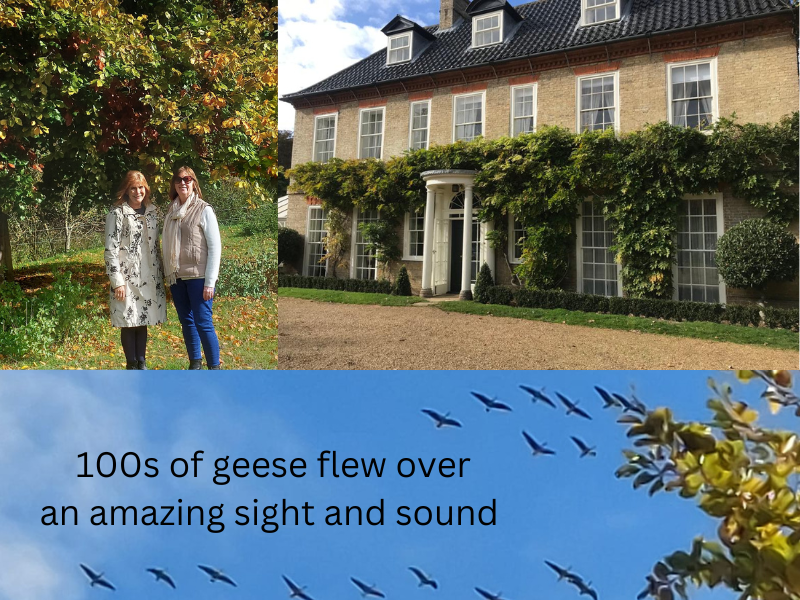
The FWG 2022 Writing retreat. Top left me and writer friend, Janet Bridger. Photos by Catherine Rendall

Now, let me introduce this week’s guest.

Gabriel Constans is the author of fiction, and non-fiction. His book A Brave Year (52 Weeks Being Mindful) draws on his lifetime practice of daily meditation.

In this episode Gabriel explains how writers can:

Find balance in life

Achieve writing goals with a calm and quiet mind

Fulfil their potential and purpose

You can spend more time with Gabriel by visiting his websites.

Website: http://www.gogabriel.com/books.html

Videos & Film: http://www.gogabriel.com/videos.html
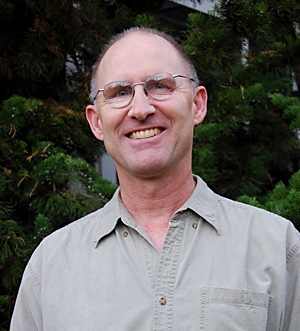
Gabriel Constans

You can listen to the podcast here: Episode two (season 2) How to achieve your potential as a writer the mindful way, with author Dr Gabriel Constans

Or read the transcript below:

Deborah: Dr. Gabriel Constans has an impressive CV both as both as an author and a caregiver. His catalogue of fiction, nonfiction and short stories is too long to list here, but I will provide a link to Gabriel’s books in the show notes. Gabriel has served the community over the past few decades as a grief counsellor, a social worker, a massage therapist, a certified thought field therapist, a mental health consultant working with teams and ex-convicts on substance misuse, and as an advisor for the street children of Rwanda project. He has a doctorate in death education, a master’s in pastoral counselling, and a Bachelor of Science in Human Relations and organisational behaviour. 

Wow, your achievements are breath-taking. What has driven you on this journey, Gabriel? And what have you learned along the way? I should say welcome and hello, first of all, before I throw the question at you.

Gabriel: Oh, welcome, and it’s a pleasure to be with you. And thank you for that question. I think in some ways, it’s interesting what started me on this journey was a couple things when I used to work – as far as caregiving, I worked as a nursing assistant on the cancer unit at the local hospital. 

I saw a person in pastoral care, and how she interacted with people, and supported. And I decided, that’s what I wanted to be when I grew up.

So, I went back to school, and got all the degrees I needed to do it. And that’s why I about three years later, no, four or five years later, started working in pastoral care at the hospital. Before that I had already been involved with hospice for a long time. So that way, I was able to combine really a lot of what I did as a volunteer, with my work and vocation.

Deborah: Can I just ask you something there. First of all, how old were you when you saw that person working in pastoral care? And the other thing really is, do you think sometimes when we see something or hear something, it triggers something – a sense of purpose? I wonder if you could explore that with me.

Gabriel: Yes.  I already had felt a sense of purpose. For other things I was involved with, such as hospice and in counselling and that I had been doing since I was about 16 in different formats. But this was the first time I saw that, and thought, 

‘Oh, I can do this and have enough money to live on. And do something that is also perhaps the most helpful for other people at the same time. So, it gave me a purpose as far as my job, vocation.

The purpose as far as being with other people, and helping other people came before that. But this – when I saw Rosemary Helmer, who was the person who was in pastoral care at that time, that’s what inspired me to see it was possible to do both at the same time. I think I was about 20. See, we had one son, one daughter, one son we hadn’t adopted anybody yet. I was around 25. So, that’s what happened.
Image by falco from Pixabay

Deborah: So, where did you go from there in your life? You’ve had such an interesting life. Can you tell us a few of the milestones?

Gabriel: Well, I started actually, around that same time. I started writing again, a lot more. I hadn’t written since I did an alternative newspaper in high school years before and I started writing fiction again. That was a big turning point for me because I started realising two things, one that I enjoyed it, and that I have a lot to learn to make it better. And part of that started, in some ways, like you, when you were making up stories to a younger brother, and then to your daughter. When the children were little, I would make up stories and start just creating them as well as reading comic books but and then I realised there were stories that I wanted to start telling talking about. And I think it wasn’t. So, I started doing fiction and then after a while, I started doing a lot more nonfiction, doing profiles of people that I thought were inspiring. Getting things accepted in different newspapers, journals, and magazines in the US and around the world. Then, after some time, I started going back to writing more fiction. As the kids got older, the fiction changed.

Deborah: I was reading about one of your novels, the Buddhist’s Wife, and I wondered, do you have Buddhist beliefs yourself?

Gabriel: I do, although I don’t per se state that I’m Buddhist, because in many ways, it’s – for some people, it’s become a religion. But in other ways, 

it’s essentially practising being mindful and compassionate to people, and to yourself, and finding out what works and what doesn’t.

 So, there’s no – in its pure essence in Zen and Buddhism, there is no hierarchy. There is no church, or group. There are just people that are seeking what is true – what they discover what is true, in order to connect with other people. 

So, I started going to a Zen monastery when I was 16. It was the only thing in the area where I grew up – a small town and a lumber mill in Northern California, that I really connected with. And it was about an hour away. So that was my first introduction to it. And actually, the first time I got married, that’s where we got married at the Zen Buddhist monastery. So, in some ways, I guess I have been a Buddhist – in quotes since then.

Deborah: How have your spiritual beliefs influenced your daily life and your life as a writer? Either / or?

Gabriel:  I think primarily spiritual beliefs because through the years I went through different phases of girlfriend, a Jewish girlfriend who wanted to be Catholic, so I became Catholic. And we worked with Mother Teresa co-workers. And then at another time, I went to Quaker meetings for a long time.

I think primarily, 

it’s influenced me by realising there’s something beyond myself. And that we all have a similar connection of being human.

I think those are the two primary ways it’s influenced me. I found that through different practices, by paying more attention to myself, I was able to let go of myself more. And so, in that way it has helped me to be more present and helpful with other people, as well, the more that I practice in my own life. So, in that way, spirituality, which can mean a lot of things I know to a lot of people. That’s what it means to me. A way to get out of myself and connect with others.

Deborah: It sounds simple, but it’s incredibly profound. And it’s a work in progress. I should think, for everybody.

Gabriel: Absolutely.  It’s ongoing.

 It’s like I’ve been meditating for over 50 years, and I feel as though I have just started.

Deborah: Really. I’m new to it then because I’ve been meditating every day for four years and it seems I’m very much on the nursery slopes compared to 50 years.

Gabriel: You have all the time to serve. The time is irrelevant in a way. Just now is now. So yes, I think the thing that meditation – actually with a lot of spiritual practices, that probably is the most difficult for me which is one reason that I learned over the years and wrote the book, A Brave Year (52 Weeks Being Mindful) to make it easier for people to do.

 The thing that I forget the most is to just remember to be present, and to pay attention to what I’m thinking, feeling, and sensing with my senses.

Because it’s so easy to get caught up in what our mind is telling us. All the things we’re doing, or all the things we think we need to do, or what comes next, or what already happened. And that’s what our mind is, that’s for. 

Image by Nato Pereira from Pixabay

Deborah: It’s part of being human, isn’t it?  Very hard. It leads me to talk more about the writers’ journey and the process for writers, because I know lots of writers and other creatives listening will really be wrestling with the wanting to control and the difficulty in letting go when they’re thinking about their work, and getting it published – getting their voice heard, getting it out there. So, what advice or help might you pass on to other creatives?

Gabriel: Probably what I learned and keep remembering is – 

really be clear why it is that you are writing? What is your intention for writing?

No matter what it is, you’re writing – nonfiction, fiction, fantasy, regardless of the genre, what is your intention? Why do you want to write? Or why are you writing? I think that’s probably the most important place to start. And also come back to asking yourself that question. Because if it’s to have other people reaffirm you or to become well known, or to make money, or just to be creative – to create different worlds that take you outside of yourself. Or whether it’s journaling and writing something just about your own life and your experience as a way to take it out of your life and look at it and also to externalise it and let it be cathartic. All of those reasons are okay. Any reason as to why you are writing is okay. But if you’re doing it for some of those intentions, such as wanting to make money or being well known, or want lots of people to read what you write, or have people tell you positive things, ‘Oh, you’re such a good writer,’ or to reaffirm who you are, or to give meaning in your life, for those reasons, it can be very lonely and a long, long time. So, that’s why it’s important to look at why you’re doing it, and then doing it because you enjoy writing. And to continue doing that, regardless of the outcomes can be really life-saving as far as your energy, and your grief, and disappointment, and dealing with rejection. 

Because the more secure you feel in yourself, the more okay you are with who you are and how things are in the moment. Then you don’t get as attached to the outcomes

I still do sometimes. But it comes and goes more quickly. And it’s not so overwhelming. 

I still get excited about screenplays accepted or, you know, after years of trying to get something produced. I get all excited and, you know, dance around and etcetera but the other times when three producers don’t want to look at it. One or two finally look at it and then months later say they aren’t interested – the feelings that that brings up, I’ll acknowledge them as well. Usually, sadness and disappointment. But it doesn’t last as long and doesn’t prevent me as much as it used to in the past from continuing to keep writing and keep doing it.

Deborah: I agree with you entirely. Really helpful. And hearing you say it in such a thoughtful way is really helpful. I think it’s something that people will listen to and find really calming on this journey, which can be very rough, and tumultuous? How do you self-care? Because you will have times, as we all do, when, as you say, when you have had a setback or disappointment, or just life gets in the way and it’s a bit overwhelming. How do you self-care apart from the meditation? Do you have other things that you do to keep your equilibrium?

Gabriel: Yes. I balance out the day quite a bit. And it’s easier since I work at home now with pretty much everything. It is more difficult when you’re out at a job, or working, or doing other things or with raising children. I remember those times. Even though I’m still like raising children as adults sometimes. So, it’s much more difficult but having a balance helped the most when I had a really packed day. All those things are pretty much the same things I do now. Just not as much as I do now. And what those things were, and are: doing yoga in the morning. Meditating every morning. Doing tai chi. I love being outside, and we have a small garden – I never used to be into gardening at all. And then all of a sudden one day it just became my thing. I don’t know why. So, being outside if possible.

Nature is something bigger than yourself, other kinds of living creatures being around

You can do it in the city too, if you live in a city, if you live in London or a big city, and it’s pretty much all concrete. There are still little places you can go. You can find little parks.  Just going for a walk, being out in the air and paying attention to yourself and not necessarily all of the people and things around you. I love watching movies and reading books which are all things that take me outside of myself – my own cares and worries and stress.

Deborah: Sounds like you have a similar sort of life to me. I wake up I do my yoga. I have a lovely walk by the sea. I do my meditation, and I write, and I spend time with my lovely husband. So, yes, is it’s a good life.

Gabriel: Yes, wonderful. That sounds really wonderful.

Deborah: Like you I did work hard before I retired. So, life brings different things in different seasons.

Gabriel: Yes. What was the work that you did? It was in health care, wasn’t it?

Deborah: Varied. I started off by training and then working as an occupational therapist. And then, my husband gave up work when daughter was born. She’s now 32. And he didn’t go back to work. So, I’ve been the main wage earner, which was great, because that propelled me to fulfil my potential, I guess. And I’ve always loved what I do.

 So, I went into managing health services, and then into regulation. And in the latter years – the last 15 to 20 years, I lose count, I’ve had a management consultancy for health and social care. And I’ve been writing safeguarding adult reviews, independent inquiries, you know, domestic homicide reviews and chairing boards for safeguarding adults. So, I’ve been doing that in the latter years, but most of my career was working with older people. So, I did lots to do lots of work, both as a clinician and in informing government policy through national reports and things. So, my work also was very much writing before I was writing fiction, I was writing national reports, I was writing my safeguarding adult reviews. So, it was always writing, it’s just changed to writing fiction now. And I always say that now I write happy endings for people because they were never happy safeguarding reviews.

Gabriel: Yes, so many things are beyond your control. How wonderful. Thank you for the support and what you’ve done for so many people for so long to help them in different circumstances,

Deborah: And likewise, to you. I don’t know about you but I feel that it’s been a privilege and a pleasure, being able to work with people in health and social care. And I don’t know about you – you must tell me. But I feel that for so long, I’ve been listening to people who have experienced adversity, and have had to cope with incredible challenges in their lives. Perhaps feeling on the outskirts of society, and unheard. I’ve listened to them. And my paid job was making sure those voices were heard, and fighting for them, really. So now that I write fiction, those voices still kind of play out in my head. These characters come into my books, which are almost like the ghosts of the voices from my health and social care career. I don’t know whether you find that you carry a lot of that with you still in your work?
Image by Sabine van Erp from Pixabay

Gabriel: I do and actually especially with hospice because I went into homes and people’s families, as a social worker and bereavement counsellor for many years, and in all kinds of situations. A lot of those stories, and people have been reflected, not the same names, I changed the situations and stuff. But they had a big impact on me, and influenced how I write characters, as far as fiction. And then of course, with a lot of nonfiction I wrote. A lot of that is about death and dying, and trauma, and resilience, and how to live your life without – so obviously, those are drawn a lot from those experiences as well. But it has come out in fiction as well, in different ways. I think I learned a lot about, about people. And the variety of ways, the endless variety of ways, of how we comprehend and how we act. And what happens in our lives, and the beauty of how different people are. And yet also how similar in some ways so that we can all relate to a character. Even if it’s a fantasy that takes place somewhere zillion times in the future. I try to write fantasy. There are still certain characteristics about it that we can identify with.

Deborah: So why do you write? You were saying we should consider our purpose for writing? What is it that makes you feel you need to write?

Gabriel: For nonfiction, when I started writing a lot of nonfiction articles and books, there was very little about death and dying available to people. And it was still – it still is, but even more so – something people didn’t talk about or deal with grief and loss. It was the same with birth and midwives having it back in the home (home births). You’ve had it in the home a lot longer in UK, but up until the 70s it was still illegal in the US because the medical community pretty much hijacked it and said it was a whole technical thing that had to be done in hospitals. So, with hospice, and with people dying, it was very similar having it be in the home, as opposed to in the hospital. So, when I first started writing, I wanted to make it more available to people, what a natural thing grief and loss is. And reaction, and the differences between just grief and normal reaction to loss and complicated grief and how to get support. 

So, I think for a lot of nonfiction when I first started writing, it was to help support people, and inform people, help them make a difference. And with fiction, I always came up with a story, with ideas for things. And stories that I hadn’t seen somebody else do exactly the same way. Even though all fictional stories are the same, in many respects. Just those little things and different combinations of stories or characters, I just felt compelled to write about. Actually, the first fiction book – this may sound weird, being a male, 

I wanted to empower women’s voices in characters of women who have never been talked about – hardly ever in fiction, let alone nonfiction, for their experience to be available to people, or what I imagined their experience might have been. 

So those are some of the primary reasons I think that I still write fiction.

Deborah: I’m sure that your stories are helping people in the same way as your work and caregiving did.

Gabriel: I don’t know if it is or not. It’s something that I love doing.

 If it makes people laugh, or something touches them and gives them a break from other things going on, or something that was a bad they identify with. That’s wonderful.

Deborah: It’s a great thing as a writer, when you get feedback from readers that you’ve touched a chord and something’s meant something to them. I think that gives writers great joy, doesn’t it? 

Gabriel: For sure. 

Deborah: Well, you’ve shared many words of wisdom with us, is there a parting message you’d like to share?

Gabriel: A message I think that is probably the most vital is: 

If you are clear why you write and continue doing that, then be consistent about it.  

People with a lot of things, especially with writing, try it for a month or two and if they don’t have what they determine success, or people don’t say it’s ‘Oh, it’s wonderful’, then they stop.  I think one reason that I’ve been able to have so many things published and produced etc. was not because I’m a fantastic writer. But because I’ve been consistent and kept getting better, as the years went along. In the first years, I thought, ‘Oh, this is the best thing I’ve ever written’. Now, oh my gosh, I look back and think oh, this is horrible, how could I have thought that.

 So, being open to constructive criticism, getting somebody who’s willing to be really honest with what you write, I think makes a huge difference.

And then being open to changing things completely from how you thought they might go. And keep working on things.

Image by Dorothe from Pixabay

Deborah: Have you taken any of your early works down of have you left them out there?

Gabriel: I haven’t taken any of them down but I think some of them aren’t available anymore, because magazines don’t exist. Some of the publishers of the players I first wrote, I think they don’t exist anymore. 

Deborah: Thank you very much Gabriel. I really enjoyed meeting and talking to you. I wish you continued success.

Gabriel: Thank you so much. I really appreciate you taking the time and having this conversation. I hope it is as enjoyable to you as it has been to me.

Great words of wisdom from Gabriel. Why do you write? I write because it brings me joy. Of course, I love getting feedback from a reader that they have enjoyed a story. Entertaining a person, triggering emotions, or memories is a wonderful accomplishment. Connecting with readers through the written word is why I write. 

It has taken a couple of years and a lot of hard work finding my readers but now, with my third book about to be published, I am reaping the rewards. I have found my readership and I write with them in mind. It may only be a few hundred people today but I value each one of them and I know that my tribe of readers will continue to grow. Be patient and consistent writer friends. And above all find joy in writing.

So until next time. Look after your beautiful self and trust the journey.

You can find all episodes of The Mindful Writer podcast here: https://themindfulwriter.buzzsprout.com

Don’t forget to subscribe so you don’t miss any episodes.
How to Know Yourself and Love What You Do

‘Knowing yourself is the beginning of all wisdom.’

Aristotle

At the beginning of last week’s podcast, The Mindful Writer, I told you how I was applying Know Yourself to my writing journey. Understanding our personality type, our strengths, and our weaknesses have, for many of us, been part of our professional life. The personality tests, which at one time seemed to be a requirement of the job recruitment process, labelled us so that we could be fitted into an organisation. But there are trillions of shapes and sizes – every one of us is unique. And nobody knows us better than ourselves.

We have an amazing resource of inner knowledge, gained through a lifetime – maybe many lives. We are the best textbook on ourselves; we just have to look inside.

When we take time to learn who we are:
How we think, feel, react, learn, grow
What makes us happy, sad, frustrated, fulfilled
Our values, and beliefs
What we are good at and where we struggle
Motivations, aspirations, fears

The list goes on.

Christos Giakkas – Pixabay

We can use this self-knowledge to flow through life with less resistance and angst. As creatives, we can achieve our best work and reach our audience.

I believe that by knowing and accepting our unique selves we can take joy in the writing journey. Envy, shame, imposter syndrome, despair, and fear of failure become a thing of the past.

Getting to know ourself takes time, it is our life’s work, but if we stop and look inward there is so much knowledge already there. The truth is, we try and deny it. We are too busy trying to be like someone else instead of honouring our unique selves.

I have got to know myself over the years through:
Journaling
Meditation
Yoga
Mindful activities such as walking in nature
Reflection
Observation

It helps me to write down how I am feeling. To reflect back on how I behaved in the past and the consequences of my actions – there are behaviour patterns for me: Starting a new project with energy and enthusiasm then burning out.
Impatience – stepping in to try and take control of a process rather than allowing events to unfold in their own time.
Driving myself hard with high expectations lead to feelings of failure and disappointment when I do not achieve my goals in the anticipated time frame.

By recognising these behaviour patterns, I can treat myself with compassion. It is like being a caring, and wise line manager/supervisor. Journaling has helped me to have these conversations with myself. To set realistic goals, to keep motivated, and to self-care.

In last week’s Mindful Writer, Grace Sammon  talks about finding meaning in the moment. What is this moment teaching me? It is a good way to stop and reflect on how we are feeling – to check in on ourselves, before reacting.

There are many books on how to write a novel. I know that I work best starting with an outline plan – nothing detailed just the beginning, midpoint, ending, and the key pinch points. Every time I start to write a new novel, I wonder how I achieved it before. Every time is different.

A best-selling author friend of mine wrote a letter to herself as a reminder that: She will experience overwhelm and despair at some point in writing the first draft. She will panic and be terrified of failing. Because this is what always happens to her. She wrote to herself with compassion reminding herself that this is part of her writing process and that she always comes through it.

Understand the different approaches on writing a novel and then find one that is right for you. There is no right or wrong way – but there is the best way for you. And you are the expert on this.

Similarly, the time it takes to write a novel. How often and how much we write. I like to write every day when I am working on a story. I typically write one chapter a day, because my chapters are short and this satisfies me. Another person may prefer writing on one or two days of the week. I write early in the morning because I am a morning person, another person may prefer late at night. Do what works for you and don’t compare yourself to others.

Stock Snap Pixabay

We bring to our writing life skills, knowledge, and expertise, from other areas of our life. Understanding what we are good at, and enjoy doing, should form the basis of our marketing plan.

Facilitating group work, listening to people and enabling them to be heard, sharing good practice and resources – have been key components of my working life for the past few decades. It makes sense for me to use this experience in my approach to marketing.

Networking is the basis of all marketing practice – making meaningful connections with other writers and readers. My podcasts, Castaway Books, and The Mindful Writer, allowed me to sit quietly with my guest and listen to how they have experienced life, using questions to explore with them deeper meaning. This comes naturally to me after a career in health and social care.

The Friday Salon tweet-chat and virtual writing retreats draw on my management consultancy experience facilitating groups and sharing good practice.

My marketing approach will be different from yours because you will bring to it different knowledge, skills, and experience. For example, one of my writing friends worked in quality control and is skilled and knowledgeable about systems. He used this expertise to develop a quality system for writing a novel in one month – The Efficient Novelist. Sharing this model through social media, seminars, and a book has been an important component of his marketing plan.

Another writer was in advertising and sales. This writer uses Pinterest, Instagram and Facebook to share beautifully designed posts. She finds visually appealing content to share with readers and writers.

There is no one marketing plan to suit everyone. If we know ourselves then we can find an approach that, not only are we good at, but one that we enjoy. When we find that niche approach it doesn’t feel like work. I forget that my podcasts, and meeting with Friday Salon friends started as marketing. I am making meaningful connections. My networks continue to expand, and amazing people have come into my life as a result. This is what marketing is about. By forming these networks and connections we invite new opportunities.

So, take time to know yourself. Go inward and listen. What brings you joy and what fills you with dread? Where is fear holding you back? Be honest with yourself. Be compassionate and kind. Know that we are one of a kind – one in a million. When we do what comes naturally, we flow with ease.

This is a work in progress for me. I keep forgetting that there is nothing to worry about. That everything is working out just fine.

I am enough.

I am doing enough.

And I am doing it my way.

How to overcome obstacles or a setback

In this week’s Mindful Writer podcast, Kamina A Fitzgerald author of Class Dismissed: Life Lessons and Short Stories and her blog of the same name http://schoolspiration.com joins me to talk about three bible stories which have important lessons for us as creatives. 

I went for a run by the sea this morning. The sun was shining and the was tide out. There was even a shard of rainbow suspended between an arc of clouds. Whenever I go for a run by the sea, I get so many ideas and find clarity on some of the things that have been troubling me. It’s as though I have a conversation with my inner self or a greater power.

Anyway, on this morning’s run I was thinking about a film I watched on Netflix this week, Paycheck with Ben Affleck. It is an exciting thriller, but it also has a message: When things don’t go the way you planned and you are disappointed trust that God or the Universe has a better plan for you. Follow the signs even when you don’t know what they mean. Of course, the film makes no mention of this but I drew a parallel. If I tell you anymore, I will spoil the film for you. It’s well worth watching – very exciting.

Stories have been used for thousands of years to pass on wisdom and learning. In today’s podcast, Kamina Fitzgerald, reminds us of three stories from the Bible which have powerful messages to help us on this writing journey. 

dkauthor@btinternet.com

Now on to the interview ….

Kamina Fitzgerald

Why should we be patient when the Universe or God seem to be taking too long to manifest our dreams?

How do we overcome obstacles or move forward when we feel stuck?

Why is it important to nurture, cherish and protect our talents – our special gifts?

Kamina explains all of this using three bible stories. The messages are inspirational and have helped me on this writing journey.

A transcript of the interview is below, or Click here to listen 

Deborah: Hello, Kamina Fitzgerald. I’m absolutely delighted to welcome you to the mindful writer podcast, because I discovered you through reading your blog posts. The School of Life Sessions. I love the way you introduce them with, The school bell has rung …

Kamina: Hello, Deborah. It’s a pleasure being on your podcast today. And the main way I start my blog is The class is now in session. And then at the end, I will say, The school bell has rung, class is dismissed. 

Deborah: Excellent. And that comes from the fact that you are a teacher by profession, and currently the vice-principal of a business school?

Kamina: I’m vice principal of a middle school here in North Carolina, and I was a business teacher. So, you are correct. And so, I look at not only teaching as being – teaching the lesson, but also teaching life lessons. So, my blog is really centred around sharing those stories to motivate and inspire. And I look at it as a lesson – everything that I write.

Deborah: And you’ve also written five books about life lessons, for which I will give links in the show notes. Could you tell us a little about them?

Kamina: Okay. Well, mostly the first book I wrote was a children’s book called Bumper Stucco Village – Patience as a virtue. And I wrote that a long time ago. It has kind of a Disneyland feel of a girl who is going to be promised to someone. And she was worried about that because she wanted to marry for love and she met someone and wished she could marry that person. And at the end, she gets a chance to, so it was kind of a story. If you want to read it; it’s interesting because she thought she was going to lose out on that opportunity, but through being patient she ended up getting the desires of her heart after all. 

I’ve also written inspirational stories. They didn’t have much rhyme or reason. I guess they were more about friendship, life, managing your careers, choosing your career.

I write a lot of career focused things because I used to be a workforce development person, where I tried to help students understand their career choices and what they needed to go to university to make that career happen. So, some of my things have a lot of helping you make decisions on the career front as well.

Deborah: I got so excited, which is why you paused. Because you could see that I was desperate to say something.  When you were talking about the first book, the fiction book for children, you mentioned a story about how the girl had to be patient and wait. That made me think of one of the blogs that you wrote that really inspired me, which was Do not go ahead of God.

The stories in the Bible teach us lessons through stories. And that that’s very interesting that you’re using a story as well, to give a similar sort of message. Now I’m a very impatient person by nature. And I can think of several times in my life where I have gone ahead of God. I’ve jumped in being too impatient – I’ve got to make things happen. My good fortune in life has come despite me. I mean this a classic example for me. It was when I desperately wanted to be an occupational therapist when I was at school, it’s all I ever wanted to do. And when I got a letter from the clearing house saying, we suggest you seek another career – because I wasn’t studying the right subjects and didn’t have the qualifications, I thought, Right. That’s it. So, I left. I got a job in an insurance company and then eight or nine months later, I got a letter inviting me to interview for my college and I didn’t have the qualifications. 

Kamina: Wow. 

Deborah: I’ll let you talk in a minute! But the good result from that – a little miracle did happen for me because I went for the interview really enthusiastic and said, Oh, you know, I really, really want to become an occupational therapist. And they said, Well, if you go away and you pass these exams. Would you come back next year?  And I said, Yes, I will. And something went wrong with the administration because a week later I got a letter saying, As you have now got these qualifications you can start this September. 

Kamina: Oh, wow. 

Deborah: And I never told them, but that was when the rules were different and I’ve been on the right path, despite me jumping in.

Kamina: Wow, that’s amazing that it ended up happening anyway, even though you tried to you know, plan it yourself. That’s the graciousness I think of God, that sometimes we have a tendency to jump ahead and he still lets us get what we want. 

Deborah: Anyway. Tell me about the Bible story that you used in your blog. 

Kamina: Sure. So, with the Don’t get ahead of God story, I was referring to the five promises that God gave Abraham when he was promising to, you know, make him a great nation and give them a great land of promise. And it was certain things that he promised him. And Abraham was a person of faith and he, he believed God, even if it seems as if he was delayed. But Abraham’s wife, Sarah, she, you know, wanted to help things along. Especially when it came to her being a mother, she I believe was around 99 years old when she got pregnant.

So, of course we all can think that, she could be a little worried. Okay. I’m going to be a mother of many nations, but I’m 99. So, she thought maybe she can help God along. And it caused a lot of heartache when she tried to do things herself. So, I just talked about waiting on the promises of God. Just from us reading those stories, hopefully it can encourage us to just continue to be patient and to wait. Because it’s worth the wait whenever you’ve got promises for things in your life. And sometimes, even with Sarah and doing that in spite of herself, she still was blessed with Isaac. So, you know, I think that that still happens for us today.

Deborah: Like me. I tried to sabotage, but despite me, I still got what I needed.

Kamina:  Exactly. So it still happens even now. And I’ve been the same way with several different occasions where, you know, I would try to make things happen, but then when I’m praying about it and something better comes along, it makes me happy because even though what I did may not have worked, usually God can open a better door for me. So, I’ve been grateful for that. At first, you’re disappointed, but when something else better happens, you’re like, wow, I could have just waited on this instead of trying to force the other situation.

Deborah: Absolutely. I found that as well. And what has absolutely amazed me, particularly when I was about 40 years old. I was pushing myself along a career trajectory. You know, next job was chief executive and was applying for these jobs. And I thought that’s where I need to go. And I was completely stuck in that thinking that mindset, so I was disappointed and disappointed repeatedly. What ended up happening was something far better and greater than I could have imagined. That was much, much more in fitting with what I could give- it fitted me. It was the right path. And I would never have been able to imagine that in a million years it was, it was wonderful. A wonderful blessing that came my way, taking me on a different path.

I think sometimes we can get so frustrated, can’t we? We think, well, why won’t you give me what I want? Why? Because we don’t know what we don’t know. 

Kamina: And sometimes, like you said, it’s amazing how another opportunity will come and it’s so perfect for you and you never imagined it. That happens a lot too. So, I think if, you know, that can happen, then maybe that’ll make you more patient. Because that has happened to me before too, where God knows you better than you know yourself. So, you can say, Why didn’t I get that job? I was trying to move up or I tried to apply forward. I’m qualified. But then another door can open that you did not perceive could open. I think that is always amazing when that happens. 

Deborah: Absolutely. And timing. I mean, God’s timing, isn’t our timing. I say, God, but I’m going to say God/ the Universe, because some people have different sorts of faiths and it doesn’t matter whether you believe it’s the Universe or you believe it’s God. It is having that faith in a greater power. But the timing could be very different to what we think the timing should be. 

Kamina: Very true I’ve actually been reading this in a research study I was doing about the Kairos time and that being a divine time. When I was younger, there was a pastor who wrote a book about God’s appointed time and it was talking about the Greek word Kairos. We know in chronological time, it is like, you said, In two more years I need to be here, in three more years I need to be there ….  But with Kairos there is an interruption when you know, I’m looking with tunnel vision and then this certain situation happens out of the blue, and I couldn’t even imagine it happening, but it’s perfect for me, or is causing me now to have to make a decision or see things differently.

So, it’s amazing. I believe there really is a such thing as a divine time that happens that interrupts your trajectory of your goals for yourself, and then you have to decide: Am I going to keep going on the path that I have for myself, or am I going to step into this possible opportunity that I didn’t perceive happening? 

Deborah:  To do that, you have to be open to opportunities and different solutions. If you get really wedded to one option, This is the only way for me. You don’t see other things along your way. 

Kamina: That is so true. 

Deborah: There’s a message there, especially for writers who are trying to get published. Because the reason that I launched this podcast is because of the emotional turmoil that authors go through as they try to get published. It’s a rollercoaster of emotion for many writers, who are trying to get published, get turned down by agents, and they’re trying to cope with rejection, and the frustration of that. It’s knowing that sometimes you have to go through that for a reason. And one of the reasons can be that your writing hasn’t matured sufficiently for you to be able to give your best. It might be good enough. It might be better than many other writers, but it might be that if you give yourself time to grow what you gain to finally bring to fruition is much greater. And that might be where you need to start, because otherwise you do yourself a disservice. So, there’s all sorts of reasons why things might be. And we get so hung up on feeling it’s a judgment or a criticism of us and letting it affect our self-esteem, but there can be all sorts of reasons why you need to wait.

Kamina: Yes, I like that. And that’s very encouraging for you to say that because a lot of times you can think that you’re ready for something or that you are at your best when really, you’re not. And a lot of the times you won’t stretch yourself if you’re not rejected. I think growth happens a lot when you are rejected, it just depends on how you interpret it and what you do with it. So I do like what you just said, and I think that should be encouraging for, you know, most of the writers or artists or anyone who is, you know, setting goals for themselves who have been rejected to just don’t look at it like it’s a rejection. Look at it as a growth opportunity for yourself to be better. And maybe that persons rejecting you and then the next person is going to see your work and it’s going to work for them.

Deborah: It’s a bit like people waiting for the perfect partner, the younger people who want to fall in love. I think falling in love is a bit like finding an agent to represent you or a home for your book. The person is out there. You just haven’t met them yet. You might not meet the one that’s the perfect match for you because they might not be ready to meet you yet because there’s something else going on in their life. 

Kamina: Exactly. They may have to have a person to break up with or something. 

Deborah: Or they might be about to become an agent, but they’re not an agent yet and you’ve got to wait for them. 

Kamina: Yeah. It was like, Don’t get ahead of God now or don’t get ahead of yourself. Just wait until it is all aligned, then you’ll be glad you did. 

Deborah: We are all part of something bigger, everything has to be in place because it’s not just about us. It’s about the people who come into our lives and being the right time for them as well as.

Kamina: Exactly. I agree.

Deborah: Now this goes onto another one of your very inspirational posts where you talked about Jesus telling Simon to cast once again, his net into the sea. And I should get you to tell us a bit more in a moment, but it, it makes me think about when somebody says to you, Have you tried this? Have you tried that? And you think, Oh, don’t tell me that, I know better than you. But sometimes that’s what you need to do. You tell us in your own words. 

Kamina: Okay. Well, with that story, I was referring to when Simon Peter had been fishing all night and all day, and he hadn’t caught anything and anyone who knows Peter, he was a professional fisher. He was a fisherman by trade. So, he knew everything that you really need to know to fish. So, when Jesus walked up to him and said, Go out further, launch yourself out into the deep. Simon Peter was really annoyed and kind of like, What do you know? You’re telling me and this is what I do. And of course, Jesus was a carpenter by trade. So, he was a little annoyed, but he said, Nevertheless, at your word, I’ll go do it. And he did it. And he had so much fish that he couldn’t contain it in the net. 

So, it’s a lesson to me that we have to make sure that we make decisions not based on what we’re comfortable with, that we don’t make decisions based on our, I guess you could say study, or maybe what we know, but be open to other suggestions, especially if what you’re doing isn’t working. I think that’s the main thing. Because no matter what I do every day or my professional job, if it’s not working, I should be open to a suggestion or reflecting, Hmm. Maybe I should try something else. So, I think that was kinda my thinking was to just be mindful of, you know, for me spiritual counsel and being willing to hear other perspectives.

Deborah: And isn’t it interesting that you can get these suggestions or these little directions, the most unlikely sources and unexpected times? If you keep your mind open and you hear and you respond. It could be something that you read. It could be a stranger saying something. It could be, it could be anything.

It brings to mind when I was working as a management consultant and I had lots and lots of work, then suddenly the work dried up. I kept on going out to try and find work you know, bidding for work. It wasn’t happening. I was so frustrated. And then somebody who I had worked with in the past, who had had no contact with me for a long time sent me an email out of the blue saying, Have you seen this advert? They’re looking for a chair of a safeguarding adult board in a London council. And I thought, Well, why would I do that? I don’t think I’m qualified. I wouldn’t even think of doing that. I did. Not only did I get that job, but it then led into a ten-year career around adult safeguarding. I chaired five different boards. I wrote safeguarding adult reviews. I became an expert on it. I wrote journal articles.

It was absolutely where I was, where I needed to be. But if I hadn’t listened to that woman who happened to say to me, Have you thought about? And I sometimes think that these people are put there like little angels.

Kamina: That’s exactly what I had. What I read in my book about the Kairos moment. It was just like that.  You’re looking, things aren’t really working. And then one little word or sentence or suggestion can just turn you upside down and it gets like:  What? That’s nothing I’m qualified for, but like you said, you actually adhere to the Kairos moment or the divine appointed time and, and they opened up a whole other career level for you. So that’s amazing. 

Deborah: Interesting. I picked out three posts, which I told you in advance. The other one was, I’ll get it right this time, Samson and Delilah.

Kamina: Okay. In that one, I’ve talked about the spirit behind Delilah. I shared a lot of her characteristic traits that I pointed out: A person who looked good on the outside; a person who was very cunning and complimentary and flattering. Just the traits of who she was and how she led Samson to finally share his secret.

It just really stood out to me. So, I just wanted to talk about those traits because I think it’s still around today that a lot of us can think of times where we have been deceived by people. We never would have seen deceiving us. It’s just something, a lesson that I think even a child or an adult can learn from just to be mindful of people in your life. When people come in, you know, come around you that you’re not deceived. It is more so a story about deception and just being, being careful about that in your life. Delilah  looks good on the outside and said all the right things. 

Deborah: You were saying in this story that again, and again, Samson would catch her out and see that she was trying to cut his hair but he saw only what he wanted to believe. I think it’s the way that we fool ourselves, because if we want to believe something, we ignore all of our instincts. Just as I was saying that we need to be open to hear things and see things – in the same way you can completely close off if you only see what you want to believe, can’t you? You can completely close down.

Kamina: So true. I think that, you know, I can definitely remember times where I saw what I wanted to see. And you may have a family member or a good friend that are trying to tell you, Be careful. You know, do not see this. And it’s amazing how we can trick ourselves. Even if you read my blog, you may still fall for it. So, you know, I mean, Samson was, was smart and he was anointed and, you know, he destroyed so many of the Philistines, but this one person came in his life who looked good on the outside, and he liked her so much he was willing to lose everything for her. So, I just think it’s important that we regard ourselves as well, because we all have something that we can offer the world. We have gifts and we have to be careful. Just be mindful that not everyone is your friend or means well for you.

Kamina:  Other people suffer.

Deborah: Absolutely. We have special gifts. Every one of us is amazing, unique and not to give all of that away, but have self-respect and belief. You owe it to others as well as to yourself to nurture, cherish, and protect those special gifts that you have so you can use them. And when we give it all up for somebody who’s not worthy and we don’t listen then…

Deborah:  Absolutely. As well as ourselves. 

Kamina:So true. 

Deborah: I always like to think the best of people. I always see the best in them. And I can think of examples like that because it breaks my heart to think that somebody has let me down who I’ve trusted. So, I go back to trusting them again.

Kamina: Yes because it’s a bad feeling to get to a point where you don’t trust anyone, you know, that’s a terrible thing to feel like I can’t trust anyone because I’ve been hurt. So, we usually try to see the good and isolate that bit whenever we have been hurt or deceived by someone. You know, we’re human.

Deborah:  I found it so inspiring talking to you as I do your blogs, and I’m now going to be looking at your books as well, which I’ve discovered.

Kamina: Thank you, I’m inspired by you. I didn’t know, you know, your story. So, I think that you’ve inspired me as well, especially since I am still in my career and trying to work hard and eventually get to the point where I can be like you.

Deborah: Oh, thank you.

Kamina: It made me feel better to know that I need to be open to suggestions and make sure that I’m not just seeing things through one way or through having a tunnel vision about things.

Deborah: Excellent. Thank you. 

Kamina: You’re welcome. Goodbye. 

You can find all episodes of The Mindful Writer Podcast to play on your chosen podcast here: https://themindfulwriter.buzzsprout.com

Don’t forget to subscribe so that you hear when a new episode goes live.

Why there is no right time to write but being older has its advantages. 

I started to write my first novel when I was in my fifties. I am 62 next month and have had two novels published The Borrowed Boy Aug 2020 and Just Bea February 2021. I always wanted to write a novel and have been a writer all of my life from writing stories and making books as an eight-year-old, to writing national reports for NGOs, and editing an International Journal Working with Older People. There were many reasons I did not pursue my dream at a younger age. I was the main breadwinner as my husband was a stay-at-home dad. When I wasn’t working, I was compensating for not being a full-time mum – always torn between building my career and spending quality time with my daughter. I have no regrets as I had a wonderful career and all the while I was writing reports, and national publications on health and social care I was honing my writing skills.

An article in the Guardian 20th August 2021, about the new award announced by Women’s Prize in partnership with Good Housekeeping, argued that the upper age limit of 35 years should be scrapped and prompted debate on social media. Some felt it was discriminating against older women and Joanna Walsh writing in The Guardian believed assumptions were being made about older women having financial security with no need for recognition. 

There is no right time to write. My brother has had considerable success as a songwriter and now in his sixties has started to write a novel. We have shared our feelings about having so much we still want to achieve and a sharpened awareness of how quickly time can pass. The truth is none of us know how much time we have. Using our time the best that we can, valuing how precious it is, and making the most of every moment is important at every stage of life.

Mary Wesley had her first adult novel published at the age of 71 and followed with several best-selling novels. Penelope Fitzgerald was first published at 60 and became famous at 80 after winning the Booker Prize for Off-Shore then went on to achieve international fame with The Blue Flower. It is never too late.

There is scientific evidence that creativity increases during and after menopause (Dr. Christaine Northrup https://www.drnorthrup.com).  I believe it is more than hormonal change. Men and women reach a time in their life when they may experience a freedom that they haven’t known before. Children may be less dependent and a person’s career more established. It is a time of reflection as we become introspective, questioning our purpose in life. Also known to some as a mid-life crisis. We are all creative beings and have an innate need to express ourselves. The pressures of earning a living and raising a family can deny us the fulfilment of this need if we consider it an indulgence. 

Bruno/Germany Pixabay

For me now is the perfect time to write. At this stage of my life, I have:

 Stored more life experiences that I can draw on in my writing.

I am fortunate enough to have financial security and so earning a living from writing is not be a necessity.

With children grown and parents no longer in need of my care, I have fewer demands on my time.

I have acquired skills from my working life such as marketing, public speaking, financial management, and contract negotiation.

I know how quickly time passes and so make the most of every opportunity.

I am more confident having achieved success in other areas of life.

I have more leisure time.

There is never a right time to write but neither is there a cut-off point. Creativity should not discriminate by age, gender, race, faith or sexuality. It crosses all divides and connects us in a meaningful way. Writing has deepened my self-awareness and I have discovered a wonderful writing community.

Why new beginnings are scary

Beginnings, endings, and the pause between

Beginnings are always scary and endings sad. But it is the most natural cycle in life. In a world of uncertainty, the only things we can depend on happening are birth, disease, and death. Sorry to sound morbid but disease is part of the life-cycle whether we like it or not. 

At this time in my life, I attend more funerals than weddings. I often wonder about all the people who have passed from this life, within my lifetime and generations before. It makes me think of this time on earth as a short but precious experience within something much greater. If nobody died – ever – it would be pretty crowded down here. An overgrown garden with no room for the plants to grow and bloom. 

Our creator decides on our beginning and our end but we too are creators and within our lifespan will orchestrate many new beginnings: jobs, relationships, homes, works of art. The idea to start something new is like a tiny bud of new growth. At first, we may not see the tender shoot. It is hidden from our scrutiny, as we focus on what is familiar. The idea refuses to be ignored and grows. We may glimpse it when our mind is still and wonder – Could I do that?

Cocoparisienne Pixabay

When we are comfortable in our home, or our job, we can put up with a lot of dissatisfaction rather than disrupt what is familiar and step out of our comfort zone. However, when we ignore our idea to try something new it can make us unhappy because it won’t go away. For something new to grow we have to make room and that means cutting back the deadwood. It is hard to accept that something we once loved has run its course. Because endings are sad. We are saying goodbye to a friend that has served us well: a career, job, home, marriage. I retired from a very happy and successful career in health and social care this year to commit to my career as an author. It was five years after glimpsing the first green shoot of that idea.

It is exciting to start a new job, move to a new home, or begin a creative project but scary too. What if I have made the wrong decision? What if I fail? With all the deadwood cutaway we feel exposed. We can no longer hide behind our story – the way we have always done things. We have moved out of our comfort zone and that is when the magic begins because we grow. If what you are doing doesn’t scare you a little then the chances are you are not challenging yourself enough. To achieve our full potential, we need to listen to our intuition, recognise the buds of new growth and make room for them to grow.

I have just returned from staying with my daughter, who is between jobs. I am between projects as I have finished writing a novel and am about to start a new one. The pause between. In yoga, the pause between breaths is sacred as it is a place of stillness. Each new breath brings oxygen and life into the body, the exhale discards what no longer serves us. When we are still, we are at one with ourselves. Free of thought we can tune into our senses – how we feel: physically, emotionally, spiritually, and mentally. It can be an uncomfortable place as we often use activity and repetitive thought patterns to block feelings we do not want to acknowledge. However, to be still – to be present in the pause between, allows us to appreciate all that we have become through our experience and prepare us for the challenges ahead.

I am in a pause between books, my third novel set in the world of theatrical magic in 1980 which is doing the rounds with literary agents and a new story idea that has been nagging me to be told. I am having difficulty letting go of the completed novel. I have read and edited that book from beginning to end 5 times in the last month. Instead of moving on to the next project, I keep returning to tweak a chapter or a line. However, I am appreciating the pause between. I am using the time to replenish my creative well which has become easier now some of the lockdown restrictions have been lifted. Whilst visiting my daughter last week I visited three art exhibitions and it was as though I had watered my soul – it was parched. In fact, I am finding all sorts of things to do instead of starting to write that new story: updating my website, clearing out neglected cupboards, and spending time on social media. Yes, I am procrastinating. Maybe I am a little afraid of starting this new project. In my head it is an amazing story, but will it live up to my expectations? I will never know unless I start to write!

Wherever you are in your current journey – beginning, middle, or end. I wish you success, fulfilment, and joy.

5 steps to attract what you want into your life

‘I want this more than anything.’

‘If this doesn’t happen, I don’t know what I’ll do.’

‘If only I got that promotion/job everything would be different.’

‘I just need to find that special someone and I will be happy.’

The drama and passion of these heartfelt pleas are fuelled by the media. We watch films and read books where life is simple. The geeky girl/boy meets someone who loves them just the way that they are, they fall in love and live happily ever after. A woman loses her job, her world is falling apart, but then she writes a book, and all of her financial worries are resolved. Then, there are the talent shows where an awkward-looking boy tells the camera that winning the competition would mean everything to him, and a few series later he is back as the star act, having achieved super-stardom. Real-life doesn’t make good telly and so stories of success, both imaginary and real, are dramatized and we buy into this. I have thought for some time that the romcoms we adore contribute to dissatisfaction in relationships. 

Albrecht Fietz Pixabay

1. Focus on what is within your control

Our dream is a pot of gold at the end of a rainbow. We truly believe that once that one thing we wish for happens our life will be transformed. For many writers, it is getting an agent or a publishing deal. We hold that heartfelt wish so tight, we clench it within our soul, willing it to happen. To relax that hold for one second feels as though we are giving up and reducing our chances of success. Everything depends on that wish coming true.

The thing that we long to happen, or fear will happen doesn’t change our life. There is a blip of happiness or despair, but in the scheme of things, it is a minor disturbance. Think back to the day you got your dream job, got married, or on the downside received a rejection letter from an agent or following an interview. You may have been happy or disappointed for a few days, or weeks but then life happened and soon you had another goal or dream. I can no longer remember my rejection letters or the jobs I didn’t get. 

The constant is the life you are living now. Your family and friends, the pleasure that you get from everyday activities, your good health. By focusing on what is beyond our control, changing another person’s behaviour, making someone like you – hire you – sign you, we are neglecting to change the things that we can control. If life carries on as normal after the blip, then we need to invest in making it a good life by appreciating what we have now and making the most of each moment. 

Noel Bauza Pixabay

2. Invite new opportunities into your life

This is a lesson that has taken me some time to learn, and I am still learning. When I was forty, I could see only one way to further my career and that was the next step up on the career ladder – a chief executive of a health trust. It had been my goal for years and I had made steady progress up until that point. I was shortlisted again and again but was disappointed when I received the news that I had not been successful and each time a different or conflicting reason – ‘too strategic,’ ‘not strategic enough.’ I didn’t know what to do as this had always been my goal and it felt too early in my career to settle for what I had already achieved.

I was in the depths of despair. I felt rejected – unworthy. Not good enough. I was blinded to other opportunities because I was too focused on that one outcome. A wise woman suggested that I was feeling discomfort as the job I had was no longer a good fit for me. Like an ill-fitting shoe, I had outgrown the role. This sparked my imagination and I wrote down all the things I enjoyed and was good at, also the things I didn’t like about my job. 

Unsurprisingly, the job I had set my heart on was not a good fit for me either. The result was a specification of my unique combination of skills, expertise, and experience. I used that to evaluate every job advertised within a salary scale that was acceptable. In keeping an open mind, I came across an advertisement that I would never have considered before. I wasn’t even sure what the job description meant, but it was a perfect fit with my personal specification and the employer thought so too because at the end of a two-day selection process I was offered the job. What unfolded from there was better than I could have imagined. I found the perfect career for me as one opportunity led to another.

Through this experience, I learned that my imagination is limited. The universe/God’s vision is greater. When I stopped hanging on tightly to what I thought should happen and opened my heart and mind to possibilities, I was led to the best outcome for me. 

Beate Bachmann Pixabay

3. Do not attach yourself to one particular outcome

You may be focused on bagging your dream agent, securing a traditional publishing deal, getting that promotion, or your ideal job and I wish you success. Keep working towards your goal and hopefully, your wish will come true. However, too narrow a focus might be blinding you to other opportunities. 

Try brainstorming all of the options. Be imaginative and open yourself up to the infinite possibilities for your success. Instead of focusing on one agent, try approaching several. Visualise offers coming in from four or more so that you have to choose. Submit to independent publishers. Enter novel writing competitions. Scatter these seeds of possibility and you may be surprised by what grows. 

Your future is waiting for you. It could be brighter and bigger than anything you have imagined, but you need to open your heart and mind to new possibilities and trust that what is right for you will find you.

Peggy und Marco Lachmann-Anke Pixabay

4. Open your heart

I know what it feels like to want something too much. It is a tightly clenched fist in the solar plexus, a lump of longing that takes up all the room in your heart. You are afraid to release your grip. As though holding tight to that dream will make it come true, and if you release your grip, it will lessen your chances of success. I have learned that this is not true and by wanting something too much we are driving away the very thing that we want. 

We have all heard the stories of a couple who conceive when they have stopped trying for a baby, the girlfriend who meets the love of her life after resigning herself to a future of singledom, the job offers that flood in when you have decided to become self-employed. 

When we are desperate for something we become tense. There is a physiological reaction that may lead to symptoms of stress, for me it is eczema and migraines. We become so focused that we have tunnel vision and miss the bigger picture. A tense, intense person, who is desperate for something, is not attractive and can repel the person that they want to attract. 

If you are in a furniture store and a sales assistant working for commission pursues you relentlessly, advising you of the features of every sofa you show a vague interest in, I suspect that like me, you will decide to visit another day or go to a different store where you won’t be hounded into buying something. 

Many years ago, I had a friend who following a divorce was desperate to find another man. This friend was young, attractive, and clever. She had a great job and was financially independent. She threw herself into the dating world with gusto, joining online dating agencies and requesting blind dates. I tried introducing her to eligible men but her desperation scared them off. Sadly, none of her would-be partners wanted a second date.

I am extremely embarrassed to confess that when I started out as a management consultant, I stepped out of a meeting to run after someone who I thought might be interested in hiring me. I cringe when I remember this. At that time, I was terrified that I would not attract any clients and, of course, I didn’t. When I relaxed and went with the flow, I had plenty of work. The more work I had, the more I was offered. 

When we are relaxed and content, we are open to new possibilities. We notice opportunities because we have an open mind and are more susceptible to ideas that come into our orbit. People are drawn to us because we radiate positivity. 

I know it is hard to let go of longing. Keep hold of your dream but try to gently release your grip. Imagine that knot of tension, softening. Breathing exercises and meditation can help with this. When I am meditating, I imagine a lotus flower opening up to the sun. It takes practice but you can relax your hold. 

Jplenio Pixabay

5. Trust the journey

I believe that our purpose is an idea that is sown like a seed in our heart. Our wish to be a writer, an artist, a chef, an acrobat is intense because we are driven to achieve our life purpose. But just as the seed has been sown, trust that your dream will come to fruition. Open yourself up to a greater power. Trust that what you need will come to you. Be relaxed and calm. Because then you will find the golden breadcrumbs that will lead you to your destiny- a chance meeting, an advertisement, an idea that comes from a conversation.

I previously published this post as Wanting Something Too Much Part 1-3. I have combined them here and renamed them so that they are more accessible. 

How Uniforms Affect Behaviour

Many years ago, I worked as a hospital manager responsible for a big directorate covering wards and community services. I loved being an occupational therapist and had progressed to a general manager as wherever I was in the system, I could see ways to improve it but to do that I had to move higher up in the system. Looking back, I was ill-suited to this post as I hate bureaucracy and hierarchy. My interest was and has always been improving the experiences of people who use health and social care services. I found a better way to achieve this as I explain in my post How to find your perfect job.

Although the experience I am about to share with you happened twenty years ago, the lessons have stayed with me and are relevant today.

The head occupational therapist (OT) was exhausted and badly in need of a holiday but she insisted that she couldn’t take leave because her department was understaffed and the team unable to cope without her. As I was a qualified occupational therapist and my registration to practice was up to date, I suggested that I step in as head of her department for a few days. I had a deputy who could cover for me and I saw an opportunity to get a different perspective on how our directorate was working. 

So, I swapped my suit for an OT uniform and went back to the wards. It was just a different uniform but that day felt as though I was acting in one of those body-swap films. These are the encounters that have stayed with me. They say something about female stereotypes and identity that interest me.

I regularly walked through our wards as a hospital manager. The ward manager would always notice me and find time to have a few words but the other staff and patients rarely paid me any attention. When I stepped onto the same ward dressed in an OT uniform, patients called out, ‘nurse, nurse.’ Hands reached out to me from the beds. I was overwhelmed by the cries from patients in need. There were not enough staff. I wanted to respond to all of the cries for help but I had gone to the ward to assess a patient. As a senior manager, I should have been more aware of the staff shortages. 

As I was walking back to the OT department along a corridor I regularly walked dressed in a suit, a porter clicked his tongue and gave me a suggestive wink. 

Later that day I joined my clinical director on his ward round. My role that day was as an OT and I joined his entourage of junior doctors and students as we discussed each patient at the end of their bed. A male junior doctor was condescending in the way that he spoke to me. I was after all a lowly OT in his opinion. The clinical director corrected him at once, pointing out that he was talking to his directorate manager.

Finally, I waited in the rheumatology out-patients department to pick up some OT referrals. All was going well until one of the consultants realised who I was and went into a rage, claiming I was spying on them.

I was perhaps a little naïve thinking I could just change my role for the day without preparing everyone, and making it clear who I was and why I was there. 

Wearing an OT uniform, I was seen as a caregiver, a porter’s mate – or fancy (I take it that he was being matey and not just flirting), and apparently, I had a perceived place in the medical hierarchy. 

My other uniform, my suit, gave me status, and respect. It also made me an outsider and a threat. 

That day revealed to me the reality of how things worked in our directorate. I wanted to know what was working and where we needed to do things differently. It wasn’t about catching people out. It was about giving them what they needed to do the job in the way that they wanted. 

A comment made by the head OT which I had dismissed as crazy, now made sense to me. She said, ‘When we meet with managers, you are in suits and we are in uniform, so we feel as though we are at a disadvantage.’

The NHS has a culture of hierarchy and there is a distrust between clinicians and managers. Female stereotypes of care-giver, conniving manager, naughty-nurse, or handmaiden put women in boxes. 

Of course, these are snapshots of responses to me when I changed my uniform and took on a different role within an institution. They are striking because of the sharp contrast between the roles, and because I had no time to acclimatise.

However, it makes me think about the uniforms we wear in life and the roles we take on at work and home. Sometimes, we become so attached to a role that we lose sight of who we really are. Labels can define us: our familial relationship to others, our work role, our experience, our condition. 

This blog is a bit different from my usual content but I have been wanting to record this experience for twenty- years. I am interested to hear your thoughts and experiences.

How to find your perfect job

In my novel Just Bea, Ryan tells Bea that instead of trying to make herself fit she should find what fits her. 

Bea says to Ryan,

‘…I could at least prepare. Do everything possible to increase my chances of success. And I did. It’s harder for me because it doesn’t come naturally, fitting in.’ 

He replies

            ‘Maybe that’s because you’re starting from the wrong place. Take those Jiminy shoes. You didn’t go squeezing your foot into a pair that was too small or make do with ones that were too big? That would be daft. No, you found the right fit for your size and shape.’

The analogy of finding a shoe to fit came from advice I received when I had become stuck in my career. I was restless in my job; it no longer fulfilled me and I wasn’t getting shortlisted for the jobs I thought I ought to be applying for.

Up until my late thirties, my career progression had been linear. I always knew what the next step should be until I reached this stage in my life. I could only see two options: to stay where I was, or in a similar role, feeling frustrated and dissatisfied, or get promoted to the next level and that wasn’t happening.

A wise woman told me that I had outgrown my job and like a badly fitting show it was starting to pinch and rub. That I knew. But how did I fix it?

The advice was the same as Ryan gave Bea, ‘Find your shape and size and then find the job that fits you.’

Chris Kinkel Pixabay

I had tried everything else and was tired of throwing myself against the same wall – applying for jobs with high expectations, then disappointment when I got rejected. I had to find another way and although the advice seemed a bit vague, I decided to give it a go.

There were no instructions or rules so I made my own. I had to start with a clean sheet of paper – no preconceived ideas, a completely open mind. 

I made a list of things that I was good at and enjoyed. For example:

  • Researching what works well and why
  • Problem-solving
  • Mediating
  • Listening to and enabling others
  • Writing

Then I made a list of the things I didn’t enjoy in my current job.

For example:

  • Conflict
  • Internal politics
  • Operational management
  • Bureaucracy
  • Hierarchies

I kept on writing – brainstorming. When pages of paper were covered in lists, diagrams, and swirls I took stock. I had a job specification but I didn’t know whether there was a job that would meet it. The posts I had been applying for certainly didn’t. It was a template – my shape and size. Now I just had to find a job that would be a perfect fit.

The next time I opened my trade journal on the jobs page I didn’t look at the job titles, instead I checked the descriptions and then, if they were a possible, I requested a job specification. If I had not taken this approach then I would never have discovered the perfect job for me. My eyes would have slid past the job advert as I had become 100% focused on what I considered to be the next logical move. 

I had to go through a rigorous selection process but all of the exercises played to my strengths and of course, I was offered the job. It is a job that I loved and it led to many more exciting opportunities. 

There is a lesson for us here. When we hit a brick wall we need to stop and consider why. There is a reason. If we are too focused on one particular outcome then we are blinded to other opportunities and it takes longer for us to find the right path. 

We are unique individuals with our own special gifts. How can we expect others to see what we have to offer if we do not know ourselves? It takes imagination and self-belief to find our right path. Honesty and courage. The alternative is to stay still and be miserable or beat ourselves up by believing we are not good enough.

Whether you are looking for promotion, a change of career, or trying to get published, stop and take stock – recognise your unique contribution and then find the right home. I have done this in my journey to publication and in finding the best way to market my books. I know what I am good at and situations where I do not thrive. Nobody knows you as well as you do. So be kind and nurture yourself.