Why every writer needs a rubber duck

I spent this week at a writing retreat with a writer’s group I have belonged to for several years. This has become an annual event with of course the exception of 2020. Although the retreat is not far from home it is like stepping into a different world. A lane that resembles a farm track, takes us away from the industrial estates and traffic to a low, wide gate. We enter the numerical code and drive through. The gate closes behind us and with it the outside world. Our home for the next four days is a beautiful Georgian mansion set in 52 acres of private woodland and landscaped gardens, with two ponds and a large lake attracting wildlife. There is no need to leave our paradise as we have bought enough food and drink to feed twice as many people for two weeks. 

For me, a writing retreat is about having the mental space and time to focus on my writing in an environment that stimulates creativity and soothes the soul. This year I started each day with a pre-recorded yoga class and meditation. I had not done this at previous retreats and it made a significant difference. It gave me a sense of calm, clarity, and a deep appreciation for all that I was experiencing. My novel progressed well and I was able to reflect on my writing journey.

One of the greatest benefits of a retreat with writer friends is being able to share a writing problem – whether it is finding the right word, testing out novel titles or just talking through a dilemma. 

One afternoon, I was sitting in the sun chewing over a marketing problem. I had great plans but I wasn’t sure how I was going to schedule everything. As I scribbled different project plans in my notebook, a writer friend settled herself in the corner sofa opposite me to drink her coffee. ‘I was just trying to work out how I’m going to…’ I started to explain step by step my problem. Without her saying a word I had two aha moments. The solution seemed obvious now I had explained it. I finished by telling her exactly what I needed to do.

‘That,’ my friend explained, ‘is what’s called rubber duck debugging. It’s a technique used in programming. When you explain a problem to someone else the solution becomes apparent. Rather than take a colleague’s time a programmer talks to a rubber duck and it has the same effect.’ I loved this idea. Although talking to my bright and interested friend drinking coffee in the sunshine was far better than sitting at a desk with a rubber duck for company.
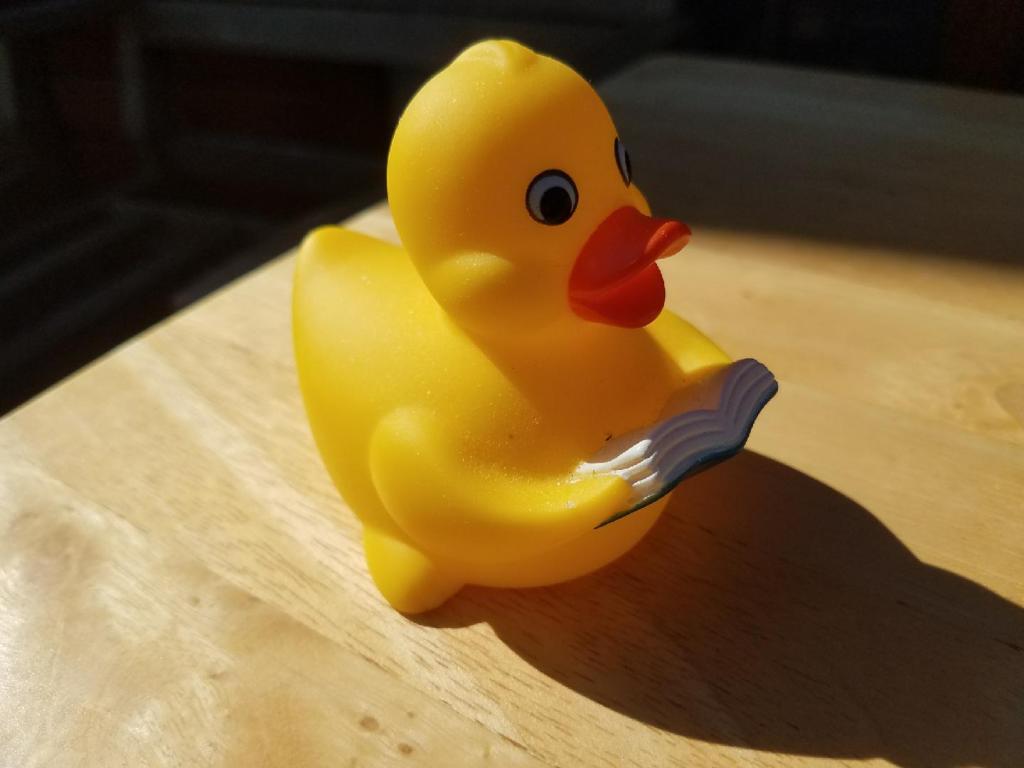
Curtesy of Anita Belli

It made me think. This is what I did in my working life. Talking through work problems at meetings with colleagues, giving presentations and lectures, it deepened my understanding of a topic and gave me insight. Creatives often spend a lot of time alone and so we need to find ways to create this practice. Journaling can work but sometimes we need to talk through the problem to get clarity. Fortunately, I have a few good female friends who will listen to me as we walk and talk without feeling the need to come up with answers and this is invaluable. And if not, I could run myself a hot bubble bath and chat to my duck.

I came away from the writing retreat feeling calm, in control, and inspired. By stepping into that other world, I gained a new perspective on my writing life. I had been full of angst worrying about the future and doubting myself. Something magical happened in that Georgian house because now I am content and confident. I am completely relaxed about my writing life and excited to try out some new ideas.

Retreats are not accessible to all creatives. Finance, location, and other factors can be a barrier. If you cannot get away alone or with other creatives then perhaps you could create a retreat environment at home. A different schedule and way of working where you commit to self-care for a few days. Turn off all distractions and use your creative powers to imagine yourself on a retreat. The tweet-chat that I host Friday Salon (#FriSalon) have suggested we have a virtual writing retreat. I am thinking about how we can do this effectively. If you have experienced a virtual retreat, then please let me know how it worked. 

Next week I am sleeping out as part of the GlassDoor London Sleep Out, raising awareness and funding for this charity which helps people find a path out of homelessness and provides support. It is on Friday 1st/2ndOctober. Starting to feel a bit anxious now as I haven’t travelled into London since the pandemic and sleeping on the street amongst strangers is most definitely out of my comfort zone. I will report back here next Monday! Until then …

How to survive the writer’s journey

How are your energy levels right now? Do you sometimes lose your oomph? Fatigue and sometimes burnout are part of the writer’s life but we can be kinder to ourselves and find a natural rhythm that enables us to give our best and enjoy the writing journey. 

I have not written a blog post for a few weeks. As I explained in my last blog, I am planning to record podcasts on the inner journey of the creative – chatting with writer friends, and will post transcripts of these podcasts as blogs. However, this change of direction, will take a little time to come to fruition. In the meantime, I am missing this weekly communication! It has become part of my Sunday ritual – a run by the sea where I reflect on what I have learnt that week and then, on my return, sharing it with you.

 I felt I had nothing new to say about the inner journey of the creative, and my posts were in danger of becoming repetitive. Maybe I just needed a break to consolidate what I had learned. It has also been an exhausting six weeks. First my father’s memorial service which I planned and then hosted, and a couple of weeks later a fundraising tea party in aid of Glass Door – a charity that helps people find a path out of homelessness. I just did not have the energy to run and so lost the inspiration that I always gain from this morning ritual. But today I enjoyed my Sunday run by the sea and felt compelled to share my thoughts.

For me the marathon of writing, publishing, and marketing novels began in March 2020. I limbered up, and set off from the starting line as if I was in a hundred metre sprint. I kept up an incredible pace, keeping my sight on the finish line – a time in the not too distant future when my efforts would have paid off: the expenditure on publishing my novels would be returned in sales and there might even be some profit, I would have an email list of a thousand devoted readers eagerly awaiting my next novel. I tried everything in marketing and attended on line workshops which promised incredible results. Although I continued to write, the joy of relaxing into my writing was marred by the pressure to sell – to keep up with the targets I had set myself and what the experts told me I should be doing. Does that sound familiar? 

A writer friend warned me that if I continued at that pace I would risk burn-out. Fortunately, I did not, but I did recognise an ebb in my energy and motivation. This did not affect my writing as I never have difficulty sitting down to write and that is a blessing. I also listened to my own inner wisdom. This is not a sprint it is a marathon and as writers we need to pace ourselves. To accept our personal seasons of creativity. To step back and reflect on what works for us and what does not. To allow ourselves to make mistakes without beating ourselves up. To accept that everything we do as writers can be changed – including book covers, titles and blurb. We can reinvent ourselves. Try writing in a different genre. Explore and have fun with different marketing approaches. And writing should be fun. Why would we devote so much time and energy to this writing life if it did not bring us joy?

Yesterday I downloaded the latest writing craft book by the wonderful Joanna Penn. The Relaxed Author was written by Joanna with Leslie Lefebvre. The title spoke to me and as soon as I opened the pages, I found gems of wisdom. 

I started this blog by describing the writer’s journey as a race but that is not a good analogy because it is not a competition. We all compare ourselves to other writers, measuring our success against theirs even though we know it is not healthy. It is unkind – when we need to be our own best friend and cheerleader. We each have a different journey, one that is unique and perfect for us as we learn, grow, and fulfil our potential. Patience, resilience, and self-care are essential to succeed as a writer. 

I have made a conscious decision to slow my pace. To enjoy the journey. I will continue to work hard and set myself goals but I will listen to my inner self and be kind. I will value times of inactivity respecting the natural ebb and flow of creativity and the need for renewal. 

Tomorrow I am going away for a few days on a writer’s retreat. I am looking forward to a break from social media and the opportunity to focus on me and my writing. If I do not blog every week I know that you will not judge me and neither will I judge myself – although I have to admit, that is still a work in progress.

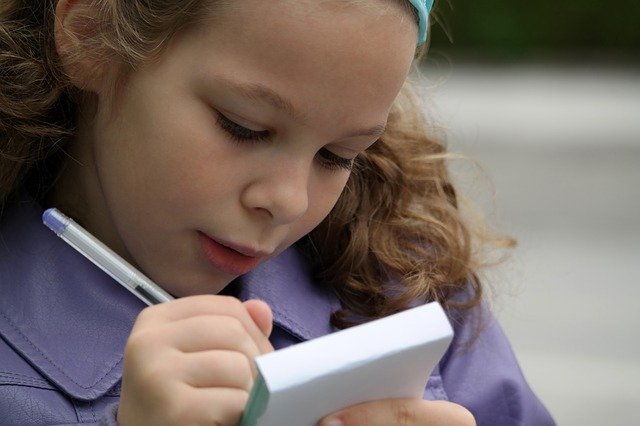
The writer’s notebook.

I know from conversations on social media that most writers have many notebooks. We love choosing or receiving notebooks with pretty covers to fill with scribbled thoughts. I currently have nine notebooks that are still ‘open’. Which means there are still empty pages to fill, and ideas I want to pursue. I kept journals long before I started writing, and could not count how many I filled over the past decades. Fortunately, most of these have been disposed of, or I would have to buy a bigger house. Although I did tear out a few important pages to keep because they still have meaning today.

Each notebook has a different purpose, although ideas spill over from one to another in a jumble of ideas and impressions. Doris Lessing famously kept five notebooks, which she wrote about in the 1962 feminist classic, The Golden Notebook. Each notebook was of a different colour: autobiographical, confessional, a writer’s observations, political musings, and a golden notebook that pulled all of the threads together. I read this book a long time ago and although I struggled with some sections it left an impression on me. It is perhaps time that I read it again now I am older and have a different perspective on life.

Courtesy of Gimp Workshop Pixabay

Journaling 

The pages I have kept are those which serve to remind me that all will be well if I go inwards to listen to what is in my heart; to find guidance from God, the universe, guardian angels, inner wisdom, whatever you choose to name that power. The journals that I filled in my thirties were full of angst about my career development and frustration that the path I had envisioned seemed closed to me. Years later when I read those journal pages I was filled with compassion for the younger me. Everything turned out perfectly, better than I could have imagined. I just needed to be patient and open to new opportunities. Using a different coloured pen, I wrote responses to my younger self between the lines and in the margins. I reassured myself that all would be well. These are the journal notes I have kept, because now if I pour my angst out on the page I imagine an older version of me responding in the margins – all will be well. 

‘In the diary you find proof that in situations which today would seem unbearable, you lived, looked around and wrote down observations, that this right hand moved then as it does today, when we may be wiser because we are able to look back upon our former condition, and for that very reason have got to admit the courage of our earlier striving in which we persisted even in sheer ignorance Franz Kafka.’ The Diaries 1910-1923
 
‘I am anxious, and it soothes me to express myself here. It is like whispering to one’s self and listening at the same time.’ Bram Stoker Dracula

courtesy of S.Hermann F. Ritcher Pixabay

Morning pages

Writer’s keep notebooks to jot down impressions, observations, and ideas. Inspirations for stories, snatches of dialogue, and interesting names. I always take a notebook on holiday with me to record the scents, sounds, and sights that make a place unique. I have one notebook especially for holidays so that I can dip into this if I am describing a location.

Julia Cameron introduced a writing exercise Morning pages in her book The Artist’s Way. She encourages writers to warm up each morning by writing freely for a few minutes. It is a way to relax into using the right side of the brain and to stimulate creativity. My morning pages are scattered throughout several notebooks. As these scribblings are intended to be disposable, they randomly fill gaps – but amongst those scribbles, there are a few ideas that one day maybe the seeds of a story.

‘Your subconscious mind is trying to help you all the time. That’s why I keep a journal – not for chatter but for mostly the images that flow into the mind or little ideas. I keep a running journal, and I have all of my life, so it’s like your gold mine when you start writing.’ Jim Harrison
 
I don’t journal to ‘be productive.’ I don’t do it to find great ideas or to put down prose I can later publish. The pages aren’t intended for anyone but me. It’s the most cost-effective therapy I’ve ever found.’ Tim Ferriss
 

Planning novels

Then, there are the special notebooks. The ones that I designate for each novel. All of my ideas, planning, character development, photographs, news clippings, notes from research visits, etc. are recorded here.

When I designate a notebook for a novel I know that I have committed to writing that story. I have a notebook for an unnamed novel that I have yet to write. Whilst I am writing, Misdirection, and preparing Just Bea for publication, I am also jotting notes and references in a notebook for this unnamed novel.

All of the ideas that seeded my novels came from scribbles in notebooks. Passing thoughts that I captured and pressed between the pages for safekeeping. Although I might flick through my notebooks looking for inspiration, there is no need. The unconscious mind is busy sifting and selecting the thoughts I have recorded. Overtime a story emerges, sometimes fully formed and it nags to be told. 

courtesy of Raphaël Jeanneret Pixabay

Acquiring a journaling practice

You don’t have to be a writer to keep a journal. It is a form of meditation and reflection. A way to make sense of the world, and to self-care. Don’t think about what to write, just write. It is when you are relaxed with no expectation that thoughts flow. 

The notebooks and diaries of many famous writers have been published: William Somerset Maughan, Coleridge, Virginia Woolf, Mark Twain, Sylvia Plath, and Thomas Mann, to name but a few. Anne Frank’s diary deserves a line of its own.

How do you use your notebooks?

Restore and renew your creative spirit

Superpowers of creatives

As creatives, we are passionate about our art. A desire to share our work with other people can be all-consuming. We drive ourselves harder and harder to succeed. Does this sound familiar? 

Writers, artists, musicians and entrepreneurs have some character traits in common. These can be both a blessing and a curse. This blog is about recognising our superpowers as creatives and nurturing them with self-care so that they serve us well.

Creatives are sensitive people. As we regularly tune into the right side of our brain to create, we further develop our intuition.

I suspect that many of us are empaths. An empath is a highly intuitive person, who senses the feelings and emotions of the people around them. We absorb other people’s pain, as we try to ease their suffering. 

Creatives are perfectionists. We are self-critical, and that inner critic can sometimes prevent us from expressing our self for fear that our work will not be good enough.

We tend to be good and loyal friends. Our emotional intelligence means that we are often successful in the workplace, and are caring and supportive of our staff.

Our drive to succeed makes us self-starters. As entrepreneurs we put everything into our work, striving to achieve the best we possibly can.

These attributes are amazing superpowers, but they need to be treated with respect, or we risk burn out, writers’ block, feeling overwhelmed, or emotionally and mentally exhausted. 

Burnout

A new project gets one hundred percent superpower. We are flying high. For example, you have finished writing a novel. You have self-published and spent weeks marketing it. The steep learning curve has been worth it because you have received fabulous reviews and your friends and family are proud of what you have achieved. Or, you have set up a new business and after months of work, you have launched with a fanfare.

This is when we are most at risk of burn out, if we do not recognise how to look after our superpowers. There is likely to be an adrenalin slump after the work and excitement of a launch. We will be vulnerable to our self-critic when we look at how far we still have to climb, and our energy levels will be low. 

I have noticed on social media that a number of creatives are experiencing low energy levels and poor health. It is not surprising as we are trying to adjust to and cope with a pandemic.  As empaths, personal stories of heartbreak and loss, and those we hear from friends, and the media affect us deeply. This is another reason why we need to take extra care of our mental and emotional health at this time.

Self-care

If you are anything like me, you will be very good at giving advice to friends, telling them to take care of their emotional and mental health but may fail to look after yourself. 

A holiday or a spa day away from home may not be possible, at this time but you can create this at home. Find a day when you are going to be alone for all or part of the day and plan some treats. This will be different for everyone, but this is what my retreat day would include:

  • A guided meditation for chakra alignment or deep relaxation. There are several on YouTube. I favour Deepak Chopra or The Honest Guys.
  • Restorative yoga. Again, there are workshops on YouTube, but I subscribe to Core Vitality Yoga, and recommend the virtual retreat, I equip myself with a couple of pillows, a bolster or rolled-up towel, a throw/blanket, a face mask, and soothing oils, for this.
  • A light lunch made up beforehand. This would include a delicious salad, fresh fruit, and maybe a smoothie. 
  • A walk where you can enjoy nature.
  • A warm bath with scented oils, and candles. I might put a conditioning mask on my hair, or include other beauty treatments such as a face mask.
  • Put on comfortable clothes to lounge in and read a book or listen to music.
  • Manicure and pedicure if you feel inclined.

I have enjoyed a couple of home retreat days like this. It is important that you have a complete break from work and social media on this day. Do not let anything interfere with this special time. I promise you, it will feel good.

On a day to day basis, we can take care of ourselves by slowing down. How many of us obsess about being active on social media? I love my Twitter friends, and because of that, I do not want them to feel pressurised into constantly responding to me. Mindfully monitoring the time that we spend on social media can be beneficial to our emotional and mental wellbeing.

Find time to do things that you enjoy. I have been so intent on getting my debut published that I have neglected other interests: riding my bike, walking in the woods, crafting, and baking. I am going to make time for these things, and when I do engage in them, I will try to be one hundred percent present. 

A visualisation

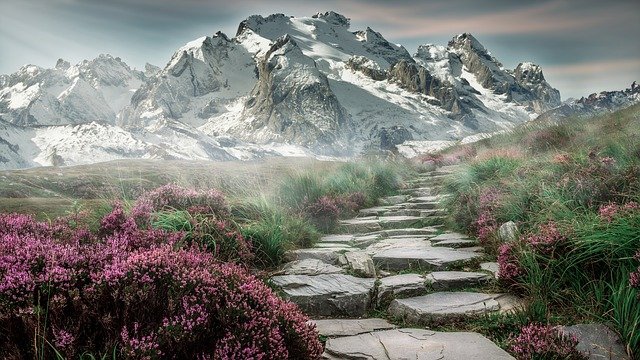
Finally, I will share with you a little visualisation that helps me. I imagine that we are all climbing a mountain. Some travellers are ahead and others behind. When I look down, I am surprised at how far I have come. Small steps each and every day have had an impact. However, I am tired and I still have such a long way to go. I sit at the side of the mountain and rest. The view before me is beautiful. It is momentary – the exact fall of the light, the little bird that has alighted at my side, the flowers in bloom. I rest in the moment. 

‘Why do you need to carry that heavy backpack?’ a voice says. ‘Everything you need will be provided.’ And so, I let go of my load. 

There is a well of crystal-clear water and I drink my fill. As I rest I help others on their journey. I know that when I need a hand or a word of encouragement there will be others to help me. 

As I set off again I feel lighter and restored. Instead of worrying about the climb I enjoy the sun on my back and remember to admire the view. 

These are techniques that help me. I hope that by sharing them I have given a hand to you on that mountain path.