Life-changing decisions

Have you ever made an impulsive decision that has changed your life? I have made a few ropey decisions, mostly when I was much younger. Maybe we take fewer risks as we grow older, keeping within our comfort zone.

 Perhaps the most questionable decision was when I packed a rucksack and, on an impulse, flew from London to Tucson Arizona to surprise an American penfriend, who I had met on a previous visit. It seemed romantic at the time. I was twenty-one had just finished training as an occupational therapist and found myself with free time. So, I took a Freddie Laker flight to Arizona and an internal flight to Tuscon, buying my tickets the same or previous day. I’m not sure I even told my parents until the day I set off from my Hampstead bedsit, feeling like a brave, free-spirited adventurer. It wasn’t until I arrived in Tucson in the early hours of the morning that I realised I only had a post box address for my friend who lived in Bisbee 95 miles away.

We all make impulsive decisions at some point in our life, maybe several times. We are acting on a gut instinct that it is the right thing to do, despite it seeming to be irrational. Angie Winkle in The Borrowed Boy does just that. Her head tells her that she must return Danny to the young woman who lost him on the Tube and she tries to reunite them, but her instincts tell her that Danny needs her. He has welts on his back, and talks of being a naughty boy; he clings to Angie when they see the woman, he was parted from waiting at the statue. The woman is smiling as she chats on her phone. Angie’s train is about to depart and she has to decide in haste. So, she acts on instinct, listening to her gut, and takes Danny with her on a journey that changes both of their lives. 

The decisions that we make, shape our lives. There is a quote by Ayn Rand:

‘Everyman builds his world in his own image. 

He has the power to choose,

But no power to escape the necessity of choice.’

For forty years Angie had been afraid of making wrong decisions, and so she let life pass her by, watching from the side-lines. She found that not making decisions comes with consequences too. It wasn’t until Angie realised that life was short that she decided to make the most of every minute of every day. She had let life pass her by and now she vowed not to waste another moment. 
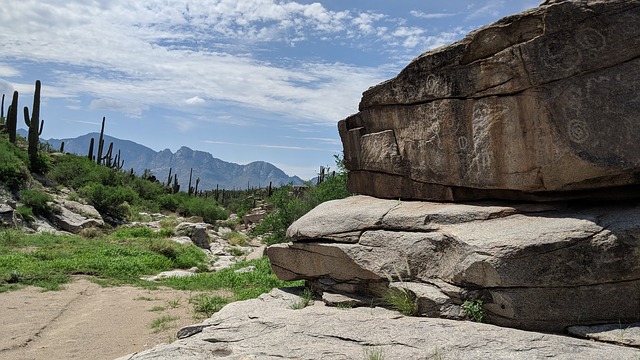
I would like to say that my spontaneous but risky decision making was a one-off but there were a few hairy moments in my younger years. Thank goodness my own daughter is much more sensible than me. The Arizona escapade had a happy ending because as unlikely as it may seem a young black guy who was waiting in the line behind me, heard me speak to the cab driver. He stepped forward and said that he knew where my friend lived. We shared a cab to Bisbee and true to his word he directed us to my friend’s house. I think he was one of many angels who have come to my rescue at different times in my life. The summer I spent in Bisbee was memorable and I would not change that experience. It led to other events in my life for which I am grateful.

Every day we make a multitude of decisions, some as simple as whether or not to eat a second biscuit, others are deceptively more critical. Sometimes we have time to weigh up the pros and cons and gather information to make an informed decision. At other times we have to act on instinct and hope for the best.

Angie’s decision to take Danny with her shapes her life. Whether it was the right decision or not, I will leave you to decide. One final quote from a meme – author unknown.

            ‘Sometimes you make choices in life and sometimes choices make you.’

How to stay the course and succeed

Ambition is great, it drives us to achieve our goals but it needs to be tempered with patience if we are to keep on track and avoid crashing. This has been a hard lesson for me and although looking back on my life I ended up in the right place, there were times when I caused myself unnecessary distress and almost sabotaged my chances of success as a result of my impatience. 

A pattern that I recognise in my behaviour starts with a heartfelt wish or passion. I put everything that I have into achieving this goal. Early achievements indicate that I am on the right track and I have what it takes. This is all good. We are inspired by our dreams to find our life’s purpose. The little markers of success along the way, for example, praise from a line manager, achieving a weight loss goal, or winning a writing competition, are like flags waving us on. There is a moment of realisation as we start to believe that we can achieve our dream.

In the past, this has been the point at which I start to sabotage my chances of success. It is a critical stage where patience is essential if we are to keep on track. 

Have you heard of the Terrible Twos? It is an expression used by parents to describe the developmental stage of two-year-old children who are prone to temper tantrums. At this age the child wants to be independent and can become frustrated when they discover that they do not have the motor and cognitive skills needed to achieve a task. The child might imagine themselves doing this activity and cannot understand why it is not possible. 

This is me. In my mind’s eye, I am already capable. The passion to achieve deceives me into believing I am ready. When the world does not recognise this and give me what I want I throw my hands up in despair. Then comes the self-doubt. The resentment and feelings of not being good enough. What a waste of energy and unnecessary grief. I get there in the end but looking back on my past experience I can see now that there is an easier way.

It is hard to stay present when you are used to striving for success. The business world teaches us to inflate our achievements to show that we have reached or exceeded targets. I am incredibly tough on myself, setting unrealistic goals of what I expect to achieve on a daily, weekly, and monthly basis. When I fall short, I berate myself for failing and work harder. The result is inevitable:  Burn out. Poor decision making, and shoddy work as I am not taking my time. 

When we let go of trying to control and trust the journey, we get there a lot faster. The passion that is currently driving me is to publish my books and reach a significant number of readers. In March 2020 when the UK first went into lockdown I had not published any books and I didn’t have a social media presence. In eight months, I have published my debut, The Borrowed Boy, and my second novel, Just Bea, is in the process of being formatted for publication. I started this blog and have posted weekly. I have over 1k followers on Twitter and host a weekly tweet chat Friday Salon. I have also filmed a pilot for a YouTube programme Castaway Books. It’s exhausting just reading this.

This week I had a reality check. There is no hurry. Everything will unfold in its own time. Writing this blog brings me great satisfaction as I am developing self-awareness and making valuable connections with readers. I love hosting the Friday Salon tweet chats as it feels as though I am meeting with writer friends in the pub. I am learning new skills. Last week I was amazed to find myself editing a film for YouTube. 

When I relax into enjoying my work with no expectation it becomes a pleasure. I can savour each moment, immersing myself in the task without keeping one eye on the clock. I still have a diary with daily goals but they are more achievable. Every day, every hour I am learning and growing. Like the two-year-old, I do not yet know what I don’t know, but as I try things out and practice new skills I am discovering. It is a joy to learn, and the connections I am making with people on this journey are enriching my life. 

In my blog on Learning to be patient, I spoke about the lessons from nature. That we have what we need to become the person we are meant to be but just as a plant develops through the seasons so do we. We cannot rush nature. 

Be patient. Trust the journey. And have fun. You are exactly where you need to be right now. And above all be kind to yourself. 

Why community is important

Everybody needs to feel valued and respected for what they bring to the world. When a person retires or becomes redundant they may experience a feeling of being surplus to requirements. We all need to be needed and when we think that we have no useful purpose it can lead to depression. The truth is, we all need each other and every single person has something of value to contribute to their community. 

My novels The Borrowed Boy and Just Bea are about community life and how friendship and connection help the protagonists to overcome feelings of loneliness and isolation. Stories about the power of friendship and community have become popular in recent years with novels such as Saving MissyMr. Doubler Begins Again, and The Authenticity Project

I think this is because we idealise a community life of bygone days. Out of town superstores, on-line shopping and services, and an economy where everything is paid for – even the giving of care, means that personal, local transactions have diminished. Neighbourhoods are transient as people move in and out of the area. In towns where people leave home to go to work each day, there may be very little interaction between neighbours. 

When you are experiencing a busy home and working life this may not concern you. But what happens when that changes? Divorce, retirement, bereavement, or a shift to working from home as a result of the pandemic may change your perspective. Suddenly, the connections you took for granted are no longer there and you may feel isolated. 

The pandemic has shaken up our world in so many ways. Life will never be the same again as we adapt to new ways of living. Not all of the changes will be negative. Already, people are moving out of big cities to the countryside and seaside villages, as they anticipate working from home several days a week. We have started to buy local produce and favour smaller stores, alongside shopping on-line. Maybe we will start to look to our local community and neighbourhood to find what we need to survive.

Readers of my blogs on personal development will know that I believe on a personal level we have everything that we need to achieve our goals. Well, I also believe that every neighbourhood and community have the resources they need to thrive. Each person in your neighbourhood has skills, experience, and knowledge that is of value to another person. Practical skills such as decorating, cake-making, and gardening. Knowledge such as local history, or how to start a business. Caregivers. Home-makers. People who are good at networking. Singers, crafters, DIYers. The list is endless. You may have watched TV programmes where communities are brought together to achieve a challenge such as improving a house or creating a community garden. There is a wonderful energy as neighbours work together, discovering one another’s skills, and forging new friendships. 

In my novel The Borrowed Boy, Angie Winkle lives a very isolated life until she visits Jaywick Sands and finds a place where she belongs. Her skills as a mechanic, a dressmaker, and a caregiver are valued by her neighbours. For the first time in her life Angie feels needed, and this transforms her.

Commercialisation, the internet, and globalisation have fragmented community life. Instead of trading skills with one another, we have looked outside of our community to purchase everything we want or need. Buying local is about more than supporting local businesses and protecting the environment, it provides an opportunity to discover the wealth of skills, experience, and knowledge within our community. In doing so, we give purpose and meaning to the lives of our neighbours. We make connections and friendships. People need people. We are a tribal species wired for connection. Meaningful engagement that values what each person has to give. 

I believe that everywhere has community when you look for it. All it takes is one step, maybe joining a club or association, introducing yourself to a neighbour, or volunteering to help out with a community project. If you don’t like mixing in groups then finding ways to serve others, for example, offering to shop for an elderly neighbour and then taking the time to get to know them because they too will have something to offer you or somebody else that you know. Build your community one person at a time. Connect others and watch as your community weaves itself together. Stronger, more resilient, and a happier place to live and work.

Learning to be patient

Patience is a virtue, but not one that comes easily to me. I know that I am impatient, not with other people, just with myself. I want to achieve everything yesterday. However, there is a positive side. My impatience has served me well in many ways as I am motivated to succeed, work hard, and I am very productive. Great attributes in the world of commerce where we are expected to go faster and faster. Not so good as a writer because creative work has to unfold in its own time, and we have no control over when and how our work will be received by the world. 

Everything has a season. A beginning, a middle, and an end. And then a new beginning. When we live in the moment we treasure the beauty of each day, the changing colours of the landscape, and discovering new shoots in the flower bed. We are part of nature. There is a season for all that we achieve, and just as the flower bed goes through change, so do we. 

It is good to have a goal. A vision for our future. However, when we are willing that future to happen before it is time, we can stunt our growth and slow down the process. This is because we are not allowing change to happen. We are not relaxing into the now and being mindful of the lessons that are there for us and the opportunities. Instead of growing, we are expending our energy thrashing against the unfairness of life. The result – what we want is pushed further away because we are not ready to receive it, without change.

Like most writers, my goal is and has been for many years to be a successful published author. I approached this goal as if it were a work project over which I had some control. I studied what I had to do, went through all the steps, submitted my manuscript to agents, got myself a first-class literary agent, and submitted to publishers. At every stage of this process I was impatient: Each time I sent a manuscript out to agents I counted the days until I received a response. When my agent was reviewing drafts, and when editors from publishing houses were considering our submission. It was hard. My health and well-being suffered. I felt out of control. As a management consultant used to working for myself I railed against this lack of autonomy and was overwhelmed by a feeling of helplessness. 

I told the story of how I changed course, and decided to become an indie entrepreneur in my blogs Meditation challenge parts onetwo, and three. The path I was following was not going to get me to where I wanted to be. Since deciding to take the self-publishing route I have had to learn new skills and try different things to market my novels. This is exactly where I need to be right now. I love that I have discovered blogging. By sharing my experience with other creatives, I have deepened my understanding and self-awareness. I write to connect with others in a meaningful way and I have found that blogging and other social media platforms such as Twitter have enabled me to do this in ways that I had not believed possible.

If my debut novel had been published last year through the traditional publishing route I would not have had that experience. My life is richer as a result. Now, I embrace what each new day has to offer. I honestly love everything about my working life as an author, and I know that I am growing and changing. Instead of worrying about the future, I am delighting in the small changes in my life, much like the gardener who enjoys watching the flower bed for new growth. 

The creator of all things has sown a seed of desire in our hearts. We must pursue our dreams but recognise that for our dream to unfold it needs to be nurtured and given time to grow. Just as our creator sends the sun and rain to nourish the earth, we too will receive what we need. When the season is right we will enjoy our harvest but creation cannot be rushed. It is not easy to be patient when you are burning with desire, but creation as magnificent as you must be honoured with time, care, and above all patience. It will happen when the time is right. 

The power of self belief

‘She’s not showing any commitment to your relationship,’ a girlfriend counselled me as we took our habitual walk and talk by the sea.

I check my phone every few minutes, exasperating my husband. I wonder if he thinks I am having an affair.

Maybe my email was worded wrong and she misinterpreted what I said. Or – I missed something written between the lines of her text. I check again. And again.

Maybe she’s just not that into me. 

No, I wasn’t having an affair. I was stressing over the lack of contact from my literary agent. It really is akin to dating. That feeling of elation when you receive an email full of exclamation marks – the agent loves your work and, in my case, ‘I am waiting on the edge of my seat,’ to receive my full MS. And another the next day, ‘I can’t stop thinking about your novel.’ Heady stuff. You hand over your heart. 

A new love affair or a collaboration with an enthusiastic literary agent is wonderful. It is to be celebrated and enjoyed. However, it is important to stay grounded. When we look outside of ourselves for affirmation that we are ‘good enough’ we hand over the responsibility for our happiness and wellbeing.

Take back control for your happiness

I am not suggesting that you hold back in any way, or distrust this new relationship, only that you do not look for external validation of your worth. We hear it said by spiritual gurus and counsellors that we are enough, in fact, more than enough. They are wise words, but not so easy to believe when we are filled with self-doubt.

To take back control, listen to your heart and not the thought goblins who whisper criticism and doubt in your head. You need to really listen to your heart to understand what you want and why. That’s easy you might say, ‘I want to be a successful published author.’ Or, ‘I want to meet my soulmate, get married, and start a family.’ Dig a bit deeper. Ask yourself why. Get to the root of what you want and need. 

For me, it is to reach as wide an audience as possible, because I have something to say and want to be heard. I want to connect with readers through my words and make a difference – whether it is to give a few hours of escape or to inspire in some way. I have a unique combination of skills and experience that make me who I am. My purpose is clear and is not dependent on another person. A publishing contract is just one way to achieve my goal. I have everything I need to fulfil my potential and achieve my dreams.

It is great to find true love, to get approval, and positive affirmation. We all need this. But when it does not come from the source we expected, it doesn’t mean that we are undeserving. It just means, it isn’t the right one for us at that time.

You are God’s gift 

You must have heard the saying, ‘He/she thinks they are God’s gift.’ Well, guess what, you and me – we areGod’s gift to the world. We have been provided with all that we need to fulfil our unique purpose. It may have arrived in a box, like a flatpack from Ikea – full of odds and ends that are a mystery to us. The instructions assure us that everything is there, we just need the patience to put it all together. When we are distracted, comparing ourselves to others, and seeking approval, we are neglecting our gift. 

Spend time marvelling over everything in that box. Value each of the parts, however small, because they are essential to creating our true self:  our skills, attributes, personality traits, our dreams and wishes, our passions. When we realise just how amazing we are, we are fired up with positive energy. Not only is that very attractive – we are no longer a box of oddments, we are the shiny fully assembled model in the shop window, it enables us to know exactly what we need and to be discerning. Instead of waiting to be chosen, we do the choosing. 

The magic outside our comfort zone

Many years ago, I watched a television programme that left an impression on me. An older woman explained why she took up sky-diving in her sixties. It was an antidote to the risk of an ever-diminishing life, as a result of living within her comfort zone. As we get older, we can be less inclined to take risks and settle into a comfortable routine. Sky-diving is a bit extreme. I considered trying a tandem skydive but the thought of jumping out of a plane terrifies me. In the 2001 film Kate and Leopold, Meg Ryan has to step off the Brooklynn Bridge, to be reunited with Leopold and to live the life she truly desires. I love that film, but every time I watch it she goes to jump and I think, I couldn’t do it. I would lose everything because I would be too afraid.

There is a parallel here to life. It’s great being comfortable, feeling calm and secure. When our world changes, establishing a routine can help us to feel in control.  During lockdown, a routine helped many of us create a sense of stability in a scary world. However, over time we can become stuck, moving within the boundaries we have established. Comfort turns to discontent as we become aware of our unfilled potential. It is frightening to step out of our comfort zone: fear of failure, rejection, or disappointment. But we risk losing much more if we stay put. We risk losing the opportunity to fulfil our potential, and to discover new interests and passions. We aren’t just denying ourselves the expression of our true self and all that we can be, we are denying it to the world. We have a responsibility to fulfil our potential and that means continuing to learn and grow, whatever stage of life we are at. 

In an earlier blog Welcoming change, I told you how I was letting go of a successful career as a management consultant to start a new one as an indie author entrepreneur. It was and is scary. I was very comfortable with my working life, but this meant that nothing challenged me. I had decades of experience in health and social care. I could take on any management consultancy job in my field and know that I had the skills and experience to deliver. It was a great place to be and paid the bills. Outside of my comfort zone was my unfulfilled potential. I knew I wanted to be a published author and there were other things, other versions of me that I needed to explore. I am only just discovering some of that potential, as I try out new things. 

Yes, we may fail. I made my first book promotion video without looking at the camera because I didn’t know where it was on my phone. I’ll know next time, so it isn’t failure; it’s my first attempt. I like the old adage that when we mess things up we just need to use the experience as manure to nourish future projects. 

The past six months have been a steep learning curve for me. I have learnt how to: commission and work with a creative team (editors and book cover designer), format a manuscript for publication, self-publish, set up and write a blog, use Mailchimp to share a newsletter, and use social media (Twitter, Instagram, Business page on Facebook). I am planning a YouTube channel to broadcast twice a week from January 2021, and I am writing and publishing another two novels next year.

 I am sixty and so I have not grown up with the technology that younger people are experienced in using. Of course, I have experienced frustration and felt stupid. What happens if my investment of time and money doesn’t pay off? I have felt weary, exhausted from the effort and relentless drive to succeed. But, I am growing. I am learning. And I am transforming. I am becoming a new me. I am pushing out into the unknown and with each step into that magical terrain, my world becomes bigger. Instead of feeling the weight of fear and uncertainty, I am going to embrace each new experience and find joy in learning. 

There’s just one other thing I will resolve to do. This is the scariest of all. I am going to visit my local swimming pool and jump into the deep end. It is a first step. I will not jump out of a plane, but maybe, if I can learn to do that without fear, I might just be able to jump back in time to be with the love of my life, should a Leopold beckon me one day. 

Restore and renew your creative spirit

Superpowers of creatives

As creatives, we are passionate about our art. A desire to share our work with other people can be all-consuming. We drive ourselves harder and harder to succeed. Does this sound familiar? 

Writers, artists, musicians and entrepreneurs have some character traits in common. These can be both a blessing and a curse. This blog is about recognising our superpowers as creatives and nurturing them with self-care so that they serve us well.

Creatives are sensitive people. As we regularly tune into the right side of our brain to create, we further develop our intuition.

I suspect that many of us are empaths. An empath is a highly intuitive person, who senses the feelings and emotions of the people around them. We absorb other people’s pain, as we try to ease their suffering. 

Creatives are perfectionists. We are self-critical, and that inner critic can sometimes prevent us from expressing our self for fear that our work will not be good enough.

We tend to be good and loyal friends. Our emotional intelligence means that we are often successful in the workplace, and are caring and supportive of our staff.

Our drive to succeed makes us self-starters. As entrepreneurs we put everything into our work, striving to achieve the best we possibly can.

These attributes are amazing superpowers, but they need to be treated with respect, or we risk burn out, writers’ block, feeling overwhelmed, or emotionally and mentally exhausted. 

Burnout

A new project gets one hundred percent superpower. We are flying high. For example, you have finished writing a novel. You have self-published and spent weeks marketing it. The steep learning curve has been worth it because you have received fabulous reviews and your friends and family are proud of what you have achieved. Or, you have set up a new business and after months of work, you have launched with a fanfare.

This is when we are most at risk of burn out, if we do not recognise how to look after our superpowers. There is likely to be an adrenalin slump after the work and excitement of a launch. We will be vulnerable to our self-critic when we look at how far we still have to climb, and our energy levels will be low. 

I have noticed on social media that a number of creatives are experiencing low energy levels and poor health. It is not surprising as we are trying to adjust to and cope with a pandemic.  As empaths, personal stories of heartbreak and loss, and those we hear from friends, and the media affect us deeply. This is another reason why we need to take extra care of our mental and emotional health at this time.

Self-care

If you are anything like me, you will be very good at giving advice to friends, telling them to take care of their emotional and mental health but may fail to look after yourself. 

A holiday or a spa day away from home may not be possible, at this time but you can create this at home. Find a day when you are going to be alone for all or part of the day and plan some treats. This will be different for everyone, but this is what my retreat day would include:

  • A guided meditation for chakra alignment or deep relaxation. There are several on YouTube. I favour Deepak Chopra or The Honest Guys.
  • Restorative yoga. Again, there are workshops on YouTube, but I subscribe to Core Vitality Yoga, and recommend the virtual retreat, I equip myself with a couple of pillows, a bolster or rolled-up towel, a throw/blanket, a face mask, and soothing oils, for this.
  • A light lunch made up beforehand. This would include a delicious salad, fresh fruit, and maybe a smoothie. 
  • A walk where you can enjoy nature.
  • A warm bath with scented oils, and candles. I might put a conditioning mask on my hair, or include other beauty treatments such as a face mask.
  • Put on comfortable clothes to lounge in and read a book or listen to music.
  • Manicure and pedicure if you feel inclined.

I have enjoyed a couple of home retreat days like this. It is important that you have a complete break from work and social media on this day. Do not let anything interfere with this special time. I promise you, it will feel good.

On a day to day basis, we can take care of ourselves by slowing down. How many of us obsess about being active on social media? I love my Twitter friends, and because of that, I do not want them to feel pressurised into constantly responding to me. Mindfully monitoring the time that we spend on social media can be beneficial to our emotional and mental wellbeing.

Find time to do things that you enjoy. I have been so intent on getting my debut published that I have neglected other interests: riding my bike, walking in the woods, crafting, and baking. I am going to make time for these things, and when I do engage in them, I will try to be one hundred percent present. 

A visualisation

Finally, I will share with you a little visualisation that helps me. I imagine that we are all climbing a mountain. Some travellers are ahead and others behind. When I look down, I am surprised at how far I have come. Small steps each and every day have had an impact. However, I am tired and I still have such a long way to go. I sit at the side of the mountain and rest. The view before me is beautiful. It is momentary – the exact fall of the light, the little bird that has alighted at my side, the flowers in bloom. I rest in the moment. 

‘Why do you need to carry that heavy backpack?’ a voice says. ‘Everything you need will be provided.’ And so, I let go of my load. 

There is a well of crystal-clear water and I drink my fill. As I rest I help others on their journey. I know that when I need a hand or a word of encouragement there will be others to help me. 

As I set off again I feel lighter and restored. Instead of worrying about the climb I enjoy the sun on my back and remember to admire the view. 

These are techniques that help me. I hope that by sharing them I have given a hand to you on that mountain path. 

Remembering the 1970s

Reminiscence bump

Interestingly, our most vivid and frequently recollected memories tend to focus on two decades of our life around the age of twenty. For me, it is the period between 1975 and 1985 when I was aged fifteen to twenty-five. This phenomenon is known as the reminiscence bump. When I first heard of this on radio four, many years ago, I was fascinated. I didn’t realise there was a science to this. I just attributed it to more excitement in my life at that time. To some extent I was right.

Our brain imprints unusual experiences more than the mundane. In our late teens and early twenties, we experience many things for the first time. I was lucky enough to have a brother who was two years older than me and a musician. From the age of fifteen, I went to see bands, travelling in an old transit van with my brother and his friends. We lived in a suburb of London and I was lucky enough to see most of the big names in rock at that time, although I don’t think I really appreciated it. My brother, Trevor Steel, went on to become a success in The Escape Club in the 1980s, and most of the boys who I hung out with then became successful songwriters and musicians. It was a magical time, and I have learned since from school friends that they envied my access to these glamorous boys, who looked after me like a sister. 

When I was nineteen, I flew for the first time ever. My college friend asked me to travel with her on a Freddie Laker Skytrain to LA to visit her sister. It was only on the plane that she explained that her sister was actually being held in a jail in Vegas for picking up a hitchhiker who had forged credit cards. And so, my American adventures began. When my friends were released from jail we had to buy a car as their vehicle was impounded and we spent the summer driving along the coast, sleeping on roadsides or the beach. My college friend and I returned to the states several times. On one occasion, my college friend, her sister, and I hitchhiked from Wyoming to Arizona. Thank goodness, my daughter was much more sensible than me.

I met my husband in 1981 in London and we married in 1984. Life has been exciting since then, but memories of my late teens and early twenties are like a film – full of vibrant images.

Memories help us to make sense of who we are

Photo by Gerd Altman Pixabay

Another explanation as to why we experience this reminiscence bump around the age of twenty is attributed to a narrative perspective. The theory being, that we organise memories of events to make sense of who we are. Our teens and early twenties are formative years when we are testing our beliefs and embedding our values. I find it fascinating that my 88-year-old father who has Alzheimer’s focuses on the two years in his life when he was in the army pay corps. He would have been around the age of nineteen. Although he can recall many happy memories of his married life, and raising a family of four, it is his time in the army that he enjoys talking about most. 

Photo by Suvan Chowdhury on Pexels.com

The 1970s

I wanted to talk about the reminiscence bump, and the 1970s, as this is the era that Angie Winkle, in my debut The Borrowed Boy, recalls. I loved writing about the fashion and music of that time as it took me back to when I was a teenager. 

The 1970s was a great time for music: David Bowie, Marc Bolan, Deep Purple, Led Zeppelin, Bob Dylan, Pink Floyd, Fleetwood Mac. The list is endless. I loved and still do – Al Stewart. His lyrics are poetic.

The 1970s might be of interest to you because you lived through them, or because it is a bygone era. If I have stirred memories or curiosity you might want to try one of these novels set in the 1970s.

  • Everything I never told you, Celeste Ng’s debut novel set in a small Ohio town in the 1970s.
  • Channelling Mark Twain, Carol Muske-Dukes. Set in the mid-1970s a blonde poet, Holly teaches a poetry class in the women’s prison on Rikers Island.
  • Joyland, Stephen King, set in 1973 in a North Carolina amusement park
  • Paradise, Toni Morrison, a gripping novel about life in a small all-black Oklahoma town during the 1970s.

Unleashing creativity and purpose

September a time for new beginnings

September has always been my favourite month of the year. A new school-term. A new rough book and a sharp pencil. A new teacher, excited to introduce the term’s work, and to learn our names. It’s a time of new possibilities. The harvest has been gathered in and the fields lie fallow, waiting for new crops to be sown.

It is the month I got married, and the month our daughter was born. When the leaves start to fall and my pockets fill with shiny conkers and acorns snug within their cups, my heart soars. I went for a run this morning, delighting in the crunch of leaves beneath my feet and the golden glow of sun, low in the sky now that summer has been spent. I got to thinking. This time in my life, it is like the fall. My achievements: building a successful business, raising a family, caring for ageing parents, are my harvest. I have toiled hard and loved every moment, but it is now done. Like the bronze and gold leaves at my feet, I have shed these responsibilities, and I am at a new stage in my life. A time to create something new.

Creativity increases during and post menopause

There is scientific evidence that women become more creative during and after menopause as a result of hormonal change (Dr. Christaine Northrup https://www.drnorthrup.com). I believe it is more than hormonal change. Men and women reach a time in their life when they experience a freedom that they haven’t known before. The harvest has been gathered and we reflect on the fallow field before us. We become introspective, questioning our true purpose in life. No longer required to serve others, we can dance to our own tune. In this time of reflection, we discover our intuition and insightfulness. It is no wonder we experience a surge of creativity. Alan Titchmarsh, once said on a Gardening programme, that we become invigorated in the spring because we can smell the plant sap of new growth. Maybe it is sensing our unfulfilled potential that awakens our longing to create when we begin our autumn years.

Don’t let a believe that it is too late to fulfil your dreams hold you back. I was really inspired by Penelope Fitzgerald’s story, (see Hermione Lee’s biography). Fitzgerald started publishing her books at the age of sixty. At the age of eighty, she became famous after winning the Booker Prize in 1978 for her novel Offshore, and then international fame when The Blue Flower won a major award in America. Her novels, like mine, tend to be about people living on the edges of society, combining pathos with humour. Maybe that’s why I was drawn to her work. She was a remarkable woman who led a full and fascinating life, experiencing hardship herself for many years.

Your creative yearnings may not be as a writer. We are all creative, and fulfilling this need is as important as our spiritual, physical, psychological, and emotional needs. Your creativity might be expressed in the interior design of your home, a meal prepared for friends, quilting, or gardening. The list is endless. What is important is that you make time to express your creativity and enjoy it.

A new term

Photo by Pixabay on Pexels.com

I remember travelling home from work on the train one evening on the first day of term. The carriage was static with excitement and anticipation as students of all ages chatted about the courses they were studying. A couple of women were getting to know one another, as they spoke about the healthcare module they had just begun. A group of teenagers compared subject choices, eager to share how they saw their future unfolding with university options and careers. I breathed in the energy and felt high! 

Autumn is a time of change. Of new beginnings. Maybe you are thinking about retirement or your children have left home for university. Approach the coming months as though it is a new term. There is a fallow field before you. Now is the time to unleash your creativity. It is exciting and it may be a little scary, but beginnings always are. 

I will be spending the months leading up to Christmas writing my third novel, Misdirection, and learning about marketing as I prepare to launch my second novel Just Bea on 1st February. I would love to hear about your plans whether it is a craft project, your garden, or your novel/poetry. Let’s be like the teenagers buzzing with news about their plans on the first day back at school!

Wanting Something Too Much – Part Three

This is the third blog on Wanting something too much. 

In part one, I described the blip of happiness or despair when the one thing we want, or fear finally happens. Often, it is not life-changing in the way that we have imagined and life resumes. My message is to make sure the life you live now is a good one, and don’t hang all of your hopes on that elusive dream.

In part two, I reflected on outcomes. By attaching too much to one outcome, we can become blinded to other opportunities. When we have an open heart and mind we invite new possibilities into our life and in doing so, find the best outcome for us. 

Photo by Pixabay on Pexels.com

I know what it feels like to want something too much. It is a tightly clenched fist in the solar plexus, a lump of longing that takes up all the room in your heart. You are afraid to release your grip. As though holding tight to that dream will make it come true, and to release your grip will lessen your chances of success. I have learned that this is not true and by wanting something too much we are driving away the very thing that we want. 

We have all heard the stories of a couple who conceive when they have stopped trying for a baby, the girlfriend who meets the love of her life after resigning herself to a future of singledom, the job offers that flood in when you have decided to become self-employed. 

When we are desperate for something we become tense. There is a physiological reaction that may lead to symptoms of stress, for me it is eczema and migraines. We become so focused that we have tunnel vision and miss the bigger picture. A tense, intense person, who is desperate for something, is not attractive and can repel the person that they want to attract. 

If you are in a furniture store and a sales assistant working for commission pursues you relentlessly, advising you of the features of every sofa you show a vague interest in, I suspect that like me, you will decide to visit another day or go to a different store where you won’t be hounded into buying something. 

Many years ago, I had a friend who following a divorce was desperate to find another man. This friend was young, attractive, and clever. She had a great job and was financially independent. She threw herself into the dating world with gusto, joining on-line dating agencies and requesting blind dates. I tried introducing her to eligible men but her desperation scared them off. Sadly, none of her would-be partners wanted a second date.

I am extremely embarrassed to confess that when I started out as a management consultant I stepped out of a meeting to run after someone who I thought might be interested in hiring me. I cringe when I remember this. At that time, I was terrified that I would not attract any clients and of course I didn’t. When I relaxed and went with the flow, I had plenty of work. The more work I had, the more I was offered. 

When we are relaxed and content we are open to new possibilities. We notice opportunities because we have an open mind and are more susceptible to ideas that come into our orbit. People are drawn to us because we radiate positivity. 

I know it is hard to let go of longing. Keep hold of your dream but try to gently release your grip. Imagine that knot of tension, softening. Breathing exercises and meditation can help with this. When I am meditating, I imagine a lotus flower opening up to the sun. It takes practice but you can relax your hold. 

I believe that our purpose is an idea that is sown like a seed in our heart. Our wish to be a writer, an artist, a chef, an acrobat is intense because we are driven to achieve our life purpose. But just as the seed has been sown, trust that your dream will come to fruition. Open yourself up to a greater power. Trust that what you need will come to you. Be relaxed and calm. Because then you will find the golden breadcrumbs that will lead you to your destiny- a chance meeting, an advertisement, an idea that comes from a conversation.

I have devoted three blogs to this topic and could write more. Longing for success is the bane of creatives. Learning to attract what we need into our life is an important lesson for all of us.

Wishing you all a plentiful harvest. Namaste. 

Inviting new opportunities into your life

Wanting something too much – part two 

My heart aches for the creatives who share their heartfelt wish in social media with longing and desperation because I know how it feels to want something so badly. 

Changing career

This is a lesson that has taken me some time to learn, and I am still learning. When I was forty, I could see only one way to further my career and that was the next step up on the career ladder – a chief executive of a health trust. It had been my goal for years and I had made steady progress up until that point. I was shortlisted again and again but was disappointed when I received the news that I had not been successful and each time a different or conflicting reason – ‘too strategic,’ ‘not strategic enough.’ I didn’t know what to do as this had always been my goal and it felt too early in my career to settle for what I had already achieved.

I was in the depths of despair. I felt rejected – unworthy. Not good enough. I was blinded to other opportunities because I was too focused on that one outcome. A wise woman suggested that I was feeling discomfort as the job I had was no longer a good fit for me. Like an ill-fitting shoe I had outgrown the role. This sparked my imagination and I wrote down all the things I enjoyed and was good at, also the things I didn’t like about my job. 

Unsurprisingly, the job I had set my heart on was not a good fit for me either. The result was a specification of my unique combination of skills, expertise, and experience. I used that to evaluate every job advertised within a salary scale that was acceptable. In keeping an open mind, I came across an advertisement that I would never have considered before. I wasn’t even sure what the job description meant, but it was a perfect fit with my personal specification and the employer thought so too, because at the end of a two-day selection process I was offered the job. What unfolded from there was better than I could have imagined. I found the perfect career for me as one opportunity led to another.

Through this experience, I learned that my imagination is limited. The universe/God’s vision is greater. When I stopped hanging on tightly to what I thought should happen and opened my heart and mind to possibilities, I was led to the best outcome for me. 

The best outcome for you

You may be focused on bagging your dream agent, securing a traditional publishing deal, getting that promotion, or your ideal job and I wish you success. Keep working towards your goal and hopefully, your wish will come true. However, too narrow a focus might be blinding you to other opportunities. 

Try brainstorming all of the options. Be imaginative and open yourself up to the infinite possibilities for your success. Instead of focusing on one agent, try approaching several. Visualise offers coming in from four or more so that you have to choose. Submit to independent publishers. Enter novel writing competitions. Scatter these seeds of possibility and you may be surprised by what grows. 

Your future is waiting for you. It could be brighter and bigger than anything you have imagined, but you need to open your heart and mind to new possibilities and trust that what is right for you will find you.

Wanting something too much part one

‘I want this more than anything.’

‘If this doesn’t happen, I don’t know what I’ll do.’

‘If only I got that promotion/job everything would be different.’

‘I just need to find that special someone and I will be happy.’

The drama and passion of these heartfelt pleas are fuelled by the media. We watch films and read books where life is simple. The geeky girl/boy meets someone who loves them just the way that they are, they fall in love and live happily ever after. A woman loses her job, her world is falling apart, but then she writes a book, and all of her financial worries are resolved. Then, there are the talent shows where an awkward looking boy tells the camera that winning the competition would mean everything to him, and a few series later he is back as the star act, having achieved super-stardom. Real-life doesn’t make good telly and so stories of success, both imaginary and real, are dramatized and we buy into this. I have thought for some time that the romcoms we adore contribute to a dissatisfaction in relationships.

Our dream is a pot of gold at the end of a rainbow. We truly believe that one that one thing we wish for happens our life will be transformed. For many writers, it is getting an agent or a publishing deal. We hold that heartfelt wish so tight, we clench it within our soul, willing it to happen. To relax that hold for one second feels as though we are giving up and reducing our chances of success. Everything depends on that wish coming true.

My writing buddy achieved what seemed to the outside world like an overnight success. I know that she worked hard to develop her writing craft over many years and when success came it was well deserved and well earned. This friend won a novel competition and a couple of years later her internationally best-selling novel was advertised on posters at airports and railway stations. Of course, she was giddy with excitement as she was swept up in a whirlwind of success, but soon life settled back into a routine. ‘I am often asked how I feel about my success, and that it must have changed my life beyond recognition,’ she told me, ‘but it hasn’t. Not really. I was happy before and I’m happy now. Apart from being able to earn a living doing something I love, nothing much has changed.’

I have another friend who was over-joyed to be signed by her ‘dream’ literary agent certain that this was it – her passport to the glittery world of becoming a published author. Fourteen months later, she is still waiting for her agent to find a publisher and one heartfelt wish has been replaced with another.

The thing that we long to happen, or fear will happen doesn’t change our life. There is a blip of happiness or despair, but in the scheme of things, it is a minor disturbance. Think back to the day you got your dream job, got married, or on the downside received a rejection letter from an agent or following an interview. You may have been happy or disappointed for a few days, or weeks but then life happened and soon you had another goal or dream. I can no longer remember my rejection letters or the jobs I didn’t get. 

The constant is the life you are living now. Your family and friends, the pleasure that you get from everyday activities, your good health. By focusing on what is beyond our control, changing another person’s behaviour, making someone like you – hire you – sign you, we are neglecting to change the things that we can control. If life carries on as normal after the blip, then we need to invest in making it a good life by appreciating what we have now and making the most of each moment. 

<a href=”https://www.bloglovin.com/blog/20612947/?claim=x58rwyqm4zp”>Follow my blog with Bloglovin</a

Kindertransport

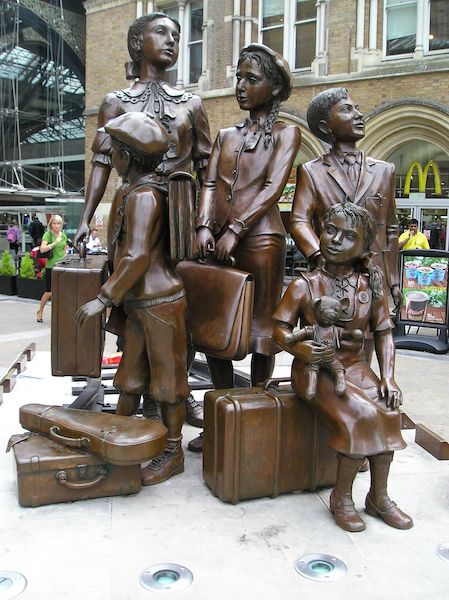
The Kinder transport statues inspired the cover design of The Borrowed Boy. If you have read this story, you will know that Angie arranged to meet Nikoleta at one of the two statues that are situated at Liverpool Street Station. 

For the children

The statue of two children is at the entrance to the Tube on the concourse of the station and is called For the children. For several years I passed by this statue on my way to and from work. Some days there would be discarded paper cups or takeaway containers littering the plinth, a person might be resting against it, or a small child hoisted up as though it were a seat. On one occasion a fresh posy of flowers had been placed in the girl’s arms. Unnoticed. Ignored. Recognised as a memorial to the plight of refugees. The people who passed by this statue had different responses. Much like our attitudes to the plight of refugees who seek asylum in our country. 

The personal stories of migrants and refugees fleeing the horror of war, making perilous journeys across the sea, or in containers moves me to tears. In researching this blog, I looked back at the news on migrants that might have influenced me at the time of writing The Borrowed Boy. I came across a news story, a photograph taken in June 2019 of a father and his infant daughter, washed up on the bank of the Rio Grande after a failed crossing to the USA from El Salvador. Their bodies lie prone, the twenty-three-month-old child held close to her father’s body within his T-shirt. I remembered my husband and daughter when she was tiny. How he took care of her every need, the way that he gazed at her and held her. I imagined this young father, trying to keep his baby safe and I cried. Not the silent tears triggered by an emotional read, great noisy sobs. It is a heartbreaking story, but sadly just one of many. 

In the years that led up to Britain’s referendum to leave Europe, there was a growing disquiet and resentment towards immigrants and refugees. I am not judging. Fear of the unknown and imagined consequences of change influence how people behave. However, there was a time in Britain’s history where we acted kindly and showed compassion. The Kinder transport statues at Liverpool Street Station commemorate the arrival of ten thousand children who feeling Nazi persecution arrived in Britain by train during 1938. They travelled to England without their parents and were sent to foster homes and hostels.

The Arrival

The second statue is called The Arrival and stands outside the Station in the aptly named Hope Square. The bronze statues are the work of Frank Meisler, who was himself one of these children. They were installed at Liverpool Street Station in 2006.

Beneath The Arrival is a plaque which reads:

Children of the Kindertransport.

In gratitude to the people of Britain for saving the lives of 10,000 unaccompanied mainly Jewish children who fled from Nazi persecution in 1938 and 1939. ‘Whoever rescues a single soul is credited as though they had saved the whole world.’ Talmud.

There is also a memorial plaque in Hope Square, which reads:

Hope Square

Dedicated to the children of the Kindergarten Transport who found hope and safety in Britain through the gateway of Liverpool Street station.

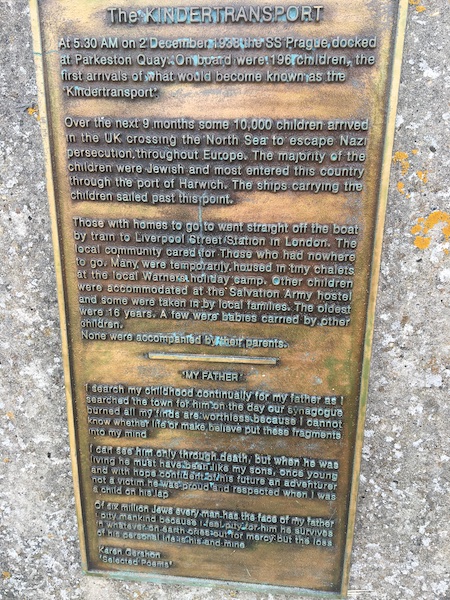
The children travelled by ferry from The Hook of Holland to Harwich, in Essex, England before boarding the train to Liverpool Street station in London. Harwich is on the same coastline as Clacton and Jaywick Sands, and close to where I live. I took a photograph of this plaque when walking by the sea in Harwich.

I cannot begin to imagine what life is like for families who have to leave a country that they love and risk their lives so that they can live without fear. The Bea Keeper of Aleppo, Christy Lefteri, The Kite Runner Khaled Hosseiniand Exit West, Mohsin Hamidare all excellent novels that convey this well. Stories have the power of engendering empathy, as we experience the inner world of the protagonist. See my blog on Empathy

The Borrowed Boy is a story about hope, friendship and the power of communities.

Follow my blog with Bloglovin

Fear of failure

In last week’s blog, I asked you, what is holding you back from investing in yourself as a writer? I touched on something that I believe is a big issue for all creatives – fear of failure.

Do you remember as a child being given a blank sheet of paper, and a pencil, with the invitation to draw something – anything? At some point, I went from a child freely expressing herself with wonderful scribbles, to the paralysing fear that what I tried to draw would look ridiculous and so I said, ‘I cannot draw,’ and I believed that for many years. 

In my forties I signed up for an adult education class called, Drawing for the Terrified. I discovered to my amazement that when I learned to relax and enjoy the process I could draw. We are all capable of achieving astonishing things if only we would open ourselves up to those possibilities. Fear of failure can prevent us from pursuing our goals, as we stop trying or unconsciously undermine our efforts.

Oh, the angst of writers! We are our own worst enemies. 

Unfinished manuscripts

I have a friend who would write a novel until it was 80-90% complete and then abandon it and start another. Her computer must have had at least ten incomplete novels. Eventually, she worked through her fear of failure and I am pleased to say that she is now completing and publishing one book after another – with great success. 

Looking for perfection

It is good to take pride in your work so that it shines, but to take this too far can be another indication of fear of failure. I am a bit of a perfectionist myself. I have to commit to a deadline or I would never let go of a book always believing that it could be better. Of course, it could always be better, but whilst we concentrate all of our efforts on that one project there are others that will never see the light. I know of one writer, who has now sadly passed away. She dedicated years and years to writing the one novel, it was never quite good enough. Sadly, that novel has not yet been published. Life is too short to wait for perfection.

Publishing a book without any promotion

This is a common one. The Indie author who works hard to write a book and self-publish then as soon as it is out there – runs for the hills! When it doesn’t sell they might lament the lack of marketing opportunities for Indie authors, or attribute the lack of sales to not being able to afford fancy promotion, etc. This is a good example of subconsciously undermining one’s efforts.

Sending just one or two query letters to agents before giving up

Fear of rejection is the worst, but we all know as writers that we have to develop a tough skin. I hated sending out query letters and waiting for a response. Every rejection feels personal – it reinforces our fear of failure. I think the writer’s wisdom is that you receive about one hundred rejections, whether they are from agents or publishers, before getting that treasured YES. So, start counting as every rejection is taking you closer towards your goal.

Curtesy of Steve Johnson Pixabay

Writer’s block

Sometimes you can feel like the child I described at the beginning of this post, sitting staring at a blank screen terrified to write in case it’s no good. There are ways to overcome this and stimulate the flow of creativity, perhaps a topic for a future post, but sadly some writers turn away from their passion saying ‘I can’t write.’ One writer recently shared with me her distress at not being ‘good enough’ or ‘writing like she was meant to.’ This writer was trying to fulfil other people’s expectations of what her writing should look like and that is a sure way to kill creativity. 

Overcoming the fear of rejection

Overcoming the fear of rejection takes courage and some inner work. Understanding where that fear comes from is a good place to start. Sometimes an early life experience can contribute to these feelings. I can pinpoint the first time I felt the impact of disappointing my parents. They wanted me to attend a certain secondary school. I attended an interview and was pleased with my performance. At eleven or twelve years old I wasn’t worried about the interview and neither was I too concerned about getting into that particular school – but pleasing my parents was of primary importance to me. I remember my mother’s face when she came into my bedroom one morning with the rejection letter. She was very disappointed and having been present at my interview went on to do a post mortem of my failure to impress. 

We are afraid of failing because:

  • We worry about what other people will think of us
  • We don’t want to disappoint the people we love and admire
  • It will prove we are just not good enough
  • It will end our dream of success

It doesn’t matter what other people think. Those people who love you just want you to be happy and always have your best interests at heart. My mother did that day when she read out my rejection letter. If fear of failure stops you from pursuing your dream then the only person that you are disappointing is yourself. Confident people know that they will not always succeed at everything that they try but it doesn’t stop them from having a go. 

Curtesy of Pixabay

How to succeed

Recognise your fear of failure and understand the cause. When you have acknowledged it, accept the feeling for what it is, and move on. It may always be with you but it doesn’t need to control how you act. 

There are so many things that we cannot control as creatives: getting an agent, getting published, receiving good reviews. All we can do is give ourselves the best possible chance of success by learning from others who have achieved what we are working towards and modelling our behaviour on what has worked for them. Control the things that are within your power and let go of those that are not.

Have a vision of where you want to be but set small achievable goals. This could be as simple as sitting down to write for fifteen minutes a day. Congratulate yourself on achieving each small task as one by one these will lead you to your goal.

Do not attach yourself to one particular outcome, for example, signing with a literary agent and publishing your book traditionally. There are always many options, you just have to be creative. Sometimes we have to try several different things before finding the right path. 

When things do not go as you hoped see what you can learn from the experience and then try something else. You have not failed, just have just got a little closer to your goal.

Investing in yourself as a writer …because you are worth it

Publication day

Saturday 1st August 2020 was the official launch day for my debut The Borrowed Boy, although it has been available in paperback from Amazon since the 1st July – a fortuitous error on my part as I didn’t realise that Amazon do not support pre-orders of Indie print books. Fortuitous, because it resulted in several reviews being posted on Amazon and Goodreads ahead of publication day. 

Sending a book out into the world

Sending a book out into the world is a bit like sending your child to school for the first time, allowing them to fend for themselves. As a working mum I didn’t have this experience, it was my husband who took our daughter to school. The first time she went to nursery school for the afternoon, he was a nervous wreck. He sat in an empty pub boring the poor bartender with stories about his amazing child until it was time to collect her. It was the same her first day at school. My husband sat at home worrying about her day – how she would be received, and whether she would be happy – but our daughter just took it in her stride, a confident girl, who was ready to make her mark in a small way, at the beginning of life’s journey. 

When our books go out into the world we are like anxious parents waiting to see what impact they might have, whether they will receive good reviews and find readers who love them. First time parents – first time novelists – we have a lot to learn about letting go, but it can only get easier with practice. 

Investment of  time, resources, and patience

What is important is that we continue to invest time, resources, and patience in sharing our creativity with the world. You wouldn’t invest your time raising a child with gentle, loving care and then leave it to its own devices. Neither would you send your child into the world without first preparing it for this adventure. Indie authors, authors who choose to self-publish rather than following the traditional route to publication, sometimes fail to invest in the publication, launch, and marketing of their novel, despite the huge commitment and dedication they have put into its creation. This saddens me, as I hear the disappointment and heartbreak of authors who have written worthy novels but their dreams of success are thwarted through a lack of sales. 

Readers complete the loop of creation

The creation of art is a two-way process. The artist creates but the creation is completed by the responses of an audience. Art is a conversation that enables both writer and reader to gain a deeper understanding of themselves and their world. The wonderful Rachel Joyce visited our local book club at the independent bookshop, Caxton’s of Frinton-on-Sea. When she was asked about some of the themes in her new novel Miss Benson’s Beetle, Joyce said, ‘It is only when I get the responses of readers that I truly understand the themes in my books.’ It is as though readers hold a mirror up to our soul so that we can see more clearly what was in our heart. The need for an author to have a readership is about more than financial reward. 

What is stopping you from investing in yourself?

As artists we create, but all too often we send our work out into the world without investing in its success. The reasons a writer might give are:

  • I can’t afford- a professional website, a cover designer, an editor, advertising etc.
  • I don’t do social-media.
  • I’m a creative not a business person.
  • I don’t have the time to spend on marketing, it’s hard enough finding time to write.
  • I don’t like promoting myself, I’m too modest, too shy, an introvert.

I get it. I have felt, and continue to feel all of these things. But, I’ll go back to my analogy. You wouldn’t send a child off into the world without first doing a good job in preparing it and neither would you stop investing time, money and patience in it’s future. As creatives, I think we have to ask ourselves really honestly – what is stopping me from investing in my future as a writer? Maybe we use these excuses because of: 

  • A fear of failure
  • Not really believing in our talent – imposter syndrome
  • Not thinking ourselves worthy of a financial investment, because we are not ‘good enough.’

Honouring your inner artist

I am doing some internal work myself as I have a mental battle with the recognition that I need to invest more money in things such as my website and learning new skills, and an inner voice (a goblin) that tells me, I have already invested financially in publishing a book – what if I never make back that money? What if it is a foolish, vanity project? Am I good enough? Fortunately, I have a mentor who is there to remind me that sometimes things feel uncomfortable, but I have to take chances if I am to grow. I believe in myself and I believe that my creativity deserves the investment of my time, money and patience. As the advert says Because I am worth it. 

Are you honouring the artist within? Are you giving your creativity the best possible chance of success? What is truly holding you back? What sacrifices are you prepared to make – time, money spent on other things? What changes can you make today to increase your chances of success? Can you plan a way ahead to give yourself the future that you deserve?

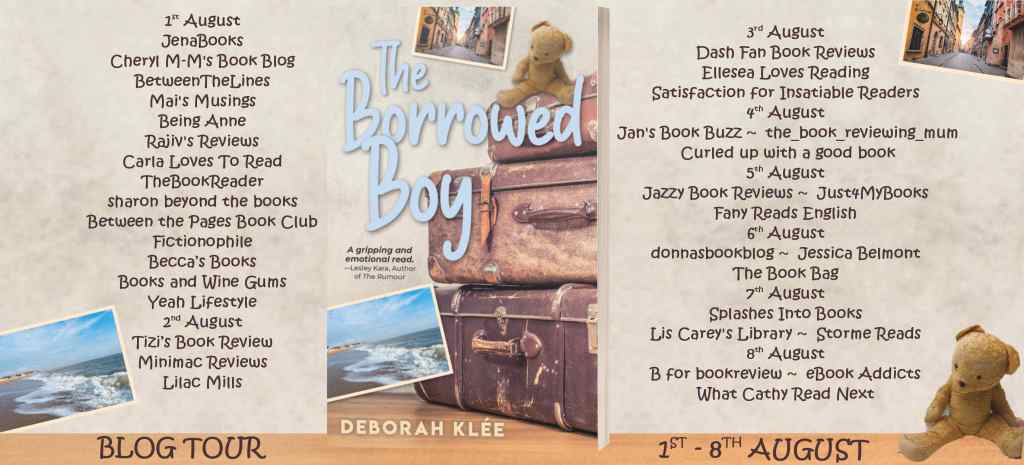
The blog tour

I sent The Borrowed Boy into the world with a fanfare. The amazing Rachel of Rachel’s Random Resourcesorganised a blog tour for me at a very modest cost. This resulted in 34 highly regarded book-bloggers hosting me on their site over the course of this week. A blog tour combines book reviews, guest blogs and interviews with the author. A huge thank you to all of the book bloggers who took part and to Rachel for an excellent and professionally managed tour – I cannot recommend her services highly enough.

You can read about the blog tour here:

https://abrakdeborah.wordpress.com/the-borrowed-boy-blog-tour/