Life-changing decisions

Have you ever made an impulsive decision that has changed your life? I have made a few ropey decisions, mostly when I was much younger. Maybe we take fewer risks as we grow older, keeping within our comfort zone.

 Perhaps the most questionable decision was when I packed a rucksack and, on an impulse, flew from London to Tucson Arizona to surprise an American penfriend, who I had met on a previous visit. It seemed romantic at the time. I was twenty-one had just finished training as an occupational therapist and found myself with free time. So, I took a Freddie Laker flight to Arizona and an internal flight to Tuscon, buying my tickets the same or previous day. I’m not sure I even told my parents until the day I set off from my Hampstead bedsit, feeling like a brave, free-spirited adventurer. It wasn’t until I arrived in Tucson in the early hours of the morning that I realised I only had a post box address for my friend who lived in Bisbee 95 miles away.

We all make impulsive decisions at some point in our life, maybe several times. We are acting on a gut instinct that it is the right thing to do, despite it seeming to be irrational. Angie Winkle in The Borrowed Boy does just that. Her head tells her that she must return Danny to the young woman who lost him on the Tube and she tries to reunite them, but her instincts tell her that Danny needs her. He has welts on his back, and talks of being a naughty boy; he clings to Angie when they see the woman, he was parted from waiting at the statue. The woman is smiling as she chats on her phone. Angie’s train is about to depart and she has to decide in haste. So, she acts on instinct, listening to her gut, and takes Danny with her on a journey that changes both of their lives. 

The decisions that we make, shape our lives. There is a quote by Ayn Rand:

‘Everyman builds his world in his own image. 

He has the power to choose,

But no power to escape the necessity of choice.’

For forty years Angie had been afraid of making wrong decisions, and so she let life pass her by, watching from the side-lines. She found that not making decisions comes with consequences too. It wasn’t until Angie realised that life was short that she decided to make the most of every minute of every day. She had let life pass her by and now she vowed not to waste another moment. 
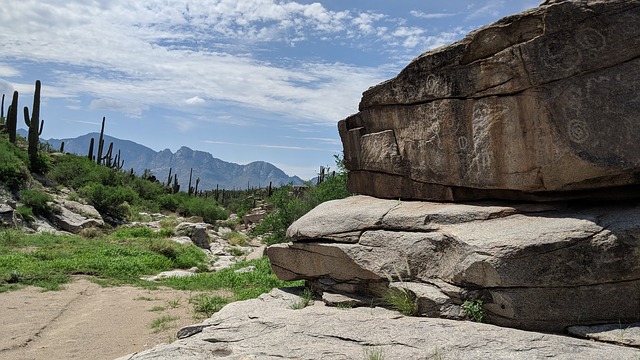
I would like to say that my spontaneous but risky decision making was a one-off but there were a few hairy moments in my younger years. Thank goodness my own daughter is much more sensible than me. The Arizona escapade had a happy ending because as unlikely as it may seem a young black guy who was waiting in the line behind me, heard me speak to the cab driver. He stepped forward and said that he knew where my friend lived. We shared a cab to Bisbee and true to his word he directed us to my friend’s house. I think he was one of many angels who have come to my rescue at different times in my life. The summer I spent in Bisbee was memorable and I would not change that experience. It led to other events in my life for which I am grateful.

Every day we make a multitude of decisions, some as simple as whether or not to eat a second biscuit, others are deceptively more critical. Sometimes we have time to weigh up the pros and cons and gather information to make an informed decision. At other times we have to act on instinct and hope for the best.

Angie’s decision to take Danny with her shapes her life. Whether it was the right decision or not, I will leave you to decide. One final quote from a meme – author unknown.

            ‘Sometimes you make choices in life and sometimes choices make you.’
Why community is important

Everybody needs to feel valued and respected for what they bring to the world. When a person retires or becomes redundant they may experience a feeling of being surplus to requirements. We all need to be needed and when we think that we have no useful purpose it can lead to depression. The truth is, we all need each other and every single person has something of value to contribute to their community. 

My novels The Borrowed Boy and Just Bea are about community life and how friendship and connection help the protagonists to overcome feelings of loneliness and isolation. Stories about the power of friendship and community have become popular in recent years with novels such as Saving MissyMr. Doubler Begins Again, and The Authenticity Project

I think this is because we idealise a community life of bygone days. Out of town superstores, on-line shopping and services, and an economy where everything is paid for – even the giving of care, means that personal, local transactions have diminished. Neighbourhoods are transient as people move in and out of the area. In towns where people leave home to go to work each day, there may be very little interaction between neighbours. 

When you are experiencing a busy home and working life this may not concern you. But what happens when that changes? Divorce, retirement, bereavement, or a shift to working from home as a result of the pandemic may change your perspective. Suddenly, the connections you took for granted are no longer there and you may feel isolated. 

The pandemic has shaken up our world in so many ways. Life will never be the same again as we adapt to new ways of living. Not all of the changes will be negative. Already, people are moving out of big cities to the countryside and seaside villages, as they anticipate working from home several days a week. We have started to buy local produce and favour smaller stores, alongside shopping on-line. Maybe we will start to look to our local community and neighbourhood to find what we need to survive.

Readers of my blogs on personal development will know that I believe on a personal level we have everything that we need to achieve our goals. Well, I also believe that every neighbourhood and community have the resources they need to thrive. Each person in your neighbourhood has skills, experience, and knowledge that is of value to another person. Practical skills such as decorating, cake-making, and gardening. Knowledge such as local history, or how to start a business. Caregivers. Home-makers. People who are good at networking. Singers, crafters, DIYers. The list is endless. You may have watched TV programmes where communities are brought together to achieve a challenge such as improving a house or creating a community garden. There is a wonderful energy as neighbours work together, discovering one another’s skills, and forging new friendships. 

In my novel The Borrowed Boy, Angie Winkle lives a very isolated life until she visits Jaywick Sands and finds a place where she belongs. Her skills as a mechanic, a dressmaker, and a caregiver are valued by her neighbours. For the first time in her life Angie feels needed, and this transforms her.

Commercialisation, the internet, and globalisation have fragmented community life. Instead of trading skills with one another, we have looked outside of our community to purchase everything we want or need. Buying local is about more than supporting local businesses and protecting the environment, it provides an opportunity to discover the wealth of skills, experience, and knowledge within our community. In doing so, we give purpose and meaning to the lives of our neighbours. We make connections and friendships. People need people. We are a tribal species wired for connection. Meaningful engagement that values what each person has to give. 

I believe that everywhere has community when you look for it. All it takes is one step, maybe joining a club or association, introducing yourself to a neighbour, or volunteering to help out with a community project. If you don’t like mixing in groups then finding ways to serve others, for example, offering to shop for an elderly neighbour and then taking the time to get to know them because they too will have something to offer you or somebody else that you know. Build your community one person at a time. Connect others and watch as your community weaves itself together. Stronger, more resilient, and a happier place to live and work.

Remembering the 1970s

Reminiscence bump

Interestingly, our most vivid and frequently recollected memories tend to focus on two decades of our life around the age of twenty. For me, it is the period between 1975 and 1985 when I was aged fifteen to twenty-five. This phenomenon is known as the reminiscence bump. When I first heard of this on radio four, many years ago, I was fascinated. I didn’t realise there was a science to this. I just attributed it to more excitement in my life at that time. To some extent I was right.

Our brain imprints unusual experiences more than the mundane. In our late teens and early twenties, we experience many things for the first time. I was lucky enough to have a brother who was two years older than me and a musician. From the age of fifteen, I went to see bands, travelling in an old transit van with my brother and his friends. We lived in a suburb of London and I was lucky enough to see most of the big names in rock at that time, although I don’t think I really appreciated it. My brother, Trevor Steel, went on to become a success in The Escape Club in the 1980s, and most of the boys who I hung out with then became successful songwriters and musicians. It was a magical time, and I have learned since from school friends that they envied my access to these glamorous boys, who looked after me like a sister. 

When I was nineteen, I flew for the first time ever. My college friend asked me to travel with her on a Freddie Laker Skytrain to LA to visit her sister. It was only on the plane that she explained that her sister was actually being held in a jail in Vegas for picking up a hitchhiker who had forged credit cards. And so, my American adventures began. When my friends were released from jail we had to buy a car as their vehicle was impounded and we spent the summer driving along the coast, sleeping on roadsides or the beach. My college friend and I returned to the states several times. On one occasion, my college friend, her sister, and I hitchhiked from Wyoming to Arizona. Thank goodness, my daughter was much more sensible than me.

I met my husband in 1981 in London and we married in 1984. Life has been exciting since then, but memories of my late teens and early twenties are like a film – full of vibrant images.

Memories help us to make sense of who we are

Photo by Gerd Altman Pixabay

Another explanation as to why we experience this reminiscence bump around the age of twenty is attributed to a narrative perspective. The theory being, that we organise memories of events to make sense of who we are. Our teens and early twenties are formative years when we are testing our beliefs and embedding our values. I find it fascinating that my 88-year-old father who has Alzheimer’s focuses on the two years in his life when he was in the army pay corps. He would have been around the age of nineteen. Although he can recall many happy memories of his married life, and raising a family of four, it is his time in the army that he enjoys talking about most. 

Photo by Suvan Chowdhury on Pexels.com

The 1970s

I wanted to talk about the reminiscence bump, and the 1970s, as this is the era that Angie Winkle, in my debut The Borrowed Boy, recalls. I loved writing about the fashion and music of that time as it took me back to when I was a teenager. 

The 1970s was a great time for music: David Bowie, Marc Bolan, Deep Purple, Led Zeppelin, Bob Dylan, Pink Floyd, Fleetwood Mac. The list is endless. I loved and still do – Al Stewart. His lyrics are poetic.

The 1970s might be of interest to you because you lived through them, or because it is a bygone era. If I have stirred memories or curiosity you might want to try one of these novels set in the 1970s.

  • Everything I never told you, Celeste Ng’s debut novel set in a small Ohio town in the 1970s.
  • Channelling Mark Twain, Carol Muske-Dukes. Set in the mid-1970s a blonde poet, Holly teaches a poetry class in the women’s prison on Rikers Island.
  • Joyland, Stephen King, set in 1973 in a North Carolina amusement park
  • Paradise, Toni Morrison, a gripping novel about life in a small all-black Oklahoma town during the 1970s.

Kindertransport

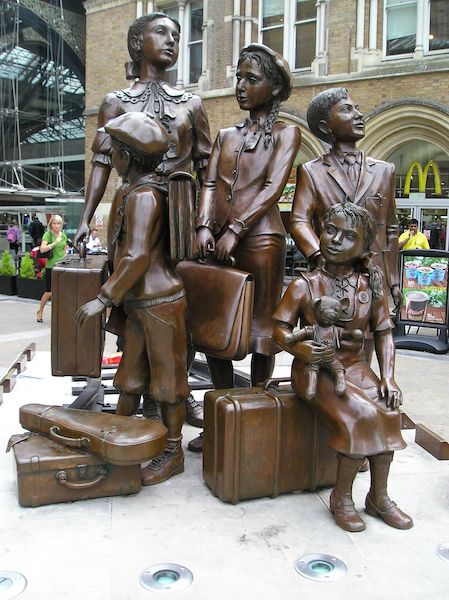
The Kinder transport statues inspired the cover design of The Borrowed Boy. If you have read this story, you will know that Angie arranged to meet Nikoleta at one of the two statues that are situated at Liverpool Street Station. 

For the children

The statue of two children is at the entrance to the Tube on the concourse of the station and is called For the children. For several years I passed by this statue on my way to and from work. Some days there would be discarded paper cups or takeaway containers littering the plinth, a person might be resting against it, or a small child hoisted up as though it were a seat. On one occasion a fresh posy of flowers had been placed in the girl’s arms. Unnoticed. Ignored. Recognised as a memorial to the plight of refugees. The people who passed by this statue had different responses. Much like our attitudes to the plight of refugees who seek asylum in our country. 

The personal stories of migrants and refugees fleeing the horror of war, making perilous journeys across the sea, or in containers moves me to tears. In researching this blog, I looked back at the news on migrants that might have influenced me at the time of writing The Borrowed Boy. I came across a news story, a photograph taken in June 2019 of a father and his infant daughter, washed up on the bank of the Rio Grande after a failed crossing to the USA from El Salvador. Their bodies lie prone, the twenty-three-month-old child held close to her father’s body within his T-shirt. I remembered my husband and daughter when she was tiny. How he took care of her every need, the way that he gazed at her and held her. I imagined this young father, trying to keep his baby safe and I cried. Not the silent tears triggered by an emotional read, great noisy sobs. It is a heartbreaking story, but sadly just one of many. 

In the years that led up to Britain’s referendum to leave Europe, there was a growing disquiet and resentment towards immigrants and refugees. I am not judging. Fear of the unknown and imagined consequences of change influence how people behave. However, there was a time in Britain’s history where we acted kindly and showed compassion. The Kinder transport statues at Liverpool Street Station commemorate the arrival of ten thousand children who feeling Nazi persecution arrived in Britain by train during 1938. They travelled to England without their parents and were sent to foster homes and hostels.

The Arrival

The second statue is called The Arrival and stands outside the Station in the aptly named Hope Square. The bronze statues are the work of Frank Meisler, who was himself one of these children. They were installed at Liverpool Street Station in 2006.

Beneath The Arrival is a plaque which reads:

Children of the Kindertransport.

In gratitude to the people of Britain for saving the lives of 10,000 unaccompanied mainly Jewish children who fled from Nazi persecution in 1938 and 1939. ‘Whoever rescues a single soul is credited as though they had saved the whole world.’ Talmud.

There is also a memorial plaque in Hope Square, which reads:

Hope Square

Dedicated to the children of the Kindergarten Transport who found hope and safety in Britain through the gateway of Liverpool Street station.

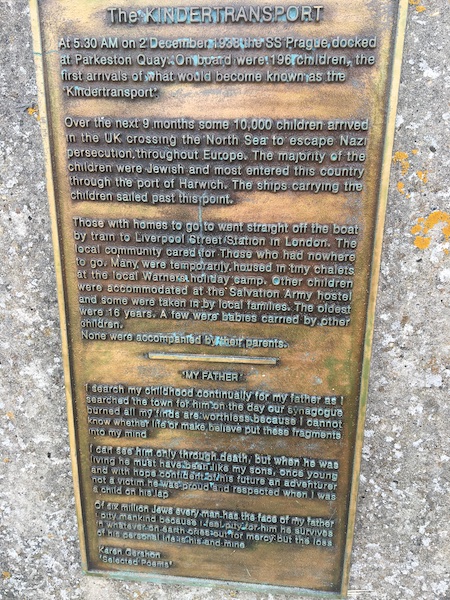
The children travelled by ferry from The Hook of Holland to Harwich, in Essex, England before boarding the train to Liverpool Street station in London. Harwich is on the same coastline as Clacton and Jaywick Sands, and close to where I live. I took a photograph of this plaque when walking by the sea in Harwich.

I cannot begin to imagine what life is like for families who have to leave a country that they love and risk their lives so that they can live without fear. The Bea Keeper of Aleppo, Christy Lefteri, The Kite Runner Khaled Hosseiniand Exit West, Mohsin Hamidare all excellent novels that convey this well. Stories have the power of engendering empathy, as we experience the inner world of the protagonist. See my blog on Empathy

The Borrowed Boy is a story about hope, friendship and the power of communities.

Follow my blog with Bloglovin

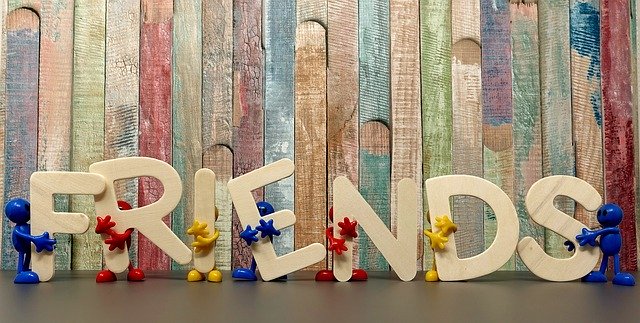
Friendships and community

Novels about community

A theme in The Borrowed Boy, my debut novel, is our need to belong. From the day we start school and find ourselves alone on the playground, to later life when we may find ourselves living alone in a house, no longer known to our neighbours. We all have an innate need to be seen, valued, and respected.

In recent years there have been a number of bestselling novels with the theme of community and friendships combatting loneliness: Mr. Doubler Begins Again, Seni Glaister, Eleanor Oliphant is Completely Fine, Gail Honeyman, The Authenticity Project, Clare Pooley and Saving Missy, Beth Morrey, to name just a few. Why is there an appetite for these heart-warming stories?

Our need to belong

I believe it is because we have all at some time experienced a need to belong, and can identify with the feelings of isolation and loneliness experienced by the protagonists in these stories. Life changes such as:

  • Moving into a new neighbourhood.
  • Retiring from work
  • Having a baby
  • Changing schools
  • Losing a loved one

Can all leave us feeling like that lost child on the playground, watching everyone else having fun as they run past in a game of tag, not seeming to see us. Yes, I was that child for a year or so – unable to join in because I had always played games with my little sister, who was too young for school, and I had not learnt how to make friends.

I wonder whether society is becoming more fragmented, as we lose the sense of community. People who go out to work, seem to be working longer hours. Out of town superstores have replaced a reliance on small local shops. Children and grandchildren often live overseas or on the other side of the country. Communities are transient, particularly in London, where few of the residents have lived in the same street for more than five years. There is a hankering after a by-gone age when people knew all of their neighbours and looked out for one another.

How the pandemic brought communities closer together

The pandemic will have cast a light on each of our neighbourhoods. In the UK we were encouraged to stand outside our home, every Thursday evening to clap in appreciation of our NHS. On those evenings I noticed a few of our neighbours for the first time. We started to talk to each other, checking that all is well. We also went back to buying locally, supporting local businesses, and frequenting the neighbourhood convenience store. As life changed, some of us were able to take a step back from our busy lives and rediscover the importance of family, and community.

Communities come together when there is a disaster, whether it is a flood, forest fires or as in this case a pandemic. We seem to have the instinct to come together and support one another. Academics have questioned whether this can be engineered and many attempts have been made by pioneers such as the ABCD (Asset-Based Community Development) movement which started in the USA in the 1960s in an attempt to rebuild troubled communities, and closer to home the Troubled Families Programme, which aimed to build a network of support around families struggling with multiple problems. These approaches have been successful, but they tend to create a dependence upon the paid staff. They hit the target but miss the point. 

Combatting loneliness and isolation

 A person who is lonely does not get the same satisfaction from a companion who has been paid to spend time with them, or a volunteer who is providing companionship under the banner of a charity. We all want real friendships where there is a reciprocal benefit. Having a common purpose brings together people from different backgrounds with different skills and life experiences. A bit like a team-building exercise, everyone does what they can and we are sometimes surprised to find out about peoples’ hidden talents. 

In 2013 Marc Mordey and I embarked on a project. We wanted to find out if we could bring people together in a neighbourhood and enable them to be self-sustaining through real friendships and shared interests. Our premise was: everyone has something of value to contribute, the gifts of experience, knowledge, or practical skills. Our aim was to bring together a neighbourhood and enable them to share what they had to make it a better place to live. 

We worked with neighbours in two London areas, Dagenham and Balham. We learned a lot. The pilot projects have been evaluated by SITRA (2014) and written up in several publications.

The community in The Borrowed Boy

But this isn’t an academic paper, I wanted to shine a light on the theme of community in The Borrowed Boy. There are two hidden communities in the story. Hidden, because sometimes we only see what we expect to see. I’ll let you read the book and come to your own conclusions.

Although Jaywick Sands is a real place on the Essex coast, the places and people in the story are entirely fictional. For fun, I have applied some of our learning on communities to this fictitious community.

Every neighbourhood has a unique character.

  • The residents of Jaywick were suspicious of anyone from outside their community. 
  • They were united in a common cause, to persuade the Council to provide better living conditions. 
  • Most of the residents were living in poverty but they shared what they had. 
  • Although it had seen better days, residents were proud of their seaside village with its sandy beaches.

There are key people and places within a community that hold it together.

  • Josie and The Seashell café provided a hub for this community. Josie knew all that was going on. She put people in contact with each other and knew when a person needed a bit of extra support. 

Clubs and associations provide a community’s network

  • When Josie needed to activate the community to see off an unwelcome visitor, she commandeered the assistance of: the dog walkers, Harley Hell Raisers (the local biking club), the kids who gathered in the square with their bicycles, the Queens Head publican and a few of their patrons.
  • A councillor tried to influence this community by inviting them to a social event at the Community Centre. The residents turned up for the fish and chips and booze, some enjoyed a dance, but without Josie on board, the Councillor was wasting his breath. 

How would you describe the unique characteristics of your own neighbourhood, or the fictitious one in your novel? 

Who are the people who know what is going on and make things happen?

Which clubs and associations did you miss most in lockdown? 

How do these serve to keep you connected and part of your local community?

I hope you will join me on some of the blog stops for the blog tour of The Borrowed Boy which starts on 1stAugust. See My books for the full programme. 

Holiday nostalgia

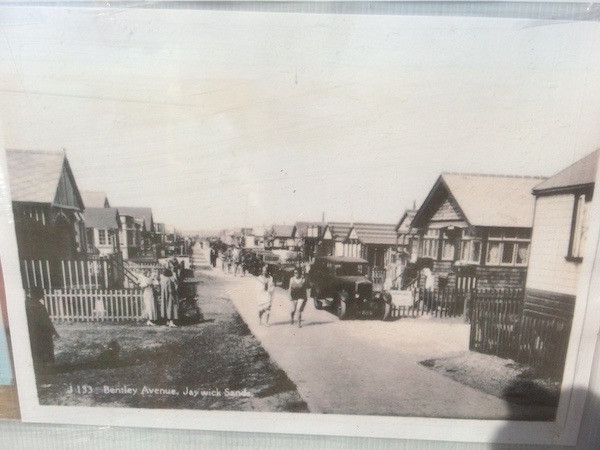
The Borrowed Boy is set in Jaywick Sands, a seaside village a few miles from where I live on the Essex coast (England). I was inspired to write this story after riding my bicycle along a cycle path from Clacton pier to Jaywick, a journey that my protagonist Angie Winkle makes on several occasions. The postcard bottom left of the book cover is of Jaywick Sands.

Jaywick has been much aligned by the media. In October 2018 in the USA a Republican advert for Nick Stella used images of Jaywick Sands with the headline, What could happen if you don’t vote for Trump.’ There was of course outrage in the British press at this defamation of Jaywick using old images that did not reflect improvements by the local council. But the British media have also presented Jaywick negatively. A couple of years ago it was the focus of a TV series, Benefits Britain, which portrayed a small proportion of the village’s residents. 

There is no doubt about it, Jaywick is run down. It has been named the most deprived neighbourhood in England on the UK Government index, three times since 2010. However, people who have been rehoused from Jaywick into what are considered to be more affluent villages have told me that they miss the community spirit of Jaywick. ‘People look out for each other there,’ I have been told on more than one occasion. 

A London cabby spent an entire journey reminiscing about holidays spent at Jaywick Sands when he was a ‘nipper’. The internet is full of shared recollections of Jaywick in its heydays – the donkey rides on the beach, the little chalets with the Elsan toilets. My elderly neighbour grew up in Jaywick and remembers taking mugs of tea from his house to day-trippers on the beach. I think that Jaywick Sands is a very special place. In my author’s note at the back of the book, I have said a little about its history, but I wanted to share it with you here too. 

The Plotlands development craze

In 1928 Jaywick was developed as part of the Plotlands craze which was popular in South East England. Cheap agricultural land was sold off to Londoners so that they could build a holiday home. There were no building regulations and councils were not required to provide sanitation, electricity, or drainage. 

Land in Jaywick was bought up by employees of Ford’s, as it was relatively close to the Dagenham based factory. Chalets were typically constructed from Ford’s packing cases and the streets were named after cars. 

During the second world war, London’s East-enders moved out of their bombed homes to live permanently in Jaywick. Whereas other plotland sites in England were developed into new towns, Jaywick residents refused to budge. 

Over the year’s residents petitioned the council for funding towards sanitation and electricity and this common purpose created a strong sense of community.

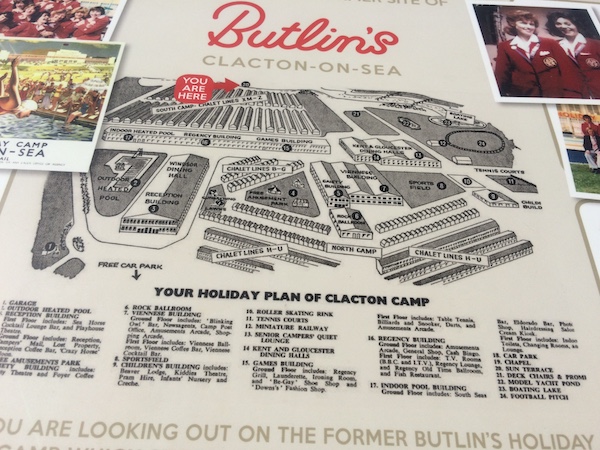
A copy of the campers map of Butlins and those famous redcoats who entertained us.

The closure of Butlins Holiday Camp in 1983 led to a further decline in the holiday village, although many Londoners today still treasure childhood memories of holidays spent on Jaywick’s sandy beach. 

Holiday experiences have changed so much since the 1960s. I never had a holiday abroad with my parents, I was one of four children and airfares were unaffordable. We went to holiday camps, like Butlins although the Pontins camp in Camber Sands was our favourite. 

The first time I went abroad was in 1979 when I went with a friend to Los Angeles on the Laker Sky Train. Freddie Laker brought down the cost of air travel and opened up many more opportunities for travel.  There was a time when cruises were a luxury that only an elite group could afford, but they have become much more accessible in the past few decades. Holiday experiences are about to change again, as the Pandemic of 2020 leaves its legacy on the travel industry. Maybe English seaside resorts will have a renaissance as the British rediscover holidays closer to home.

I hope that you enjoy visiting my fictitious version of Jaywick Sands in The Borrowed Boy and maybe discuss some of the themes in your reading group.