Vincent Ehindero Blogger Award

I am delighted to have been nominated by Ingrid of Experiments in Fiction for the Vincent Ehindero Blogger Award. My second award this year! I must start displaying them on a dedicated page because it is a reminder of the love and support of this wonderful community.

I discovered Ingrid’s blog Experiments in Fiction earlier this year and I am delighted that I did, as I feel I have come to know a little about this talented poet and generous soul. Experiments in Fiction is a fabulous blog as it is packed with interesting content. I have recently been enjoying Postcards from Slovenia, Ingrid’s home country. The photographs and descriptions have persuaded me that this is one of the first places I will visit when the world feels a safe place to travel again.

Experiments in Fiction aims to promote stories that say something new or old in a new way. Ingrid connects with other writers and generously promotes their work. For the past few weeks, her blog has been hosting a poetry challenge where poets are invited to send a poem in response to a theme. The poet with the winning entry then judges the next challenge. I have delighted in reading the entries. Ingrid herself is a talented poet and I am looking forward to reading a collection of her poems when she is published.

The Rules:

  1. Thank the person who nominated you with a link to their blog. 
  2. Make a post of the award (with a photo of the logo).
  3. Post the rules.
  4. Ask 5-10 questions of your choice.
  5. Nominate 10-30 other bloggers (or more) and notify them.

Ingrid’s questions with my answers:

  1. Who would you like to see as the next ruler of your country and why?

I am purposefully going to dodge talking politics and nominate the Cinderella from the Disney movie. When she becomes queen of her kingdom her manifesto is: with kindness, courage and a little bit of magic you can achieve anything. This should be the motto of creatives.

2. How have you survived lockdown?

Fortunately, my family and I have remained safe and well, and for that I am truly grateful. At the beginning of lockdown, when we were unable to find a publisher for my debut,I parted company with my ‘dream’ agent. Since then, I have published with an Indie press, started a blog, found social media, and joined the amazing community of creatives who support one another. I have also been learning French with daily practice, and enjoying yoga, meditation, and long walks with my husband. I have done more than survive – I have thrived. Like the wild flowers that bloom in the cracks of concrete in our back yard.

3. If you could meet any historical figure who would it be and why?

Mahatma Gandhi, because he was an incredible leader who led non-violent resistance and brought about change despite immense opposition. 

4. If you had a time machine but could only travel either backwards or forwards, which would you choose and why?

I would go forwards in time, because if I had a glimpse of our world in the future I might be able help us to prepare and mitigate disaster.

5. What is the meaning of life?

Thanks Ingrid! To find your purpose by doing what you love and following your dreams. To remember that we are all made of the same matter, we are connected to one another and all that is in this world and beyond. Cinderalla had it right – Be Kind. Be Courageous. I watched that film for the first time last night so I am a bit obsessed today.

6. What is your favourite comedy show or movie (has to be comedy).

In the early 90s there was a TV show called Smack the Pony. This series made me weep with laughter. The comedians were all women and the humour appealed to a female audience. I don’t watch a lot of television but my husband is always watching reruns of The Big Bang Theory, and that is entertaining .

Questions for my nominees:

  1. What brought you to blogging and why?
  2. What would you tell your younger self?
  3. What is your life purpose/mission?
  4. Describe yourself in three words
  5. What can we look forward to on your blog?

My nominees are:

I am going to cheat and only name six bloggers. This is because some I would nominate are unable to participate at this time, and because others have already been mentioned in this train. The first two, are bloggers I have come to love not only for their interesting and varied blogs, but also for their support and generosity to other bloggers.

Azilde Elizabeth https://azildeelizabeth.com

Winnie Tataw https://winsbooks.blog

The second two are new to blogging but respected experts in their fields. I recommend that you have a look at their blogs, Anita is an author and creative writing tutor and Sherry is an expert in health and social care.

Anita Belli http://anitabellibooks2020.wordpress.com

Sherry Malik https://sherrymalik.wordpress.com

The last two are bloggers who I have recently discovered. Lauren is a freelance journalist who is passionate about social justice. Her interests reflect my own and I love reading her posts. Matthew has a background in mental health and promotes the use of story telling to improve mental health and well-being. He is an expert in this field and has many speaking engagements.

Lauren Crosby Medlicott https://laurencrosbymedlicott.substack.com

Matthew Williams https://afamiliarstranger.co.uk

I hope you will enjoy discovering these blogs. Now, could I include my swimming certificate for a width of the pool on my trophies page?
Wanting something too much part one

‘I want this more than anything.’

‘If this doesn’t happen, I don’t know what I’ll do.’

‘If only I got that promotion/job everything would be different.’

‘I just need to find that special someone and I will be happy.’

The drama and passion of these heartfelt pleas are fuelled by the media. We watch films and read books where life is simple. The geeky girl/boy meets someone who loves them just the way that they are, they fall in love and live happily ever after. A woman loses her job, her world is falling apart, but then she writes a book, and all of her financial worries are resolved. Then, there are the talent shows where an awkward looking boy tells the camera that winning the competition would mean everything to him, and a few series later he is back as the star act, having achieved super-stardom. Real-life doesn’t make good telly and so stories of success, both imaginary and real, are dramatized and we buy into this. I have thought for some time that the romcoms we adore contribute to a dissatisfaction in relationships.

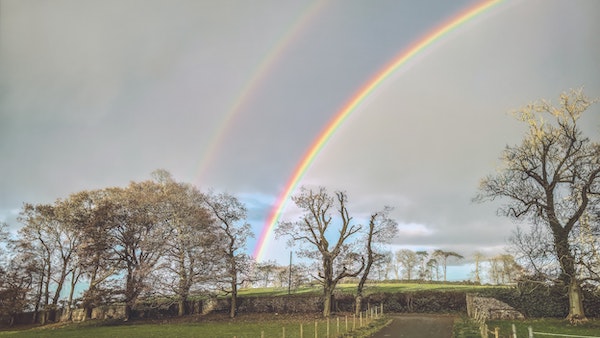
Our dream is a pot of gold at the end of a rainbow. We truly believe that one that one thing we wish for happens our life will be transformed. For many writers, it is getting an agent or a publishing deal. We hold that heartfelt wish so tight, we clench it within our soul, willing it to happen. To relax that hold for one second feels as though we are giving up and reducing our chances of success. Everything depends on that wish coming true.

My writing buddy achieved what seemed to the outside world like an overnight success. I know that she worked hard to develop her writing craft over many years and when success came it was well deserved and well earned. This friend won a novel competition and a couple of years later her internationally best-selling novel was advertised on posters at airports and railway stations. Of course, she was giddy with excitement as she was swept up in a whirlwind of success, but soon life settled back into a routine. ‘I am often asked how I feel about my success, and that it must have changed my life beyond recognition,’ she told me, ‘but it hasn’t. Not really. I was happy before and I’m happy now. Apart from being able to earn a living doing something I love, nothing much has changed.’

I have another friend who was over-joyed to be signed by her ‘dream’ literary agent certain that this was it – her passport to the glittery world of becoming a published author. Fourteen months later, she is still waiting for her agent to find a publisher and one heartfelt wish has been replaced with another.

The thing that we long to happen, or fear will happen doesn’t change our life. There is a blip of happiness or despair, but in the scheme of things, it is a minor disturbance. Think back to the day you got your dream job, got married, or on the downside received a rejection letter from an agent or following an interview. You may have been happy or disappointed for a few days, or weeks but then life happened and soon you had another goal or dream. I can no longer remember my rejection letters or the jobs I didn’t get. 

The constant is the life you are living now. Your family and friends, the pleasure that you get from everyday activities, your good health. By focusing on what is beyond our control, changing another person’s behaviour, making someone like you – hire you – sign you, we are neglecting to change the things that we can control. If life carries on as normal after the blip, then we need to invest in making it a good life by appreciating what we have now and making the most of each moment. 

<a href=”https://www.bloglovin.com/blog/20612947/?claim=x58rwyqm4zp”>Follow my blog with Bloglovin</a

Kindertransport

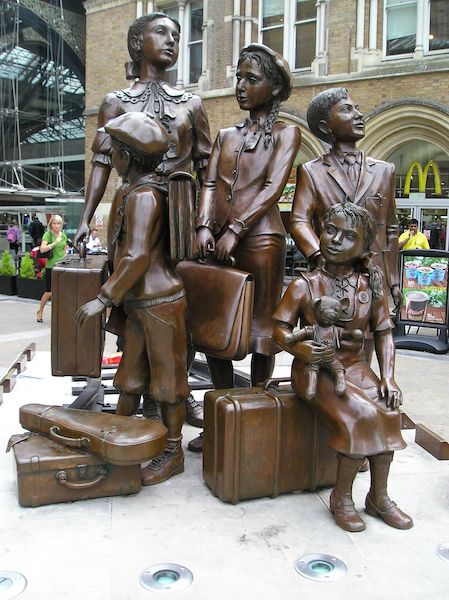
The Kinder transport statues inspired the cover design of The Borrowed Boy. If you have read this story, you will know that Angie arranged to meet Nikoleta at one of the two statues that are situated at Liverpool Street Station. 

For the children

The statue of two children is at the entrance to the Tube on the concourse of the station and is called For the children. For several years I passed by this statue on my way to and from work. Some days there would be discarded paper cups or takeaway containers littering the plinth, a person might be resting against it, or a small child hoisted up as though it were a seat. On one occasion a fresh posy of flowers had been placed in the girl’s arms. Unnoticed. Ignored. Recognised as a memorial to the plight of refugees. The people who passed by this statue had different responses. Much like our attitudes to the plight of refugees who seek asylum in our country. 

The personal stories of migrants and refugees fleeing the horror of war, making perilous journeys across the sea, or in containers moves me to tears. In researching this blog, I looked back at the news on migrants that might have influenced me at the time of writing The Borrowed Boy. I came across a news story, a photograph taken in June 2019 of a father and his infant daughter, washed up on the bank of the Rio Grande after a failed crossing to the USA from El Salvador. Their bodies lie prone, the twenty-three-month-old child held close to her father’s body within his T-shirt. I remembered my husband and daughter when she was tiny. How he took care of her every need, the way that he gazed at her and held her. I imagined this young father, trying to keep his baby safe and I cried. Not the silent tears triggered by an emotional read, great noisy sobs. It is a heartbreaking story, but sadly just one of many. 

In the years that led up to Britain’s referendum to leave Europe, there was a growing disquiet and resentment towards immigrants and refugees. I am not judging. Fear of the unknown and imagined consequences of change influence how people behave. However, there was a time in Britain’s history where we acted kindly and showed compassion. The Kinder transport statues at Liverpool Street Station commemorate the arrival of ten thousand children who feeling Nazi persecution arrived in Britain by train during 1938. They travelled to England without their parents and were sent to foster homes and hostels.

The Arrival

The second statue is called The Arrival and stands outside the Station in the aptly named Hope Square. The bronze statues are the work of Frank Meisler, who was himself one of these children. They were installed at Liverpool Street Station in 2006.

Beneath The Arrival is a plaque which reads:

Children of the Kindertransport.

In gratitude to the people of Britain for saving the lives of 10,000 unaccompanied mainly Jewish children who fled from Nazi persecution in 1938 and 1939. ‘Whoever rescues a single soul is credited as though they had saved the whole world.’ Talmud.

There is also a memorial plaque in Hope Square, which reads:

Hope Square

Dedicated to the children of the Kindergarten Transport who found hope and safety in Britain through the gateway of Liverpool Street station.

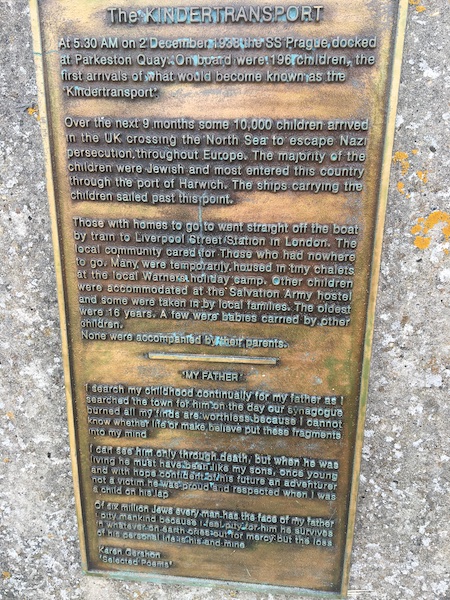
The children travelled by ferry from The Hook of Holland to Harwich, in Essex, England before boarding the train to Liverpool Street station in London. Harwich is on the same coastline as Clacton and Jaywick Sands, and close to where I live. I took a photograph of this plaque when walking by the sea in Harwich.

I cannot begin to imagine what life is like for families who have to leave a country that they love and risk their lives so that they can live without fear. The Bea Keeper of Aleppo, Christy Lefteri, The Kite Runner Khaled Hosseiniand Exit West, Mohsin Hamidare all excellent novels that convey this well. Stories have the power of engendering empathy, as we experience the inner world of the protagonist. See my blog on Empathy

The Borrowed Boy is a story about hope, friendship and the power of communities.

Follow my blog with Bloglovin

Fear of failure

In last week’s blog, I asked you, what is holding you back from investing in yourself as a writer? I touched on something that I believe is a big issue for all creatives – fear of failure.

Do you remember as a child being given a blank sheet of paper, and a pencil, with the invitation to draw something – anything? At some point, I went from a child freely expressing herself with wonderful scribbles, to the paralysing fear that what I tried to draw would look ridiculous and so I said, ‘I cannot draw,’ and I believed that for many years. 

In my forties I signed up for an adult education class called, Drawing for the Terrified. I discovered to my amazement that when I learned to relax and enjoy the process I could draw. We are all capable of achieving astonishing things if only we would open ourselves up to those possibilities. Fear of failure can prevent us from pursuing our goals, as we stop trying or unconsciously undermine our efforts.

Oh, the angst of writers! We are our own worst enemies. 

Unfinished manuscripts

I have a friend who would write a novel until it was 80-90% complete and then abandon it and start another. Her computer must have had at least ten incomplete novels. Eventually, she worked through her fear of failure and I am pleased to say that she is now completing and publishing one book after another – with great success. 

Looking for perfection

It is good to take pride in your work so that it shines, but to take this too far can be another indication of fear of failure. I am a bit of a perfectionist myself. I have to commit to a deadline or I would never let go of a book always believing that it could be better. Of course, it could always be better, but whilst we concentrate all of our efforts on that one project there are others that will never see the light. I know of one writer, who has now sadly passed away. She dedicated years and years to writing the one novel, it was never quite good enough. Sadly, that novel has not yet been published. Life is too short to wait for perfection.

Publishing a book without any promotion

This is a common one. The Indie author who works hard to write a book and self-publish then as soon as it is out there – runs for the hills! When it doesn’t sell they might lament the lack of marketing opportunities for Indie authors, or attribute the lack of sales to not being able to afford fancy promotion, etc. This is a good example of subconsciously undermining one’s efforts.

Sending just one or two query letters to agents before giving up

Fear of rejection is the worst, but we all know as writers that we have to develop a tough skin. I hated sending out query letters and waiting for a response. Every rejection feels personal – it reinforces our fear of failure. I think the writer’s wisdom is that you receive about one hundred rejections, whether they are from agents or publishers, before getting that treasured YES. So, start counting as every rejection is taking you closer towards your goal.

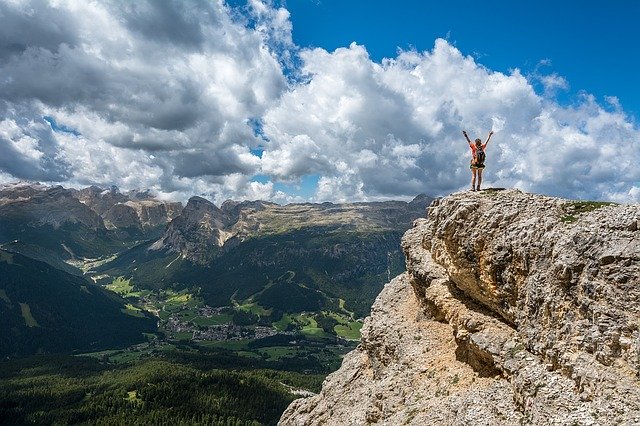
Curtesy of Steve Johnson Pixabay

Writer’s block

Sometimes you can feel like the child I described at the beginning of this post, sitting staring at a blank screen terrified to write in case it’s no good. There are ways to overcome this and stimulate the flow of creativity, perhaps a topic for a future post, but sadly some writers turn away from their passion saying ‘I can’t write.’ One writer recently shared with me her distress at not being ‘good enough’ or ‘writing like she was meant to.’ This writer was trying to fulfil other people’s expectations of what her writing should look like and that is a sure way to kill creativity. 

Overcoming the fear of rejection

Overcoming the fear of rejection takes courage and some inner work. Understanding where that fear comes from is a good place to start. Sometimes an early life experience can contribute to these feelings. I can pinpoint the first time I felt the impact of disappointing my parents. They wanted me to attend a certain secondary school. I attended an interview and was pleased with my performance. At eleven or twelve years old I wasn’t worried about the interview and neither was I too concerned about getting into that particular school – but pleasing my parents was of primary importance to me. I remember my mother’s face when she came into my bedroom one morning with the rejection letter. She was very disappointed and having been present at my interview went on to do a post mortem of my failure to impress. 

We are afraid of failing because:

  • We worry about what other people will think of us
  • We don’t want to disappoint the people we love and admire
  • It will prove we are just not good enough
  • It will end our dream of success

It doesn’t matter what other people think. Those people who love you just want you to be happy and always have your best interests at heart. My mother did that day when she read out my rejection letter. If fear of failure stops you from pursuing your dream then the only person that you are disappointing is yourself. Confident people know that they will not always succeed at everything that they try but it doesn’t stop them from having a go. 

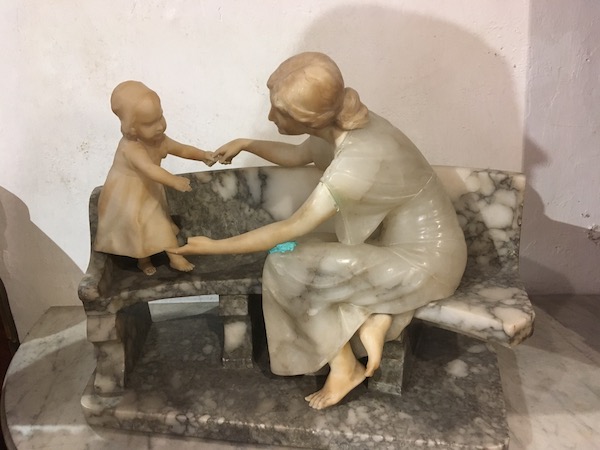
Curtesy of Pixabay

How to succeed

Recognise your fear of failure and understand the cause. When you have acknowledged it, accept the feeling for what it is, and move on. It may always be with you but it doesn’t need to control how you act. 

There are so many things that we cannot control as creatives: getting an agent, getting published, receiving good reviews. All we can do is give ourselves the best possible chance of success by learning from others who have achieved what we are working towards and modelling our behaviour on what has worked for them. Control the things that are within your power and let go of those that are not.

Have a vision of where you want to be but set small achievable goals. This could be as simple as sitting down to write for fifteen minutes a day. Congratulate yourself on achieving each small task as one by one these will lead you to your goal.

Do not attach yourself to one particular outcome, for example, signing with a literary agent and publishing your book traditionally. There are always many options, you just have to be creative. Sometimes we have to try several different things before finding the right path. 

When things do not go as you hoped see what you can learn from the experience and then try something else. You have not failed, just have just got a little closer to your goal.

Investing in yourself as a writer …because you are worth it

Publication day

Saturday 1st August 2020 was the official launch day for my debut The Borrowed Boy, although it has been available in paperback from Amazon since the 1st July – a fortuitous error on my part as I didn’t realise that Amazon do not support pre-orders of Indie print books. Fortuitous, because it resulted in several reviews being posted on Amazon and Goodreads ahead of publication day. 

Sending a book out into the world

Sending a book out into the world is a bit like sending your child to school for the first time, allowing them to fend for themselves. As a working mum I didn’t have this experience, it was my husband who took our daughter to school. The first time she went to nursery school for the afternoon, he was a nervous wreck. He sat in an empty pub boring the poor bartender with stories about his amazing child until it was time to collect her. It was the same her first day at school. My husband sat at home worrying about her day – how she would be received, and whether she would be happy – but our daughter just took it in her stride, a confident girl, who was ready to make her mark in a small way, at the beginning of life’s journey. 

When our books go out into the world we are like anxious parents waiting to see what impact they might have, whether they will receive good reviews and find readers who love them. First time parents – first time novelists – we have a lot to learn about letting go, but it can only get easier with practice. 

Investment of  time, resources, and patience

What is important is that we continue to invest time, resources, and patience in sharing our creativity with the world. You wouldn’t invest your time raising a child with gentle, loving care and then leave it to its own devices. Neither would you send your child into the world without first preparing it for this adventure. Indie authors, authors who choose to self-publish rather than following the traditional route to publication, sometimes fail to invest in the publication, launch, and marketing of their novel, despite the huge commitment and dedication they have put into its creation. This saddens me, as I hear the disappointment and heartbreak of authors who have written worthy novels but their dreams of success are thwarted through a lack of sales. 

Readers complete the loop of creation

The creation of art is a two-way process. The artist creates but the creation is completed by the responses of an audience. Art is a conversation that enables both writer and reader to gain a deeper understanding of themselves and their world. The wonderful Rachel Joyce visited our local book club at the independent bookshop, Caxton’s of Frinton-on-Sea. When she was asked about some of the themes in her new novel Miss Benson’s Beetle, Joyce said, ‘It is only when I get the responses of readers that I truly understand the themes in my books.’ It is as though readers hold a mirror up to our soul so that we can see more clearly what was in our heart. The need for an author to have a readership is about more than financial reward. 

What is stopping you from investing in yourself?

As artists we create, but all too often we send our work out into the world without investing in its success. The reasons a writer might give are:

  • I can’t afford- a professional website, a cover designer, an editor, advertising etc.
  • I don’t do social-media.
  • I’m a creative not a business person.
  • I don’t have the time to spend on marketing, it’s hard enough finding time to write.
  • I don’t like promoting myself, I’m too modest, too shy, an introvert.

I get it. I have felt, and continue to feel all of these things. But, I’ll go back to my analogy. You wouldn’t send a child off into the world without first doing a good job in preparing it and neither would you stop investing time, money and patience in it’s future. As creatives, I think we have to ask ourselves really honestly – what is stopping me from investing in my future as a writer? Maybe we use these excuses because of: 

  • A fear of failure
  • Not really believing in our talent – imposter syndrome
  • Not thinking ourselves worthy of a financial investment, because we are not ‘good enough.’

Honouring your inner artist

I am doing some internal work myself as I have a mental battle with the recognition that I need to invest more money in things such as my website and learning new skills, and an inner voice (a goblin) that tells me, I have already invested financially in publishing a book – what if I never make back that money? What if it is a foolish, vanity project? Am I good enough? Fortunately, I have a mentor who is there to remind me that sometimes things feel uncomfortable, but I have to take chances if I am to grow. I believe in myself and I believe that my creativity deserves the investment of my time, money and patience. As the advert says Because I am worth it. 

Are you honouring the artist within? Are you giving your creativity the best possible chance of success? What is truly holding you back? What sacrifices are you prepared to make – time, money spent on other things? What changes can you make today to increase your chances of success? Can you plan a way ahead to give yourself the future that you deserve?

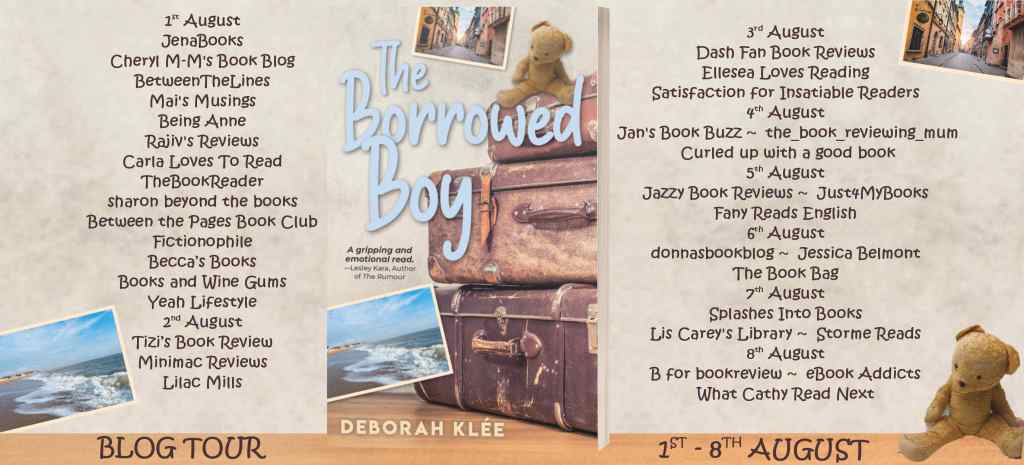
The blog tour

I sent The Borrowed Boy into the world with a fanfare. The amazing Rachel of Rachel’s Random Resourcesorganised a blog tour for me at a very modest cost. This resulted in 34 highly regarded book-bloggers hosting me on their site over the course of this week. A blog tour combines book reviews, guest blogs and interviews with the author. A huge thank you to all of the book bloggers who took part and to Rachel for an excellent and professionally managed tour – I cannot recommend her services highly enough.

You can read about the blog tour here:

https://abrakdeborah.wordpress.com/the-borrowed-boy-blog-tour/

Friendships and community

Novels about community

A theme in The Borrowed Boy, my debut novel, is our need to belong. From the day we start school and find ourselves alone on the playground, to later life when we may find ourselves living alone in a house, no longer known to our neighbours. We all have an innate need to be seen, valued, and respected.

In recent years there have been a number of bestselling novels with the theme of community and friendships combatting loneliness: Mr. Doubler Begins Again, Seni Glaister, Eleanor Oliphant is Completely Fine, Gail Honeyman, The Authenticity Project, Clare Pooley and Saving Missy, Beth Morrey, to name just a few. Why is there an appetite for these heart-warming stories?

Our need to belong

I believe it is because we have all at some time experienced a need to belong, and can identify with the feelings of isolation and loneliness experienced by the protagonists in these stories. Life changes such as:

  • Moving into a new neighbourhood.
  • Retiring from work
  • Having a baby
  • Changing schools
  • Losing a loved one

Can all leave us feeling like that lost child on the playground, watching everyone else having fun as they run past in a game of tag, not seeming to see us. Yes, I was that child for a year or so – unable to join in because I had always played games with my little sister, who was too young for school, and I had not learnt how to make friends.

I wonder whether society is becoming more fragmented, as we lose the sense of community. People who go out to work, seem to be working longer hours. Out of town superstores have replaced a reliance on small local shops. Children and grandchildren often live overseas or on the other side of the country. Communities are transient, particularly in London, where few of the residents have lived in the same street for more than five years. There is a hankering after a by-gone age when people knew all of their neighbours and looked out for one another.

How the pandemic brought communities closer together

The pandemic will have cast a light on each of our neighbourhoods. In the UK we were encouraged to stand outside our home, every Thursday evening to clap in appreciation of our NHS. On those evenings I noticed a few of our neighbours for the first time. We started to talk to each other, checking that all is well. We also went back to buying locally, supporting local businesses, and frequenting the neighbourhood convenience store. As life changed, some of us were able to take a step back from our busy lives and rediscover the importance of family, and community.

Communities come together when there is a disaster, whether it is a flood, forest fires or as in this case a pandemic. We seem to have the instinct to come together and support one another. Academics have questioned whether this can be engineered and many attempts have been made by pioneers such as the ABCD (Asset-Based Community Development) movement which started in the USA in the 1960s in an attempt to rebuild troubled communities, and closer to home the Troubled Families Programme, which aimed to build a network of support around families struggling with multiple problems. These approaches have been successful, but they tend to create a dependence upon the paid staff. They hit the target but miss the point. 

Combatting loneliness and isolation

 A person who is lonely does not get the same satisfaction from a companion who has been paid to spend time with them, or a volunteer who is providing companionship under the banner of a charity. We all want real friendships where there is a reciprocal benefit. Having a common purpose brings together people from different backgrounds with different skills and life experiences. A bit like a team-building exercise, everyone does what they can and we are sometimes surprised to find out about peoples’ hidden talents. 

In 2013 Marc Mordey and I embarked on a project. We wanted to find out if we could bring people together in a neighbourhood and enable them to be self-sustaining through real friendships and shared interests. Our premise was: everyone has something of value to contribute, the gifts of experience, knowledge, or practical skills. Our aim was to bring together a neighbourhood and enable them to share what they had to make it a better place to live. 

We worked with neighbours in two London areas, Dagenham and Balham. We learned a lot. The pilot projects have been evaluated by SITRA (2014) and written up in several publications.

The community in The Borrowed Boy

But this isn’t an academic paper, I wanted to shine a light on the theme of community in The Borrowed Boy. There are two hidden communities in the story. Hidden, because sometimes we only see what we expect to see. I’ll let you read the book and come to your own conclusions.

Although Jaywick Sands is a real place on the Essex coast, the places and people in the story are entirely fictional. For fun, I have applied some of our learning on communities to this fictitious community.

Every neighbourhood has a unique character.

  • The residents of Jaywick were suspicious of anyone from outside their community. 
  • They were united in a common cause, to persuade the Council to provide better living conditions. 
  • Most of the residents were living in poverty but they shared what they had. 
  • Although it had seen better days, residents were proud of their seaside village with its sandy beaches.

There are key people and places within a community that hold it together.

  • Josie and The Seashell café provided a hub for this community. Josie knew all that was going on. She put people in contact with each other and knew when a person needed a bit of extra support. 

Clubs and associations provide a community’s network

  • When Josie needed to activate the community to see off an unwelcome visitor, she commandeered the assistance of: the dog walkers, Harley Hell Raisers (the local biking club), the kids who gathered in the square with their bicycles, the Queens Head publican and a few of their patrons.
  • A councillor tried to influence this community by inviting them to a social event at the Community Centre. The residents turned up for the fish and chips and booze, some enjoyed a dance, but without Josie on board, the Councillor was wasting his breath. 

How would you describe the unique characteristics of your own neighbourhood, or the fictitious one in your novel? 

Who are the people who know what is going on and make things happen?

Which clubs and associations did you miss most in lockdown? 

How do these serve to keep you connected and part of your local community?

I hope you will join me on some of the blog stops for the blog tour of The Borrowed Boy which starts on 1stAugust. See My books for the full programme. 

Holiday nostalgia

The Borrowed Boy is set in Jaywick Sands, a seaside village a few miles from where I live on the Essex coast (England). I was inspired to write this story after riding my bicycle along a cycle path from Clacton pier to Jaywick, a journey that my protagonist Angie Winkle makes on several occasions. The postcard bottom left of the book cover is of Jaywick Sands.

Jaywick has been much aligned by the media. In October 2018 in the USA a Republican advert for Nick Stella used images of Jaywick Sands with the headline, What could happen if you don’t vote for Trump.’ There was of course outrage in the British press at this defamation of Jaywick using old images that did not reflect improvements by the local council. But the British media have also presented Jaywick negatively. A couple of years ago it was the focus of a TV series, Benefits Britain, which portrayed a small proportion of the village’s residents. 

There is no doubt about it, Jaywick is run down. It has been named the most deprived neighbourhood in England on the UK Government index, three times since 2010. However, people who have been rehoused from Jaywick into what are considered to be more affluent villages have told me that they miss the community spirit of Jaywick. ‘People look out for each other there,’ I have been told on more than one occasion. 

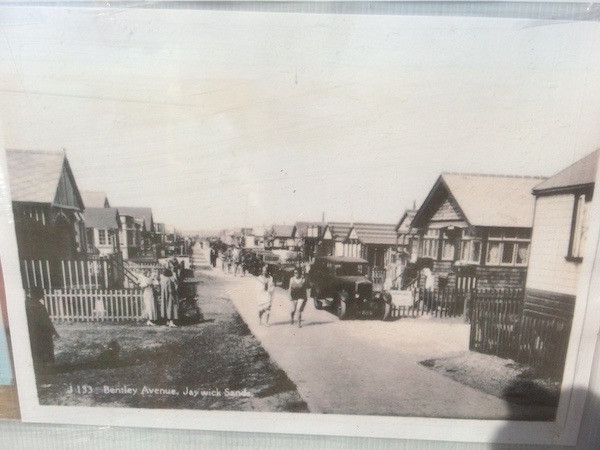
A London cabby spent an entire journey reminiscing about holidays spent at Jaywick Sands when he was a ‘nipper’. The internet is full of shared recollections of Jaywick in its heydays – the donkey rides on the beach, the little chalets with the Elsan toilets. My elderly neighbour grew up in Jaywick and remembers taking mugs of tea from his house to day-trippers on the beach. I think that Jaywick Sands is a very special place. In my author’s note at the back of the book, I have said a little about its history, but I wanted to share it with you here too. 

The Plotlands development craze

In 1928 Jaywick was developed as part of the Plotlands craze which was popular in South East England. Cheap agricultural land was sold off to Londoners so that they could build a holiday home. There were no building regulations and councils were not required to provide sanitation, electricity, or drainage. 

Land in Jaywick was bought up by employees of Ford’s, as it was relatively close to the Dagenham based factory. Chalets were typically constructed from Ford’s packing cases and the streets were named after cars. 

During the second world war, London’s East-enders moved out of their bombed homes to live permanently in Jaywick. Whereas other plotland sites in England were developed into new towns, Jaywick residents refused to budge. 

Over the year’s residents petitioned the council for funding towards sanitation and electricity and this common purpose created a strong sense of community.

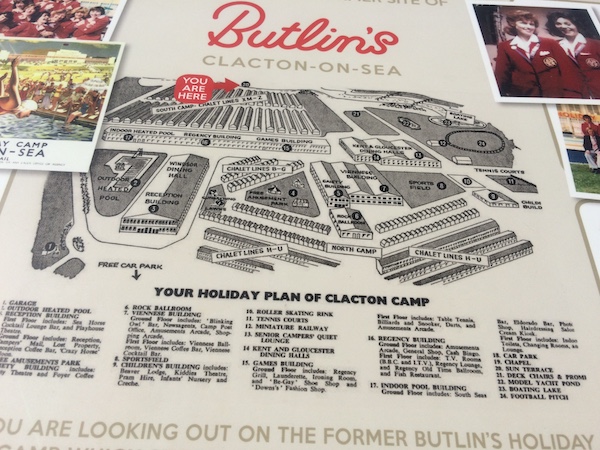
A copy of the campers map of Butlins and those famous redcoats who entertained us.

The closure of Butlins Holiday Camp in 1983 led to a further decline in the holiday village, although many Londoners today still treasure childhood memories of holidays spent on Jaywick’s sandy beach. 

Holiday experiences have changed so much since the 1960s. I never had a holiday abroad with my parents, I was one of four children and airfares were unaffordable. We went to holiday camps, like Butlins although the Pontins camp in Camber Sands was our favourite. 

The first time I went abroad was in 1979 when I went with a friend to Los Angeles on the Laker Sky Train. Freddie Laker brought down the cost of air travel and opened up many more opportunities for travel.  There was a time when cruises were a luxury that only an elite group could afford, but they have become much more accessible in the past few decades. Holiday experiences are about to change again, as the Pandemic of 2020 leaves its legacy on the travel industry. Maybe English seaside resorts will have a renaissance as the British rediscover holidays closer to home.

I hope that you enjoy visiting my fictitious version of Jaywick Sands in The Borrowed Boy and maybe discuss some of the themes in your reading group. 

You are not what you think

Cognitive dissonance

When I was a young occupational therapy student studying psychology, I was delighted by the word cognitive dissonance and it’s meaning. In simple terms, it’s when you are not sure that you are doing the right thing and so you balance reasoning in favour of the action you have taken. Like convincing yourself that the dress you bought was a good buy because although it doesn’t fit right now, it will when you lose that additional weight, and it was half price in the sale. It’s human nature that we always want to be right. In our quest to be right, our brains work overtime coming up with all the reasons that we are doing the right thing, even when our gut says we aren’t. 

Head or heart

In my blog Meditation challenge part two,  I was working with a leading literary agent to get my novel ready for submission to publishers. There are other times in my life where I have been led by my thoughts and not my heart, but I am going to use this example as I have learned something from the experience, that I would like to share.

I can put my finger on the date when I should have paused and taken stock. It was my birthday and I was out having lunch with a girlfriend when the email I had been waiting for showed up on my phone. Two weeks prior to this, I had submitted my edited manuscript to my agent. I was excited, as I believed I had responded to all of the points raised, and I was really pleased with what I had accomplished. This email was going to be BIG. She would love it! What if she didn’t? My hands trembled as I opened the message. It was a holding email; my agent was busy and would get back to me in a month. In fact, it was four months before I got a response. 

Thoughts are just thoughts

Our thoughts can drive us crazy, as we use them to try and make sense of our world – confirming our worst fears or imagining the reality we want to believe. Thoughts are not the reality, they are just thoughts. My thoughts at that time were: this is my only opportunity. Everything hangs on this agent’s response. When I didn’t hear back, I assumed the worst. I judged myself and started to lose confidence in my writing ability. My thoughts imprisoned me in a false reality.

Psychology tells us that our thoughts are not always rational. I got stuck in a loop where my thoughts resulted in a fear of failure. My emotional response to  perceived reality triggered further irrational thoughts. If only I could have broken that cycle by realising that they were just my thoughts. 

We always have choices

A good friend suggested to me that by not meeting with me or getting me to sign a contract, my agent was avoiding any attachment so that she could more easily drop me if we didn’t get a publishing contract. I didn’t disagree, all that my friend said was true. I was acting with my eyes open. However, this is where cognitive dissonance came in as I convinced myself that I didn’t have a choice. I reasoned that it didn’t matter because my agent was going to bring my manuscript to the attention of top publishers. She had an amazing reputation and I was lucky to have her representing me. I had nothing to lose. Besides, what if nobody else wants to represent me? a little voice in my head whispered. I didn’t think I had much choice. 

Feeling stuck

So often, we get stuck in a situation that is not serving us well, but we convince ourselves that there is no other way.

When we feel stuck it is often because we are believing something that is not true. There is always another way. Sometimes it feels as though there isn’t, but we just have to use our imagination – and that should be easy to us. We are creative people. 

Instead of trying to justify our actions or inaction by building a wall of perceived truth, we need to listen to our hearts. My heart was telling me that I wasn’t happy. If I had honoured myself with kindness, and acknowledged that although they felt real, my thoughts were just thoughts not reality, I might have broken free sooner. 

Sometimes we knock ourselves out by repeatedly hitting against a wall when all we have to do is walk around it. There is always another way.

Going forward

Looking back, I can understand now that my agent’s success at that time led to changes in her working life that she had not anticipated. When we parted company, she explained that her world had changed significantly since we started working together. I realise now that her lack of communication was no reflection on my writing ability, and wasn’t personal. I had responsibility for myself. There were other options. The editor who was working with me at that time also worked freelance. Since becoming an Indie author, this editor has worked with me on my next novel, and I hope that we will continue to work together.

It was fourteen months after receiving a holding email that signalled a change in my working relationship with my agent that I suggested it might be better for us to part company. I have had no regrets since, but I could have saved myself the misery and self-doubt of my negative thoughts.

Of course, I can still list all of the positives that justify why I stayed with that agent for a year longer than I perhaps should have done. Cognitive dissonance is a powerful thing. But, I have learned from this experience.

Lessons learned:

  • When something doesn’t feel right, listen to your heart (gut/intuition)
  • List the thoughts that are limiting you and then let them go.
  • When negative thoughts stick, be kind to yourself and allow time to shift your thinking.
  • Honour yourself with courage and respect, you are responsible for your destiny – nobody else has this power. 
  • When we still our thoughts and listen to our heart, a greater power reveals itself. 

The Sunshine Bloggers Award

I am delighted to have been nominated by the talented Ingrid at  Experiments in Fiction for the Sunshine Blogger Award! Ingrid uses her blog to bring stories that are experimental in nature to the reader’s attention, so that they challenge the reader and raise questions. Ingrid writes beautiful moving poetry, and is also an accomplished writer. Refreshingly original, her blog is a joy to read Ingrid also has a talented son – check out 7 year old Benji’s post.

The Rules

  • Thank the person who nominated you and provide a link back to their blog so others can find them.
  • Answer the 11 questions asked by the blogger who nominated you.
  • Nominate 11 other bloggers and ask them 11 new questions.
  • Notify the nominees about it by commenting on one of their blog posts.
  • List the rules and display a Sunshine Blogger Award logo on your post and/or your blog site.

Questions for me:

1.When did you start writing?

I have always written: home-made books when I was a child, journals throughout my adult life and then as a freelance journalist in health and social care. Writing fiction was at first a hobby – short stories that I shared with family and friends. However, I started writing novels eight years ago, when a short story kept on growing until it became my first novel

2. What are your writing goals?

The Borrowed Boy will be published on 1st August. My plan is to publish Just Bea on 1st February 2021 and Misdirectionin August 2021. I have already written these novels and received editorial assessments and so I am confident that this is achievable. Then, I am looking forward to writing my next story which is in my head and getting impatient to be told – so lots of writing ahead. 

3. What do you prefer to read, factual or fictional writing?

I prefer fiction but enjoy reading autobiographies too. I am currently fascinated by Penelope Fitzgerald’s life story and have requested a book of her letters from the library.

4. Do you prefer poetry or prose?

That is hard as good prose within a novel is poetic. I read more fiction than poetry and so it has to be prose. However, I love Lemn Sissay’s poems. Every time I listen to him reading, Invisible Kisses my heart bursts with love.

5. Do you prefer short fiction or novels?

Definitely novels. I find it hard to concentrate when reading a short story and cannot read magazines for the same reason. My mind will not still and keeps thinking ahead to the next task. When I open a novel, I relax, knowing that I can read for as long as I choose. 

6. What is your dream holiday destination?

I am lucky enough to have had many wonderful holidays and have travelled to every continent. However, Italy is one of my favourite destinations: Venice, Tuscany or Sorrento.

7. How would you spend your last day on earth, if you could choose to do absolutely anything?

I would return to the Parrucchiano restaurant in Sorento and dine at a long table beneath the lemon trees, surrounded by family and friends. We would spend the afternoon enjoying good food and wine, laughing and sharing happy memories.

8. What is your favourite song?

Al Stewart’s Year of the Cat. Al Stewart’s early albums are the soundtrack to my teenage years, Orange and Bedsitter Images. He is a poet. Although this song is not one of his best, it has a special place in my heart. When we first met, my husband made me a book. On each page he wrote a line of that song and used collage, photographs and his own art work to capture the early days of our relationship. It was a love letter like no other.

9. Do you use social media to promote your writing and if so, which platforms?

When I thought about how I would market my books I decided to blog. I had no idea that writing the blog would be so enjoyable. It also means that I can connect with like-minded people on Twitter and Instagram by sharing blog posts rather than trying to sell my books. It has brought me into contact with some wonderful people across the globe. 

10. Have you ever written a book, or do you plan to (please provide details)?

I have written four books but I am about to publish my debut, The Borrowed Boy. 

11. Large hotel or small guest house: which do you prefer and why?

A large hotel. I have had some unfortunate experiences whilst staying at guest houses, as they can be a bit unpredictable. I like to be assured of the quality and service provided so that I can relax and enjoy exploring the area. 

My Nominees

1. Elizabeth Bennet’s Plague Diaries

2. Lu Reviews Books

3. Lizzie Chantry

4. And Then What 

5. The Marcist Agenda 

6. Helen Carey Books

7. Behind her Books

8. EdMyJourneyOCD

9. Being Anne

10. Wins Books

11. Rachel Brooker

Questions for nominated bloggers:

1. What attracted you to start a blog and how has it developed?

2. If you were restricted to eat the favourite cuisine of one nation (forever), what would it be: Indian, Chinese, Mexican, Italian, other?

3. What superpower would you like to have and why?

4. Name 2-4 books that have had a memorable impact on you at any stage in your life.

5. What is your greatest achievement?

6. What is the most daring thing you have done?

8. What would be at the top of your bucket list?

9. Which songs/artistes provided a soundtrack to your teenage years?

10. If you could time travel to another time past or future when would it be and why?

11. What advice would you give to new bloggers? 

Abundance – or how to get more followers

To receive without asking

It has become a joke between my daughter and me that, Sherman, my husband, always gets preferential treatment at holiday buffets. For example, several years ago, Sherman and I were on a cruise of the Nile. I was standing in a long line of people waiting for the chef to prepare an omelette. Sherman is not even in the queue, he is helping himself to a bread roll close by the omelette station. The chef calls him over and, with a grin and a wink, slides a fluffy omelette onto his plate. Why? Why does Sherman get his needs met without having to ask? I know it doesn’t seem fair.

We have been married for thirty-five years and I have learnt that shop assistants, strangers in cafés, and people we occasionally pass on the street, all want to talk to Sherman. Faces light up when he approaches. We visited a pub on one occasion whilst on holiday in Whitby, Yorkshire. Seven years later we returned to the same pub and the publican greeted Sherman recalling his last visit. I know that Sherman would have bought him a pint when they first met and would probably have made him laugh. But beneath his banter is a man who genuinely cares. He notices people and makes them feel special and included. He doesn’t do it for any kind of return. He loves people and has a generous nature.

My daughter told me that she tried the ‘Sherman technique’ whilst on holiday hoping that she would get preferential treatment at the buffet, and was disappointed to find that it didn’t work. And there is the trick – the lesson to be learned.

If you do something hoping to be rewarded in kind, you will be disappointed. Life doesn’t work like that. When I first started this blog, I checked the statistics a few times each week driving myself crazy with negative thoughts. Why would anyone follow my blog when there were more experienced people out there writing much more interesting stuff than me? Was I wasting my time? 

Checking stats

Then I had a revelation, and I have Lauryn Trimmer prostorybuilders.wordpress.com to thank for that. In a blog, Lauryn said quite simply, Don’t look at the view count on stats. Just don’t do it. That was all it needed. I went for a run and thought, why am I worrying about the stats? I am doing something that I love. The blog, sharing thoughts and ideas with like-minded people on social media, reading and reviewing other authors’ work, being part of a readers’ and writers’ community – I love these experiences and opportunities. By the end of that run, my mind set had changed. Now, I commit to all of these things for the joy that they bring – not for any expected return.

The law of abundance

Meditation teaches us that gratitude, love, and joy bring abundance into our lives. That people are attracted to positive energy. Abundance does not work like a weighing scale with each good deed or good thought rewarded in kind. By being happy with where you are and who you are, you radiate positivity. 

If you have been following my blogs, you will know that I started this journey as an Indie author/creative entrepreneur with mixed feelings: excited by the possibilities, but daunted by the challenge that lay ahead. It is still early days, but as I relax and enjoy connecting with other creatives without expectation, just a willingness to support others on a similar journey, people and opportunities have come into my life that I could not have anticipated. 

Networking

Social media can be a valuable tool for networking and may lead to more meaningful connections with others. It can also be soul destroying if you value your worth by how many followers or ‘likes’ that you have. Take pleasure in the process. Be kind. Be authentic. Don’t expect any return– but don’t be surprised when you are called to the front of the line to receive an omelette before having to ask.

I am ending this week’s blog with a favourite poem of mine. Many years ago, this was pinned above my desk as the words really resonate with me. It is by Robert Muller, former Assistant Secretary-General of the United Nations.

Decide to Network

Decide to network
Use every letter you write
Every conversation you have
Every meeting you attend
To express your fundamental beliefs and dreams
Affirm to others the vision of the world you want
Network through thought
Network through action
Network through love
Network through the spirit
You are the center of the world
You are a free, immensely powerful source
of life and goodness
Affirm it
Spread it
Radiate it
Think day and night about it
And you will see a miracle happen:
the greatness of your own life.
In a world of big powers, media, and monopolies
But of six billion individuals
Networking is the new freedom
the new democracy
a new form of happiness.

Robert Muller

Welcoming Change

Beginnings are scary.

I am writing this blog on the first day of the summer solstice, here in the Northern hemisphere. It seems fitting, as today I am writing about change. 

Steven Rogers said, ‘Beginnings are usually scary, endings are usually sad, but it’s what’s in the middle that counts.’ I am embarking on a change in my career and it is scary. I have been here before, when I moved from the clear career path as an executive manager in the NHS to a very different role working for the Audit Commission, a national regulator of local authority and health care services. Then, as now, I moved from the safety of a role where I was respected and knew what I was doing, to one where I felt like the new girl – clueless and deskilled.

In recent years, I have been letting my profile as a consultant in health and social care decline, so that I can commit more time to writing. Just thinking about this change gives me palpitations. It’s a mixture of fear and excitement. I worked hard to establish my management consultancy and it has been successful, but since my mother died a few years ago, I have been pursuing my passion for writing. Maybe her passing made me realise that I had to make the most of every day.

Finding the courage to take a new direction

It is easy to stay in a place where we feel comfortable, instead of taking a risk to follow our dreams. I am not suggesting writers should give up paid work to write full-time when they have no guaranteed income. I am in a fortunate position of being semi-retired and so I can afford to bring in less money and focus more on writing. But, when I was a hospital manager and stepped off the career ladder to take a route that was unfamiliar I had to be brave. It was the right decision for me and led to greater things than I could ever have imagined, but it took a leap of faith. 

Your heart tells you when it is time to make changes in your life, although it may take some time before you get the courage to listen to that inner voice and act. Letting go is the hardest part of that journey. If you are at the top of a mountain, feeling successful and valued, albeit unchallenged, stepping into the unknown is scary. If you have established a home routine that works and is comfortable, but no longer meets your needs, then disruption is scary.

The space between ending and beginning

Then, as now, emails relating to my day job went from a torrent of daily communications to a trickle and then nothing. Did that mean I was no longer important? I wasn’t needed? In the NHS Trust, there had been a reorganisation, and I had talked myself out of a job as I searched for a role that would enable me to improve services. All was quiet and I was afraid that I had wrecked my career.

 In that quiet time, I meditated and reflected. A mentor suggested the role I was in no longer fitted me. She suggested I spend time working out ‘my shape’ and then find a job to fit – keeping an open mind. If it hadn’t been for that space between the ending and beginning I would never have found my path. 

I am back in that place again today. I have intentionally let my consultancy business decline, turning down work, and moving my focus from networking with health and social care colleagues to networking with the writing community. I am in the space between, feeling my way, uncertain what the future may hold. Everything is unfamiliar and I am pushing myself every day to learn new skills: setting up this blog, using social media to network, publishing my debut. I am no longer the expert, the person to go to, a person well connected within a community. Maybe one day I will be, but now I am at the bottom of a mountain, with a steep climb ahead.

Fulfilling our potential

Everything has a season. A beginning, a middle and an end. Like our breath. It is the pause between breaths, the space between thoughts where the divine happens. We have to be still, to hear what is in our heart, and be open to new possibilities. We don’t know what the future will look like, we just have to have enough faith to let go of the old. Then wait. Beneath the ground nature takes its course and seeds germinate. Looking at bare soil is very, very scary. 

If we cling to what we know and never have the courage to learn something new, then we fail to fulfil our potential. Isn’t that what we are all here to do? To be the best version of ourselves that we can? This weekend it is International yoga day and the summer solstice here in the UK. As we go into the first day of summer, I hope that your harvest is plentiful and your dreams fulfilled. Namaste. 

Balancing Time

Balancing commitments

‘I would find it hard shutting the door on my husband and children, saying I needed time to write,’ a woman once said to me, when I was giving a library reading. She longed to be a writer but didn’t honour herself by protecting her writing time.

This is so often a problem for woman, and I suspect men, as many are homemakers and care givers. When we take time for ourselves, we may feel guilty and sometimes use this as an excuse not to follow our dreams. 

When our daughter was born thirty years ago, my husband gave up work to be a full-time dad. He never went back to work, through choice, and I have been the sole wage earner for our little family. It worked for us and I have no regrets. However, when I was working I felt I should be with my daughter and when I was playing with her, I felt guilty for not catching up with work. I was always weighing up my time, believing that I had failed at both.

Mindfulness

Then, a wise woman told me to give myself 100% to whatever I was doing at that time. It was a challenge and I didn’t always succeed, but I have carried that mantra with me. When I am writing I close my door and switch off from the outside world. That’s the easy part, as I can lose myself for hours and often have to set a timer so that I don’t miss a yoga class or forget to prepare dinner. 

It goes both ways. When I’m with my husband I try to be 100% present. If I’m with him in person but my mind is working on my next chapter or mulling over my protagonist’s motivations then I’m not truly with him. Of course, that doesn’t mean he always reciprocates. For example, when I’ve just finished telling him about our plans for that weekend, he may respond with, ‘what are we doing this weekend?’ And I know that he was thinking about guitar chords or mentally playing his piano. 

It’s not easy to always be 100% present but you do get more out of each activity. You know yourself that when a person is truly listening to you, and not thinking about something else, then you feel valued and the quality of your relationship is strengthened. And as writers and artists, we absorb more from our experience of the world to later draw upon when we return to our craft. 

Finding time

Not everyone has the luxury of dedicating two hours or more to an uninterrupted writing stint. This need not be a barrier. I’m sure you’ve heard the analogy of pouring sand into a jar full of pebbles. The pebbles are the must dos that get in the way of writing. But, if you pour a fine sand into the jar it fills the space between the pebbles. Sometimes, a little and often is all we can manage, the fine sand finding a space between our other commitments.

When I was torn every which way caring for a parent with dementia, working, and managing household stuff, I found twenty minutes here and there throughout my day. I scribbled notes of the next scene I was going to write. My mind must have been working without me being aware, because whenever I sat down to write the words came. When time is precious, you perhaps write more freely. Just write without worrying about grammar and spelling. By the end of the day you might well have five hundred to a thousand words from several short writing bursts.

Honour yourself and that heartfelt wish

I always divide and weigh my time, trying to get the most from each day. Maybe all working mothers get into that habit. But, I have learnt to focus one thing at a time and no longer feel guilty or torn by competing demands. 

If there is something that you want to do, a heart-felt dream, then find the time. It may mean giving up something else, but if you don’t honour yourself and carve out a little sacred time, then one day you will regret what might have been. I don’t know whether the lady in the library started to write or not. I hope that she did. Seeds are sown in our heart, but they can only grow and blossom if we feed them, nurturing them with patience and our time. 

Roz White – author interview

Today I am interviewing Roz White, author of The Sisterhood series and Lady Ghast, A Steam Punk Phantasy. I enjoyed the first book in the Sisterhood series, see my review on Good Reads: shorturl.at/brtxD

Hello Roz. I loved Sisterhood and will read more in this series however, it was the first novel I have read about transgender women. What was your journey in getting published and having your voice heard? 

 I had previously written a few books (under a different name) and self-published on Lulu; actually, to be totally precise, my very first book (a non-fiction dealing with certain aspects of local history that ought to have been my PhD thesis had I ever taken it) was taken on by a local publisher, now sadly long defunct. So, when I started The Sisterhood, I expected to be putting it up on Lulu as well – it was a fairly straightforward process and if I made any sales, then great! However, I stumbled across a small start-up publisher on Facebook, and to my great surprise they took me on! Wow – I was going to be properly published! Then, just as my book was the next on the list for putting out there – yep, they folded. So initially it went back on Lulu; then Amazon seemingly simplified their own KDP process (or Create as I think it was called then) and were pushing it on social media. Given how much greater a reach I was going to get on Amazon as compared to Lulu, it was a bit of a no-brainer to migrate everything over, really, although since I’m still writing new stuff at an alarming rate (no, really, it is! Potentially three books a year…) there are still some of the early books only on Lulu. It’s a work in progress, so to speak.

The five women in Sisterhood have very different needs, wants and, experiences as transgender people, what were you aiming to achieve in telling their stories?

The story behind writing the thing in the first place is one I find I’ve succumbed to over and over – I go looking for something suitable to read in a given genre, and can’t find anything. So, I write it. The local history book I referred to earlier was the result of another book by an “enthusiast” rather than a “historian” (and since I did my BA in History, I rather grandly consider myself as such) and I rashly said in front of a whole room of people, “he’s got so much of this wrong – it’s rubbish!” To which they replied, “well write something better then,” – so I did. Which was precisely the starting-point for The Sisterhood: as a transwoman myself, I wanted to read about the realities of the condition. 

There are plenty of textbooks out there, most of which regard gender dysphoria in a strictly medical / academic manner; there is plenty of thinly-disguised porn, in which the trans element is a mere device for either forced cross-dressing for sexual gratification or for the (usually male) protagonist to discover a whole new universe of sexual experience. I wanted stories that told of being laughed at in shops, of how to overcome the crushing worry about even stepping outside, about worrying if you’re perverted or sick or whatever for having these urges… etc. So, the initial intention was to write something that my trans friends would read and relate to as we negotiated our own varied and diverse corners of the world; then I discovered that, through online book groups, a good number of cis-women (and cis-men, come to that) were reading them and empathising with the characters as well! Now that’s a result and a half as far as I’m concerned: I couldn’t be more delighted with the reception the books have had, as can be judged from the reviews for them on Amazon.

That leads nicely into my next question. What impact has your writing had in raising awareness and challenging stereotypical beliefs? 

I’d like to think it’s had quite a bit, to be honest – there are other books of a similar style out there now (a trilogy by my good friend Debbie, who writes under the name of Iain Benson, takes a very similar idea and sets it firmly in and around Manchester, UK), and I’d like to think that I had something to do with the idea that transwomen can write mainstream fiction and have it well-received. It remains a fact that, had I found anything I considered worth reading in terms of trans fiction when I started, The Sisterhood would probably never have seen the light of day. I could say the same of my alter-ego H.A. Douglas’ Viking-Age novels, and indeed of my Lady Ghast steampunk series; perhaps I set high standards for the fiction I choose to read, I don’t know. I grew up on H.G. Wells, E.E. Smith, Arthur C. Clarke, Asimov, etc, for what it’s worth…

You give a candid account of your personal situation as a transgender woman, in the back of the book? How much of the characters’ lives reflect some of your own experiences?

That’s an interesting one. There are five main characters because a single character could not possibly have fitted every potential experience into that one life; I’ve not experienced everything my five girls have, but people I know, have. There’s nothing in there that somebody with this condition hasn’t had to face and deal with, from Naomi’s tolerant wife to Cathy’s supremely hostile one; we’ve all faced going into a shop for the first time and being terrified of the reception we’ll get (most of us have experienced the difficulty of finding affordable shoes in a wearable size, too!), we’ve all worried if we’re too tall, too hairy, too deep in the voice, if we look ridiculous… there’s a photo somewhere of me in a shop with one of the sales assistants, and I tower over her! It’s awful! 

I’m not proud to say I’ve concealed things, I’ve hidden stuff and sneaked outings where I could; I’ve also said more than once that had I been able to keep all this a secret, I would have taken that secret to the grave, gladly. But it wasn’t to be. So, in short, there is nothing in there that somebody, somewhere, hasn’t done; it’s been tricky as the series has grown and continued (I originally thought it would be just the one book, and I’ve just finished writing novel eight!), but the girls are still, hopefully, reflecting real life sufficiently to keep it all relevant and readable.

Can you tell us a little about the other books in this series?

A friend once described the series as “Dickensian” – I think she was trying to be kind, but I’ve never been much of a fan of Dickens! I think what she meant was that it ploughed on and on, and it does raise the question of “where does it actually end?” The books simply follow the girls as they live their lives and continue to face what it throws at them, both collectively and individually. Much of what happens in Book one goes on in the next one; how much should I give away?

 I try to put just enough in the back-cover blurb to give an idea of the contents; I’ve tried to address one major and widespread issue in each book. So here goes: Book two presents Jo with a major trauma – well, two, actually, but also exposes her to her toxic family once more. Book three deals with how families deal with the sudden revelation that “coming out” so often is, and all the questions, doubts and uncertainties that such an admission leads to. Book four addresses things like divorce and the way being trans can sometimes be used as a weapon in such situations, and also with discrimination and hostility in the workplace. Book five considers how romance and relationships work (or sometimes not), and whether compromise can be a viable way forward for families and partners of trans people; Book six is where I put all the dark and nasty stuff, such as rejection, mental health issues, stress-related trauma and the crushing, crippling terror of potentially losing everything to this condition. That’s where we’re up to now – oh, and there are novellas as well!

Thank you Roz. I hope that has tempted visitors to this site to seek out your books. Next week’s blog will be about finding time to do the things that matter to us, when there are so many competing demands on our time.

Empathy

I have a distant memory of a counsellor explaining that finger puppets could be used in therapy to help a person understand and accept different aspects of their personality. It must have been when I was training or practising as an occupational therapist. I don’t know how this therapy was to be practiced or whether or not it was successful, but it came back to me as I thought about the writing process.

Both reading and writing take us on a journey of self-awareness. Like many writers, I have kept a journal for most of my life, from my diary entries as an angst teenager to recent reflections and meditations on life.  

As writers we create characters and dig deep to capture emotional memories so that we can make these fictional characters and what they are experiencing believable. We ask questions of our characters, curiously delving into their inner worlds. They sometimes behave in unpredictable ways that surprise us. My characters took over and led me in another direction, a writer is often heard to say. 

This takes me back to the finger puppets. I think that every character we create carries a little of us. The parts of ourselves we are comfortable with, as well as the parts we deny or fear. In storytelling, we have the opportunity to explore how our characters react in different situations. It wasn’t until recently that I discovered myself crying as I wrote a scene. I realised then that I had learnt how to express real emotion on the page.

Maybe it is because I have spent my whole career listening to adults who have felt excluded or misunderstood that I have tried hard to put myself in their shoes and understand something of their life experience. Writing from the perspective of characters who have a different experience of life, helps me to develop more empathy. In gaining a greater understanding of others, we gain more self-awareness. 

As readers we are transported into the inner world of a protagonist. The experiences of these fictional characters may trigger emotional memory or make us question our beliefs. I believe that reading makes us more empathetic. A few books in particular have increased my awareness and understanding of life from a different perspective. Although I read it several years ago Lori Larsens, story about conjoined twins Rose and Ruby The Girls has stayed with me. It challenged my assumptions about what life might be like for a conjoined twin.

There have been a number of books in recent years from the perspective of people on the autistic spectrum, including Mark Haddon’s, The curious incident of the dog in the night-time, Gail Honeyman’s Eleanor Oliphant is Completely Fine, and Graeme Simsion’s The Rosie Result. Although people who are on the autistic spectrum will all have very different experiences, these stories have gone some way to increasing reader’s understanding and awareness. 

Recently, I enjoyed reading the first book in Roz White’s Sisterhood series. This novel about the experiences of five very different transgender women moved me and opened my eyes to what a life lived as a transgender woman might feel like. Next week I am interviewing the author Roz White to find out about her experience as a transgender author.

No more writer’s block

Writing, painting and, playing music are like meditation. You know that feeling when you’re in the zone? For me, it feels like slipping into a quiet place in my head, where ideas flow without me having to think too much about it. 

Using the right side of the brain

I came across Betty Edwards, Drawing on the right side of your brain, when I was practicing life drawing, several years ago. She explains that the left side of our brain is concerned with logical thought and the right with creativity. Betty Edwards, can explain this much better than me, see her website and blogs https://www.drawright.com

When we are writing or drawing and allow the right side of our brain to lead, we allow our creativity to flow unchecked. The left side of our brain wants to analyse what we are doing and judge how good it is. When I was worried about whether my debut novel would find a market, my mind went blank. I didn’t think that I had another novel idea in me. Everything that came into my head, I dismissed. The left side of my brain squashed any glimmer of creative thought.

Writers’ block

 Writers and artists need to have a business head, selling our work is a business. But we have to separate this from the creative process. When a person complains of writers’ block, I believe it is because they cannot quieten the left side of the brain and tune in to their creativity using the right side. 

Meditation Writing Exercises

This is where meditation helps. The deep relaxation of meditation stills your mind. That feeling of being aware but also in a dreamlike state is similar to being in the zone. If you can prepare to write by first meditating, you may find that ideas come more easily and you switch off the critical part of your brain that tries to censor what you write. 

Julia Cameron introduced Morning pages in her book The Artists Way (1992). Check out Julia’s blogs on creativity https://juliacameronlive.com/basic-tools/morning-pages/

Morning Pages are a daily practice of writing first thing in the morning, allowing a stream of consciousness to flow, to stimulate creativity. This exercise is making the most of your body’s relaxed state on waking, to tune in to the right side of the brain. 

Try writing something immediately after your meditation practice. Don’t worry about grammar, spelling, or sentence structure. Just write. I use notebooks for these and never travel without one. When I read them back, I’m sometimes surprised at the beauty of the writing. If I had set out to write in that way, I wouldn’t have been able to. It comes from somewhere deep inside and I need to be in that relaxed meditative state. 

You might also try a guided meditation on creativity. There are a few but I recommend Mind Valley’s one, see my blog Meditation Challenge Part Two.

The Artist Within

I started this blog by saying, writing and drawing are like meditating. To improve any of these skills, you need to practice, ideally a daily routine. When you first start to meditate you will find that your mind wanders and you have to gently bring it back to the present. It’s the same when you’re writing. You want to focus inward but the left side of your brain keeps trying to tug you back, distracting you with daily trivia or criticising your inner voice. That’s okay, just as in meditation, you patiently refocus until you find yourself in the zone. 

Namaste

At the end of a yoga class we say to one another ‘Namaste’. This, as you no doubt know, means, ‘The divine in me bows to the divine in you.’ 

I think that as writers and artists we are connecting the divine in us with the divine in others. Creating from the heart, we are offering up something of ourselves. It will be received and interpreted by others, as it touches something in them, this could be excitement, empathy, joy or inspiration. A good book makes you forget the outside world as you absorb yourself in an imaginary world. Art and music can touch us in a profound way.

Keep yourself in brackets

When I was learning how to facilitate group work as a health and social care professional, a wise mentor said to me, ‘You need to keep yourself in brackets.’ I think that we have that same responsibility as writers. If the divine in me is to connect with readers on an emotional level, they need to believe in the world I have created and not be jarred into the present by an awareness of the writer. That can be a narrative tone, which is like the writer looking over your shoulder explaining why they wrote a particular line or too much disclosure on social media. There is a fine balance between getting to know a writer and maintaining a sense of mystery and awe. I hate it when I love an actor in a particular role and then I find out that they are not a nice person. 

And so, I will refrain from telling you about the contents of my laundry basket and instead wish you Namaste, until next week when the topic will be how reading and writing can help us to develop greater empathy.