I am delighted to welcome author Winnifred Tataw to my blog this week. I discovered Winnie through her blog https://winsbooks.blog
It was the Built by Us crafting films that first captivated me. I just love watching Winnie’s demonstrations as she is so warm and joyful – always smiling. I have been amazed by her energy and productivity. Winnie has incredible talent as an artist, crafter, and novelist. So, it gives me great pleasure to congratulate Winnie on the publication of Lone Star this week and to introduce her to you.
What inspired you to start writing?
My imagination and my mother. I am always imagining things and creating things in my head and on paper with my art. One day my mother asked me why I didn’t write it down and I took off from there!
When and where do you prefer to write?
I love to write on rainy days with a warm cup of tea or marshmallow hot chocolate. I prefer to write in the daytime, and edit at night. That is the new writing process I’ve started and it works great for me!
What is your favourite book?
The Giver from Lois Lowry. I read this book back in middle (grade) school and fell in love with it. I’ve read it a couple more times after that and each time the story gets better and better.
If you could give your younger writing self any advice what would it be?
Keep dreaming! Your imagination and determination are going to take you far. As long as you keep pushing through, what you envision is going to come forth. You got this Win-Win! (And invest in a very good editor!)
And finally, tell us about your most recent book and where we can find it.
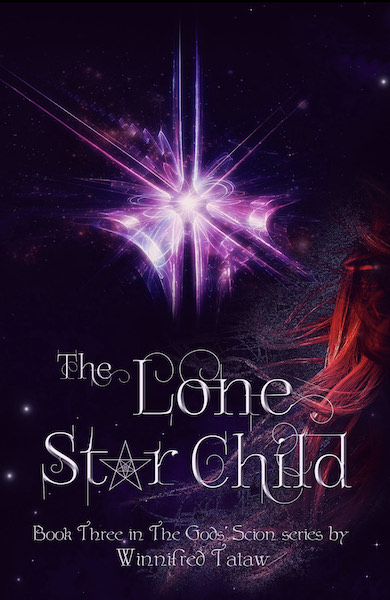
My book, The Lone Star Child comes out on December 5, 2020! It is the third book in my young adult fantasy series The Gods’ Scion. It is a tale about revenge and loneliness. There is the theme of coming to terms with past wounds that have plagued many of the book’s characters for years.
The Lone Star Child by Winnifred Tataw
Ophiuchus was cursed to imprisonment in space for wanting to share their gifts with the world. For millennia, they have been alone and forgotten. But Caro, the Space Acolyte, is their new chance at freedom. They’ve had a long time to think about what they’ll do once they’re freed. Which, with Caro’s help, will soon become a reality. Finally, they will be able to crush all those who ever forsake them in the past. But this time around, it will be different. This time they won’t show any mercy. Every person that ever abandoned them will feel their wrath. The Gods called them a monster. Well now, they’ve got one.
This week I have invited change guru Matthew Williams to write a guest blog
As we approach the end of 2020 – and let’s be honest, the back of it can’t come soon enough – many of us will be taking stock of the year that everything changed.
Freedoms that earlier generations fought and died for, freedoms that are widely considered to be the foundational stones upon which our society is built – and that many of us have long taken for granted – were curtailed under the relentless advance of an enemy that few of us had even heard of this time last year: Covid-19.
2020 has taught us a lot, and it has powerfully reinforced a universal truth – the inevitability of change.
For many, change represents the unknown, the uncertain, and the uncontrollable. In short, it represents fear. For others change represents the new – excitement, opportunity and adventure.
Like much in life, it is our mindset that largely determines our experience of change.
Our mindset determines how we respond to the unexpected changes that life thrusts upon us without the courtesy of knocking on our door. Divorce, illness, bereavement, redundancy – all are examples of ‘plot twists’ in our stories that have the power to fundamentally alter the courses of our lives, forever. Our mindset also determines how likely we are to instigate change, our willingness to take the bold strides towards an unknown future that promises much but guarantees little.
Many of us are content to live within our comfort zone, safely socially distanced within our own bubble, unwilling to step towards the boundary of what is known and familiar. This can be true even when we may think we long for change.
But sometimes, as 2020 has brought home to many of us, life has a way of insisting that our comfort zone is no longer an option.
Life has dealt me two major plot twists in recent years – divorce and depression. And there has been one thing that has helped me to navigate my way past these most unwelcome of visitors – the pen (well, the keyboard and iPad too, but you get the point).
I became a writer in December 2015, a response to an accumulation of factors one year on from the end of my marriage. The thing is, I never set out to become a writer; it just kind of happened, sparked by a compulsion that had hitherto laid dormant. It wasn’t that I wanted to write about what I was going through, I needed to.
And so I wrote, and I wrote, and I wrote. What started as a blog became my first book, Something Changed – Stumbling Through Divorce, Dating and Depression; this was soon followed by my first poetry collection, A Familiar Stranger. Writing has enhanced my life in so many ways that I could never have imagined when my words first poured forth on my screen 6 years ago.
As I started my writing journey, words flowed from me in a constant stream, articulating difficult and painful thoughts and emotions and giving form to my internal struggles. The act of writing was a powerful catharsis, but it was more than that. What was released was repurposed, reframed. Meaning and clarity came from the chaos and confusion of divorce, and from my prior struggles with my mental health, to which I also turned the illuminating scroll of my pen. My struggles were thus embodied within a bigger, more significant story; a story of self-doubt and self-discovery, of challenge and of change.
The act of writing was one part of this story, the other major part was the act of sharing my story with others. A few people close to me were concerned about this. Was it going to be good for my mental health? And what about what other people thought of my (over)sharing of some of my most difficult moments, within an online environment that often likes to share the shining surfaces of life far more readily than the dark undersides.
I reflected on what my compulsion to share my story was rooted in. Although I would describe myself as a confident and friendly person, I’m not someone that naturally likes to draw attention to myself (and if I was, there’s better things to be noticed for than going through divorce and depression!).
In sharing my story publicly while it was unfolding, I felt I was somehow holding myself to account. I was forcing myself to find the positives, to turn these adversities into something good, and to create a better future from the ashes of the past.
As an avid lifetime reader, I also recognised the power of our stories to make a difference in the lives of others. A truthful story, boldly and fearlessly told, holds a rare and potent power. Having found my voice, I felt an obligation to share my story, to show others going through similar trials that they were not alone, that someone else out there ‘got it’. And that together, as writer and reader, we would get through it.
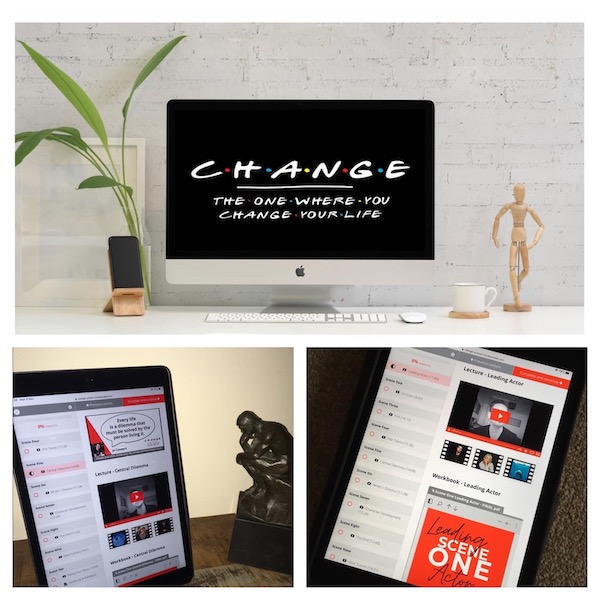
In writing my story I created an empowering narrative that became a springboard for a new and better life. And now, through the gift of storytelling, I am helping to change the lives of others. I have developed an online personal development programme, Change, which uses storytelling principles to help people to unleash the power of their own personal story. It helps people to explore their life story in a way that is, according to one attendee, ‘inspiring, fresh and different’. It enables them to reframe their narratives where they fail to serve their best interests, and to help people take the necessary steps to write the best chapters in their life stories to date – as their best selves.
As we look forward to 2021 I want to use the lessons of my writing life to help others to embrace the opportunity to first define, and then design, the life stories that they want to live.
Why settle for your life when you can get busy writing a better one?
About Change
Change is Matthew’s unique new online personal development programme that uses the power of your own personal story to help you to:
discover what is holding you back from living your best life
gain insight and clarity on the changes that will bring you greater success and happiness
identify the steps that will lead you to a more fulfilling life
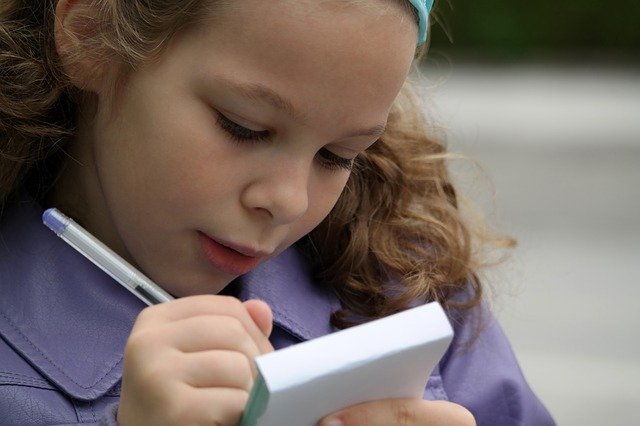
I know from conversations on social media that most writers have many notebooks. We love choosing or receiving notebooks with pretty covers to fill with scribbled thoughts. I currently have nine notebooks that are still ‘open’. Which means there are still empty pages to fill, and ideas I want to pursue. I kept journals long before I started writing, and could not count how many I filled over the past decades. Fortunately, most of these have been disposed of, or I would have to buy a bigger house. Although I did tear out a few important pages to keep because they still have meaning today.
Each notebook has a different purpose, although ideas spill over from one to another in a jumble of ideas and impressions. Doris Lessing famously kept five notebooks, which she wrote about in the 1962 feminist classic, The Golden Notebook. Each notebook was of a different colour: autobiographical, confessional, a writer’s observations, political musings, and a golden notebook that pulled all of the threads together. I read this book a long time ago and although I struggled with some sections it left an impression on me. It is perhaps time that I read it again now I am older and have a different perspective on life.
Courtesy of Gimp Workshop Pixabay
Journaling
The pages I have kept are those which serve to remind me that all will be well if I go inwards to listen to what is in my heart; to find guidance from God, the universe, guardian angels, inner wisdom, whatever you choose to name that power. The journals that I filled in my thirties were full of angst about my career development and frustration that the path I had envisioned seemed closed to me. Years later when I read those journal pages I was filled with compassion for the younger me. Everything turned out perfectly, better than I could have imagined. I just needed to be patient and open to new opportunities. Using a different coloured pen, I wrote responses to my younger self between the lines and in the margins. I reassured myself that all would be well. These are the journal notes I have kept, because now if I pour my angst out on the page I imagine an older version of me responding in the margins – all will be well.
‘In the diary you find proof that in situations which today would seem unbearable, you lived, looked around and wrote down observations, that this right hand moved then as it does today, when we may be wiser because we are able to look back upon our former condition, and for that very reason have got to admit the courage of our earlier striving in which we persisted even in sheer ignorance Franz Kafka.’ The Diaries 1910-1923
‘I am anxious, and it soothes me to express myself here. It is like whispering to one’s self and listening at the same time.’ Bram Stoker Dracula
courtesy of S.Hermann F. Ritcher Pixabay
Morning pages
Writer’s keep notebooks to jot down impressions, observations, and ideas. Inspirations for stories, snatches of dialogue, and interesting names. I always take a notebook on holiday with me to record the scents, sounds, and sights that make a place unique. I have one notebook especially for holidays so that I can dip into this if I am describing a location.
Julia Cameron introduced a writing exercise Morning pages in her book The Artist’s Way. She encourages writers to warm up each morning by writing freely for a few minutes. It is a way to relax into using the right side of the brain and to stimulate creativity. My morning pages are scattered throughout several notebooks. As these scribblings are intended to be disposable, they randomly fill gaps – but amongst those scribbles, there are a few ideas that one day maybe the seeds of a story.
‘Your subconscious mind is trying to help you all the time. That’s why I keep a journal – not for chatter but for mostly the images that flow into the mind or little ideas. I keep a running journal, and I have all of my life, so it’s like your gold mine when you start writing.’ Jim Harrison
I don’t journal to ‘be productive.’ I don’t do it to find great ideas or to put down prose I can later publish. The pages aren’t intended for anyone but me. It’s the most cost-effective therapy I’ve ever found.’ Tim Ferriss
Planning novels
Then, there are the special notebooks. The ones that I designate for each novel. All of my ideas, planning, character development, photographs, news clippings, notes from research visits, etc. are recorded here.
When I designate a notebook for a novel I know that I have committed to writing that story. I have a notebook for an unnamed novel that I have yet to write. Whilst I am writing, Misdirection, and preparing Just Bea for publication, I am also jotting notes and references in a notebook for this unnamed novel.
All of the ideas that seeded my novels came from scribbles in notebooks. Passing thoughts that I captured and pressed between the pages for safekeeping. Although I might flick through my notebooks looking for inspiration, there is no need. The unconscious mind is busy sifting and selecting the thoughts I have recorded. Overtime a story emerges, sometimes fully formed and it nags to be told.
courtesy of Raphaël Jeanneret Pixabay
Acquiring a journaling practice
You don’t have to be a writer to keep a journal. It is a form of meditation and reflection. A way to make sense of the world, and to self-care. Don’t think about what to write, just write. It is when you are relaxed with no expectation that thoughts flow.
The notebooks and diaries of many famous writers have been published: William Somerset Maughan, Coleridge, Virginia Woolf, Mark Twain, Sylvia Plath, and Thomas Mann, to name but a few. Anne Frank’s diary deserves a line of its own.
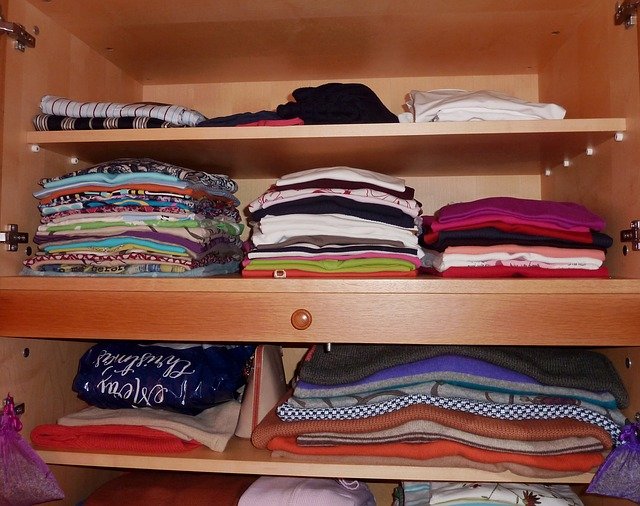
A period of lockdown seems the ideal time to clear out cupboards and drawers. It is a job that I hate but I always get a sense of satisfaction knowing that I have thrown away things I no longer need and created some order to help me find the things I do need. It must be four or five years ago that I last went meticulously through all of my personal belongings to do a clear out. Since then, I have emptied my parents’ home and so more things have found their way into the eaves of my house, to sort out later. The trouble is, later never comes and every time I open certain doors, everything comes tumbling out.
Clearing the home of a person who has died or is moving permanently into a care home brings into sharp focus the amount of stuff we acquire in a lifetime, most of which we do not need. It is of course much easier to decide what to throw out and what to keep when we are doing this for someone else. We hang onto things because of the memories associated with them because we might one day need this thing, or just because letting go is hard.
As I look in dismay at the disorder of my once organised drawers, cupboards, and the eaves of my house, I cannot help but draw an analogy with the clutter of thoughts that cram my head. Just as physical clutter creates visual stress, mind clutter creates emotional and mental stress. We cannot find what is important because it is lost in our jumble of thoughts. Sometimes we need to declutter the mind so that we have more clarity over what is important to us and can work on letting go of the thoughts that no longer serve us.
Let’s start with the surface clutter: the to-do list, and the distraction of social media. The thoughts that have us darting our attention from one thing to another and achieving very little. Call it our sock drawer!
Make a list of what needs to be done, break it down into tasks for the months, weeks, and days. I have a marketing plan for my novels. There is so much I want to achieve that I have a to-do list that realistically will take months if not years. Every time I find a marketing tip, something that I should do to promote sales, I add it to my long list. Then, I prioritise for the month setting an achievable goal. Each week, I work towards this goal, breaking down the steps. My desk diary has tasks for each day. I stick to this. Every time I think of something else I should/could do, I add it to the long list and return my focus to that day’s tasks. Before I established this discipline, my mind was like a bluebottle buzzing from one thought to another never settling long enough to complete anything.
Socks paired and sorted – time to tackle the knicker drawer. Social media can rob us of time and drain our energy unless we create some order. I turn off notifications when I am working so that I am not distracted by pings and messages. I love spending time chatting with Twitter and Facebook friends but I try to set boundaries around the time spent on this. Scheduling tweets for the week using Buffer helps. Also, a system such as Tweet deck. When I am being very focused I set a timer and interact on Twitter from Tweet deck where I can be intentional in the way that I network. I also indulge in a bit of chatter when relaxing, but I recognise that I am making this choice over other relaxation activities so that it does not become a habit.
Sorting out our drawers is the easy part. Now, we will go a bit deeper and tackle the cupboards. Open the door and thoughts come tumbling out. The constant chatter that replays past events finding fault, and worries about the future. The to-ing and fro-ing from past to future leaves us feeling giddy and ungrounded. We need to be mindful of the present, to still our mind. Exercise helps as we focus on our breath and become aware of the physical sensations in our body. Being close to nature is also good. If you practice mindfulness meditation for a few minutes each day you will soon take back control of these troublesome thoughts.
Now, into the eaves of the house. Maybe you have an attic or basement. It’s where you have stored long-held beliefs and memories. Part of you knows that they are there, waiting for your attention – much like the treasures I brought back from my parents’ house. The thoughts that we feel an attachment to and are reluctant to let go of. Maybe it is a childhood memory. A past hurt or grievance. Or a negative belief about ourselves. Sorting through these thoughts needs time and care. Let’s take one of these thoughts at a time. We will sit quietly where we are comfortable, safe, and cannot be disturbed and then lovingly unwrap the thought. Why have we held onto it for so long? Is it serving us or holding us back? Maybe we thought we would need it one day; how else would we remember not to make the same mistake again? If it is time to let that thought go, do so with compassion for yourself. Meditation has helped me to discover these thoughts and to let them go. I have found Tara Brach’s talks and meditations particularly helpful.
Decluttering the mind is an important part of self-care. Just as our homes can become disorganised, so can our minds. When we spring clean our home, we throw away what we no longer need, and tidy the things that are important to us so that they are easy to find. We feel energised and more in control. The same is true when we manage our thoughts.
Have you ever made an impulsive decision that has changed your life? I have made a few ropey decisions, mostly when I was much younger. Maybe we take fewer risks as we grow older, keeping within our comfort zone.
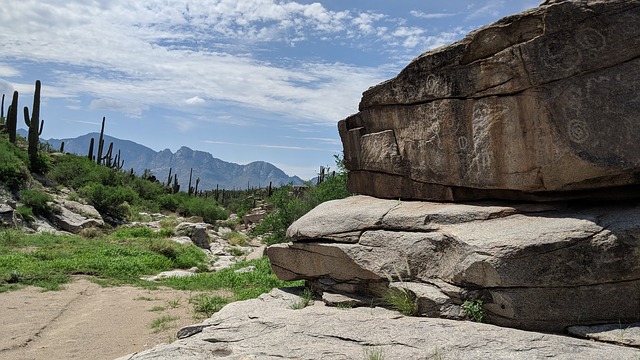
Perhaps the most questionable decision was when I packed a rucksack and, on an impulse, flew from London to Tucson Arizona to surprise an American penfriend, who I had met on a previous visit. It seemed romantic at the time. I was twenty-one had just finished training as an occupational therapist and found myself with free time. So, I took a Freddie Laker flight to Arizona and an internal flight to Tuscon, buying my tickets the same or previous day. I’m not sure I even told my parents until the day I set off from my Hampstead bedsit, feeling like a brave, free-spirited adventurer. It wasn’t until I arrived in Tucson in the early hours of the morning that I realised I only had a post box address for my friend who lived in Bisbee 95 miles away.
We all make impulsive decisions at some point in our life, maybe several times. We are acting on a gut instinct that it is the right thing to do, despite it seeming to be irrational. Angie Winkle in The Borrowed Boy does just that. Her head tells her that she must return Danny to the young woman who lost him on the Tube and she tries to reunite them, but her instincts tell her that Danny needs her. He has welts on his back, and talks of being a naughty boy; he clings to Angie when they see the woman, he was parted from waiting at the statue. The woman is smiling as she chats on her phone. Angie’s train is about to depart and she has to decide in haste. So, she acts on instinct, listening to her gut, and takes Danny with her on a journey that changes both of their lives.
The decisions that we make, shape our lives. There is a quote by Ayn Rand:
‘Everyman builds his world in his own image.
He has the power to choose,
But no power to escape the necessity of choice.’
For forty years Angie had been afraid of making wrong decisions, and so she let life pass her by, watching from the side-lines. She found that not making decisions comes with consequences too. It wasn’t until Angie realised that life was short that she decided to make the most of every minute of every day. She had let life pass her by and now she vowed not to waste another moment.
I would like to say that my spontaneous but risky decision making was a one-off but there were a few hairy moments in my younger years. Thank goodness my own daughter is much more sensible than me. The Arizona escapade had a happy ending because as unlikely as it may seem a young black guy who was waiting in the line behind me, heard me speak to the cab driver. He stepped forward and said that he knew where my friend lived. We shared a cab to Bisbee and true to his word he directed us to my friend’s house. I think he was one of many angels who have come to my rescue at different times in my life. The summer I spent in Bisbee was memorable and I would not change that experience. It led to other events in my life for which I am grateful.
Every day we make a multitude of decisions, some as simple as whether or not to eat a second biscuit, others are deceptively more critical. Sometimes we have time to weigh up the pros and cons and gather information to make an informed decision. At other times we have to act on instinct and hope for the best.
Angie’s decision to take Danny with her shapes her life. Whether it was the right decision or not, I will leave you to decide. One final quote from a meme – author unknown.
‘Sometimes you make choices in life and sometimes choices make you.’
Ambition is great, it drives us to achieve our goals but it needs to be tempered with patience if we are to keep on track and avoid crashing. This has been a hard lesson for me and although looking back on my life I ended up in the right place, there were times when I caused myself unnecessary distress and almost sabotaged my chances of success as a result of my impatience.
A pattern that I recognise in my behaviour starts with a heartfelt wish or passion. I put everything that I have into achieving this goal. Early achievements indicate that I am on the right track and I have what it takes. This is all good. We are inspired by our dreams to find our life’s purpose. The little markers of success along the way, for example, praise from a line manager, achieving a weight loss goal, or winning a writing competition, are like flags waving us on. There is a moment of realisation as we start to believe that we can achieve our dream.
In the past, this has been the point at which I start to sabotage my chances of success. It is a critical stage where patience is essential if we are to keep on track.
Have you heard of the Terrible Twos? It is an expression used by parents to describe the developmental stage of two-year-old children who are prone to temper tantrums. At this age the child wants to be independent and can become frustrated when they discover that they do not have the motor and cognitive skills needed to achieve a task. The child might imagine themselves doing this activity and cannot understand why it is not possible.
This is me. In my mind’s eye, I am already capable. The passion to achieve deceives me into believing I am ready. When the world does not recognise this and give me what I want I throw my hands up in despair. Then comes the self-doubt. The resentment and feelings of not being good enough. What a waste of energy and unnecessary grief. I get there in the end but looking back on my past experience I can see now that there is an easier way.
It is hard to stay present when you are used to striving for success. The business world teaches us to inflate our achievements to show that we have reached or exceeded targets. I am incredibly tough on myself, setting unrealistic goals of what I expect to achieve on a daily, weekly, and monthly basis. When I fall short, I berate myself for failing and work harder. The result is inevitable: Burn out. Poor decision making, and shoddy work as I am not taking my time.
When we let go of trying to control and trust the journey, we get there a lot faster. The passion that is currently driving me is to publish my books and reach a significant number of readers. In March 2020 when the UK first went into lockdown I had not published any books and I didn’t have a social media presence. In eight months, I have published my debut, The Borrowed Boy,andmy second novel, Just Bea, is in the process of being formatted for publication. I started this blog and have posted weekly. I have over 1k followers on Twitter and host a weekly tweet chat Friday Salon. I have also filmed a pilot for a YouTube programme Castaway Books. It’s exhausting just reading this.
This week I had a reality check. There is no hurry. Everything will unfold in its own time. Writing this blog brings me great satisfaction as I am developing self-awareness and making valuable connections with readers. I love hosting the Friday Salon tweet chats as it feels as though I am meeting with writer friends in the pub. I am learning new skills. Last week I was amazed to find myself editing a film for YouTube.
When I relax into enjoying my work with no expectation it becomes a pleasure. I can savour each moment, immersing myself in the task without keeping one eye on the clock. I still have a diary with daily goals but they are more achievable. Every day, every hour I am learning and growing. Like the two-year-old, I do not yet know what I don’t know, but as I try things out and practice new skills I am discovering. It is a joy to learn, and the connections I am making with people on this journey are enriching my life.
In my blog on Learning to be patient, I spoke about the lessons from nature. That we have what we need to become the person we are meant to be but just as a plant develops through the seasons so do we. We cannot rush nature.
Be patient. Trust the journey. And have fun. You are exactly where you need to be right now. And above all be kind to yourself.
Everybody needs to feel valued and respected for what they bring to the world. When a person retires or becomes redundant they may experience a feeling of being surplus to requirements. We all need to be needed and when we think that we have no useful purpose it can lead to depression. The truth is, we all need each other and every single person has something of value to contribute to their community.
My novels The Borrowed Boy and Just Bea are about community life and how friendship and connection help the protagonists to overcome feelings of loneliness and isolation. Stories about the power of friendship and community have become popular in recent years with novels such as Saving Missy, Mr. Doubler Begins Again, and The Authenticity Project.
I think this is because we idealise a community life of bygone days. Out of town superstores, on-line shopping and services, and an economy where everything is paid for – even the giving of care, means that personal, local transactions have diminished. Neighbourhoods are transient as people move in and out of the area. In towns where people leave home to go to work each day, there may be very little interaction between neighbours.
When you are experiencing a busy home and working life this may not concern you. But what happens when that changes? Divorce, retirement, bereavement, or a shift to working from home as a result of the pandemic may change your perspective. Suddenly, the connections you took for granted are no longer there and you may feel isolated.
The pandemic has shaken up our world in so many ways. Life will never be the same again as we adapt to new ways of living. Not all of the changes will be negative. Already, people are moving out of big cities to the countryside and seaside villages, as they anticipate working from home several days a week. We have started to buy local produce and favour smaller stores, alongside shopping on-line. Maybe we will start to look to our local community and neighbourhood to find what we need to survive.
Readers of my blogs on personal development will know that I believe on a personal level we have everything that we need to achieve our goals. Well, I also believe that every neighbourhood and community have the resources they need to thrive. Each person in your neighbourhood has skills, experience, and knowledge that is of value to another person. Practical skills such as decorating, cake-making, and gardening. Knowledge such as local history, or how to start a business. Caregivers. Home-makers. People who are good at networking. Singers, crafters, DIYers. The list is endless. You may have watched TV programmes where communities are brought together to achieve a challenge such as improving a house or creating a community garden. There is a wonderful energy as neighbours work together, discovering one another’s skills, and forging new friendships.
In my novel The Borrowed Boy, Angie Winkle lives a very isolated life until she visits Jaywick Sands and finds a place where she belongs. Her skills as a mechanic, a dressmaker, and a caregiver are valued by her neighbours. For the first time in her life Angie feels needed, and this transforms her.
Commercialisation, the internet, and globalisation have fragmented community life. Instead of trading skills with one another, we have looked outside of our community to purchase everything we want or need. Buying local is about more than supporting local businesses and protecting the environment, it provides an opportunity to discover the wealth of skills, experience, and knowledge within our community. In doing so, we give purpose and meaning to the lives of our neighbours. We make connections and friendships. People need people. We are a tribal species wired for connection. Meaningful engagement that values what each person has to give.
I believe that everywhere has community when you look for it. All it takes is one step, maybe joining a club or association, introducing yourself to a neighbour, or volunteering to help out with a community project. If you don’t like mixing in groups then finding ways to serve others, for example, offering to shop for an elderly neighbour and then taking the time to get to know them because they too will have something to offer you or somebody else that you know. Build your community one person at a time. Connect others and watch as your community weaves itself together. Stronger, more resilient, and a happier place to live and work.
Patience is a virtue, but not one that comes easily to me. I know that I am impatient, not with other people, just with myself. I want to achieve everything yesterday. However, there is a positive side. My impatience has served me well in many ways as I am motivated to succeed, work hard, and I am very productive. Great attributes in the world of commerce where we are expected to go faster and faster. Not so good as a writer because creative work has to unfold in its own time, and we have no control over when and how our work will be received by the world.
Everything has a season. A beginning, a middle, and an end. And then a new beginning. When we live in the moment we treasure the beauty of each day, the changing colours of the landscape, and discovering new shoots in the flower bed. We are part of nature. There is a season for all that we achieve, and just as the flower bed goes through change, so do we.
It is good to have a goal. A vision for our future. However, when we are willing that future to happen before it is time, we can stunt our growth and slow down the process. This is because we are not allowing change to happen. We are not relaxing into the now and being mindful of the lessons that are there for us and the opportunities. Instead of growing, we are expending our energy thrashing against the unfairness of life. The result – what we want is pushed further away because we are not ready to receive it, without change.
Like most writers, my goal is and has been for many years to be a successful published author. I approached this goal as if it were a work project over which I had some control. I studied what I had to do, went through all the steps, submitted my manuscript to agents, got myself a first-class literary agent, and submitted to publishers. At every stage of this process I was impatient: Each time I sent a manuscript out to agents I counted the days until I received a response. When my agent was reviewing drafts, and when editors from publishing houses were considering our submission. It was hard. My health and well-being suffered. I felt out of control. As a management consultant used to working for myself I railed against this lack of autonomy and was overwhelmed by a feeling of helplessness.
I told the story of how I changed course, and decided to become an indie entrepreneur in my blogs Meditation challenge parts one, two, and three. The path I was following was not going to get me to where I wanted to be. Since deciding to take the self-publishing route I have had to learn new skills and try different things to market my novels. This is exactly where I need to be right now. I love that I have discovered blogging. By sharing my experience with other creatives, I have deepened my understanding and self-awareness. I write to connect with others in a meaningful way and I have found that blogging and other social media platforms such as Twitter have enabled me to do this in ways that I had not believed possible.
If my debut novel had been published last year through the traditional publishing route I would not have had that experience. My life is richer as a result. Now, I embrace what each new day has to offer. I honestly love everything about my working life as an author, and I know that I am growing and changing. Instead of worrying about the future, I am delighting in the small changes in my life, much like the gardener who enjoys watching the flower bed for new growth.
The creator of all things has sown a seed of desire in our hearts. We must pursue our dreams but recognise that for our dream to unfold it needs to be nurtured and given time to grow. Just as our creator sends the sun and rain to nourish the earth, we too will receive what we need. When the season is right we will enjoy our harvest but creation cannot be rushed. It is not easy to be patient when you are burning with desire, but creation as magnificent as you must be honoured with time, care, and above all patience. It will happen when the time is right.
‘She’s not showing any commitment to your relationship,’ a girlfriend counselled me as we took our habitual walk and talk by the sea.
I check my phone every few minutes, exasperating my husband. I wonder if he thinks I am having an affair.
Maybe my email was worded wrong and she misinterpreted what I said. Or – I missed something written between the lines of her text. I check again. And again.
Maybe she’s just not that into me.
No, I wasn’t having an affair. I was stressing over the lack of contact from my literary agent. It really is akin to dating. That feeling of elation when you receive an email full of exclamation marks – the agent loves your work and, in my case, ‘I am waiting on the edge of my seat,’ to receive my full MS. And another the next day, ‘I can’t stop thinking about your novel.’ Heady stuff. You hand over your heart.
A new love affair or a collaboration with an enthusiastic literary agent is wonderful. It is to be celebrated and enjoyed. However, it is important to stay grounded. When we look outside of ourselves for affirmation that we are ‘good enough’ we hand over the responsibility for our happiness and wellbeing.
Take back control for your happiness
I am not suggesting that you hold back in any way, or distrust this new relationship, only that you do not look for external validation of your worth. We hear it said by spiritual gurus and counsellors that we are enough, in fact, more than enough. They are wise words, but not so easy to believe when we are filled with self-doubt.
To take back control, listen to your heart and not the thought goblins who whisper criticism and doubt in your head. You need to really listen to your heart to understand what you want and why. That’s easy you might say, ‘I want to be a successful published author.’ Or, ‘I want to meet my soulmate, get married, and start a family.’ Dig a bit deeper. Ask yourself why. Get to the root of what you want and need.
For me, it is to reach as wide an audience as possible, because I have something to say and want to be heard. I want to connect with readers through my words and make a difference – whether it is to give a few hours of escape or to inspire in some way. I have a unique combination of skills and experience that make me who I am. My purpose is clear and is not dependent on another person. A publishing contract is just one way to achieve my goal. I have everything I need to fulfil my potential and achieve my dreams.
It is great to find true love, to get approval, and positive affirmation. We all need this. But when it does not come from the source we expected, it doesn’t mean that we are undeserving. It just means, it isn’t the right one for us at that time.
You are God’s gift
You must have heard the saying, ‘He/she thinks they are God’s gift.’ Well, guess what, you and me – we areGod’s gift to the world. We have been provided with all that we need to fulfil our unique purpose. It may have arrived in a box, like a flatpack from Ikea – full of odds and ends that are a mystery to us. The instructions assure us that everything is there, we just need the patience to put it all together. When we are distracted, comparing ourselves to others, and seeking approval, we are neglecting our gift.
Spend time marvelling over everything in that box. Value each of the parts, however small, because they are essential to creating our true self: our skills, attributes, personality traits, our dreams and wishes, our passions. When we realise just how amazing we are, we are fired up with positive energy. Not only is that very attractive – we are no longer a box of oddments, we are the shiny fully assembled model in the shop window, it enables us to know exactly what we need and to be discerning. Instead of waiting to be chosen, we do the choosing.
Many years ago, I watched a television programme that left an impression on me. An older woman explained why she took up sky-diving in her sixties. It was an antidote to the risk of an ever-diminishing life, as a result of living within her comfort zone. As we get older, we can be less inclined to take risks and settle into a comfortable routine. Sky-diving is a bit extreme. I considered trying a tandem skydive but the thought of jumping out of a plane terrifies me. In the 2001 film Kate and Leopold, Meg Ryan has to step off the Brooklynn Bridge, to be reunited with Leopold and to live the life she truly desires. I love that film, but every time I watch it she goes to jump and I think, I couldn’t do it. I would lose everything because I would be too afraid.
There is a parallel here to life. It’s great being comfortable, feeling calm and secure. When our world changes, establishing a routine can help us to feel in control. During lockdown, a routine helped many of us create a sense of stability in a scary world. However, over time we can become stuck, moving within the boundaries we have established. Comfort turns to discontent as we become aware of our unfilled potential. It is frightening to step out of our comfort zone: fear of failure, rejection, or disappointment. But we risk losing much more if we stay put. We risk losing the opportunity to fulfil our potential, and to discover new interests and passions. We aren’t just denying ourselves the expression of our true self and all that we can be, we are denying it to the world. We have a responsibility to fulfil our potential and that means continuing to learn and grow, whatever stage of life we are at.
In an earlier blog Welcoming change, I told you how I was letting go of a successful career as a management consultant to start a new one as an indie author entrepreneur. It was and is scary. I was very comfortable with my working life, but this meant that nothing challenged me. I had decades of experience in health and social care. I could take on any management consultancy job in my field and know that I had the skills and experience to deliver. It was a great place to be and paid the bills. Outside of my comfort zone was my unfulfilled potential. I knew I wanted to be a published author and there were other things, other versions of me that I needed to explore. I am only just discovering some of that potential, as I try out new things.
Yes, we may fail. I made my first book promotion video without looking at the camera because I didn’t know where it was on my phone. I’ll know next time, so it isn’t failure; it’s my first attempt. I like the old adage that when we mess things up we just need to use the experience as manure to nourish future projects.
The past six months have been a steep learning curve for me. I have learnt how to: commission and work with a creative team (editors and book cover designer), format a manuscript for publication, self-publish, set up and write a blog, use Mailchimp to share a newsletter, and use social media (Twitter, Instagram, Business page on Facebook). I am planning a YouTube channel to broadcast twice a week from January 2021, and I am writing and publishing another two novels next year.
I am sixty and so I have not grown up with the technology that younger people are experienced in using. Of course, I have experienced frustration and felt stupid. What happens if my investment of time and money doesn’t pay off? I have felt weary, exhausted from the effort and relentless drive to succeed. But, I am growing. I am learning. And I am transforming. I am becoming a new me. I am pushing out into the unknown and with each step into that magical terrain, my world becomes bigger. Instead of feeling the weight of fear and uncertainty, I am going to embrace each new experience and find joy in learning.
There’s just one other thing I will resolve to do. This is the scariest of all. I am going to visit my local swimming pool and jump into the deep end. It is a first step. I will not jump out of a plane, but maybe, if I can learn to do that without fear, I might just be able to jump back in time to be with the love of my life, should a Leopold beckon me one day.
As creatives, we are passionate about our art. A desire to share our work with other people can be all-consuming. We drive ourselves harder and harder to succeed. Does this sound familiar?
Writers, artists, musicians and entrepreneurs have some character traits in common. These can be both a blessing and a curse. This blog is about recognising our superpowers as creatives and nurturing them with self-care so that they serve us well.
Creatives are sensitive people. As we regularly tune into the right side of our brain to create, we further develop our intuition.
I suspect that many of us are empaths. An empath is a highly intuitive person, who senses the feelings and emotions of the people around them. We absorb other people’s pain, as we try to ease their suffering.
Creatives are perfectionists. We are self-critical, and that inner critic can sometimes prevent us from expressing our self for fear that our work will not be good enough.
We tend to be good and loyal friends. Our emotional intelligence means that we are often successful in the workplace, and are caring and supportive of our staff.
Our drive to succeed makes us self-starters. As entrepreneurs we put everything into our work, striving to achieve the best we possibly can.
These attributes are amazing superpowers, but they need to be treated with respect, or we risk burn out, writers’ block, feeling overwhelmed, or emotionally and mentally exhausted.
Burnout
A new project gets one hundred percent superpower. We are flying high. For example, you have finished writing a novel. You have self-published and spent weeks marketing it. The steep learning curve has been worth it because you have received fabulous reviews and your friends and family are proud of what you have achieved. Or, you have set up a new business and after months of work, you have launched with a fanfare.
This is when we are most at risk of burn out, if we do not recognise how to look after our superpowers. There is likely to be an adrenalin slump after the work and excitement of a launch. We will be vulnerable to our self-critic when we look at how far we still have to climb, and our energy levels will be low.
I have noticed on social media that a number of creatives are experiencing low energy levels and poor health. It is not surprising as we are trying to adjust to and cope with a pandemic. As empaths, personal stories of heartbreak and loss, and those we hear from friends, and the media affect us deeply. This is another reason why we need to take extra care of our mental and emotional health at this time.
Self-care
If you are anything like me, you will be very good at giving advice to friends, telling them to take care of their emotional and mental health but may fail to look after yourself.
A holiday or a spa day away from home may not be possible, at this time but you can create this at home. Find a day when you are going to be alone for all or part of the day and plan some treats. This will be different for everyone, but this is what my retreat day would include:
A guided meditation for chakra alignment or deep relaxation. There are several on YouTube. I favour Deepak Chopra or The Honest Guys.
Restorative yoga. Again, there are workshops on YouTube, but I subscribe to Core Vitality Yoga, and recommend the virtual retreat, I equip myself with a couple of pillows, a bolster or rolled-up towel, a throw/blanket, a face mask, and soothing oils, for this.
A light lunch made up beforehand. This would include a delicious salad, fresh fruit, and maybe a smoothie.
A walk where you can enjoy nature.
A warm bath with scented oils, and candles. I might put a conditioning mask on my hair, or include other beauty treatments such as a face mask.
Put on comfortable clothes to lounge in and read a book or listen to music.
Manicure and pedicure if you feel inclined.
I have enjoyed a couple of home retreat days like this. It is important that you have a complete break from work and social media on this day. Do not let anything interfere with this special time. I promise you, it will feel good.
On a day to day basis, we can take care of ourselves by slowing down. How many of us obsess about being active on social media? I love my Twitter friends, and because of that, I do not want them to feel pressurised into constantly responding to me. Mindfully monitoring the time that we spend on social media can be beneficial to our emotional and mental wellbeing.
Find time to do things that you enjoy. I have been so intent on getting my debut published that I have neglected other interests: riding my bike, walking in the woods, crafting, and baking. I am going to make time for these things, and when I do engage in them, I will try to be one hundred percent present.
A visualisation
Finally, I will share with you a little visualisation that helps me. I imagine that we are all climbing a mountain. Some travellers are ahead and others behind. When I look down, I am surprised at how far I have come. Small steps each and every day have had an impact. However, I am tired and I still have such a long way to go. I sit at the side of the mountain and rest. The view before me is beautiful. It is momentary – the exact fall of the light, the little bird that has alighted at my side, the flowers in bloom. I rest in the moment.
‘Why do you need to carry that heavy backpack?’ a voice says. ‘Everything you need will be provided.’ And so, I let go of my load.
There is a well of crystal-clear water and I drink my fill. As I rest I help others on their journey. I know that when I need a hand or a word of encouragement there will be others to help me.
As I set off again I feel lighter and restored. Instead of worrying about the climb I enjoy the sun on my back and remember to admire the view.
These are techniques that help me. I hope that by sharing them I have given a hand to you on that mountain path.
Interestingly, our most vivid and frequently recollected memories tend to focus on two decades of our life around the age of twenty. For me, it is the period between 1975 and 1985 when I was aged fifteen to twenty-five. This phenomenon is known as the reminiscence bump. When I first heard of this on radio four, many years ago, I was fascinated. I didn’t realise there was a science to this. I just attributed it to more excitement in my life at that time. To some extent I was right.
Our brain imprints unusual experiences more than the mundane. In our late teens and early twenties, we experience many things for the first time. I was lucky enough to have a brother who was two years older than me and a musician. From the age of fifteen, I went to see bands, travelling in an old transit van with my brother and his friends. We lived in a suburb of London and I was lucky enough to see most of the big names in rock at that time, although I don’t think I really appreciated it. My brother, Trevor Steel, went on to become a success in The Escape Club in the 1980s, and most of the boys who I hung out with then became successful songwriters and musicians. It was a magical time, and I have learned since from school friends that they envied my access to these glamorous boys, who looked after me like a sister.
When I was nineteen, I flew for the first time ever. My college friend asked me to travel with her on a Freddie Laker Skytrain to LA to visit her sister. It was only on the plane that she explained that her sister was actually being held in a jail in Vegas for picking up a hitchhiker who had forged credit cards. And so, my American adventures began. When my friends were released from jail we had to buy a car as their vehicle was impounded and we spent the summer driving along the coast, sleeping on roadsides or the beach. My college friend and I returned to the states several times. On one occasion, my college friend, her sister, and I hitchhiked from Wyoming to Arizona. Thank goodness, my daughter was much more sensible than me.
I met my husband in 1981 in London and we married in 1984. Life has been exciting since then, but memories of my late teens and early twenties are like a film – full of vibrant images.
Memories help us to make sense of who we are
Photo by Gerd Altman Pixabay
Another explanation as to why we experience this reminiscence bump around the age of twenty is attributed to a narrative perspective. The theory being, that we organise memories of events to make sense of who we are. Our teens and early twenties are formative years when we are testing our beliefs and embedding our values. I find it fascinating that my 88-year-old father who has Alzheimer’s focuses on the two years in his life when he was in the army pay corps. He would have been around the age of nineteen. Although he can recall many happy memories of his married life, and raising a family of four, it is his time in the army that he enjoys talking about most.
I wanted to talk about the reminiscence bump, and the 1970s, as this is the era that Angie Winkle, in my debut The Borrowed Boy, recalls. I loved writing about the fashion and music of that time as it took me back to when I was a teenager.
The 1970s was a great time for music: David Bowie, Marc Bolan, Deep Purple, Led Zeppelin, Bob Dylan, Pink Floyd, Fleetwood Mac. The list is endless. I loved and still do – Al Stewart. His lyrics are poetic.
The 1970s might be of interest to you because you lived through them, or because it is a bygone era. If I have stirred memories or curiosity you might want to try one of these novels set in the 1970s.
Everything I never told you, Celeste Ng’s debut novel set in a small Ohio town in the 1970s.
Channelling Mark Twain, Carol Muske-Dukes. Set in the mid-1970s a blonde poet, Holly teaches a poetry class in the women’s prison on Rikers Island.
Joyland, Stephen King, set in 1973 in a North Carolina amusement park
Paradise, Toni Morrison, a gripping novel about life in a small all-black Oklahoma town during the 1970s.
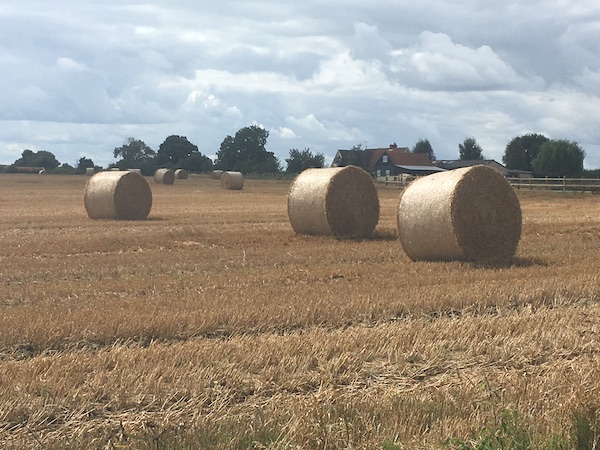
September has always been my favourite month of the year. A new school-term. A new rough book and a sharp pencil. A new teacher, excited to introduce the term’s work, and to learn our names. It’s a time of new possibilities. The harvest has been gathered in and the fields lie fallow, waiting for new crops to be sown.
It is the month I got married, and the month our daughter was born. When the leaves start to fall and my pockets fill with shiny conkers and acorns snug within their cups, my heart soars. I went for a run this morning, delighting in the crunch of leaves beneath my feet and the golden glow of sun, low in the sky now that summer has been spent. I got to thinking. This time in my life, it is like the fall. My achievements: building a successful business, raising a family, caring for ageing parents, are my harvest. I have toiled hard and loved every moment, but it is now done. Like the bronze and gold leaves at my feet, I have shed these responsibilities, and I am at a new stage in my life. A time to create something new.
Creativity increases during and post menopause
There is scientific evidence that women become more creative during and after menopause as a result of hormonal change (Dr. Christaine Northrup https://www.drnorthrup.com). I believe it is more than hormonal change. Men and women reach a time in their life when they experience a freedom that they haven’t known before. The harvest has been gathered and we reflect on the fallow field before us. We become introspective, questioning our true purpose in life. No longer required to serve others, we can dance to our own tune. In this time of reflection, we discover our intuition and insightfulness. It is no wonder we experience a surge of creativity. Alan Titchmarsh, once said on a Gardening programme, that we become invigorated in the spring because we can smell the plant sap of new growth. Maybe it is sensing our unfulfilled potential that awakens our longing to create when we begin our autumn years.
Don’t let a believe that it is too late to fulfil your dreams hold you back. I was really inspired by Penelope Fitzgerald’s story, (see Hermione Lee’s biography). Fitzgerald started publishing her books at the age of sixty. At the age of eighty, she became famous after winning the Booker Prize in 1978 for her novel Offshore, and then international fame when The Blue Flower won a major award in America. Her novels, like mine, tend to be about people living on the edges of society, combining pathos with humour. Maybe that’s why I was drawn to her work. She was a remarkable woman who led a full and fascinating life, experiencing hardship herself for many years.
Your creative yearnings may not be as a writer. We are all creative, and fulfilling this need is as important as our spiritual, physical, psychological, and emotional needs. Your creativity might be expressed in the interior design of your home, a meal prepared for friends, quilting, or gardening. The list is endless. What is important is that you make time to express your creativity and enjoy it.
I remember travelling home from work on the train one evening on the first day of term. The carriage was static with excitement and anticipation as students of all ages chatted about the courses they were studying. A couple of women were getting to know one another, as they spoke about the healthcare module they had just begun. A group of teenagers compared subject choices, eager to share how they saw their future unfolding with university options and careers. I breathed in the energy and felt high!
Autumn is a time of change. Of new beginnings. Maybe you are thinking about retirement or your children have left home for university. Approach the coming months as though it is a new term. There is a fallow field before you. Now is the time to unleash your creativity. It is exciting and it may be a little scary, but beginnings always are.
I will be spending the months leading up to Christmas writing my third novel, Misdirection, and learning about marketing as I prepare to launch my second novel Just Bea on 1st February. I would love to hear about your plans whether it is a craft project, your garden, or your novel/poetry. Let’s be like the teenagers buzzing with news about their plans on the first day back at school!
This is the third blog on Wanting something too much.
In part one, I described the blip of happiness or despair when the one thing we want, or fear finally happens. Often, it is not life-changing in the way that we have imagined and life resumes. My message is to make sure the life you live now is a good one, and don’t hang all of your hopes on that elusive dream.
In part two, I reflected on outcomes. By attaching too much to one outcome, we can become blinded to other opportunities. When we have an open heart and mind we invite new possibilities into our life and in doing so, find the best outcome for us.
I know what it feels like to want something too much. It is a tightly clenched fist in the solar plexus, a lump of longing that takes up all the room in your heart. You are afraid to release your grip. As though holding tight to that dream will make it come true, and to release your grip will lessen your chances of success. I have learned that this is not true and by wanting something too much we are driving away the very thing that we want.
We have all heard the stories of a couple who conceive when they have stopped trying for a baby, the girlfriend who meets the love of her life after resigning herself to a future of singledom, the job offers that flood in when you have decided to become self-employed.
When we are desperate for something we become tense. There is a physiological reaction that may lead to symptoms of stress, for me it is eczema and migraines. We become so focused that we have tunnel vision and miss the bigger picture. A tense, intense person, who is desperate for something, is not attractive and can repel the person that they want to attract.
If you are in a furniture store and a sales assistant working for commission pursues you relentlessly, advising you of the features of every sofa you show a vague interest in, I suspect that like me, you will decide to visit another day or go to a different store where you won’t be hounded into buying something.
Many years ago, I had a friend who following a divorce was desperate to find another man. This friend was young, attractive, and clever. She had a great job and was financially independent. She threw herself into the dating world with gusto, joining on-line dating agencies and requesting blind dates. I tried introducing her to eligible men but her desperation scared them off. Sadly, none of her would-be partners wanted a second date.
I am extremely embarrassed to confess that when I started out as a management consultant I stepped out of a meeting to run after someone who I thought might be interested in hiring me. I cringe when I remember this. At that time, I was terrified that I would not attract any clients and of course I didn’t. When I relaxed and went with the flow, I had plenty of work. The more work I had, the more I was offered.
When we are relaxed and content we are open to new possibilities. We notice opportunities because we have an open mind and are more susceptible to ideas that come into our orbit. People are drawn to us because we radiate positivity.
I know it is hard to let go of longing. Keep hold of your dream but try to gently release your grip. Imagine that knot of tension, softening. Breathing exercises and meditation can help with this. When I am meditating, I imagine a lotus flower opening up to the sun. It takes practice but you can relax your hold.
I believe that our purpose is an idea that is sown like a seed in our heart. Our wish to be a writer, an artist, a chef, an acrobat is intense because we are driven to achieve our life purpose. But just as the seed has been sown, trust that your dream will come to fruition. Open yourself up to a greater power. Trust that what you need will come to you. Be relaxed and calm. Because then you will find the golden breadcrumbs that will lead you to your destiny- a chance meeting, an advertisement, an idea that comes from a conversation.
I have devoted three blogs to this topic and could write more. Longing for success is the bane of creatives. Learning to attract what we need into our life is an important lesson for all of us.
My heart aches for the creatives who share their heartfelt wish in social media with longing and desperation because I know how it feels to want something so badly.
Changing career
This is a lesson that has taken me some time to learn, and I am still learning. When I was forty, I could see only one way to further my career and that was the next step up on the career ladder – a chief executive of a health trust. It had been my goal for years and I had made steady progress up until that point. I was shortlisted again and again but was disappointed when I received the news that I had not been successful and each time a different or conflicting reason – ‘too strategic,’ ‘not strategic enough.’ I didn’t know what to do as this had always been my goal and it felt too early in my career to settle for what I had already achieved.
I was in the depths of despair. I felt rejected – unworthy. Not good enough. I was blinded to other opportunities because I was too focused on that one outcome. A wise woman suggested that I was feeling discomfort as the job I had was no longer a good fit for me. Like an ill-fitting shoe I had outgrown the role. This sparked my imagination and I wrote down all the things I enjoyed and was good at, also the things I didn’t like about my job.
Unsurprisingly, the job I had set my heart on was not a good fit for me either. The result was a specification of my unique combination of skills, expertise, and experience. I used that to evaluate every job advertised within a salary scale that was acceptable. In keeping an open mind, I came across an advertisement that I would never have considered before. I wasn’t even sure what the job description meant, but it was a perfect fit with my personal specification and the employer thought so too, because at the end of a two-day selection process I was offered the job. What unfolded from there was better than I could have imagined. I found the perfect career for me as one opportunity led to another.
Through this experience, I learned that my imagination is limited. The universe/God’s vision is greater. When I stopped hanging on tightly to what I thought should happen and opened my heart and mind to possibilities, I was led to the best outcome for me.
The best outcome for you
You may be focused on bagging your dream agent, securing a traditional publishing deal, getting that promotion, or your ideal job and I wish you success. Keep working towards your goal and hopefully, your wish will come true. However, too narrow a focus might be blinding you to other opportunities.
Try brainstorming all of the options. Be imaginative and open yourself up to the infinite possibilities for your success. Instead of focusing on one agent, try approaching several. Visualise offers coming in from four or more so that you have to choose. Submit to independent publishers. Enter novel writing competitions. Scatter these seeds of possibility and you may be surprised by what grows.
Your future is waiting for you. It could be brighter and bigger than anything you have imagined, but you need to open your heart and mind to new possibilities and trust that what is right for you will find you.









 Deborah Klee