Whatever we are trying to achieve: weight loss, success at work, or any other goal, there is the opportunity to learn about ourselves and grow from the experience – even if we don’t achieve our goal. It is of course, about the journey, not the destination.
I started this year resolving to lose half a stone that had crept up on me and was refusing to budge. I could have welcomed those extra pounds, bought looser dresses and attributed it to the inevitability of late middle-age. But I wasn’t comfortable with my new body shape and did something I had never done before – I joined a slimming club.
I am six weeks into the Slimming World regime and although I am happy with my weight loss and impressed by the approach; it is the life lessons I have learnt that are having the most impact. Lessons that can be transferred to any project or journey.
When I turned up for my first session, I didn’t know what to expect. I was concerned that having so little weight to lose, I might offend those people struggling with a greater challenge. Here is my first lesson: Comparison.
Comparison.
On more than one occasion a group member would reassure me that if my half-stone mattered to me, then it was just as important and relevant as another person’s two stone. The love, generosity, and fellowship of club members was inspiring.
One week, I noticed a beautiful young woman with a curvaceous figure and a pretty face. She was trying to slim down to a version of herself before she had babies. The way she spoke of how she was now and how she wanted to be saddened me. Couldn’t she see how beautiful she was? I told her how I saw her. The consultant, observed that we don’t believe what other people say, until we feel beautiful ourself. I wanted to tell her, ‘Don’t compare yourself to other versions of you, or to other women, or models. You are unique. You are beautiful – just the way you are.’
We are all guilty of comparing ourselves unfavourably to others instead of recognising our unique attributes and strengths.
My mother always told me, ‘One day, in years to come, you will look at a photograph of yourself today and exclaim, “I was beautiful. So young. Why did I not appreciate it then?”’
Having Faith
I must admit, I did not believe that the diet, or lifestyle change to food optimising, would work for me. I had always had a healthy diet and thought I knew everything there was to know about calories and nutrition. At the end of week 1, when I had lost just one pound I thought, I could have lost more on my own. I was eating more than I would normally and had no faith in the process.
Week 2, I lost another pound. Then week 3, a pound and a half. Gradually, little by little the weight loss was building. I didn’t know everything.
Patience
If I had not been held to account by attending the club each week, I would have given up by week 2. That had always been my pattern of behaviour. I would weigh myself once, sometimes twice, a day. Then react to the reading by forgetting the diet as I considered there to no longer be a need, or give up because change was too slow. The truth was – I was impatient.
Breaking Habits
Changing my behaviour patterns was a challenge. I realised I had all sorts of excuses to rationalise why I weighed myself excessively, skipped meals, and filled up on sugary carbs. Now, I am having to plan what I am going to eat each day. I am taking the time and trouble to prepare three meals a day and to sit down and eat them. I am valuing myself and my body. I am mindful, when I eat.
Trusting the Journey
By week four I was on a roll. I had lost five pounds, just two more to go. I felt great and could see a difference. Then, week five I lost just half a pound and week six, nil. I had done nothing wrong. If anything, I was trying too hard. Denying myself treats. Feeling angry and resentful that this stupid diet was no longer working, and I had lost enough weight, anyway.
I was ready to throw in the towel. But the wisdom of other members taught me I was trying too hard, and I needed to let go a little. It was then I realised that by not losing any weight that week; I had learnt a more important lesson – how to enjoy life and continue to eat well, forever – not just for a few weeks. My goal shifted from losing half a stone in six weeks to learning how to enjoy treats, be kind to myself, and maintain a healthy weight in the long term.
Letting Go
When we want something too much, we tighten our grip, trying to assert our control. This often has the opposite effect. It chases away what we most want. Several people in that club reported unexpected weight losses after ‘being naughty’ – eating a bag of chips or a takeaway. Now, I have stopped being hard on myself. I am realising that I can still enjoy all of my favourite treats in moderation. Now I know that, I don’t even want them!
In summary
This is what I have learnt about myself and my world:
Be patient.
Celebrate every achievement, however small it may seem, because they all add up.
Don’t be afraid to step outside of my comfort zone, it can open up new opportunities and learning.
Listen and learn, even when you think you know it all.
Be thankful for my strong, and healthy body and appreciate its beauty.
Take time and care to prepare and eat nutritious meals, it is never a waste of time.
When things do not happen the way, I want and expect them to, ask myself what is this teaching me?
Stop being so hard on myself and have fun.
I do not have to suffer to achieve great things.
I have also learnt that my local Slimming World club has the most amazing, kind, and supportive women. And they are all beautiful – just the way they are.
In this episode of The Mindful Writer, Sandell Morse tells me about her journey back to herself and why it is never too late to pursue our dreams. Before I introduce Sandell, let me update you on my writing journey.
I am making steady progress with my WIP, a dual timeline story set in 1940s war years and 1964, north Yorkshire. My 1964 protagonist travelled in to Harrogate to buy a pink gingham dress similar to a popular one sold in Biba that year. I wanted to know where young people would have shopped for fashionable clothes in 1964, Harrogate, so I sent a message to the Harrogate, Past, Present, and Future Facebook group.
Within one minute I received a response, followed by many more. 138 comments to date. I loved the recollections that people shared: glass fronted wooden counters and drawers from which items were carefully removed by assistants wearing gloves, then displayed over the counter for inspection; the discussions about which shops were there in 1964 and which ones came later. We all love to reminisce and share memories about our community. History is preserved through these stories handed down through generations.
So, my heartfelt thanks to the Harrogate, Past, Present, and Future Facebook group for their generosity in sharing their memories, and for their support in my research of this novel.
Memoirs are a powerful form of story-telling. They give us a glimpse into another life, another time, another culture. They enable the writer to reflect and make sense of life experiences, sometimes finding new meaning.
This is a great lead in to this week’s guest, Sandell Morse, prize-winning author of a fascinating memoir. So let me introduce you.
I was humbled to interview Sandell Morse. This prize-winning author’s journey is remarkable. At 81 Sandell’s first book The Spiral Shell: A French Village Reveals Its Secrets of Jewish Resistance in World War II, was published, receiving much critical acclaim – a silver medalist in the 2020 Sarton Women’s Book Awards for Memoir and a finalist for the 2021 New Hampshire Literary Award for Nonfiction.
The Spiral Shell is a double journey, one outward in which Sandell uncovers long-silenced stories of courage and resistance in a village in Southwest France, and one inward as she unexpectantly finds herself on a journey back to her own Jewish identity.
I asked Sandell what inspired her to write this memoir and how the story developed as she researched Jewish resistance in WW11.
Sandell started writing when she was middle-aged. First fiction, and then non-fiction. She had a residency at Moulin à Nef, a retreat owned and operated by the Virginia Centre for the Creative Arts https://www.vcca.com/ in Auvillar, France. Auvillar is on the Campo de Santiago, a pilgrimage walk, which means that it is also on a Crusaders Route and that got Sandell thinking about Jews both in the Middle Ages and during World War II.
She chatted to a rabbi about her interest and he suggested she meet a friend of his. Initially, Sandell had no intention of writing a book. Her plan had been to write a series of essays. The connection made through the rabbi, led Sandell to a French woman who was a Jewish scholar and a journalist. She became Sandell’s translator. Another connection led Sandell to the discovery of a nine-year-old resistance courier who had lived in the village with his family. He shared Sandell’s maiden name and so it intrigued her to discover more.
It was like following a trail of breadcrumbs, Sandell said.
I commented on how life was sometimes like that, leading us along a path that we had not expected. It sounds as though everything fell into place for you; I said.
‘It was not so much falling into place as being present in the moment.’
She went on to say; I was 71 when this all began. I had raised my family, and I had been writing for many years, but I had not travelled alone.
‘I had the opportunity to be the person I wanted to be. Just me.’
I returned to the same village in France, many times. I was introduced to Germaine Poliakov, a 92-year-old-woman who had been a caretaker in a secret house in another village not far from where I stayed. We became very close.
I was interested in Sandell’s observation that now that she no longer had responsibilities as a parent she could be herself. I have spent much of my life being a wife, and a mother. When I try to find my true self, I think back to the person I was before I took on these roles. I wondered whether Sandell had found freedom in this, later in life.
‘Yes’, she said. ‘That is what I experienced.’
I quoted back to Sandell her epiphany as she described it in a press release:
‘I wanted my French friends to acknowledge their heritage and history. But what was I thinking? They were holding a mirror to my face. This was what I wanted to do, stand tall and say to the world, I am a Jew. No more childish games. No more now you see me, now you don’t. No more being a Jew only inside the comfortable world of other Jews.’
I asked Sandell how writing her memoir changed her perception of herself and her community.
‘That was huge,’ she says. I was the daughter of a German/Jewish American father whose family came over to the States in the mid-1800s, and an Eastern European orthodox family on my mother’s side. My father’s main goal was assimilation. Assimilation is when a minority group take on as many characteristics of the majority group as they can. But the irony is, you can never belong, because however much you try – you won’t be us.
I had blue eyes and fair hair so it was easy for me to assimilate. I celebrated Christmas, a wreath on my door, etc. Then, when I was studying for a Master of Arts in literary studies, I took an interdisciplinary class about dealing with the past, led by a Holocaust scholar and and an English scholar.
I did a lot of reading and research and I realised that assimilation was a kind of erasure of a culture and people and that was Hitler’s goal. I didn’t want to contribute to that and so I started going to synagogue and learning more about my Jewish identity.
When I was interviewing, Germaine, she was also a very assimilated French/German Jew– in France there is a lot of hidden antisemitism – Germaine told me about her experience when she went to a concert. A friend whispered to her, ‘That conductor. He is Jewish.’ She observed her friend would not have mentioned anything had the conductor been Christian.
Sandell asked Germaine, if she then told her friend that she too was Jewish. Germaine said, ‘You can’t do that here.’
I asked Sandell how long it took her to internalise her new understanding and then change her behaviour.
It’s ongoing, Sandell says. As a Jewish person I grew up as a minority where the majority were Christians. The way Christians understand being Jewish is from their interpretation of the bible – Old Testament. Jewish people read the Hebrew bible before it was translated.
This interested me as I have long felt that religion, particularly Christianity is based on scriptures written thousands of years ago and interpreted by man. I expressed my belief that religion unlike spirituality is manmade and can be about power. Religions can set people against each other. In my view, there is one God but many ways in which to worship as we all come from different backgrounds and cultures. I would love to study theology so that I could identify the common truths that run through all religions.
Sandell agreed with me that religions have more that unites them than divides them. However, we did not entirely agree on the importance of rituals. I explained that I no longer went to church as I found the rituals imposed on me distracting and as a result I felt further from God. When I meditate, I experience a deeper connection.
Sandell’s view is ritual takes us to past, present, and future within a framework. That Judaism gives us the freedom to create our own rituals. She went on to say that she doesn’t believe in God, but in spirituality and mysticism. In Judaism, there is no hierarchy. No head of church. Every synagogue is a small community.
I asked Sandell how her attitude to ageing had influenced what she had achieved in her life.
I have come to accept that you cannot deny your body is ageing. My mother-in-law was a wise-women. She told me,
‘You don’t give things up – they give you up.’
I thought, I am not going to give anything up until I really have to. So, I just keep going. I am a hiker, and a skier. Just keep going until you can’t.
I asked, ‘Do you think fear can stop us from carrying on doing things?’
Absolutely. People say to me, are you afraid you might break something? If I was, then I wouldn’t be able to ski properly because I would tense up. I just have to take the risk and accept the consequences. Sandell skis with a group of older people. One of the group broke her shoulder but now she’s back skiing. A man in his 90s still skis with them.
We laughed about the transition from ‘falling over’ when you are under 60 to ‘having a fall’ when you get older. The shift in perception of how others see you.
Sandell said that publishing her recent book gave her renewed energy as she had to learn social media and how to market when her book was published during the pandemic.
I asked for her words of advice to her younger self.
Sandell told me a wonderful story about how when she was 3-years-old she would stand on the porch and watch children pass by on their way to school. One day, unknown to her parents she followed the children to school and took herself to kindergarten. When her parents found her, the teacher said that Sandell could stay in the class as she was no trouble. So, she continued to attend kindergarten until she was old enough to start. When her mother tried to enrol her, the teacher said, ‘You can’t put that child back into kindergarten she will be nothing but trouble. You’d better get her tested.’
When Sandell was tested, she was asked to colour a picture of a cow purple. She responded, ‘I’ve never seen a purple cow.’ So, Sandell was enrolled in first grade instead of starting Kindergarten.
Her reply to my question, ‘What advice would you give your younger self?’ ‘None because I don’t think my younger self would have listened to anything I said.’
I asked, what advice would you give listeners who think it is too late to pursue their dreams?
As long as you are breathing and able to; give it one hundred percent. Sandell teaches creative writing workshops to people who have started writing in their seventies. When you get older, she says, life slows down and you reflect more than you did. Stories come out and you want to write them down.
Sandell is going to be my role model for ageing. Whenever I question if I am too old to try something new, I will tell myself, Sandell Morse is still skiing at 83.
When we finished recording this interview, I expressed concern to Sandell that maybe I had revealed too much of myself, my spiritual and religious beliefs. I am always careful to be inclusive as I do not want to alienate listeners who have differing views. I thought I might need to edit the chat but when I listened again, I decided that it was okay to share my personal beliefs. They feel deeply personal and exposing myself in this way made me feel vulnerable.
I think that this is true for all creatives when we express ourselves through our art. It takes courage to be authentic. To dig deep. In writing her memoir, Sandell has shared a transformation of self. When we read other people’s truths it helps us to examine our own. I am grateful to Sandell for inspiring me with her honesty, courage, and her positive attitude to ageing.
I hope you are now convinced that it is never too late to pursue your dreams, whatever they might be – maybe you will write a memoir?
I am generally a positive person. As a teenager, my daughter wrote in my Mother’s Day card (her gift was a book, The Pig of Happiness): ‘You remind me of the pig of happiness most of the time. Although your optimistic outlook on life can sometimes be a bit annoying, it usually cheers me up.’
We laugh about this message, now she is in her thirties. I am generally optimistic, but like all people, I have days when a little sadness descends and I question my self-worth. I am fortunate that these moments do not last long, unlike depression, which can be very debilitating.
Those days when I don’t feel like the pig of happiness can usually be attributed to:
Being tired
Feeling burnt out
Another person’s bad mood impacting on me
Thoughtless or hurtful remarks made by friends or acquaintances.
Being tired or burnt out is easy to fix when we are in control of our own time. It is not so easy for parents of young children, carers, and those working long hours in a demanding job. Recognising when we need some self-care is the first step to renewing our energy and lifting our mood.
When someone we live with, or love, is unhappy or angry, we can absorb some of their mood. We might empathise becoming low ourselves or, when anger is released in a non-discriminatory way, react with anger. When this happens to me, I try to make time to do things that fill me with joy: walks by the sea, writing, meeting girlfriends for coffee, yoga, or spin. We can be kind, compassionate, and supportive, but it is important to show ourselves the same love as we do our loved one.
Recently, I have become aware of how other people’s envy or discontent impact me. Like all traits, there are positive and negative sides. The positive: I always look for the best in people. I am forgiving and loyal. The negative: I am too trusting and do not always protect myself from people who do not wish me well.
My positive, joyful approach to life can make others feel envious. I must have something that they don’t – better health, more money, more opportunity. If I can achieve things they cannot, then I must have more than my share of good fortune, and it’s not fair.
Instead of nurturing their own light, they try to diminish mine. An example of this is a workshop I attended a year ago. We all talked about our experience of lockdown. It was a small group of participants and the intention was for us all to feel safe and supported as we reflected on the previous year and set our intentions for the next. When it was my turn, I spoke about the books I had published, and my podcast – how I had to learn new skills, my anxiety about marketing my books and uncertainty about the future.
A woman, unknown to me, said, ‘Do you know how that makes me feel? It makes me think you cannot possibly have achieved all of that. It makes me feel angry. Envious. Jealous. I’m just putting it out there, as others may feel the same.’
There was complete silence. The facilitator did not pick her up on her hurtful remark and we moved on to the next person. Although I was upset by her comment, I am also grateful. Not to that woman. She was unkind. But it reflected words and actions directed at me at other times in my life. Sadly, some people, particularly other women, focus on a person’s success as a measure of their failure, fuelling a hatred towards that person.
Partners too, can resent it when we grow, fulfilling our dreams, as they might feel left behind and resentful. This is not my experience, but I have seen it happen.
When we recognise negative energy in another person, we can protect ourselves by understanding where it is coming from and not reacting.
However, it is not always easy to recognise. There have been a few occasions when I have been deceived into believing a person is my friend despite being disappointed repeatedly by their actions and words. Why do we do that? My mother would get frustrated with me when, as a teenager, I failed to see through the false friendship of a friend who repeatedly treated me with a lack of respect or consideration. In my case, I blamed myself and thought I wasn’t good enough.
Often, memories from our formative years influence how we react to people who are false friends. For example, as a child, I desperately wanted my father’s approval.
Friends or acquaintances may drop comments into a conversation intended to tip you off balance. I heard an interview with Catherine Cookson many years ago. She was surprised and hurt at the reaction of friends and neighbours when, after many years of struggling as an author, she had success. ‘I thought that they would be pleased for me,’ she said.
There will always be people who want to dim our light. There will always be people who cast a shadow. Protect yourself by going inward. Remind yourself that you are loved. You are exactly where you need to be on your journey. You are enough.
When Hamza Yassin won Strictly Come Dancing in 2022, he shared three life lessons. The first was:
Surround yourself with people whose eyes light up when you enter the room.
I am blessed to have many wonderful, loyal, kind, and supportive friends.
We will all have days when we feel a little sad, or not at our best. Take time out to self-care. Be your own best-friend. Because you are precious. Never stop shining your beautiful light.
In this episode of the Mindful Writer, author Kim Nash, shares her secrets to success, but before we learn how to make our dreams come true, let me update you on my writing journey.
After the successful launch of The Forever Cruise in December, I am hunkering down to work on my fifth book set in Yorkshire. My plan is to complete a first draft before I go away for a month cruising the Caribbean and then cross Atlantic to the Greek islands. My plan is to leave this draft with beta-readers whilst I enjoy a break and fill my creative well with fresh story ideas. On my return, I will prepare The Last Act for publication in July. Then back to my Yorkshire novel. A busy but exciting year ahead. I’m really looking forward to the cruise.
It’s great starting the new year with plans and goals. There is a lot that we have no control over and life will always throw unexpected challenges. My guest this week explains how she turned her dreams into a reality and shares many words of wisdom on dealing with life’s curve balls.
So, let me introduce you.
Kim Nash is the author of uplifting, funny, heartwarming, romantic, feel-good fiction. Kim is Digital Publicity Director for publisher Bookouture (a division of Hachette UK) and is a book blogger at www.kimthebookworm.co.uk.
In this episode, Kim tells me:
How she turned her dreams and wishes into a reality.
Kim, you have a remarkable history of achievement. A love of reading inspired you to start a blog reviewing books, Kim the Bookworm. Your outgoing personality and can-do attitude led to you securing a position at Bookoutre (digital publisher) where you are now Head of Publicity and social media manager. In 2019 your debut Amazing Grace was published by Hera followed by another three books in quick succession. As I said, a considerable achievement.
How have you turned your dreams and wishes into reality?
Kim’s journey started with book blogging. She read a book by Milly Johnson, A Spring Affair. It was about a woman who cleared clutter from her home and discovered it was her life that needed to be decluttered. At the time of reading this book, Kim was experiencing challenges in her own life. The book helped her gain a different perspective. At the end of the story, the author invited readers to contact her to give feedback. Kim wrote to say what the book meant to her and was astounded to receive a reply hours later. Milly wrote, ‘You lady are the reason that I write.’
Kim and I talked about the joy of receiving feedback from readers. Kim says:
‘The best thing about being an author is when a person you have never met chooses your book out of all the books available to them and it helps them through a situation or takes them away from their normal life.’
We agreed that if you touch one other person, you have achieved something incredible as a writer.
‘Comparison is the thief of joy,’ is one of Kim’s favourite mantras. For her, success is not the number of books she has sold but the number of times she receives messages of this kind from readers.
It was Milly Johnson who encouraged Kim to set up a book blog. Having had one important exchange with Milly, Kim contacted her again and asked her if, as an author, she felt a book blog would be useful. At that time, there were few book bloggers. Once again, Milly inspired Kim with confidence and she started her book blog – Kim the Bookworm.
Kim’s work as a book blogger took her into the publishing world, as she became known to authors and publishers. She was invited to launch parties and other events where she networked. One day a publicist at Bookoutre contacted Kim to ask if she would review a book. In her response, which was yes, Kim asked a question: ‘If you know of anyone in publishing who would like to employ an enthusiastic book lover, let me know.’
As a result, Kim was offered a job with Bookoutre. She had years of experience in PR and marketing as well as her love for books and reputation as a book blogger. It was an opportunity that brought together all the things that she loved.
I asked Kim what advice she would give based on this experience of seeing her dreams materialise.
‘Be brave enough to put yourself forward. Recognise what you need to do to make things happen. You can’t become an author without first writing a book.’
Always ask yourself what you need to know. For example, when will a decision be made? Be direct and ask the question.
Being an author can make you feel anxious, so don’t be afraid to ask the questions when you need an answer. Being an author is a massive emotional roller-coaster. Kim says: At Bookoutre we always try to get back to authors so that we do not increase their anxiety. It seems to be accepted in this industry that it’s okay not to get back to people, but it is not acceptable. Agents and publishers don’t get back to people. In any business other than publishing, it would be different.
I agreed. ‘Don’t hand over responsibility and control for your happiness to the industry or anyone. And don’t attach yourself to one particular outcome.’
Kim talked about having a can-do attitude. In response to the lack of literary cultural events in the area where she lives, Kim set up a local book festival with fellow author Phillipa Ashley. Her message is: If you want something to happen, then make it happen yourself. Another example is the book club she set up nine years ago.
If there are things you would like to happen – write them down.
Then write what you need to do to make them happen.
Finally, be brave. Step outside of your comfort zone and do it.
I asked Kim how she looked after her health and well-being given her busy life. I use a colour coded planner, Kim explains. The colour coding shows her the activities that are taking most of her time. When cleaning the oven takes priority over writing, she knows that she is procrastinating.
Kim loves nature. She takes her dog for walks, enjoying sunsets and sunrises, walks in the forest or by water. Sometimes she just needs to sit in front of the TV and binge watch a favourite series. Time with family and friends – laughing. These activities help her relax and unwind.
Kim is an inspiration to me and one of my role models.
I love her can-do attitude. Sometimes we may look at another person’s journeys comparing it to our own and we make excuses: that person has more opportunities, more money, more time. That might all be true. Their journey is different and we gain nothing by comparing. But we can learn from another person. How have they achieved success? Determination? Resilience? Persistence? Putting themselves forward as Kim did? Self-belief? What can you take control of in your life right now? What do you want to happen in your life and what do you need to do to make it happen?
I wish you the very best for 2023. The Mindful Writer Podcast will be back on 8th February with guest, Sandell Morse who explains how her journey to a French village uncovered long silenced stories of courage and resistance, and her unexpected inward journey back to her Jewish identity. Subscribe now so that you don’t miss this fascinating episode.
So, until next time: Take care of your beautiful self and trust the journey.
It is that time of the year when we write our good intentions, fuelled by an ideal of what we think our life should be. Comparing yourself to others or an earlier version of yourself is unkind. I was one of four children and had a wise and loving mother. She appreciated what each of us brought into the world and made room for us to shine without dimming one another’s light. That doesn’t mean I wasn’t furious when my little sister bought a pair of satin trousers (Abba style), the same as mine in a clashing colour, and then wore them to the same event as me. Siblings argue and compete. But a kind parent appreciates who we are without comparing us. We need to be that loving parent to ourselves.
When we tell ourselves what we should be, we are denying what we are. We imagine ourselves and our life to be different and beat ourselves up that we have not attained that life.
Replace I should with I am. This past year I have relaxed into the reality of my life. Not the life I thought I should have – because I was comparing myself to others, but the glorious reality of my life right now, the way it is. To let go of the angst, the tight control of an angry parent yelling at me to do better, was like sinking into my yoga mat. I could feel the release, the expansion of my heart – room to breathe.
When I realised how great my life is and marvelled at all I have achieved, I found joy in every task. Life was no longer a race or competition. It became an adventure – a magical, mystery tour. Because, when I let go and allowed my life to unfold, great and unexpected things happened.
Many self-help books tell us to imagine what our ideal life would look like with the promise that if we see ourselves living that life, it will become our reality. Manifesting abundance has become a common mantra for those who follow new-age thinking. I believe we can attract good things into our life by being open to opportunities, daring to move outside of our comfort zone, and by being positive. There is nothing mystical about this. It is about taking risks, seeing opportunities, and projecting a positive image that inspires confidence in us.
Instead of starting the year by visualising what your ideal life would look like and what you should do to achieve that, try this:
Visualise how you would like your life to feel. How does it feel now?
In yoga and meditation, we work through the body, relaxing it from our fingers to our toes. Recognising where we hold tension and then letting go. Understanding where we hold tension in our acceptance of self is similar. Maybe we have some work to do on letting go of past hurts? Be compassionate and kind – not critical.
Focus on the reality of your life now. What is it teaching you? When this time has passed – and time passes far too quickly – what will you miss? One day we may look back with regret wishing we had the same person, or people in our life, the health that we have today. We may long for an ordinary, predictable day. So, cherish every moment.
Relax into the now and let go of expectation. You are enough. If you have just one new year’s resolution, let it be – Be Kind to You. Because you are amazing.
In this episode of The Mindful Writer, Laurence Anholt, best-selling author, and multi-award winner author, explores the relationship between fathers and sons, and shares some useful writing tips.
Before I introduce Laurence, let me update you on my writing journey.
This podcast is going live the day before the official launch date of The Forever Cruise. The paperback was published a few weeks ago and has had excellent reviews. So, I am looking forward to the launch party on 1stDecember, at my local independent bookshop, Caxtons.
This may sound weird but for the past few decades I have experienced prophetic dreams about career and aspirations. They always take the form of a car. For example:
Missing the turnoff on a roundabout: Did not get the job and career went in a different direction.
Car reversed: Received a revise and resubmit response from an agent.
Car joining motorway without stopping at junction: Agent submitted MS to publishers without first asking me to sign a contract or to meet.
I could go on. I have a dream, sometimes recurring and then the event follows.
A few weeks ago, I had a car dream that made little sense until now. It was a recurring dream where the car turned a corner. I thought maybe I was to change direction, write something different, or I was about to be offered a publishing contract. But none of these explanations rang true.
Whether or not you believe these dreams were prophetic, I think you will agree that we all have intuition. Our heart knows but sometimes it takes a while for us to register this mentally. Maybe my car dreams are about my intuition being heard when I am sleeping.
In the past couple of weeks, the dream has made sense to me. So many amazing things have happened, and it seems are continuing to happen, as I approach the launch of my third novel. Incredible support from my local community and social media friends, in ways that I could not have imagined. Every day I get another surprise. I will tell you about these wonderful gifts in a future blog.
This leads me in to introducing this week’s guest. Laurence talks about the dappled light – how we need both the highs and lows in life. The balance. So, if you feel as though you are on a long road with no light at the end look forward to turning a corner. Who knows what magnificent views await you? And now my friends on to the interview.
Laurence Anholt has been at the forefront of UK publishing for thirty years and consistently amongst 150 most borrowed authors from UK libraries across all genres.
His award-winning books span every age from baby board books, through to his adult crime series, The Mindful Detective.
In this episode Laurence talks about fathers and sons:
How his father’s experience as a young man liberating Belson had a ripple effect on the generations that followed.
How criticism is like weed-killer on the shoots of new life
Why we should embrace the light and shade in our lives
Laurence Anholt
Deborah: I’m delighted to welcome Lawrence Anholt to the Mindful Writer podcast today. Lawrence has been an author for over 35 years. His books, he says, reflect the ages of his children, as he first wrote stories for young children, then older children, young adults, and today he writes for adults.
Laurence is multi-talented as an artist, Illustrator, and an author. He once owned a bookshop which went by the wonderful name of Chimpanzee Beside the Sea, which I love. It makes you smile, just saying it.
Laurence lives with his wife, Cathy, who is also an artist. And they’re passionate about renovating properties, creating beautiful homes. Their current home includes a rewilding project. So fascinated, reading all about your background, and really delighted to meet you, Lawrence.
Laurence: So nice to meet you, Deborah, thanks for inviting me.
Deborah: Well, Lawrence, I haven’t got enough air time to do justice to all you’ve achieved in your life to date, and I’m sure, there will be more to come. But hopefully, we’ll learn more about you as we talk. You had huge international success as an award-winning author of children’s and young adult’s books, before writing your Mindful Detective series, which is what drew me to you – with the word mindful, which I found fascinating. But, before we go there, and we will go there, because I want to talk about that.
I listened to a radio four programme recently called Forethought, in which you were sharing some of your family history, which inspired The Hypnotist. I want to start there, because it’s really interesting how your family history, and your relationship with your father, inspired you to become an author and perhaps influenced what you wrote. Can we talk about that?
Laurence: Yes.
I had a complicated and quite difficult relationship with my father. When he died about 10 or 12 years ago, I honestly thought to myself: Well, I never really knew him.
He was a very secretive man. And actually, Deborah, right now I’m working on a sort of memoir – a sort of autobiography. So, every day now, I’m sitting down and writing about my father and my relationship with him. So, it’s something that’s very much in my mind.
As a child, and as a teenager, I really didn’t get him at all. I felt rejected by him, he wasn’t a good communicator. And it was only really later in life that I began to find out where he was coming from. Why he was the way he was; about his background experiences during the war, and the whole history of his family, which impacted so much on him. And it’s almost a cliche, but these things are like dropping a pebble in a pond; they have ripples that run through the generations.
There’s just simply not time to go into it in detail now. But my father came from a Dutch Jewish family with Persian roots. And during the war, he was a member of British intelligence. And he had some pretty horrific experiences in occupied France and occupied Holland. And eventually, he was in the group as a very young man of British allies who liberated Belson.
So, he saw some really appalling stuff at a very young age. And when he met my mom, he just simply hadn’t processed it. And there was no way of processing it, I think back then. So, when we all came along – when we were born, actually, you know, I’m quite old – not that long after the war. My father was not ready to have children, in many ways. Emotionally, he was still a child himself. And that had huge ramifications for me and my siblings. And it’s something I’ve been working with, for the whole of my life, really.
I think a lot of my friends actually – it’s extraordinary, and I’m talking about men here, but the same thing, I’m sure is true of women – you know, did struggle with their relationship with their father.
Particularly my generation, because the father’s had been through the war and so on.
So, yes. I mean, that’s very much part of who I am and who I always have been. And I think because he wasn’t nurturing as a father, I think I struggled a lot with self-esteem as a young man and at school. I failed miserably at school, actually. And so, I guess my life journey has been that journey of trying to find who I am, trying to find some degree of self-esteem –enough at least to write, and to paint, and to do the things that I want to do.
And also, in particular for me, not to repeat the same mistakes with my own children, and now my grandchildren. So, I remember – I had kids quite young – and I remember almost consciously thinking to myself that I was going to do the opposite, really, of what my father did or didn’t do. And I would just finally say that, you know, none of this is to cast blame. When I was a young man, if you’d have asked me, I would have said, I hated my father. You know, that’s the way that we were. But I mean, that’s a pretty pointless and kneejerk way of reacting. And I think now, you know, I respect him. There are many, many things that I admire about the man he was: a very liberal man and without prejudice, really. And a self-educated man. And he’d been on an extraordinary journey himself. So, you know, I do have respect for who he was, but he wouldn’t have won any parenting awards, let’s put it that way.
Deborah: It’s interesting, isn’t it, as you get older, that you can look back with compassion at your parents, as you go through different, similar stages – life stages, you can look back, and perhaps look back on yourself as well, with some compassion?
Deborah: Interesting, you were talking about your generation and fathers who went through the war. That’s really interesting, and that I’ve picked up that a lot with men. And, you know, years ago, because I was an occupational therapist early in my career and worked in mental health, and I found a book – I just wished I had bought it. I think, I must have just it on a library shelf. It was about the main reasons why – men and fathers, and they were categorised with the case studies about the reasons why there were conflicts or problems between men and their fathers. And somebody had written this from a mental health perspective. And it was so powerful, about that important relationship between father and son.
Laurence: Yes, and it’s been a huge privilege for me. I have three grown up children and four grandchildren. And I have two daughters, and a son. And just concentrating for a moment on the relationship between men and boys. I mean, for me, it’s been one of the most – it almost makes me well up to talk about it – it’s been one of the most profound and rewarding things in my life, to develop a relationship with my son. A really close relationship. He lives in Berlin. Now he’s an artist, a painter, very, very successful. And we have such a close relationship. And it’s, it’s sort of everything I would have wanted with my father, but just didn’t happen. And I have a grandson too. And I can see the same thing happening there. It’s not to say that I was perfect as a father, in any way at all.
But I’ve always thought that raising, I mean, it’s one of the things that attracted me to writing and illustrating children’s books is because I’m very interested in early childhood, those formative years, those very early weeks, months, and years, really do affect the people that we become.
And one of the things that I understood, I think, is that raising children in a way is kind of really very simple. You know, children just want our time. They want to be heard. They want a discussion. They just want you to show up. And, you know, I’ve said before that …
raising children is almost like growing plants, that in a way you water them, you give them sunlight. And that criticism is almost like weed killer.
And I received a lot of criticism as a child, both from my father but also at school. That’s the way that schools worked largely back then. I received so much criticism. And even now I struggle with that inner voice, that critical inner voice, and I’ve had to very consciously understand that that voice doesn’t belong to me. It’s not my voice – that the these are thoughts that were implanted there at that very formative age. So, with my kids, I set out to do the opposite really, to, you know, when they came home with their first drippy paintings, it just seems so natural to say: It’s wonderful. It’s beautiful. And to watch them grow and flourish. From that point, I think is an absolutely marvellous thing. And you know what you give your children you get back ten times over in your own life. So, that’s very important to me. In fact, if I was to say, You know what I’m most proud of in my life? It’s not so much anything to do with work, it’s to do with my relationship with my kids and my grandchildren. And that’s the most precious thing to me. It really is.
Deborah: That’s wonderful. You’ve written some amazing children’s books. You wrote the Anholt Artists books for children, which brought together your love of painting because you started life as an artist, didn’t you?
Laurence: Yes, I did.
Deborah: So, the question really: life as an artist, and life as an author is, it’s a very, very difficult path to take. So why did you choose to do that? Were you pushed or persuaded in any way to go out and earn a living? Because you spend lots of time with your children, but it must have been very difficult making that decision?
Laurence: Yeah, that’s a really good point. I mean, yes, I was pushed to do something. Although, you know, my father, both of my parents were people who were very interested in the arts in general. So, it’s not like they were forcing me to become a dentist or something. But I do remember my father, when I first had a child saying: You know, now you’ve got to face up your responsibilities and pay your mortgage, and so on. Perfectly fair.
And I did work for a while, as a school teacher. I taught art for a while, but not for long. And then, very quickly, I got into the business along with my wife, Catherine, of writing and illustrating picture books. And it seemed very natural to me. And well, above all else, it allowed me to be at home, to work from home. And not only that, but sort of integrate the children into my work. You know, a lot of our early ideas came from our own children. So, it ticked a lot of boxes looking back on it.
None of that it was a conscious plan at the time. But also, yes, I’ve always been both an artist and a writer. I’ve always been interested in both of those things. And when you think about it, picture books are one of the few ways in which you can do both. That series that I do about great artists came really very naturally to me. And in fact, 35 years on, I’m still working on those. I’m doing some interesting projects related to those right now – stories about great artists for young children. Yeah, so when I’m working on those, it’s the words, and the pictures running together, almost like a sort of footpath beside a stream, really through t a story. And I like that very much.
And just finally to say, that when I’m writing novels now, writing novels for adults, I think, visually. I’m not sure if everybody does, but I see the events, almost like a movie in my head. I’ve always just thought in that way. I think visually. And so, for me, when I’m writing,
when I’m writing (for adults), I get myself almost into a state of sort of lucid dreaming, you know, where I see and smell and touch everything that’s around me. And I’m sort of lulling myself into a hypnotic state. And again, this ties into meditation and the whole sort of mental attitude towards writing.
And that for me is the secret. When I’m in that stage, then the writing comes very fluidly. And the characters become very real and the places become very real. And when I’m not, then it just ain’t happening. And then there’s that whole struggle of, of getting into it. So, a bit of a rambling answer, but yeah.
Deborah: No, that’s incredible. So, the stories you write, the ones you write for children: the Anholt Artists, and the Hypnotist, which is about race and the Ku Klux Klan, and The Mindful Detective novels, they’re all about values and life lessons. Because The Mindful Detective is about the values and life of a Buddhist detective. And I know there’s messages in each of the children’s art books. So, is that always your intention?
Laurence: Yeah. It’s certainly not something that I sort of set out to do. I certainly don’t want ever want to be didactic. But yes. I suppose part of writing is exploring what you’re learning and what you’re feeling in your life. And so that spills out into the work.
I mean, I write often to try and solidify my own ideas, and if those ideas are passed on to other people and you know, that’s absolutely a bonus.
The Hypnotists was a young adult novel about, as you say, civil rights and the Ku Klux Klan. And, yeah, I mean, I absolutely did want to educate young people about that very, very important era in history. And, you know, I’ve had some really interesting correspondence with young people about that. But, yeah, I don’t ever want to be sort of preachy.
With The Mindful Detective, in a way, I think what entertains me about it is that he’s this very unlikely cop. He’s a cop who feels too much for his own good. Besides the sort of Buddhist aspect, he’s also an empath. So, when he’s confronted by a crime, it horrifies him. It appals him. And I think that’s one of the reasons that I wanted to create this character. It was because I’ve often looked at – we’re all fascinated by true crime and that sort of thing – but it amazes me quite often, how detached people are by it all. And I guess if you were a detective or a cop, you would have to develop a pretty thick skin. But I’ve often sort of thought, well, what would that actually be like? What would it be like for me? I mean, I would be traumatised by what I’ve seen. So, my character, Vincent Kane, The Mindful Detective, is a very reluctant cop. He really doesn’t want to be here at all, but he’s damn good at it because he has these intuitive skills, ways of relating to people, and also an instinctive sleuthing skill, almost like a sort of Native American tracker. So, he picks up on things that other people don’t see. And that’s why he’s always pulled back to these things. Pulled out of his blissful life in his cabin on the under cliffs outside Lyme Regis, where he sits in in meditation and enjoying nature, every time he’s reluctantly drawn into some bizarre crime. So that’s the basic idea.
Deborah: Sounds fantastic. I’ve got to read them. You practice meditation yourself, don’t you? So, I wondered how that helps you as a writer.
Laurence: Yes. I got into – I mean, I’ve talked a lot about my father, the person I haven’t talked about is my mother, who was an extraordinary woman. My parents just couldn’t have been more different. Again, I’m writing about this now. So, it’s very much in my mind. My mum was Scottish English. And whereas my father was olive-skinned, dark and secretive, my mother was an academic. She loved literature and writing. And she was an English teacher; a wonderful woman. And she also had a kind of almost hippyish interest in eastern philosophy. She loved to travel.
And I remember, in my teens I think, being dragged along to a transcendental meditation group that she joined. And that was a thing that we had in common throughout our life, really; that we talked about the sort of spiritual side of things. And so, I got into meditation through her really at a relatively young age. And I’m sort of on and off, and on and off with it. And I would always come back to it at times of particular stress or particular difficulty. I’d realise that there was something missing. And then I have to think that what is it? What’s missing? What’s missing? And then I’d realised that it was that. And I think that, you know, the world that we’re living in now, is a very complicated and quite scary world. And for young people, particularly, they’re faced with so many existential threats, and there’s so much anxiety about and social media intensifies that.
And so, I think meditation and some sort of spiritual basis, some sort of foundation in our lives is more important, perhaps, than it ever has been.
And there’s a lovely thing happening as I’m talking now, which is, the sun’s coming out across the sea out of my window. It has been a foggy day and the sun’s just coming out. So, there we are. That’s what meditations like. It’s restorative. And so, I meditate not because I’m a spiritually aware person, but because of the opposite. Because I have a naturally very overactive mind. I have a brain like Piccadilly Circus in the rush hour and I just need this to stabilise my life.
And so yeah, I start each day sitting for 30 minutes. And it’s tremendously important because it helps me to focus. And you know, in the old days, I remember when we first got computers, there was that D fragmenting process that you had to do with your computer. And it’s a bit like that, you know…
restoring factory settings in your mind. Getting rid of the clutter. Just sitting in silence. And then writing comes so much easier from that point.
It also helps me to settle that critical voice and get ready for writing? So, it’s invaluable for me? Yeah.
Deborah: I agree, because I like to – I have to – do a daily meditation because as you say, if I don’t do it, I can feel it. It’s like missing a meal. You need it for your nourishment.
Laurence: Exactly. Exactly.
Deborah: And like you, for me, it’s to still myself, and all of that noise that goes on in your head: the critic, the worrying, the anxiety. It’s just calming down. Very good.
So, if you go back to the young Lawrence, perhaps when you were going through the most angst with your family life or worrying about life as an artist? What, what words of wisdom would you say to your younger self now?
Laurence: Yeah, I mean, that’s a tricky one. Because I think what I lacked as a child was, you know, that encouragement that should have come from other people, i.e., from my father, from teachers at school, and so on. And so, you know, that’s not something that I could fix. But actually, I’ll tell you something that’s just come to mind, Deborah, which I think applies to writers and to children as well.
When I was writing children’s books, I spend a lot of time visiting schools. And I would talk to really quite young kids about that inner voice about the way that we talk to ourselves. And I remember a thing that I would say to kids of six or seven years old, that they would really, really understand. I would say to them,
imagine that you’re sitting down at a table and you’re trying to draw a picture or do some creative writing and you’ve got a friend who’s standing at your shoulder and the whole time you’re working they’re saying: That’s rubbish. That’s no good. That’s never going to work, you know? What would that be like?
And the kids would say: Oh, my God, it would be impossible to do your work. And then I would say to them: Do you have an inner voice? Do you speak to yourself? And they would understand that, and they would recognise that yes, they probably did. And I think we all have an inner voice. And so, I think that this idea of examining that inner voice and making sure that it’s helpful, that it’s constructive is really, really important, wherever you are in your life.
That’s one of the things that I learned from getting interested in Buddhism. I did a full foundation course in Buddhist philosophy. And I remember the very first principle of Buddhism that I discovered that just rang so true to me, was, the Buddha said this incredible thing two and a half, thousand years ago, which I believe to be one of the truest things that has ever been said. He said,
the mind is everything. What you think you become.
And when you think about it, that is so profound, because everything that we experience in our life, is through the filter of our own mind, and through our own thoughts. And so, if we can affect that inner filter, that inner voice, and just become aware of it, and look at the way that we’re speaking to ourselves, and what sort of a climate and inner climate we’re creating, then we can begin to change that. Not by blaming ourselves, or criticising ourselves further, but just by bringing awareness to it, which again, is a Buddhist philosophy, bringing awareness to things. And then slowly, slowly, slowly, changing that inner voice to something more positive.
So, to the children I would say:
Imagine that that friend behind your shoulder goes away and another friend comes in who’s encouraging saying, ‘That’s great. That’s fantastic. You’re doing so well.’ How would that affect what you actually produce?
And I think as adults, we can do this on a daily basis. This has been the journey of my life really. I absorbed so much negativity. I had an extraordinary experience when my father died, which was clearing out his house. And for some strange reason, he’d kept my school reports. I’m not sure why. And they were, without exception, incredibly negative and critical. And, you know, I failed so badly. And it’s almost like these teachers, and my father had got into this thing of, you know, that I was fulfilling a prophecy, you know: He’s stupid. He’s lazy. There we go, this proves it. And so, it went on. And there was this kind of negative spiral that just went on, and on, and on.
And so, the journey of my life, I think it has been, it still goes on, on daily basis, has been learning to just tweak that. Just to change it. And it’s magical. It’s extraordinary. And it ties in with, you know, this whole thing of manifesting. It’s thought of as a sort of modern concept, but that’s part of Buddhism as well. That, you know,
if you start believing in positive things, then good fortune does seem to flow your way to the most extraordinary degree.
And I remember, you know, in my 20s, and 30s, late 20s, and 30s, when I was beginning this journey with my wife, Cathy, of writing and illustrating children’s books, for whatever reason, I was in a very positive frame of mind. I was meditating at the time, and it was just quite extraordinary. There was this sort of wonderful tide of good fortune that seemed to flow towards us, and it sort of just felt so natural. And then you lose touch with that, and you become doubtful and cynical, and it leaves you. And then it comes back again, you know, and I think that’s such an interesting, such an interesting concept. Again, another Waffly answer.
Deborah: No, that’s fascinating. I’m hanging on your every word, as I’m sure listeners will. You’re so interesting and inspiring. I know – and I’m talking from my personal experience – I’ve gone through times where everything is going really great. And you’re thinking, wow, you know, I’ve manifested this – I don’t use those words –but I’ve manifested this. I’ve been really positive and done all the right things. Everything’s going great. And it goes on for so long. And then suddenly, you go into a real slump. And either, things don’t happen when you think they should; they don’t happen the way you think they should; you feel out of control, and you feel as if it’s left you, and you’re lost. And whatever wonderful spirit was guiding you and blessing you, seems to have disappeared for a bit. Let’s talk about that, because that’s an important stage that we all go through. What’s your reflections on how to deal with that?
Laurence: So absolutely true. I experienced that myself. I think one always will experience that. So, what I would say to that is, I think, again, I would look at a little bit of wisdom that used to come from my own mum. She had this this amazing philosophy. And one of her favourite words was the word dappled. Dappled is a lovely word. And I remember at quite a young age, she shared a poem with me by Gerard Manley Hopkins, which is called Pied Beauty. And it’s about the dappled quality of nature, you know, the way that the light falls through a tree in light and shade and the way that the cows in the field are dappled and so on. And, Gerald Manley Hopkins, she explained to me, was using this as a metaphor for life – the light and the dark. And again, this comes back to Buddhism, that, you know, one cannot exist without the other.
And so those dips and dives that we constantly enter and then leave are as much a part of life as the joy. That it’s impossible to be in a joyful blissed out state all the time. Life just isn’t like that.
But I think that what you can do; you can you can’t avoid those things. You can’t avoid illness. You can’t avoid tragedy. You can’t avoid so many things. I mean, so much of what’s going on in the world right now is out of our control. But what you can do, is adopt a state of sort of benevolent acceptance, in a way. Which has to do with embracing those lights and darks. And again, the, you know, coming back to Buddhism, the Buddhist monks would have this practice of meditating in the charnel grounds. You know, alongside the dead bodies, because it was part of this acceptance of mortality and death. And all the things that we in the West push away and reject. It was to do with that thing of accepting it all. Accepting it all, for whatever it is; the dappled things in life, and sort of being at ease with that. Because after all, you cannot avoid it.
We will all die. We will all become ill. We will all get older.
And so, if you’re fighting it … I think that’s one of the things that’s so unhealthy with this Instagram culture that’s been pushed on young people. They’re being encouraged to aspire to this idea of perfection, which is an illusion. It just simply doesn’t exist. So yeah, I also think with writing, those periods of uncertainty, when you examine them afterwards, are not quite what they seem. It feels sometimes like you’ve lost touch with your creative flow. But actually, if you examine it afterwards, it’s, I’m trying to remember who it was The boys in the basement…
Deborah: Stephen King?
Laurence: Stephen King, said, ‘The boys in the basement, (the girls in the basement too), you know, there’s something cooking down in the bottom oven – and just to accept that. When it’s difficult, go for a walk. I’m very blessed here. We have a lot of space. We’ve got a bit of land, and so just to sit at a desk beating yourself up, is not the best way to be. So, make use of the times when you’re outside, just doing something completely different are as important, I think. That is all I can say.
Deborah: Thank you. Well, I think time is going to start running out, and I could talk to you forever. So many fascinating insights. It was a real privilege to have you join us today.
Laurence: Such a pleasure, Deborah.
Deborah: Any last words, before you go?
Laurence: People often ask for little writing tips. I mean, one very small writing tip I’ve been thinking about a lot. My daughter, Maddy, published her first book – really good book, last year about toxic relationships. She’s a really good writer. I was speaking to her just yesterday and she got rather stuck at a particular point and she was asking me for advice. And she said that she had lost connection with what she was writing, And I was in a similar place myself. So, we had a bit if a discussion about it. Maddy had trained as an actor. And so, I said to her, it’s those skills that you need to apply here. In other words what I’m saying in a convoluted way is that as writers we need to step inside the skin of our protagonists. So, when we get stuck. When we get lost. It’s because we’ve lost connection with our characters. And so, what you can do as a writer, when you get stuck is become an actor and start feeling what they are feeling. For me, feelings and emotions are often the key to getting things moving again. So, if I’m just not able to connect with a situation in the story, I try to do that. To think what that person is feeling. In writing this thing that is almost autobiographical, I was struggling with that and I realised it was because it was just really rather painful – this business of remembering how lost and painful it all was. And so, you have to go there; really step in and feel those kinds of feelings and then the writing starts to flow from that point.
So, I would say as a little tip for a writer, when you get stuck, inhabit those emotions; experience the feelings of your protagonist at that particular point and see if that starts to get the machine flowing again.
I hope you enjoyed that interview as much as I did. Laurence was so interesting; I was reluctant to say goodbye and probably over ran. If you are still with me, I am going to end by reading the poem Laurence mentioned by Herald Manley Hopkins. Pied Beauty.
To prepare for the launch of my book, The Forever Cruise, I wrote a new short story as a giveaway. I say, ‘new’ but the truth, is I wrote a version of this story ten years ago. I had recently joined a small creative writing class in my village. Our facilitator suggested we try entering a short story competition. The brief was to write about the senses. I wrote A World of Difference, a story about a sighted boy in a world of blind people, where his sight was considered a disability. I won this competition and as a result had my story published in an anthology by Chuffed Buff Books. So, I have been a published author since 2013!
It was my first flag of encouragement. We need these affirmations along the way when we follow our heart, unsure where we are headed.
Chuffed Buff Books sadly folded a few years ago. So, when I was searching for a short story to write as a giveaway, I pulled it out to see if it still had some merit. I love the premise. The idea came to me because as a young occupational therapist I was angry and frustrated that people were made to feel disabled as a result of their environment. That the environment disabled people. I was idealistic at twenty and believed that one day things would be different. Huh!
The premise still rang true but my writing needed much improvement, as did the plot. I have of course become a better writer over the past ten years. So, I set about rewriting the story.
What is really interesting is the feedback from two beta-readers. The first, a writer friend who is regularly published in women’s magazines. This writer friend was very encouraging and gave me a couple of pointers on the romance side of things. The second beta-reader was Anneliese Knop, a blind author. I asked Anneliese for a sensitivity review. Boy, was that interesting!
In the draft I shared with Anneliese, I wrote:
‘It is rare for a person to be sighted. A sighted person may not have a well-developed sense of smell. They may have difficulty hearing some pitches that are easily heard by non-sighted people. Their responses can at times be slow as they tend to lose concentration easily, this may be because they are distracted by sight.’
This is what she said: ‘My first impression was that it was clearly written by a sighted person, in that you used the words “sighted” and “non-sighted” in the opening paragraph, and throughout the story. A sighted person only thinks of themselves as “sighted” when they encounter a blind person. A blind society wouldn’t think of themselves as blind until they come into context of sight, and in that case, they wouldn’t use the negative “non” to refer to themselves. After all, they’re not lacking anything, from their perspective. The “sighted” person has something extra, like a growth or excess of something. They might more accurately think of themselves as normal, and the random sampling of sighted people as “photo-sensitive,” or something else denoting their excessive awareness of light. I imagine some additional health concerns like headaches might be listed in the disadvantages of having sight. Sure, blind people can and do get headaches, but a lot of headaches come from eye strain and excessive brightness. On a sunny day in a world without sunglasses, the poor photo-sensitive people would be considered infirm.’
Who would have thought that we are at a disadvantage being exposed to bright light? As a migraine sufferer I could identify with this. Thank goodness for sunglasses which would not have been invented in a world of blind people.
Headaches and photosensitivity can be particularly disabling for a sighted person. Their sense of smell will be underdeveloped, and they may have difficulty hearing some pitches. Their responses can be slow as they lose concentration easily, this may be because they are distracted by sight. Only a small proportion of the population experience the disabling condition of having sight. Awareness of the sighted person’s experience and careful adaptation of the environment can greatly enhance the sighted person’s feeling of independence and wellbeing.
The comment that I loved most from Anneliese was this:
‘As I understand it, infatuation and sexual attraction doesn’t generally lead to people wanting to grope each other’s faces. Now, in a biology geared more toward touch than sight, this might be different. The modes of determining genetic compatibility would have to be different. But then, the face would probably be slightly less important than the arms, chest, shoulders, torso. The face’s ability to project strength and intelligence is only useful to prospective mates with sight. A blind society would have evolved seeking signs of these things in other body parts.’
I found Anneliese’s perspective fascinating. My protagonist no longer wants to ‘grope’ the face of a handsome stranger.
A World of Difference is an uplifting story about a single mother and her teenage son as they negotiate the difference in their worlds, and prepare for more change: he is on the brink of adulthood and she is preparing for an empty nest.
In this fourth episode of season 2 The Mindful Writer, Leah Bailey, talks about the power of words and explores how they can change our perspective.
Before I introduce you, let me update you on my writing journey. Publication day for The Forever Cruise gets closer, and I experience as many highs and lows as a cruise ship on a choppy sea. The paperback is already out, as I wanted to be sure I had copies in time for the launch party on 1st December – which is the day the eBook goes live.
Highs – I’ve had some wonderful reviews from readers who ordered the paperback, and advanced readers who received a copy of the eBook in exchange for an honest review.
Lows – I noticed some typos in the paperback and had to correct and re-order for the launch party. What have I learnt from this? I have reviewed my proofing process so that there is less chance this will happen again. Having beaten myself up for not being perfect, I have reflected and concluded that it is okay – we learn from our mistakes. I’ve been charging ahead at a million miles an hour, wearing myself out, and making mistakes. I set high standards for myself, and so, when I fail to meet them, I am tough on myself. I am learning to be kinder to me. To slow down. And to be grateful for where I am now on my writing journey.
I am looking forward to celebrating the publication of The Forever Cruise with my wonderful readers, friends, and family. It is with their support and friendship that I have been able to write and publish this book.
Sometimes we are so focused on what we have not achieved that we forget to cherish where we are now.
My guest this week, lives very much in the moment. I found her interview fascinating. So, let me introduce you.
Leah Bailey is a poet, and teacher of English language and literature. In this episode, Leah explains how we use language to:
Connect with other people
Make sense of our world
Express how we are feeling
Process thoughts, and emotions.
Leah also shares some practical exercises to write for wellbeing and reads two beautiful poems.
Leah Bailey
Deborah: Hi Leah, I am really pleased to welcome you to the mindful writer podcast. So, before you introduce yourself, and I shall do a bit of an introduction for you, I should just say you are recovering from the cat knocking over your mug of coffee.
Leah: Yes. Two of my key things for my sanity is my cats and my coffee. But unfortunately, they do sometimes collide.
Deborah: So welcome. Leah, you are a poet, with three collections of your poems now published, including the most recent, Coffee and Paper Cuts. I love the title of that one. The English language is your passion, and one that you share with others, both as a poet, and a teacher of English language and literature. So, let’s start with why you think it’s important to use the written word to communicate our thoughts and feelings.
Leah: I think that language is how we approach the world. It’s how we think; it’s how we communicate. And so, to be able to understand ourselves, using language, through reflection, and then to be able to communicate our understanding to someone else, connects us to other people: whether the language is our own, or someone else’s.
I did some travelling recently. And so, you know, when you’re in a country where you don’t speak the language, you have to communicate. And so, you find the words – you find the sentences – you find the capacity, using everything you have to get something across. That is quite important and valuable.
But language, and the words that we choose to use, can be both helpful and harmful.
And so having the right ones, and communicating what we actually want to say, instead of what we think we want to say. Miscommunication, can cause huge problems in terms of language. So, knowing and understanding the right words to use to communicate what you actually mean is vitally important for anybody: adults, teenagers, students, and teachers alike.
Deborah: And that is a skill, isn’t it? I remember my aunt years ago – I overheard a conversation; she was talking to my mum. And she said, ‘Oh, my husband gets so crossed with me, because he says, when we have arguments, you always win because you know, the right things to say, and I don’t have the language or I can’t express myself like you do.’ So, he felt powerless compared to her.
Sometimes there’s a bit of an imbalance or an inequality, when somebody hasn’t had an education, or they can’t express themselves so well, to actually be heard. So, I wondered how teaching language and working with students, adults and children, and young people, how you can help people to express their emotions.
Leah: Well, it’s important to try and get them to think for themselves, and not just parrot other language that they’ve heard. One of the most important parts of my job is not telling them what to think. Because obviously, that would be me imposing my ideas on them. My language, my words. It’s trying to get them to understand their own responses and their own thoughts, and put those thoughts into words, because all too often, they are just repeating something that they’ve heard in the playground, or just repeating something that they have heard in the classroom, or out in society, or on TV. So, the concept, you know, the concept of trying to get them to express themselves, but making sure that it’s them. Making sure that it’s their own thoughts, and not just the thoughts of someone else that they are copying because they think that that’s in fashion. So, the thing I suggest to all my students is to read as much as possible. It doesn’t have to be classics or poetry or, or even something beyond the fashion magazine. But any reading at all.
Any reading at all exposes you to more ideas. And the more ideas you have, the easier it is to express your own ideas.
Watching how a great writer does it, or how someone you admire does it, helps you do it better yourself. So, finding language – finding language to be able to suit your own ideas, is vital to being able to argue for yourself, being able to defend yourself, or support yourself.
And all too often people use it to manipulate others just because they’re better at it. So, you know, we know that language has a double-edged sword. It can be used for great, good things: persuading people to step up and do the right thing. And unfortunately, persuading people to engage in horrible things. So, you know, using the power of words is a dangerous tool, but is vital to be able to use yourself.
Deborah: As you said, at the beginning of your response, words can be used for good or for bad, and they can influence. They’re very powerful.
What about using language to help you understand your feelings, your emotions, and to understand yourself, when you’re in a dark place? How can writing help you to make sense of your world?
Leah: Well, writing for me has always been a kind of therapeutic use – a therapeutic effect. My process for writing is – usually when something occurs to me, or I have an emotion, or a feeling that’s happening, that is intense, especially whether that’s intensely good or intensely bad. But those intense feelings you have inside. My process for writing is to usually write down a single word, or phrase or something that I see in front of me. And that’s where I start. And then I write it by hand, and I just kind of splurge. I don’t worry too much about the technical things. And then when I take the handwritten and type it up, I can start to shape and develop it.
And for me, especially when it is negative, it’s taking it outside of my head, and putting it onto the page, so that I can look at it and observe it, and deal with it outside of myself.
So, whether your type of writing is poetry, or prose, or any kind of thing, it’s taking the feelings and trying to find the right words. And then shaping them, and dealing with them, and developing them outside of yourself on the page that I find the most helpful, because then it’s not in a tangle inside your brain. It’s in a defined – it’s online. It’s you know, in letters and words, and punctuation marks, and you can you can deal with it. And then when you have dealt with it, or when you’re satisfied that you understand it, you can shut the book and put it aside.
Deborah: That’s a really good way of describing it. It’s almost as if you can have a conversation with yourself, because you can get it out. And then, as you say, look at it objectively with fresh eyes. And it’s almost like a dialogue between you and your inner thoughts. Excellent.
Leah: Hmm. Wrestling with it.
Deborah: We were talking in another conversation we’ve had outside of this, about when a person is in dark place – a person experiencing depression. And they may not understand. How do they understand what’s going on? And how can loved-ones help – understand what’s going on? Because trying to give voice, or to be heard, or to explain – can words help with that?
Leah: Well, you know, obviously, in that previous conversation we had, you know, I deal with a lot of people who have different types of mental health issues. I myself, have dealt with episodic depression. So, it’s part of that kind of word tangle I said was in my head.
A lot of times people don’t, who have not experienced any mental health problems, will not understand the experience of it.
So, if you are able to somehow put it into words, that gets them closer to being able to understand the experience of it. But likewise, one of the main problems with things like depression is that there isn’t a reason. Loved ones and people that we are in relationships with, and friendships with, they desperately want to help. But it’s difficult to communicate reasons for something feeling the way it does, when there isn’t a reason. Because a lot of the difficulties with mental health, is that they’re irrational. They are just parts of our brain that are making us feel, and do, and say, things that we wouldn’t necessarily want to if we didn’t feel the way we do. That there’s no source. There’s no reason for it happening. And if you have experienced that, it’s difficult to communicate to someone else that there isn’t a reason. That you just feel the way you do. And so, using writing and using poetry to kind of communicate that helps someone else understand it.
One of the main purposes for all of my writing is to share experience good and bad: emotions, events, experiences.
To try and connect with someone who might not be good with words, as you said, someone who struggles with knowing words or knowing what to say, it’s helping that person say, ‘Yes, that – that’s what I feel. I’m not alone, thank God. I’m not the only one. Or someone who has never had that experience, to kind of feel it, however briefly, while reading the poem. And think, ‘Oh, my gosh, that’s incredible how that feels.’ or ‘That’s horrible. I wish I could help someone who feels that way.’ So that the concept of shared experience with writing makes it resonate.
I can’t tell you, there’s any number of poems that I’ve talked to with people that I know have read them. Then like that, you know, that made me cry, or that made me laugh, or I saw myself in that. And it’s not that I have anything necessarily special about putting those particular poems out there.
It is just, from my experience, from my observation, from my reflection, trapped in words and stuck on the page, and shared with someone else. Not just as a relief to me, so that it’s outside me and I can deal with it, but so that they themselves can see it, and know that they are not the only one feeling it and, and have a way of expressing it themselves.
Deborah: I’m glad you said that, because that’s really powerful. And especially to people who might be listening, who live with loved ones who go through depression. I hear so many people say, ‘I don’t know what to say. I don’t know how to help them.’ So that’s really helpful.
Leah: It’s important, you know, when you read these poems, or you read these experiences, or when you listen to people who have experienced it – putting it into words; it’s not about necessarily actively doing something. Just like there isn’t an act of reason that necessarily starts it; there’s not necessarily one trick, or one thing that you can do to help that person other than not give up on them.
You know, we people who experience depression, have a tendency to push people away and to isolate themselves, either because they feel like they deserve it, or because they don’t want to burden their loved ones in their relationship. They see someone trying to help them, and trying to help them, and trying to help them, and they feel like a burden. That you know, their completely irrational feeling is harming someone that they care about.
And so, the important thing with a loved one who’s experiencing mental health is simply the effort of trying to understand and not giving up on, you know, that continuing process, as they try to understand themselves, you work with them on that – you go on that trip with them. So that you both learn kind of together and deal with it.
You know, it’s something that I’m quite passionate about – trying to help the students and adults that I work with to be healthy in themselves. With that wellbeing in trying to explore those thoughts and emotions: positive and negative, that come from, from everyday experience.
Deborah: Thank you. And that leads me to my next question about your writing for wellbeing workshops. You work with adults, and you work with young people. So how does that work? How might somebody who doesn’t consider themselves to be a writer – they’re not going to write a novel, a story, or a poem – but they want to use writing to help them get in touch with their thoughts and feelings? How would they go about that?
Leah: Okay, well, that’s like a two-part answer. And the first one, and the reason I started the workshop, is because we have responsibilities all the time. We have emails to write and reports. And in this – in the academic context – were where I live, essentially, we have to write essays and we have to write stories. And even when we’re writing poetry and creative writing, it’s for a grade or it’s for a parental report, or it’s for an office email. And it doesn’t matter what job you’re in, a lot of the communication that we have to do day to day is our responsibility. And I started the writing for wellbeing workshop simply as an outlet and a one-hour a week outlet for people to just write for fun. To just write whatever’s in their mind, just for the sake of doing it, not for any other purpose, or any other responsibility.
Just to enjoy going through the attic, of their mind and kind of getting it out there without actually having to produce anything, or be anything other than what they want.
So, when I start the workshop, I’ll give you the other answer, which is: I provide stimulus. And so, if you don’t consider yourself a writer, that’s fine, you don’t have to be. The idea of writing for wellbeing is starting with something small.
I have writing prompts that I provide. For me, I have them on my Instagram, once a week. But when I come to the workshop, I have maybe lists of them, and I put them out and people can choose a particular prompt. Or there are tonnes of books that contain writing exercises that you can do. I use one called The Five-Minute writer, which is great, it has like 50 different five-minute exercises. The exercises or the writing prompts are just a start. It’s whatever comes to you from that.
There are ways of doing it using abstract nouns or random words. Like you can almost literally cut up a dictionary, and pick out a word. And then whatever comes to you from that word, that’s what you write about. Fiction, nonfiction, poetry, whatever. And then it doesn’t have to be 100,000 words, it can be 10, or it can be two sides of A4, or it can be whatever it needs to be. But the idea is to just kind of go with it. Whatever Association you have. We hear it all the time; people hear a song on the radio and it reminds them of a memory. Or they hear a certain phrase or quote from the film or TV show that they’ve seen, and it reminds them of something else, or the moment. So, that’s the kind of thing we’re talking about. You start with a writing prompt, or a word or an idea, and whatever is associated with that, that’s where you start developing it.
The next step obviously, could be a picture. When we take photographs, we don’t take photographs of everything and anything. I mean, you know, I do, because I’m weird. But I mean like observation of what’s around you – what’s important. So, when you are thinking about taking a picture, you kind of frame it. You look at it; you get the right angle; you get the right content in the photograph; it’s the same with writing. There’s information around us all the time – stimulation. I’m sitting in a room with the fan going. I can hear the buzzing of the fan. My cat is sneaking around under the bed waiting to destroy another coffee cup. The light outside is a particular threatening to rain kind of look. And I’m in just one moment here, feeling those things: temperature wise, topical wise. It doesn’t have to be a great metaphor of our time. It can just be what your senses feel around you.
Same with a photograph. When you take a photograph, it’s because you want to remember it. The whatever,that is in the photograph, is something that you want to remember. So, you can look at the photograph and do that same sort of sensory input. What temperature was it? What was the weather like? What were you feeling that made you want to take the photograph? Why do you want to remember it? Why is it important to you? Has that memory changed since you took the photograph? Does the feeling change since you took the photograph? So, all of those observational skills of what’s coming at us all the time is fodder for writing. You’ve got to do it. It’s being aware of what’s around you, and then putting it into words. And that’s just the external stuff. Once you start to develop that you can reflect on it, and turn it on the inside of what that stimulus on the outside does to your brain.
Deborah: And how does it help with health and wellbeing?
Leah: Being aware of what affects you is extremely important. Whether that’s noticing that every time it rains, you get a certain feeling. Or if you have a favourite coat, or a favourite bag, or every time you wear a certain shirt it reminds you of a certain person, or a certain day when you wore it before.
So, that awareness of what stimulates those feelings is extremely healthy because then you can start to pick and choose what makes you feel good.
And what makes you feel more yourself; what makes you feel your best self, and start to discard or minimise the things that don’t make you feel good, or don’t make you feel yourself. So, by extending our awareness, and for our observational skills in order to write about them, you start to notice things you might not have noticed before. And in noticing them decide whether they are beneficial or healthy, or includes your wellbeing. If you know that a particular – if you start to write about a particular voice, or a particular stimulus outside of yourself, that is not very healthy, not very helpful you can start to minimise it, or avoid it, or detract from it, to improve your wellbeing. And then, over time, the observation – the more you observe, the more you understand, the easier it is for you to decide what you keep inside yourself.
Deborah: Excellent. I think in addition to getting a greater self-awareness through writing, the relaxation of writing – going to a quiet still place, it’s quite meditative, isn’t it?
Leah: Yes, I do write in quiet places. Sometimes I do find that nice, quiet still place. When we have the workshop, it’s usually after school in a quiet classroom. We don’t always interact. I give out the stimulus, which they’re free to ignore. And then they just write and then people share, but they don’t have to share to get feedback. So, that nice quiet space.
I also write in the noisy bar, because that’s very stimulus heavy as well. So, I think both. I’ve met loads of writers and they all say they all have their place where they go writing. So, I think that it can be just as fun in a noisy bar as it can be a quiet classroom.
Deborah: But it’s the going there. In fact, that leads well into the poem that I hope you’re going to read. Because in this poem, when you wrote it, you were in a public place but you went very much inward to write it. So, it’s a good example. I shall let you introduce it.
Leah: Okay, so this is from my first book between Hindsight and Foresight, which is best of all the poetry I’d written from the time I was 14 Until I was 38. So, it spans a whole wide range of feelings and emotions and experiences in one volume.
This particular poem was written the first time I lived on my own – basically in my entire life. I’d never lived on my own, it was family or partners or uni. But this was the first time I’d lived on my own and I decided to go out to dinner, even though I was on my own. And so, the poem follows that process and it’s one it’s one of my favourites to use as an example because it was a sneaky poem. I thought it was going to be about one thing, and it turned out to be about something completely different.
Deborah: Lovely. It gives me shivers. It is beautiful. Tell us about what you thought it was going to be about, and what it ended up being about.
Leah: Well, this happened obviously, like I said, when I was living alone for the first time, but it was like a really dramatic change in my life. I’d never lived on my own. And so, it became,
it became … I thought it was going to be an exploration of me being lonely. And you know, how it felt to be lonely, or how it felt to be on my own for the first time. And
instead, it turned into kind of a – almost a mantra of realisation that just because I was alone, didn’t necessarily mean that I had to feel lonely. That I could still enjoy the twilight. I could enjoy a night out. I could, you know, just listen to the quiet, and the echoes, and the reflection, and have it not be negative, to be on my own.
So I started the poem thinking that it was going to be an exploration of how I felt being so lonely. And it turned out to be like, well, no, you’re alone – not the same. And it was very sneaky. Poems – ideas are not always in the charge of the writer. Sometimes they take over. And they’re like, No, no, this is this is what you want to write about. This is what you’re thinking; not what you thought that was.
Deborah: What it says to me, is that you’d gone out with one feeling – feeling like, I’m going to this restaurant on my own; I’m going to feel lonely. And this is what I mean about the process of the writing, because you were very much in the moment. You were picking up all the sensory cues around you, as you wrote them down. You were very much in the moment, and that enabled you to go inward. And as you went inward, you found that sense of inner peace, and the reassurance within that this is okay. So that’s where I think that writing can be quite meditative, and help you connect with your inner self.
Leah: Yes.
Deborah: It demonstrates this beautifully.
Leah: Yes, and as we were saying in another conversation about when we are in relationships.
When we are with other people – family, or partners, or friends – we change. We have different facets of ourselves, and we become that person that they relate to.
But when we’re on our own, the only person we have to relate to is ourselves. And so, the mirrors, the bouncing off of who we actually are, and how we actually are and how well we are or, our wellbeing, or how we are feeling. We have nothing to bounce off of when we’re by ourselves.
And so, within relationships: that is who we are. And it’s not always bad to be the person within the relationship. But our identity separate from our relationships, is also important to explore, which is where that kind of went. Define Alone is how I relate to myself when there’s only me there.
Deborah: I find that interesting, because I’ve been married to my husband for 38 years; I’ve been a mother for 33 years; and sometimes when I’m meditating, I just I just go back to who I was, before I was a mother, before I was a wife, to connect with my younger self. Because sometimes I feel that I can see myself so much through their eyes and their impressions of me.
When you’ve got a partner of many, many years, you kind of partly absorb part of them, as you do with your parents. Since my mother died, I can hear her voice in my head all the time with her views on things. I think all your loved ones – you get all of their noises in your head. And sometimes, finding that quiet still place that is you, is quite hard. Because you love them all, and your relationships with them are important, but there’s also a part of you that is uniquely you. And we lose sight of that sometimes, don’t we?
Leah: Sometimes, and it’s important to get back to it. And that is another benefit for the wellbeing of the writing, because
if you do write over time, you can then revisit that writing and remind yourself of a good thing. Or you can remind yourself of a negative experience you had and realise how strong you are to have overcome it when you’ve when you’ve gone past it.
So, by pinning it to the page, you’re not just dealing with it at the time for your wellbeing. But also, later on when you go back and you look at these things and you remember those pleasant experiences, and you relive those pleasant experiences, and you relive the darker ones realising how strong you are to have gotten past. And it’s like, you know, so it puts everything in perspective if you can look at it over time. So, it helps you at the time, and it helps you later to revisit it.
Deborah: That’s great. I’m going to ask you to read another poem, but this time, I would like you to read a poem that has influenced you. Because you were saying that sometimes you read a poem, which means that you don’t feel so alone. So, I’m interested in the receiving of poetry and hearing, as well as the … the two-way process of the words coming from you and receiving. So, I’m going to say goodbye to you in a moment but before we do that, please could you say something about receiving poetry – the other part of the two-way process?
Leah: Obviously, I read a lot because I am a teacher, and so I read constantly. My preference for reading is pre 1900 poetry and things like that. I do read some modern poetry. There’s a series published by Bloodaxe called, Staying Alive: Being Human, which is all very modern poetry written in the last one hundred years. It is very good – encompassing many, many topics. It’s good to dip into and dip out of when you need that kind of exploration.
The poem I want to read to you comes from an anthology that a friend gave me as a present when I was a teenager because she knows I love poetry. I love exploring other people’s feelings and seeing if it’s like, or unlike, my own feelings. It helps me to express. This particular poem that I’m going to read to you is by Grace Stricker Dawson. I’ve used it many times to express to other people who I feel that they have helped me, because the experience is similar. So, If I don’t have the words someone else might – kinda thing.
Deborah: Thank you Leah. I am going to say goodbye to you now, and then we will close the show with the poem you are about to read.
YOU ENTERED my life in a casual way, And saw at a glance what I needed; There were others who passed me or met me each day, But never a one of them heeded. Perhaps you were thinking of other folks more, Or chance simply seemed to decree it; I know there were many such chances before, But the others — well, they didn’t see it.
You said just the thing that I wished you would say, And you made me believe that you meant it; I held up my head in the old gallant way, And resolved you should never repent it. There are times when encouragement means such a lot, And a word is enough to convey it; There were others who could have, as easy as not — But, just the same, they didn’t say it.
There may have been someone who could have done more To help me along, though I doubt it; What I needed was cheering, and always before They had let me plod onward without it. You helped to refashion the dream of my heart, And made me turn eagerly to it; There were others who might have (I question that part) — But, after all, they didn’t do it!
A moving poem to end this episode. A reminder to be kind, and not just to others but to yourself. Would you speak to your best friend the way that you talk to yourself in your head? Our work for today – to love ourselves and to be the person described in this poem in the way that we take care of us. If you find it hard – think of the person who loves/loved you most and imagine what they would say to you. Feel their love.
So, until next time … look after your beautiful self, and trust the journey.
In this third episode of season two, The Mindful Writer, Isabella May talks frankly about her writing and spiritual journey. It was recorded some months ago, and listening to it today, I realise how my writing life has changed since that interview. At that time, I had two complete manuscripts and was undecided whether to pursue a traditional publishing route or Indie publish. Now, I am approaching the launch date of The Forever Cruise – the paperback is already on sale with Amazon. I needed to make sure I could order copies in time for my book launch and with postal strikes and Christmas approaching I didn’t want to risk any delay. Anyway, listening to Isabella’s philosophy about being true to yourself, and trusting you are on the right path, it reinforced the decision I had already made. Before we get to that fascinating interview let me update you on my writing journey.
Since my holiday, which was only six weeks ago, life has been hectic. All great things – and related to writing but too much. When I plan and commit to things, I underestimate how much time and energy each activity takes. Everything is in my diary but I do not take account of how much energy I have. Sometimes I think of my energy like a jug of water. There is only so much available to me each day. I have to stop planning activities by time and start thinking about the energy they use. It’s no good filling every hour with tasks if there is no water left in that jug! And I have to replenish the jug with relaxation. I am celebrating my 63rd birthday this week and although I am in excellent health, I am beginning to realise that maybe I need to listen to my body and slow down – just a little.
Writing news – my WIP on a sunken village is progressing well. The Last Act is out on submission with publishers. And The Forever Cruise will be published as an e-book 1st December. Life is good!
Now on to the interview.
Isabella May is a level 4 pranic healer, and the author of foodie, romance, journey books. Having experienced domestic violence and the birth of a still born daughter, Isabella went on a spiritual journey.
In this interview Isabella tells me how her understanding of The Law of Attraction, and Pranic Healing have transformed her life and led to her to a deeper understanding about her journey as a woman, and as a writer.
Deborah: Hi, today I’m talking to Isabella May. Hi, Isabella.
Isabella: Hi, thanks for inviting me.
Deborah: An absolute pleasure. Isabella May, is author of eight foodie, romance, journey books. And I love saying that because they are my three favourite things: food, travel and romance. She’s a successful author, and has a life that Isabella described in a blog once as ‘pretty damn rosy.’ In fact, you’re joining us from the Costa del Sol in Spain as we speak, which is where you now live.
Isabella’s journey has not been an easy one, her experience of school bullying, a decade of domestic violence, and the heartbreak of a stillborn daughter, are life events that many of us would not recover from. Isabella attributes the positive changes in her life to a spiritual awakening.
She is now happily married with a family, and was traditionally published before embracing the opportunities of being an indie author.
Isabella, this is quite a journey. Can we start with your spiritual awakening? Perhaps tell us a bit about this experience and how it helps you to manage the highs and lows of being a writer. As I said, being a writer can be a very emotional experience. But it should be a picnic in the park compared to what you’ve been through. Tell us about your learning how you’ve used that.
Isabella: In many ways it has been a lot easier. So, I grew up in Glastonbury, which I don’t know if every single person listening has heard of it, but it’s a very spiritual, mythical town in the UK, in Somerset. And I think that really sets the tone for my spiritual journey. You have always got that intrigue, and there’s something about being born – I wasn’t born on the ley lines, but I lived in Glastonbury from toddler through to 27. So, I think you absorb that energy. And that stays with you, even if you move.
Yes, I now live in Spain, and in between that I’ve lived in various cities in the UK. I did a degree in languages. I was based in Bordeaux and Stuttgart – so, France and Germany. And around my early 20s, I started to get into self-help books. Let’s just say, I started off with Men are from Mars, Women are from Venus, like many people would have. And that piqued my interest. And then, you know, I started to devour quite a few mainstream books, and you start thinking alternatively. And then, eventually, when we moved to Spain,
I stumbled across the secret, as many people will have, on the law of attraction. And that’s when things really started to kick into gear.
I’d been through, as you say, all of those awful experiences. Financially, we weren’t in a great position as a family. I had walked away from a career – a really good jet-set career in foreign rights and selling children’s books overseas. So, I was flying off to different countries regularly every few weeks. And yeah, it was a really great time. But unfortunately, I ended up working for a company toward the end of that career, that treated me very badly as a woman, particularly in light of the stillbirth I went through
I was very backed into a corner by many male members of staff, let’s just say – and it was an awful, awful experience. So that’s another one to add to the list.
I think I started to piece together around that time, when we came to Spain, that things weren’t happening to me. It was a cause-and-effect thing. It was a law of attraction thing. And that’s what really, really got me thinking.
I was in a position then where my husband basically said: Look, you know, your career in foreign rights, obviously, it’s over. We had two young children to look after. So, I had two other children – one either side of the stillbirth. And I couldn’t really continue with my foreign rights publishing career, but I’d always wanted to write. I always wanted to write – I wanted to write a book, which was very different to the usual rom coms that are out there.
I wanted the book to include domestic violence, because it’s something I have been
you through. But I wanted readers to understand that it can happen – even when you have good things going on in your life.
So, for example, for me, I was working in publishing and one side of my life was very rosy. And, you know, I’d step out the door and I was one person. But when I came back home, at the end of the day, I was the downtrodden. I wasn’t a housewife – I wasn’t married, but I was the downtrodden housewife. And I wanted to put that out there.
So yeah, my husband, who was not part of that domestic violence relationship, he was very supportive. And he basically said: Look, you know I’ve got this job in Gibraltar. You can’t really do much with the school hours that the children have here, because they are very short in Spain. Start jotting ideas down and you know, go for it. Use this time to write that book.
So yeah, The Secret, kind of tied in with all of that, and it felt like I was on a path that I should have always been on – the signs always been there. I hope I’m not taking too long to, to answer this question. Along the way – the signs had always been there. They had been there since I was a toddler on a potty, when I used to have a pile of books by the side of me, and I wouldn’t get off – and I’d end up with a red ring around my bottom. And I used to – also when I was a young child – make up quirky, silly stories about the people on our street. I’d draw illustrations to go with them. And they were always a bit wacky – a bit different, you know. They always had that sense of humour laced through them. So, I think that’s where the rom com aspect comes from.
Deborah: That’s fascinating. I want to pick up on something you said earlier, before we get too far ahead. You said something very interesting. You said you realised things weren’t happening to you. It was two-way. That’s interesting, because lots of writers can feel –when they’re experiencing rejection, and they are feeling that they are outside and can’t get into that traditional publishing process – frustration. They can feel very victimised – things are happening to me. So, can you just shine a light on that and tell us a bit more about what you mean by that which might be helpful?
Isabella: Yes. So, I think it’s just – sort of, that realisation that your thoughts –
your thoughts, your feelings, your actions, everything is energy.
I’ve learned to expand on that much more now. Because after The Secret, the Rhonda Byrne Law of Attraction books, I went on to study Esther Hicks, and Abraham. And then after that, shortly after that, pranic Healing came into my life. And that changed everything. It was like the missing piece of the puzzle.
And it’s the understanding that you’re planting seeds all the time, everything you put out there, is multiplied and comes back to you.
So, you know, if you want good things to happen in your life, if you want success – you’ve got to stop looking at yourself in a certain way. And I can’t speak for everyone, because I think you’ve got to be at a certain point on your spiritual journey to accept that and to understand that – you know, you can’t kind of force it down anyone’s throat. And I must admit, I did start to do that when I got into The Secret. I’d have people come over to stay here and I’d leave copies in the spare room – like a preaching sort of fairy godmother, but everyone’s on their own journey.
I was at that stage in my journey where I was ready, the student was ready the teacher appeared in the form of these books.
And yeah, I really sort of started to realise – particularly with pranic healing, which is just such a high level of spiritual truths, that everything I was doing, you know, everything I received was of my own making. And when you start looking at things in that way, and realising everything’s energy – and taking karma and things like that into consideration, you look at things differently. But again, I know this isn’t going to gel with everybody and I know this is something that will really be difficult for some people to accept, let’s say.
So, you know, for me, that’s where I’m at in my spiritual journey and it’s made all the difference. All the difference. It’s made my life so much clearer. It’s helped take away the bad emotions associated with writing because I went through quite a struggle with the whole rejection side of things as you say. I take critique and rejection really badly – I always have done. I sort of felt like a star shaped peg really trying to fit into a square hole for a long, long time.
And, you know, whatever I tried – I’m going on to sort of answer another question here – but whatever I tried, it felt like I was pushing all the time – pushing, and pushing, and pushing. And I also felt like the industry owed me because I’d worked on foreign rights for so long. I think I’d spent 12 to 15 years in foreign rights in some form or another. I’d sold books in 45 plus languages everywhere from Korea, South Korea, to Iceland, to the Dutch Island of Aruba, to South Africa. And I felt like, hang on a minute – the traditional industry owes me. I’ve done all of this for them. Now, I want them to put my books out there.
But you get to a point when you realise, you have to surrender because your mental health is on the floor from constant rejections.
And I was always so close. It was always Yesbut. Yes, you wrote really beautifully.We love it, but you’re trying to do too much. That was the usual old chestnut rejection I would get.
For me, things came to a head when – I’ll be quite honest, I did a Romantic Novelist Association thing. Kind of like a conference where they pair authors with an agent or an editorial director. You choose your top three, and they put you together and you have a chat. You send off your manuscript, and they look through it and appraise it. I don’t think any of them had kind of looked at the fact I’d been traditionally published before. And they were just – It was awful. They were teaching me how to suck grapes, basically. And one of them basically said – this was someone from a big top five publishing house. No, you need to write the whole thing over again. That was from my book, The Chocolate Box. You need to write the whole thing over again. And we would suggest you base it in a hotel, and you have the character dropping chocolates under the pillows … And you do this and you do that. I thought, hang on one minute, you’re rewriting my entire story. That doesn’t happen in it at all – you know, it’s just not what it’s meant to be. It’s based in a French Gite. And it’s a team-building retreat run by this woman who’s faked her CV to be HR manager, so she can get the guy who works at the company. No, I don’t think I’m basing it in a hotel. Yeah, so I think that was it for me. I just thought, why you’re putting yourself through this? I just didn’t know why I was doing it anymore. It’s not working.
You know, and I’ve also seen so many writers spend two years of their life constantly sending off subs and things and it’s great when it works. But sometimes it’s not meant to work – sometimes trad isn’t the path to take and the universe is trying to tell you something, you know?
Deborah: I must jump in there, because you’ve touched on something that is very relevant to me for where I am in my journey. I’ve self-published two novels. I’ll be frank too. I had a leading literary agent representing me on my first book, who said that she thought it’d be snapped up by the industry – that it really deserved to be published. I was so excited. And she went out to the big five. And anyway, 18 months later – I mean, I had to keep doing rewrites – rewrites, and rewrites for her. But the end result – we were pleased with that, but I didn’t get a publishing deal. And then, she dropped me because I’d never actually signed a contract. It really – looking back – it was only if I’d made it with that book, that she was going to sign me. So, that was it. I was completely back into having to find an agent again. That’s the reason I self-published. For me, it was wonderful – not just the self-publishing experience, the indie author experience, which I’ve loved. It was realising that I didn’t have to give away the control or responsibility for my happiness to a person or an industry – that I could take control of that.
I loved that freedom, becauseit can really wear you down that whole waiting for somebody to say, Yes, I approve of you. Yes, you’re good enough.
And all the things that we read into it – which they’re not saying, but we read into it. Our esteem is held in, you know, in their hands as far as we see it at the time. So, I moved past that. But now, I’m at the point where I’ve got two full manuscripts and I’m going through that process again, this time with a very different attitude because I’m much lighter of heart. I’m not handing responsibility to anyone. I know there are options. And I keep on looking to the universe for answers – am I to carry on as an indie author? Or am I to go this way? And it’s difficult. I’m older than you. And I think to myself about how much time I’ve got, you know, whether you can waste 2- 3 or 5 years, waiting for a yes, when you don’t know how many writing years you’ve got in you.
Isabella: I totally understand what you’re saying. And that, for me is one of the things that you really, sort of, take into account. I mean, no, I don’t like comparing myself to other people. But I’ve started on this writing journey at the same time as other friends and some of them have been messed about by literary agents to be quite frank – they won’t be listening to this podcast – I don’t think, but if they are – sorry. They have been.
And they are younger, okay. And that’s their path, perhaps. But I can’t help but think, well, I’ve got 10 books out there in that space of time, and it’s not quantity, obviously, it’s quality.
But I think as long as you stay true to yourself, as long as you know – if you get to that point eventually, where they’re not discrediting your unique voice – the agent or publisher that signs you. But if you’re being asked to rewrite things so much, that it’s a totally different story and it’s not what’s come from your heart, and your soul, then I think it’s hard to sit with that – as how to stand in front of that book and feel as proud about it as you could be. And I mean, in a way, I kind of liken it to the same way that women, in particular, have fought to be heard for centuries. You know, we have writers and stories who don’t naturally fit in, we’ve all got a unique storytelling voice. And if that’s being watered down too much, that’s not what we’re here to do.
I think we’ve all got unique voices and unique ways of expressing ourselves. And we do ourselves a massive discredit, if we are moulding ourselves too much to fit into the industry.
I think as long as you’re not forging your creativity by ticking all the boxes of an agent or publishing house, then that’s fine. But I don’t think anyone will ever truly be satisfied if they go down that route and have to do that too much. And I think then, success is fleeting and meaningless in a way.
And what I love is the way that traditional publishing has been shaken up at the moment, we’re entering – or we already have, into the Age of Aquarius, and creativity really needs to shine now. That’s what we’re being called to do.
So, there’s new ways of doing things, you know, evolution is part of it. And we don’t need these badges of honour from these big companies. They are lovely but like you say, you’re seeking an outsider’s approval all the time. And for me, that should really only come from the readers, not from the gatekeepers.
I find that frustrating – we only, really, need our own approval, and obviously, some readers – otherwise nobody’s going to buy our books. And obviously, a good editor. We can’t just throw material out there willy-nilly. But yeah, everything’s changed so much. And you can see that as well with, for example, with Booktoc. So, I’m a big part of the Booktoc community at the moment.
Deborah: Sorry. What is that Booktoc?
Isabella: Tik Tok
Deborah: Oh, Tic Tok – Booktoc. Got it.
Isabella: I didn’t want to get involved, initially. Actually, Lizzie, who was on this show before, she coaxed me into it. And yes, it’s made quite a difference in terms of daily sales on daily Kindle Unlimited patriots. And what I love about it is that you can truly be yourself on that platform, to people of all ages, all backgrounds, all genres of writing, and we are just on there for the books, we’re not on there for anything else. We’re literally just on there for books. So, we have our own book talk hashtag, but you can be yourself on there. So that’s a great place for your personality to shine and it then creates a level playing field for all of us. There is no advantage over being a traditionally published author on there. And you’ll find that indies are selling many, many times more books than the traditional authors because indies have more time to go on there and do it. The traditionally published authors are like, Well, I’m not doing this marketing. My publisher should be doing that.So, you know for me, it’s made a huge difference.
And it’s free as well. It’s a really creative platform. There’s so much you can do with it. And I find it very exciting. And the fact that sort of turned up the year that I made the decision to be completely self-published, I think that’s great. It’s really exciting. I mean, I’m not obviously selling millions of books. It’s changed things. It’s definitely changed things andyou realise you can then be directly in touch with your readers. You don’t need anyone gatekeeping, or telling you your books are good enough, you know – they will.
Deborah: I love that. I didn’t know that there was this Booktoc I knew about Tik Tok. But there’s so many horrible things on Tik Tok, I decided not to get involved. I’m going to check it out now.
Isabella: It’s in Tik Tok – If you see what I mean? It’ll be #booktoc once you’re in TikTok. And yeah, I’d heard a lot of bad things about Tik Tok, I really had. I was very reluctant to join. I understood, it was all teenagers lip synching, and dancing around in bikinis and all that kind of thing. And honestly, nothing could be further from the truth. It’s a very positive, supportive community.
So, I will go there as opposed to spending my time on Twitter, for example. I’m not on Twitter very much anymore. And I kind of switched my time marketing #booktoc. So, you’ll find Mind Body Spiritual Authors on there, as well, you know, all sorts of authors, from all different genres. It’s really good.
Deborah: So, Isabella, how do you find your emotional courage, your resilience, and your determination when you need it? Where does that come from?
Isabella: Well, it’s certainly been tested through the pandemic, like most people’s but meditation. So, I do a very specific meditation called Twin Hearts, which I try to do every day. But it really does cleanse the aura of stress and negative energy. It really calms everything down and stops all the mind chatter. It’s great. And then, where I’ve learnt pranic healing, I also apply pranic psychotherapy techniques to physically remove stress, anxiety, depression – anything like that, from the chakras. So, that’s amazing. It really, really helps. And it also boosts motivation.
And also, I suppose having a sort of sense of purpose and a sense of destiny. And knowing deep within that I am on the right path now, now that I’m self-publishing.
And having a vision as well, I think it’s important to keep a vision in mind and not to compare yourself to others.
That is one of the worst things that you can do as a writer, and I’m very guilty of doing it from time to time.
Deborah: One of my biggest fears, I guess, because I’m further back in the journey than you are – having only indie published two novels. I spent a lot of money on getting it done probably: structural edits, copy edits, good cover design. I did it all properly. But there’s a lot of financial investment, and what I find difficult – where my courage is affected, I kind of know that the more books I get out there, and the more promoting and advertising, it will eventually pay off. But I feel very uncomfortable about spending that much money. Without – you know, my courage fails me when I don’t see the income coming anywhere near to matching the expenditure. How do you how do you cope with that?
Isabella: Again, go back to the pranic healing side of things that’s been incredible with helping me with all aspects of life. Pranic healing covers finances as well. So, it covers health, spirituality, relationships, and finances. And yeah,
it’s just having that understanding that you have to give to receive, you have to exhale to inhale. Everything’s a cycle.
You have to kind of look at it in that way. But it can be very difficult. I understand that at a grassroots level, when you’re in the thick of it and you’re thinking oh my goodness, you know, I’m spending out on editing – I’m doing this, I’m doing that. It’s difficult to justify carrying on but what I look at, as well, is the fact that abundance and prosperity comes in from many, many different channels. Sometimes it doesn’t come back to us directly from our books, but it will come through other means. And that’s been really interesting to look at.
My books have a very kind of uplifting, good energy feel to them, I suppose. They help people escape and they’re infused with positivity. Ultimately, of course, they have some baddies and things like that, but they’re very uplifting. And I think when you’re putting words out there, obviously words have vibrations, or on the spiritual side – they literally do have vibrations.
So, if you’re putting good words out there, and you’re helping people in some way to perhaps think about improving areas of their life, and you can sow these kinds of seeds into a romcom even, then I think, ultimately, you are going to get that good karma back at some point.
It might not be immediate, but the more you put out there, the more it will come back. And so, it’s just trusting really, but it is hard at times. It’s hard when you don’t see that instant gratification as you would with, you know, a nine to five office job where you’re getting paid at the end of the month – you know what’s coming in, and it’s regular.
Deborah: That’s really helpful. Thinking as well, about some women – I know some women who have expressed a feeling that they’re being selfish if they spend time to write instead of being with their partner. And, again, spending money on something if they have a joint account with their partner. Now, I’m not talking about me here, but I’m talking about other women who might be listening, who have felt that to pursue a creative hobby or interest that maybe a partner sees as a hobby, feels selfish. And so, what would you say to them?
Isabella: Well, I think it harks back to – and I’m, you know, this is such a timely question – I’m reading so many books at the moment where women’s rights, you know, the suffragette movement, all sorts of things, are coming into whatever fiction I’m reading. And I just look back at it, and I think we have to keep pushing for this, you know,
we have to let our voices be heard, whether it be in our writing, our storytelling, whether it be in voting or you know, equality – when it comes to things like abortion. It encompasses everything we do.
That’s one of the reasons I write foodie, romance journeys, because I get so fed up with hearing women justify how many calories they’ve eaten, and that side of things. It’s the sort of everyday nuances that get swept under the carpet if we don’t stand up for them. I would say that many women, not all women, but many women have had families, and we have brought children up and we’ve mothered and now it’s time for us, we’ve made sacrifices with our careers. And just because the money isn’t coming in immediately, you know, we are entitled to do this. It’s something for us, whether we’re doing it for a hobby, or we’re doing it as a career. You know, we’re entitled to have this time to express ourselves creatively. And we’re not just doing it for ourselves, we’re doing it for all the women who’ve come before us – for all of them, who struggled and fought to get us to where we are today. And we still got a long way to go on this journey. So, it’s really important, I think, and I understand, it’s not easy.
When I got together with my husband, I was the breadwinner and things have totally turned around since children – as they do, and now he earns a lot more than I ever did back then.
But I just think you support each other. And you know, if you’ve got a partner who doesn’t support you, then well, I don’t like to say it. But maybe it’s time to ask questions as to your relationship and things like that.
Deborah: Thank you. Thank you. I’m getting a lot out of talking to you. I hope – I’m sure, everybody will. But I personally thank you as well, for so much. So, Isabella, what words of wisdom would you impart to your younger self? It’s a question I ask everybody that comes on to this podcast. If you were to look back at that time when you were really at your lowest as a writer and struggling – from where you are now what would you say to your younger self?
Isabella:
I would say it’s all happening perfectly and stop comparing yourself to everybody else.
I still do it now and I still have to tell myself off for doing it. But I do. I will compare myself to other writers. I think, well, you know, they’re signed up with that publisher, and they have all these books out, and have been translated into all these foreign languages. Something I would love – seeing as I worked in foreign rights for so long. I hope they appreciate how lucky they are. You know, they’ve won this award, or that award. They’ve done, this, that, or the other. And then, I look at them and think – well maybe that don’t have a family. Maybe it’s easier for them to write and produce more. Maybe they are older than me. Maybe they started their writing career in their twenties. There are so many variables, and we are all such different people. And so, you can’t, and shouldn’t, compare yourself to anyone else because no two journeys are the same. But I also do believe that it is all happening perfectly and even the books that you’re not so proud of – or for me, I’ve changed my covers multiple times – you look back and think – yes, but if that hadn’t happened, I wouldn’t be here now at this point. It was a learning curve and a steep learning curve too – being a self-published, indie author. It’s perhaps a steeper learning curve for us than traditional authors. So, I think we have to give ourselves a huge pat on the back, because we have to do so many things, and wear so many hats: writing, and marketing, and publicity. You know, all the variables. And so, yeah, I think we’re doing an amazing job.
Deborah: That’s true. There are so many things I could ask you. You are so fascinating. I’ll have to ask you to come back again on a future show, I think. But before you go – any parting thoughts to encourage writers out there?
Isabella: I would just say:
Stay true to yourself. Don’t be too seduced by traditional publishing.
This is the mistake I made. I was published traditionally with a small press, and they were lovely – Crooked Cat Books. However, they then changed their list and decided to go dark, so my books didn’t fit. So, me and a number of other authors – we all got our rights back. At that point, I thought, that’s it I’m going to have my big break now. I’ve had three books out there. Everybody is going to want to snap me up. I’ve got a nice – small, but loyal readership. I had been with a small publisher and obviously they couldn’t afford much marketing. I thought – That’s it now. Who wouldn’t want me? You know, I write books about food, and romance, and they’ve got good reviews. I got a bit big for my boots, I suppose – I’ll be honest. But I was so fixated on success happening only via the traditional publishing industry – and that was my mistake. Things are really different now, you know. Indies, self-published authors have shaken up the industry so much. It’s not what it was. The hey-day, the golden years, have absolutely gone. They really have. We can go straight to market now, with books, and things are very different.
We hold our destiny in our own hands.
And so, I know it is a question of finances – as some of us are paying for editors, and good cover designers, and all the rest of it – but I would think seriously about spending years: chasing, and subbing to agents, and you know, going through all that turmoil because it can be. If you’ve got a thick skin, fine go for it. But even then, you know, you can get snapped up and you find, quite often, that there are one or two authors who are cherry picked and have all the marketing thrown at them – and you still have to do your own marketing. So really, in many ways, you might just as well self-publish. And it is so much fun. It really is.
Whether your writing journey takes you on a traditionally published route, an independently published, self-published, or a hybrid one the most important thing is to embrace the experience. Be open to possibilities as you plough your own furrow. I have never been more content and rewarded in my writing life as I accept where I am now with gratitude.
So until next time, take care of your beautiful self and trust the journey.
In this second episode (season two) of The Mindful Writer, author Gabriel Constans, tells me how being mindful and finding balance in life has enabled him to achieve his life purpose.
Before I introduce you to Gabriel, let me update you on my writing journey.
I have just returned from a writing retreat with a wonderful group of writer friends. We have been meeting as a group for nine years. Everyone in our group of nine has developed as a writer and each of us taken very different journeys. One of our group became a best-selling Times author which made us all proud.
We celebrate each other’s success whether it is finding the emotional courage to continue writing despite feelings of self-doubt, publishing a debut, or having a short story published in a magazine. I would not have survived this writing journey without the support of my writing group. It is perhaps the best advice I can give any writer – find a group of writer friends. We have critiqued one another’s work over the years learning from the critique process as well as the personal feedback. We beta read each other’s work, talk through writing problems, and are loyal cheerleaders. When one of us succeeds we all do as we are invested in one another’s journey and share the excitement.
When I celebrate the launch of my 3rd novel The Forever Cruise on the 1st December, I know that my writer friends will be there cheering me on. I honestly could not have written this book without Ellie Holmes urging me not to ditch the idea because it was too difficult and then inspiring me to create a fantastic plot, and Janet, Catherine, Peter, Ellie, and Anita, beta-reading because they helped to make the book shine.
The group was formed when one of the group moved in to the area, leaving behind another writer’s group. This founder member put out a request on a local Facebook group and an advert in the independent bookstore. The rest is history. My point is, you can make it happen. If there is not an existing writers’ group in your area start one. It could be the best thing that you do to improve as a writer and to enjoy the writing journey.
The FWG 2022 Writing retreat. Top left me and writer friend, Janet Bridger. Photos by Catherine Rendall
Now, let me introduce this week’s guest.
Gabriel Constans is the author of fiction, and non-fiction. His book A Brave Year (52 Weeks Being Mindful) draws on his lifetime practice of daily meditation.
In this episode Gabriel explains how writers can:
Find balance in life
Achieve writing goals with a calm and quiet mind
Fulfil their potential and purpose
You can spend more time with Gabriel by visiting his websites.
Deborah: Dr. Gabriel Constans has an impressive CV both as both as an author and a caregiver. His catalogue of fiction, nonfiction and short stories is too long to list here, but I will provide a link to Gabriel’s books in the show notes. Gabriel has served the community over the past few decades as a grief counsellor, a social worker, a massage therapist, a certified thought field therapist, a mental health consultant working with teams and ex-convicts on substance misuse, and as an advisor for the street children of Rwanda project. He has a doctorate in death education, a master’s in pastoral counselling, and a Bachelor of Science in Human Relations and organisational behaviour.
Wow, your achievements are breath-taking. What has driven you on this journey, Gabriel? And what have you learned along the way? I should say welcome and hello, first of all, before I throw the question at you.
Gabriel: Oh, welcome, and it’s a pleasure to be with you. And thank you for that question. I think in some ways, it’s interesting what started me on this journey was a couple things when I used to work – as far as caregiving, I worked as a nursing assistant on the cancer unit at the local hospital.
I saw a person in pastoral care, and how she interacted with people, and supported. And I decided, that’s what I wanted to be when I grew up.
So, I went back to school, and got all the degrees I needed to do it. And that’s why I about three years later, no, four or five years later, started working in pastoral care at the hospital. Before that I had already been involved with hospice for a long time. So that way, I was able to combine really a lot of what I did as a volunteer, with my work and vocation.
Deborah: Can I just ask you something there. First of all, how old were you when you saw that person working in pastoral care? And the other thing really is, do you think sometimes when we see something or hear something, it triggers something – a sense of purpose? I wonder if you could explore that with me.
Gabriel: Yes. I already had felt a sense of purpose. For other things I was involved with, such as hospice and in counselling and that I had been doing since I was about 16 in different formats. But this was the first time I saw that, and thought,
‘Oh, I can do this and have enough money to live on. And do something that is also perhaps the most helpful for other people at the same time. So, it gave me a purpose as far as my job, vocation.
The purpose as far as being with other people, and helping other people came before that. But this – when I saw Rosemary Helmer, who was the person who was in pastoral care at that time, that’s what inspired me to see it was possible to do both at the same time. I think I was about 20. See, we had one son, one daughter, one son we hadn’t adopted anybody yet. I was around 25. So, that’s what happened.
Deborah: So, where did you go from there in your life? You’ve had such an interesting life. Can you tell us a few of the milestones?
Gabriel: Well, I started actually, around that same time. I started writing again, a lot more. I hadn’t written since I did an alternative newspaper in high school years before and I started writing fiction again. That was a big turning point for me because I started realising two things, one that I enjoyed it, and that I have a lot to learn to make it better. And part of that started, in some ways, like you, when you were making up stories to a younger brother, and then to your daughter. When the children were little, I would make up stories and start just creating them as well as reading comic books but and then I realised there were stories that I wanted to start telling talking about. And I think it wasn’t. So, I started doing fiction and then after a while, I started doing a lot more nonfiction, doing profiles of people that I thought were inspiring. Getting things accepted in different newspapers, journals, and magazines in the US and around the world. Then, after some time, I started going back to writing more fiction. As the kids got older, the fiction changed.
Deborah: I was reading about one of your novels, the Buddhist’s Wife, and I wondered, do you have Buddhist beliefs yourself?
Gabriel: I do, although I don’t per se state that I’m Buddhist, because in many ways, it’s – for some people, it’s become a religion. But in other ways,
it’s essentially practising being mindful and compassionate to people, and to yourself, and finding out what works and what doesn’t.
So, there’s no – in its pure essence in Zen and Buddhism, there is no hierarchy. There is no church, or group. There are just people that are seeking what is true – what they discover what is true, in order to connect with other people.
So, I started going to a Zen monastery when I was 16. It was the only thing in the area where I grew up – a small town and a lumber mill in Northern California, that I really connected with. And it was about an hour away. So that was my first introduction to it. And actually, the first time I got married, that’s where we got married at the Zen Buddhist monastery. So, in some ways, I guess I have been a Buddhist – in quotes since then.
Deborah: How have your spiritual beliefs influenced your daily life and your life as a writer? Either / or?
Gabriel: I think primarily spiritual beliefs because through the years I went through different phases of girlfriend, a Jewish girlfriend who wanted to be Catholic, so I became Catholic. And we worked with Mother Teresa co-workers. And then at another time, I went to Quaker meetings for a long time.
I think primarily,
it’s influenced me by realising there’s something beyond myself. And that we all have a similar connection of being human.
I think those are the two primary ways it’s influenced me. I found that through different practices, by paying more attention to myself, I was able to let go of myself more. And so, in that way it has helped me to be more present and helpful with other people, as well, the more that I practice in my own life. So, in that way, spirituality, which can mean a lot of things I know to a lot of people. That’s what it means to me. A way to get out of myself and connect with others.
Deborah: It sounds simple, but it’s incredibly profound. And it’s a work in progress. I should think, for everybody.
Gabriel: Absolutely. It’s ongoing.
It’s like I’ve been meditating for over 50 years, and I feel as though I have just started.
Deborah: Really. I’m new to it then because I’ve been meditating every day for four years and it seems I’m very much on the nursery slopes compared to 50 years.
Gabriel: You have all the time to serve. The time is irrelevant in a way. Just now is now. So yes, I think the thing that meditation – actually with a lot of spiritual practices, that probably is the most difficult for me which is one reason that I learned over the years and wrote the book, A Brave Year (52 Weeks Being Mindful) to make it easier for people to do.
The thing that I forget the most is to just remember to be present, and to pay attention to what I’m thinking, feeling, and sensing with my senses.
Because it’s so easy to get caught up in what our mind is telling us. All the things we’re doing, or all the things we think we need to do, or what comes next, or what already happened. And that’s what our mind is, that’s for.
Deborah: It’s part of being human, isn’t it? Very hard. It leads me to talk more about the writers’ journey and the process for writers, because I know lots of writers and other creatives listening will really be wrestling with the wanting to control and the difficulty in letting go when they’re thinking about their work, and getting it published – getting their voice heard, getting it out there. So, what advice or help might you pass on to other creatives?
Gabriel: Probably what I learned and keep remembering is –
really be clear why it is that you are writing? What is your intention for writing?
No matter what it is, you’re writing – nonfiction, fiction, fantasy, regardless of the genre, what is your intention? Why do you want to write? Or why are you writing? I think that’s probably the most important place to start. And also come back to asking yourself that question. Because if it’s to have other people reaffirm you or to become well known, or to make money, or just to be creative – to create different worlds that take you outside of yourself. Or whether it’s journaling and writing something just about your own life and your experience as a way to take it out of your life and look at it and also to externalise it and let it be cathartic. All of those reasons are okay. Any reason as to why you are writing is okay. But if you’re doing it for some of those intentions, such as wanting to make money or being well known, or want lots of people to read what you write, or have people tell you positive things, ‘Oh, you’re such a good writer,’ or to reaffirm who you are, or to give meaning in your life, for those reasons, it can be very lonely and a long, long time. So, that’s why it’s important to look at why you’re doing it, and then doing it because you enjoy writing. And to continue doing that, regardless of the outcomes can be really life-saving as far as your energy, and your grief, and disappointment, and dealing with rejection.
Because the more secure you feel in yourself, the more okay you are with who you are and how things are in the moment. Then you don’t get as attached to the outcomes.
I still do sometimes. But it comes and goes more quickly. And it’s not so overwhelming.
I still get excited about screenplays accepted or, you know, after years of trying to get something produced. I get all excited and, you know, dance around and etcetera but the other times when three producers don’t want to look at it. One or two finally look at it and then months later say they aren’t interested – the feelings that that brings up, I’ll acknowledge them as well. Usually, sadness and disappointment. But it doesn’t last as long and doesn’t prevent me as much as it used to in the past from continuing to keep writing and keep doing it.
Deborah: I agree with you entirely. Really helpful. And hearing you say it in such a thoughtful way is really helpful. I think it’s something that people will listen to and find really calming on this journey, which can be very rough, and tumultuous? How do you self-care? Because you will have times, as we all do, when, as you say, when you have had a setback or disappointment, or just life gets in the way and it’s a bit overwhelming. How do you self-care apart from the meditation? Do you have other things that you do to keep your equilibrium?
Gabriel: Yes. I balance out the day quite a bit. And it’s easier since I work at home now with pretty much everything. It is more difficult when you’re out at a job, or working, or doing other things or with raising children. I remember those times. Even though I’m still like raising children as adults sometimes. So, it’s much more difficult but having a balance helped the most when I had a really packed day. All those things are pretty much the same things I do now. Just not as much as I do now. And what those things were, and are: doing yoga in the morning. Meditating every morning. Doing tai chi. I love being outside, and we have a small garden – I never used to be into gardening at all. And then all of a sudden one day it just became my thing. I don’t know why. So, being outside if possible.
Nature is something bigger than yourself, other kinds of living creatures being around.
You can do it in the city too, if you live in a city, if you live in London or a big city, and it’s pretty much all concrete. There are still little places you can go. You can find little parks. Just going for a walk, being out in the air and paying attention to yourself and not necessarily all of the people and things around you. I love watching movies and reading books which are all things that take me outside of myself – my own cares and worries and stress.
Deborah: Sounds like you have a similar sort of life to me. I wake up I do my yoga. I have a lovely walk by the sea. I do my meditation, and I write, and I spend time with my lovely husband. So, yes, is it’s a good life.
Gabriel: Yes, wonderful. That sounds really wonderful.
Deborah: Like you I did work hard before I retired. So, life brings different things in different seasons.
Gabriel: Yes. What was the work that you did? It was in health care, wasn’t it?
Deborah: Varied. I started off by training and then working as an occupational therapist. And then, my husband gave up work when daughter was born. She’s now 32. And he didn’t go back to work. So, I’ve been the main wage earner, which was great, because that propelled me to fulfil my potential, I guess. And I’ve always loved what I do.
So, I went into managing health services, and then into regulation. And in the latter years – the last 15 to 20 years, I lose count, I’ve had a management consultancy for health and social care. And I’ve been writing safeguarding adult reviews, independent inquiries, you know, domestic homicide reviews and chairing boards for safeguarding adults. So, I’ve been doing that in the latter years, but most of my career was working with older people. So, I did lots to do lots of work, both as a clinician and in informing government policy through national reports and things. So, my work also was very much writing before I was writing fiction, I was writing national reports, I was writing my safeguarding adult reviews. So, it was always writing, it’s just changed to writing fiction now. And I always say that now I write happy endings for people because they were never happy safeguarding reviews.
Gabriel: Yes, so many things are beyond your control. How wonderful. Thank you for the support and what you’ve done for so many people for so long to help them in different circumstances,
Deborah: And likewise, to you. I don’t know about you but I feel that it’s been a privilege and a pleasure, being able to work with people in health and social care. And I don’t know about you – you must tell me. But I feel that for so long, I’ve been listening to people who have experienced adversity, and have had to cope with incredible challenges in their lives. Perhaps feeling on the outskirts of society, and unheard. I’ve listened to them. And my paid job was making sure those voices were heard, and fighting for them, really. So now that I write fiction, those voices still kind of play out in my head. These characters come into my books, which are almost like the ghosts of the voices from my health and social care career. I don’t know whether you find that you carry a lot of that with you still in your work?
Gabriel: I do and actually especially with hospice because I went into homes and people’s families, as a social worker and bereavement counsellor for many years, and in all kinds of situations. A lot of those stories, and people have been reflected, not the same names, I changed the situations and stuff. But they had a big impact on me, and influenced how I write characters, as far as fiction. And then of course, with a lot of nonfiction I wrote. A lot of that is about death and dying, and trauma, and resilience, and how to live your life without – so obviously, those are drawn a lot from those experiences as well. But it has come out in fiction as well, in different ways. I think I learned a lot about, about people. And the variety of ways, the endless variety of ways, of how we comprehend and how we act. And what happens in our lives, and the beauty of how different people are. And yet also how similar in some ways so that we can all relate to a character. Even if it’s a fantasy that takes place somewhere zillion times in the future. I try to write fantasy. There are still certain characteristics about it that we can identify with.
Deborah: So why do you write? You were saying we should consider our purpose for writing? What is it that makes you feel you need to write?
Gabriel: For nonfiction, when I started writing a lot of nonfiction articles and books, there was very little about death and dying available to people. And it was still – it still is, but even more so – something people didn’t talk about or deal with grief and loss. It was the same with birth and midwives having it back in the home (home births). You’ve had it in the home a lot longer in UK, but up until the 70s it was still illegal in the US because the medical community pretty much hijacked it and said it was a whole technical thing that had to be done in hospitals. So, with hospice, and with people dying, it was very similar having it be in the home, as opposed to in the hospital. So, when I first started writing, I wanted to make it more available to people, what a natural thing grief and loss is. And reaction, and the differences between just grief and normal reaction to loss and complicated grief and how to get support.
So, I think for a lot of nonfiction when I first started writing, it was to help support people, and inform people, help them make a difference. And with fiction, I always came up with a story, with ideas for things. And stories that I hadn’t seen somebody else do exactly the same way. Even though all fictional stories are the same, in many respects. Just those little things and different combinations of stories or characters, I just felt compelled to write about. Actually, the first fiction book – this may sound weird, being a male,
I wanted to empower women’s voices in characters of women who have never been talked about – hardly ever in fiction, let alone nonfiction, for their experience to be available to people, or what I imagined their experience might have been.
So those are some of the primary reasons I think that I still write fiction.
Deborah: I’m sure that your stories are helping people in the same way as your work and caregiving did.
Gabriel: I don’t know if it is or not. It’s something that I love doing.
If it makes people laugh, or something touches them and gives them a break from other things going on, or something that was a bad they identify with. That’s wonderful.
Deborah: It’s a great thing as a writer, when you get feedback from readers that you’ve touched a chord and something’s meant something to them. I think that gives writers great joy, doesn’t it?
Gabriel: For sure.
Deborah: Well, you’ve shared many words of wisdom with us, is there a parting message you’d like to share?
Gabriel: A message I think that is probably the most vital is:
If you are clear why you write and continue doing that, then be consistent about it.
People with a lot of things, especially with writing, try it for a month or two and if they don’t have what they determine success, or people don’t say it’s ‘Oh, it’s wonderful’, then they stop. I think one reason that I’ve been able to have so many things published and produced etc. was not because I’m a fantastic writer. But because I’ve been consistent and kept getting better, as the years went along. In the first years, I thought, ‘Oh, this is the best thing I’ve ever written’. Now, oh my gosh, I look back and think oh, this is horrible, how could I have thought that.
So, being open to constructive criticism, getting somebody who’s willing to be really honest with what you write, I think makes a huge difference.
And then being open to changing things completely from how you thought they might go. And keep working on things.
Deborah: Have you taken any of your early works down of have you left them out there?
Gabriel: I haven’t taken any of them down but I think some of them aren’t available anymore, because magazines don’t exist. Some of the publishers of the players I first wrote, I think they don’t exist anymore.
Deborah: Thank you very much Gabriel. I really enjoyed meeting and talking to you. I wish you continued success.
Gabriel: Thank you so much. I really appreciate you taking the time and having this conversation. I hope it is as enjoyable to you as it has been to me.
Great words of wisdom from Gabriel. Why do you write? I write because it brings me joy. Of course, I love getting feedback from a reader that they have enjoyed a story. Entertaining a person, triggering emotions, or memories is a wonderful accomplishment. Connecting with readers through the written word is why I write.
It has taken a couple of years and a lot of hard work finding my readers but now, with my third book about to be published, I am reaping the rewards. I have found my readership and I write with them in mind. It may only be a few hundred people today but I value each one of them and I know that my tribe of readers will continue to grow. Be patient and consistent writer friends. And above all find joy in writing.
So until next time. Look after your beautiful self and trust the journey.
In this episode of The Mindful Writer, Jack Canfora and I explore the challenges of keeping a calm and positive mind despite disappointment and despair.
Welcome back to season two of The Mindful Writer. There are lots of great guests in this season. As always, they have been a joy to meet and I am looking forward to sharing their wisdom with you.
In this episode, Jack Canfora and I explore the challenges of keeping a calm and positive mind despite disappointment and despair.
Before I introduce you, let me update you on my writing journey. Life has become incredibly busy for me – but exciting too. We returned from a Mediterranean cruise a week ago, our first venture abroad since the pandemic. It was a wonderful holiday and I returned with my creative well overflowing from the many fascinating experiences on our travels.
The downside of a holiday is managing the workload before and after the break. I am following the advice I have shared here from guests – scheduling everything in my diary and only concerning myself with one day’s activity at a time.
Alongside preparing for the launch of my next novel The Forever Cruise on 1st December, which is incredibly exciting because it will be my first in person launch event since the pandemic, I am helping to organise the Frinton Literary Festival in October. Paula Hawkins and Freya North are just two of the authors featured this year.
I try to schedule at least two hours every day to write, as well as allocating marketing and admin time. It would be easy to neglect my writing if I did not make this a priority.
When there are many competing demands on our time and we feel overwhelmed by the to do list we often neglect our self-care. The truth is relaxation, exercise, family time – the things that make us feel good, are even more important because when we balance these with work we achieve more and become more resilient.
My guest this week has experienced many highs and lows in his writing life and has a realistic perspective on what we might expect of ourselves in challenging times. So, let me introduce you.
Deborah: Jack Canfora, playwriter, podcaster and writing coach, I came across you through the Pointless Overthinking blog as you’re a regular contributor. However, since then, I’ve discovered and listened to your podcast NNR, the New Normal Rep Theatre Company podcast, and I love your energy and sense of humour. There have been numerous regional productions of your plays, and you’ve won several playwright awards. So, I consider you to be very successful as a writer. This is something you and I have discussed – how do we measure success? So, Jack Canfora, what does success look like to you?
Jack: Well, I can tell you what I aspire that answer to be for me, which is – and I’m getting better at it, I feel I’m getting closer to it – is thinking of success in terms of doing what you’re doing, in my case writing, as well as you can possibly do it. In whatever that means to you, you know, for me, it is to be honest, and it’s hopefully entertaining, but also accomplishing what I set out to do, which is writing a play – simply writing a good play. And if you get people to perform it, that’s even better, of course. But ultimately, those are all things beyond your control – beyond my control, certainly, and the only thing I can control is how well I write. And if I feel satisfied with what I’ve written – relatively, because I’m never completely satisfied, right? I think someone said, forget who – they said about plays, the plays are never finished, they’re just abandoned. And I think that’s true of probably all writing. But as long as I can feel at the end of the day, I’ve done the best I could do, then that should be my definition of success. And there are days where I’m pretty close to that. And there are days also when I get to work with some talented people, which I’ve been very lucky to do pretty regularly, and get to spend time in a room with them working on a play that I wrote, and they take the trouble to remember the lines I wrote. I mean, that’s pretty great in and of itself. There’s a sense in which, you know, what more could you want from from life? In fact, that’s the most fun for me – being in the rehearsal room and doing those things in collaboration. There are external things sure, like, having your name better known and having some money. I wouldn’t lie and say that I’m not so profound, that those things don’t matter to me. But I think in the end, I have to try to measure and I think all I can do is try to measure what I can do, and leave the other things to the fates. So, is that too long a winded answer?
Deborah: No, it’s not at all, but there are a few things I want to pick up with you on the interesting points you made. First of all, the point you made about the things we can and the things we can’t control, that’s quite difficult, isn’t it? To think about what we can control and letting go of the things we can’t. I know you coach writers, how do you help them cope with the letting go of what they can’t control?
Jack: Well, first of all, do as I say not as I do to a certain extent. I mean, I think it’s something that’s aspirational. Like I would argue, mindfulness is probably. You know, attaining that perfect sort of Zen – just being in the moment and letting everything go. Very few people can ever really, truly accomplish that for any length of time. But that’s always the goal. And you can’t – paradoxically, you can’t measure your time there in terms of goals. It’s just, you know, being in the moment in terms of letting go of the stuff you can’t control. I think it’s a tough reality to square with what your dreams or ambitions may be. I have to tell myself this on a regular basis. I read – someone posted something recently, and they said that ‘the theatre is at least twice as old as the Christ’s tale and it’s been disappointing disciples ever since and that – art owes you nothing. And you owe yourself the best you can do. The things that are beyond your control – you’re going to have to let go one way or another, are you going to let go of it freely? Or even let go of it? Or are you gonna have it prised from you kicking and screaming? Either way, you’re gonna have to let it go.
Deborah: We’ve all had that experience – that kicking and screaming, when you rail against the world that ‘why hasn’t this or that happened?’ and, ‘it’s not fair.’ The energy we waste on that.
Jack: Oh, my goodness, yes, that’s, you know, more of my week than I would like to admit.
Deborah: Another point you said, is knowing when to let go – when it’s finished. Saying that, you can keep on and on and on, and you say ‘a play is just a play that’s been abandoned because it’s never finished.’ There are two things there: How do you decide it’s good enough? And also, when you’re doing the best, you can, for yourself – to show your best work, how do you stop those voices in your head, that are the critics – the voices questioning how it’s going to be received that get in the way?
Jack: Yeah, well, again, it’s sounds like this is going to be a wishy-washy answer. But I think that it’s a little bit of both. I think you do have to silence those critics at a certain point. But I also think it’s important to listen to them to a degree. Because, I think, if you don’t, you run the risk of becoming sort of self-indulgent. And the minute I think, as a writer, and as a novelist, or a poet, or short story writer, or a playwright, or what have you, you send – you know, you write your work and keep it to yourself, that’s fine, you can be as self-indulgent as you like, it’s sort of freeing in a way – but the minute you send it out for someone else to read, then I think you have an obligation to not be that way, to yourself as much as anyone else, because probably no one’s going to want to read it or do it if it’s that way.
I have been lucky enough to cultivate relationships with a few people in particular, whom I have great respect for. And so, just to give you my own experience as a playwright, if I’m in a room with people whom I trust, you know, in terms of their intellectual and emotional judgement about a work, and they say, X, and I was thinking Y, then, that doesn’t mean I’m wrong necessarily. Or there is a wrong. But if you’re saying X, and my intent was Y, it behoves me to at least consider X, because three very smart and dedicated people have said this whom I trust. And again, I can’t emphasise that enough, because there are people who, whose judgments won’t jive with yours. And so, you need you need to be open to that critic.
But on the other hand, you also have to say, you sort of have to feel I think, when you’ve reached a wall. The great thing for me as a playwright is if my play is being produced, there reaches a point where the script is what they call frozen, and the actors and you are no longer allowed to make changes. And that is a great thing to do, you know, to a writer actually, because you can overwrite things. I think, a lot of problems for playwrights and also my guess is for novelists or other fiction writers, you can workshop things to death. And there is a point where, you know, there’s little quirks in the play that technically may not be by the book correct. If you sand all those away, it becomes pretty nondescript. So again, it’s a question of taste, right? I mean, I readily accept that not everyone is going to like my plays. I say that, but I don’t really think that! But I aspire to that. I mean, Tolstoy hated Shakespeare, so Shakespeare can’t be beloved. I do feel the onus of having everyone like me, is definitely lifted off of my shoulders. You know, I just have to do the best I can. And you know, again, it’s a constant practice. I think it’s a practice and I’ve never gotten there completely. I may never achieve that at all. But that’s certainly what I what I aspire to do.
What I would advise is constantly tug back and forth with yourself. Be absolutely as forgiving to yourself as you can be while you’re writing and then as ruthless with yourself as you can be when you’re editing. It’s a bit of a back and and forth, I think.
Deborah: Do you use anything like yoga or meditation? Because as you were talking, and you were saying, keep going back to it, it made me think of when we’re meditating. And your mind wanders, and you come back to the stillness. So, do you have affirmations or meditation or anything to help keep you in the right state of mind?
Jack: Yeah, I think I would benefit enormously from it. And again, I think my story is very typical. But I have tried meditation on several occasions and have found it bafflingly hard. And I am ashamed to say I have, you know, I’ve sort of walked away from it. But, you know, it’s, it’s clearly to my benefit to try it again. I guess this is the word of the day, I aspire to get to that place where I can incorporate that as part of my life, because I have no doubt that it would help every aspect of my life.
Deborah: I’m a great believer in in meditation and yoga. It’s part of my daily practice. And it has made a huge, huge difference. In fact, I started a daily meditation practice, when I knew I was going to be going through a challenging time as a writer. This is about four years ago, when a book was out with an agent, to find a home for it – a publishing contract. I started doing it then – planning to do it in the 40 days for Lent before Easter. And I’ve carried on, I think about four years into it now, for daily practice.
Jack: That’s wonderful.
Deborah: When I compare how I was, emotionally, and mentally, at that point – when I was waiting for to hear back about my work, compared to how I am now. All the things you say about letting go and being calm and accepting. I’m totally – I can feel, in that place. And I just noticed such a huge difference.
Jack: Yeah. I guess I would want to drill down on that a little bit. So, like you said, that you’re in a completely different place? And is it that you just feel calmer and more at ease? Or is it something more profound than that?
Deborah: I wouldn’t say – profound, in terms of great spiritual-awakening-type things, to dress it up. It is a sense of absolute calmness. But the greatest thing for me is really being open to possibilities. And knowing that I’m not giving responsibility for my happiness into an agent’s hands or in the outcome. I’m not wedding myself to one particular outcome. I absolutely feel uplifted by the number of potential outcomes there might be. And I truly, truly believe 100% that the right thing will find me at the right time. And I have absolute faith in that. It takes an awful lot away from the anxiety. And I think that positive attitude, and that feeling of well-being, you’re more likely to attract something, just by the fact that if somebody is positive and happy, and not chasing something, they’re more attractive to a person, whether it’s dating or a job or anything. The desperate person, the uptight person has a closed mind and can’t see the wood for the trees. So, I think it’s just practical, you know?
Jack: Well, I think that’s a much better answer than I gave about what you would tell the student in terms of letting go. Yes, absolutely, that sounds wonderful. I hope to get there someday. But yes, I mean, I think that’s exactly it. It’s not living and dying with every rejection. Because if you do that, you’re I mean, as a writer, as an artist, you’re just really asking for it. I mean, I think you’re asking for it as an artist to begin with, right? You know, the odds are stacked against you, in terms of what you can control in terms of, you know, the standardised in normative sense of what success, you know, means. So, if you go chasing after that, and if you go chasing after that doggedly, with only one sense of what constitutes happiness or success, or, you know, and I think, you know, as a writer, and just as a person, if you do that, then you’re bound to be, you know, the irony is, I think the more you do that, the less likely you are to, to get that specific thing, because you’re never going to. It’s never going to be played out the way you expect it to play out – good, and bad or indifferent. You just have to sort of be flexible enough to bend with the wind.
Deborah: So, looking at your journey Jack because often when you look back, you can see oh, that happened. If that hadn’t happened, this wouldn’t have happened. And it all starts to make sense. What has your journey been like? Because as I said, you are successful, and it can’t have always been easy. So, what were the breakthroughs for you that you can look back on and say, ‘Oh, well, I’m glad it happened that way?’
Jack: Again, success is such a relative thing. I mean, you know, it’s there. I’ve been very lucky in many regards, with plays done regionally in and off Broadway, and I’ve a couple, you know, published for sale on Amazon, by the way.
Deborah: Which I will promote in the show notes (see below).
Jack: But, I think inevitably, the answer comes down to relationships for me. You know, I’ve been able to meet people and some people fall away, just like you fall away from certain people’s lives. But I’ve been very lucky in cultivating some really good relationships with people who have helped me both pragmatically, but also just grow as a person and as a writer. So really cultivate those relationships, and not let in a cynical’ What can I get out of this person?’ way, but in a genuine form of connection.
I have had it pointed out to me by a few people who have seen my plays, that a common thread is running through them, because the subject matters differ pretty wildly. But a common thread is – people sort of seeking a community or connection. And I think that’s probably true. It’s never in my mind as I’m writing it. But I think it’s probably true. And I think, especially these days, I think, you know, our culture is sort of, you know, finely crafted to promote alienation. And so, I think that it’s something we all need. And I remember, as a kid, I found that with people doing theatre, or as a musician, when I was in the band, you know, a lifetime ago. But, yeah, it’s always about the people to me, and I think I would, I would give myself this much credit that even a while ago, even at a fairly young age, even if I didn’t know it, intellectually, I intuited that really, the point of things is relationships, and other people. Not that you should become dependent on other people, but that you should be welcoming of other people. And so, yeah, like I said, I think that’s the one key thing for me that I’ve realised over and over again, that inevitably boils down to the relationships you have with people.
Deborah: Excellent advice. I agree. Absolutely, networking is so important, you don’t know who might come into your life that can have a huge influence, and how you can help other people.
Jack: Yes, has to be reciprocal. I completely agree, and you have to be fine with it, you know, doing something with someone when they have some sort of pragmatic success from it, and you don’t necessarily. That’s certainly happened to me. And you have to sort of let go of that little childish self that says, ‘Well, why didn’t I get some?’ Which very much exists within me, but yeah, I am much happier, when I can be happy for that person. You know, and it’s just a very nice feeling.
Deborah: That’s a really good thing to pick up. Because I think we would be lying if any of us said we didn’t, at some time feel envy for a fellow writer who we wished well, who we loved with all our hearts, but we thought, That’s not fair. And then, you feel awful that you think that’s not fair when you really do wish them well. Feeling why not me? And it’s, as you say, it’s a childlike emotion, because that’s where we are.
Jack: Yeah, that’s where I am certainly. I think it was Gore Vidal said, ‘Every time a friend of mine succeeds, I die a little inside’, which is a little too acidic, I think, for it to be, you know, entirely true. But yeah, we all have those feelings. And I think it’s okay. You know, as I’ve grown up or attempted to, I think, one of the things you learn is that your feelings are going to show up, and they’re going to take whatever form they take. It’s a question of, you know, you can’t judge yourself for that, because there’s a sense of what you’re not, you’re not in control of your feelings. What you can control is what you do with those feelings and what feelings you choose to dwell on and to focus and to foster. That’s your choice. But the feelings themselves aren’t either good or bad. They just exist.
Deborah: When I do my meditation, if I feel like that, I do two things. One, I acknowledge, that’s how I feel and I don’t give myself a hard time about it. I just feel where it is in my body. I can feel it and recognise it’s there. And then I think about that person, wishing them love, wishing them the best and sending light and love. It sounds a bit hippy, but it’s sending a sense of feeling to them that I genuinely want well for them, and then with those two combined, and trusting that there’s a different path for me – and that’s okay. Those two techniques really helped me.
Jack: Yeah. I think that wonderful and it’s down to you, if you can put out that feeling genuinely – out there to the world. To quote someone else – the Beatles said, and I think it’s very true, ‘The love you take is equal to the love you make.’ And I think really the point of that is – you need to learn to give and feel good and feel love wherever you can find it. And just, again, let go of anything negative and don’t judge yourself for it. You know, everything is transient. Even your darkest feelings are going to pass. Don’t try to label them. And more importantly, don’t label yourself based on what you’re feeling at any given moment.
Deborah: I was listening to something on TV about Julie Andrews’s life, you know, Mary Poppins, My Fair lady?
Jack: Oh yeah!
Deborah: Well, this is a great true story. I hadn’t really realised at the time but Mary Poppins, not Mary Poppins, sorry, Julie Andrews – she’s just a real person! Julie Andrews had done My Fair Lady on Broadway and in London. And it was huge, huge success. So, when they were coming to choose an actress to be in the film, she assumed it would be her. And of course, it wasn’t. It was Audrey Hepburn. And can you imagine her disappointment, you know, as an artist, when that happened? How devastated she must have felt? She really believed it was hers. And it wasn’t. And then a few months later, the role of Mary Poppins fell into her lap. And she was asked to do that. Then when it came to the awards, that film and her as leading actress, got more awards than my fair lady. I take from that, when things don’t go the way that you hope they will or expect them to, very often, there’s something much better that you hadn’t envisaged just waiting for you.
Jack: That’s absolutely true. And that’s true of my life as well. In low moments, it’s very hard to see that maybe this is a new opportunity, in that this clears the path for you to go a way and you’ll actually get more out of. I’ve had multiple experiences of that my life.
Deborah: Yes, me too. And I think the older you get – I’m sure I’m older than you.
Deborah: As you go through life, the more experiences that you have that you can look back on. You can use those as a reference point to think, ‘Ah, but when that didn’t happen, X happened. And when that didn’t happen, that happened.’ And you get more and more affirmations that this is the way life can work – is, working for you. And that fills you, I think, with positivity. If you can go back and remember that.
Jack: Yes, absolutely. It’s so hard for me to claim to be committed. It’s so hard for me in the moment, where I’m expressing or experiencing disappointment to, to remind myself of that, but it is vital to do that. You’re absolutely right.
Deborah: It’s a journey. We’re all a work in progress.
Jack: Yes. Very much so very much.
Deborah: That’s why the journey is so interesting.
Jack: Yes, that’s right. I won’t pretend this is an insight of mine, it’s pretty much common knowledge. But, you know, suffering is awful, it’s why they call it suffering, but it’s also imperative that you have it without that you wouldn’t grow in any way. I suffer a lot from depression, and I don’t recommend it to anyone, if they have a choice. But having said that, I also have to, in my less desperate moments, realise that it’s actually been a pretty, a very strict and mean, but very good teacher. At times, I think I’m a lot more empathetic than I would have been, had I not had those feelings. I think, whatever abilities I have, to whatever degree I have them, have been sort of sharpened I think, by that experience. I mean, certainly, I don’t think I would have been a writer. And I certainly wouldn’t have been, you know, as however good or bad or I may be, I wouldn’t have been able to reach the potential I’ve reached, you know, to whatever degree that may be without that suffering. And so, I think it’s you have to accept, you know, the yin and the yang as they say.
Deborah: It’s a really good point to make. Thank you. How would you like to be remembered?
Jack: Well, if I’m remembered at all that would be a little surprising for me. I think ultimately, you know, I mean, cliched answers are really cliches for a reason. I really want to be – I have two children who mean the universe to me. And so, I want to be remembered by them, as someone who loved them and did his best even when he – you know, although I am far from perfect father, but that they knew that they were loved and that I love them. And then, beyond that, I would love to be thought of fondly by my friends and most of the people whose lives I’ve been in, that won’t be 100%. But it’ll hopefully it’ll be nice. And then maybe if in my small, totally unverifiable via data way made the world just made, like a half a centimetre nicer, you know, slightly, slightly better than when I showed up.
Deborah: I’m sure you’ve already done that, because my favourite film is, It’s a Wonderful Life.
Jack: Oh, that’s a beautiful one. The day, I don’t cry at the end of that movie is the day I really need to worry about myself.
Deborah: So, I’m sure you already touched a lot of lives through your plays and your work.
Jack: Well, that’s very kind. Thank you. Then of course, lastly, I would love it if a play or two of mine survived into the next generation, but ultimately, I won’t be around. So, the most important thing is to just, you know, be as kind as you can be, as often as you can be. There are days in which the bar for my ability to be kind is pretty low. So that varies, obviously, but I think that’s our main job – to try to be kind. When I was younger, I really valued talent and intelligence. And it’s not that I don’t value those anymore, but I place a lot more stock in than just being a good person, you know, a nice person, which sounds idiotic, but I think it’s true. I mean, I think being proud of, you know, your intellect, for example, is like being proud of your blood type it is sort of an accident of birth. But kindness is something you have to work at.
Getting back to our earlier point about what do you have control of, you don’t have control over a lot of things. And you don’t really have control over your talent to a degree. I mean, you can work at it and shape it, and I think you should, but you don’t have control to a degree in your intelligence, for example. But you do have control in how kind you are, and how you treat other people. So ultimately, I think that’s what I respect that, more than anything.
Deborah: Again, this is probably a cliche, but when I heard it, which wasn’t that long ago, for the first time, it had an impact on me. I was at a funeral. And the celebrant said, ‘It’s not what we have achieved, but what we have become that’s important in life.’ And I thought that was so true.
Jack: Yes, that’s really wonderful. It’s far better than I would have come up with, but I think it’s so true. And I think that, you know, in life as I get older, I think that most of life is a verb as opposed to a noun. You know, it’s about acting, whatever way you want to, but acting in the best way you know how for yourself and for others, rather than just thinking things will come to you or thinking things are facts – unalterable and permanent. You know, it’s about, it’s about trying to do these things that matters more.
Deborah: I nearly said, ‘absolutely.’ And I’ve noticed when I’ve been editing my show notes, I say absolutely too much. Absolutely.
Jack: Well, good. Good. I got a couple of them out of you so I succeeded today.
Deborah: Great. So finally, what words of wisdom would you impart to your younger self, when you go back to when you first started out writing and you felt overwhelmed by what you wanted to achieve and where you were? Looking back, what would you say to yourself?
Jack: Well, I would say to myself, and I think is what I would say to myself today, and will say to myself tomorrow, which is much of what we’ve been talking about is – ‘Just do the best you can do and don’t worry so much about the other things.’
Everyone would always like to have accomplished more materially. I certainly would, I’m not ashamed of saying that, but and I haven’t accomplished nearly as much as some and I’ve been fortunate enough to accomplish in the material sense, more than other people. Although, again, at the same time, you also have to realise a lot of it doesn’t have to do with you, a lot of it has to do with luck, and it’s not really necessarily in any way a definitive quantification of your abilities.
You just have to do what you can do and try and enjoy the relationships and just enjoy the work as much as you possibly can, even when – this is gonna sound ridiculous, but even when it’s not fun. You should still enjoy it as much as possible. And, again, do everything you can to succeed materially, but don’t use that as the arbiter of whether or not you’ve succeeded or failed.
Deborah: Those are great words of wisdom. Life goes by far too quickly for us to waste our energy being unhappy.
Jack: Yes, absolutely. Now I’m saying it now. You’ve started a trend.
Deborah: Brilliant.
Jack: It’s your catch phrase.
Deborah: (laughs) I’ve really enjoyed talking to you Jack Canfora.
Jack: Likewise. Thank you so much for having me on.
Deborah: It’s a pleasure. So, I will give links to your work in the show notes.
Jack: Please do. Thank you so much. And again, it was such a pleasure talking to you. A lot of fun. Thank you.
I really appreciate Jack’s honesty in talking to me about disappointment, envy, and suffering because we all experience these feelings at some time, even the most successful of writers. It is what we do with them that makes us stronger and better – both as a person and a creative.
Since chatting with Jack he has told me about an audio play that is going to be released on all podcast platforms in October, called Step Nine. You can find out more by visiting his theatre company’s website www.newnormalrep.org. I recommend you subscribe to New Normal Rep’s YouTube page, which has lots of amazing free content, including an online production of Jack’s last play Jericho, directed by Marsha Mason.
I will be away on a writer’s retreat before we next meet. I’m so looking forward to spending a few days hidden away in the wilds of Norfolk with my writer friends, where I intend to lose myself in my WIP. When life gets this busy I have to remind myself that I love everything that I do and try to enjoy each moment instead of fretting over getting everything done!
Please check out The Forever Cruise available for pre-order on Amazon for just 99p/99c until publication day on 1st December.
So, until we meet again look after your beautiful self, and trust the journey.
In this 10th episode of The Mindful Writer, I am joined by Saralyn Richard, author of award-winning mysteries and creative writing tutor.
Before I introduce you to Saralyn let me update you on my writing journey.
Since getting back from my research visit to the Yorkshire reservoir, I have been impatient to write this story about a sunken village. For the first time as a writer, I am experiencing flashes of scenes and dialogue playing out in my head when I am not writing. This story is like an insistent child nagging me to drop everything and give it my full attention. Unfortunately, that is not possible. I am preparing for the launch of The Forever Cruise on 1st December, submitting The Last Act to publishers, working with the Frinton Literary Festival Committee to deliver a programme of author events in October, and getting ready for my holiday next week! All exciting things – but each of them competing for my attention.
This week’s guest Saralyn Richard has great words of advice on how to keep focused and make the most of every opportunity. So, let me introduce you.
Saralyn Richard writes award-winning mysteries. In this episode she tells me:
How after losing her home and all of her possessions in Hurricane Ike, she learnt to focus on what was good in her life.
How to keep focused
How to make the most of every opportunity
And above all … to ‘Bloom where you are planted.’
Saralyn Richard
Deborah: I’m delighted to welcome Saralyn Richard today – award winning author of the Detective Parrot mystery series and creative writing tutor. So, welcome Saralyn.
Saralyn: Thank you so much. It’s great to be with you today, Deborah.
Deborah: You’re speaking from Texas, and I am from Essex in the UK. So, it’s wonderful that we can be talking from across the globe.
Saralyn: And that we have universal experiences.
Deborah: Absolutely. I think writing really connects people. Writing and reading connect people in a really important, meaningful way. It’s wonderful. But we’ll get to that. You describe yourself Saralyn, as a people person, and you say the most rewarding parts of the writing journey are those that connects you to people. So, let’s talk about networking. Why is this important? And what difference has it made to you and your work?
Saralyn: Well, on the professional side, networking gives you exposure. And exposure is more valuable than anything, it’s more valuable than sales. It’s a way of introducing you to readers that you don’t know. And, and to writers that you don’t know, and to all the people that are in the publishing industry that you don’t know. So, networking is an introduction to a whole world that is brand new. It’s educational, because you learn from every single person that you meet. And it helps you collaborate. And if you think that you’re going to be a successful writer, in your office all by yourself, you’re sadly mistaken, because writing requires collaboration. But on every level, as you go through the writing process, there are people that you need to work with. And if you don’t have the networking to help you get to those people, then you know you’re closing doors for yourself.
Deborah: I think it might be difficult for people who are very shy, because there are some authors I’ve met on social media, who really aren’t comfortable with connecting with people for all sorts of reasons. Is there any advice or thoughts you could give to help people who find it difficult?
Saralyn: I would say, start slow. Don’t try to connect with 1000 people in your first year as a writer, try to connect with five people. And if five is overwhelming, then try to connect with two people. The connection can be soft. Also, you don’t have to go meet them in person. You can meet them on social media, or you can meet them through a friend, you know, so that the new person is a friend of a friend. But make it a goal for yourself to expand your reach. Maybe just one person at a time or two people at a time. And take it slow. And once you have those successful, new friends – I’m just going to call them friends. It’s easier to make more. It increases geometrically, because those two people will introduce you to maybe two more people each. And so you’ll pull in that way. I mean, a lot of the people that I have met have led me to book clubs, or they’ve led me to organisational meetings, or you know, places where I have met a dozen people or 50 people. And so, it just grows. If you’re shy just think of it as a little seed that you’re planting. And then that seed is going to flourish and it will grow and prosper for you.
Deborah: I love that analogy, because I think everything, we put out there is like sowing seeds. You never know what might take root or where. Because as you go out and you network, and you meet people, unexpected people working across different professions across the world, you don’t know how that’s going to turn into a potential opportunity. Things come back to us, don’t they from most unlikely places? You throw all those seeds out. You don’t know what will take root or where you just have to keep on giving.
Saralyn: Well, it’s like I’ve just met you. And how would we have ever met we are continents apart, and oceans apart? And we would never have met if you hadn’t been committed to networking. And I hadn’t been committed to networking.
Deborah: And other people that led us to each other. It was an author who had contacted me to be interviewed on my other show, Castaway books, who then asked me if I was interested in working with your wonderful Author Talk network – with authors to interview. I told her about my show. And then and the Author Talk network became involved through another one of my guests, Grace Salmon. So, one person leads to another person, leads to another person – and all the opportunities that grow from that. It’s wonderful. And across the world.
Excellent. Let’s just talk about readers and connecting with them as well. Because there’s something really special isn’t there about your work going out there and then getting the feedback from readers? I sometimes think that any work of art is incomplete – the process is incomplete, until you have that feedback loop. You kind of create your art together with the person receiving it.
Saralyn: I also think that related to that, that a book is your book when you’re writing it. But once it’s out there and published, it’s no longer your book. That book belongs to the reader – to each one of the readers. So, what those readers see in the book is valid for them. And if a reader asks me, Well, what did you mean by this? I have to say, Well, what did you see in that? Because it’s for the reader to find his or her own insights. And the book is now theirs.
Deborah: Yes absolutely. I love it when readers come back – I’ve spoken to a number of book clubs now. Sometimes they come back with themes that I may not have picked up myself, or insights that I think, Oh yes, I hadn’t thought of that. It’s a two-way process, isn’t it?
Writers need to develop resilience, determination, and above all else, patience. And I have to admit that although I’m determined, and I’m pretty resilient, patience is my weakness. I want to see results. I’m hard on myself. I push myself. Waiting for the right thing to happen at the right time has been my mantra, because it’s not natural to me. It’s not my default position. What have you learned about yourself on the writing journey? And how have you developed a positive mindset?
Saralyn: Well, I have a lot of stories to tell. I’ve been collecting them for many, many years. I was an educator, and school administrator, and school improvement consultant. And that kept me so busy I couldn’t write. And it was a very frustrating. I was a frustrated writer, because I had always wanted to be a writer. And I didn’t have the time to do that until I gave up that other profession. I don’t have any regrets about that, because I was collecting stories all along and learning a lot about life and, and gathering these stories to tell. So now that I have the time – and I guess I had to practice patience, to get to that point where I have the time – I’m just so excited to be able to do what I’ve always wanted to do. So, every piece of writing is joyful for me. And mindful too. I bring years when I have thought about writing to the actual writing process. So, I’m happy to be able to practice the craft. I’m happy to be professional in my writing. And I just have fun with every single part of it.
As far as a positive mindset, I have learned to ignore those things that I can’t control. Like, if I get a bad review, I really have to let it just roll off my shoulders and not think about it, because I can’t control that. Why put my energy on something that is not, it’s not going to be a good use of my energy, it would be better for me to use my energy for something positive.
I also focus on using my time wisely and productively. Because I have all these stories, I don’t know how much time I have to tell them. And so, I really want to make sure that every writing year that I have, I really spend that improving my writing and bringing new stories to life.
Probably the third thing I have learned is that seeking answers and feedback from other people that I respect and trust is critical to good writing. You can’t write in a vacuum. People are going to see things in your writing that really kind of amaze you. And so, I have an alpha reader who is my husband. And then, I have a whole slew of beta readers who were in two different critique groups. I solicit input from them. And I really pay attention to what they see in the words, because readers will see the same things. So, I want to make sure that everything that comes out of my pen is what I intended. And I can’t do that alone. I have to depend on others for that feedback.
Probably the final thing would be I’ve learned how to avoid distractions. And I think that’s really critical in this day and age, with all the beeps and pings – phones ringing and text messages and advertisements and you know, one person screaming louder than the other trying to be heard. I think it’s really important for the writer to just go into the zone of the book and concentrate on that zone. And just block out all these other distractions. A distraction could be just something like a naysayer that oh, why do you spend so much time doing that? You’re never going to profit from it financially. And that might be true. But there are other reasons that you’re a writer besides just financial profit. And so, I just discard all of those things that might distract me from my purpose.
Deborah: Yes, silencing your inner critic, as well as all the outside noise and focusing in. Yes, I get that. Gosh, you brought up so many really helpful things I want to explore with you. Great words of wisdom, and lots of experience. The first one I wanted to think about was the bit about waiting and improving your craft. Because I think – especially new writers, now that we can publish independently – I think sometimes writers are so keen to get themselves published, or to find an agent, that they don’t wait and give themselves the time to flourish and blossom and become the writer that fulfils their potential. I always remember that in – I think it was the last adaptation of Little Women – Jo’s father says to her, ‘Your writing is your greatest gift. Don’t sell yourself short’. It’s when she was going to sell her stories to a magazine and she wasn’t developing the story that she could write.
And something else you said about letting go of the things you can’t control. I think if you haven’t got an agent, or you haven’t got a publishing contract – things aren’t moving as quickly and in the way you hope – trust the right thing will happen at the right time. Because you can’t control that. The universe, God, a greater higher power has a much better picture of the world and what’s there for you. So, all you can do is – do your best to produce the best work you can. When I look back, I very nearly got published with my very first novel, and it’s going back several years. Now, I’m so glad I didn’t, because if I had done, it wasn’t the best I could do. I have had years in which to get better, and I would have sold myself short. So, there is some wisdom in just waiting and being patient, don’t you think?
Saralyn: Well, rushing, doesn’t produce well in anything. Even if you rush to get dressed, you’re not going to look your very best. If you rush to get somewhere you may not actually get there faster. So, taking your time, having patience, knowing that every time that you practice, you’re getting better and better. All of those are very wise things for the new writer.
Deborah: The other thing is you were saying about limited time. You and I perhaps got into writing more toward once we’d finished our fulltime careers. I too used to be a consultant in health and social care, and that was about improving services. And I was in regulation. So, I had a similar sort of role to you. I was writing work and I wanted to write my creative writing. But coming to this as you retire, or in the later years, I don’t know about you, but I have a feeling about how many years have I got to produce this work and a feeling of impatience, that time could be limited. And that drives you a bit as well, doesn’t it?
Saralyn: It does. But the most important thing, I think, is to make the best of, of whatever stage you’re in. And that’s what I tried to do – just make the best of every day, every writing day, every promotional day. Whatever I’m doing that day, I try to make it the best.
Deborah: That’s really good advice. Give 100% to what you’re doing that day. And just because you’re a certain age doesn’t mean to say you’ve got less time than somebody any other age. We have no idea what the future holds.
How do you cope with rejection and disappointment?
Saralyn: Oh, I’m going to divert for a minute to a life experience that I had with a hurricane. I live in hurricane country. The city I live in is an island in on the Gulf Coast of Texas. And occasionally we have severe hurricanes with damage. In 2008, Hurricane Ike destroyed my house, and all of my possessions, everything. It was a traumatic event. And I learned at that time, a very important life lesson, which was not to dwell on what I have lost but to focus on what I still have – what is good in my life. So, every time I missed something like, Oh, I really miss my piano. I just cancelled that thought. And I was like, I really cherish my dogs. You know, I just concentrated on what I really do have that I do appreciate. And I do that same thing. With everything that happens to me in life. It’s a coping strategy, but it’s a good one. It helps me get over the really bad times and the very big losses. And it helps me find gladness and joy about something that I do have or something that I have gained. So, I really just don’t think about rejection and disappointment. I just push it over to the side. And I replace that thought with something that I’m grateful for.
Deborah: That’s amazing. I can’t imagine what it would be like to lose everything. It’s been on my mind very much with events going on in the world at the moment – with Ukraine. Putting myself in the place of those people that have had to walk away from everything. And you did the same with a hurricane in. It’s heartbreaking. So, to have come through that, your emotional resilience and courage to find a positive way to look at it – that is incredible. So, I admire you very much for that.
Saralyn: Thank you. But it’s not really something that is to be admired as much as it’s just a life skill. And everybody can be grateful. I mean, gratitude is really helpful. In every situation, even if you’re not feeling down or disappointed. Gratitude is a great way to live your life.
Deborah: I agree. I do – every day, I think about all the things I’m grateful for. Because I do have a very blessed life. I’m very, very lucky. So, you’ve given many great words of wisdom, which will all be in the show notes, I always. But I always end with the key things from each interview, because there’s so much that’s shared, but have you any words of wisdom or a favourite mantra to leave us with or a quote you’d like to share?
Saralyn: Well, my favourite all time quote is something that I think is going to resonate with you. Because you’ve been using similar metaphors throughout this talk. And that is to bloom where you are planted. So many times, in my life, I’ve been planted in some situations that were not pleasant, or were difficult, challenging. But if you focus on blooming, where you’re planted, then it changes your whole attitude, it changes your whole perspective. And I think it makes you a better person, in this case, a better writer. Because, okay, my publisher is not one of the big five publishers, but I can bloom where I’m planted, and be the best author that I can with the publisher that I have. And I’m totally grateful for the publisher that I have. So that’s, that’s my mantra.
Deborah: It’s a beautiful mantra and a wonderful one to finish on. You’re quite right. It absolutely resonates with me. Thank you so much, Saralyn. It was a joy talking to you.
Saralyn: Thanks, Deborah.
Saralyn has invited you to join her my monthly newsletter for special opportunities, fun content, and ways to connect. Subscribe at http://saralynrichard.com.
This is the last episode in season one of The Mindful Writer. What a season it has been! I have been lifted up, inspired, and motivated by the words of wisdom from my incredible guests. When I had the idea for this podcast I did not know where I would find my guests but I am learning when we are on the right track miraculous things happen.
Don’t worry this is not the end of The Mindful Writer. Season two begins on 5th October with playwright Jack Canfora. In the mean-time, I will be enjoying our first holiday abroad since the pandemic – a France and Spain cruise. I should not say I will because one thing the pandemic has taught us is that things do not always go according to our plan. So, God willing!
Until we meet again look after your beautiful self, and trust the journey.
In this ninth episode of The Mindful Writer, author, Sherri Leimkuhler tells me how training for the Ironman and yoga have taught her valuable life lessons.
Before I introduce you to Sherri, let me update you on my writing journey as it has been particularly exciting this past week. I have had an adventure! Earlier this year I decided to write about a sunken village that I had seen in an image on the internet many years ago. It was a photo of a church spire just visible in the midst of a newly created reservoir. I did some research and found out that this reservoir was in the wilds of North Yorkshire. I was travelling by public transport and had no idea where I might stay or how I would reach the reservoir. By a stroke of luck or serendipity I found a lovely woman, Sheila, who no longer provided B&B but was willing to provide accommodation in her home. She lived just three miles from the reservoir. We started chatting by email. Sheila was incredibly helpful. Not only did she offer me comfortable accommodation – she hosted an afternoon tea so that I could chat to her friend who had grown up in the now submerged village, she drove me around the area so that I could explore, and put me in touch with a local historian among other locals who each spent considerable time sharing their knowledge and memories with me.
I was overwhelmed by the kindness and generosity of this community. I am excited to write this story and hope that it will now more accurately reflect real life experience of the flooding. I love writing about communities. Meeting people and hearing about their experience is one of the things I love about being a writer.
None of that has much to do with the topic of today – but I had to share my excitement with you.
Now to the interview.
Sherri Leimkuhler is an author, athlete, and yoga instructor. In this episode she shares some valuable life lessons on how to survive the writing journey by developing stamina, resilience, and a quiet mind.
Deborah: I’m delighted to welcome Sherri Leimkuhler to the podcast today. Sherri is the best-selling author of What’s Left Untold. She has also been writing a health and fitness column, For the Fun Of IT, for Carroll County Times, for nearly a decade. As well as being a writer, Sherri is a former pilot, a competitive triathlete, a two-time Ironman finisher, and is also a yoga instructor. So, hi Sherri.
Sherri: Hi, Deborah,
Deborah: I should say, Sherri’s joining us from Maryland.
Sherri: Thank you so much for having me.
Deborah: So, you’ve achieved a great deal, Sherri. And you’re evidently highly motivated and determined. Yoga and meditation are part of my daily routine. And I get loads of inspiration out of my weekly run. Both of those things have become so important to me – meditation, and yoga. Then, once a week when I’m running, that’s where I get all the ideas for my blog, because your mind is resting and it all comes as inspiration. So, what I wanted to ask you – because, you teach yoga, what has yoga taught you about yourself? And how have you applied that to your life?
Sherri: Yoga has taught me that I need to slow down. And I need to appreciate a slower pace. I know that you were talking on your blog about focusing on the spaces between the breath, and that’s something that I have been working to be better at. I do spend a lot of time focusing on the breath. But it’s those pauses in-between that I need to be better at letting them rest and not always trying to fill them with something. As you read in my bio, I’m a very active person, not an idle person. And so, I’m often running with all cylinders firing and wishing for that moment to just slow down and breathe. I have a terrible habit of every time I do get that moment, I fill it with something else immediately. It’s just – I’ve always been that way. And so, yoga has really allowed me to silence the noise a little bit. Taught me how to draw my awareness inward and listen to what I really need – what my body’s telling me. And to try to appreciate those quiet moments when they when they make themselves available.
Deborah: I think that’s hard to do. Because the on the other side of the coin from being determined – having all that energy – what’s the name of the yellow chakra around the navel area? What’s it called? Has it got a proper name?
Sherri: The solar plexus chakra?
Deborah: That’s the one. When it is really strong, and you’ve got lots of energy and motivation, which you have, it’s great. But then there’s also the downside of it, that it’s fire could kind of get a bit out of control. And that’s when we wear ourselves into the ground and we get burned out.
Sherri: Absolutely, yes. That fire quickly does get out of control. And so, just learning to give myself permission and help my students recognise that and give themselves permission to let go of guilt. I think there’s a lot of us carry around a sense that we always need to be doing something there’s a lot of, should. The word should I’m trying to get that word out of my vocabulary, because a lot of times it can be associated with positive things. But it’s also associated with things that just bring us guilt – like, I should be doing this, or I shouldn’t be doing that, or I should have done that. And so, I think it’s important to just enjoy the moment and give ourselves permission to do that without always feeling so obligated to do other things.
Deborah: And to be in that moment and not be thinking about what you ought to be doing instead of.
Sherri: That’s right. That’s right. And that’s why savasana is so difficult. It is often considered the most difficult or most challenging part of the yoga practice to stay in that moment. Breathe in that moment – exist in that moment, instead of trying to stop our minds already racing to what’s next. What’s happening. What am I doing after my practice? What am I doing next, instead of staying in the now? It’s a challenge.
Deborah: Absolutely. Absolutely. There’s another thing I think about with the pause between breaths. It is the pause between events in our life. When you’re driving yourself to achieve something, or perhaps you’ve come to the end of a project and you don’t know what’s coming next. Trusting that space, allowing the space so that the right thing comes to fill it and you’re tuned in to receiving that right thing. Because when we are constantly filling every gap of our time – project to project, we don’t leave any gap for anything new to come into our life.
Sherri: That’s so true. And it’s so important to allow that space.
Deborah: I had a friend recently who was reducing her hours to semi retire. And she’s a very busy woman all the time, and she was cutting down her days. She’d barely done it for a week, when she said, ‘I can’t do it, I can’t do it, I’ve got to fill my days.’ And I said, ‘Things will come to you, those days will be filled. But you’ve got to leave them free long enough for the right thing to come into your life. Don’t keep filling them out of fear. And maybe it is just fear that makes us want to fill every moment of every day, and not allow space.
Sherri: Yes, that’s an important word, the fear – maybe what we’re trying to ignore, maybe what we don’t want to see or find when we stop and have that quiet time to reflect – sometimes those are the difficult things that we’ve been putting out of our mind. So, we don’t have to deal with it. And as long as we stay busy and keep moving, you know, maybe that what we fear – that’s resting within – we might not want to acknowledge and we can ignore it that way.
Deborah: That’s really important. You’ve brought back a memory for me. It was several years ago. I had booked myself the whole month of August off work, because I worked for myself. And I thought I’m going to really relax for August and just do all the wonderful things I planned. Just restful things, you know, picking fruit, cycling, days at the beach. And as soon as I stopped working for that month, my world fell apart. Absolutely fell apart. Because I found myself having to face up to things in my life that I hadn’t addressed in probably a year since my mum had died. It had an effect on my relationships. Just everything came in at once. And I spent the whole of that month in absolute emotional turmoil. But then, when I think now back to that now – that’s probably exactly what I needed, because I resolved things and moved on. But we push things away, don’t we? We don’t deal with things. We don’t listen to our emotions. And sometimes you do have to stop still, and not be afraid to face up to some feelings that you are repressing.
Sherri: That’s right. And I think it’s important to also note that there’s a lot of freedom on the other side of that, you know that all that you were holding inside was probably maybe weighing you down or affecting how you felt, and then trying to avoid addressing that uncomfortable feeling or the sad feelings. It’s always still within you, weighing on you and keeping you from really being free of that and feeling that sense of peace.
Deborah: Do you ever go on writing retreats?
Sherri: I have that as a member of the Women’s Fiction Writers Association. I have been on retreats that are very interactive, in that they were less introspective and more about learning the craft, and networking, and connecting with fellow writers. So, I have always wanted to go on a retreat that was a little more. I love that women’s fiction writers experience. But I think it would be a fully different experience to have the retreat that’s really just time set aside, to be quiet and to write. There’s actually a group here in Pennsylvania, it’s actually called the Mindful Writer’s Retreat. And that is on my list of things to hopefully do. The group comes together for meals. But other than coming together for a common meal that shared, it’s quiet. It’s a quiet experience. There are hiking trails or walking in nature. I think they do have a morning meditation, that’s optional, but the goal is just to be in that shared space and that shared silence with other people and allow that creative muse to just come out and be free. And try to be in that moment instead of you know, focusing on conversation, or connecting, or learning craft and really just see how that creativity will speak to you in that type of environment.
Deborah: Sounds blissful. It sounds like sinking yourself in a warm bath.
Sherri: Yes. So, if I ever get there, I will let you know. They do four a year, one each season. And so, the timing hasn’t been right. I’ve still got children at home. So, the timing hasn’t been right for me yet. But when my oldest heads off to university, I’m hoping that might be something I can put into the schedule.
Debotrah: I was just thinking there’ll be listeners here, authors who perhaps have young children – they might be working full Time and caring for young children. They’re probably thinking, If I just had 15- 20 minutes to myself it would be blissful.
Sherri: Exactly. Time is … the most elusive element of time – that we’re always trying to work everything else around. And it’s always shifting. It’s always different.
Deborah: You do lots of physical training, which compliments the yoga, doesn’t it?
You know the Ironman and the triathlon. Remind me what the Ironman is? Is it? No, tell me what tell me what the Ironman is. I think I know but please tell me.
Sherri: Ironman technically is the brand name for an ultra-distance triathlon. So, there are ultra-different distance triathlons that are the same in physical aspect that aren’t necessarily called the Ironman, but that’s sort of the gold standard for what is a two-and-a-half-mile swim 2.4 mile swim, 112 miles on the bike, and then a full marathon at the end.
Deborah: Wow, you must be incredibly fit.
Sherri: Physical Fitness is important to me, for my own wellbeing. I’ve always shaped it around how it makes me feel and never about how it makes me look. That was very important. Raising my daughters – for us in our house eating is for nourishment and exercise is for health and wellbeing and not to fit a certain image or size or anything like that.
So yes, I think it’s almost an extreme. Ironman training was a challenge.
I had three children in four years. And I was just looking to make sure that that wasn’t going to be the only thing that was defining me. And it was something my husband and I did together. I don’t know how couples do that survive that with only one. Because it’s very time consuming. It is like a part time job. And while other couples might be going out to dinner, and a movie for a date night, which is lovely. We often were having a babysitter, and going for a swim and a bike ride. And that was how we spent our time together. But I loved it. I’m so grateful for that experience.
But after 10 years, it was too much. And that was one of those moments where I was listening to myself and my body – on the other side of it was starting to break down a little bit. There was a lot of fatigue, physically, emotionally. And I knew it was time for me to take a step back and, and really make sure I was again, just focusing on it for my own enjoyment and fulfilment and not time goals, and speed goals, and distance goals. And so, that’s where I am right now. I don’t even wear a GPS watch. I don’t want to know how fast I’m going or how far. I just go out on the trails in the woods and nature and just run because it feels good.
Deborah: There’s a parallel there for people surviving the writing journey. There is what feels like a marathon, especially when people start out and haven’t even written the first draft – writing a book and getting it published. That is like surviving a marathon. And then the wanting to do better, better, better. The bit about looking at how are your sales? comparing yourself to others? I can see lots of parallels there with the writing journey. What What can you take from your experience as an athlete to help writers to sustain that journey?
Sherri: There are so many parallels there. I think probably the best way to start that conversation is that it’s never wise to just wake up one day and go out and run a marathon. You don’t go from zero to 26.2 miles. Without the training, without the patience, without putting in the time. You need to set a goal for yourself. And there’s so many steps to take before that goal.
Creating a training plan, creating a progression that makes sense. The little steps along the way to achieve that ultimate goal is to develop strength and patience and realise that there’s going to be setbacks and obstacles and that doesn’t take you off of your course to the point that you won’t be able to achieve your goal but to just recognise they will be there and kind of have a plan on how to deal with those things when you come off course. Not to look back to keep moving forward.
When I was training for Ironman, there were two golden rules. One was that you never skip rest day. There always had to be a rest day. And the other was that you didn’t try to make up workouts that you missed, you kept moving forward. So, you didn’t deviate from that plan in that way. You just kept looking to the ultimate goal.
And enjoy. Remember to enjoy the journey. The goal is just one part of the whole experience. But there’s so many moments of joy and things to appreciate along the way. It’s important to keep that in sight as well.
Deborah: Some absolute gems in there. Just thinking about the setbacks. When we get setbacks, when you are disappointed, you can experience rejection, you think you’re going down one route, and then it doesn’t happen for you the way you thought it would. That’s really hard for writers. They might then start to feel imposter syndrome, or It’s never going to happen for me and get disheartened. But you’re saying, accept those setbacks just as you do as an athlete. Are there any words of advice you can give for people going through that emotional turmoil?
Sherri: Oh, absolutely, definitely stay flexible, and open minded. But I think the important things – I wrote a blog article, and I’m able to send you the link to it about Seven Tips For Writing Success and Sanity. And a couple of those in there were, first to write the book that you want to write. There’s so many different expectations in the industry, or maybe there’s a fad genre, like when Twilight came out, there was suddenly vampire books everywhere. And that’s it’s so rapidly changing. I think it’s really important for an author to tell the story that’s within them, that wants to come out. And stay true to that, and know that there will be readers for that story, people who want to read that book, and publishers who want to publish that book. And it might take some time to find the right home for that work.
I think there’s a difference between taking craft advice and making the work the best it can be, versus completely changing the story that you want to write. So, I think it’s important to stay true with that. And if it’s helpful at all, it took 11 years for my first book that we published – 11 years from the point that I had the spark of inspiration when I knew what I wanted to write about to actually putting that book out in the world. It is a little different than traditional women’s fiction. Some of the rejections I received were because publishers weren’t necessarily comfortable with a controversial ending in my book. And it was a risk they maybe weren’t willing to take with an unknown or a new author. I might have been able to find a publisher sooner, if I had changed the way the book ended. But I really wanted to stay true to the story. Embrace what was unique about it and different about it. And I did eventually find a very supportive home for that book. And that’s What’s left Untold (link to buy).
Deborah: Yes. Excellent. I will sure that we there are links to your author page and the book in the in the show notes so people can find out more. And you’ve had great success with it.
Sherri: Thank you. I was so excited. One of the high points of the journey, for sure was when the book hit the USA Today bestseller list. So that was a really exciting moment. It was a difficult time in the midst of the pandemic to release a book as a debut author was not able to meet in person, you know, with readers and with bookstores, the way I always imagined it would be. The moment that I learned about the USA Today list, I was out on a boat with my husband celebrating my 25th wedding anniversary and we always envisioned we would be in in Italy, cycling the Amalfi Coast. And of course, that didn’t couldn’t happen at that time. So, we were kind of just in a remote location on a boat by ourselves. And I got word, you know, I didn’t even have reception on my phone some of the time. And so, it was a really unique and exciting moment to learn that.
Deborah: Fantastic. I’m so happy for you, and 11 years. So, what advice would you give yourself when you were going through times thinking, This, is never going to happen for me? What advice would you give your younger self looking back?
Sherri: Definitely. It would be to never, never give up. Never give up on the story and never give up on the process. It should be a labour of love. I don’t know that there’s any reason an author should want to write a book that’s any greater than – it’s just because they have a story they want to tell, and they want to share it with others. I definitely didn’t set out to make any lists or win an award or, you know, even sustain myself as a full-time career. I just wanted to enjoy the creative process of writing. And so, it was frustrating, because I do think – one of Stephen King’s – he has a book called On Writing. And one of his tips is to write every day, even if it’s only 15 minutes write every day. And that was a very hard thing for me to do. But I could see the value in it, because the longer I would be away from the story, the more disconnected I felt from it, and had to go backtrack, to kind of get back into the pace, in the spirit of the story. So that’s definitely if writers can find the discipline to just do a little bit each day, and try to keep connected with the momentum of the story, just to never give up, it will happen. If it’s meant to happen, it’s going to happen. If it’s a passion of your heart, and your spirit, it’ll get there and there’s not a deadline on it.
Deborah: I believe that. I believe that if you’ve got a passion for anything, whether it’s to write a book or music, whatever it is, it’s in your heart, it’s in your heart for a reason. And when you listen, you go inward, and you listen, that’s what your soul wants you to do. And if that’s what you’ve got to do, then as you say, it’s going to happen. It may not happen the way you expect it to, or in the timescale you want it to, but it will happen. And I always say trust the journey.
Sherri: Trust the journey. And what a journey it is!
Deborah: How do you relax? Maybe you find your physical exercise a way to relax, but your life sounds very, very full. How do you self-care?
Sherri: I do get do something physical every day. That is a non-negotiable for me – every day, even if it’s just 30 minutes, I do something. And if I’m very protective of my personal time, in terms of finding a work life balance. I’ve learned to be very strong in protecting that space. And to say no, it’s okay to say no.
I try not to work in the evenings. And I try not to work on the weekends, because that’s the time with my family. And I need that downtime away from work. And that’s one of the things I remind myself all the time, kind of dovetailing back to your previous question. I take time to remind myself that I already have everything I need. I have my health, I have my family, I have love. And those are the most important things above all, above all of these other things. And those are the things I want to make sure that I continue to nourish. So, I definitely take breaks and make sure I protect that. That special time with my husband and my kids is precious.
Deborah: Thank you. That’s great.
Sherri: Before we leave any other any other words of wisdom you want to pass on to any listeners?
Sherri: Oh my goodness. I definitely think – just you know, enjoy the ride is a big thing. To let go of the guilt and the ‘shoulds.’ One thing that I always say to my kids is to sleep on it. Everything always is better in the morning, being tired and having a muddled brain that’s just exhausted after a day of stress and doing so many things and trying to be everything to so many people. It can get overwhelming and it can put things out of perspective and seem a much bigger problem than it might be.
One of the visualisations I use in my yoga class is to let my students acknowledge anything that’s worrying them any troubles or concerns, acknowledge that it’s there, and then actually visualise putting it inside a drawer and closing the drawer and putting it away. It’s not lost. It’s not forgotten. It’s not overlooked. But it doesn’t have to be dealt with right in that minute. You can come back to it when you have a better perspective, when you’ve had some rest. When you’ve had a break. And then you might find solutions that that weren’t available before in that moment of stress.
Deborah: I’m glad I asked you for the final gem of advice because that’s a wonderful one. I love that one. Thank you so much. It’s been a pleasure talking to you, Sherry.
Deborah: It’s been so wonderful to talk to you as well, Deborah. Thanks so much for having me here today.
I hope you enjoyed that episode as much as me. We may never achieve the Ironman but surviving this writer’s journey with a calm and quiet mind takes stamina, resilience, and patience. How do you keep your sanity? I’d love to hear from you. Drop me a line at dkauthor@btinternet.com or leave a comment on the blog/podcast.
So, until next time … Look after your beautiful self and trust the journey.
This is a mantra that we often use in yoga class to meditate. I touch my thumb to each finger in turn. Peace. Begins. With. Me. Over time, the message has settled within me becoming my truth.
Sometimes we feel as though we are caught in a whirlwind with things happening to us beyond our control. A devastating medical diagnosis for you or a loved one. Bereavement. Struggling to pay the bills. Redundancy. Divorce.
We may have parents who are near the end of life or children who are experiencing a crisis. We want to make everything better for our loved ones but feel overwhelmed and helpless.
The world is a scary place right now. Listening to the news can cause anxiety, anger, and frustration.
It is hard not to get caught up and pulled apart by a whirlwind of emotions. Finding peace within. A sense of calm, despite all that rages around us can be challenging. It may even feel pointless – achieving peace for just one minute impossible.
Early on in my writing journey, there were times when I experienced emotional turmoil and felt out of control. Fear of failure. Disappointment. Rejection. Elation followed by despair. The highs and lows of my writing life were having a detrimental effect on my relationships, my health and my well-being. I was looking to outside influences to bring me peace of mind and reassurance. Through meditation and journaling, I learned to take back control.
We all know that we cannot control what happens to us only how we respond. But this is sometimes easier said than done.
Jan Pixabay
So how do we find peace within? Here are some suggestions:
Find five or ten minutes each day to meditate. Use a YouTube guided meditation if you are new to this. Boho Beautiful, The Honest Guys, and Adrienne (of yoga fame) are good places to start.
Practise breathing exercises. We do this a lot in yoga. It takes practice but can be very effective. I Googled this and saw there were a lot of resources. This one might be helpful: https://www.verywellmind.com/abdominal-breathing-2584115
Walk in nature and focus on your senses, what you can see, smell, and feel.
Write a gratitude list. Grace Sammon (a guest on my podcast The Mindful Writer) described this process beautifully when talking about a friend. ‘…she had a very cantankerous divorce, and she would just go to the beach and cry. And someone told her she needed to find joy and gratitude every day. And she thought that was preposterous. So, on her list, she would write down sand. Sand. Water. Beach. But what she found just from that act of mindfulness, she was able to grow that list and cry less because it was that: Sand. Seagull. Bird. Wave. Sunlight. Cloud. Rainbow. People chatting. People walking. And her list, really unbeknownst and unplanned to her, grew.’
Another of my guests, Matthew Williams, used journaling when he was in a dark place following a divorce. By writing down what had happened to him he started to make sense of his life. In his words…‘We create narratives around everything that happens in our life, who we are, our relationships to others. All of that is a story that we tell ourselves. And the question is who, who is holding the pen? And who is writing that story? Are you consciously creating the story of your life? Or are you allowing it to be written for you by other people’s expectations – by a particular person in your life, whether it be a partner, a parent, an employer? Are you handing the pen to somebody else? At any point, you can take that pen and you can create your story.’
Some people find spiritual affirmations helpful. Again, there are a lot of these on the internet if you Google.
Gentle physical exercise can help us to feel grounded. I love to dance, and of course, practise yoga.
Although it may not feel like it at times peace really does begin with us. Try to find that quiet place within. At first, it may only be for one minute. Be grateful for that one minute and know that you can return again and again. A loving, and compassionate you is waiting within. Peace. Begins. With. Me.
Sending you peace and the hope that you find some light within the darkness.

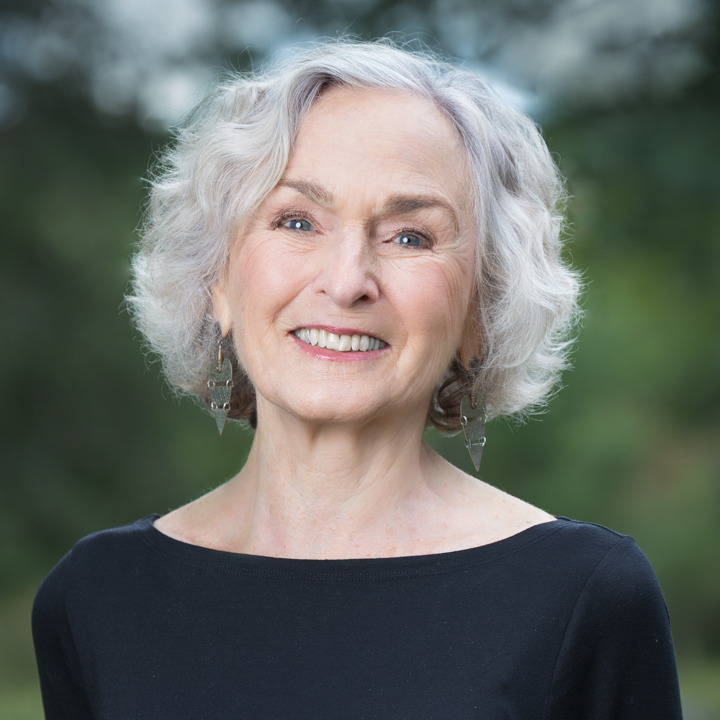

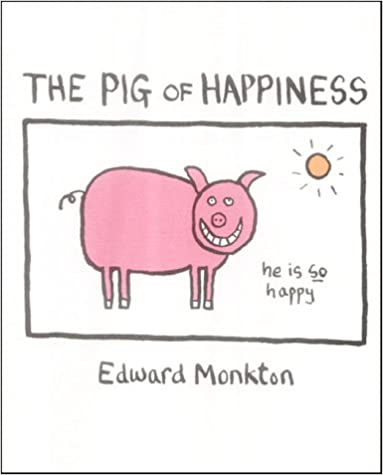




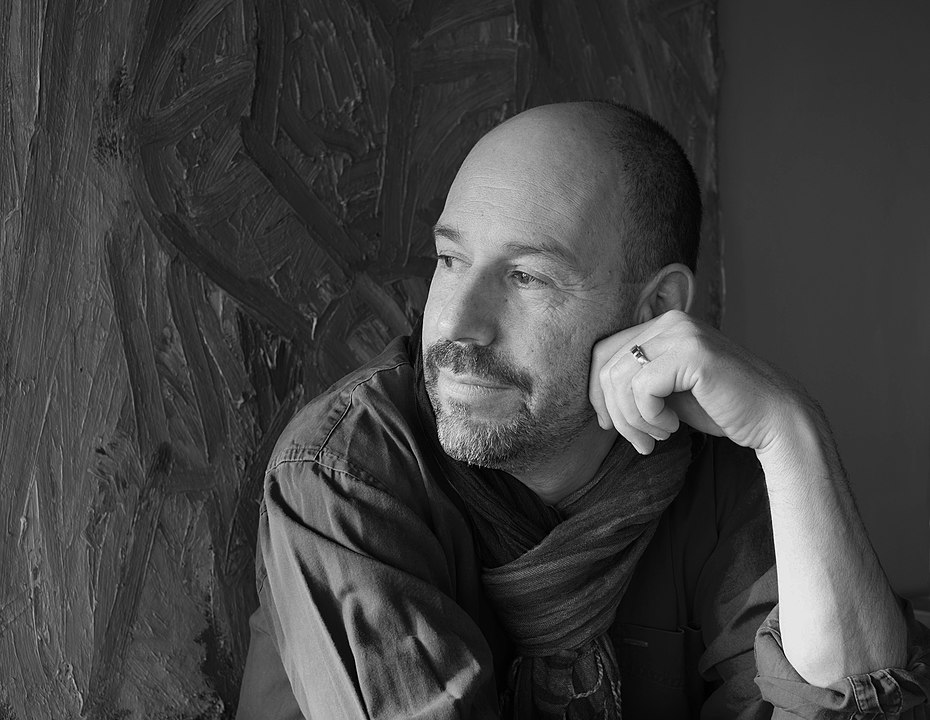


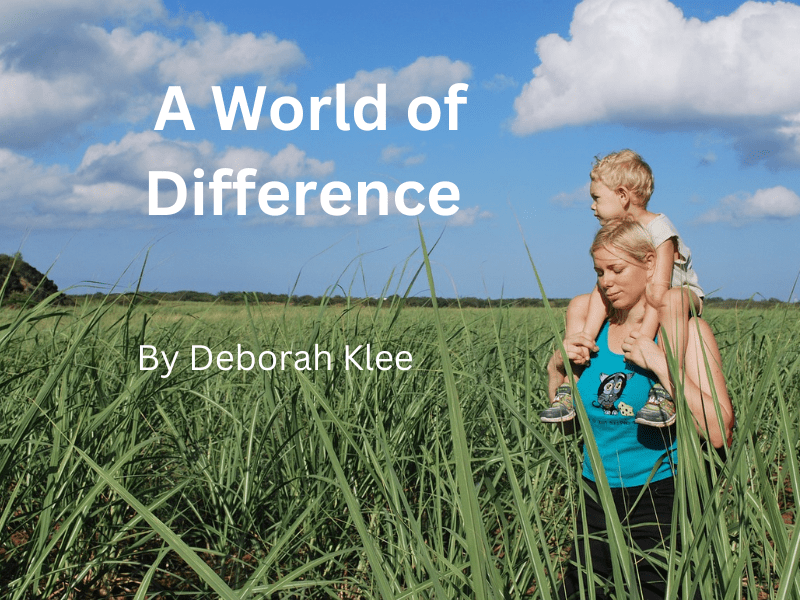
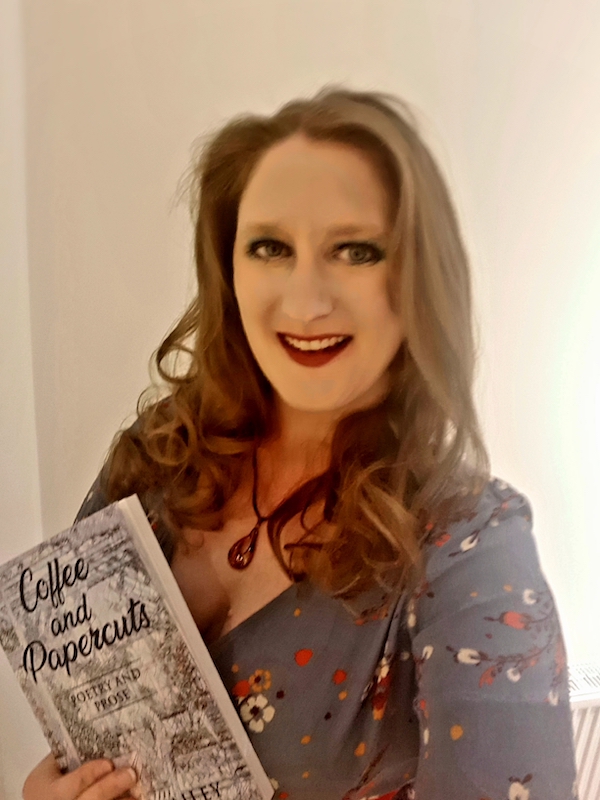





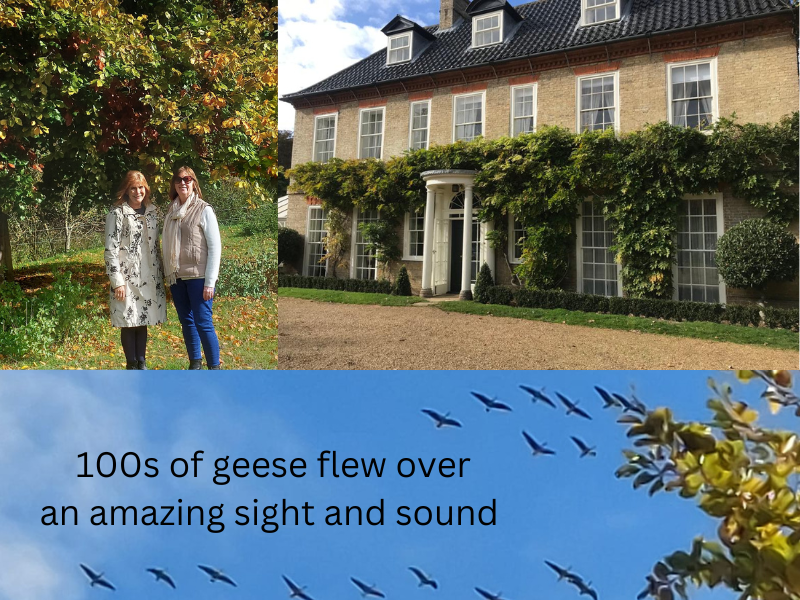





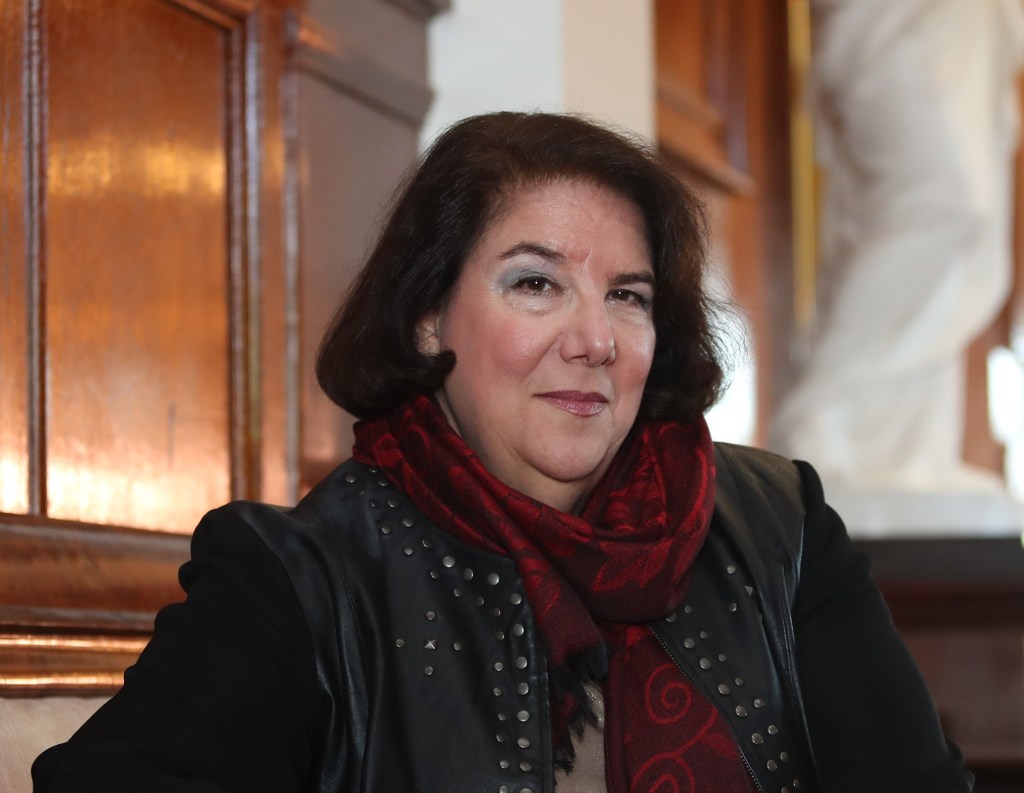
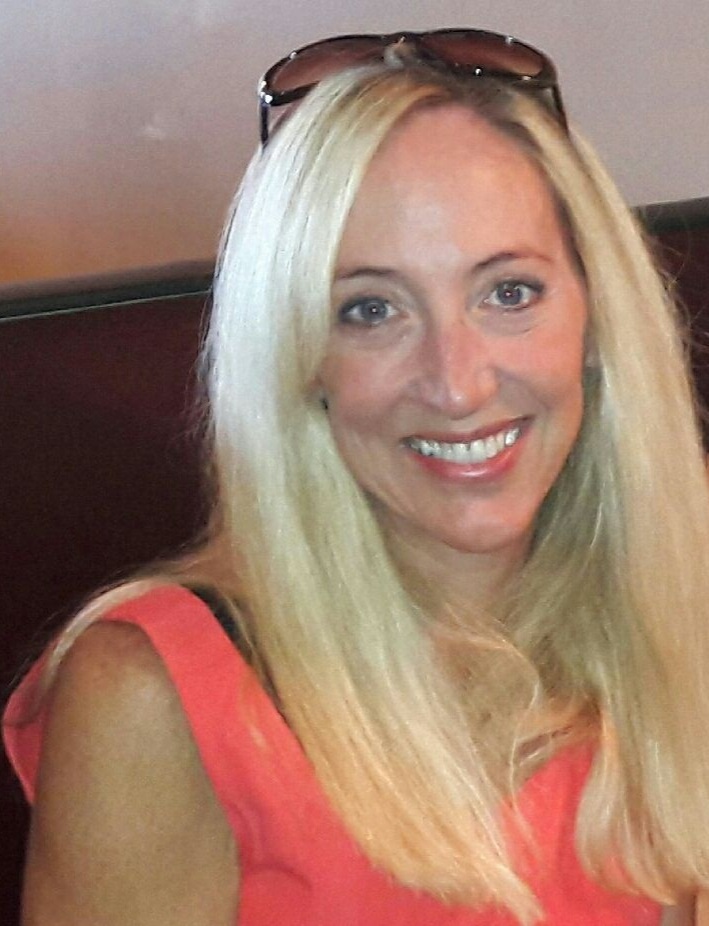
 Deborah Klee